
Programs do not maintain some secret, universal “blacklist” of unmatched applicants. What they do maintain—very carefully—is a memory. And that memory is not nearly as simple as the horror stories you hear in group chats.
Let me be blunt: the “once you go unmatched, you’re done everywhere” myth is lazy, fear‑driven nonsense. But the opposite fantasy—“it doesn’t matter at all, just reapply like nothing happened”—is just as wrong. Programs absolutely look at prior failures to match. They just do it in a much more predictable, pattern‑based, and frankly boring way than the urban legends suggest.
You’re not fighting a blacklist. You’re fighting numbers, risk perception, and narrative.
Let’s break down how this actually works.
The Blacklist Myth vs The Boring Reality
I’ve heard variations of the same story a hundred times:
- “If you don’t rank a program after interviewing, they flag you and you’re dead to them forever.”
- “If you SOAP at all, all the big academic places will never touch you again.”
- “If you apply to the same program after going unmatched, they auto‑reject you. It’s in their system.”
Sounds dramatic. Also mostly wrong.
Here’s the reality:
There is no national, NRMP‑wide, or ERAS‑wide blacklist of applicants who went unmatched. The NRMP actually publishes data showing a large proportion of eventual residents did not match in their first attempt, especially in competitive specialties that people later re‑enter via prelim + PGY‑2 routes.
Programs can see that you’re a prior applicant and whether you’ve graduated, done a prior match cycle, or currently hold another position. They can also remember you locally. But that’s a far cry from a formal blacklist.
What really happens is simpler and more rational than people want to admit: programs are trying to reduce their risk of bringing in a resident who might struggle, fail exams, or leave. Prior unmatched status is a signal, not a life sentence. How you handle that signal is the whole game.
What Programs Actually See When You Reapply
Let’s talk mechanics, because this is where the conspiracy theories usually die.
When you reapply after going unmatched:
- ERAS shows your prior graduation year.
- Your CV and MSPE won’t magically reset. Gaps are visible.
- If you’ve already matched to something else (prelim, another specialty), that’s in your history.
- Some programs’ internal applicant tracking systems flag you as a prior applicant to their program.
What they do not see:
- A national “red list” labeling you as “unmatched 2024.”
- A tag that says “SOAP participant” specifically, unless you explain it or it’s implied in your timeline.
- A universal note that you “declined to rank” them. Rank lists are private; programs do not see them.
Programs learn you went unmatched mostly from chronology and your own materials. Example: You graduated in 2024, applied for PGY‑1 starting 2025, then you’re applying again for 2026 without any residency listed. They can do basic math.
And yes, I’ve heard PDs say, “We noticed he applied last year and didn’t match.” It’s not hidden. They just process it as one more piece of data.
Do Individual Programs “Blacklist” People? The Uncomfortable Answer
Here’s where nuance matters.
Some programs absolutely do have internal “do not interview again” lists. But those lists are tiny and reserved for people who made a very bad impression, not simply for going unmatched.
People who end up on those internal lists usually fall into a few categories:
- Major professionalism issues on interview day (inappropriate comments, rude to staff, behavior that sets off alarms).
- Discovered misrepresentation or dishonesty in their application.
- Catastrophic interpersonal problems during an away rotation or observership there.
- Burning a bridge on purpose (no‑showing interviews without notice, ghosting after accepting a position, etc.).
Going unmatched is not in the same category.
If you interviewed at a place, were perfectly normal, they ranked you but you didn’t match? You are not “blacklisted.” The PD may not choose to bring back someone who didn’t clearly advance their program’s goals last time, but that’s not a ban. That’s competition.
If you never got an interview at a certain program the first time and you apply again unchanged? You probably still won’t get an interview. That’s not a blacklist either. That’s them making the same decision with basically the same data.
The brutal truth: what applicants call “blacklisting” is often just “you weren’t competitive enough for them and nothing significant changed.”
How Unmatched Status Really Affects Your Chances
The NRMP and specialty organizations actually give us clues here. Look at their “Charting Outcomes” and reapplicant data. The pattern is consistent:
Reapplicants can and do match—but they tend to match:
- In less competitive specialties than their original target, or
- Into programs that are less selective, or
- After clearly upgrading their application (research, new scores, strong letters, meaningful clinical work).
Prior unmatched status is a risk signal, but not all risk is equal.
Programs care about a few specific questions:
- Did you go unmatched because of unrealistic targeting, or because almost no one liked your file?
- Did you spend the gap year doing something meaningful, or did you just sit and re‑submit the same ERAS?
- Did you fix the thing that clearly hurt you (Step failures, no letters in the specialty, poor clinical performance)?
If you’re an unmatched applicant who:
- Originally applied only to ultra‑competitive programs with a mediocre file, and
- Then reapply more realistically, with better targeting and a stronger narrative
—you’re often more appealing the second time, not less. I’ve seen that play out repeatedly.
If you’re unmatched and then:
- Change nothing,
- Add a weak “research volunteer” line, and
- Reapply to nearly the same list,
then your prior unmatched status just confirms the original concern: poor strategy and weak self‑assessment. That’s what kills you, not a list.
Why Some Programs Avoid Prior Unmatched Applicants
Now the uncomfortable part. Some programs do quietly downgrade or avoid prior unmatched applicants. Not because they’re cruel—because they’re conservative.
From conversations I’ve heard in conference rooms, it sounds like this:
- “He went unmatched last year and didn't do much this year. Why risk that when we have plenty of fresh grads?”
- “She’s two years out now. I’d rather take someone closer to training.”
- “If he couldn’t match with that Step 1 and those letters last year, something didn’t click.”
There are structural reasons too:
- Programs worry about older grads being rusty clinically.
- Visa issues can get more complicated after gaps.
- Some GME offices impose informal rules: “No more than X years from graduation unless already in training.”
None of that is a blacklist. It’s risk‑aversion. You can overcome it, but not with the same application that already lost.
SOAP, Scramble, and the “Scarlet Letter” Story
SOAP has its own mythology. People talk about it like a permanent stain: “If you SOAPed, top programs will never touch you again.”
Let’s debunk that.
SOAP participation itself is not tagged in some permanent database PDs browse over coffee. What they see is:
- You didn’t start residency the year you graduated, or
- You started in a SOAP‑acquired position (sometimes obvious from program type).
What actually matters to them:
- Did you SOAP into something and then leave or fail out?
- Did you SOAP unsuccessfully and then do nothing structured afterward?
- Or did you SOAP into a prelim, perform well, get good letters, and now apply again with proof of success?
Huge difference.
I’ve seen residents SOAP into a prelim internal medicine year and then successfully match anesthesia, radiology, or another specialty the following cycle. Those programs knew they SOAPed. They simply cared more about the story: “I didn’t match, I regrouped, I crushed my prelim year, here are my PD letters, and here’s why I’m committed to this new specialty.”
SOAP does not equal lifelong rejection. Mediocre choices after SOAP do.
Reapplying to the Same Program: Smart or Suicidal?
Another favorite myth: “If you reapply to a program that rejected you before, they’ll laugh and auto‑filter you.”
Reality: it depends completely on what’s changed.
Programs re‑interview prior applicants in a few common scenarios:
- The applicant did a research year or prelim year with them or their affiliated hospital and impressed everyone.
- The applicant significantly boosted their file (Step 2 score, publications, US clinical experience for IMGs) and has strong new letters.
- The prior cycle, they were borderline; this time they look more clearly competitive.
Where they do quietly ignore repeats:
- Applicant is essentially unchanged and still below their typical range.
- They remember a lukewarm or odd interview.
- There is now a stronger applicant pool and they do not need to dig deeper.
Again: no blacklist. Just rational triage.
If you plan to reapply to the same place, you need a visible upgrade. Not one extra shadowing line. Real change.
What Actually Moves the Needle After You Go Unmatched
Here’s the part most people do not want to hear: almost nobody matches successfully as a reapplicant by doing a cosmetic tune‑up. You need real work.
Look at what actually helps former unmatched applicants who later match:
- A strong, completed prelim year with excellent PD and faculty letters.
- High‑quality research or a structured research year in that specialty with tangible output and mentorship.
- Significant new US clinical experience (for IMGs), with concrete letters saying, “This person is ready to function as an intern.”
- A clearly improved exam profile (Step 2, OET, etc.) if scores were an issue.

What absolutely does not impress most programs:
- Unstructured “gap time” labeled as “independent study.”
- Random online certificates or low‑stakes volunteering that does not match your stated specialty interest.
- Re‑submitting the same personal statement with a couple of lines about “resilience.”
The data from NRMP reapplicant outcomes is brutal but clear: the more substantive your upgrade, the more your prior unmatched status fades in importance.
How PDs Actually Talk About Prior Unmatched Applicants
I’ll give you the flavor of real conversations I’ve heard in selection meetings. It usually sounds something like:
- “He’s a reapplicant, but his prelim PD loves him, and his Step 2 is solid. I’m okay ranking him.”
- “Two years out, no residency, no clear activity. I’m going to pass.”
- “She went unmatched in derm and is now applying to IM, did a research year, obviously recalibrated. I’m fine with that.”
- “We interviewed him last year; he was fine but not special. I’d rather use the slot on someone new.”
You see the pattern. No one says, “He went unmatched; we’re categorically out.” They say, “Does this file, today, justify an interview and a rank?”
Your job is to make “today” look different from “last time.”
The Data Side: Why This Feels Like Blacklisting Even When It Isn’t
If there’s no blacklist, why does it feel like one to reapplicants?
Because the odds really do drop, especially for certain profiles. The numbers aren’t kind, and people confuse harsh statistics with conspiracies.
To visualize the basic dynamic:
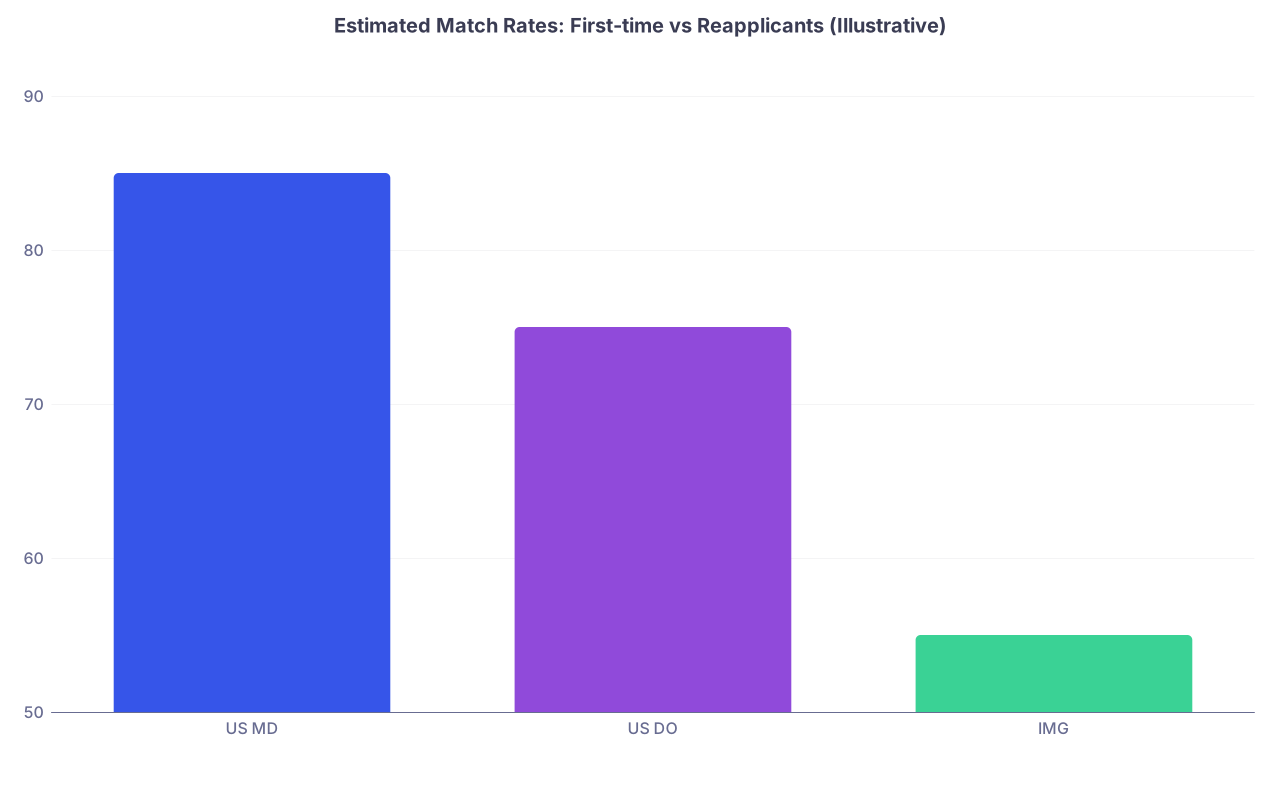
| Category | Value |
|---|---|
| US MD | 85 |
| US DO | 75 |
| IMG | 55 |
Those are rough, illustrative patterns you see echoed across multiple NRMP reports: reapplicants, on average, match less often than first‑timers in the same category. Not because they’re blacklisted, but because:
- The same weaknesses persist.
- They’re often older grads by the time they succeed.
- Program risk tolerance hasn’t changed, but their file hasn’t improved much.
If you understand that, you stop asking, “Am I blacklisted?” and start asking, “How do I become the exception in my category?”
Timing and Gaps: How Many Years Out Is Too Many?
Another common fear: “After X years, everyone will blacklist me.”
Programs don’t have one magic cutoff, but you’ll hear soft rules like “no more than 5 years from graduation without residency” from some IMGs, and tighter ranges for some US grads.
A simple way to think about it:
| Years Since Grad | Competitiveness Impact |
|---|---|
| 0–1 years | Normal, expected |
| 2–3 years | Noticeable, needs explanation and activity |
| 4–5 years | Significant concern, needs strong current clinical work |
| >5 years | Very hard without ongoing supervised practice |
This is not a hard rulebook, but it reflects what PDs worry about: recency of training. The longer you’re out, the less attractive you are unless you’re actively practicing in some supervised or structured way (prelim, another country, etc.).
Again: no blacklist. Just math and risk.
The Psychological Trap: Thinking You’re Branded Forever
The nastiest part of the “blacklist” myth is what it does to you mentally.
I’ve watched unmatched grads sabotage themselves because they truly believed they were irreparably tainted:
- They under‑applied the second time (“What’s the point?”).
- They refused to pivot specialties because “if I couldn’t match derm, nobody will want me anywhere.”
- They hid gaps instead of owning them, which made PDs trust them even less.
Programs are not combing through old spreadsheets vendetta‑style. They’re skimming hundreds or thousands of apps, looking for reasons to say yes to some and no to many. If you hand them a coherent, upgraded story, they don’t have the time or energy to hold onto last year’s version of you as some permanent identity.

| Step | Description |
|---|---|
| Step 1 | Go Unmatched |
| Step 2 | Reassess Competitiveness |
| Step 3 | Stay in Same Specialty |
| Step 4 | Gain New Experience |
| Step 5 | Reapply Strategically |
| Step 6 | High Risk of Repeat Unmatch |
| Step 7 | Change Specialty? |
| Step 8 | Application Upgraded? |
So, What Should You Actually Do if You Went Unmatched?
Since this is supposed to be about post‑Match options, let me cut through the fluff.
You cannot control whether a few programs keep a mental or internal note about you. You can control three things:
First, radically honest self‑assessment. Why did you really go unmatched? Not the story you tell your friends. The actual reasons: scores, red flags, letters, strategy, late application, over‑reaching.
Second, visible, concrete improvement. Not cosmetic, not symbolic. Real work: prelim year, research year, new exams, serious clinical exposure, new advocates who will pick up the phone for you.
Third, narrative. You must own the unmatched year directly in your personal statement and interviews: what happened, what you did, and why you’re a stronger, safer bet now. If you sound evasive or bitter, that’s much worse than the unmatched label itself.
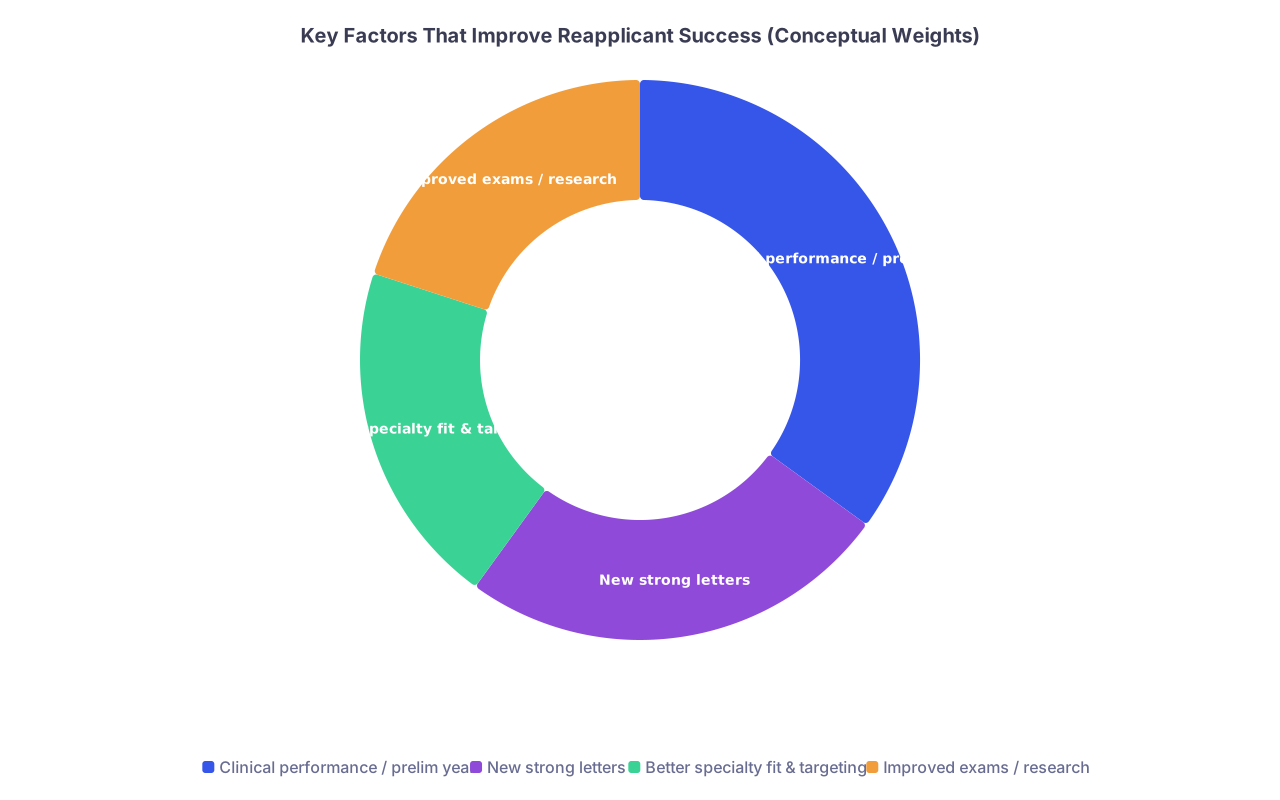
| Category | Value |
|---|---|
| Clinical performance / prelim year | 35 |
| New strong letters | 25 |
| Better specialty fit & targeting | 20 |
| Improved exams / research | 20 |
This is what actually shifts the odds—not trying to outsmart some mythical blacklist.

The Bottom Line
Programs are not secretly blacklisting every unmatched applicant. They are doing something much more boring and much more dangerous for people who want a comforting villain:
They are judging your current file, your trajectory, and your risk.
Three key points:
- There is no centralized blacklist; what looks like “being banned” is usually just unchanged competitiveness and risk‑averse programs making the same call twice.
- Prior unmatched status is a signal, not a sentence. The impact depends almost entirely on how convincingly you improve your application and explain the gap.
- You do not need to outwit a conspiracy. You need to outgrow your previous application—substantially, visibly, and honestly.