
What if this prelim match is the moment I quietly fell off the “real doctor” track and no one tells me until it’s too late?
Because that’s what it feels like, right? Everyone else posting categorical matches on Instagram, talking about their “family” in IM or surgery or EM, and you’re… prelim. One year. No guaranteed next step. The medical version of sleeping on someone’s couch.
Let me say the scary thing out loud so we can deal with it:
It feels like you failed the Match.
First: Did You Ruin Your Career? The Hard Answer
No, you didn’t ruin your career.
But. You did make your life more complicated.
The prelim year is like being handed a one-year contract with no renewal clause. You’re still a doctor. You’re still in an ACGME-accredited residency program. You’re still getting paid and trained and evaluated.
But now your path is:
- Do intern year
- Reapply
- Hope you land a categorical or advanced spot
- Try not to lose your mind in the meantime
Here’s what’s true, from watching this play out for real people:
- Plenty of people match categorical after a prelim year. Actually happens every year.
- Some pivot into a different specialty and end up genuinely happier.
- A smaller group struggles, doesn’t match again right away, and has to make some tough choices.
So the real question isn’t, “Did I ruin my career?”
It’s, “What do I do now so this doesn’t become the last chapter?”
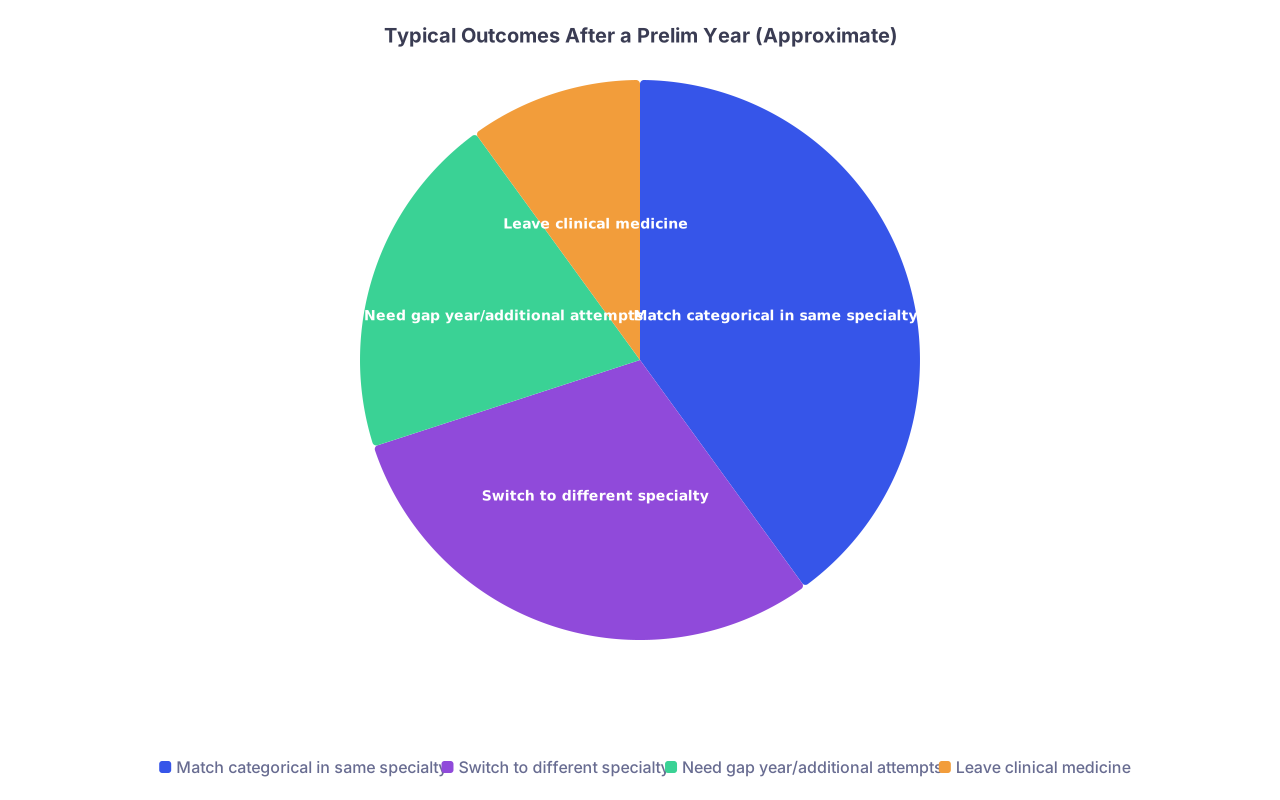
| Category | Value |
|---|---|
| Match categorical in same specialty | 40 |
| Switch to different specialty | 30 |
| Need gap year/additional attempts | 20 |
| Leave clinical medicine | 10 |
Are those exact numbers? No. But that’s roughly the pattern I’ve seen and heard admitted behind closed doors.
Your job is to move yourself into the first two slices of that pie.
What Your Prelim Year Actually Means (And Doesn’t Mean)
The brain loves to catastrophize, so let’s separate feelings from facts.
What it doesn’t mean
- It does not mean you’re “unmatchable.” You matched. Period.
- It does not mean programs “hate” you. Often you were just lower on the list, or the specialty was brutally competitive this year.
- It does not mean your original specialty is dead. Harder? Yes. Dead? No.
I’ve seen people go from a surgery prelim at a random community program to categorical spots at solid academic places. Same with IM, radiology, anesthesia, even derm with research + prelim medicine.
What it does mean
You now have:
- A ticking clock: one year to build a stronger application
- A new set of people who can vouch for you—or sink you
- Less margin for error: professionalism, performance, and networking suddenly matter a lot
You’re no longer “just” an M4 applicant. You’re an intern who either confirms programs’ doubts… or proves them wrong.
Step 1: Decide If You Still Want The Same Specialty
You don’t have to decide this tonight. But you do have to decide earlier than you think.
Ask yourself—brutally honestly:
- Did I not match because the specialty is ultra competitive (derm, ortho, ENT, plastics, rad onc, etc.) despite a strong app?
- Or did I not match because my application was weak for even less competitive fields (low Step scores, few interviews, professionalism issues, repeated failures)?
Different causes → different solutions.
If you applied to, say, anesthesiology, got 10+ interviews, no red flags, and still didn’t land a categorical, you’re in better shape than someone who applied broadly to IM/FM/psych and got 2–3 interviews total.
Here’s the harsh version: if you barely got looks from any programs this cycle, just repeating the same plan after a prelim year is probably a setup for another bad Match.
This is where a lot of us freeze. Because admitting “Maybe I need to switch specialties” feels like another failure. It’s not. It’s strategy.
Step 2: Use Your Prelim Year Like a Weapon, Not a Holding Pattern
If you show up to your prelim year thinking, “Whatever, it’s just one year, then I’ll reapply,” you’re dead in the water. Programs can smell that from orbit.
You need to become the intern that attendings fight to keep. The one the PD says, “I would absolutely take them categorically if I had a spot.”
Your goals during prelim year
Let me be very blunt. Intern year is not just about surviving. It’s about manufacturing evidence that you are:
- Reliable
- Hard-working
- Easy to work with
- Not a problem
You want:
- Strong, specific letters from people who actually know you
- Your PD on your side, not quietly lukewarm when other programs email them
- No professionalism complaints, no lateness, no passive-aggressive stuff
If you were a bit flaky in med school? That era is over. You’re on stage now.

| Step | Description |
|---|---|
| Step 1 | Start Prelim Year |
| Step 2 | Excel clinically |
| Step 3 | Earn strong letters |
| Step 4 | Decide specialty path |
| Step 5 | Targeted reapplication |
| Step 6 | Rebuild application |
| Step 7 | Match categorical |
Step 3: Figure Out Your Reapplication Strategy—Early
You can’t wait until January of intern year to “see how it goes.” By then, apps are already in and interviews are happening.
You basically have to be planning your reapplication by late summer or early fall of your prelim year.
If you’re staying in the same specialty
You need to:
- Talk to your prelim PD early: “I’d like to reapply in X specialty this fall. Can we discuss how to position my application and who might support me?”
- Get letters from faculty in that specialty if possible, or at least from people who’ve worked closely with you and can speak to your clinical performance.
- Identify what was weak before: Step score? Lack of research? Weak letters? No away rotations? You need to fix at least one or two of those.
Programs hate seeing the exact same application a year later with just “intern at XYZ prelim program” slapped on top. Show growth.
If you’re switching specialties
You need to be even more intentional:
- Talk to residents and attendings in the new field at your hospital. Ask blunt questions about your competitiveness.
- Arrange electives or exposure in that specialty during your prelim year if possible.
- Be able to explain why you’re switching without throwing your old specialty under the bus or sounding flaky.
I’ve seen surgery prelims successfully switch to IM, anesthesia, radiology, PM&R, EM, even psych. The story that works is: “I learned a ton, realized I’m better fit for X, and my performance here backs that up.”
Step 4: Understand the Real Risks (So You Don’t Get Blindsided)
Here’s the part everyone whispers about but doesn’t say clearly.
Yes, you can finish prelim and still not match again
It happens. Not constantly, but enough that pretending it’s impossible is stupid. People finish a prelim year, reapply, don’t match, and end up:
- Doing a research year
- Trying to scramble into another prelim or transitional year
- Leaving clinical medicine for a while (or for good)
This is the nightmare scenario living rent-free in your head right now. You’re not crazy for worrying about it.
But look closely: the people who land here usually have a pattern:
- Weak performance during prelim year (average at best, or unprofessional)
- No clear strategy or improved application
- Minimal mentorship and no one advocating for them
- Unrealistic specialty expectations (e.g., aiming for derm with a 220 and no research)
You cannot control everything. But you can avoid that pattern.
No, a prelim year alone doesn’t “blacklist” you
Programs understand prelims. They know some specialties require them. They know some applicants wind up prelim-only by numbers, bad luck, or rigid rank lists.
What worries programs is:
- Gaps with no good explanation
- Repeated failures without evidence of learning
- PDs who hesitate when asked, “Would you rehire this person?”
Your reputation from this single year will follow you more than your Match result.
Prelim vs Transitional vs Categorical—What Actually Changes?
Quick sanity check, because all these terms blur together when you’re panicking.
| Type | Length | Guaranteed Continuation? | Typical Purpose |
|---|---|---|---|
| Prelim Medicine | 1 year | No | Step toward advanced or reapply |
| Prelim Surgery | 1 year | No | Required for some surgical fields |
| Transitional | 1 year | No | Broad PGY-1 for advanced spots |
| Categorical | 3-7 years | Yes (if in good standing) | Full training to board eligibility |
Transitional tends to be cushier than prelim surgery, but from a “will I ever be a real attending” standpoint, all three 1-year options share the same problem: no automatic future.
What About Money, Loans, and Life Plans?
Yeah. The logistical anxiety is brutal.
- You’ve got loans capitalizing, maybe family depending on you, a partner trying to plan their own career.
- You don’t know where you’ll be living after this year.
- You feel like one bad Match year could snowball into financial disaster.
Here’s the part people forget: even a single year as a resident puts you in a different category than “unmatched completely.”
You’ll:
- Make an intern salary (not amazing, but not zero)
- Start PSLF eligibility if you’re at a qualifying nonprofit hospital
- Gain real work experience and licensure steps that open non-residency options later (urgent care, telemed, industry roles, etc., in some states after certain requirements)
No, that’s not the dream. But it’s also not total collapse.
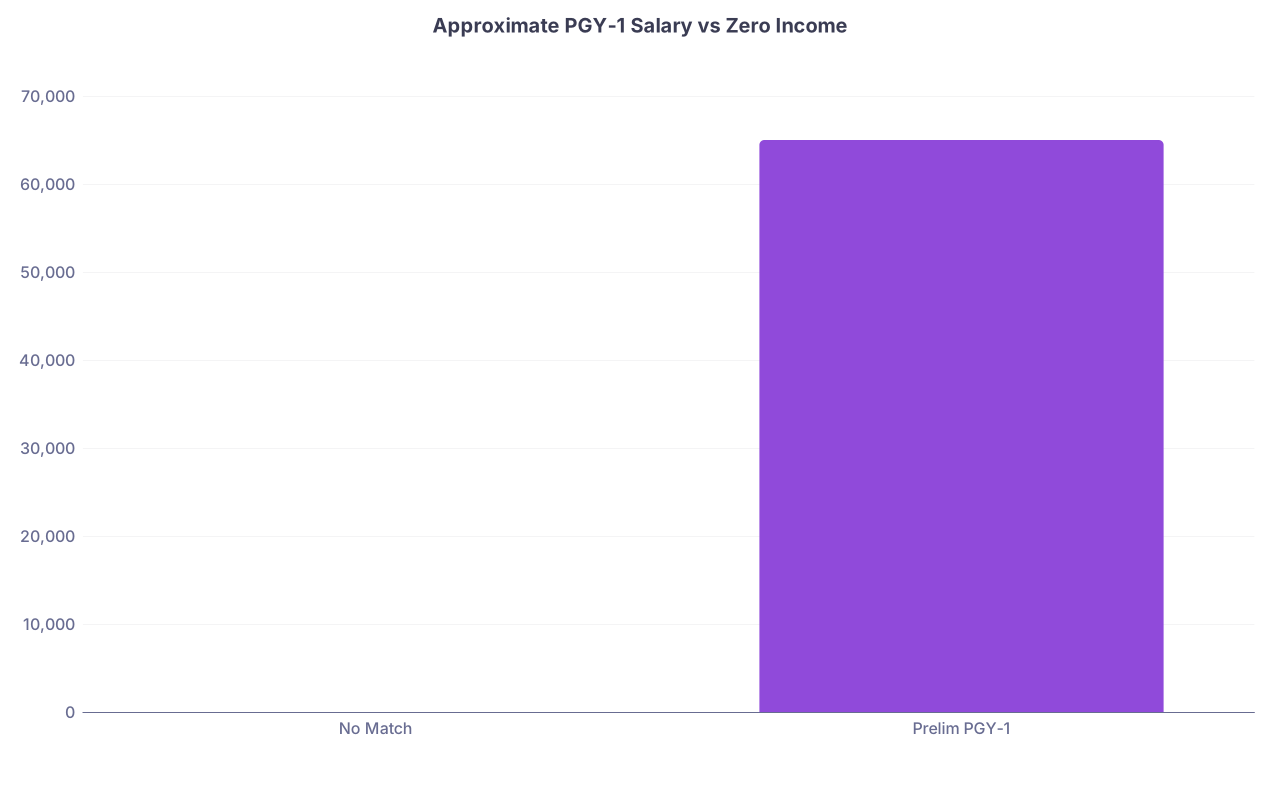
| Category | Value |
|---|---|
| No Match | 0 |
| Prelim PGY-1 | 65000 |
Your anxiety is screaming “all or nothing.” Reality is usually “annoying and harder than planned, but not fatal.”
How To Talk About This Without Sounding Like damaged goods
You will have to explain this. In personal statements. In interviews. To attendings who ask, “So what’s your plan after this year?”
The worst things you can do:
- Trash your current program or the Match process
- Blame everything on other people (“bad advising,” “biased programs,” “the system”)
- Sound hopeless or bitter
The story that actually works is something like:
“I applied in X, targeted competitive programs, and ultimately matched to a prelim spot. It wasn’t the categorical position I hoped for, but this year has made me a stronger clinician. I’ve grown a lot in [specific skills], have strong support from my PD and faculty, and I’m excited to bring this foundation to a categorical position in [specialty].”
You’re showing resilience without spin. Programs like that.

When You Should Actually Consider Changing Course Completely
Here’s the part nobody wants to say out loud.
If you:
- Struggled massively with exams (multiple Step failures)
- Had professionalism or academic issues
- Got very few interviews twice
- Completed a prelim year with just “okay” feedback, not glowing
You might need to think beyond the original dream. Not because you’re “not good enough to be a doctor,” but because the residency gatekeeping process is narrow and mean and cares about things that are, frankly, not always fair.
People in this situation sometimes:
- Pivot to less competitive specialties
- Go into non-residency clinical roles where allowed
- Move into industry, consulting, informatics, public health, etc.
Is that what you wanted when you started med school? No. Does that mean med school was a mistake? Also no. It just means your path is not the glossy brochure one. Most aren’t.
But if you’re reading this right after matching a prelim, you’re not there yet. You’re in “this sucks, but I still have leverage” territory.
Real Talk: What To Do In The Next 3–6 Months
Very concretely:
- Feel miserable for a bit. Cry. Rage. That’s normal. Don’t make big decisions in those first 72 hours.
- Email or set up meetings with:
- Your med school advisor
- Your prelim PD once you arrive
- A couple of residents who’ve been through weird match situations
- Decide by early intern year:
- Same specialty vs different
- How broadly you’re willing to apply next time
- Treat every rotation like an extended interview. Because it is.
- Keep receipts. Log your cases, feedback, small wins, patient comments. These become letter fodder later.
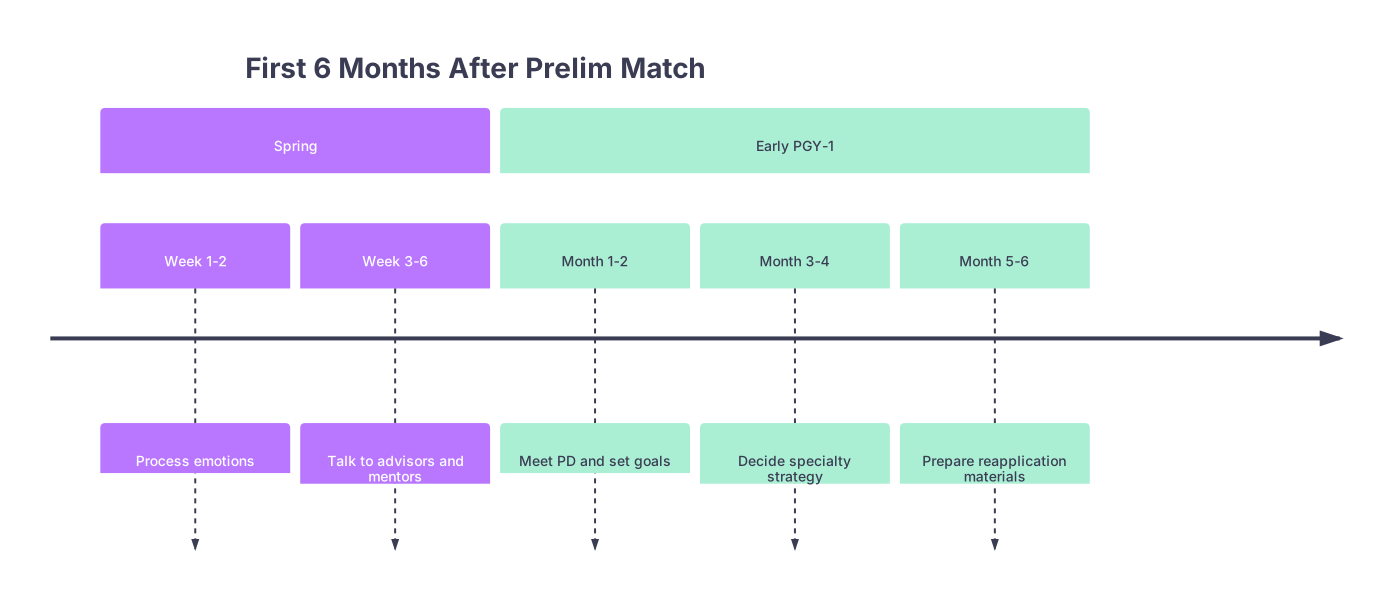
| Period | Event |
|---|---|
| Spring - Week 1-2 | Process emotions |
| Spring - Week 3-6 | Talk to advisors and mentors |
| Early PGY-1 - Month 1-2 | Meet PD and set goals |
| Early PGY-1 - Month 3-4 | Decide specialty strategy |
| Early PGY-1 - Month 5-6 | Prepare reapplication materials |
You don’t have to feel hopeful yet. You just have to not give the system more reasons to write you off.