
The biggest mistake prelim residents make is waiting until January to “figure out” reapplying. By January, you’re already late.
You’re in a PGY‑1 preliminary year. You’re tired, constantly paged, and still somehow expected to rebuild an entire residency application. That’s brutal—but it’s doable if you treat this like a second full‑time job and follow a calendar with zero guesswork.
I’m going to walk you month‑by‑month, then week‑by‑week through ERAS/NRMP deadlines and all the hidden “soft” deadlines programs never write down but absolutely use to filter people out.
Big‑Picture Timeline: PGY‑1 Reapplying Overview
Before we go month by month, you need the spine of the year in your head.
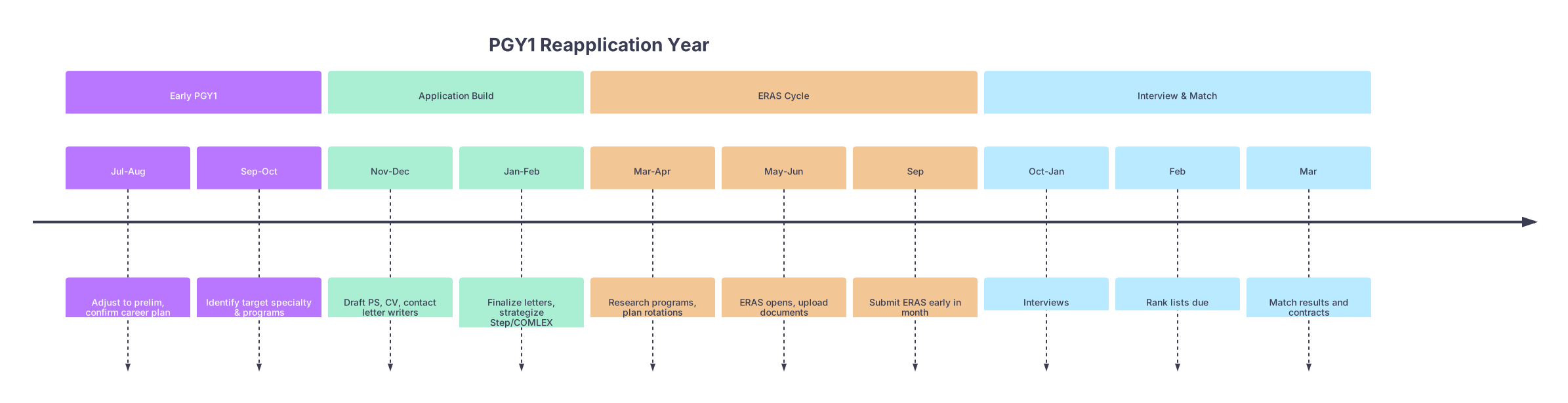
| Period | Event |
|---|---|
| Early PGY1 - Jul-Aug | Adjust to prelim, confirm career plan |
| Early PGY1 - Sep-Oct | Identify target specialty & programs |
| Application Build - Nov-Dec | Draft PS, CV, contact letter writers |
| Application Build - Jan-Feb | Finalize letters, strategize Step/COMLEX |
| ERAS Cycle - Mar-Apr | Research programs, plan rotations |
| ERAS Cycle - May-Jun | ERAS opens, upload documents |
| ERAS Cycle - Sep | Submit ERAS early in month |
| Interview & Match - Oct-Jan | Interviews |
| Interview & Match - Feb | Rank lists due |
| Interview & Match - Mar | Match results and contracts |
Now let’s zoom in.
July–September: Orientation, Reality Check, and Strategy
July (Start of PGY‑1): Stabilize and Decide
At this point you should:
- Survive orientation and your first month.
- Be honest about your specialty plan.
You fall into one of three common buckets:
You’re in a prelim IM/Transitional year and reapplying to advanced specialties
(neuro, rads, gas, derm, ophtho, etc.)
→ Your reapplication cycle is now.You’re in a prelim surgery spot and want categorical surgery (or switch to another specialty).
→ You’re also in this current cycle.You’re in a prelim year you never wanted and trying to pivot to something more realistic.
→ You have the hardest path. All the more reason to start now.
Concrete tasks for July:
- Decide if you’re definitely reapplying this cycle or waiting a year.
Waiting can be smart if:- You need a big test score jump.
- You have extremely weak application signals.
- Identify 1–2 faculty in your prelim program who might become advocates.
Talk like this: “I’m planning to reapply to [specialty] this ERAS cycle. I’d really value your advice on how programs will view a prelim reapplicant.”
August: Clarify Specialty Target and Year Strategy
By end of August you should:
- Lock in your target specialty (and backup, if any).
- Understand if you’re applying:
- To advanced only (e.g., Neurology, Anesthesiology with PGY‑2 start)
- To categorical positions in a new specialty
- To both, depending on what is offered
This is when you quietly:
- Review your old application:
- Step scores
- MSPE language (especially any red flags)
- LOR quality
- Research and experiences
- Have one blunt conversation with a mentor (former med school advisor or trusted attending) about whether your plan is realistic.
October–December: Build the Reapplication Foundation
This is where most prelims screw up—they wait until ERAS opens. Wrong. You need to have 70–80% of your content ready before that.
October: Request Early Letters and Start Drafts
At this point you should:
- Identify 3–4 potential letter writers in your prelim program who:
- Actually know your work ethic.
- Have at least attending-level titles.
- Are likely to say “yes” enthusiastically, not politely.
You don’t ask them for letters yet. You say:
“I’m planning to reapply this cycle to [specialty]. Would you be comfortable supporting me with a letter later this year if things continue to go well?”
You also:
- Pull your old personal statement and mark what must die.
If you wrote a “since childhood I wanted to be a doctor” essay, it’s going in the trash. - Start a running achievement log from prelim:
- Patients/families who praised you
- Tough cases you handled at 2 a.m.
- Any mini‑leadership (sign‑out improvements, new order set ideas, etc.)
Those details fuel your personal statement and interviewer stories.
November: Draft Personal Statement and Update CV
By the end of November you should have:
A solid first draft of your new personal statement:
- It must answer one question: Why are you now a stronger candidate than last year?
- It should include 1–2 specific PGY‑1 stories that show growth, not just “I learned a lot.”
An updated CV that:
- Includes all prelim responsibilities and any teaching, QI, or committee work.
- Clearly shows your prelim year is in good standing, not imploding.
Also November:
- Identify any missing pieces you can still fix:
- Need a Step 2/3 score bump? You’re flirting with dangerous timing, but it’s still possible.
- Need at least something to show academic interest (case report, QI)? Start it now.
December: Lock in Letter Writers
December is your soft LOR deadline.
At this point you should:
- Formally ask for letters of recommendation from:
- 1–2 attendings in your prelim program (preferably from your core specialty if you’re staying in-field).
- 1–2 from medical school or prior rotations who still remember you.
Ask like this, in person if possible:
“I’m reapplying to [specialty] through ERAS this coming cycle. I’ve really valued working with you and was hoping you’d feel comfortable writing a strong letter of recommendation for me. The letter would be due by June so there’s plenty of time, and I can send you my updated CV and a short summary of my goals.”
Why December?
- Because if they say “maybe later,” you know to find backups.
- Because attendings get progressively more burned out and less responsive after New Year, not more.
January–March: Tighten Strategy and Plan ERAS Cycle
January: Reality Check and Backup Plan
By the end of January you should:
- Have an honest competitiveness assessment:
- Are you a realistic candidate in your chosen specialty this year?
- Do you need a geographic strategy (e.g., mostly community programs, specific regions)?
- Decide on application breadth:
- Competitive field (derm, ophtho, plastics)? Expect 70–100+ programs.
- Moderate field (neuro, anesthesia, rads, psych)? 40–80 programs.
- Less competitive but still tough as a switcher? 30–60.
You also:
- Decide how you’ll present your prelim year in interviews:
- Why did you end up prelim instead of categorical?
- Why should they believe you’re committed to this specialty now?
Write and rehearse those answers. Bad answers here kill interview days.
February: Plan Rotations and Step/COMLEX Timing
At this point you should:
- Review your PGY‑1 schedule with an eye toward:
- Lighter rotations between May–September → best ERAS prep window.
- Avoiding schedule conflicts in October–January → prime interview season.
If your program allows any scheduling input, now’s when to push:
- Try to avoid ICU/night float in October–January.
- Try to cluster tougher blocks earlier (Jan–April) to free your second half for application tasks.
If you’re considering Step 3:
- Ideal: Take it before ERAS opens (May/June) so score is ready by application time.
- Reasonable: Take it by August; any later and you risk results arriving after interview decisions.
March: Build Your Target Program List
By the end of March you should have:
- A first draft of your program list, including:
- “Reach” programs: 10–20%
- “Realistic” programs: 60–70%
- “Safety/backup” programs: 10–20%
Use filters:
- Community vs university
- Geographic ties
- Programs known to take prelim reapplicants (ask seniors, look at past residents, talk to former co‑interns).
| Competitiveness Level | Total Programs | Reach | Core | Safety |
|---|---|---|---|---|
| Very Competitive | 80 | 15 | 55 | 10 |
| Moderate | 60 | 10 | 40 | 10 |
| Less Competitive | 40 | 5 | 25 | 10 |
April–June: ERAS Opens and Document Finalization
This is where the “real” calendar begins.
April: Final Revisions and Document Prep
By the end of April you should:
- Have a nearly final personal statement.
- Have CV entries cleaned and formatted for ERAS.
- Have reached out to any letter writers who haven’t confirmed.
You also:
- Decide if you’re using one universal PS or multiple specialty‑specific versions.
- Collect key data:
- Exact dates of all med school and residency rotations
- Relevant licensing numbers
- Updated contact info
May: ERAS Opens – You Start Input, Not “Think”
Typically:
- Early May – ERAS opens for applicants to begin working.
You cannot submit yet, but you can:- Enter all experiences, publications, and education.
- Upload CV, personal statement drafts.
- Send official instructions to letter writers so they can upload to ERAS.
At this point you should:
- Block 2–3 focused hours per week (ideally on lighter call days) to chip away at ERAS.
- Treat May 31 as your soft internal deadline for:
- Fully entered experiences and education.
- Final PS text ready to paste.
- All letter writers reminded.
June: Finalize Letters and Application Core
By end of June you should:
- Have at least 3 letters already uploaded (or clearly in progress):
- 1–2 from your prelim year
- 1–2 legacy letters from med school or prior rotations
You also:
- Triple‑check your program list.
- Proofread every entry on ERAS—this is the last month where you have breathing room to fix errors.
This is where your calendar overlaps with pure survival: you’re finishing off hard rotations, maybe taking Step 3, and pushing letter writers. Fatigue isn’t an excuse. Everyone is tired; programs still judge typos.
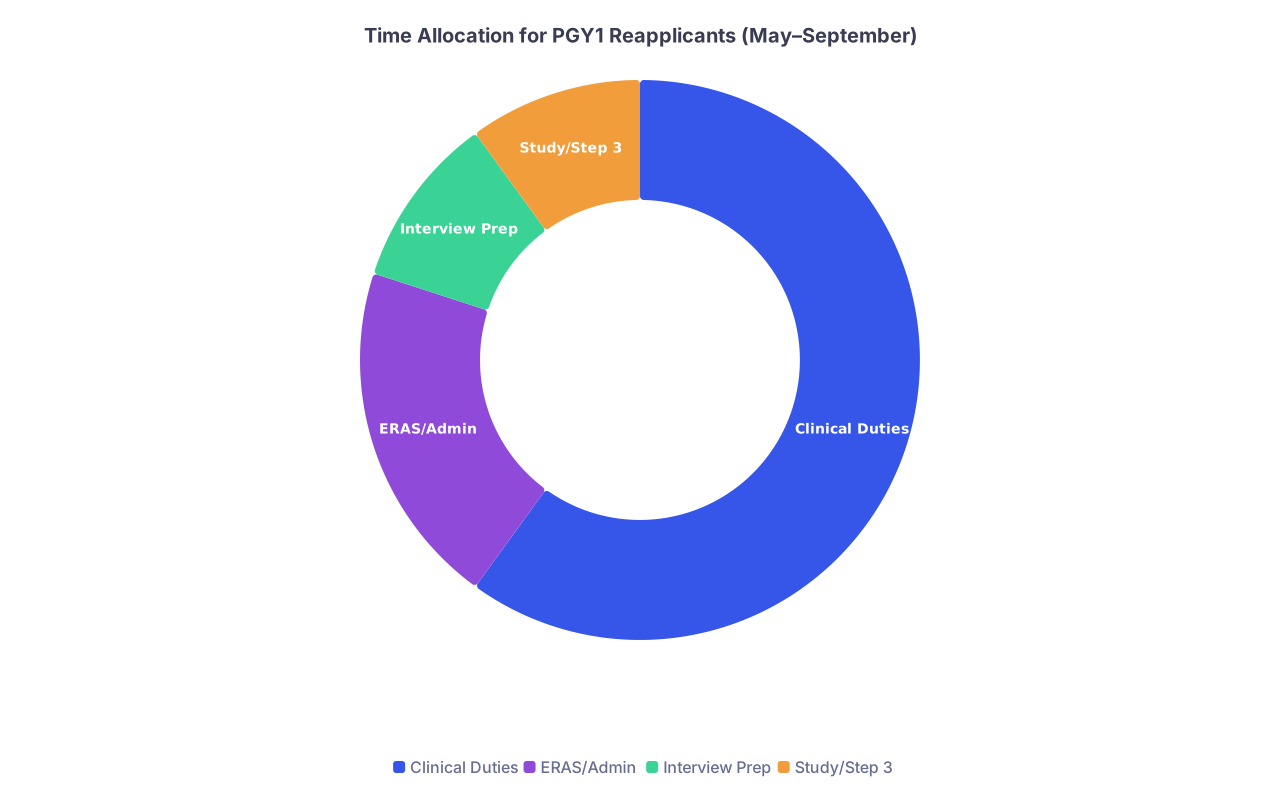
| Category | Value |
|---|---|
| Clinical Duties | 60 |
| ERAS/Admin | 20 |
| Interview Prep | 10 |
| Study/Step 3 | 10 |
July–September: Submission Window and Critical Deadlines
July: Refine, Don’t Build
At this point you should:
- Have ERAS 90–95% complete.
- Be doing final polishing only in July, not starting from scratch.
July tasks:
- Re‑read your personal statement with a “why now, why you” lens.
- Clean up any vague or inflated language in your experiences.
- Confirm that:
- All letters are requested in ERAS.
- Photo is uploaded.
- USMLE/COMLEX scores are assigned.
August: Lock Everything in and Prep for Day 1 Submission
Key real‑world fact: many program directors start filtering applications within the first week of ERAS availability to programs.
At this point you should:
- Treat August 15–31 as your last window to:
- Make any meaningful edits.
- Replace a weak letter (if a stronger one appears).
- Final proof.
Aim for this internal schedule:
- By August 15 – All documents final. No new writing.
- Between August 15–31 – Pure review, no major content changes.
- Set a personal deadline to be ready to submit on the first possible day ERAS allows program submission (usually early September).
September: Submit Early, Don’t Wait
Historically:
- Early–Mid September – ERAS first date to submit and transmit to programs.
- Programs start screening almost immediately.
At this point you should:
- Submit your ERAS application on Day 1 or within 48 hours of the opening to programs.
- Ensure:
- All programs are correctly selected.
- All letters are properly assigned to each program.
- You’ve paid and seen confirmation of submission.
Once submitted:
- Do not spam programs.
One respectful update email or letter of interest later in the season is fine, but not in the first week.
October–January: Interview Season While Still a Prelim
You’re now in the split‑life phase: full‑time intern, part‑time job hunter.
October: First Interview Invites and Scheduling
At this point you should:
- Start receiving interview invites, especially from community or moderate competitiveness programs.
- Have a clear availability grid ready:
- Days you absolutely cannot be off (call, ICU).
- Days you can trade.
- Days you can burn vacation.
Coordinate early with your chief residents or scheduler. Approach them before invites are flooding in:
“I’m reapplying this year. I’ll need some flexibility from October to January for interviews. Is there a preferred way to request days off or swaps so I can make this work with minimal disruption?”
November–December: Peak Interview Months
This is high‑stress.
At this point you should:
- Be interviewing 1–2 days most weeks if your application is getting traction.
- Be prepared to:
- Do virtual interviews from hospital call rooms (make sure background, Wi‑Fi, and noise are acceptable).
- Use single days off + post‑call days creatively to attend interviews.
Keep a strict post‑interview log:
- Program name
- People you met
- Gut feeling
- Any red flags
- How you think they view prelims/reapplicants
This log becomes your ranking guide.
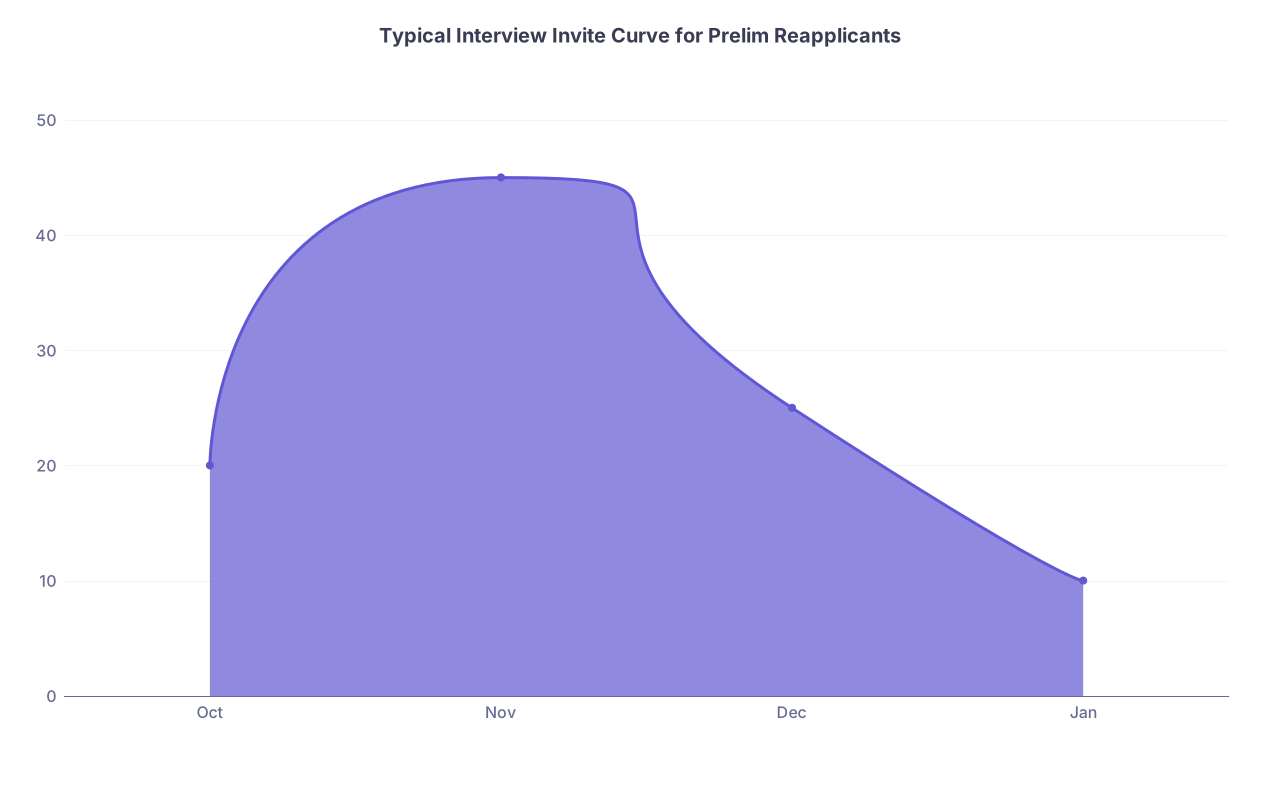
| Category | Value |
|---|---|
| Oct | 20 |
| Nov | 45 |
| Dec | 25 |
| Jan | 10 |
January: Last‑Minute Invites and Rank List Draft
By the end of January you should:
- Have your preliminary rank list drafted.
- Know your top 5–10 programs clearly, with reasons.
You also:
- Decide if you’re sending any “love letters” or preference signals:
- Only do this where you mean it.
- Keep it short and specific.
February–March: Rank List and Match Outcome
February: NRMP Rank Order List Deadline
Historically:
- Late February – NRMP deadline to certify rank order list.
At this point you should:
- Certify your rank list a few days before the deadline.
Don’t trust your future post‑call self to remember. - Re‑confirm:
- You’re correctly participating in the right NRMP match (main match vs specialty‑specific).
- Advanced vs categorical ranks are set as intended.
- Any partner or couple‑matching logic is correctly entered.
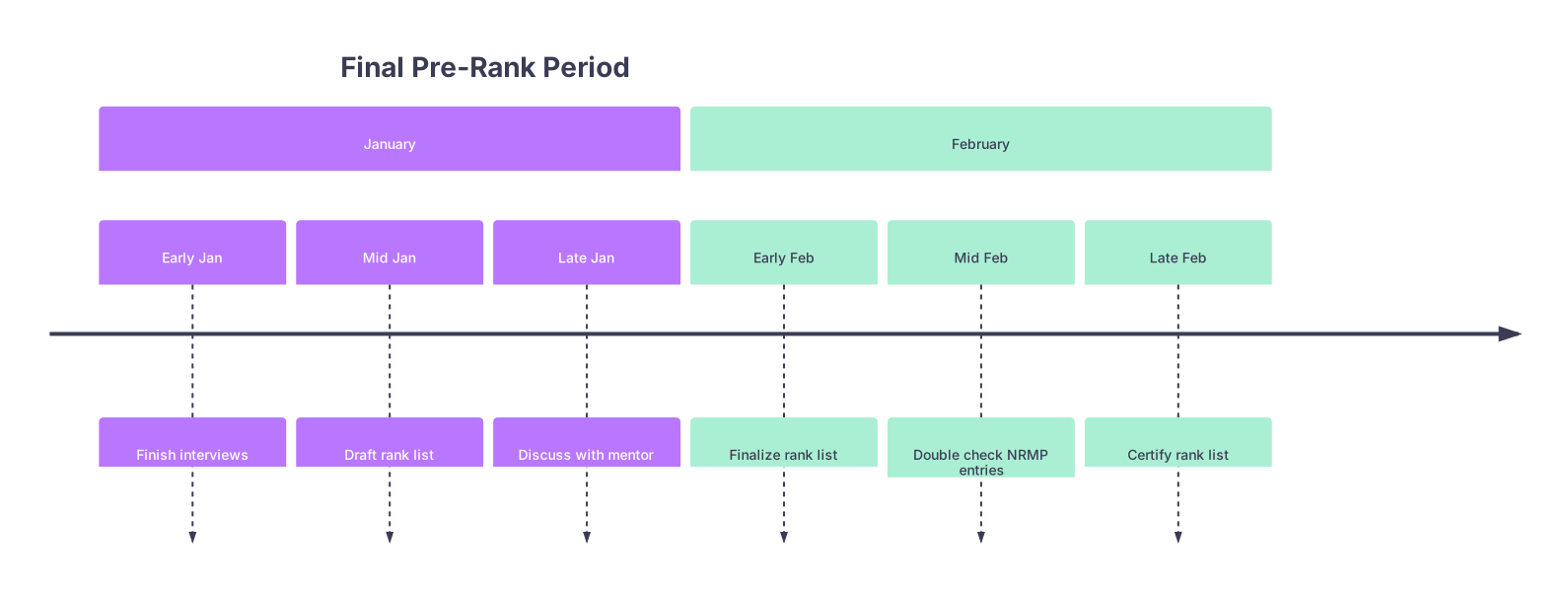
| Period | Event |
|---|---|
| January - Early Jan | Finish interviews |
| January - Mid Jan | Draft rank list |
| January - Late Jan | Discuss with mentor |
| February - Early Feb | Finalize rank list |
| February - Mid Feb | Double check NRMP entries |
| February - Late Feb | Certify rank list |
March: Match Week and Next Contract
Match Week outcomes for a prelim reapplicant:
Matched into categorical or advanced spot
→ Coordinate with both your current prelim program and your new program. Clarify:- Contract timing
- Credentialing
- Any gap between prelim and PGY‑2 start.
Did not match
→ You go into SOAP or start planning another cycle. This is its own brutal timeline and usually requires:- Immediate meeting with PD/mentor.
- Rapid decision on whether to scramble into any PGY‑1/PGY‑2 or regroup for another year.

Day‑to‑Day Habits That Make This Calendar Work
All of the above fails if you don’t manage the small, boring stuff. Two daily/weekly non‑negotiables:
Weekly 60–90 minute “Application Block”
- Sunday mornings, post‑call afternoons, whatever.
- No pager if possible. Just ERAS, emails, PS editing, or program research.
- Treat it like a standing appointment.
Running Achievement/Case Log
- One note on your phone or cloud doc.
- Every time something notable happens:
- “Handled new septic shock admit on nights, escalated vasopressors correctly, got compliment from ICU attending.”
- These become powerful interview stories and PS material.
FAQ (Exactly 4 Questions)
1. Is it a red flag to reapply while in a prelim program?
Yes and no. Programs notice, and they will absolutely ask why you’re reapplying. But how you frame it matters more than the fact itself. If your story shows growth—better performance, stronger clinical skills, clearer specialty commitment—many programs view prelim experience as a plus. If you sound bitter, vague, or still confused about your path, it becomes a hard red flag.
2. How many letters should come from my prelim year versus medical school?
If you’re reapplying during PGY‑1, aim for at least 2 letters from your prelim year and 1–2 from medical school or prior rotations. Programs want current data on how you perform as a resident. Old med school letters alone make you look stagnant. The strongest combo is: 1–2 letters from attendings in your target specialty (if possible) and 1 from your prelim PD or core faculty who can speak to reliability and work ethic.
3. What if my prelim program is toxic and I can’t get good letters?
Then you need to be strategic and fast. Grab letters from the least toxic reasonable faculty who have seen you work and are not openly hostile. Combine those with strong med school letters and any outside rotations or electives you can do in your target specialty. Do not write a personal statement that bashes your program. In interviews, stay factual and neutral: emphasize what you learned and what you’re looking for going forward.
4. If I miss the early September ERAS submission window, am I doomed?
You’re not doomed, but you’re handicapping yourself unnecessarily. For a prelim reapplicant, where you’re already under extra scrutiny, late September submissions absolutely hurt at many programs that batch‑review early. Your goal should be Day 1–3 submission. Beyond the first week, you’re relying on programs that review continuously or have unfilled interview slots, which is not where you want to live.
Two things to remember: start months earlier than you think you need to, and treat reapplying as a second job, not a background task. If you respect the calendar, you give yourself a real shot. If you wing it, the calendar will steamroll you.