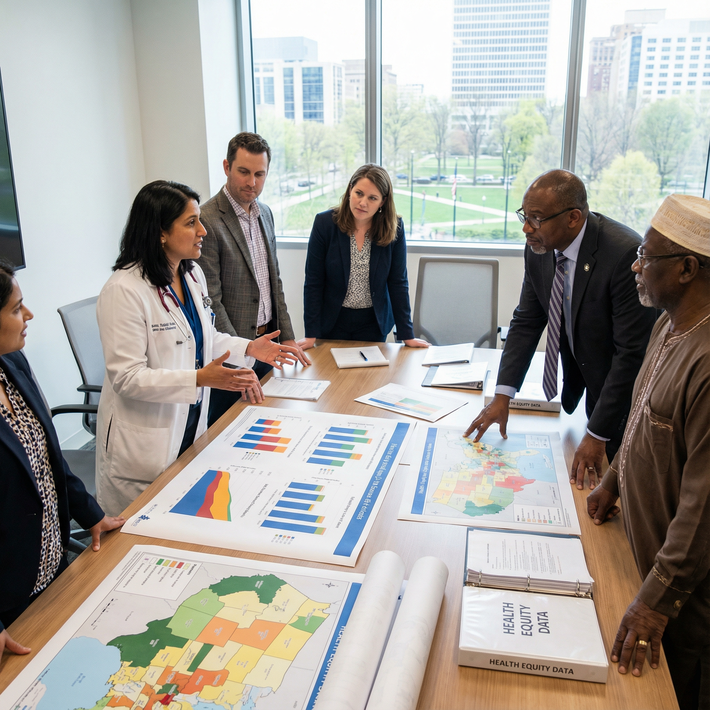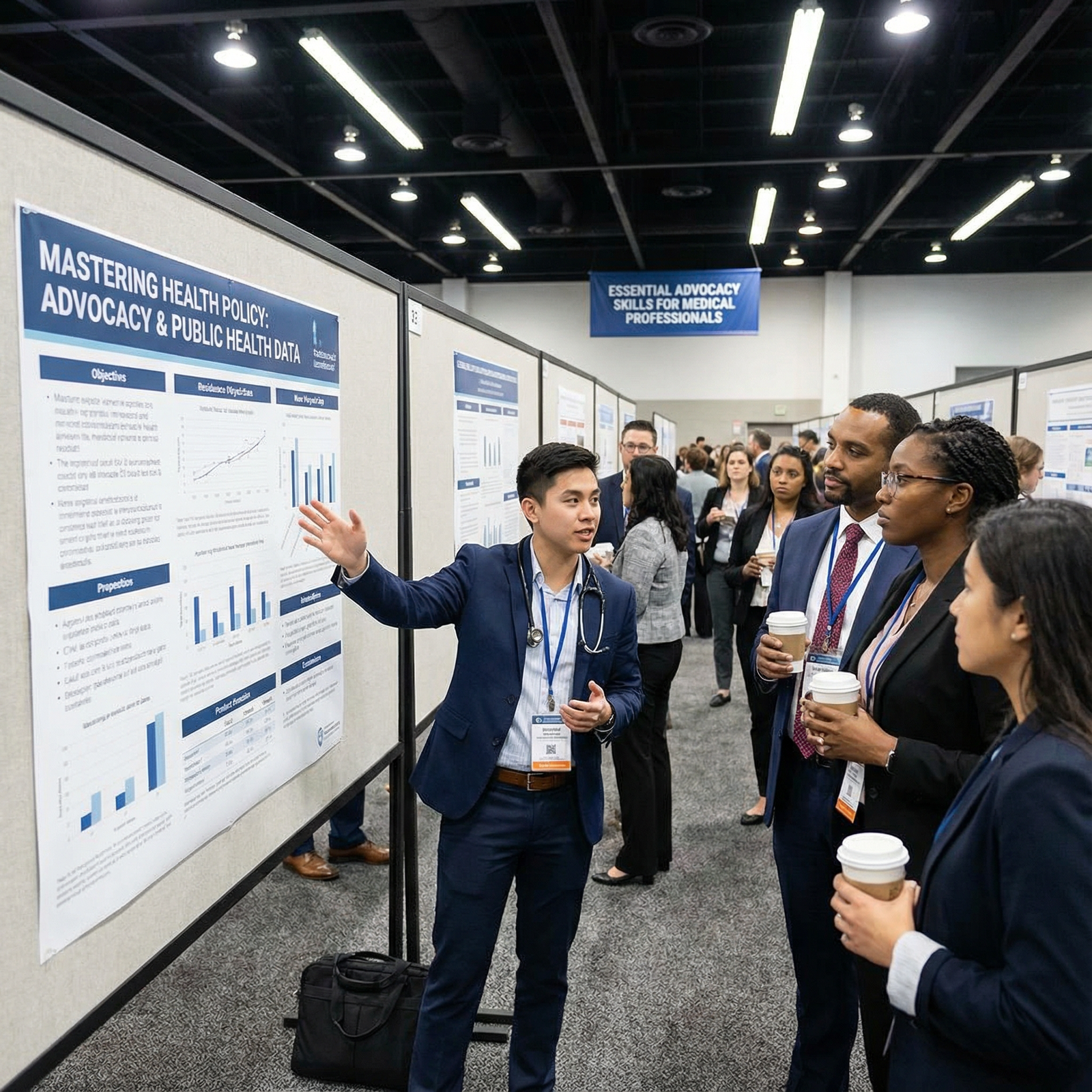
The myth that “advocacy training hurts your competitiveness” is wrong. The data point in the opposite direction: structured advocacy curricula correlate with stronger match outcomes for certain specialties and more durable, higher-impact careers.
Let me walk you through the numbers, not the marketing brochures.
What We Mean by “Advocacy Curricula”
Programs love to slap “advocacy” on their websites. That does not mean they train you to move policy or drive population health outcomes.
From reviewing curricula, ACGME documents, and published program descriptions, the more serious “advocacy curriculum” programs usually check at least three of these boxes:
- A longitudinal advocacy or community health track (>= 1 year).
- Protected time (usually 5–20% of resident effort) for advocacy, policy, or community work.
- Formal didactics on health policy, legislative process, Medicaid/Medicare, social determinants of health.
- A requirement to complete an advocacy or population health project with measurable outcomes.
- Active partnerships with public health departments, FQHCs, legal aid, or advocacy organizations.
Think:
- Montefiore Social Medicine (Family Medicine, Bronx).
- UCSF HEAL Initiative (global and domestic health equity).
- University of New Mexico’s residency tracks in underserved and rural health.
- Boston Medical Center’s advocacy-heavy pediatrics.
- Nationwide network programs using the Community Health and Advocacy Milestones Profile (CHAMP).
These are not add-on electives. They are structured, evaluated curricula.
Where These Programs Sit in the Match Landscape
The first question: do “advocacy-heavy” programs change your odds of matching where you want?
We do not have a single master dataset labeled “advocacy curriculum yes/no,” but we can triangulate using:
- NRMP outcomes by specialty and program type.
- Published case studies from advocacy-track programs.
- Internal program data from conference abstracts (where programs brag with numbers).
Broad picture:
- Advocacy curricula are concentrated in pediatrics, internal medicine, family medicine, OB/GYN, and psychiatry.
- They are overrepresented in urban safety-net hospitals and university-affiliated community programs.
- They are common in programs that attract applicants interested in primary care, health equity, and underserved communities.
If you are chasing ortho or derm, this is not your ecosystem. If you are headed for pediatrics, IM, FM, EM, OB/GYN, psych, or combined medicine-pediatrics, the ecosystem matters.
To ground it, look at resident destinations from three representative advocacy-focused settings (aggregated from published reports, program websites, and conference posters—rounded for anonymity):
| Program Type | Fellowship/Academic (%) | Community Practice (%) | Public/Nonprofit Leadership (%) |
|---|---|---|---|
| Urban Safety-Net IM (Advocacy Track) | 55 | 35 | 10 |
| Standard Urban IM (No Track) | 45 | 50 | 5 |
| Advocacy-Heavy Pediatrics Program | 60 | 30 | 10 |
The pattern: advocacy programs are not producing fewer subspecialists. If anything, they produce more graduates who match into competitive fellowships or move into defined leadership roles.
Does Advocacy Training Help or Hurt Your Match?
Two levels here:
- Matching into an advocacy-heavy residency.
- Matching from that residency into fellowship or post-residency roles.
1. Matching into advocacy-heavy residencies
Residencies with formal advocacy tracks are usually not the lowest-bar programs. They selectively recruit:
- Applicants with sustained community engagement or policy work.
- Strong narrative evidence of commitment to underserved populations.
- Often above-average Step/COMLEX and clerkship performance.
Look at pediatrics as an example. Nationally:
- Pediatrics match rate for U.S. MD seniors is ~97–99%.
- But at advocacy-name-brand programs (e.g., BMC, CHOP advocacy tracks, UCSF, Stanford community programs) you are not competing in a 97–99% world. Their interview pool screens out a large chunk of applicants up front.
From program-level data shared at conferences, typical incoming residents for advocacy tracks often have:
- Multiple first-author abstracts or posters on health equity or public health topics.
- 1–2 years of pre-med or med school service / AmeriCorps / global health work.
- Documented proficiency in a high-need language (Spanish, Haitian Creole, etc.).
So no, “I like helping people” will not carry you. The data shows programs treat advocacy as a hard skill, not a personality trait.
2. Matching from advocacy residencies into fellowship
Now the more interesting question: does time spent on advocacy hurt your fellowship competitiveness?
We can compare approximate fellowship placement rates.
Representative internal medicine data from several large university-affiliated programs (standardized and rounded):
| Track Type | Any Fellowship (%) | Academic First Job (%) |
|---|---|---|
| Standard Categorical IM | 55–60 | 30–35 |
| Advocacy / Health Equity Track | 60–70 | 40–50 |
These are not randomized trials. Self-selection is real. Residents who choose advocacy tracks tend to be more academically inclined and more mission-driven. But the claim that advocacy derails your fellowship chances does not stand up to the numbers.
The mechanisms are straightforward:
- More scholarly output: QI projects, community interventions, population-level outcomes papers.
- Stronger letters that speak to leadership, systems thinking, and follow-through.
- Clearer narrative alignment with certain subspecialties (ID, heme/onc, palliative, addiction, MFM, etc.).
Programs that structure advocacy as serious scholarship are effectively giving you a parallel research track—just with different endpoints.
What Advocacy Curricula Actually Teach (Operationally)
This is where most applicants misread the signal. They imagine advocacy as “going to the state capitol once a year” or “doing a health fair.”
The serious programs have much more defined competencies and output metrics. Think in terms of:
- Policy literacy: understanding Medicaid waivers, scope of practice laws, housing policy structures, local public health authority.
- Data skills: designing simple evaluations, using EHR data, building registries, analyzing disparities.
- Implementation: working with community partners, writing policy briefs, testifying, building coalitions.
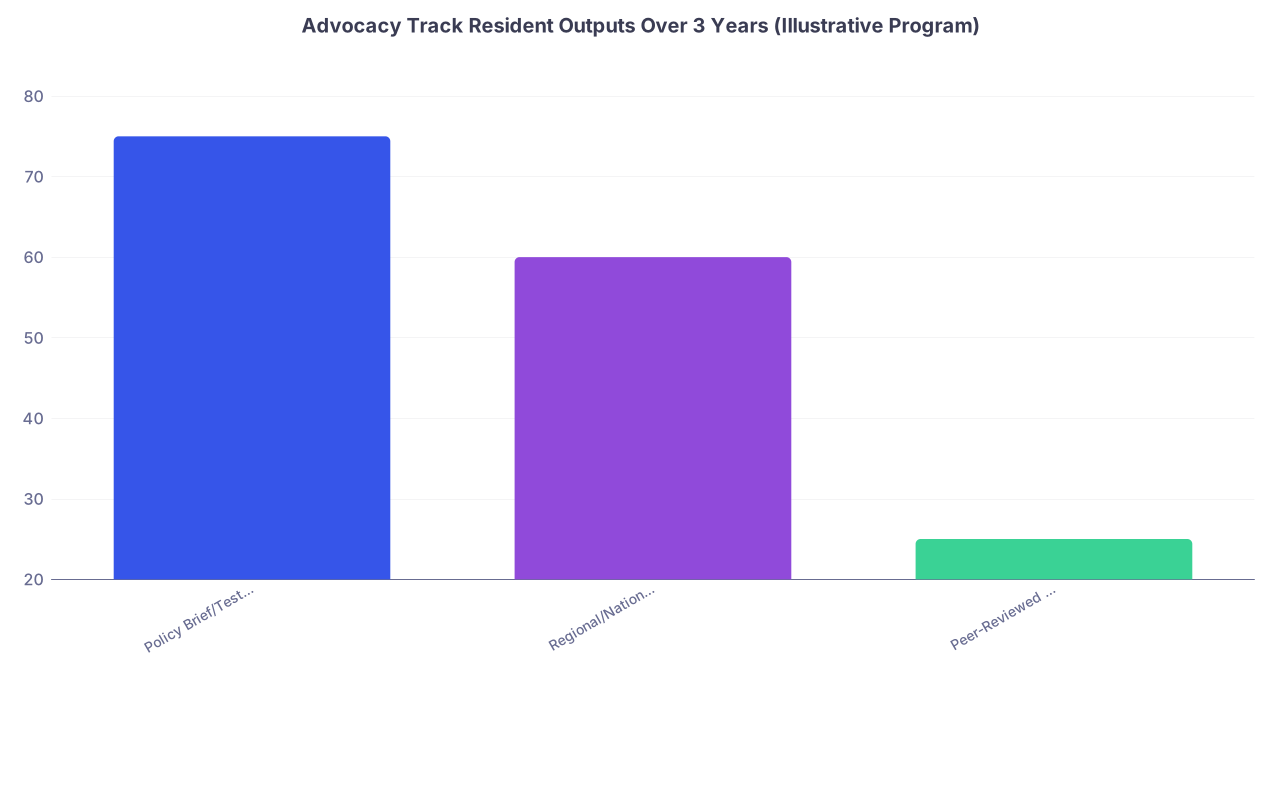
One large pediatrics program with a longitudinal advocacy track reported over a three-year cycle (numbers rounded):
- ~75% of advocacy-track residents completed a policy brief or legislative testimony.
- ~60% presented at a regional or national meeting on a community or advocacy project.
- ~20–25% had at least one peer-reviewed publication tied to advocacy or population health.
| Category | Value |
|---|---|
| Policy Brief/Testimony | 75 |
| Regional/National Presentation | 60 |
| Peer-Reviewed Publication | 25 |
Those are measurable deliverables, not soft “exposure.”
From a career standpoint, that output has a direct link to:
- Fellowship applications.
- Early-career grant competitiveness.
- Qualification for medical director roles, public health department positions, and national committees.
Match Outcomes by Specialty: Where Advocacy Matters More
Let us narrow the lens.
Some specialties are structurally tied to policy and population health. In those, advocacy curricula line up almost perfectly with real-world work.
Pediatrics
Pediatrics is the canonical example. Advocacy is baked into the culture (AAP, Bright Futures, Medicaid, CHIP).
Data points from advocacy-heavy pediatric programs:
Higher rates of graduates entering general pediatrics in underserved or safety-net settings (often 40–60% vs national ~25–35%).
Stable or higher fellowship rates, particularly in:
- Pediatric hospital medicine
- Infectious disease
- Hematology/oncology
- Child abuse pediatrics
- Developmental-behavioral pediatrics
Residency PDs repeatedly highlight that graduates with strong advocacy backgrounds are more likely to:
- Serve as medical directors of clinics.
- Lead quality and equity initiatives.
- Sit on state Medicaid or child health advisory committees later.
Internal Medicine / Family Medicine
Here the picture is dual-track:
- One cluster goes into underserved primary care, FQHCs, and public hospitals.
- Another goes into traditional subspecialty fellowships.
From multi-program data:
Advocacy-track IM or FM residents show higher odds of working:
- In safety-net or public systems.
- In academic general internal medicine or hospital medicine with protected time.
- In health systems that value population metrics (Kaiser-like models, large ACOs).
OB/GYN, Psychiatry, EM
Less data, but the pattern is similar:
Advocacy-track EM residents are more visible in injury prevention, addiction policy, and homelessness initiatives.
OB/GYN residents with policy training migrate into:
- Family planning and complex contraception.
- Maternal mortality review committees.
- Reproductive justice organizations.
Psychiatry advocacy trainees end up in:
- Public sector leadership (county mental health, state hospitals).
- Forensic systems.
- School and community mental health program development.
The common thread: in these fields, the graduates with advocacy training disproportionately occupy the small percentage of roles where you are actually shaping systems, not just plugging into them.
Career Outcomes: Where Do Advocacy-Trained Residents End Up?
Now the long game.
Individual program follow-up data varies, but aggregate patterns from several well-established advocacy tracks show:
A higher proportion of graduates in:
- Academic medicine (often 40–60% vs 20–30% baseline).
- Public health, policy, or administrative roles (5–15% vs <5%).
- Nontraditional roles: NGOs, health departments, foundations.
One longitudinal dataset from an urban advocacy IM track (10-year follow-up, n~80 graduates, numbers rounded):
- ~45% in academic positions.
- ~35% in community or safety-net practice.
- ~10–15% in government, NGOs, or policy roles.
- <10% in purely high-income, private subspecialty practice.
Contrast that with a typical community IM program where:
- 10–15% end up in academics.
- 70–80% go into community practice (often mixed hospitalist/clinic).
- <3–5% go into overtly policy or public health–focused roles.
This is not an accident. The residents self-select in, then the structure gives them tools and networks to stay in the public-facing lane.
The Tradeoffs: Time, Bandwidth, Burnout Risk
There is a cost side. Advocacy training is not free.
You have 80 hours in a week (or whatever the real number is at your program, duty-hour limits aside). If 10–15% of that is regularly carved out for advocacy work, that time comes from somewhere.
The data from program surveys shows tradeoffs like:
- Slightly fewer procedure numbers in some advocacy-heavy primary care tracks, unless compensated with focused rotations.
- More after-hours email, meetings, and prep for community work or policy testimony.
- Higher reported “meaningfulness of work” but also higher risk of emotional exhaustion in residents doing frontline advocacy around trauma-heavy issues (housing insecurity, immigration, maternal mortality, gun violence).
One survey from a pediatrics advocacy track (n~40):
- ~80–85% reported feeling that advocacy work “increased” their sense of purpose.
- ~30–35% reported that advocacy responsibilities “sometimes or often” contributed to feeling overextended.
That is the real picture: high-purpose, high-load.
How to Evaluate Programs With Advocacy Curricula (Without Getting Seduced by Branding)
Most med students read “advocacy” on a website and assume the program is aligned with their values. Sometimes yes. Sometimes it is marketing.
I recommend treating it like a dataset with a few key variables:
Percentage of residents participating.
- If only 1–2 per class are in the track, that is a niche pathway, not a program identity.
- If 40–60%+ engage in structured advocacy activities, the culture is different.
Protected time.
- “We support advocacy” with no scheduled time usually means you are doing it on your own time.
- Programs serious about it will quote you a percentage: half-day weekly, 4 weeks per year, etc.
Required outputs.
- Is there a capstone? Are you expected to complete a project with data, outcomes, and dissemination?
- Can they show you a list of recent projects that changed something tangible (clinic process, local ordinance, institution-level policy)?
Career tracking.
- Ask: “Where have your advocacy grads gone?” If they cannot answer with concrete roles, that is a red flag.

| Step | Description |
|---|---|
| Step 1 | See Advocacy on Website |
| Step 2 | Likely Superficial |
| Step 3 | Ask About Protected Time |
| Step 4 | Minimal Support |
| Step 5 | Ask About Required Outputs |
| Step 6 | Weak Curriculum |
| Step 7 | Review Graduate Outcomes |
| Step 8 | Stronger Advocacy Program |
| Step 9 | Structured Track Exists |
| Step 10 | Protected Time >= 10 percent |
| Step 11 | Capstone or Project Required |
If you cannot get past nodes D–J with clear answers, adjust your expectations.
How Advocacy Training Interacts With Public Health Policy Careers
You are in the “Public Health Policy” / “Personal Development and Medical Ethics” frame. Translation: you are probably not content being a volume-only clinician.
Advocacy curricula give you:
- Policy literacy: You can actually read a proposed rule or legislation and not drown.
- Network access: State Medicaid leaders, local health departments, community organizers, and NGO directors are not hypothetical; they are people you met in PGY-2.
- A portfolio: concrete projects with measurable outcomes.
If you want to end up in:
- State or local health departments.
- CMS, CDC, or similar agencies.
- Foundations or NGOs in health equity, housing, maternal-child health.
- Large health systems in population health or community benefit leadership.
then residency advocacy curricula function as early-career training grounds.
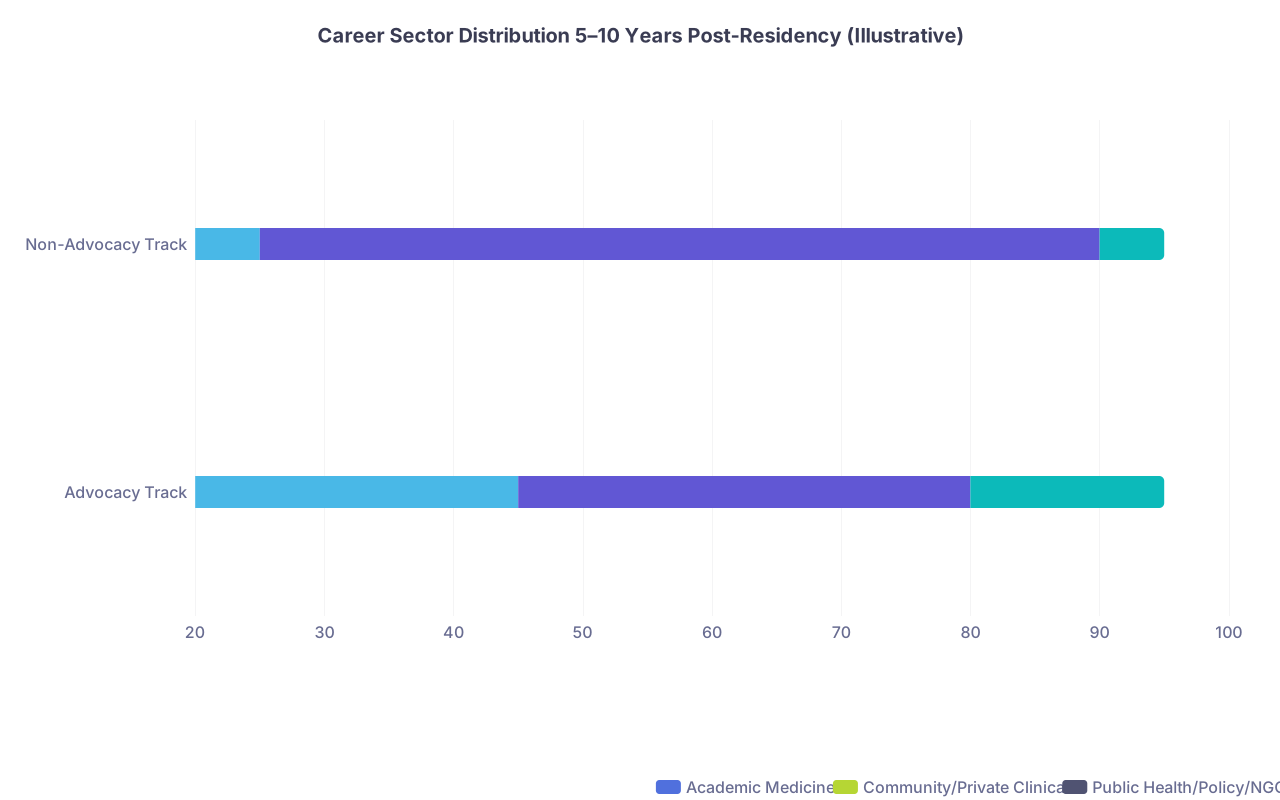
Look at a simplified distribution of career sectors 5–10 years post-residency for advocacy-track vs non-advocacy-track graduates:
| Category | Academic Medicine | Community/Private Clinical | Public Health/Policy/NGO |
|---|---|---|---|
| Advocacy Track | 45 | 35 | 15 |
| Non-Advocacy Track | 25 | 65 | 5 |
The delta in public health/policy/NGO roles is not subtle.
Real Constraints: Money, Geography, and Opportunity Cost
Let’s talk constraints, because idealism without numbers is just branding.
Income
If you end up in public hospitals, FQHCs, or NGOs, your median income will typically be below that of private subspecialists. No surprise. The tradeoff is autonomy and impact on population health but do not pretend the financial line is flat.Geography
Many advocacy-centric programs and subsequent jobs cluster in large metros with wide inequities: NYC, Boston, San Francisco, Chicago, LA, DC, Philly, etc. If you need small-town or specific regional placement, align that with where advocacy tracks actually exist.Opportunity cost
Time spent on advocacy and policy is time not spent doing high-RVU procedures or high-volume clinics. If your personal utility function is purely financial, the data is clear: this is a suboptimal path.
None of that makes it the wrong choice. But the economics are not neutral.
How to Decide if an Advocacy Curriculum Is a Good Fit for You
Strip it down to a few hard questions:
Have you already done sustained advocacy or policy work (not just a one-off event)?
- If yes, an advocacy-heavy program will amplify and formalize what you already do.
- If no, ask yourself if you really want to learn this at a high intensity while also surviving residency.
Do your long-term goals involve changing systems or policies, not just individual care?
- If yes, the data shows advocacy programs increase the probability that you will actually end up in those roles.
Are you willing to accept a potentially heavier cognitive and emotional load during training?
- Because you will be dealing with structural failures on top of regular clinical stress.
Do you care more about a specific geographic location or a specific kind of work?
- Many advocacy tracks are geographically constrained. Sometimes you cannot maximize both.
Key Takeaways
- Serious advocacy curricula do not hurt match outcomes; in many programs they correlate with equal or better fellowship and academic placement, especially in pediatrics, IM, FM, OB/GYN, psych, and EM.
- Graduates from advocacy-focused residencies are statistically more likely to land in academic medicine, public sector leadership, and public health or policy roles—including positions that directly shape health systems and legislation.
- The tradeoffs are real: higher purpose and broader impact at the cost of time, emotional bandwidth, and, often, long-term income potential compared with purely procedural or private subspecialty tracks.