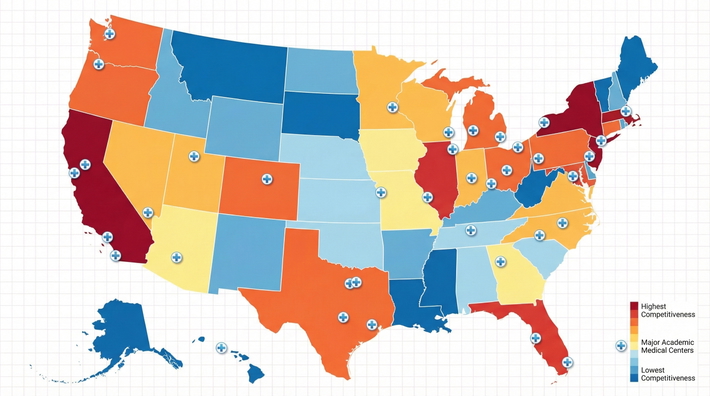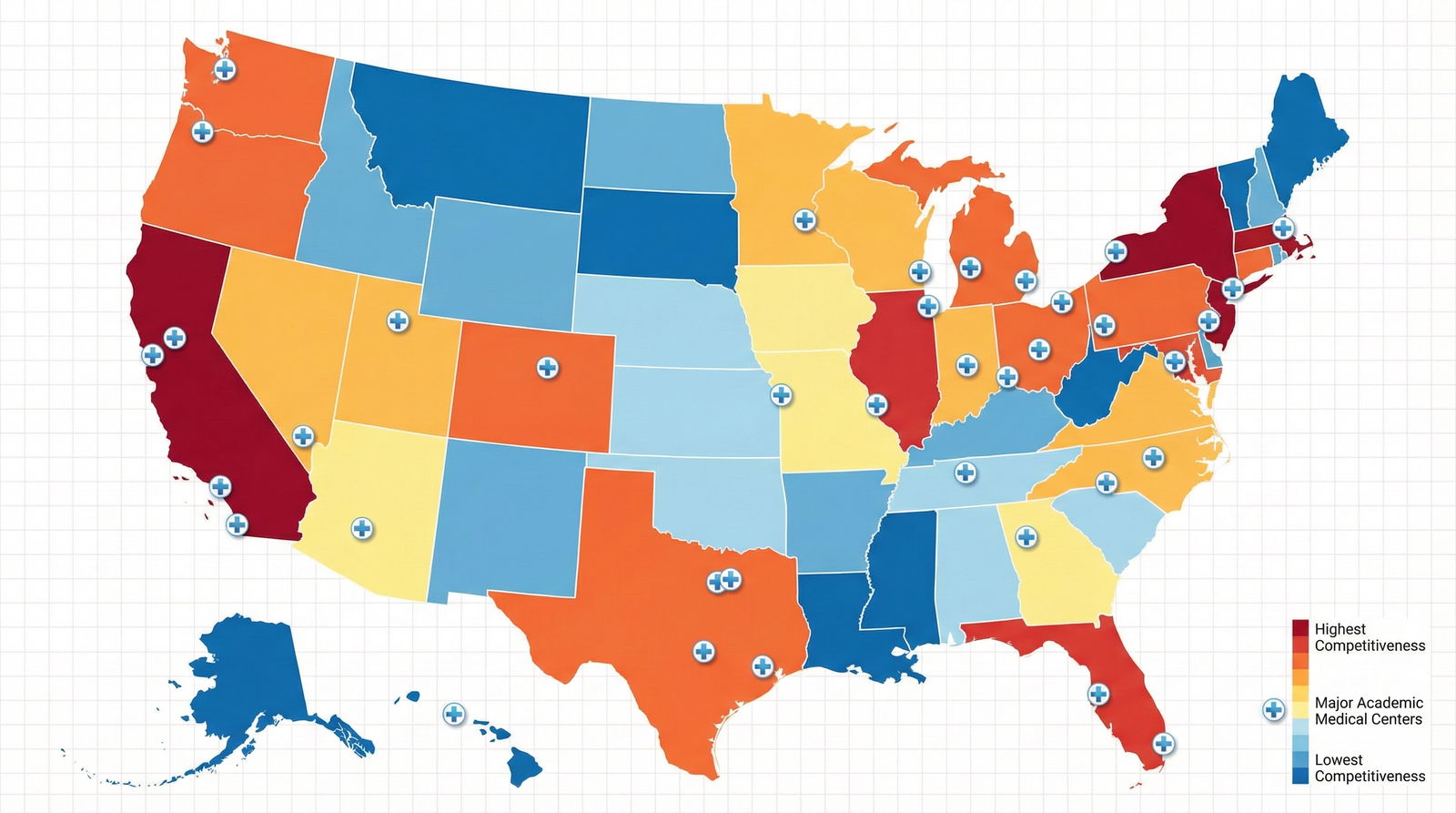
The belief that once you leave your region for med school or residency you “can’t ever match back home” is garbage.
You absolutely can match back home after leaving your region. But it’s not automatic, and if you don’t play it strategically, you really can make it much harder on yourself than it needs to be.
Here’s the real breakdown.
The Core Answer: Yes, But You Need Receipts
Programs care about three things when it comes to “regional fit”:
- Do you have a credible reason to be in this region long-term?
- Can you prove that, not just say it?
- Have you shown real engagement with that region’s institutions and patient population?
If you left the Midwest for med school in California and now want to go back to Chicago for residency, that’s totally doable. Same for Northeast → South, South → West, whatever. People do this every year.
You just can’t show up senior year saying, “I miss real winters” and expect PDs to rearrange their rank list for you. You need:
- Documented ties (family, growing up there, spouse/partner there, prior work/school there)
- Regional experiences (rotations, research, conferences, service, etc.)
- A consistent story that actually makes sense
Programs aren’t anti-non-local. They’re anti-“will leave us after one year.”
How Programs Actually Think About Region
Let’s strip away the mythology. Programs ask essentially:
- Will this person show up if we rank them?
- Will they stay and not transfer out?
- Will they fit our patients, culture, and system?
“Region” is just a shorthand for “probability you’ll stick around and not be miserable.”
, Training history, Med school location, Applicant statement, Away rotations](https://cdn.residencyadvisor.com/images/articles_svg/chart-common-factors-programs-use-to-infer-regional-fit-6454.svg "Common Factors Programs Use to Infer Regional Fit")
| Category | Value |
|---|---|
| [Family ties](https://residencyadvisor.com/resources/regional-residency-guides/how-important-are-regional-ties-emails-to-program-directors) | 90 |
| Training history | 75 |
| Med school location | 70 |
| Applicant statement | 60 |
| Away rotations | 55 |
Roughly how PDs weight these things in their heads:
- Born/raised in region, or lots of family there? Huge plus.
- Significant chunk of life there (college, prior career, military)? Strong plus.
- Multiple away rotations or sub-Is in the region? Very helpful.
- Serious partner/spouse anchored in the region? Very compelling.
- “I like the outdoors/city life/food scene”? Weak. Everyone says this.
So if you left your home region, your job is simple: make your ties and your story so obvious that nobody questions why you want to be back.
Scenario Breakdown: Where You’re Starting From
Let’s walk through the common situations.

1. You grew up there, left for med school, now want to go back
This is the easiest “match back home” scenario.
Programs will usually accept:
- “This is where my whole family is.”
- “I grew up in this health system / city and want to practice here.”
- “I want to be close to aging parents / support network.”
What you should do:
- Put your hometown and state clearly in ERAS (don’t bury it).
- Explicitly mention returning home in your personal statement or geographic preferences.
- Ask your letter writers to reference your desire to return to X region.
- Do at least one away rotation back in that region if possible.
If you do this correctly, you’re not “the California student wanting Midwest” — you’re “the Midwestern kid who went to school in California and wants to come home.” Totally different framing.
2. You have no family there but did college or years of life there
Also very workable.
Examples:
- You’re from Texas, did college in Boston, med school in the Midwest, and now want the Northeast.
- You worked as an MA in Seattle for 4 years, went elsewhere for med school, and want to return.
You need to:
- Emphasize your multi-year history there: college, work, long-standing community connections.
- Bring in specifics: departments you volunteered with, communities you served, mentors from that region.
- If you can get letters from that region, even better.
Programs will buy, “I spent 4 years in undergrad here, my professional network is here, and I plan to settle here long-term.” That’s believable.
3. You have a spouse/partner anchored there
This is one of the strongest anchors. PDs understand dual-career constraints.
You should:
- Explicitly mention your partner’s job or training location in your geographic comments or PS if comfortable.
- Be prepared to talk about it on interview day: “My partner is a software engineer / PhD candidate / lawyer in X city.”
You don’t need to overshare, but hiding this is a mistake. This is exactly the kind of concrete, practical reason PDs like to hear.
4. You just “like the area” and have no real ties
This is the hardest—but still not impossible.
You’ll need to manufacture credible ties:
- Multiple away rotations in the region
- Regional research collaborations
- Presenting at that region’s conferences (e.g., state specialty societies)
- Long-term friends or mentors there (harder to show on paper, but can show in narrative)
You have to be honest with yourself: if you’re totally free geographically and just prefer “good weather and nice restaurants,” you’re competing against a lot of people who actually grew up there. That doesn’t mean you’ll be rejected, but local applicants will get an edge all else equal.
Levers You Can Actually Pull (Step‑by‑Step)
Here’s how to increase your odds of matching back home when you’re physically training somewhere else.
1. Decide your target region early
End of M3 (or PGY‑1 if this is about fellowship) is not early. That’s borderline late.
Earlier is better because:
- You can choose away rotations strategically
- You can line up research or mentors in that region
- You can attend that region’s conferences or virtual events
If you’re M1–M2 reading this, you’re ahead of the game.
2. Build visible, concrete ties
Think in terms of “receipts” a PD could see on your application:
- Rotations: At least one in the target region, ideally at a program type you actually want (academic vs community).
- Research: Any project with a PI or co-author in that region.
- Presentations: Posters or talks at region-specific or state-specific meetings.
- Mentorship: A mentor who is known in that region and will say, “They want to train here.”
Document this so it doesn’t just live in your brain.
3. Use signaling tools wisely
Use every structured signal you’re given:
- ERAS geographic preferences: Don’t be “open to all regions” if you truly have a region you’re trying to get back to. Prioritize.
- Supplemental applications (like for IM, EM, etc.): Where they ask about geography, give specific reasons.
- Personal statement: Doesn’t need to be a love letter to the city, but one clean paragraph that anchors you to that region helps.
Bad: “I’ve always wanted to live on the East Coast.”
Better: “I grew up in North Carolina, did undergrad in Virginia, and my long-term goal is to practice in the Mid-Atlantic region near my family.”
4. Network like an adult, not like a spam bot
Cold emailing 40 PDs is annoying and useless.
What actually works:
- Ask your current faculty if they know anyone in your target region. They often do.
- Present at a regional conference and meet faculty there.
- Do an away rotation and actually perform well. Show up early, be reliable, be teachable.
Then, close the loop:
- Send a short, specific follow-up: “I’m applying this year and will be listing your program highly given my ties to X region.”
Specialty & Competitiveness: How Much Does Region Matter?
Let’s be blunt: some specialties and regions are bloodbaths.
| Situation | Difficulty | Why |
|---|---|---|
| Home region + non-competitive specialty | Low | Local ties + available spots |
| Home region + mid-tier specialty | Moderate | Ties help but not decisive |
| No ties + highly competitive specialty | High | Programs favor known quantities |
| Strong ties + mid-tier academic programs | Moderate | Very realistic with good app |
| Strong ties + very elite programs | Variable | Ties help but stats & CV drive outcome |
- Primary care in your home state? Very doable, ties matter a lot.
- Competitive surgical subspecialty in a saturated coastal city? Your ties help, but scores, research, and letters will dominate.
- For mid-competitive fields (IM, general surgery, EM, anesthesia), local ties can be a decisive tiebreaker among otherwise similar applicants.
So yes, you can match back home—but don’t expect geography to compensate for a massively weak application in a hyper-competitive specialty.
Red Flags and Mistakes That Kill Your Story
Couple of ways people sabotage themselves trying to match back to their region:
Inconsistent story
You tell one program you want to be in the Midwest “to be near family,” but your ERAS geographic preference says “West only,” and your personal statement talks about “my dream of living on the West Coast.” PDs notice.No proof of interest
You applied to 20 programs in your “home region” but didn’t rotate there, don’t know anyone there, and can’t name a single local health issue or community you care about there beyond “sports teams” and “food.” That reads as fake.Treating geography like a negotiation chip
Telling a program “I’ll definitely rank you first if you interview me, I’m from here” is a good way to annoy people. Show, don’t bargain.Last-minute pivot
Zero actions for three years, then in September of M4: “Actually I want to go back home.” You might get away with it in less competitive scenarios, but you’ve wasted a lot of leverage.
Quick Reality Check: How Often Do People Actually Match Back?
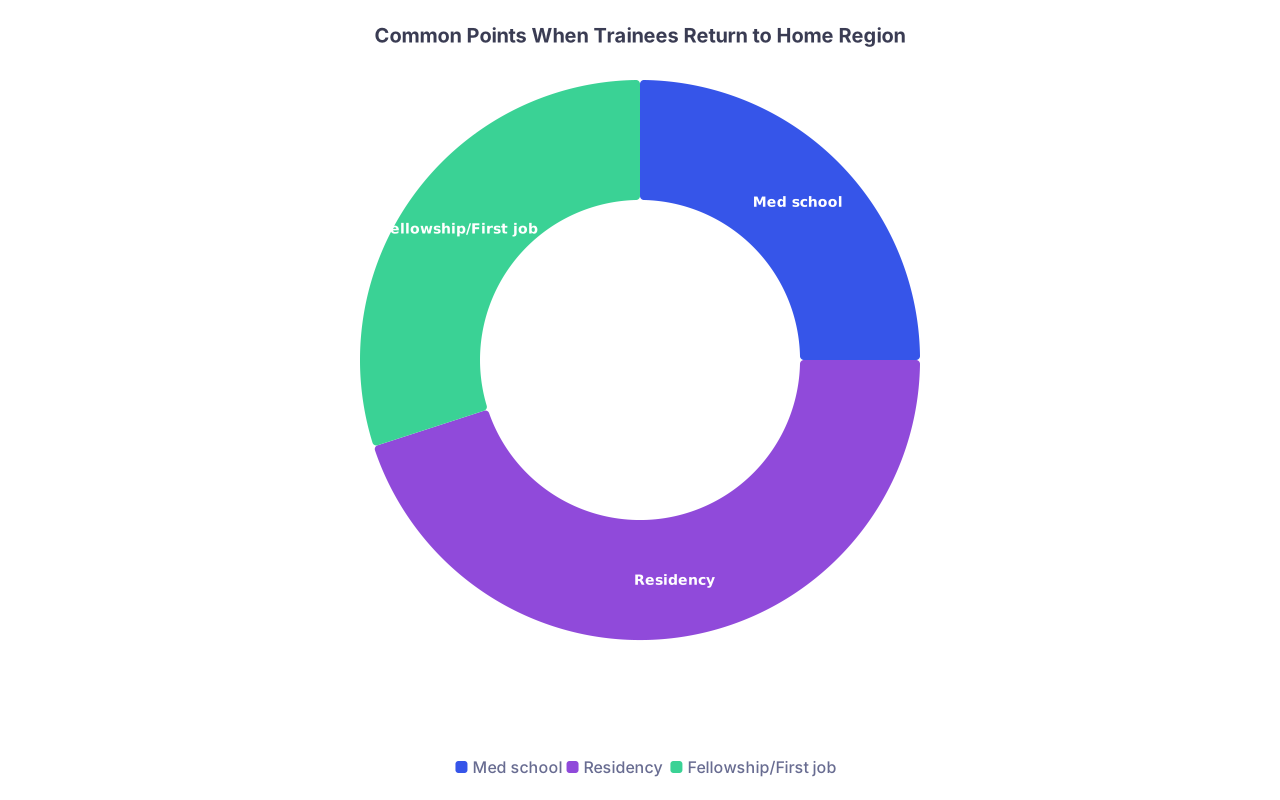
People go “back home” at 3 main points:
- For medical school
- For residency
- For first job / fellowship
| Category | Value |
|---|---|
| Med school | 25 |
| Residency | 45 |
| Fellowship/First job | 30 |
The biggest shift back to a home region tends to be at residency and first job, not med school. That means you’re not some bizarre outlier for wanting to swing back after leaving. You’re normal.
The people who fail to match back home usually:
- Don’t have competitive enough applications for the local market, or
- Did nothing to show commitment to that region and treated it like an afterthought
Not because they “left and can’t ever come back.”
If You’re Already Late In the Game
Let’s say you’re M4 in September or a PGY‑3 aiming for a fellowship and just waking up to this.
Here’s a pragmatic salvage plan:
- Scrub your application and make sure your ties are obvious (hometown, prior schools, family situation).
- Use your personal statement addendum / geographic preference to clearly state your desire to return and why.
- Ask one or two letter writers to name the region explicitly in their letter: “They are committed to returning to the Southeast to practice.”
- When you interview, keep your story simple and consistent: “I trained away, but my long-term goal is to build a career back home near my family / partner / community.”
You might not land the “dream” prestige program in your region that mostly takes internal candidates, but matching back to the region at a solid program is still very realistic.
Bottom Line
You can absolutely match back home after leaving your region. It’s not some one-way door.
The real questions are:
- Have you built visible ties to that region?
- Is your story coherent and believable?
- Does your overall application actually match the competitiveness of that region and specialty?
Do those three things well, and you’re not asking for a miracle. You’re just asking for something the match already gives people every year.
FAQ: Matching Back Home After Leaving Your Region
1. Do programs care more about my med school region or where I grew up?
Where you grew up and where your family/partner lives usually carry more weight than where your med school is. Med school shows where you were, not necessarily where you want to stay. Hometown and family are stronger long-term anchors from a PD’s perspective.
2. If I didn’t do any away rotations in my home region, am I screwed?
No, not automatically. Away rotations are useful evidence but not mandatory. If you have strong ties (family, childhood, previous schooling) and a solid application, you can still match back home. You’ll just need to highlight those ties more clearly and use your essays and interviews to make the case.
3. Should I mention wanting to be near family in my personal statement?
Yes, if it’s true and actually central to why you want that region. Don’t make your entire statement about geography, but one clean, honest paragraph about family or support systems anchoring you to a region is helpful. Programs like stable residents who are less likely to leave.
4. How many programs should I apply to in my target region vs other regions?
Depends on your competitiveness, but for most people: heavily favor the region you actually want, then add a safety net of programs in other regions you’d genuinely attend. Don’t put all your eggs in a single saturated city. Think regionally (e.g., “Midwest” not just “Chicago”).
5. Does this all change for fellowship instead of residency?
Fellowship cares a bit less about “home” and more about your niche, research, and letters. But region still matters if you want to ultimately practice there. Doing fellowship near your target practice region is a strong move, because most people get jobs near where they trained last.
6. If my stats are weak for my home region, should I still try or just give up?
You should still try—but be realistic. Apply broadly inside the region (include community and mid-tier programs, not just the big-name academic centers), and apply outside the region too. Ties can help break ties between similar applicants; they won’t magically erase big gaps in scores, grades, or letters.
Key points:
- Yes, you can realistically match back home after leaving your region—if you build visible ties and tell a consistent story.
- Region is a tiebreaker, not a miracle worker; your overall application still has to be competitive for that market.