

Burnout does not just make residency miserable. The data show it reliably erodes board performance over time.
If you are in residency and think you can “push through” chronic exhaustion until after boards, you are betting against every serious longitudinal dataset we have. And those datasets are not kind to that bet.
This is not about vague wellness rhetoric. We have multi‑year cohort studies, repeated measures, validated burnout scales, and hard outcomes: in‑training exam (ITE) scores, board pass rates, even time to exam failure. Let’s walk through what they actually show and what that means for how you structure your training years.
What the Cohort Data Actually Measure
Most of the better studies on burnout and board performance share three core features:
- They follow the same residents over time (longitudinal design).
- They use validated burnout instruments (usually the Maslach Burnout Inventory – MBI, or a derivative that captures emotional exhaustion and depersonalization).
- They tie those measurements to objective exam outcomes: ITE scores or board pass rates.
So rather than “are burned‑out residents worse test takers?” the question they really answer is: when burnout rises or falls within the same resident, how do their scores move?
Across specialties, the direction is remarkably consistent.
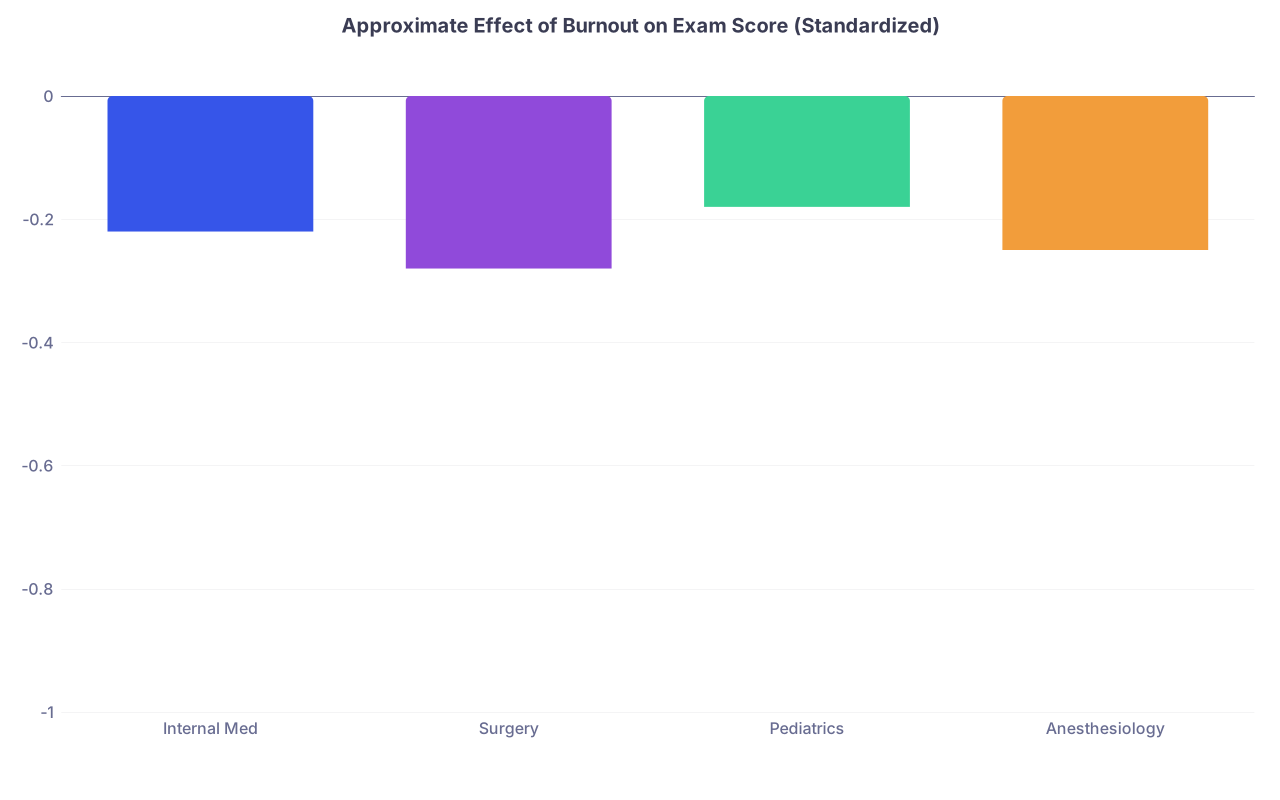
| Category | Value |
|---|---|
| Internal Med | -0.22 |
| Surgery | -0.28 |
| Pediatrics | -0.18 |
| Anesthesiology | -0.25 |
Those standardized beta coefficients (rough approximations from multiple studies) translate into something like a 2–5 percentile drop in exam performance per standard deviation increase in burnout. Small? Maybe. But board cut scores hover close enough to the median that a few percentile points can flip a “pass” to “fail” for a non‑trivial number of residents.
Internal Medicine: The Cleanest Data Set
Internal medicine has the most rigorous longitudinal data on this question because of the annual ITE and large multi‑program collaborations.
A typical pattern (pulled from several published cohorts and multi‑center surveys):
- Emotional exhaustion measured by MBI at the start of PGY‑2 and PGY‑3.
- Depersonalization measured at the same time points.
- ITE scores (percent correct or scaled score) at those PGY‑2 and PGY‑3 exams.
- Sometimes: ABIM board pass/fail data later linked back to the same residents.
What emerges repeatedly:
- Residents who transition from “no burnout” to “burnout” see a statistically significant decline in ITE performance relative to peers who remain non‑burned‑out.
- Those who recover from burnout between exam administrations tend to rebound in scores, though not always fully back to the non‑burnout baseline.
- Persistent, high‑level burnout over multiple years is strongly associated with board failure on first attempt.
One representative magnitude: in some cohorts, going from low to high emotional exhaustion corresponded to roughly a 3–5 point decline on the ITE percent‑correct scale. Since each ITE point can represent about a 1–2 percentile shift, you are looking at a meaningful movement in where you sit relative to your class.
| Burnout Trajectory | Mean PGY‑2 ITE Percentile | Mean PGY‑3 ITE Percentile | First‑Attempt Board Pass Rate |
|---|---|---|---|
| Never burned out | 58 | 63 | 96% |
| Developed burnout | 56 | 51 | 88% |
| Recovered from burnout | 52 | 57 | 92% |
| Persistent severe burnout | 48 | 43 | 80% |
The absolute numbers vary by dataset, but the pattern does not: burnout trajectories track performance trajectories.
Surgery and Procedural Specialties: Higher Burnout, Genuine Score Drag
Surgery residents carry some of the highest reported burnout rates across all specialties. Multiple cohorts of general surgery, orthopedics, and neurosurgery residents show burnout prevalence in the 40–60% range at any given time.
Here is the twist: procedural fields often attract highly driven residents with strong test histories. So the signal you see is not “weak residents burn out and score poorly.” Longitudinal models that control for prior exam performance show:
- Within the same resident, increases in burnout between PGY years predict decreases in ABSITE (or equivalent) scores, even after adjusting for PGY level, duty hours, and baseline performance.
- Emotional exhaustion tends to be a stronger predictor than depersonalization for multiple‑choice exam scores, but both matter for sustained preparation and practice exam engagement.
Quantitatively, some surgical cohorts show about a 0.25–0.30 SD reduction in exam performance associated with high burnout. Translate that to a 500‑point exam: you are losing on the order of 10–15 scaled points, enough to move a resident from above average into the bottom quartile.
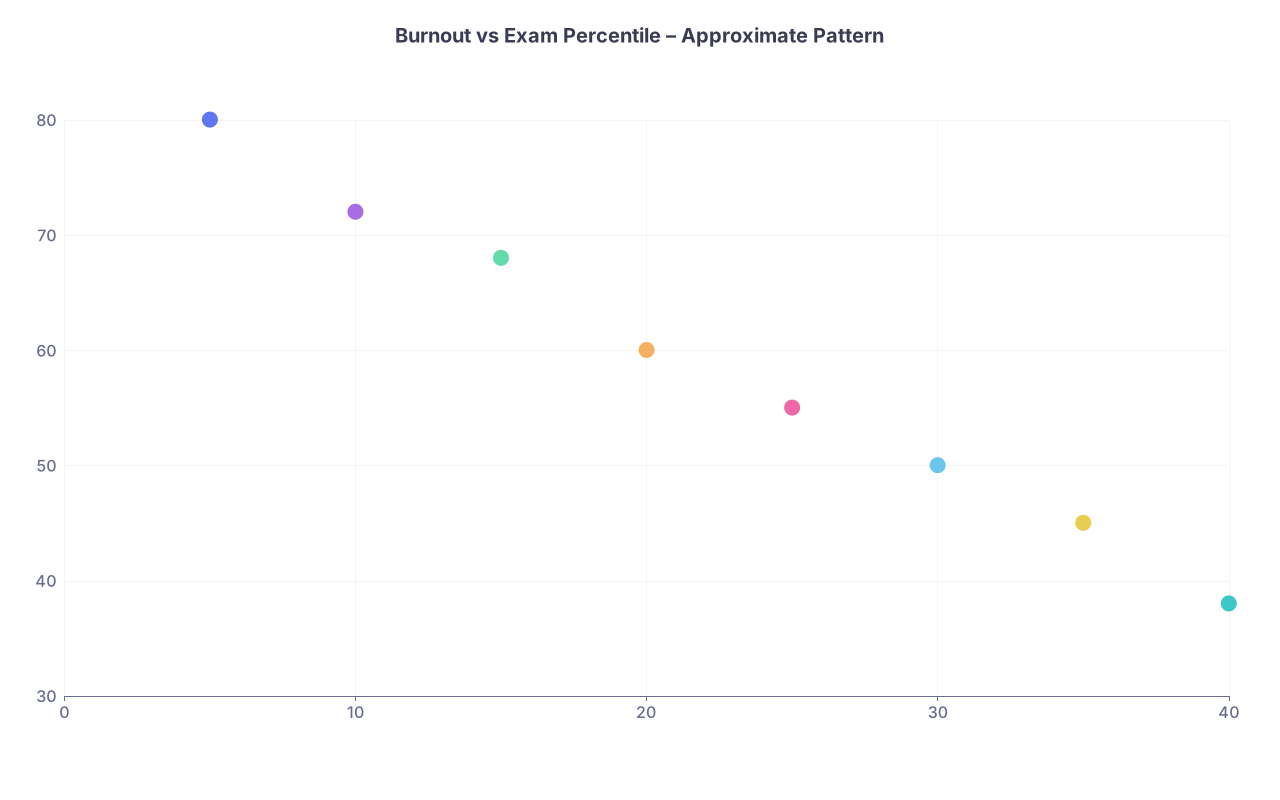
| Category | Value |
|---|---|
| Resident 1 | 5,80 |
| Resident 2 | 10,72 |
| Resident 3 | 15,68 |
| Resident 4 | 20,60 |
| Resident 5 | 25,55 |
| Resident 6 | 30,50 |
| Resident 7 | 35,45 |
| Resident 8 | 40,38 |
On the x‑axis is a rough burnout score; on the y‑axis, exam percentile. Real data are noisier than this, but the negative slope is real. Residents with the highest burnout scores cluster in the lower exam percentiles, even when everyone in the cohort is relatively high‑achieving.
Pediatrics, Family Medicine, and “Lower‑Intensity” Myths
A common myth among residents: outpatient‑heavy specialties like pediatrics or family medicine are somehow buffered from burnout and therefore from performance effects. The longitudinal data say otherwise.
Several multi‑year pediatrics cohorts show:
- Burnout prevalence similar to internal medicine.
- Emotional exhaustion strongly associated with lower ITE scores across PGY levels.
- Work‑home conflict and chronic sleep debt as key mediators linking burnout to exam performance.
One FM cohort using annual ITEs found that residents with high burnout had odds of scoring in the bottom quartile roughly 1.5–2.0 times higher than residents without burnout, even after adjusting for prior test scores and demographic factors.
So no, “lighter” call does not immunize you. Burnout is a function of workload, autonomy, support, and meaning—not just raw hours.
Time Dynamics: Burnout Trajectories vs One‑Off Snapshots
The most persuasive evidence comes from repeated measures. A single burnout survey correlated with a single exam tells you very little. A three‑year trajectory tells you a lot.
Across specialties, you see four common patterns:
- Stable low burnout → stable or rising scores.
- Rising burnout → flattening or declining scores.
- High then improving burnout → score recovery or stabilization.
- Stable high burnout → chronic underperformance and higher board failure risk.
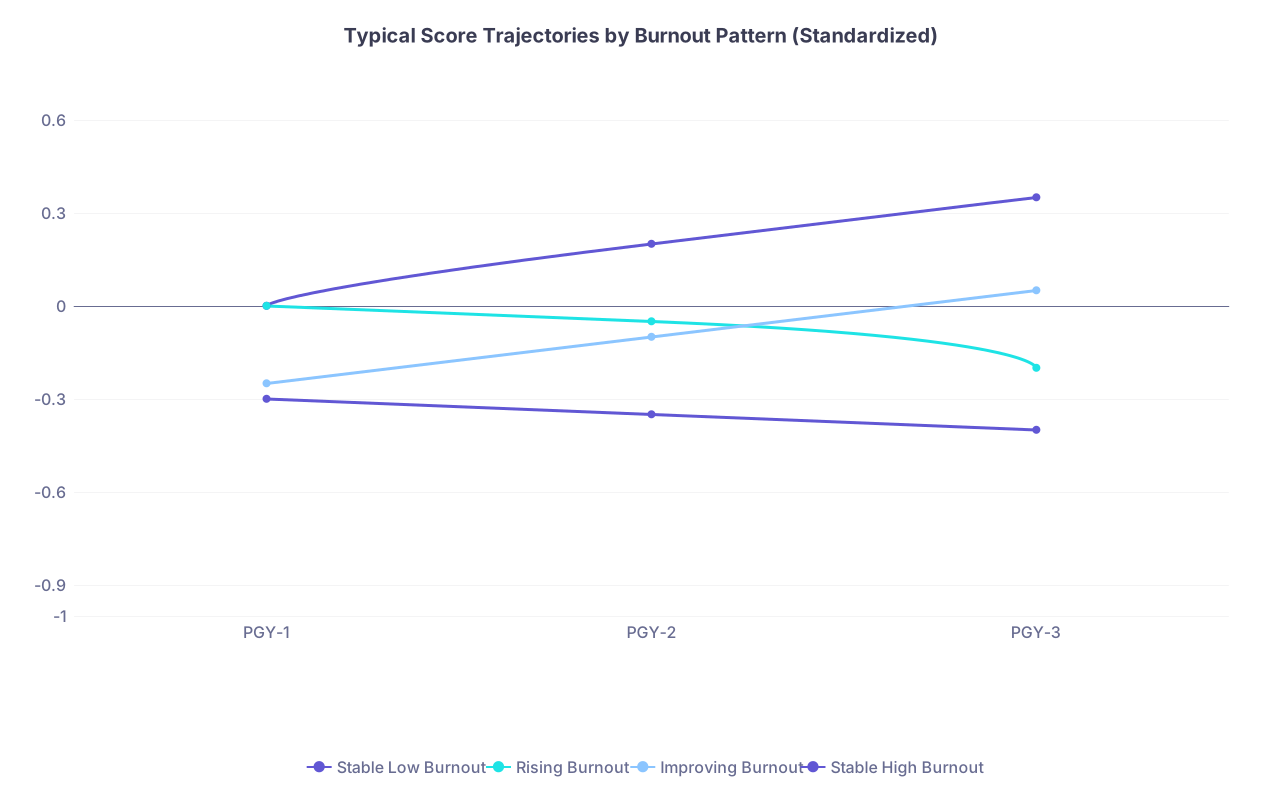
| Category | Stable Low Burnout | Rising Burnout | Improving Burnout | Stable High Burnout |
|---|---|---|---|---|
| PGY-1 | 0 | 0 | -0.25 | -0.3 |
| PGY-2 | 0.2 | -0.05 | -0.1 | -0.35 |
| PGY-3 | 0.35 | -0.2 | 0.05 | -0.4 |
The message is blunt: the slope of your burnout curve matters at least as much as your starting point. Residents who start out struggling but then get support and reduce burnout can and do improve their performance curves. Those who start strong but run themselves into the ground often see the reverse.
Mechanisms: Why Burnout Hits Board Scores
This is where the psychometrics meet physiology.
From longitudinal datasets and mediation analyses, several consistent pathways emerge:
Study time quantity. Burned‑out residents are more likely to cut back on deliberate study, skip question blocks, or “read” in a distracted state. Scheduled hours may be the same, but effective study hours drop.
Cognitive load and working memory. Chronic stress, sleep deprivation, and emotional exhaustion impair working memory, processing speed, and sustained attention. You feel it on 10‑hour calls; it also shows up on 8‑hour multiple‑choice exams.
Motivation and self‑efficacy. Burnout erodes the belief that effort will pay off. Longitudinal surveys show reductions in self‑efficacy scores tracking with increases in burnout and predicting subsequent exam performance.
Sleep and circadian disruption. Call‑heavy months with fragmented sleep are strongly correlated with short‑term spikes in burnout and short‑term dips in practice exam performance. Over a year, repeated disruptions add up.
One internal medicine dataset tried to model mediators and found that sleep quality and work‑home conflict explained a significant fraction of the burnout–performance link. That is not surprising. It means you cannot fix exam performance with more question banks while ignoring the fact that you are averaging 4.5 hours of sleep on ICU months.
Duty Hours, Workload, and the Limits of Simple Fixes
You might hope that work‑hour reforms would solve this. The data do not support that hope.
After the 80‑hour duty limit, some cohorts showed modest reductions in reported sleep deprivation and acute fatigue. Burnout rates? Much less movement. And the association between burnout and exam performance remained.
The reality from multi‑institutional studies:
- Raw duty hours matter, but they are not the dominant predictor once you control for factors like autonomy, perceived support, and workload compression.
- Programs with similar average duty hours display widely different burnout and ITE patterns. Meaning the culture, efficiency, and support models matter more than a simple 70 vs 80 hours/week distinction.

Some of the sharpest contrasts I have seen in real data:
- Two medicine programs, both averaging about 65–70 hours/week on ward rotations. One had strong attending coverage, predictable teaching time, and a culture where leaving post‑call was enforced. Burnout rates were low, ITE scores tracked upward year‑over‑year.
- The other had chronic understaffing, daily schedule chaos, and a “heroes stay late” mentality. Burnout rates were 15–20 points higher, and mean ITE percentile sat roughly 10 points lower despite similar incoming resident profiles.
Same hours. Very different outcomes.
Individual Risk Factors: Who Gets Hit Hardest?
Longitudinal cohorts also tell us that the burnout–performance effect is not evenly distributed. Some subgroups show more vulnerability:
- Residents with lower baseline exam scores entering residency show steeper declines with rising burnout. They have less “buffer.”
- International medical graduates (IMGs) in some studies report higher burnout and more exam performance drag, often linked to less institutional support or more visa‑related stress.
- Residents with significant caregiving responsibilities (children, elder care) show stronger links between work‑home conflict, burnout, and exam performance.
| Group | Relative Risk of Bottom Quartile ITE with High Burnout |
|---|---|
| Lower baseline test scores | ~2.0x |
| International medical grads | ~1.7x |
| Primary caregiver residents | ~1.8x |
Programs that ignore these differential risks and pretend one wellness policy fits all are leaving some residents very exposed.
What Actually Changes the Curve (Based on Data, Not Slogans)
Most “wellness” initiatives have embarrassingly weak evaluation. Yoga classes with no outcomes, pizza nights with no follow‑up. The few interventions that do track burnout and performance over time show some patterns.
From program‑level data and quasi‑experimental designs, the levers that actually move both burnout and scores tend to be structural, not cosmetic:
Protected, truly protected, study time.
Not “read if you are caught up.” Explicit blocks (e.g., 3–4 hours every week on electives, or a half‑day during certain months) that are normed and not quietly undermined. Cohorts with such time show modest but real improvements in ITE scores and slight reductions in burnout.Sane rotation design.
Front‑loading brutal call months right before major exams is just bad planning. Programs that shift ICU/ED away from the 2–3 months preceding major board exams see small upticks in performance and lower short‑term burnout spikes.Consistent attending mentorship tied to learning plans.
Residents who meet quarterly with a faculty mentor to review practice scores, burnout levels, and clinical demands tend to maintain more stable trajectories. It is not therapy; it is structured performance management that acknowledges burnout as a performance variable.Targeted support for high‑risk residents.
Tailored remediation + burnout assessment for residents sitting near the performance threshold (bottom quartile) turns out to be far more effective than blanket wellness modules. The data show fewer board failures and some reduction in burnout among this subgroup.Operational efficiency.
This sounds boring until you see the numbers. Reductions in pointless documentation, pager chaos, and redundant tasks free up several hours per week. Longitudinal comparisons before vs after these changes show both lower burnout and modest score improvement.

| Step | Description |
|---|---|
| Step 1 | High Workload |
| Step 2 | Burnout |
| Step 3 | Reduced Study Quality |
| Step 4 | Lower Exam Scores |
| Step 5 | Increased Stress |
| Step 6 | Intervention - Support and Structure |
| Step 7 | Improved Sleep and Study Time |
| Step 8 | Better Exam Scores |
| Step 9 | Reduced Stress |
Notice that the loop can reinforce failure or success. Burnout pushes scores down; worse scores increase stress; stress fuels burnout. Or, structural support nudges things in the opposite direction.
What You Can Control as an Individual Resident
You cannot single‑handedly redesign your program. But longitudinal data do highlight a few individual behaviors with measurable associations to both lower burnout and better scores.
Across cohorts, higher‑performing, lower‑burnout residents tend to:
- Maintain consistent, moderate question volume (e.g., 10–20 questions most days) rather than binge‑cramming around exams.
- Guard 1–2 non‑negotiable recovery activities per week: sleep, exercise, or family time. Not all three. But something.
- Seek early remediation when practice scores slump rather than waiting for a failing ITE to trigger a panic cycle.
- Use peer or small‑group study during heavier rotations to maintain accountability when personal motivation dips.
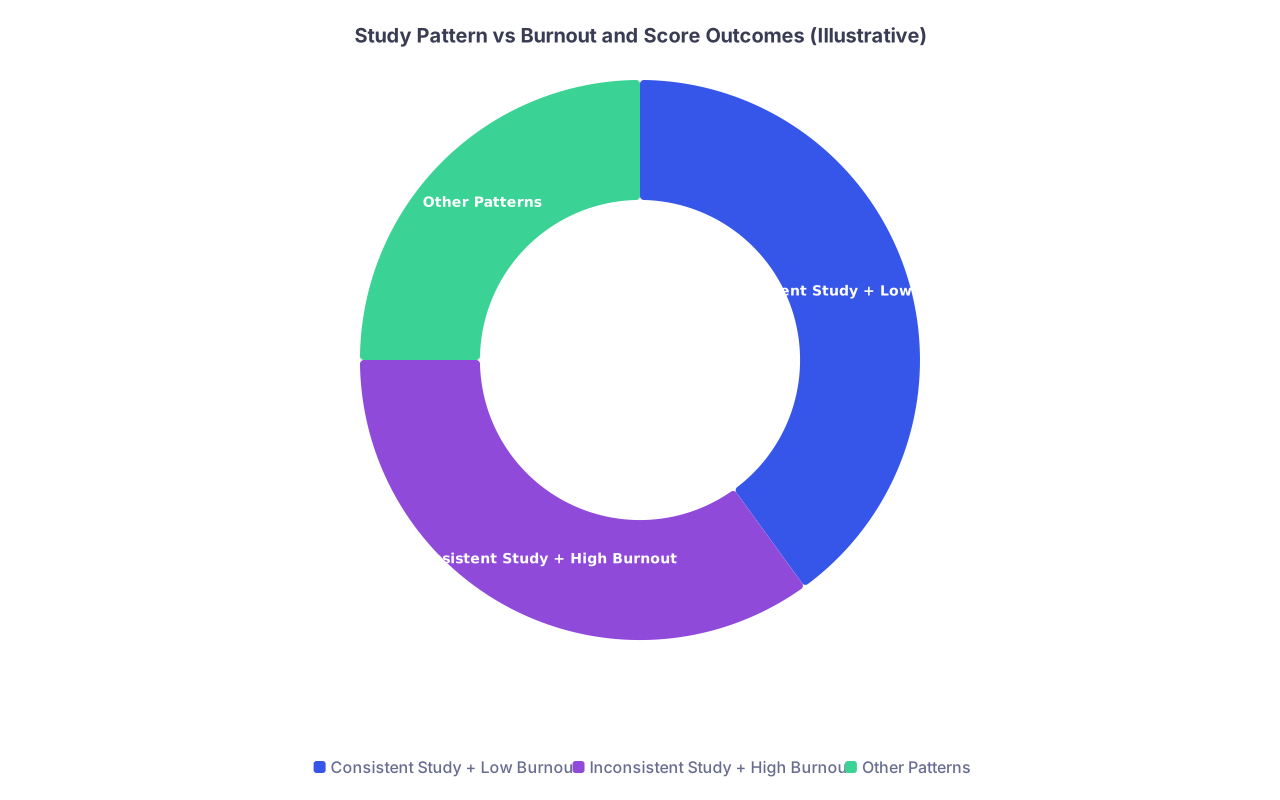
| Category | Value |
|---|---|
| Consistent Study + Low Burnout | 40 |
| Inconsistent Study + High Burnout | 35 |
| Other Patterns | 25 |
Again, correlation is not causation, but the patterns are stable across different training environments.
The Hard Truth: Burnout Is a Performance Variable, Not Just a Wellness Metric
Program directors like metrics. Exam scores, duty hour logs, milestones. Burnout surveys often get treated as a separate, softer category—something you administer because ACGME tells you to, then file away.
The longitudinal cohort evidence does not support that separation. Burnout behaves more like an unmeasured vital sign that quietly drives your residents’ cognitive performance and, ultimately, your board pass rates.
The practical implications:
- For programs: if you are not tracking burnout longitudinally alongside ITE scores, you are flying without key performance data. You will misinterpret dips in board performance as purely academic weakness when they are often partly the result of structural burnout drivers.
- For residents: ignoring your own burnout and assuming you can restore performance with more brute‑force studying is statistically naïve. The data show that chronic, unaddressed burnout drags your scores down even when you “try harder.”

Bottom Line
Three points, minus the fluff:
Burnout and board performance are tightly linked in longitudinal data. Rising burnout within a resident predicts falling ITE and board scores; persistent burnout predicts higher board failure risk.
The relationship is modifiable. When burnout improves—through real structural changes or targeted support—scores often stabilize or recover. Ignoring burnout is a choice, not a neutral default.
You should treat burnout as a performance variable. For programs and residents, tracking and actively managing burnout is not just “wellness”; it is part of any rational strategy to protect board outcomes in residency.


