
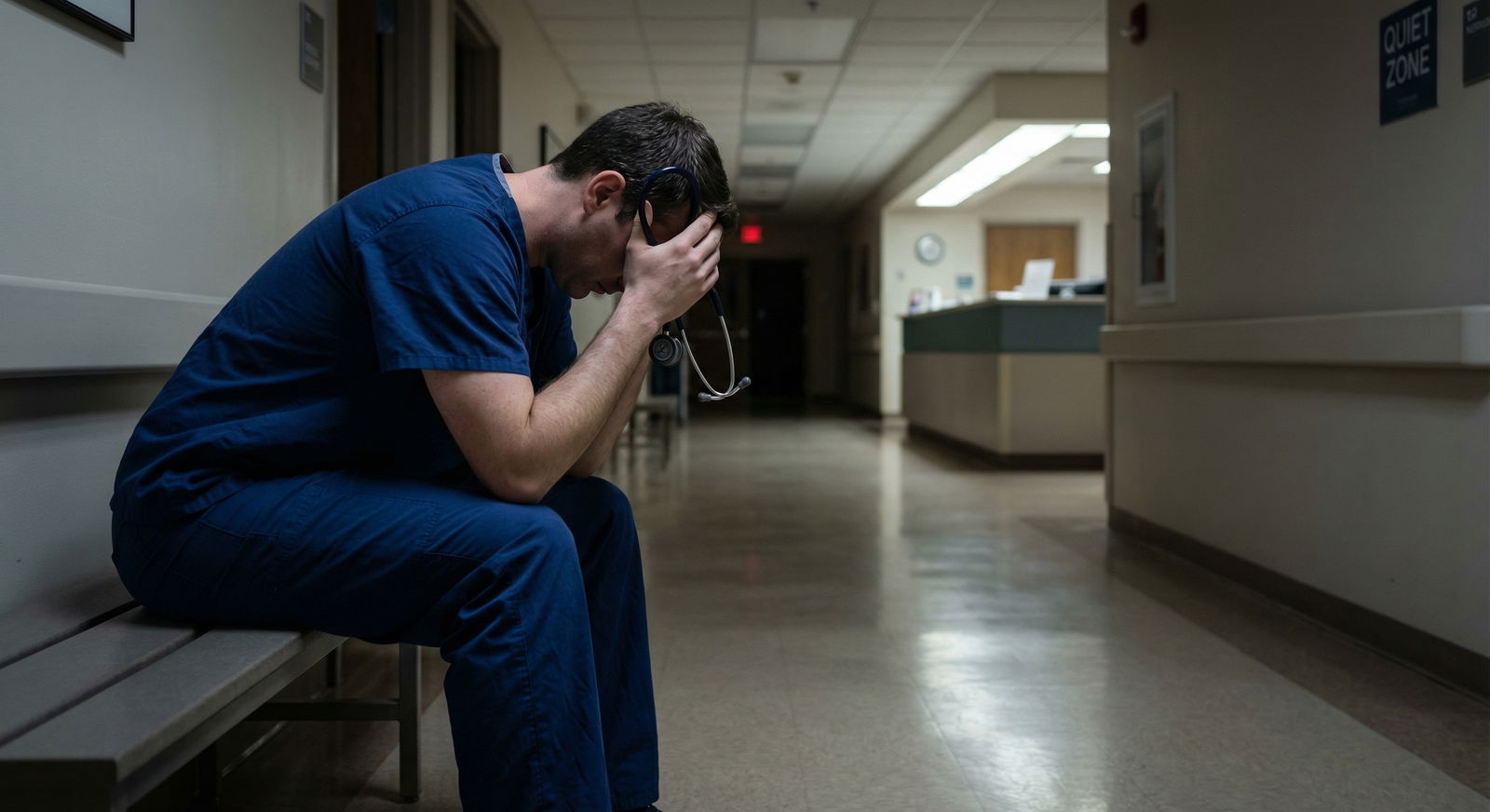
The biggest lie about residency burnout is that “you just need more support from your co-residents.”
If you’re the only resident in your specialty track, that advice is useless.
You are not just tired. You are structurally outnumbered. No built‑in peer group. No one to split calls with. No one who “just gets it” on your exact pathway. Different problem → different playbook.
Let’s build that playbook.
1. First, Name the Version of Burnout You’re Actually In
When you’re the only resident in your specialty track, burnout usually isn’t generic “residency is hard” burnout. It’s a combo of four specific problems:
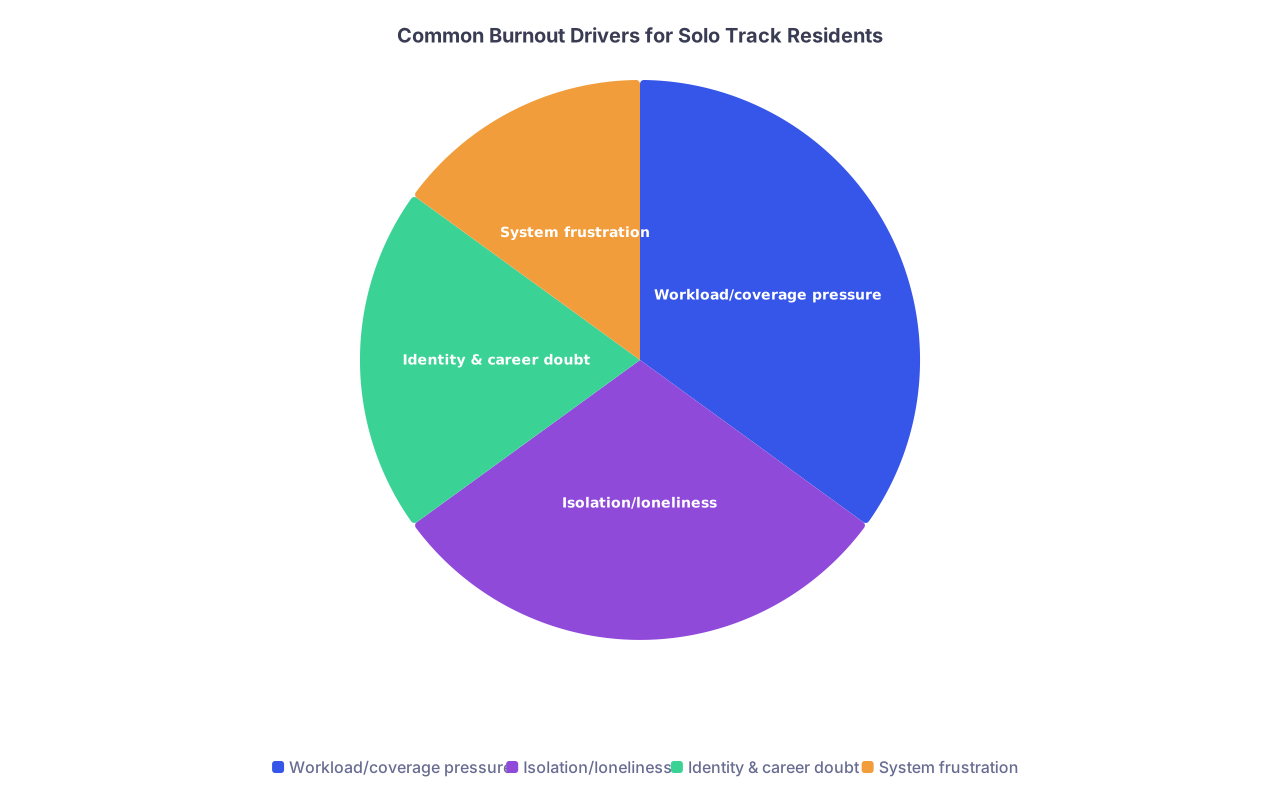
| Category | Value |
|---|---|
| Workload/coverage pressure | 35 |
| Isolation/loneliness | 30 |
| Identity & career doubt | 20 |
| System frustration | 15 |
Here’s what I’ve seen over and over with solo-track residents:
You’re the default for everything
“You’re the only X resident, so you can cover this, right?” Translation: nights, consults, teaching sessions, every weird extra project.You’re professionally isolated
Everyone else has a cohort. You have…people who are polite but not going through your exact gauntlet.You’re constantly second‑guessing your path
“Did I pick the wrong specialty?” hits harder when there’s no one in your corner saying, “No, this is normal for us.”There’s no safety in numbers
When something goes wrong, there’s no “class of us.” It feels like it’s you on trial.
Before you fix anything, you need to know which of these is bleeding the most.
Do this tonight:
Write three bullets on your phone: “What is actually burning me out right now?” Be concrete.
- “Every time someone is out sick, I get pulled to cover.”
- “I feel like I have no one to vent to who understands my field.”
- “I’m scared I’m falling behind other programs in my specialty.”
Once you see it in writing, you stop treating it like a vague cloud and start treating it like a set of problems you can attack.
2. Redraw Your Work Boundaries Before the System Eats You
If you’re the only resident in your specialty track, the system will happily use every inch of you. Not because everyone is evil. Because you’re seen as “flexible capacity.”
You need hard, explicit boundaries. Not vibes. Not “I’ll speak up if it gets bad.” Clear rules.
A. Put your non‑negotiables on paper
I don’t mean in your head. I mean literally written down. For example:
- Max number of consecutive nights you can do and still be functional
- Types of add‑on tasks you will not accept (e.g., “I don’t do last‑minute noon conference talks on my post‑call days”)
- Situations where you will always escalate (unsafe staffing, no attending backup, repeated duty hour violations)
Then you translate those into language you can actually say:
- “I can safely cover X nights in a row. Beyond that, we’re in unsafe territory.”
- “I’m post‑call that day; I’m not able to prepare or deliver a conference talk safely.”
If you don’t pre‑write the script, you will fold at 2 a.m. Ask me how I know.
B. Make workload visible, not invisible
You’re at highest risk for being overloaded when no one can see the full picture of what you’re doing.
Create a simple, brutally clear snapshot of your month:
| Category | Hours / Count |
|---|---|
| Clinical duties | 220 |
| Call shifts | 6 nights |
| Didactics led | 3 sessions |
| Research/admin | 20 hours |
| Days off | 4 |
Bring something like this to your program director or track director and say, calmly:
“This is what my month looks like now. This is where I’m hitting a wall.”
Specific numbers beat vague complaints. Every single time.
C. Build backup before you need it
You can’t wait until you’re crying in a stairwell to realize you have zero coverage.
Pick two attendings and one chief resident (even if not in your specialty) and say this explicitly:
“I’m the only resident in my track. If I’m ever in a situation that feels unsafe—either for patients or for me—I’d like to know I can reach out to you. Would you be willing to be a backup person I can text or call in those situations?”
Most decent people say yes. Now you’re not alone in your head when it hits the fan.
3. You Need a Specialty Community, Even If It’s 1000 Miles Away
You are not going to survive a niche specialty track as the only resident if your only exposure to your field is your own hospital.
You need people who can say “Yeah, my PGY-3 year looked like that too. Here’s what mattered and what didn’t.”
A. Get out of your local bubble on purpose
You have three obvious channels: national organizations, social media, and alumni.
National organizations
Almost every specialty has one. They usually have resident sections and often “trainee lounges” or listservs.What you do this month:
- Join as a resident member.
- Post once on the forum/listserv: “PGY-X in [specialty] at [type of program]. Only resident in my track. Looking to connect with others in similar setups for perspective and advice.”
It feels awkward. Do it anyway. I’ve seen those posts lead to Zoom calls, funded conference travel, and even job offers.
Social media (used strategically, not as doom‑scrolling)
Find 3–5 attendings/fellows in your specialty who post educational content or career advice. Follow them. Reply with one question or comment a week. You’re not building a brand. You’re building a back channel to your future colleagues.Alumni / fellowship programs
Ask your PD or track director:“Where have our grads gone for fellowship or faculty roles in this specialty? Would you be comfortable connecting me with 1–2 of them for 20–30 minutes of mentorship?”
Most programs love showing off successful graduates. Use that.
B. Set up a “remote co‑residents” group
You do not need 20 people. You need 3–5.
Here’s the actual template you can send to someone you clicked with at a conference or online:
“Hey [Name], I’m the only resident in the [X] track at [Hospital]. It’s been a little isolating at times. Would you be interested in a small quarterly Zoom group with a few residents in [specialty] where we just debrief cases, talk about fellowship/applications, and swap resources? Low‑key, one hour every few months.”
Simple. Clear. Many will say yes because they’re also isolated in their own way.
Throw three dates in a Doodle poll, pick one, and commit to it like a clinic session. That hour will save you ten hours of spiraling alone.
4. Fix the “Everyone Is Watching Me” Pressure
When you’re the only resident in your track, every mistake feels like a referendum on you and your specialty. That pressure will chew through your mental bandwidth if you don’t dismantle it.
A. Separate feedback about you from feedback about the role
One trick that helps: when you get criticism, mentally tag it.
- Tag A: “This is about me” (e.g., “Your notes are too sparse.”)
- Tag B: “This is about the role/system” (e.g., “We need more consult coverage.”)
Tag A → something you can personally adjust.
Tag B → something you document and bring to leadership as a structural issue.
Stop internalizing system problems as personal failures.
B. Decide in advance how you’ll respond to criticism
Again: scripts matter. When you’re tired, your brain goes straight to shame or defensiveness. Pre‑write neutral phrases:
- “Thanks for the feedback. I’d like to understand what that looked like from your side.”
- “I hear that. Just so you know, in that time block I was also covering [X/Y]. Could we talk about expectations when I’m solo on those days?”
- “That’s helpful. Let me think through how to adjust my workflow.”
You’re not being a robot. You’re giving your future exhausted self something to lean on so you don’t either explode or collapse.
C. Use objective data to keep your head straight
If you feel like “I’m screwing everything up,” check:
- Actual number of safety events with your name attached
- Specific attending feedback (not hallway hearsay)
- Rotation evaluations across time
If 8/10 evaluations say “solid resident, shows growth,” and 2 are scathing? That’s not “you are terrible.” That’s “some people are terrible at giving balanced feedback.”
Be honest with yourself. But don’t hand out power to every irritated attending.
5. Rebuild Some Control Over Your Identity and Future
Burnout worsens when you feel like a cog with no say in your own trajectory. As the only resident in a track, that’s magnified—you’re often the “pilot project” or afterthought.
You need to reclaim some agency.
A. Design a “minimum viable training experience”
Ask yourself: “If I left this program and applied for fellowship or jobs in my specialty, what would I absolutely need on my CV and in my skill set to not be embarrassed?”
List 5–7 things. Examples:
- X number of key procedures logged
- A defined amount of elective time in sub‑areas (e.g., 4 weeks in [special subfield])
- One research/quality project completed and submitted
- Present at 1–2 specialty conferences
- Regular exposure to complex cases in your field
Then make a rough map for the rest of your residency of when you’ll hit each item.
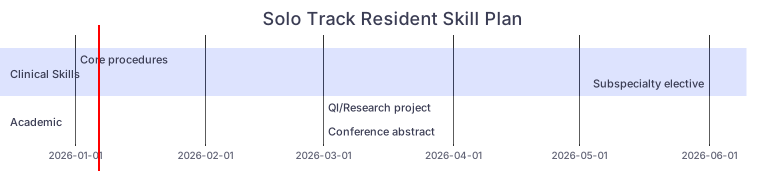
| Task | Details |
|---|---|
| Clinical Skills: Core procedures | a1, 2026-01, 9m |
| Clinical Skills: Subspecialty elective | a2, 2026-06, 2m |
| Academic: QI/Research project | b1, 2026-03, 8m |
| Academic: Conference abstract | b2, after b1, 3m |
Bring that to your track or program director and say:
“These are the minimum things I think I need to be competitive in our field. How can we make sure I hit these during my time here?”
You’re not begging. You’re co‑designing your training.
B. Start one small project that’s “yours”
When you’re exhausted, the idea of “doing more” sounds insane. But this is not about padding your CV. It’s about control and meaning.
Examples that are actually doable:
- A micro‑QI project: “Can we reduce consult note delays on our service?”
- A simple teaching series: short, 10‑minute chalk talks for interns on your favorite 3 topics
- A small case series written with an attending who’s already interested
The rule: the project must be:
- Small enough to outline on one page
- Interesting enough that you’re not dreading it
- Visible enough that someone outside your program could recognize it as “work you did”
Feeling like you’re building something—no matter how small—buffers against the “I’m just surviving” spiral.
6. Fix the Day‑to‑Day Drain Before It Breaks You
Most burnout isn’t from the huge crises. It’s from the daily grind: bad sleep, no food, constant micro‑demands. You already know sleep and exercise matter. You don’t need a lecture.
You need residency‑compatible tactics that don’t require a personality transplant.
A. Stop pretending you’ll magically have willpower at 8 p.m.
Anything you need your brain to “decide” at night? Assume it won’t happen.
Examples:
- If you want decent food on call: set up an automatic grocery delivery with 3–4 “on-call kits”: protein, quick carbs, shelf‑stable snacks. Same order every week. No thinking.
- If you want to move your body: put one 15‑minute block after sign‑out 3 days a week labeled “walk outside.” That’s it. Not a gym habit. Just a rule.
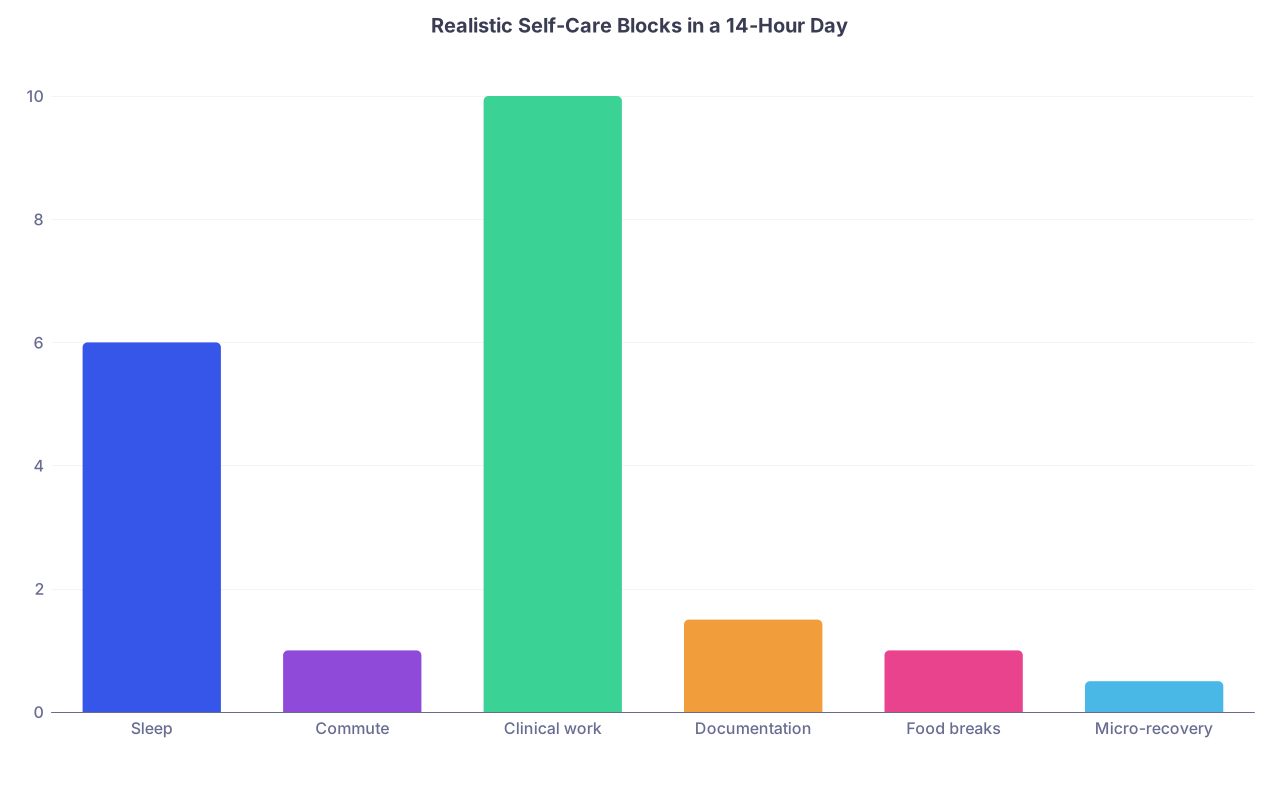
| Category | Value |
|---|---|
| Sleep | 6 |
| Commute | 1 |
| Clinical work | 10 |
| Documentation | 1.5 |
| Food breaks | 1 |
| Micro-recovery | 0.5 |
You only need micro‑recovery. 10–15 minutes between getting crushed and totally collapsing.
B. Choose one daily non‑clinical anchor
Pick one small thing that happens almost every day, that:
- Is not medicine
- Is not optimizing you
- You actually enjoy
Examples I’ve seen work:
- A 10‑minute daily call or voice note to one friend or partner
- Reading 5 pages of a non‑medical book before bed
- One episode of a mindless show with zero guilt
Protect it the way you protect sign‑out. As in: it’s on your calendar. Other things work around it when possible.
You’re not weak for needing something that reminds you you’re a human being.
7. When You’re Already Deep in the Hole
Sometimes you’re not “at risk of burnout.” You’re already there:
- Dreading every shift
- Snapping at nurses or co‑residents
- Fantasizing about quitting on the walk from the parking lot
- Feeling numb when serious things happen
At that point, you’re not dealing with “resilience.” You’re dealing with injury.
A. You need to say “I am not okay” to at least two types of people
- Someone with power to change your workload
- Program director
- Associate PD
- Chief resident with actual influence
Use the words “I’m not safe like this,” not “I’m a little overwhelmed.”
Script:
“I need to be honest. I’m at the point where my level of exhaustion and stress feels unsafe—for me and potentially for patients. I’m the only resident in this track, and the current setup is not sustainable. I need us to adjust my schedule and responsibilities in the short term so I can recover and function.”
Then shut up and let them respond. Silence is your friend here.
- Someone whose only job is to care about you
- Therapist (ideally through your GME or resident wellness program)
- Physician health program
- A mentor outside your institution
Too many residents wait until they’re googling “how to leave residency” at 3 a.m. to seek therapy. If that’s you right now: send the email today. Not after your next block.
B. Ask specifically for what would make the next 4–6 weeks survivable
You’re unlikely to get a full program redesign. But you can often get:
- One rotation switched to a lighter elective
- A run of nights broken up
- A temporary pause or reduction in non‑essential projects
- Protected half‑day for health appointments or therapy
Be concrete:
“If I could have my [X rotation] swapped for [Y lighter rotation] next month, and reduce my extra admin/teaching duties for four weeks, I believe I could get back to functioning at a sustainable level.”
Program leadership cannot read your mind. You have to hand them levers they can actually pull.
8. When You’re Seriously Considering Leaving the Track (or the Program)
Let’s be blunt. Sometimes burnout is a signal that the setup is wrong for you, not just hard.
If you’re the only resident in your specialty track, it’s easy to feel trapped: “If I leave, there’s literally no one left.” That’s not your problem to solve. Your only ethical duty is: don’t lie to yourself about what you want and what’s harming you.
A. Do a “leave vs. stay” sanity check, not a panic exit
Take 30–60 minutes on a day off. Write four lists:
- What I like about my specialty
- What I hate about my current situation
- What might get better with time (seniority, skills, staffing changes)
- What probably won’t change no matter how long I stay
Show that to:
- A trusted attending in your specialty (ideally outside your hospital)
- A mentor not in your specialty who actually knows you as a person
Ask them two questions:
- “Does this sound like ‘normal hard’ for this path, or something more serious?”
- “If I were your kid, what would you tell me?”
You’re not asking them to decide. You’re getting reality checks so you’re not deciding based on one brutal month.
B. Get information about alternatives quietly and early
If you’re even 10% serious about leaving:
- Look into transfer policies at your institution and others
- Talk (confidentially) to GME about what leaving would mean for your contract, visa (if applicable), and future training
- Reach out to residents who actually have switched specialties or programs—there are more than you think
It’s not betrayal to gather information. It’s self‑protection.
9. Make the System Work for You (As Much As Possible)
You didn’t create a system that put a single resident into a specialty track and called it good. But you can subtly push that system to be less harmful—both for you and whoever comes after you.
A. Document patterns, not just incidents
Whenever you see something that hurts you or your training, jot down:
- Date
- What happened
- Why it was a problem
- What the impact was (on you/patients/training)
You’re building a quiet log. Not for drama. For leverage.
Every 3–6 months, you can synthesize this into:
“Here are 3 recurring issues in the [specialty] track and a few ideas to address them.”
Leadership is much more receptive to “Here’s a pattern with possible fixes” than “I’m drowning, help.”
B. Push for basic structural supports for future solo residents
You may not benefit from all of this, but you can plant seeds:
- A formal mentorship pair: each track resident automatically matched with 1 attending + 1 senior resident in another specialty
- Guaranteed cross‑coverage rules: a written policy that you are not default coverage past X threshold
- A yearly review of the track with resident input built‑in
This is how you turn “I suffered alone” into “I suffered, and now the next person doesn’t have to as much.” That kind of meaning actually protects against burnout.
Your Next Step Today
Do one thing. Not ten.
Open the notes app on your phone and write three sentences:
- “What’s burning me out most right now as the only resident in my track is: ______.”
- “One concrete change that would make the next 4–6 weeks more survivable is: ______.”
- “One person I will talk to about this in the next 72 hours is: ______.”
Fill those in. Then actually send the message or email to that person before you go to bed.
You do not have to fix the whole system this month. But you do need to stop pretending this is just “how residency is” and start treating it like a solvable set of problems.
You’re not weak for struggling as the only resident in your specialty track. You’re in a structurally lonely position. Start changing the structure. One conversation, one boundary, one ally at a time.


