

The idea that “it’s just a bad rotation” is exactly how real burnout slips past people until they’re in serious trouble.
You’re not crazy for wondering if what you’re feeling is normal. But you can tell the difference between a rough block and true burnout – and if you’re in residency, you absolutely need to.
Let’s walk through a clean, honest way to sort this out.
1. The Core Difference: Pattern vs. Spike
Burnout isn’t just “tired” or “over it.” It’s a pattern that sticks, spreads, and doesn’t reset when the rotation changes.
A bad rotation is a spike:
- High stress, high hours, high frustration
- Starts when the rotation starts
- Eases when the call schedule lightens or the block ends
Burnout is a baseline shift:
- Your “normal” moves toward exhausted, numb, angry, or hopeless
- Follows you from ICU to clinic to nights
- Doesn’t really improve with days off or an easier attending
Here’s the simple rule I tell residents:
If your mood and energy rise and fall with the rotation, that’s probably the rotation.
If your mood and energy stay low no matter where you are or what you’re doing, that’s probably burnout.
2. The 3 Burnout Red Flags You Shouldn’t Ignore
We can overcomplicate this with checklists, but the classic burnout triad works for a reason. You don’t need all three to be in trouble, but if you see any of these persistently, your radar should go up.
1. Emotional Exhaustion: “I’m empty. I’ve got nothing left.”
Not “I’m tired after nights.” That’s normal.
I’m talking about:
- Waking up more tired than when you went to bed, even after a golden weekend
- Feeling dread every day, not just before certain shifts
- Small tasks (answering one more message, calling one more family) feel like climbing a mountain
- Needing more and more mental “pre-game” just to walk into the hospital
Bad rotation version:
You feel wiped on call or post-call, then slowly reset after sleep and a day off.
Burnout version:
You feel wiped all the time, and you can’t remember the last time you felt genuinely rested or emotionally available.
2. Depersonalization: “I don’t care. And that scares me.”
This one freaks residents out the most. You catch yourself thinking things you’d never say out loud.
Signs:
- Referring to patients by bed number or diagnosis and not even noticing
- Feeling annoyed rather than concerned when someone’s crashing or complicated
- Rolling your eyes at families or colleagues, often in your head, sometimes not
- Getting cynical: “None of this matters,” “No one gets better,” “Everyone’s useless”
Bad rotation version:
On day 12 in a row of admissions, you snap internally and think “I cannot see another SBO.” But you still do the work, and once the rotation ends, that sharp edge softens.
Burnout version:
You stay cold, bitter, or checked out on every service. Even the ones you used to like.
3. Reduced Efficacy: “I’m failing at everything.”
This is more than just feeling behind. It’s a global sense of “I’m not good at this” or “I’m never going to catch up.”
Look for:
- Constant thoughts: “I’m a bad resident,” “Everyone else is handling this,” “I’m faking it”
- Making more mistakes than usual and beating yourself up for days afterward
- Procrastinating on notes, follow-ups, emails, evaluations – then feeling ashamed
- Losing any sense of accomplishment, even when you objectively did a good job
Bad rotation version:
You feel clumsy on a new service, then gradually improve as you learn the system.
Burnout version:
You feel inadequate everywhere, regardless of service or attending.
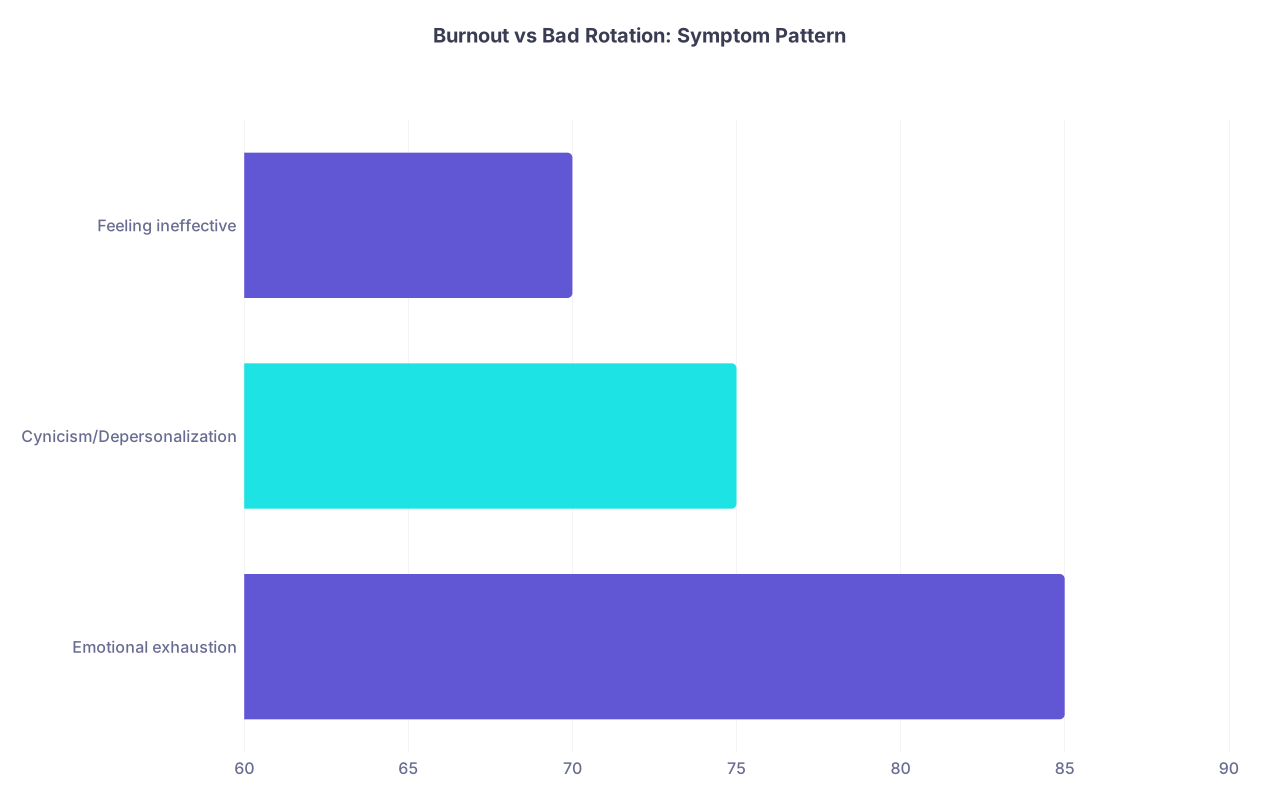
| Category | Value |
|---|---|
| Emotional exhaustion | 85 |
| Cynicism/Depersonalization | 75 |
| Feeling ineffective | 70 |
3. Simple Self-Check: 10 Questions That Actually Help
Here’s a quick screen you can run on yourself. Don’t overthink it. First gut answer, yes or no:
- In the past 2 weeks, have you dreaded almost every upcoming shift?
- Do you feel emotionally drained even on days off?
- Do you catch yourself not caring about patients you know you should care about?
- Have you thought, “If I got COVID/broke my leg/landed in the ED, at least I’d get a break”?
- Do you feel like your work rarely has a positive impact anymore?
- Have you lost interest in hobbies, friends, or things you used to enjoy?
- Do you feel disconnected from co-residents or family because you’re too wiped to engage?
- Are you sleeping more or less than usual and still feeling exhausted?
- Has your self-talk turned consistently harsh or hopeless (“I can’t do this,” “I’m useless”)?
- If someone else described your current life to you, would you be worried for them?
Rough guide:
- 0–2 yes: Probably a bad rotation or normal residency stress
- 3–5 yes: High risk for early/mild burnout
- 6+ yes: You’re not “just tired.” This is burnout territory and deserves an actual plan.
4. Time Course: How Long Has This Been Going On?
Duration matters more than intensity.
If your worst symptoms:
- Started within a week or two of a specific rotation
- Loosened whenever you got rest or an easier shift
- Seem clearly linked to one attending, one hospital, one schedule
…that’s likely rotation-specific stress.
But if:
- This has been going on for months, across multiple services
- You can’t name a last time you felt light, engaged, or hopeful about medicine
- Even vacation only gave you a short blip of relief before it all crashed back
…you’re looking at burnout, not bad luck.

| Step | Description |
|---|---|
| Step 1 | Noticing distress |
| Step 2 | Likely bad rotation |
| Step 3 | Monitor closely |
| Step 4 | Likely burnout |
| Step 5 | Tied to one rotation? |
| Step 6 | Better with days off? |
| Step 7 | Lasting more than 1 month? |
5. Physical and Behavioral Clues Residents Ignore
Burnout doesn’t just live in your thoughts. It leaks into your body and habits.
Watch for:
- New or worsening headaches, GI issues, back/neck pain
- Getting sick more often – colds, infections, slow to recover
- Living on caffeine by day, alcohol/weed/benzos at night to “turn off”
- Scrolling your phone in bed for an hour because you can’t face sleep or the next day
- Eating whatever’s there (or not eating at all) and feeling like it’s not worth fixing
Here’s the point:
A brutal rotation will temporarily wreck your sleep and diet.
Burnout makes that your default lifestyle, even on lighter weeks.
6. Context Check: Is It You, The System, or Both?
You’re training in a system that’s basically a burnout factory. So no, this isn’t all “personal resilience.”
But there’s a difference between:
- “This service is malignant. Everyone is miserable.”
- “I’m miserable literally everywhere, even where others seem okay.”
Quick reality checks you can do:
- Ask a co-resident you trust: “Is this rotation as bad as it feels to me?”
- Notice: Are all attendings “toxic,” or are you reacting more intensely than usual?
- Compare yourself to… yourself 6–12 months ago. Did your baseline shift?
If a rotation is objectively awful, then yes, you’re reacting like a normal human.
But if your reaction is extreme and persistent across contexts, that’s your own burnout, not just the environment.

7. What To Do If It’s “Just” a Bad Rotation
“Just” still sucks. You don’t have to white-knuckle it.
A concrete plan for the rest of the block:
Trim non-essentials
This isn’t the month to start three research projects and train for a marathon. Cut to survival mode: work + rest + one small thing that makes you feel human.Add one micro-pleasure per day
Something that takes 5–15 minutes:- Walk outside after sign-out
- Real coffee on your way in
- 10 minutes of a trashy show, favorite podcast, or book
- Call or text one non-med friend
Protect sleep like it’s a consult
No scrolling in bed. 10–20 minutes of wind-down (shower, stretching, boring book), then lights out. Don’t aim for perfection, aim for one more hour per 24h than you’re getting now.Name the end date
Write it somewhere you’ll see: “Last day of this rotation: [DATE]”. Your brain needs a finish line.Debrief once it’s over
Ask yourself:- What exactly made this so bad? People? Workload? Chaos?
- Is there anything I can avoid repeating (like certain elective choices or patterns)?
- Did I bounce back after 1–2 weeks? If yes, that’s a big sign it was the block, not you breaking.
8. What To Do If It’s Burnout (Or Very Close)
If your honest read is, “This isn’t just one rotation,” then you treat it like a real problem, not a personal weakness.
Step 1: Tell one person in the system
Not a vague “I’m tired.” A clear statement:
- “I think I’m burning out. This isn’t just a bad month.”
- “My baseline is off. I’m worried about my mental health and my patients.”
Options:
- Program director or associate PD
- Chief resident
- A faculty mentor you trust
- GME wellness office / ombudsperson
If your PD is part of the problem or you don’t trust them, go sideways (chiefs, other faculty) or up (GME).
Step 2: Get a real mental health eval
Not Reddit. Not only co-residents. An actual professional.
Look for:
- Hospital/health system employee assistance program (EAP)
- Resident mental health clinic (many academic centers have them now)
- Local therapist/psychiatrist who sees physicians, not just general population
Tell them you’re a resident. Ask directly about:
- Depression vs burnout vs anxiety
- Sleep strategies and/or meds if appropriate
- Whether a short leave or reduced schedule makes sense
Seeing a therapist/psychiatrist is not a professional failure. It’s the same as consulting GI for GI bleeds instead of “reading more about it on your own.”
Step 3: Adjust the workload where you can
No, you might not be able to walk away from ICU next week. But residents do get adjustments all the time when it’s serious:
- Swapping an especially brutal elective for clinic/research
- Taking 1–2 weeks off on medical or mental health leave
- Delaying a particular rotation
- Temporary reduction in clinical time if your program and GME allow
If you think “they’ll never agree,” talk to someone who’s actually done scheduling. You’d be surprised what gets rearranged quietly.
| Situation | More Likely Cause |
|---|---|
| Miserable only on ICU nights | Bad rotation |
| Miserable on all services for 2+ months | Burnout |
| Feel better after golden weekend | Bad rotation |
| Still exhausted after vacation | Burnout |
| Irritable only with one malignant attending | Bad rotation |
| Numb and detached with most patients | Burnout |
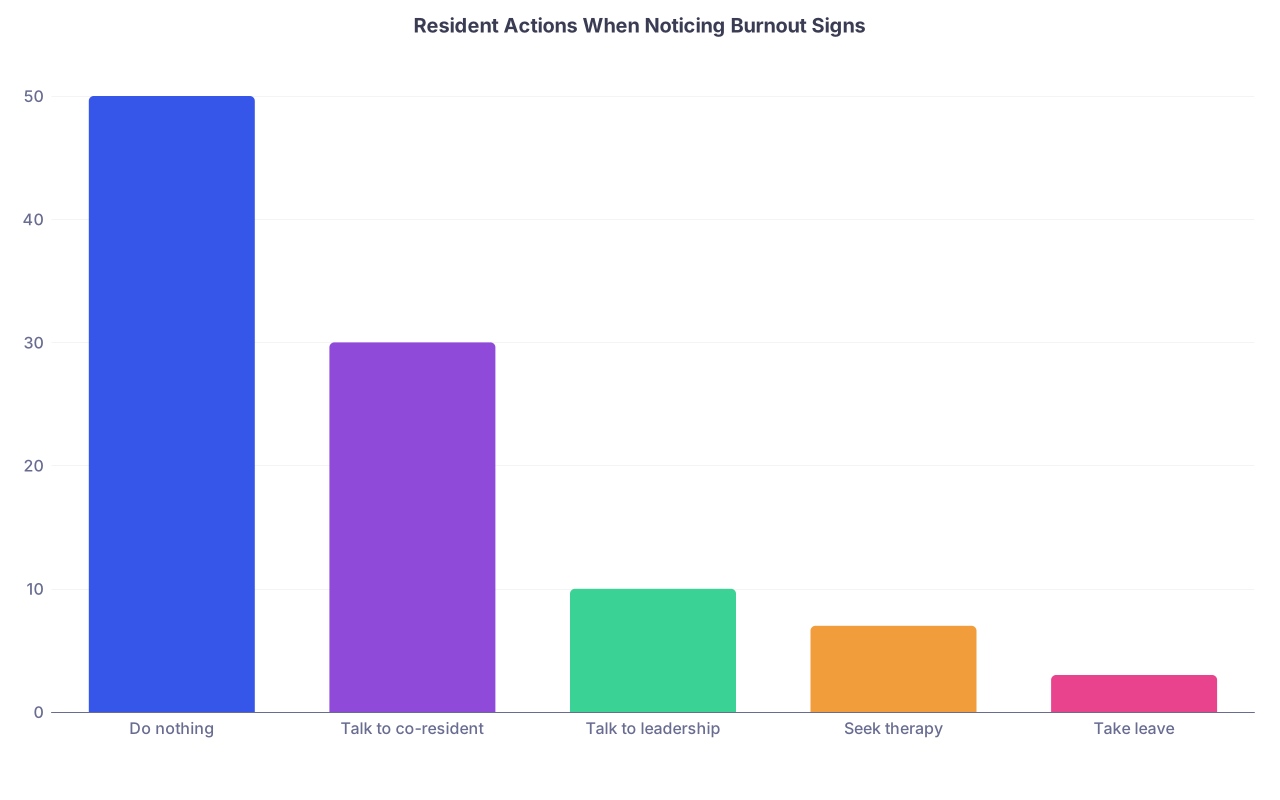
| Category | Value |
|---|---|
| Do nothing | 50 |
| Talk to co-resident | 30 |
| Talk to leadership | 10 |
| Seek therapy | 7 |
| Take leave | 3 |
Step 4: Decide what’s non-negotiable for you
You’re allowed to have lines in the sand:
- “I’m not okay working 90–100 hour weeks long term.”
- “I can’t keep doing nights every third week without serious damage.”
- “I need at least one full unplugged day off per week to function.”
You may not get everything you want. But you need to know what you need to not break, and you need to say it out loud to someone with some power in the system.

9. When You Should Hit the Panic Button
Here are times it’s not “maybe burnout,” it’s “stop and deal with this now”:
- You’re having thoughts like:
“If I got in a car accident on the way to work, it wouldn’t be so bad.”
“If I didn’t wake up tomorrow, at least this would be over.” - You’re thinking about self-harm or suicide
- You’re using alcohol/drugs daily just to cope or sleep
- You’ve had near misses or safety events because you were too exhausted or foggy
If any of that sounds even vaguely familiar, this is not overreacting:
- Call your institution’s crisis line or national hotline
- Tell a co-resident, chief, or attending on call, “I’m not safe right now.”
- Go to the ED if you need to
I’ve seen residents come back from that edge and finish training successfully. But only because they treated it like an actual emergency, not a “personality flaw.”
FAQ (5 Questions)
1. How long does a bad rotation “hangover” usually last?
Typically 3–14 days. If two weeks after the block you’re still emotionally drained, irritable, and dreading work the same way you did during the rotation, that’s more than just hangover territory and you should treat it as a burnout warning.
2. What if my whole program is malignant – is it still burnout or just reality?
It can be both. A toxic program can absolutely cause burnout. The key question is: are you so depleted that even if you switched to a healthier environment, you’d bring the same exhaustion and numbness with you? If yes, you need to address your burnout and strongly consider getting out of that environment if at all possible.
3. Does taking a leave of absence ruin my future career?
No. A short, documented medical or mental health leave is far better than crashing, failing rotations, or having major safety issues. Program directors and fellowship directors see this more than you think, and when handled cleanly and honestly, it usually isn’t a deal-breaker. Quiet suffering that leads to big failures is what hurts you long term.
4. How do I talk to my PD without sounding weak or whiny?
Be specific and professional: “Over the last 2–3 months across multiple rotations, my baseline has shifted. I’m experiencing significant emotional exhaustion and it’s starting to affect my functioning. I’d like help figuring out adjustments and I’m planning to see a mental health professional.” That’s not weakness. That’s exactly how you’d present a serious consult.
5. What if I’m not sure – should I wait and see or act now?
If you’re asking this question seriously, you’re already far enough along that “wait and see” isn’t a great strategy. You don’t have to declare, “I’m burned out.” You can simply say, “I’m worried I’m heading toward burnout and I want to get ahead of it,” and then talk to someone (mentor, therapist, PD, chief) and make at least one concrete change this month.
Key takeaways:
- A bad rotation is a spike; burnout is a new baseline that doesn’t reset when the block changes.
- Persistent exhaustion, numbness toward patients, and feeling ineffective across multiple rotations = burnout, not “just tired.”
- If your baseline has shifted for more than a month, treat it like a real problem: tell someone, get professional help, and change something concrete now, not “after this next rotation.”


