
The way most residents approach night float almost guarantees burnout.
They treat it like a month to “just survive” instead of a rotation that needs its own strategy, structure, and rules. That’s how you end up three weeks in, chugging coffee at 3 a.m., resenting everyone on days, and dreading medicine.
Let’s not do that.
This is your week-by-week, then day-by-day checklist to get through night float without frying your brain, wrecking your relationships, or trashing your health. I’ll walk you from the week before night float through the first two transition weeks back to days. At each point: what to do, what to avoid, and what to check off.
One Week Before Night Float: Set the Foundation
At this point you should stop pretending you’ll “figure it out as you go.” You won’t. You’ll default to chaos.
7 days before: big-picture planning (30–45 minutes)
Block one uninterrupted half hour. No pager. No TikTok. Just you and your calendar.
Decide:
- Your sleep strategy
- Your food plan
- Your non-negotiables (exercise, call to partner, therapy, etc.)
- Your commute and parking plan for 7 p.m.–8 a.m. hours
Pick a sleep style based on your life and hospital schedule:
| Strategy | Core Sleep Time | Nap Pattern | Best For |
|---|---|---|---|
| Day-Sleeper | 8:30–15:30 | Short pre-shift nap | No kids, quiet home |
| Split Sleep | 09:30–13:30 | 18:00–19:00 nap | Busy homes, noisy days |
| Vampire Light | 03:00–09:00 | 14:00–16:00 nap | Strong night owl tendency |
| Hybrid Weekend | 09:00–14:00 | None or short nap | When weekends are social |
Pick one. Commit for at least the first 10 days before you tinker.
Checklist – 7 days out
- Decide your core sleep window
- Decide your primary meal anchor (pre-shift vs post-shift)
- Check parking / badge access for overnight entrance
- Message your co-resident on nights (if you have one) about:
- How you’ll divide admits
- Sign-out style
- “Do not wake unless X” preferences
- Tell your close people: “I’m on nights from [dates]. Best time to text/call is [time].”
This last one matters. People stop inviting you to things when you vanish without explanation. Then you’re lonely and exhausted.
3–4 Days Before: Shift Your Clock Gradually
At this point you should start shifting, not flipping. Flipping your schedule in one day is how you get a migraine on night 1 and cry in a stairwell at 4 a.m.
3–4 days before: start pushing your bedtime
Target: move your bedtime and wake time later by 1–2 hours per day.
Example if you’re usually 23:00–06:00 and aiming for 08:30–15:30:
- T–4 days: sleep 00:00–07:30
- T–3 days: sleep 01:30–09:00
- T–2 days: sleep 03:00–10:30
- T–1 day: sleep 04:00–11:30 + 17:30–19:00 nap
You won’t hit it perfectly. That’s fine. Direction matters.
Checklist – 3–4 days out
- Push bedtime back by 1–2 hours
- Avoid early morning commitments (rounds, meetings) if possible
- Start dimming lights after 20:00, using screens with night mode
- Grab:
- Blackout curtains or eye mask
- Earplugs / white noise app
- Blue-light blocking glasses (optional but helpful)
Day Before Night 1: Lock In Your Environment
At this point you should treat your bedroom like a call room ICU. Controlled, quiet, protected.
Morning/early afternoon (the day before):
- Set up your “sleep cave”
- Blackout curtains or trash-bag hack if you’re desperate
- White noise machine or app on an old phone
- Eye mask on nightstand
- Set up your “night station” at work
- Stash snacks in your locker or resident room (nuts, protein bars, oatmeal packets, not just Skittles and chips)
- Fill a large water bottle to bring
- Put a spare phone charger in your bag
- Set boundaries
- Silence non-essential notifications 09:00–16:00
- Tell roommates/family your “do not knock” hours
Afternoon/evening before Night 1:
- Light dinner (avoid heavy fried / huge carb load)
- 20–30 minute walk or light workout
- 60–90 minute nap ending 2–3 hours before your shift (eg, 17:30–19:00)
Then stop “optimizing.” Being 90% prepared and 10% flexible beats obsessing and starting tired.
Week 1 of Night Float: Survival With Structure
The first week is dangerous. Adrenaline tricks you into thinking you’re fine. You’re not. Fatigue interest is accruing; you’ll pay in Week 2 if you overdo it now.
Here’s your daily rhythm template for a standard 19:00–07:00 shift with day-sleeper strategy:
- 06:30–07:30: Sign-out, commute home
- 08:00: Light breakfast, screens off
- 08:30–15:00: Core sleep (phone on Do Not Disturb)
- 15:00–16:00: Wake-up ritual
- 16:00–18:00: Life admin / movement / light exposure
- 18:00–18:30: Pre-shift meal
- 18:30–19:00: Commute in
- 19:00–07:00: Shift, with 10–20 min breaks every 2–3 hours if humanly possible
Week 1 Daily Checklist
At this point you should focus on consistency, not optimization.
Morning (post-shift)
- Drink water on drive home (you’re probably dehydrated)
- No caffeine after 05:00 (or earlier)
- Wear sunglasses on drive home to reduce bright light
- Light, boring breakfast (yogurt, toast, eggs – not an IHOP binge)
- In bed by 08:30–09:00
Sleep block
- Phone on Do Not Disturb with favorites bypass (ED, family)
- Room cool, dark, and quiet
- If you can’t sleep within 30 minutes:
- Get out of bed
- Do something low-stim (reading, podcast, stretching)
- Try again in 20–30 minutes
Pre-shift
- Same wake time daily (±30 minutes)
- 5–10 minutes of sunlight or bright light box
- Protein + complex carb meal (not just iced coffee and a muffin)
- Quick mental check-in: anxiety 0–10, exhaustion 0–10
- If both >7 for 3 days in a row → talk to chief or PD. That’s not “normal tired”; that’s trending toward unsafe.
During shift
- Set micro-goals: “Finish cross-cover orders by 23:00,” “Admit notes by 03:00”
- 5-minute reset every 3–4 hours:
- Bathroom
- 2 minutes of stretching in stairwell
- Drink water
- Snack rule: “something with protein before sugar.”
- Nuts, cheese sticks, Greek yogurt, protein bar
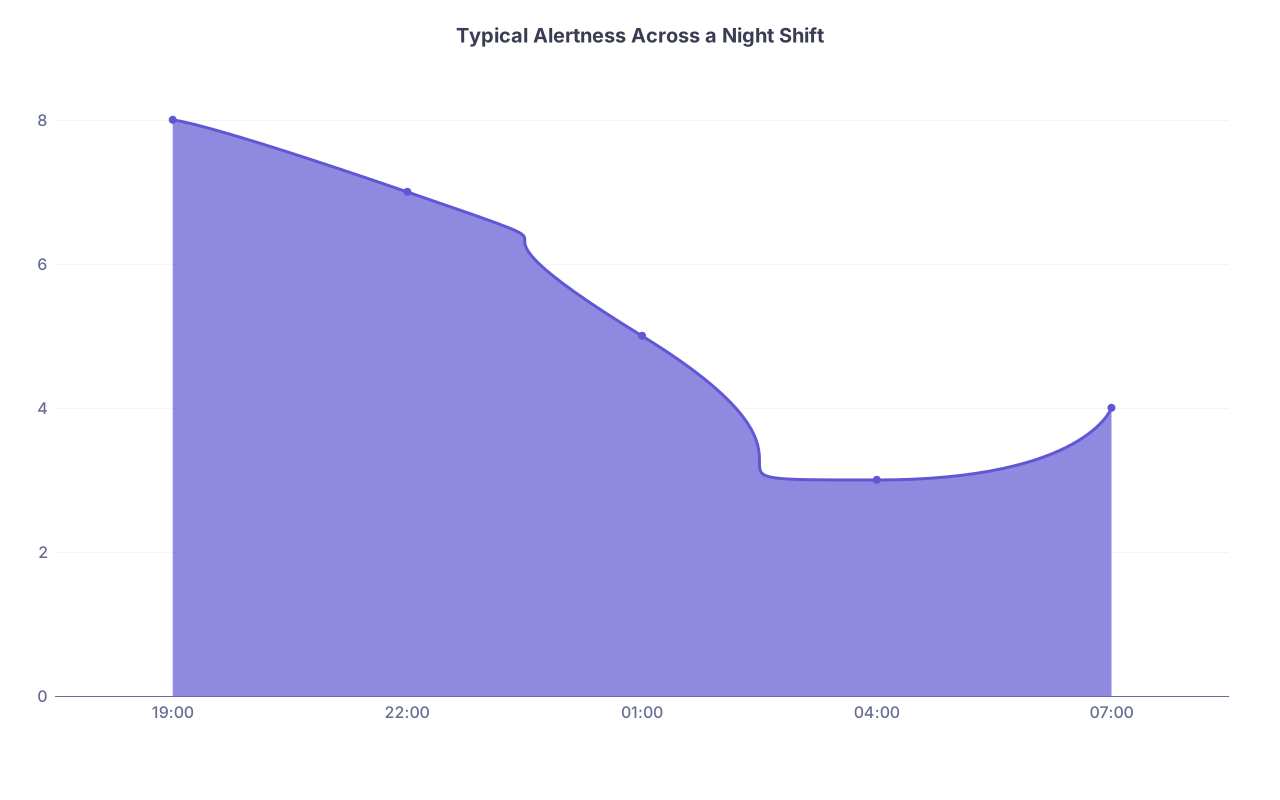
Here’s why this structure matters:
| Category | Value |
|---|---|
| 19:00 | 8 |
| 22:00 | 7 |
| 01:00 | 5 |
| 04:00 | 3 |
| 07:00 | 4 |
Most residents feel okay until around 01:00, fall off a cliff by 04:00, then get a second wind with the sun. Plan your most cognitively demanding work before 02:00 (complex admits, med recs, consult calls) and leave scut/clean-up closer to 04:00–06:00 when you’re slower.
End of Week 1: Course-Correct Before You Crash
At this point you should pause and audit. Not “ugh, this rotation sucks,” but specific, operational questions.
Sometime on your post-call day at the end of Week 1, run this quick review:
Sleep audit
- Am I getting at least 5.5–6 hours of actual sleep most days?
- Do I wake up groggy but functional, or hopeless and sick?
- Is noise/light waking me up? If yes:
- Move sleep block later (09:30–16:00)
- Add earplugs / white noise / eye mask
- Ask roommates/family for specific quiet hours adjustments
Food/energy audit
- Am I relying on vending machine and ED pizza most nights?
- Do I feel physically nauseated or jittery at 03:00?
- Simple fix for Week 2:
- Prepare 2–3 “night kits” per week: pre-packed meals and snacks
- Cap caffeine at 400 mg/day, none after 03:00
Psych audit
- Any panic, dread, or near-miss errors related to fatigue?
- Any thoughts like “I don’t care what happens to these patients”?
- If yes → that’s emotional numbing, not “being efficient.” Talk to someone (co-res, chief, mentor, therapist).
If your answers are ugly, do not just “push through Week 2.” That is how people end up in real trouble.
Week 2 of Night Float: Protect the Edges
By Week 2, the novelty is gone. At this point you should guard your boundaries like your license depends on it.
Tighten your “no” list
You’re allowed to say no to:
- Lunchtime conferences in the middle of your sleep block
- Social events that end at 03:00 when you’re trying to sleep at 08:30
- “Can you just hop on this committee Zoom at noon? It’s only 30 minutes.”
Every “only 30 minutes” fractures your sleep and turns into 90 minutes of wakefulness.
Week 2 Daily Checklist (add-ons)
Pre-sleep
- 5–10 minute wind-down ritual:
- Same podcast, same meditation, or same chill playlist
- Same order: shower → snack → stretch → bed
- No doomscrolling in bed. You’re not unique; everyone who does this sleeps worse.
Post-wake
- 10 minutes of light exercise at least 4 days this week:
- Stairs in your building
- Short bodyweight circuit
- Walk outside
- One small “non-medicine” thing daily:
- Call a friend
- Read 10 pages of a non-medical book
- Watch an episode of something stupid and light
This isn’t fluff. It’s an identity check. If you’re only a “night float resident” for 14 days straight, you feel hollow by the end.

Safety and Errors: The 03:00–05:00 Danger Window
At this point you should assume your brain is compromised between 03:00 and 05:00. That’s not weakness, that’s neurobiology.
Build systems around that window:
- Double-check meds:
- Insulin, anticoagulants, high-risk drips, electrolyte repletion
- Read back verbal orders
- Use checklists for admits after 02:00:
- H&P done?
- Allergies verified?
- Code status documented?
- Home meds reconciled or at least “To be completed by 10:00” flagged?
- If you feel yourself zoning out:
- Stand up
- Walk a loop around the unit
- Drink water
- Then come back to the chart
Do not “push through” charting half-asleep. That’s where I’ve seen real errors happen.
Last 3–4 Nights: Start Thinking About the Re-Flip
The way you handle the end of night float strongly predicts how miserable you’ll be the next week.
At this point (last 3–4 shifts) you should gently prepare to rejoin humans.
Assuming your final night ends around 07:00 on a Friday:
Two nights before last
- Keep your sleep schedule stable.
- Don’t promise early weekend plans yet.
Last night and the day after
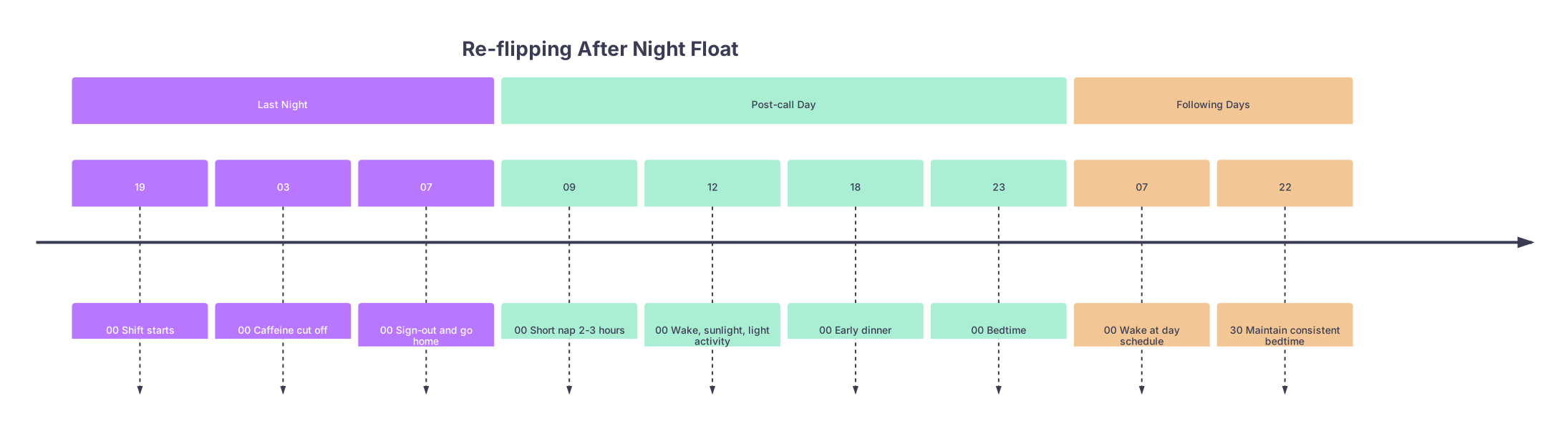
Classic pattern that works for a lot of residents:
Last shift (Thu 19:00–Fri 07:00)
- Work as usual
- Moderate caffeine overnight
Post-call Friday
- Small breakfast, light
- Short nap 2–3 hours max (eg, 09:00–12:00)
- Force yourself up, sunlight + movement
- Normal-ish bedtime 23:00–00:00 Friday night
You’ll feel awful Friday afternoon. That’s the tax. Pay it once instead of spreading chaos over 5 days.
| Period | Event |
|---|---|
| Last Night - 19 | 00 Shift starts |
| Last Night - 03 | 00 Caffeine cut off |
| Last Night - 07 | 00 Sign-out and go home |
| Post-call Day - 09 | 00 Short nap 2-3 hours |
| Post-call Day - 12 | 00 Wake, sunlight, light activity |
| Post-call Day - 18 | 00 Early dinner |
| Post-call Day - 23 | 00 Bedtime |
| Following Days - 07 | 00 Wake at day schedule |
| Following Days - 22 | 30 Maintain consistent bedtime |
The Week After Night Float: Burnout Prevention Checkpoints
This is the part people ignore. They think “I’m back on days, so it’s over.” No. This is where burnout consolidates if you do nothing.
At this point you should run a structured debrief on yourself.
First 2–3 days back on days
Keep it simple.
- Fixed wake time (±30 minutes)
- No extra shifts, no moonlighting
- 15–20 minutes of bright morning light every day
- Avoid huge naps; if you must, set an alarm for 20–30 minutes
End of first week back: 10-minute burnout screen
Ask yourself these, and answer brutally honestly:
- Am I dreading every shift, or just tired?
- Am I more cynical about patients than before nights?
- Any sense of “what’s the point” about medicine?
- Any near-miss or actual safety events last week that still bother me?
- Any trouble with basic self-care: eating, showering, leaving bed?
If several are a yes, that’s not just “night float hangover.” That’s early burnout.
What to actually do:
- Email or grab coffee with:
- A senior resident you trust, or
- Your APD / PD, or
- A therapist (many programs have free confidential services)
- Say something specific:
- “Nights really knocked me out and I’m feeling more detached from patients.”
- “I’m more anxious about my clinical decisions since night float.”
Specific = fixable. Vague “I’m just tired” = ignored.
Micro-Checklists: What To Do Each Night vs What To Stop Doing
You don’t need more information. You need frictionless habits.
Here’s a quick comparison of helpful vs self-sabotaging night float patterns:
| Night Habit | Helpful Version | Harmful Version |
|---|---|---|
| Caffeine | Front-loaded before 01:00 | Energy drinks at 04:30 |
| Food | Planned meals + protein snacks | Vending machine + pizza only |
| Sleep | Protected 6-hour block | Fragmented naps all day |
| Breaks | 5–10 min walk/stretch every few hours | 7 hours sitting, then total crash |
| Documentation | Early admits wrapped by 02:00 | Starting H&Ps at 05:30 |
You already know which column you usually live in.
Final Reality Check: You Can’t “Win” Night Float, But You Can Avoid Losing
Night float is inherently rough. The goal isn’t to feel amazing. The goal is:
- You don’t compromise patient safety.
- You don’t shred your sleep beyond repair.
- You don’t exit the month hating medicine and everyone in it.
If you do the following every week of night float, you’re already ahead of most residents:
- Weekly audit of:
- Sleep quantity/quality
- Caffeine and food habits
- Mood, cynicism, and error rate
- One honest conversation with:
- Co-resident or fellow about workload
- Senior/chief if nights are consistently unsafe
- One real-life anchor:
- Standing coffee date after your last night
- Weekly call with someone outside medicine
Tonight or right now, open your calendar and block out your core sleep window, pre-shift routine, and re-flip plan for the entire night float month. If those blocks aren’t visible and protected, they will be the first things sacrificed.