

The way most residents use post‑call days is backwards. You treat them like bonus weekends or emergency nap time, instead of what they actually are: your primary long‑term defense against burnout.
You do not need more willpower. You need a one‑year plan.
Below is exactly how to use your post‑call days over a full academic year—month by month, then block by block, then day‑of‑post‑call itself—so you’re not a shell of a human by June.
Big Picture: Your Year‑Long Post‑Call Strategy
At this point—before July 1 hits or as early in the academic year as you can—you should decide what post‑call days are for.
Not vibes. Not whatever your co‑intern is doing. A clear hierarchy:
- Safety and recovery
- Life maintenance
- Connection (people who matter)
- Growth (the future you want after this rotation/program)
If a use of your post‑call day conflicts with those four, it loses. That’s the rule.
Let’s map this over a year, then zoom in to what you should actually do hour‑by‑hour on post‑call days.
Quarter 1 (July–September): Set the Foundation
You’re new (or you’re stepping into a new PGY year). This quarter is about building habits around post‑call that you can sustain.
July: Establish the “Non‑Negotiable Post‑Call Template”
At this point in July, you should build a simple default for every post‑call day. The goal is to remove decision fatigue.
Your default template:
First 2–4 hours: Mandatory sleep
- You get home. You do not sit on the couch and start scrolling.
- You:
- Eat something small and simple (yogurt, sandwich, leftovers).
- Take a quick shower.
- Phone on Do Not Disturb.
- Blackout room as best you can.
- Then lie down. Even if you “don’t feel tired.” Your body’s confused; your frontal cortex is lying.
Mid‑day 2–3 hours: Low‑friction life maintenance
- After that first block of sleep, you keep it easy:
- One load of laundry.
- Order groceries or do a fast grocery run.
- Pay any bill that’s been nagging you.
- The rule: No heavy thinking. No big decisions.
- After that first block of sleep, you keep it easy:
Late afternoon/evening: Connection or joyful activity
- Short walk with a friend.
- Dinner with your partner.
- 30–60 minutes of a hobby that’s not medicine or screens.
Write this on a sticky note and tape it to your desk or wall. “Post‑call = Sleep → Simple chores → Connection.” That’s your July job.

| Step | Description |
|---|---|
| Step 1 | Leave Hospital |
| Step 2 | Quick food and shower |
| Step 3 | Block of sleep 2 to 4 hours |
| Step 4 | Simple tasks 1 to 2 items |
| Step 5 | Connection or hobby |
| Step 6 | Early bedtime |
August: Protect the Template Against Sabotage
By August, people will start inviting you to do dumb things post‑call.
- “Let’s go to brunch after call!”
- “We’re all going to Costco and then happy hour!”
- “You can come to this noon conference; it’ll look good!”
At this point in the year, you should:
Create your standard refusal lines so you do not think in the moment.
- “I’m post‑call; I have to sleep or I’m useless for the next shift.”
- “I already committed my post‑call day to family stuff.”
- “I learned the hard way—if I skip sleep post‑call, I crater for three days.”
Decide in advance how many post‑call days a month you’ll “break” the template.
- My hard recommendation: Maximum 1 per month.
- Put those on your calendar: “Post‑call day I can use for social/errand overload.”
September: Start Aligning Post‑Call With Long‑Term Goals
By now, you’ve survived a couple of rotations. You’re starting to see cracks.
At this point in September, you should:
- Choose one growth theme for your post‑call days this quarter:
- Boards prep light touch (30–45 minutes).
- Fellowship planning (reading about programs, light CV updates).
- Basic financial sanity (budget, reviewing loans).
- And you should confine that work to a small, fixed block after sleep on post‑call:
- Example: 16:00–16:45 “Boards flashcards” every third post‑call day.
You are not grinding for hours. You’re using a little bit of your clearest post‑call time to move the future forward 1%.
Quarter 2 (October–December): Build Systems Around You
Fall is where people start to quietly fall apart. The novelty is gone. The fatigue is real.
Here’s how to use post‑call days this quarter.
October: Automate What You Can
You’ve seen your schedule patterns. You roughly know when you’re on wards, ICU, nights.
At this point in October, you should use one post‑call day per month to set up automations that make every future post‑call easier:
On that designated “systems” post‑call:
Create recurring tasks:
- Rent/mortgage autopay.
- Automatic transfers to savings/loan payments.
- Monthly car payment, phone, utilities.
Standardize food:
- Build a recurring grocery order template for “post‑call week.”
- Save a list in your delivery app: eggs, microwaveable rice, salad kits, frozen veg, protein source.
Prep your home for exhaustion:
- Buy a cheap blackout curtain or eye mask.
- Extra set of comfortable scrubs and socks ready by the door.
The point: every post‑call day later in the year should require less effort, not more.
November: Protect Relationships Proactively
You’ll see this by mid‑November: residents vanish from their own lives. Friends stop inviting you. Partners get quietly resentful.
Post‑call days are your repair tool.
At this point in November, you should:
Identify 3–5 people you refuse to lose touch with this year.
- Partner, parent, sibling, best friend, mentor.
Assign each of them a recurring “post‑call touchpoint.”
- Example:
- First post‑call of the month → video call with parents.
- Second post‑call → coffee with partner (even if it’s at home).
- Third post‑call → 20‑minute call with friend.
- Example:
You’re tired, but 20 minutes of fully present conversation once a month prevents massive relationship decay.
December: Use Post‑Call for Honest Self‑Check
The end of the calendar year is a natural checkpoint. People either burn out quietly or course‑correct.
Around mid‑December, on a lighter rotation or when you’re post‑call and not completely destroyed, you should run a 15‑minute burnout audit:
Grab a notebook and answer, quickly:
- How’s my sleep overall? (Pattern, not one night.)
- Do I feel dread most days going in?
- Am I snapping at nurses, co‑residents, or family?
- What am I doing on post‑call that actually restores me?
- What am I doing on post‑call that makes me feel worse?
Then:
- Pick one thing to stop doing post‑call.
- Pick one thing to start or increase that genuinely helps.
This is not therapy. It’s adjusting the dials so you do not hit January already cooked.
Quarter 3 (January–March): Mid‑Year Course Correction and Peak Load
January hurts. Holidays are over, days are short, the “this is new” adrenaline is gone.
Your post‑call days now become heavy‑duty burnout prevention tools.
January: Rebuild Sleep Discipline
By this point, almost everyone has gotten sloppy:
- Doomscrolling in bed.
- “I’m fine on 3 hours, I’ll just crash later.”
- Falling asleep on the couch with scrubs still on.
On your early‑January post‑call days, you should:
- Reinforce a hard sleep rule:
- Minimum one protected sleep block of 3–4 hours post‑call. Non‑negotiable unless you’re actively bleeding.
- Engineer your space:
- Eye mask, cheap earplugs.
- Separate “sleep clothes” you only wear to bed.
- Phone charging station away from the bed.
Your brain will start to trust that post‑call = real recovery. That alone drops your baseline burnout risk.
February: Schedule Joy With the Same Seriousness as Consults
By February, every day can feel the same. That’s dangerous. Anhedonia creeps in quietly.
Use one post‑call day early in the month to schedule specific, concrete enjoyable things for the next 4–6 weeks:
- Tickets to a game, concert, or museum (even if you might have to eat the ticket if called in).
- A dinner reservation with your partner/friends for a golden weekend.
- A half‑day day trip on a non‑call weekend.
Then on each post‑call day this month:
- Spend 10–15 minutes nudging those plans along:
- Confirming times.
- Arranging coverage if needed.
- Texting friends: “I am alive. Let’s nail down Saturday the 18th at 7 pm.”
That little bit of structure makes life feel like it’s moving forward, not just happening to you.
March: Use Post‑Call for Career Reality Checks
Around March, PGY‑2s and PGY‑3s either ignore their future or obsess about it at 2 a.m. on call. Both are bad.
At this point, you should designate one post‑call day in March as a “career clarity” day:
That day, after sleep:
- Write down:
- What parts of your current rotation you actually enjoy.
- What parts you find soul‑draining.
- Make a short list:
- 2–3 fellowships or job types that seem interesting.
- 1–2 attendings whose careers you might want to understand better.
Then schedule:
- One coffee or 15‑minute hallway chat with an attending you respect.
- One email to an alum/fellow asking for a quick Zoom in April.
The key: keep it short and scheduled. Do not turn post‑call into grinding on ERAS panic. Use it to get one clear next step.
Quarter 4 (April–June): Finish Without Falling Apart
End of year haze is real. People start “counting down” and let all their good habits slide—right when fatigue is cumulative.
This quarter, your post‑call days are about prevention and positioning.
April: Audit and Fix the Basics (Again)
By early April, you should run a second burnout and basics audit on a post‑call day.
Ask yourself:
- How often am I:
- Getting outside on post‑call, even for 10 minutes?
- Eating something vaguely nutritious that day?
- Moving my body in any structured way?
Then tweak your post‑call template:
- Add 1 mandatory outdoor dose:
- 10–20 minutes daylight. Even just walking to get coffee.
- Add 1 movement block once or twice a month:
- Light yoga video.
- Very short run.
- 20‑minute walk with an audiobook.
You are not training for a marathon. You are convincing your body it’s still a living organism, not a hospital appliance.
May: Use Post‑Call to Transition to Next Year
If you are finishing PGY‑1 or PGY‑2, May is planning month.
On one or two post‑call days, you should:
- Review:
- What rotations left you most drained.
- What habits actually survived heavy call months.
- Then build a “next year survival list”:
- Three things you will keep (e.g., no‑screen first hour home post‑call).
- Two things you will drop (e.g., agreeing to social plans immediately post‑call).
- One thing you will add (e.g., monthly therapy; regular PCP visit).
Take 10–15 minutes to put these as recurring calendar events starting July.
June: Protect Your Last Few Post‑Call Days from Chaos
June is weird. People are leaving, chiefs are changing, everyone is distracted.
At this point in June, you should:
- Say no more aggressively to “just one more” committee, teaching session, or small project that lands on your post‑call day.
- Use your final 2–3 post‑call days of the academic year to:
- Close open loops (finish a half‑done QI project, send thank‑you emails, return borrowed books or equipment).
- Do small acts of kindness that improve your environment:
- Organize the resident workroom for the next class.
- Write two helpful “things I wish I knew about this rotation” emails for incoming interns.
This sounds soft. It’s not. A cleaner environment and fewer open loops are actual protective factors against burnout next year.
Post‑Call, Rotation by Rotation
Year‑long planning is great, but each rotation has a different flavor of exhaustion. You need to adapt how you use post‑call each block.
| Rotation Type | Primary Post Call Focus |
|---|---|
| Wards (q4 call) | Sleep + life maintenance |
| ICU | Sleep + emotional decompression |
| Nights | Re-anchoring circadian rhythm |
| Clinic/Consults | Growth tasks and relationships |
| Elective | Future planning and recovery |
Wards (q4 or q5 call)
At this point in a wards month, you should:
- Use post‑call days almost entirely for:
- Sleep recovery.
- One or two critical life tasks (bills, groceries).
- Light social contact (someone who doesn’t demand energy from you).
You are not “wasting” your post‑call by resting. This is exactly what prevents week‑4 collapse.
ICU
ICU call is a different animal. The emotional load is higher.
On ICU post‑call days, after sleep, you should:
- Schedule in 20–30 minutes to process:
- Talk to a trusted co‑resident or partner about the rough cases.
- Write down 3–4 sentences about anything haunting you.
- Then deliberately shift your brain out of ICU mode:
- Non‑medical content only for the rest of the day.
- No doom‑scrolling healthcare news.
If you do not make space for this, that backlog of unprocessed ICU experiences feeds straight into burnout.
Nights
Nights are where people absolutely destroy their circadian rhythm, then wonder why they feel awful for weeks.
At this point in a night float block, you should use post‑call days to re‑anchor:
- Post‑call morning from nights:
- Short nap (1–2 hours), not a 6‑hour crash if you’re trying to flip back to days.
- Get outside for daylight exposure.
- Caffeine only early in the “day.”
If you’re staying on nights, post‑call is basically your “afternoon”—keep a similar schedule each day to reduce circadian chaos.
Clinic/Consult Months
These are your best chance to leverage post‑call days for growth.
On these rotations, when you’re post‑call, you should:
- Keep sleep sacred, but you’ll often feel more functional later.
- Use a fixed 60–90 minute afternoon block on post‑call for:
- Board questions.
- Fellowship/job searches.
- Updating CV, personal statements.
If you do this consistently on lighter rotations, you won’t be cramming everything into your rare vacation week.
The Actual Post‑Call Day: Hour‑By‑Hour
Let’s put this into a simple timeline you can adapt. Assume you sign out at 08:00.
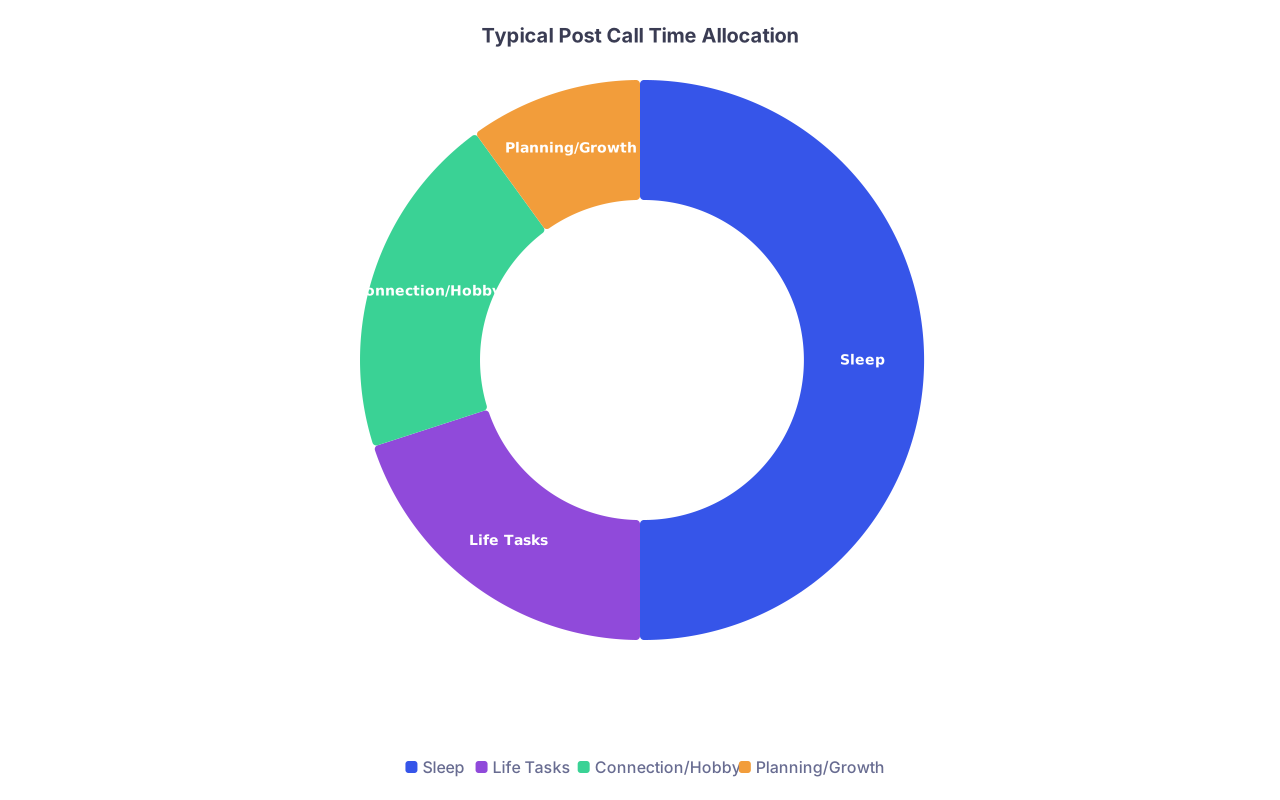
| Category | Value |
|---|---|
| Sleep | 50 |
| Life Tasks | 20 |
| Connection/Hobby | 20 |
| Planning/Growth | 10 |
08:00–09:00 – Transition Out of Hospital Mode
At this point, you should:
- Wrap up sign‑out.
- On your way out:
- Chug water.
- Eat something small (even hospital oatmeal is better than nothing).
- Commute with low stimulation:
- No intense podcasts.
- Music or silence.
09:00–13:00 – Primary Sleep Block
Home.
- Quick shower.
- Dark room.
- Phone on DND or in another room.
- 3–4 hours horizontal. No negotiating.
If you wake earlier, fine. Stay in bed and rest until at least the 3‑hour mark.
13:00–14:00 – Gentle Wake and Food
You’re groggy. At this point you should:
- Get light exposure (open blinds, step outside for 5–10 minutes).
- Eat an actual meal with:
- Protein.
- Some carbs.
- Hydration beyond coffee.
Screens still minimized if possible.
14:00–16:00 – Light Life Tasks Only
Pick 1–3 tasks total from this list:
- One load of laundry.
- Groceries or an online order.
- Pay 2–3 bills.
- Tidy one small area (desk, bedroom, kitchen counter).
Do not try to catch up on everything. That “I’ll fix my whole life post‑call” fantasy is how you end up exhausted and resentful.

16:00–17:00 – Optional Growth Block (Only If You Feel Semi‑Human)
If rotation and fatigue allow, this is where you put:
- 30–45 minutes of:
- Board questions.
- Reading a section of a review book.
- Updating your CV or reading about fellowships.
- Then 15 minutes of planning:
- Look briefly at tomorrow’s schedule.
- Jot down any big to‑dos.
- Check that your alarm is set and clothes are ready.
If you’re wrecked, skip this. Growth is optional; safety and recovery are not.
17:00–20:00 – Connection and Joy
At this point you should deliberately rejoin your life:
- Short walk with a friend, partner, or podcast.
- Dinner with someone who doesn’t need you to be “on.”
- Low‑stakes hobby: reading, light gaming, drawing, cooking.
Avoid:
- Heavy conversations about schedules or relationship conflicts.
- Alcohol as your sole coping tool. One drink with dinner is fine. Three “because I deserve it” is how you wreck sleep.

20:00–22:00 – Wind‑Down and Protect Tomorrow
Final phase.
You should:
- Prep for the next day:
- Pack bag.
- Set out scrubs.
- Quick chart of any must‑do items.
- Aim for an early, full night’s sleep:
- 21:30–22:30 in bed, ideally.
- Screens dimmed at least 30 minutes before.

Final Reality Check
Over a year, your post‑call days will either erode you or protect you. The difference is in a few boring, repeatable decisions:
- Treat post‑call as a structured tool, not a random day off: sleep → small tasks → connection → optional growth.
- Adjust your use of post‑call by season and rotation, instead of pretending July you and March you have the same bandwidth.
- Say “no” early and often to anything on post‑call that doesn’t serve safety, recovery, relationships, or your future.
If you follow that, you won’t just survive residency. You’ll finish the year tired—but not burned out and hollow.


