

Waiting until you’re “actually burned out” is already too late. You need a standing schedule to catch the slide before it buries you.
Here’s the system: quarterly self-audits, with a simple, repeatable structure. No vibes. No guessing. Just a concrete check-in rhythm that fits residency chaos instead of fighting it.
You’re in residency. You don’t have time for a 40-page workbook or a weekend “wellness retreat.” But you do have 60–90 minutes every three months and 10 minutes every week. Use them right and you’ll spot burnout risk before it tanks your performance, your relationships, or your health.
We’ll build:
- A yearly structure (which quarter = which focus).
- A specific checklist for each quarter.
- A short weekly “micro-audit” to keep you honest between quarters.
- A day‑of‑audit playbook so you know exactly what to do and when.
The Yearly Structure: Your Burnout Radar Grid
First, anchor the year. Think in quarters, not months.
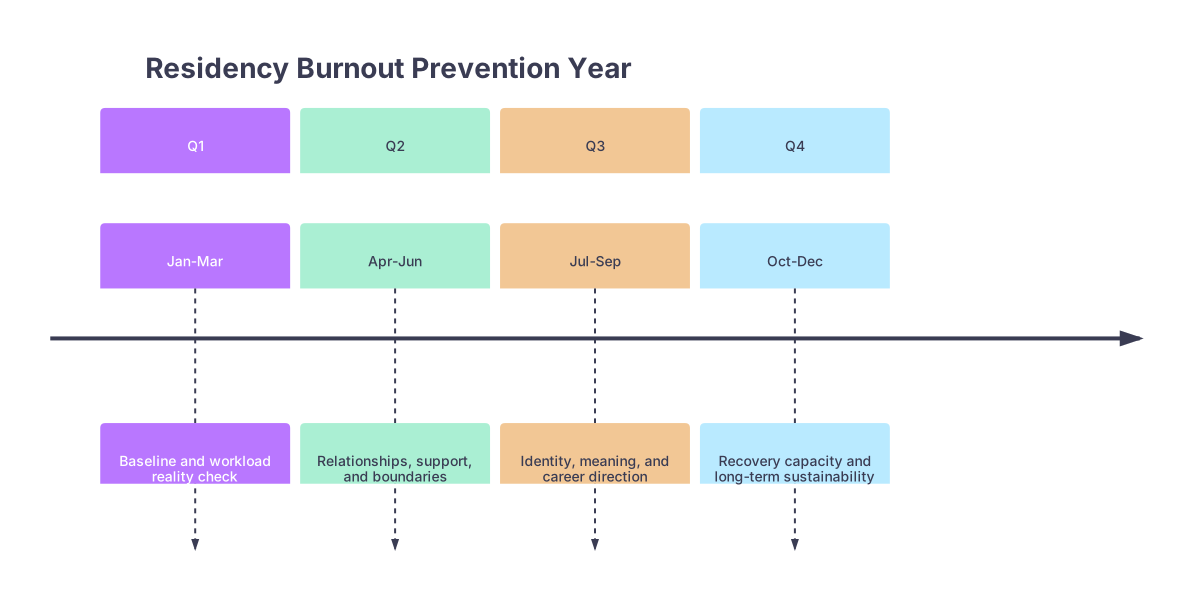
| Period | Event |
|---|---|
| Q1 - Jan-Mar | Baseline and workload reality check |
| Q2 - Apr-Jun | Relationships, support, and boundaries |
| Q3 - Jul-Sep | Identity, meaning, and career direction |
| Q4 - Oct-Dec | Recovery capacity and long-term sustainability |
At this point you should map this to your actual academic year. For most residencies:
- Q1 – Start of academic year (Jul–Sep)
- Q2 – Mid‑fall (Oct–Dec)
- Q3 – Mid‑year to early spring (Jan–Mar)
- Q4 – Late spring to year-end (Apr–Jun)
But to keep language simple, I’ll call them Q1–Q4.
The recurring pieces in every quarterly audit
Every 3 months you’ll run through the same core modules:
- Symptom Check – Are you actually sliding toward burnout?
- Workload Check – Rotations, call, charting, nonclinical tasks.
- Support Check – Who’s in your corner, really?
- Recovery Check – Sleep, energy, off‑time quality.
- Course Correction – 1–3 concrete changes for the next quarter.
Each quarter also gets a special focus:
- Q1 – Baseline and workload mapping
- Q2 – Relationships and boundaries
- Q3 – Meaning and career path
- Q4 – Sustainability and next‑year design
You’re not writing a novel. You’re filling in short, blunt answers. Think: “like pre‑rounding on yourself.”
Q1: Baseline and Workload Reality Check (New Year or New Academic Year)
Q1 is where you set your baseline and stop lying to yourself about how much you’re actually working.
At this point you should block 60–90 minutes on a lighter day (post‑call afternoon, golden weekend, or a jeopardy day that stayed quiet).
Step 1: Run a quick burnout symptom screen
Use a blunt 0–4 rating (0 = never; 4 = daily) for each:
- Emotional exhaustion at work
- Cynicism or depersonalization (eye‑rolling at patients, charting like a robot)
- Feeling ineffective or like nothing you do really matters
- Dreading going into work most days
- Frequent irritability or snapping at people over small stuff
- Physical symptoms: headaches, GI upset, constant colds
- Loss of interest in things you used to enjoy
- Thoughts like “I just need to survive this” as your main coping framework
Add the numbers. Track it every quarter.
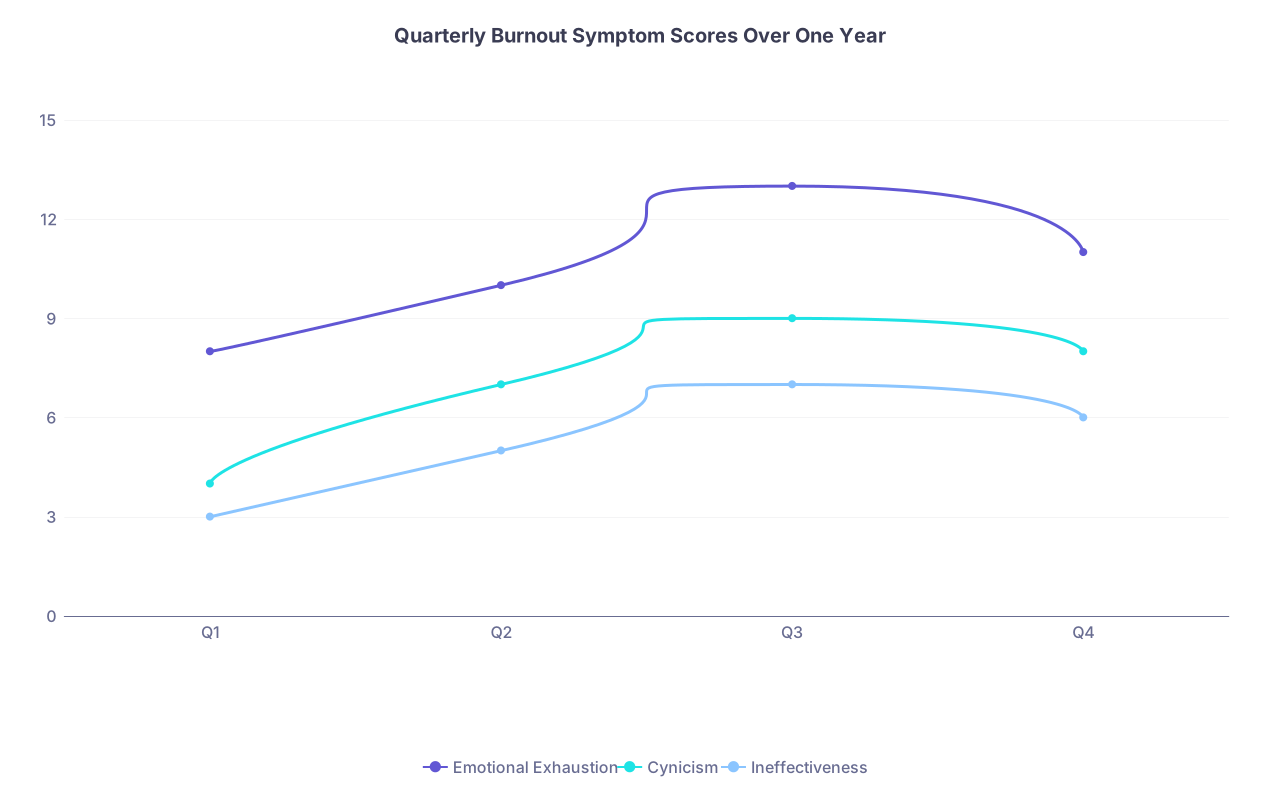
| Category | Emotional Exhaustion | Cynicism | Ineffectiveness |
|---|---|---|---|
| Q1 | 8 | 4 | 3 |
| Q2 | 10 | 7 | 5 |
| Q3 | 13 | 9 | 7 |
| Q4 | 11 | 8 | 6 |
If any item is 3–4 consistently, flag it. That’s not “just busy.” That’s a problem brewing.
Step 2: Map your actual workload
You already know you’re working a lot. That’s meaningless without detail.
Over the past 4 weeks, estimate:
- Average hours per week in hospital/clinic
- Average work hours at home (notes, studying, messages)
- Number of calls/nights in that period
- Number of true days off (no log‑ins, no messaging)
Put it in a simple table. Do not overcomplicate.
| Metric | Number |
|---|---|
| Avg in-hospital hrs/week | 70 |
| Avg at-home work hrs/week | 6 |
| Calls/nights in 4 weeks | 5 |
| True days off (no work) | 2 |
When you see this quarter over quarter, patterns jump out. That’s the point.
Step 3: Identify your top 3 energy leaks
In Q1, at this point you should list the 3 things that drain you the most, specifically:
- “Endless post‑clinic inbox messages from 7–9 pm”
- “Sign‑out chaos with cross‑cover every night”
- “Getting stuck with all the social admits on nights”
For each, write one line:
- What exactly is happening
- What part is under any degree of your control (even 10%)
Step 4: Pick 1–2 Q1 course corrections
Examples that actually work for residents:
- Ask your chief to switch you from 6‑day stretches to 5+1 format on certain rotations if possible.
- Batch inbox time into two 20‑minute chunks instead of “whenever it pings.”
- Trade 1–2 calls with a co‑resident to get one real 3‑day recovery block.
Do not write 10 goals. You’ll do none of them. Pick 1–2 changes you can implement within 2 weeks.
Q2: Relationships, Support, and Boundaries (Mid‑Fall / Mid‑Year)
By Q2, the shine has worn off. You know the system. Now it’s about whether you’re isolated or supported.
At this point you should schedule your Q2 audit after a steady week, not right after a brutal ICU stretch. You want reality, not skewed by one nightmare block.
Step 1: Repeat the core symptom and workload checks
Same 0–4 symptom ratings. Same 4‑week workload snapshot.
Then compare Q1 to Q2:
- Are scores creeping up?
- Is workload stable but symptoms worse? (That’s your coping reserve dropping.)
Step 2: Do a relationship inventory
Write down names in four buckets:
- Work allies – Co‑residents, attendings, nurses you actually trust
- Outside‑medicine people – Partner, family, friends, roommates
- Mentors – Anyone who’s invested in your development
- Professional support – Therapist, PCP, coach, peer support group
For each bucket, rate 0–3:
- 0 – Basically no one
- 1 – One person, contact is rare/inconsistent
- 2 – 1–2 people, talk at least monthly
- 3 – Several people, talk at least weekly or feel solidly supported
This looks touchy‑feely. It’s not. Loneliness is one of the fastest predictors of burnout crash I’ve seen.
Step 3: Boundary audit
At this point you should be honest about where you’re bleeding time and energy:
- How often are you answering non‑urgent work messages on days off?
- Do attendings or co‑residents routinely push you to “just handle it” past the end of your shift?
- Are you saying “yes” to extra QI projects, notes, or favors that don’t align with any of your goals?
List three situations in the past month where you:
- Knew you didn’t have capacity
- Said yes anyway
- Were resentful after
That’s where you start.
Step 4: Q2 course corrections – support and limits
Choose 2–3 specific moves:
- Schedule one standing check‑in (30–45 minutes) with a mentor every 6–8 weeks.
- Set an expectation with co‑residents: “I’m happy to help, but I’m protecting one weekend day per month as absolutely off‑limits.”
- Book a therapy intake (yes, actually book it; do not just “consider” it).
- Join one resident peer group (even if it’s just a monthly dinner with your class).
Think of Q2 as building scaffolding before the structure starts to crack.
Q3: Meaning, Identity, and Career Direction (Mid‑Year / Winter)
Q3 is dangerous. Holidays, fatigue, long stretches of “same rooms, same problems.” This is when thoughts like “Maybe I chose the wrong field” show up more often.
At this point you should not confuse existential dread with “I hate this rotation.” You need signal, not noise.
Step 1: Repeat the core checks
Symptom scale. Workload snapshot. Relationship scores.
Now, add a simple Meaning & Alignment Check. Rate 0–4:
- “My daily work feels connected to why I chose medicine.”
- “I can see at least one path where this career feels sustainable.”
- “I use my best skills at least weekly in my current role.”
- “I feel like I’m growing in ways that matter to me, not just ticking boxes.”
If most of these are 0–1, you’re running on fumes.
Step 2: Track what actually gives vs drains meaning
For 1–2 weeks around your audit, jot down—either in your notes app or a paper index card:
- One moment per day that felt good or meaningful (tiny is fine: “family thanked me,” “nailed a tricky explanation,” “teaching intern went well”)
- One moment that felt pointless or soul‑sucking
Then, on audit day, categorize both lists:
- What’s common in the meaningful moments? (Teaching? Procedures? Counselling? Team leadership?)
- What’s common in the draining ones? (Endless paperwork? Certain patient populations? Bad team dynamics?)
This is your early warning system for long‑term mismatch.
Step 3: Reality check your career story
At this point you should write short, unfiltered answers to:
- “If I could magically rearrange my next 3 years of training, what would change?”
- “If I left medicine entirely, what would I miss most? What would I not miss at all?”
- “If I stay in this specialty, what kind of job at 5–10 years out actually sounds tolerable or maybe exciting?”
You’re not committing to anything. You’re making the quiet thoughts visible.
Step 4: Q3 course corrections – alignment
Concrete examples:
- Ask to build in one elective that aligns better with your strengths (palliative, global health, informatics, teaching, etc.).
- Start a low‑stakes side project: resident teaching curriculum, small QI project that you actually care about, or a research question that bothers you.
- Book a career advising meeting with your PD or faculty you trust—specifically to talk about career fit, not just CV polishing.
This quarter is about steering the ship 5 degrees, not turning it 180 overnight.
Q4: Recovery Capacity and Long‑Term Sustainability (End of Year)
By Q4, you’ve accumulated fatigue, habits, and data. This is where you decide what has to change next year, not just next week.
At this point you should plan your Q4 audit for a time when you can also review your schedule for the upcoming year (or at least the next 6 months).
Step 1: Repeat the core checks, and add a “chronicity” note
Same symptom, workload, relationship, meaning ratings.
Then, for each major symptom that’s 3–4, ask:
- “How many months has this been at this level or higher?”
If it’s been 3+ months, that’s not a blip. That’s your new baseline. That’s when people hit walls—panic attacks, tears in workrooms, mistakes that scare you.
Step 2: Sleep, health, and body audit
Blunt questions:
- Average hours of sleep per night last month
- How many nights per week you fall asleep within 20 minutes (vs scrolling, ruminating)
- Weight changes >5–10 lbs this year, unintentional
- New or worsened medical issues you’ve ignored (BP, migraines, GI, etc.)
- Last time you saw your own doctor or had labs done
If your patients described that pattern, you’d be worried. Treat yourself like you’re not special.
Step 3: Next‑year design: what’s non‑negotiable?
Pull up next year’s projected rotation schedule if you have it, or at least “what’s likely.”
At this point you should list:
- 2–3 rotations that historically crush you (ICU? Nights? Inpatient wards under a specific attending culture?)
- 1–2 rotations that restore you (electives, clinic, research months)
Now decide on non‑negotiables:
- “I will never do more than X weeks of back‑to‑back nights.”
- “I need at least one lighter month every 4 months.”
- “I will protect one continuous 3‑day block off at least twice next year.”
You might not get everything. But if you never articulate it, you definitely won’t.
Step 4: Q4 course corrections – structural changes
These are often bigger moves:
- Talk to chiefs/PD about sequencing heavy blocks with some buffer.
- If your symptoms are high and chronic, initiate a conversation about leave, schedule modification, or formal support.
- Book all your own healthcare appointments (PCP, therapist, dentist) now for the next 3–6 months—treat them like mandatory conferences.
You’re building a system designed for a human, not a robot.
Weekly “Micro‑Audit”: 10 Minutes, Same Time Every Week
Quarterly audits catch big drifts. Weekly micro‑audits keep you from rationalizing every disaster as “just this week.”
Pick a fixed time: Sunday evening, post‑call afternoon, or commute home one day.
At this point you should answer these 5 questions in 2–3 words each, written somewhere you’ll see again:
- Energy: 0–10 this week
- Sleep: average hours per night
- Dread: how much did you dread work, 0–10
- Connection: did you have at least one real conversation that wasn’t about work? (Y/N)
- One moment I’m proud of this week

If:
- Energy <4 for 3 weeks
- Dread >7 for 3 weeks
- Connection = N more than 2 weeks in a row
…you don’t wait for the next quarter. You move up your next full audit and consider talking to someone (chief, trusted attending, therapist) now.
Day‑Of Audit: Hour‑by‑Hour Playbook
You’re a resident. You’re busy. Here’s the bare‑bones schedule for your quarterly audit.
Aim for a 60–90 minute block.
Minute 0–10: Set up
- Get off the unit. Off your couch if possible. Neutral spot: library, coffee shop, empty call room mid‑day.
- Phone on Do Not Disturb. Timer on 60 or 75 minutes.
- Open either a simple doc or a notebook dedicated to “Quarterly Self‑Audit.”
Minute 10–25: Core symptom + workload check
- Fill out 0–4 ratings for symptoms.
- Do your 4‑week workload snapshot table.
- If this isn’t your first audit, glance at prior numbers. Circle anything that got worse.
Minute 25–40: Quarter‑specific focus
Depending on quarter:
- Q1 – Energy leaks & workload reality
- Q2 – Relationship and boundary inventory
- Q3 – Meaning/identity prompts
- Q4 – Recovery and next‑year design
Don’t overthink. Short answers beat perfect answers.
Minute 40–55: Decide 1–3 course corrections
Use this rule:
- At least 1 must be implementation‑ready in 7 days.
- At least 1 should involve another human (asking for support, scheduling a meeting, adjusting a rotation if possible).
Write them as commitments:
- “By next Sunday, I will __.”
- “I will email __ by __ to discuss __.”
Minute 55–60 (or 75): Close the loop
- Add your symptom totals and workload snapshot to a simple running log.
- Write the date of your next quarterly audit at the top of a new page or calendar. Non‑negotiable.
If you’re repeatedly scoring high on symptoms (especially with physical problems, crying at work, or medical errors creeping in), this is also the moment you:
- Tell someone with authority you trust (chief, APD, PD).
- Book professional help if you haven’t yet.
Burnout isn’t a character flaw. It’s the predictable output of a bad system. Your audits just make the early signal loud enough that you can act on it.
Quick Reference: What You Should Be Doing When
| Timepoint | Main Focus | Key Actions (at this point you should…) |
|---|---|---|
| Q1 | Baseline & workload | Score symptoms, map hours, name top 3 energy leaks, choose 1–2 workload tweaks |
| Q2 | Support & boundaries | Recheck scores, map allies, identify 3 boundary failures, add 2–3 concrete support/limit moves |
| Q3 | Meaning & direction | Recheck scores, track meaningful vs draining tasks, reflect on career story, pick 1–2 alignment steps |
| Q4 | Sustainability | Recheck scores with chronicity, audit sleep/health, define non-negotiables, design structural changes for next year |
| Weekly | Micro-audit | Rate energy/dread, note sleep & connection, flag 3-week negative trends early |


