

The way most residents use elective months is wasteful. You cannot “vacation” your way out of cumulative burnout. You have to engineer your electives as a structured recovery block.
You are not lazy. You are cooked. Different problem. Different solution.
Below is a chronological, boots-on-the-ground guide to using elective time strategically to pull out of a burnout spiral without blowing up your training, your reputation, or your relationships.
6–9 Months Before Your Elective: Admit You Are Burning Out, Then Start Planning
At this point you should stop pretending this is just a “rough month.”
You know the pattern:
- You stare at sign-out and feel nothing. Just numb.
- You snap at a nurse for paging you “too much,” then feel guilty all night.
- You go home, scroll your phone in bed, and never actually recharge.
That is cumulative burnout. It does not magically resolve between Q4 calls.
Step 1: Name the problem and quantify it
By 6–9 months out from a major elective block (or even a 2–4 week elective), you should:
Take a burnout inventory:
- Maslach Burnout Inventory (if your GME offers it)
- Or a quick self-assessment: rate 1–10 for:
- Emotional exhaustion
- Cynicism / depersonalization
- Sense of accomplishment
Track for 2 weeks:
- Sleep duration
- Days you exercise
- Days you eat a full meal during shift
- Number of true days off in 14 days
You are collecting baseline data. This will matter when you try to convince yourself later that “I’m fine, I don’t need to use that elective for recovery.”
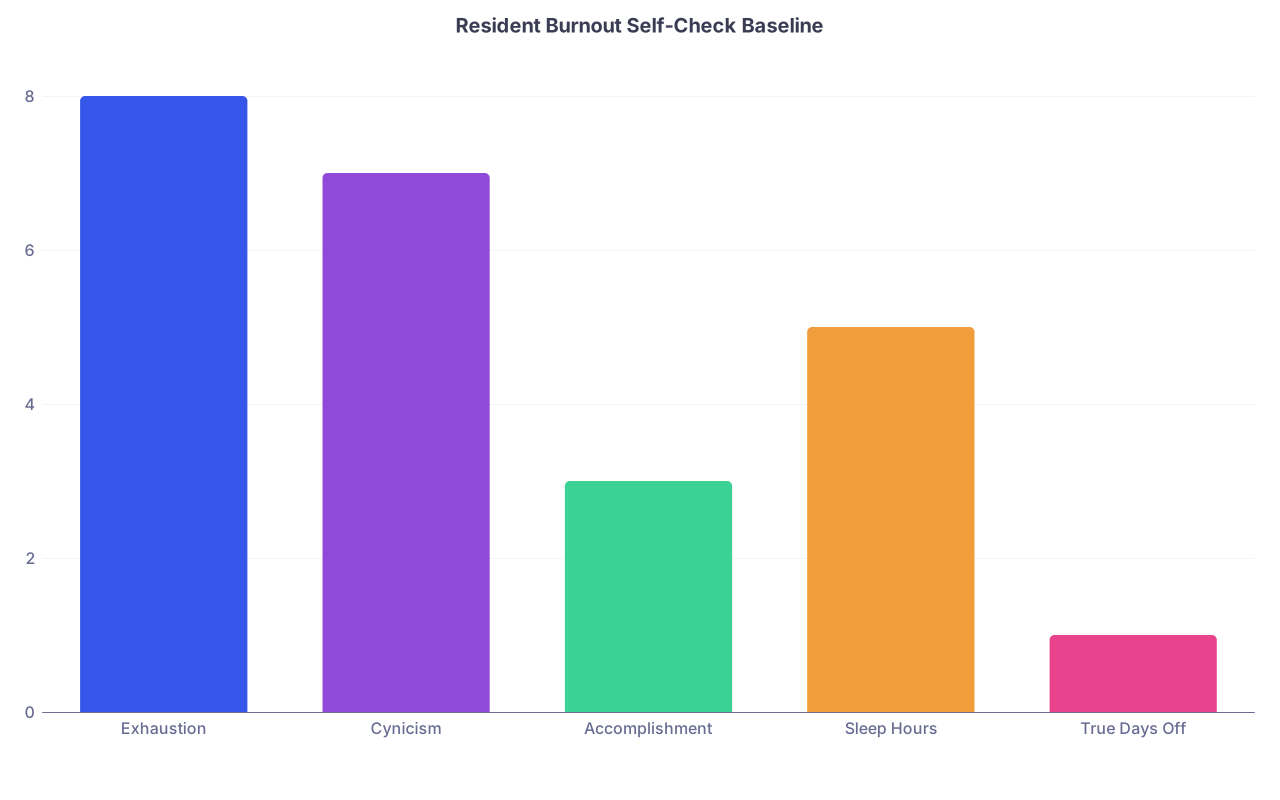
| Category | Value |
|---|---|
| Exhaustion | 8 |
| Cynicism | 7 |
| Accomplishment | 3 |
| Sleep Hours | 5 |
| True Days Off | 1 |
If your exhaustion ≥ 7, cynicism ≥ 6, or accomplishment ≤ 4, you cannot afford to treat electives as just “interesting rotations.” They must become recovery tools.
Step 2: Audit your remaining electives
At this point you should open your program’s rotation schedule and count exactly what is left:
- How many elective blocks?
- How long each (2 weeks, 4 weeks, 1–2 months)?
- Which are flexible vs locked (e.g., required subspecialty)?
Put it in a simple table:
| Elective Block | Duration | Flexibility | Ideal Timing |
|---|---|---|---|
| Block 1 | 4 weeks | High | Winter |
| Block 2 | 2 weeks | Medium | Spring |
| Block 3 | 4 weeks | Low | Summer |
You are not just picking “cool” electives. You are positioning rest and lower-intensity months before and after your heaviest rotations.
Step 3: Talk to the right people early
Six to nine months out is when you quietly start having targeted conversations:
- Program director: “I am trying to structure my electives to stay sustainable. I know X rotation is heavy; can I place my outpatient or research elective immediately after it?”
- Chief or scheduler: “Are there any months that are chronically under-staffed where it would be risky to take something lighter? I want to plan honestly around that.”
You are not asking for “time off.” You are planning to maintain performance.
3–4 Months Before: Design the “Recovery Elective” Instead of Letting It Happen to You
At this point you should be locking in the nature and location of your elective.
The wrong move: picking something because friends said, “The hours are chill, you will love it,” then filling the free time with random tasks and doom-scrolling.
The right move: designing an elective with three explicit goals:
- Reduce clinical intensity.
- Rebuild physical and mental reserves.
- Invest in something that matters to your future (so you do not feel like you are “wasting” it).
Step 1: Choose the right type of elective
From a burnout standpoint, electives fall into three rough categories.
| Type | Burnout Risk | Recovery Potential |
|---|---|---|
| Inpatient-heavy | High | Low |
| Ambulatory/outpatient | Medium | High |
| Research/administrative | Low | Very High |
You want a block that is:
- Predictable hours.
- Limited or no overnight call.
- Low “code blue every shift” adrenaline.
Concrete examples that usually work:
- Outpatient subspecialty clinics (endo, rheum, derm, palliative clinic).
- Research or QI elective with a clear project and flexible schedule.
- Elective at a slower affiliate hospital, community site, or VA system.
- Non-clinical electives: education, simulation, ultrasound (if your program allows real flex).
What I have seen sink residents is trying to “fix” burnout by doing a “prestige” or ultra-competitive away elective with intense expectations. That is career FOMO driving the bus, not survival.
Step 2: Time the elective around your worst blocks
Look at the 4–6 months around your elective:
- Do you have MICU, SICU, night float, busy wards?
- You should place the recovery elective:
- Immediately after a brutal run, or
- Immediately before it, as a preload of rest.
If you are already fraying now, put the elective as soon after the heaviest run as the schedule allows. Do not be a hero and push it to “later when it will be more convenient for fellowship applications.” There may not be a later if you crash.
6 Weeks Before: Build the Recovery Blueprint
At this point you should have the elective type and dates set. Now you build the actual structure.
Vague elective: “I will just rest more and maybe start a project.”
Strategic elective: “On this elective I will: sleep 7–8 hours most nights, restart exercise, see a therapist weekly, and move one career project substantially forward.”
Step 1: Define your “Recovery Targets”
Pick 3–5 specific, measurable targets across four domains:
- Physical
- Mental / emotional
- Social
- Professional / career
Example plan:
Physical:
- Sleep: 7+ hours, ≥ 5 nights per week.
- Movement: 30 minutes of walking or exercise, 4 days per week.
Mental / emotional:
- Weekly therapy or counseling session.
- 10 minutes of guided breathing or meditation on 4 days per week.
Social:
- One intentional, phone-free meal with a friend/partner/family each week.
- One completely non-medical activity per week (museum, hike, movie, whatever).
Professional:
- Complete 2–3 key tasks on a QI or research project.
- Update CV and personal statement draft if applying to fellowship.
Write these down. Literally. If it is not written, it will dissolve the first time your attending emails you a paper to read.

Step 2: Negotiate expectations with your elective supervisor
Before the elective starts (ideally 2–4 weeks before), send a short email or have a quick conversation:
- Clarify:
- Clinic days and hours.
- Remote work / reading expectations.
- Weekends and call responsibilities (ideally none).
- Any required deliverables (presentation, paper summary, etc.).
Say something like:
“I am really looking forward to this elective as a chance to go deeper into outpatient cardiology and also reset a bit after a heavy MICU run. I want to make sure I am meeting your expectations while keeping hours sustainable. Could we review typical daily schedule and any required reading/projects?”
You are signaling professionalism, not laziness.
Step 3: Pre-schedule your supports
At this point you should get concrete:
Book:
- Therapy/counseling sessions for each week of the elective.
- Primary care or specialist visits you have been postponing.
- Dental/vision/whatever you have ignored for two years.
Reset:
- Refill essential meds.
- Check that you have functional running shoes, work bag, and any necessary gear so you are not “too tired” to exercise because your shoes hurt.
Week-by-Week Plan During the Elective Block
Now we break down the elective month (4 weeks). Adjust if you have a 2-week or 6-week block, but the order still works.
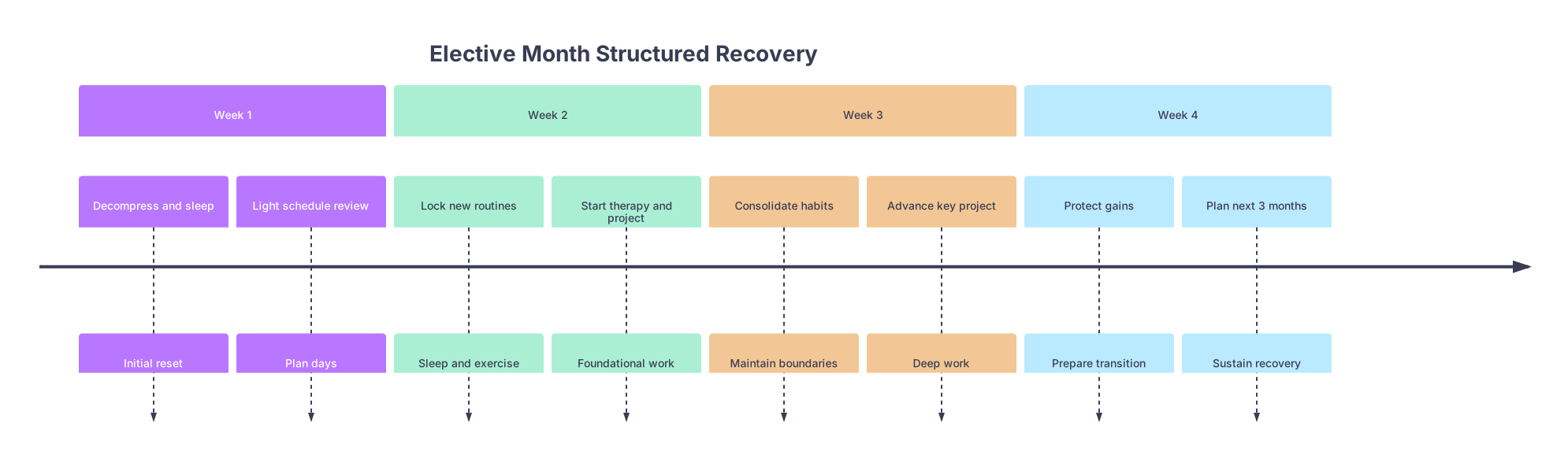
| Period | Event |
|---|---|
| Week 1 - Decompress and sleep | Initial reset |
| Week 1 - Light schedule review | Plan days |
| Week 2 - Lock new routines | Sleep and exercise |
| Week 2 - Start therapy and project | Foundational work |
| Week 3 - Consolidate habits | Maintain boundaries |
| Week 3 - Advance key project | Deep work |
| Week 4 - Protect gains | Prepare transition |
| Week 4 - Plan next 3 months | Sustain recovery |
Week 1: Decompression and Baseline Reset
At this point you should not overstuff the first week. The goal is to stop the physiological free fall.
Objectives:
- Catch up on sleep, but not to the point you shift your circadian rhythm into chaos.
- Learn the rhythm of the elective.
- Start—but not perfect—new routines.
Daily structure (example for M–F clinic-based elective):
- Morning:
- Wake at a consistent time (even if it is a bit later than ward months).
- 5 minutes of stretching + a glass of water before picking up your phone.
- Day:
- Do the work of the elective. Show up on time. Be engaged, but do not volunteer for every extra project on day 1.
- Evening (3–4 days this week):
- 10–15 minute walk after work.
- One short decompression ritual: journal 3 lines, talk to someone, or just sit outside for 5 minutes without your phone.
Avoid the Week 1 trap: “I feel so much better already, I should add extra call shifts or cover for someone else.” No. You are still depleted. You just rose from 20% to 40%.
Week 2: Lock in Recovery Routines and Start the “Future You” Work
At this point you should be feeling slightly more human. Which is exactly when many residents sabotage themselves by filling the restored capacity with more obligations.
Do the opposite: stabilize.
Objectives:
- Make the key behaviors automatic-ish:
- Bedtime and wake time.
- Movement 3–4x/week.
- Therapy started.
- Initiate—but not rush—the professional project.
Example weekly checklist:
- Sleep ≥ 7 hours on at least 4 nights.
- Exercise/movement 4 times (even if just brisk walking).
- Attend 1 therapy/counseling session.
- Spend 2 sessions of 45–60 minutes on a career project (paper, presentation, CV, fellowship planning).
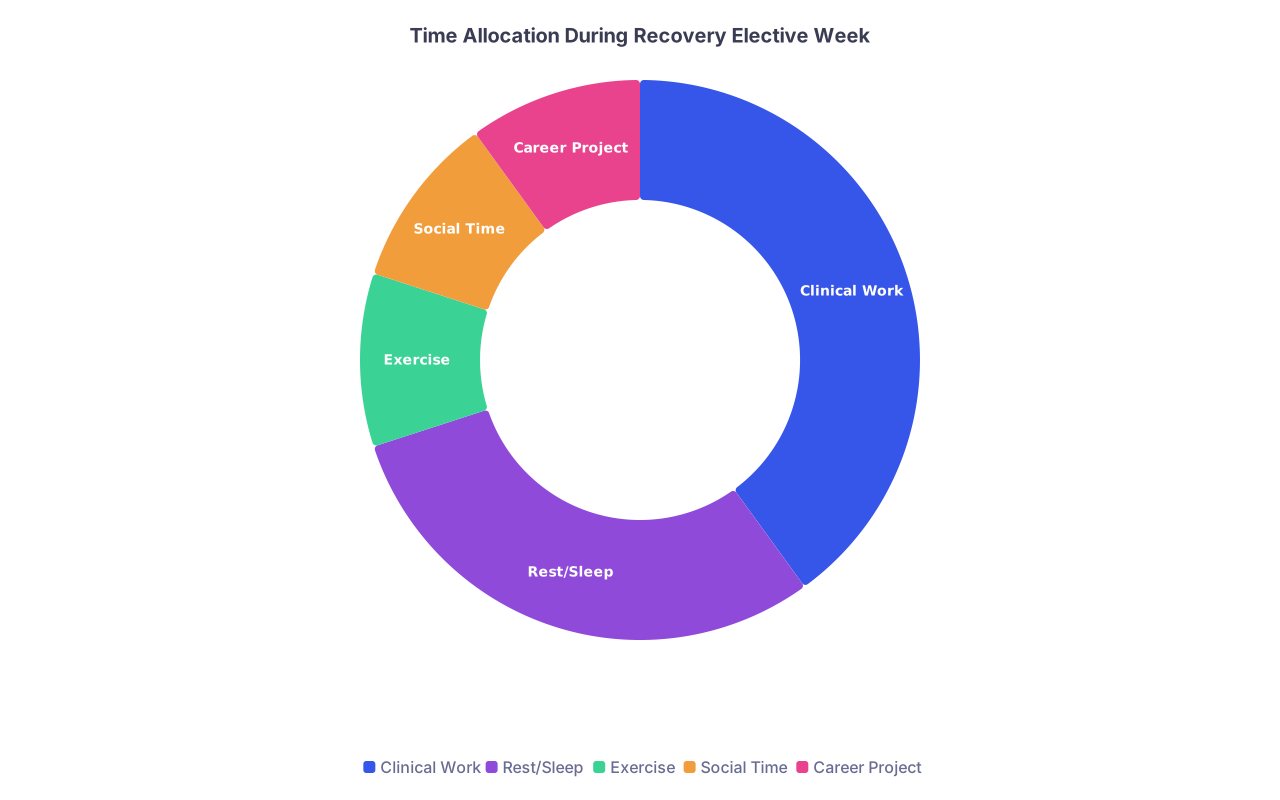
| Category | Value |
|---|---|
| Clinical Work | 40 |
| Rest/Sleep | 30 |
| Exercise | 10 |
| Social Time | 10 |
| Career Project | 10 |
Notice that clinical work is still the largest slice. You are not on vacation. You are on a lower-intensity, rebalancing month.
Week 3: Consolidate and Deepen
By Week 3, you should see early signs the burnout is loosening its grip:
- Your temper is slightly longer.
- The idea of another year of residency does not make your chest tighten.
- You can read a non-medical book chapter without re-reading the same paragraph 4 times.
Now your job is to consolidate.
Objectives:
- Keep routines boringly consistent.
- Push a single meaningful project forward.
- Avoid new big commitments.
Focus areas:
- Habits:
- Same bedtime/wake time, even if your body fights it.
- Same movement schedule.
- Project:
- Choose ONE primary professional task (e.g., draft methods section, complete IRB, build a teaching slide deck).
- Schedule 3 focused blocks (45–60 minutes) across the week.
This week is about proving to yourself that you can function at a high level without sacrificing your health entirely. That is a skill, not a personality trait.
Week 4: Protect Gains and Plan the Next 3 Months
At this point you should be turning toward the future. The worst move is to slide back into a brutal block with no transition plan.
Objectives:
- Maintain core routines.
- Build a buffer and a re-entry strategy.
- Decide what you will not do in the next 3 months.
Step 1: Do a quick before/after assessment
Repeat your earlier self-check:
- Rate exhaustion, cynicism, accomplishment again.
- Look at your sleep and activity logs.
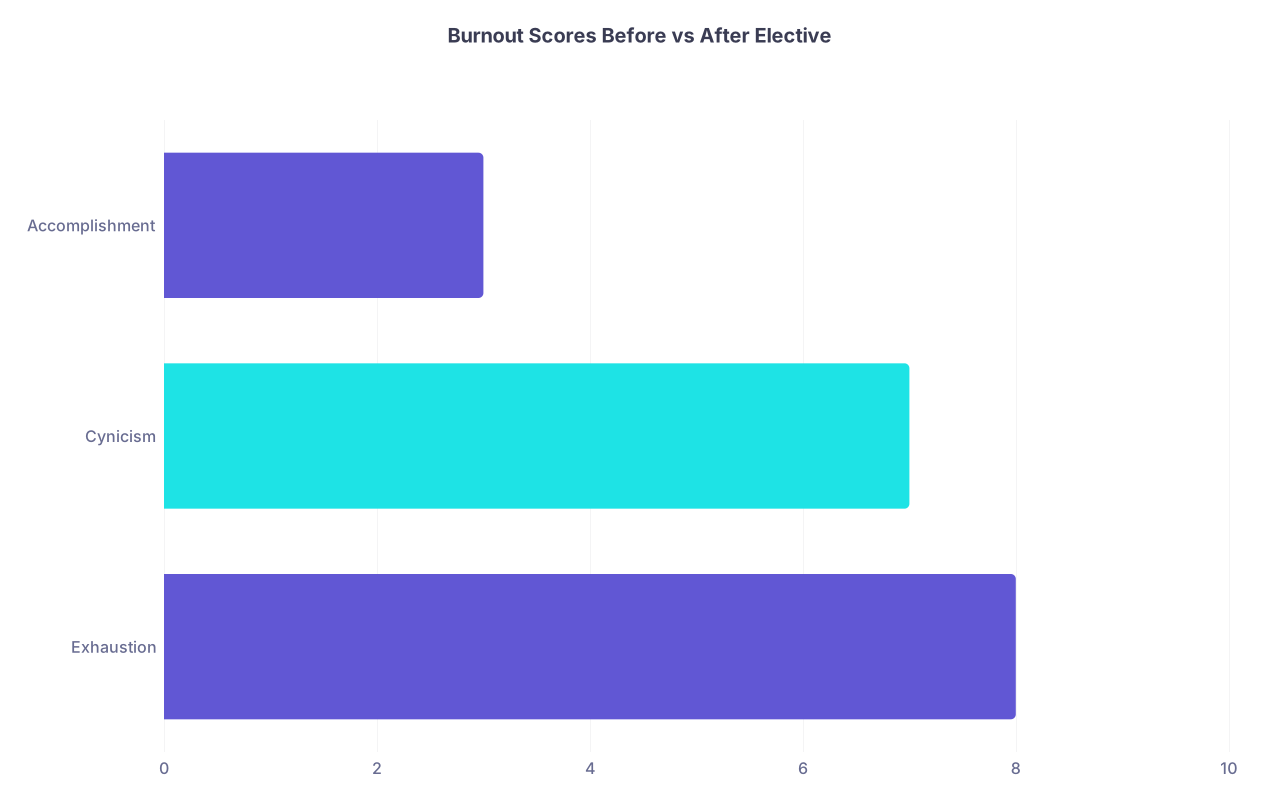
| Category | Value |
|---|---|
| Exhaustion | 8 |
| Cynicism | 7 |
| Accomplishment | 3 |
(Imagine your post-elective scores shift to 5, 4, 6. Not perfect. But directionally better. That is success.)
Step 2: Plan the next 12 weeks
You need a minimal, sustainable maintenance plan that survives even on MICU or nights:
Non-negotiables for any block:
- One short movement day per week (even on nights: a 10-minute stair walk).
- One protected, unplugged hour per week (no pager, no email, no phone if possible).
- One meal per day that is not eaten standing, moving, or charting.
Rotation-specific strategies:
- On ward months:
- Batch low-value tasks (e.g., email, paperwork) to 1–2 specific time slots per day.
- Guard your post-call sleep like it is a procedure.
- On nights:
- Pre-plan your sleep window and avoid random napping patterns.
- Use a consistent “pre-night shift” ritual (walk, shower, 10-minute quiet time).
- On ward months:
Schedule check-ins with yourself every 4 weeks. If your exhaustion returns to pre-elective levels, you intervene earlier, not “when things calm down.” They never do.
Special Scenarios: When Burnout Has Already Blown Things Up
Sometimes by the time you are planning electives, the damage is visible:
- Documented professionalism concerns.
- Recurrent sick days.
- PD “check-in” meetings that are not casual.
In that case, your elective month is not just for recovery. It may need to function as a structured remediation and safety net.
At this point you should:
- Be radically honest with your PD or trusted faculty:
- “I am struggling with sustainability. I need to use my upcoming elective to reset and avoid worse outcomes.”
- Involve your institution’s wellness or mental health services formally.
- Consider:
- Part-time return.
- FMLA or medical leave if the floor is dropping out.
Using an elective as a band-aid over a clinical depression or severe anxiety disorder is malpractice against yourself. If your symptoms are severe—suicidal thoughts, complete emotional blunting, panic attacks—you need more than an outpatient-like month.

Red Flags During Your Elective: When Recovery Is Not Happening
During the block, watch for these:
- You sleep 10–12 hours daily and still feel like a corpse.
- You feel dread even going to a low-intensity clinic.
- You are emotionally flat with family and friends.
- You cannot stop crying once you start.
- You find yourself fantasizing about accidents or not waking up.
These are not “normal” residency exhaustion anymore. At that point you should:
- Tell someone in your program.
- Contact mental health services or your physician.
- Consider modifying the elective mid-block to accommodate real treatment.
You can recover from burnout. You cannot willpower your way out of major depression or severe PTSD alone.
Long-Term: Turning One Elective Into a Pattern, Not a Fluke
A single well-designed elective can pull you back from the edge. It will not fix a toxic system on its own. You need patterns.
Over the rest of residency, your goal is to:
- Alternate heavy and light rotations whenever possible.
- Protect at least one elective or “lighter month” per year as a structured reset, not just extra productivity time.
- Learn your early warning signs:
- For some: anger and irritability.
- For others: numbness and disengagement.
- Or the classic: endless scrolling because real life feels too loud.

Today: The One Step You Need to Take
Do not wait until your next elective actually starts.
Today, open your rotation schedule and your calendar. Identify the next elective block you control and rename it—literally—in your calendar to “Recovery Elective.”
Then write down three concrete outcomes you want by the end of that month: one physical, one emotional, one professional.
That is your starting blueprint. Refine it as you get closer, but commit now that your elective months will not be random. They will be your structured counter-attack against burnout.


