The way most residents handle post-call days is broken. You are wasting the most valuable recovery window you have.
You already know the pattern:
- Drag yourself home post-call.
- Crash hard at 9 or 10 a.m.
- Wake up groggy mid-afternoon or early evening.
- Then lie in bed at 1 a.m. wondering why you can’t fall asleep.
- Start your next shift already behind.
This is not a willpower problem. It is a system problem. And systems can be fixed.
What you need is not “try to sleep when you can.” You need a repeatable, boringly consistent post-call routine that:
- Protects your long-term sleep rhythm.
- Actually makes you feel functional the next day.
- Does not fall apart just because the night was brutal.
Let us build that.
Step 1: Decide Your Non-Negotiable Goal for Post-Call Days
Most residents never define what “success” on a post-call day even looks like. So everything becomes reactive: how tired you feel, how busy the night was, what texts you wake up to.
You need a clear primary goal. Pick one of these as your default:
Protect tomorrow’s sleep schedule.
Priority: anchor bedtime around 22:00–23:30 so you do not destroy your circadian rhythm.Maximize same-day recovery for another brutal shift tomorrow.
Typical for q2–q3 calls or ICU weeks when sleep debt is extreme and circadian regularity is already wrecked.
If you are on a “normal” schedule (q4+, 28-hr calls, standard wards), you should almost always choose option 1: protect the circadian rhythm.
If you are in a stretch where you are just trying not to collapse (e.g., q2 trauma, July ICU as a new resident), option 2 may be temporarily necessary.
The routine below assumes you are doing what most programs intend with post-call days:
Use them to protect and stabilize your sleep schedule.
Step 2: Use a Simple Decision Flow Right After Sign-Out
If you “see how you feel” post-call, you will lose. Fatigue destroys judgment. You need rules.
Use this decision flow before you leave the hospital:

| Step | Description |
|---|---|
| Step 1 | Sign out post call |
| Step 2 | Stay awake, short nap only |
| Step 3 | Sleep 3 to 4 hours |
| Step 4 | Stay awake, nap later |
| Step 5 | Sleep 2 to 3 hours |
| Step 6 | Stay awake, nap 60 to 90 min max |
| Step 7 | Current time |
| Step 8 | How sleepy |
| Step 9 | How sleepy |
Memorize the practical version:
- Home before 9 a.m. and absolutely wrecked → core sleep 3–4 hours.
- Home before 11 a.m., very sleepy but not destroyed → 2–3 hours.
- Home after 11 a.m. → strictly limit to a 60–90 min nap or stay awake if possible.
Zero debate. You follow the rule you picked, not your 9 a.m. zombie brain.
Step 3: Build a Pre-Sleep “Landing Checklist” (0–30 Minutes After Hospital)
What you do in the 30 minutes right after leaving the hospital decides whether your day recovers or unravels.
Your job in this window is simple: land the plane.
Here is a checklist that actually works:
Micro-reset before you leave the building (2–5 minutes)
- Go to the restroom.
- Wash your face with cold water.
- Long exhale breathing:
- Inhale for 4 seconds
- Exhale for 6–8 seconds
- 5–10 breaths.
- Purpose: tell your nervous system the emergency is over.
Control caffeine on the walk/drive home
- If it is after 9 a.m. and you intend to sleep → no more caffeine.
- If you are driving home dangerously sleepy:
- Caffeine now is safer than falling asleep at the wheel.
- But keep it small: 50–100 mg (half cup coffee or small tea), not a 300 mg energy drink.
Absolute rule: no errands, no “just one thing”
- No grocery store.
- No pharmacy.
- No “quick Target run.”
- Every resident who “just stops quickly” ends up awake 3 hours longer than needed. I have seen this kill entire weeks of recovery.
Home entry routine (5–10 minutes)
- Drop bag in the same place.
- Take off shoes. Change into soft, non-work clothes.
- Quick hygiene:
- If not too wired: full hot shower – lowers core body temp after and makes sleep easier.
- If you are about to pass out: at least wash face, brush teeth. Do not go to bed feeling like the hospital.
Decide sleep window out loud
- Literally say it (yes, out loud):
- “I am sleeping from 09:30 to 12:30. Alarm set.”
- Anchor it in your brain as a fixed block, not an endless crash.
- Literally say it (yes, out loud):
You are not “collapsing.” You are executing a controlled landing.
Step 4: Design Your Post-Call Sleep Block Like a Procedure
Post-call sleep is not normal sleep. The enemy is oversleeping into the afternoon and destroying your ability to sleep at night.
Treat this like a procedure. Set it up deliberately.
Your target block
For typical 24–28 hour call:
- Core sleep: 3–4 hours if home before 9–10 a.m.
- Shorter block (2–3 hours): if you need to protect an earlier bedtime or you got some sleep overnight.
- Cap wake-up time: aim to be up by 13:00–14:00 at the latest in most rotations.
Concrete setup steps
Right before bed:
Room environment
- Blackout or near-dark.
- Room slightly cool if possible.
- White noise if you live near traffic or roommates.
Tech rules
- Set two alarms: one at your planned wake-up, one 10–15 minutes later as a safety.
- Put the phone out of arm’s reach.
- No scrolling “just for a second.” You know you will lose that fight.
Sleep aids
- If you routinely need something:
- 3–5 mg melatonin the night before call, not post-call morning.
- For the actual post-call block, try to avoid heavier sedatives unless you are working with a physician on this. They wreck the ability to wake up and can make you feel hungover.
- What is allowed:
- Earplugs.
- Eye mask.
- White noise app.
- If you routinely need something:
Mental offload (2 minutes)
- Keep a notepad by bed.
- Write down:
- Any patient you are still worrying about.
- Any task for tomorrow.
- Tell yourself: “I will think about this after I wake up.” This stops rumination.
Then lie down. Do not start a TV episode. Do not open email. Sleep is the only job now.
Step 5: The Wake-Up Protocol (How Not to Sleep Until 17:00)
If you do not have a strict wake-up routine, fatigue will pull you back into bed.
Your wake-up protocol:
First 60 seconds
- As soon as the alarm goes off: sit up immediately. Do not negotiate.
- Feet on the floor.
- One long stretch, arms overhead.
- If you hit snooze, you are at high risk of turning 3 hours into 6.
Light exposure (within 5 minutes)
- Open blinds fully.
- If it is dark/overcast or winter:
- Use a bright light or, ideally, a 10,000 lux light box for 15–20 minutes while you sit.
- Bright light tells your circadian system: “We are awake now.”
Hydration + small intake
- Drink a full glass of water (250–500 ml).
- Light snack with some protein or complex carb:
- Yogurt + granola.
- Toast + peanut butter.
- Half a sandwich.
- This stabilizes blood sugar and reduces that “I feel worse after sleeping” vibe.
Caffeine timing
- If waking before noon:
- You can have caffeine, but keep it moderate (100–200 mg).
- If waking after 13:00:
- Be conservative. You want to still be sleepy by 22:00–23:00.
- If waking before noon:
Move your body (5–10 minutes)
- I am not talking about a workout.
- Simple routine:
- 20 bodyweight squats or slow marches in place.
- 10–15 wall push-ups or counter push-ups.
- 1–2 minutes of gentle stretching (hamstrings, neck, shoulders).
- This moves blood flow and signals “daytime mode.”
You are allowed to feel like garbage for the first 15–30 minutes after waking. That is normal. What matters is that you do not crawl back under the covers.
Step 6: Structure the Rest of Your Post-Call Day (So You Can Sleep That Night)
The second half of the day is where most people wreck their schedule.
The goal from wake-up until night: gradually wind down, stay awake, then land at a normal bedtime.
A simple template schedule
Assume:
- You left hospital ~08:30, asleep by 09:30, woke at 13:00.
| Time | Activity Focus |
|---|---|
| 13:00-13:30 | Wake, light, hydration, short movement |
| 13:30-14:00 | Light meal or snack |
| 14:00-16:00 | Low-cognitive tasks (chores, admin) |
| 16:00-18:00 | Social / relaxing time |
| 18:00-19:00 | Dinner |
| 19:00-21:00 | Wind-down, no major tasks |
| 21:30-22:30 | Bedtime routine, sleep |
Adjust the times to your actual sleep and wake-up, but keep the sequence:
Early afternoon (first 2–3 hours awake)
- Aim for:
- Light exposure outside if possible: 15–30 mins walk.
- Chores that require movement but not deep thinking:
- Laundry.
- Grocery run (post-nap, not pre-sleep).
- Cleaning your room.
- Avoid:
- Lying on the couch in a dark room for 3 hours.
- Getting into bed “just to check something on my phone.”
- Aim for:
Mid/late afternoon
- Good time for:
- Short social contact (call family, see roommate).
- Simple admin tasks:
- Refill medications.
- Pay a bill.
- Answer a few non-urgent emails.
- Cap anything cognitively demanding (research writing, long note backlog) to 60–90 minutes max. Post-call brain is not built for brilliance.
- Good time for:
Evening
- You must treat this like any normal night before work:
- Dinner at your usual-ish time.
- Start wind-down at least 60–90 minutes before planned bedtime.
- Hard restrictions:
- No long nap after 16:00. If you absolutely must lie down, set a 20–30 min timer and keep lights on.
- Limit screens, especially “just one more episode” traps.
- No caffeine after 16:00.
- You must treat this like any normal night before work:
Step 7: A Bedtime Routine That Actually Survives Post-Call
The risk after a post-call nap: you are not sleepy at 22:00, so you stay up to midnight, 1 a.m., 2 a.m. Then your next day is ruined.
Your mission: create sleep pressure without overstimulating yourself.
Here is a reliable 45–60 minute pre-bed sequence:
T-minus 60 min: shut down “input”
- No new emails.
- No studying.
- No reading about the patient that almost coded.
- You can write down tasks for tomorrow, but that is it.
T-minus 45 min: low-stimulation activity
- Shower or wash up.
- Light stretching or yoga.
- Paper book or Kindle with blue light blocker.
- Not:
- Intense TV.
- High-engagement games.
- Doom-scrolling.
T-minus 30 min: dim the environment
- Dim lights as much as safely possible.
- Night mode on phone if you must use it.
- Consider white noise again.
In bed
- If you are not sleepy, do not lie there for 2 hours getting angry.
- New rule:
- If you are still wide awake after 20–30 minutes, get up.
- Sit in a chair, low light, boring book or podcast.
- Try again after 15–20 minutes.
- Lying in bed anxious trains your brain that “bed = place where I am frustrated and awake.”
Post-call insomnia often gets better just by protecting your wake-up time and aligning light exposure, but you still need this fallback.
Step 8: Adjust for the Type of Call and Rotation
Not all calls are equal. Your routine needs small tweaks for specific patterns.
1. 24–28 Hour Call (Classic ward/ICU call)
- If you slept almost nothing overnight:
- Default to 3–4 hour core sleep.
- Strict wake-up by 13:00–14:00.
- If you got decent sleep (e.g., 3–4 hours overnight):
- Cut post-call sleep to 2–3 hours.
- Earlier wake → easier time sleeping at 22:00.
2. Night Float
Different beast. You are on reversed circadian mode.
- Your post-call is actually your “bedtime day.”
- Focus shifts:
- Get home quickly.
- Full daytime sleep block (e.g., 08:00–14:00).
- Smaller nap before your next night if needed.
You do not need to preserve a normal 22:00 bedtime during a pure night float block. Instead, you protect consistency: same sleep window every “day.”
3. ICU / Trauma with Repeated Calls
When every day is chaos:
- You may temporarily prioritize sleep quantity over perfect circadian timing.
- That means:
- If you are dangerously exhausted, a 4–5 hour post-call sleep may be necessary.
- But you still:
- Set a latest wake-up time (e.g., 15:00–16:00).
- Get bright light after waking.
- Avoid caffeine too late in the day.
Think of it this way: in these blocks, you are managing survival first, rhythm second. Once you are back on more humane q4+ calls, return to a stricter routine.
Step 9: Track the Only Three Metrics That Matter
Most residents try to “intuit” whether their routine works. That is unreliable.
You need a tiny, 1-minute daily check. Track these three variables for 2 weeks:
- Time you fell asleep post-call.
- Time you woke up from the post-call sleep block.
- Time you went to bed that night.
Then, once or twice a week, rate:
- How you felt starting your next workday (0–10; 0 = destroyed, 10 = great).
Patterns you will see:
- If your nighttime bedtime drifts past midnight consistently:
- Your post-call sleep block is too long or too late.
- If your next-day energy is consistently <4/10:
- You may need:
- Slightly longer post-call sleep.
- A 20–30 min power nap pre-dinner (but not after 16:00).
- You may need:
- If you feel wired at night but exhausted in the morning:
- Check caffeine timing and screen exposure after 18:00.
You are not guessing. You are adjusting a protocol.
Step 10: Protect Your Routine from Real-Life Sabotage
Here is what will actually challenge this system: other people and your own guilt.
Common sabotage scenarios and fixes
Pages / texts after you leave the hospital
- Set this boundary early:
- “After I sign out post-call, I will be asleep for 3–4 hours. If something is truly urgent, please call, not text. Otherwise I will respond after 14:00.”
- Use “Do Not Disturb” with Favorites only or a small emergency list.
- Set this boundary early:
Family or partner expectations
- Have one real conversation:
- “Post-call days are not days off. They are recovery days so I do not crash my car or hurt a patient. From [time you wake] to about 18:00 I will be half-human. Let us plan real social time in the evening, not right when I get home.”
- Offer something concrete:
- A regular dinner.
- A short walk together in the afternoon.
- Have one real conversation:
Resident guilt and FOMO
- That voice that says:
- “I should use post-call days to study.”
- Or to catch up on notes. Or research. Or everything.
- Reality: if you burn your post-call days, you pay for it with:
- Lower performance.
- More mistakes.
- Faster burnout.
- I have watched high-achieving interns hit a wall by October because they tried to “optimize” every post-call day for productivity instead of recovery. They all ended up cutting back study time later anyway, just with more fatigue and shame layered on.
- That voice that says:
Calendar overload
- Hard rule:
- No standing meetings before 15:00 on post-call days.
- If someone suggests a recurring research meeting at 13:00 on your post-call:
- You say: “I am post-call that day. I can do 16:00 or another day.”
- If your program culturally disrespects post-call protection, you will still need to take whatever control you do have: how long you nap, your caffeine, your bedtime routine.
- Hard rule:
Step 11: A Concrete, Plug-and-Play Post-Call Routine
Let me put this all together as a template you can literally copy and post above your desk.
Assume: 24-hour call, leave by 08:30.
08:30–09:00 – Leave and get home
- Bathroom, cold water on face, 5 slow breaths.
- No errands. Directly home.
- Optional small coffee if dangerously sleepy while driving.
09:00–09:30 – Home landing
- Shoes off, scrubs off, quick shower.
- Decide: “Sleeping 09:30–12:30.”
- Two alarms: 12:30 and 12:40. Phone out of reach.
09:30–12:30 – Core sleep block
- Dark room, white noise.
- No phone, no TV.
12:30–13:00 – Wake-up protocol
- Sit up immediately, feet on floor.
- Open blinds, bright light.
- Full glass of water, light snack.
- 5–10 minutes walking around or light movement.
13:00–16:00 – Light activity block
- Short walk outside (15–30 minutes).
- Chores and admin (laundry, groceries).
- No naps.
16:00–18:00 – Low-key personal time
- Talk to partner/friends.
- Simple hobby, not mentally intense.
- Study/research max 60 minutes if you must, but low-pressure.
18:00–19:00 – Dinner
- Normal-sized meal.
- No caffeine afterward.
19:00–21:30 – Wind-down
- TV or reading, but cut screens by 21:00 if possible.
- Pack bag for tomorrow, quick to-do list.
21:30–22:30 – Bedtime routine
- Shower or wash up.
- Dim lights, stretch, quiet activity.
- In bed by 22:00–22:30.
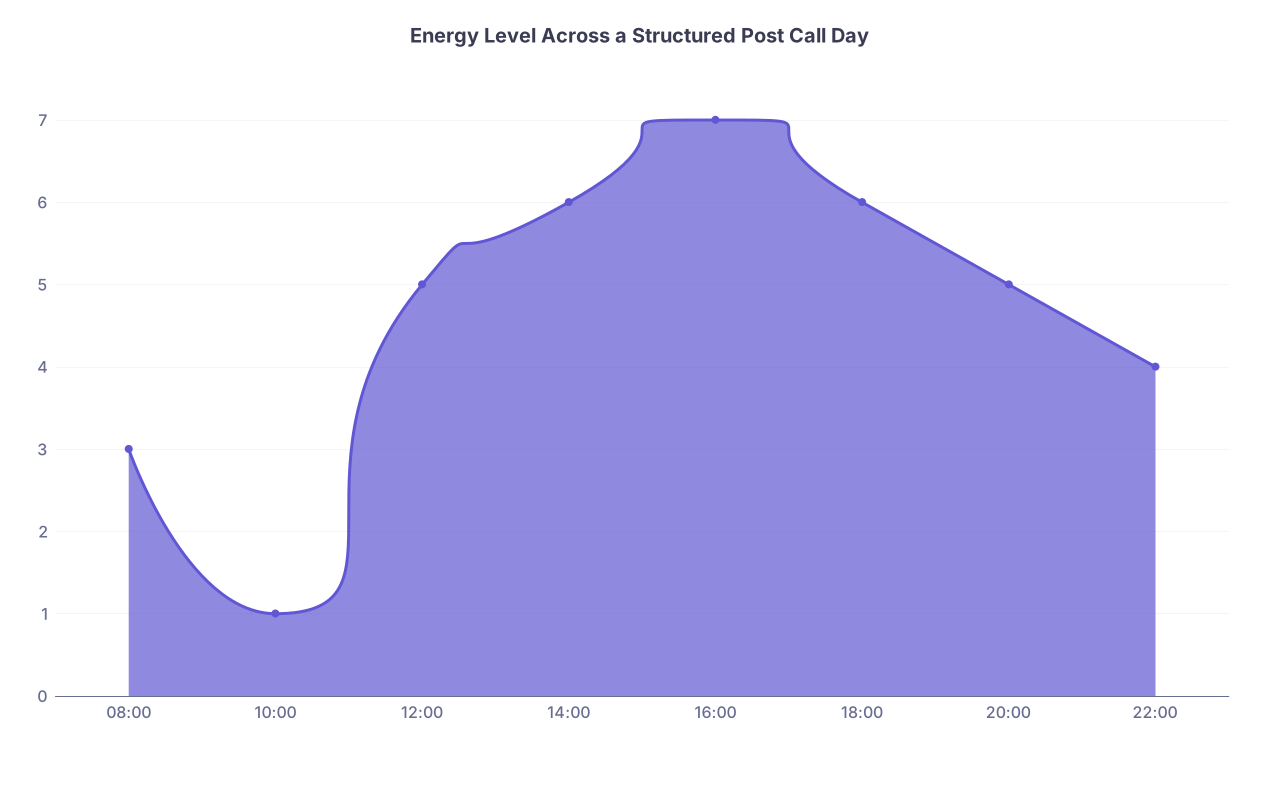
| Category | Value |
|---|---|
| 08:00 | 3 |
| 10:00 | 1 |
| 12:00 | 5 |
| 14:00 | 6 |
| 16:00 | 7 |
| 18:00 | 6 |
| 20:00 | 5 |
| 22:00 | 4 |
You adjust the times, but do not change the underlying structure:
Controlled sleep → strong wake-up → light activation → early night wind-down.
Step 12: Make It Sustainable (So You Actually Use It)
Routines fail when they are too complicated or perfectionistic.
Here is how you make this one sustainable:
Write it down in 5 bullet points.
- On your phone, on a sticky note, in your call room.
- Example:
- Home, shower, sleep by 09:30.
- Wake by 13:00, light + food.
- No naps after 16:00.
- No caffeine after 16:00.
- Bed by 22:30 with 30 min wind-down.
Run it for 3 calls in a row before “tweaking.”
- Do not redesign after one bad post-call day.
- Look for patterns across 2–3 iterations.
Change only one variable at a time.
- If you feel too tired next day → lengthen core sleep by 30 minutes.
- If you cannot sleep at night → shorten core sleep by 30–60 minutes or move wake-up earlier.
Anchor with one accountability partner.
- Co-resident or partner who knows your plan.
- Ask them to text you around your planned wake time or bedtime for the first week:
- “Up yet?”
- “Headed to bed soon?”
You do not control your call schedule. You do control whether your post-call days keep you functional or slowly destroy you.
Your next step is simple and specific:
Take your upcoming call date and block out the 24 hours after it on your calendar. Write in the exact sleep window, wake-up time, and evening bedtime you plan to use.
Do that now. Then when you sign out post-call, you are not “tired and deciding.” You are just following a protocol you already chose when you were rested.