
The way most residents handle an overbooked clinic day is inefficient, unsafe, and completely unsustainable.
You do not fix an insane schedule by “trying harder” or “being more efficient.” You fix it by running a clear playbook. On autopilot. Especially when you are drowning.
Here is that playbook.
1. First 10 Minutes: Triage The Day, Not The Next Patient
If you walk into clinic, open the schedule, and immediately click “Start Visit,” you have already lost.
You need a pre-game huddle with the schedule itself.
Step 1: Rapid schedule scan (no more than 5 minutes)
Pull up your list and go down every single name before starting.
You are looking for:
- New vs return
- Known high-need patients (the “30 minutes is never enough” crowd)
- Chief complaint / visit type
- Overbook slots and double/triple-booked time blocks
- Built-in buffers (no-shows, same-day cancellations, telehealth, procedure slots)
Mark them mentally (or literally on a sticky note):
- “Red” – complex / high risk / guaranteed time sink
- “Yellow” – moderate / potentially quick but can balloon
- “Green” – controllable / focused / quick wins
If your EMR allows “visit notes” or flags, use them. Otherwise, scribble a mini-grid.
| Risk Level | Examples | Target Time |
|---|---|---|
| Red | New HF, uncontrolled DM, chest pain, psych + meds | 25–30 min |
| Yellow | Med refill with multiple issues, chronic pain | 15–20 min |
| Green | Single issue, lab review, paperwork only | 8–12 min |
You are not trying to predict perfectly. You are simply separating landmines from layups.
Step 2: Call your shot with your attending (3–5 minutes)
Before you see the first patient, take 3 minutes with your attending if at all possible.
Sample script, straight and efficient:
“I just reviewed the schedule. We are overscheduled with 24 patients, including 5 new, 3 likely high complexity, and 4 double-book slots.
My plan:
- I will keep ‘green’ visits very focused and aim for <10 minutes.
- For complex patients, I will prioritize one or two main problems and defer the rest.
- I may ask you to see 1–2 stable follow-ups independently if we fall behind.
Are you ok with that, and can we agree to limit mid-visit tangents so we stay on time?”
You are not complaining. You are proposing a management plan for the clinic day. That is leadership. Good attendings respect this.
If they shrug and say “We’ll just do our best,” fine. You have at least framed expectations and bought yourself some flexibility for later.
2. Inside The Room: A Ruthless 10–Minute Template
Your biggest time waste is not documentation. It is inside the room.
Residents get trapped in:
- Vague opening questions
- Letting patients unload 12 issues before setting an agenda
- Storytelling detours
- Doing full H&Ps when they are not needed
You need a default mini-structure for a standard return visit that you can flex up or down.
A. The first 90 seconds: Control the agenda
Stop opening with: “What brings you in?” on a follow-up patient with 12 active problems in Epic.
Use this instead:
“Good to see you again. I reviewed your chart and it looks like today was scheduled as a follow-up for your blood pressure and diabetes. I also saw messages about your knee and trouble sleeping.
We probably will not fix everything in one visit.
Of all of these, what are the top 1–2 things you most want us to handle today?”
Then you summarize and lock it in:
“So for today we are focusing on (1) blood pressure, (2) your sleep. For your knee and the other issues, we will either do quick triage now and set a separate visit, or handle via MyChart if appropriate. Does that sound right?”
You have now:
- Set expectations
- Limited scope
- Protected the schedule
- Still respected their concerns
B. Focused data gathering: 4–5 minutes, not 12
Do not do a full ROS unless clinically necessary. Be explicit with yourself: “What do I need to know to safely make a decision today?”
For a follow-up HTN visit, for example:
- Home readings pattern?
- Med list (actual adherence, not just prescribed)
- Side effects, red flags (chest pain, SOB, neuro sx)
- Lifestyle basics (smoking, major diet change, new NSAIDs, etc.)
That is it. Everything else is optional.
You can ask, “Anything else new or worrying I should know about before we decide what to do?” Then stop talking. Let them add one or two things. Do not chase everything.
C. The 2-minute plan explanation
Most residents over-explain plans. Patients want clarity more than volume.
Use a simple pattern:
- Name the problem
- Name your goal
- State exactly what changes
- Name the follow-up / contingency
Example:
“Your blood pressure is still above goal. Our target is under 130/80 because of your diabetes.
So today we will:
- Increase your lisinopril from 10 to 20 mg.
- Ask you to check your blood pressure at home 3 times a week.
- I will send you a MyChart message in 2 weeks to review your numbers.
If you feel dizzy, lightheaded, or have syncope, call us the same day or go to urgent care.”
Never end with, “Any questions?” as your only check. That invites a 10-minute tangent. Instead use:
“What questions do you have about this specific plan before we move on?”
Notice the limit: “about this specific plan”.
D. Time boxing inside the room
You need a mental clock. When you pass 8 minutes in the room, you should be deciding:
- Do I wrap up now and document later?
- Do I pause and say, “We can schedule a second visit for the rest”?
You are allowed to use time as a tool:
“We have about 2 minutes left today. We can either (A) finish adjusting your blood pressure meds carefully, or (B) rush through your knee pain and do both poorly. I recommend we get your blood pressure right today and schedule a separate visit for your knee this week. Which do you prefer?”
Most patients will accept the trade if you frame it as quality vs rushing.
3. Between Patients: A Micro-Cycle That Keeps You Afloat
The chaos between rooms is where residents bleed time: chatting, checking every lab result, answering portal messages mid-session.
You need a fixed between-patient routine that you do every single time. No thinking.
The 3–5 minute “hallway protocol”
As soon as you leave the room:
Dictate / type a bare-bones note immediately (2–3 minutes)
Structure for a return visit:- 1 line HPI summary: “55-year-old with DM2, HTN here for BP follow-up; reports home BP 150s/90s, no red flag symptoms.”
- Problem-based A/P bullets, prioritized by what you actually did:
- HTN – Assessment sentence + 2–4 ordered bullet actions
- DM2 – One sentence; note if stable, no change
- Others – Short, or “Deferred due to time; to be addressed at [next visit date].”
Do not write literature reviews. This is not an academic essay.
Place critical orders and referrals right away (1–2 minutes)
- Med changes
- Labs/imaging absolutely required
- Follow-up visit / telehealth scheduled
Move. Now.
As soon as these three are done, you go to the next room. You can polish notes later if you get a gap.
If you can, document while in the room, but most residents underestimate how hard that is with angry / talkative / complex patients. So you at least need this fallback micro-cycle.
4. When You Are Already Behind: The Mid-Session Reset
At some point you will look up and realize you are 45–60 minutes behind with 8 patients still to go.
This is the point where many residents mentally quit. They slow down, feel guilty, and paradoxically get more behind.
You need a mid-session reset protocol.
A. Acknowledge the situation out loud
Find your attending or the clinic lead MA/nurse for 2 minutes:
“I am currently 45 minutes behind. I have 8 patients left, including 3 red-flag complex visits.
I need help strategizing: which patients can you see independently, and which ones must I see? Also, I will need support with messages or paperwork today.”
If you do not say this, staff just watch you drown. People rarely intervene uninvited.
B. Re-triage the remaining schedule
You do a second rapid pass through the remaining list:
- Can any visits be safely converted to:
- Brief telehealth
- Nurse visit (BP check, vaccine only)
- Quick reschedule with explanation?
You are not dumping work. You are making clinical prioritization decisions.
Sample language for front desk or MA to use (you can script it for them):
“Dr. X is currently dealing with several very complex patients and is running behind. She wants to make sure you have enough time for your visit. We can either keep you today for a shorter focused visit, or we can rebook you in the next few days for a full visit. Which would you prefer?”
Make it a choice. Many patients will accept a shorter focused visit.
C. Shorten your default visit style for the next 3–4 patients
You switch into “survival template” mode:
- One problem per visit, aggressively enforced
- Ultra-focused exam
- Documentation in only essential fields
- No teaching monologues longer than 60–90 seconds
You tell patients directly:
“I want to make sure you get good care despite us being very backed up today. We will focus on the most important issue only, and I will arrange quick follow-up to finish the rest.”
This is not bad medicine. It is honest, prioritized medicine.
5. How To Still Learn On A Day That Feels Like A Factory
Overbooked clinic days feel like anti-education. You feel like a scribe with a prescription pad.
You can still salvage real learning—but you must be deliberate.
A. Pick a single learning theme for the day
Not five topics. One.
Examples:
- Resistant hypertension
- Diabetic foot care
- Chronic insomnia management
- Chronic pain without opioids
In the first 2–3 relevant patients, you go slightly deeper. Ask your attending a pointed question related to today’s theme.
For example:
“For resistant HTN on 3 meds including a diuretic, what is your stepwise approach? Do you always add an MRA next, or does that depend on labs/age?”
You are not asking, “Any feedback?” You are asking for specific clinical strategy.
B. Use dead minutes for micro-learning, not doom-scrolling
You will have small chunks of 2–4 minutes: waiting for attending, room cleaning, EMR to load.
Make a running “clinic questions” doc (OneNote, Notion, or a single notes app page). Whenever a question comes up you cannot answer in the room, write one line. Example:
- “How to titrate gabapentin for neuropathic pain safely in CKD 3?”
- “Difference between trazodone vs mirtazapine in insomnia + depression?”
During micro-gaps, you look up one of these in UpToDate or guidelines, not 7. You jot 2–3 key bullets directly under the question.
Over time, you build your own clinic playbook.
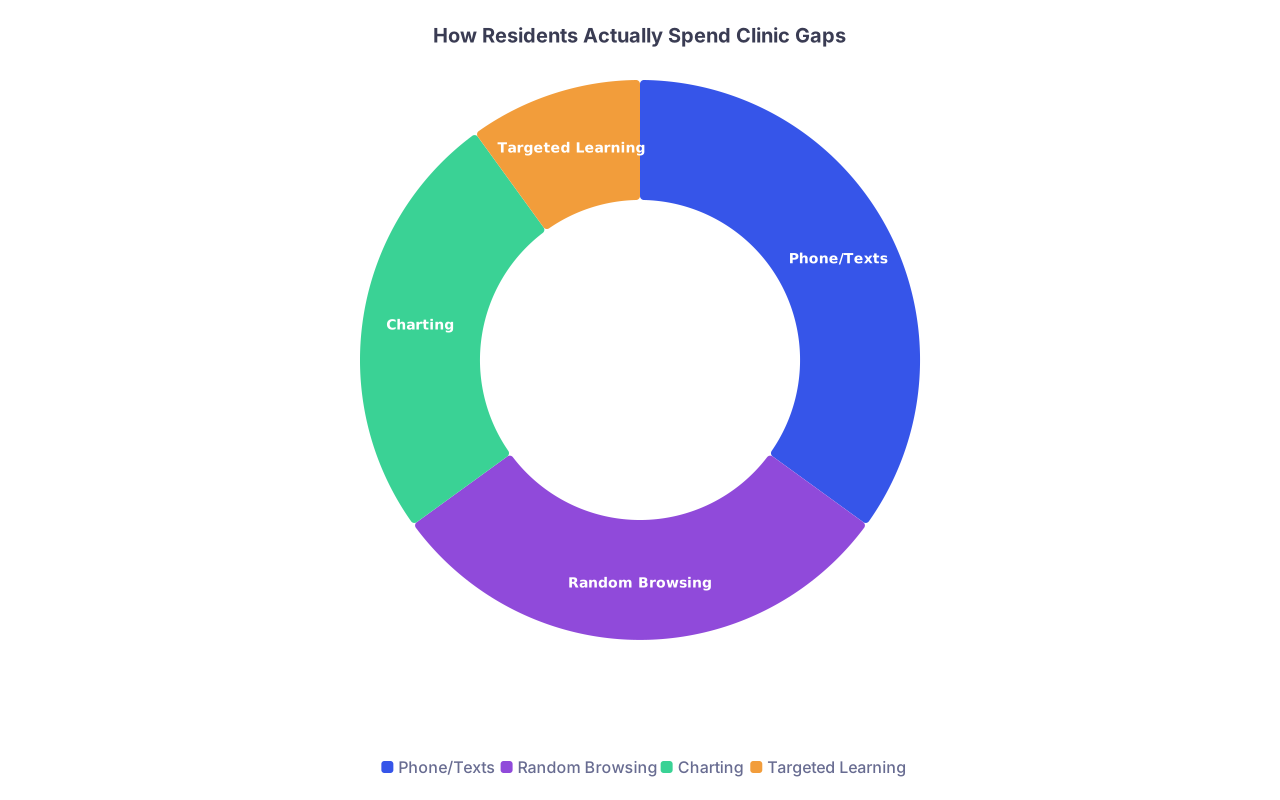
| Category | Value |
|---|---|
| Phone/Texts | 35 |
| Random Browsing | 30 |
| Charting | 25 |
| Targeted Learning | 10 |
Your goal is to push “Targeted Learning” up by even 10–15%. That alone changes how these days feel.
C. Post-clinic: 10 minutes of “learning debrief,” not 60 minutes of regret
You will be tempted to relive all your mistakes. That is useless.
Do this instead:
Write down 2 things that went well, specifically.
- “Kept the agenda tight on that complicated DM visit.”
- “Used time boxing language well with Mrs. R.”
Write down 1 clinical knowledge gap to read about tomorrow, not now.
- Literally schedule it: “Tomorrow before first case – 10 min on insomnia in older adults.”
If you had a genuinely unsafe or very uncomfortable encounter, send a quick message to your attending:
- “I would like to debrief the [X patient] encounter briefly next week, especially around [topic].”
Now you are extracting growth from chaos instead of just absorbing stress.
6. Working With Staff Instead Of Against Them
On brutal clinic days, your MA, nurse, and front desk can make or break you. Many residents underuse them or treat them like passive bystanders.
That is a mistake.
A. A 60-second team huddle at the start
Right after you review the schedule, grab whoever is available:
“We are heavily overbooked today. A few things will help:
- If labs or vitals look dangerous, please flag me right away.
- For stable med refills, if everything looks fine, we will try to keep those visits short.
- If any patient is upset about waiting, tell me quickly so I can pop in and acknowledge them.
I really appreciate any help you can give me keeping things moving.”
You have now:
- Shown respect
- Clarified priorities
- Invited proactive communication
B. Offload what does not require your license
Stop doing nurse-level tasks yourself just because it feels easier than delegating.
Examples to delegate:
- Vaccine counseling? Ask nurse/MA to do standardized counseling if clinic allows.
- BP self-monitoring log education? MA can handle with a handout and a 2-minute explanation.
- Printed instructions? Ask staff to print your brief After Visit Summary and highlight the 2 key points.
You say:
“I will put the plan clearly in the AVS. Could you please review it with them and confirm they know the medication changes and follow-up date?”
Now your time is spent on judgment, not repetition.
C. Use staff as your early warning system
On overbooked days, annoyed patients can explode. That derailment will cost you 25 minutes plus emotional energy.
Tell your MA:
“If anyone seems very upset about the wait, let me know before you room the next patient. I will go say a quick sorry and set expectations.”
Then actually do it:
“I am sorry you have been waiting. We are running behind because of a few complex cases today. I do not want to rush your care. We can either do a shorter focused visit today or reschedule you in the next few days for a full visit. I understand either choice.”
Sometimes that 60-second acknowledgement prevents a meltdown.
7. Documentation: Minimum Viable Note That Still Protects You
On insane days, your job is not to write beautiful notes. Your job is to:
- Capture your thinking
- Justify your plan
- Protect yourself medico-legally
- Make the next visit easier
You can do that with a lean structure.
A. Problem-based structure, not novel-length HPI
For each significant problem (especially chronic ones), think in this sequence:
- Status today (better / worse / stable with 1–2 data points)
- Risk framing (any red flags ruled out)
- Your decision (start/stop/change/maintain)
- Safety net (what to watch for, when to return)
Example (in note):
HTN
- Home BP 150–160s/90s on lisinopril 10 mg; clinic BP 158/92; no chest pain, dyspnea, neuro sx.
- Above goal given DM2; no red flag symptoms today.
- Increase lisinopril to 20 mg daily; continue current lifestyle approaches.
- Patient instructed to monitor BP 3x/week, log values, and send via portal in 2 weeks; advised to call/seek care for dizziness, syncope, severe headache, CP, or neuro symptoms.
Done. That protects you and is readable.
B. Use smart phrases and templates aggressively
If your EMR supports macros, spend 10 minutes on a non-clinic day building:
- A “stable chronic disease” template (diabetes, HTN, COPD)
- A “deferred issues due to time” phrase:
- “Discussed that due to time constraints and complexity of primary issues today, we will address the following concerns at a subsequent visit: [list]. Patient agreed with this plan.”
That one sentence is gold on overbooked days.
C. Final 15 minutes of clinic: Hard stop for notes
When the last patient leaves (or 15 minutes before your scheduled end), you stop seeing new work and focus solely on:
- Finishing all same-day documentation
- Closing key orders
- Sending brief f/u messages that prevent extra calls tomorrow
If someone tries to hand you “just one more quick form” at that point, you say:
“I want to make sure today’s visit notes and orders are accurate before I leave. I will handle that form first thing tomorrow morning.”
You are drawing a professional boundary. That is part of surviving residency.
8. Your Mental Health On These Days Is Not Optional
Overbooked clinic days are not just tiring. They teach you bad habits under pressure: cutting corners, resenting patients, numbing out.
You need a tiny recovery ritual. Something you actually stick to.
A. A 5-minute decompression before going home
Before leaving the clinic or hospital:
- Sit somewhere not at your workstation
- No phone, no EMR
- Take 10 slow breaths, eyes closed, feet on the floor
- Ask yourself one question:
- “Did I keep anyone unsafe today?”
- If the answer is no, you let yourself go home.
If the answer is “maybe,” write the name down and send a brief message or plan a check:
“Sending patient X a quick portal note to clarify Y.”
Then stop.
B. Create one “win” outside of medicine that evening
After a brutal day, your brain will want to disappear into scrolling or Netflix until 1 a.m. That just sets up another miserable day.
Instead, pick one micro-win:
- 15-minute walk with music
- Quick meal that is not total junk
- 10-minute call with a non-med friend or family member
- One chapter of a book that has nothing to do with medicine
You will not fix burnout with this, but you reduce the damage.
9. Putting It All Together: The Playbook As A Flow
Here is how the whole thing fits together in real life.

| Step | Description |
|---|---|
| Step 1 | Arrive at clinic |
| Step 2 | Review full schedule 5 min |
| Step 3 | Flag red yellow green visits |
| Step 4 | Quick huddle with attending |
| Step 5 | Start first patient |
| Step 6 | Use 10 min in room template |
| Step 7 | Hallway protocol - note orders next patient |
| Step 8 | Mid session reset and retriage |
| Step 9 | Shortened visit style |
| Step 10 | End of day - learning debrief and decompression |
| Step 11 | Running >30 min behind? |
You will not do this perfectly the first time. Or the fifth. But each piece you implement will buy you minutes, mental space, and actual learning.
3 Things To Remember
- Do not let the schedule dictate your brain. Triage the day early, set expectations with attending and staff, and keep tight agendas in the room.
- Use fixed micro-routines: a 10-minute visit template, a 3–5 minute hallway protocol, and a mid-session reset when you fall behind. Habits beat willpower.
- Overbooked days can still teach you something. Pick a single learning theme, capture micro-questions, and do a brief learning debrief instead of just marinating in stress.
You are not here to be swallowed by the system. You are here to learn to practice good medicine in a bad system—and that requires a strategy, not just stamina.