
The bravado about “pushing through” residency is killing people.
Not always literally. But mentally. Slowly. Quietly. And what scares me most is how normal the early warning signs can look… until they don’t.
I’m writing this as someone who lies awake at 2 a.m. thinking: What if I’m the one who breaks? What if I miss the signs? What if everyone else is just stronger?
If you’re even thinking “Scared I’ll burn out in residency,” you’re already doing more for your future self than a lot of people who pretend they’re fine right up until they’re not.
Let’s actually talk about the early warning signs. The ones people dismiss as “just residency.” The ones program directors sometimes ignore. The ones I’m terrified I’d brush off in myself.
The uncomfortable truth about residency and burnout
Burnout isn’t just “being tired.” It’s a whole pattern: emotional exhaustion, cynicism, and feeling useless or ineffective. And it’s not rare.
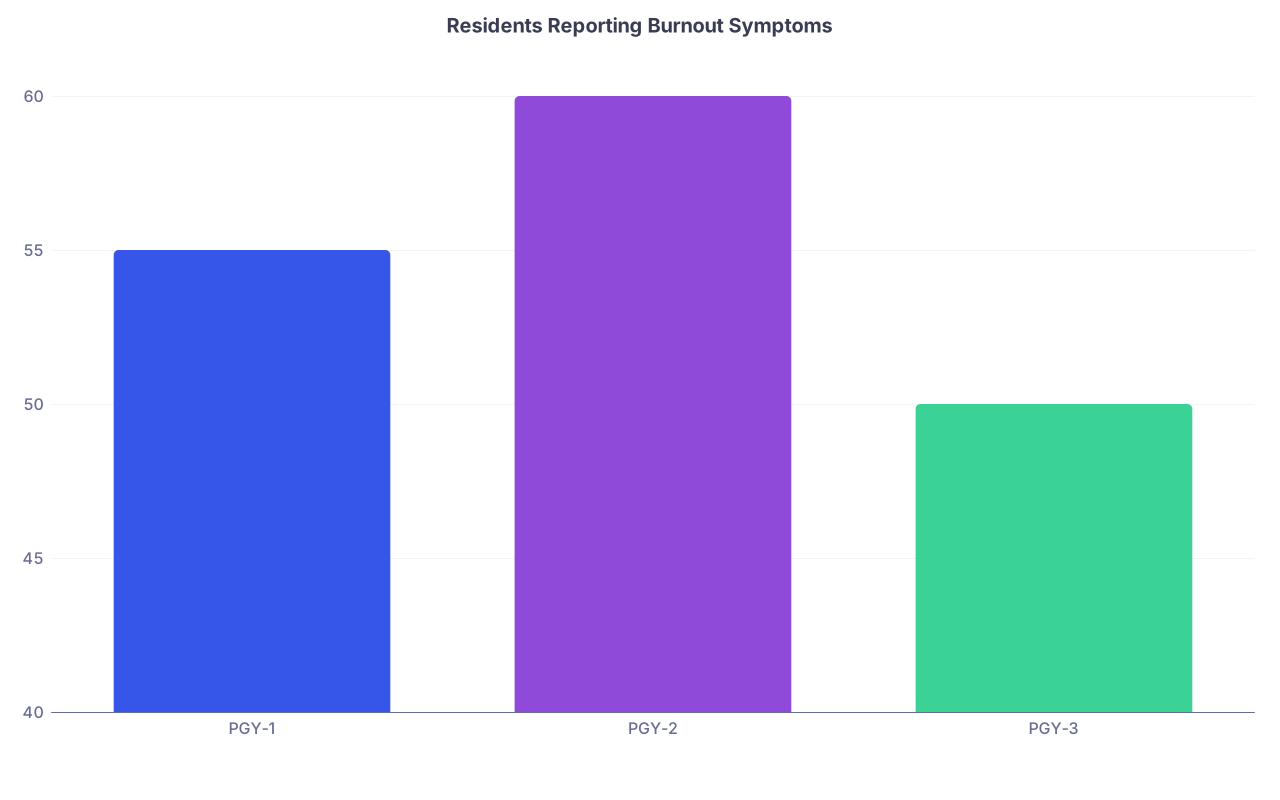
| Category | Value |
|---|---|
| PGY-1 | 55 |
| PGY-2 | 60 |
| PGY-3 | 50 |
So yeah—more than half of residents at every level report burnout symptoms. That means the default setting in a lot of programs is “struggling.” You’re not the outlier if you’re scared; you’re the one paying attention.
The problem is, the culture trains you to normalize misery:
- “Everyone’s exhausted.”
- “This is just internship.”
- “If you’re not suffering, you’re not learning.”
That’s terrible advice. And dangerous. Because the line between “tired but okay” and “quietly falling apart” is thinner than people like to admit.
Early warning signs in your body: when “just tired” isn’t just tired
This is the stuff I’m personally most afraid I’d rationalize away. You probably would too.
1. Fatigue that doesn’t reset
Normal resident tired:
- You’re exhausted post-call, sleep 10–12 hours, feel somewhat human again.
- Days off help. Not perfect, but better.
Early-warning fatigue:
- You sleep and wake up feeling like you never slept.
- Weekends don’t refill the tank.
- You start calculating: “If I nap 30 minutes in my car before sign-out, can I safely drive home?”
If rest stops helping at all, that’s not just “busy schedule.” That’s your body saying the stress system is stuck on “on.”
2. Sleep that’s not actually sleep
There’s the obvious—night float, pager, interruptions. But look for this:
- You finally get to bed and your brain won’t shut up. Endless reruns: “Did I miss that lab? Did I document that?”
- You wake up multiple times with your heart pounding and you have no idea why.
- You dread going to bed because lying there with your thoughts feels worse than being awake.
When “too wired to sleep” becomes most nights, that’s a sign your nervous system is on overdrive. People blow this off. They call it “end of rotation stress.” It’s not always that innocent.
3. Mystery body symptoms
Things I’ve heard residents say in break rooms:
- “My stomach’s been wrecked this whole month.”
- “I keep getting these headaches that never go away.”
- “My chest feels tight but my EKG’s fine… so I’m just anxious, I guess.”
Yeah. “Just anxious.” Except your body is trying to get your attention.
Watch for:
- New or worsening GI issues (constant nausea, cramps, diarrhea, no appetite)
- Tension headaches or migraines several days a week
- Chest tightness or palpitations that show up mainly when you’re thinking about work
- Constant muscle tightness, jaw clenching, grinding your teeth
You don’t need every symptom. One persistent, unexplained, stress-linked thing is enough to take seriously.
Early warning signs in your mind: when your thoughts start twisting
This part scares me most, because it’s so easy to gaslight yourself. “I’m just being dramatic.” “I should handle this better.”
4. Losing empathy… for everyone, not just annoying patients
Every resident has moments of dark humor. Or that one patient who tests the limits of human patience. That alone isn’t burnout.
Red flag territory:
- You catch yourself thinking “I don’t care what happens to them” about almost everyone
- You feel numb in family meetings where bad news is given
- You stop seeing patients as people and they become “the pancreatitis in 304” and you’re not even joking
That creeping coldness? That’s emotional exhaustion turning into depersonalization. It’s not “you being tough.” It’s a sign your system is overloaded.
5. “I’m terrible at this” on loop
Imposter syndrome is basically mandatory in training. But there’s a difference between:
- “I don’t know enough yet”
versus - “I’m useless, everyone knows it, I’ll never be good at this.”
Watch for:
- Constant mental replay of small mistakes, even when attendings said you did fine
- Assuming every neutral comment is criticism
- Feeling like you’re fooling everyone 24/7 and that exposure is inevitable
That degree of self-hate and hopelessness isn’t just being humble. It’s a cognitive sign of burnout and possibly depression.
6. Hopelessness about the future
This is where my brain likes to go at 1 a.m. when I doom-scroll residency horror stories.
Early warning looks like:
- “I chose the wrong specialty. And I’m stuck.”
- “I used to be excited about being an attending. Now I just feel trapped.”
- “Nothing I do is going to make next year better.”
Not “I’m stressed this week,” but “My entire future feels like a gray wall.” That’s a mental red flag, not something to normalize as “just intern year.”
Behavior changes: what other people might notice before you do
You can’t always trust your own perception when you’re inside it. So look at your behavior.
7. Personality shrinkage
Ask: Who was I before this?
Burnout early warnings:
- You used to be talkative; now you avoid conversations, even with people you like
- You stop texting back, not because you’re busy that day, but because responding feels like a chore
- You go from “Let’s grab food post-call” to “I just want to go home and be alone” every single time
Some withdrawal is normal for survival. A steady, global retreat from everyone and everything isn’t.
8. Numbing out in unhealthy ways
Residents joke about “post-call wine” or “tequila nights.” That’s not what I’m talking about.
I mean:
- You need alcohol or substances every night “just to turn my brain off”
- You binge-watch or scroll until 3 a.m. even though you’re exhausted and it’s ruining your sleep, but you can’t stop
- You eat mindlessly, feel awful, repeat
- You start taking extra caffeine, stimulants, or other people’s meds to “keep up”
These are self-medication patterns. Your brain is screaming “this is too much” and you’re trying to drown it out.
9. Cutting out everything that used to make you you
Normal residency sacrifice:
- Less time for hobbies
- Exercise some weeks, not others
- Miss a few social events
Concerning:
- You never do the thing you love anymore. Zero. For months.
- When you do get time off, you can’t think of anything you want to do except sleep or stare at a wall
- You say “I’ll go back to music/running/art later” but secretly you can’t imagine feeling joy from it again
That loss of interest? That’s not just being busy. That’s anhedonia—classic in both burnout and depression.
Work red flags: when your performance and safety are at stake
This is where it gets scary because medicine punishes vulnerability, but also punishes mistakes. Lose-lose.
10. You start making small, sloppy mistakes
Everyone messes up. The question is pattern.
Pay attention if:
- You repeatedly forget basic steps you know you know
- You keep missing orders, missing meds, missing pages
- Nurses are catching more things for you than they used to
- You’re double- and triple-checking simple stuff because you don’t trust your own brain anymore
That cognitive fog—forgetfulness, slower thinking, not tracking conversations—is a physiological burnout sign. It’s not just “being busy.”
11. Your threshold for asking for help changes
Two equally dangerous directions:
- You stop asking for help because you’re too ashamed, tired, or defeated
or - You start asking for help for everything because you feel paralyzed and unsafe deciding anything
The sweet spot is: “I can manage what I should, and I escalate what I should.” When burnout hits, your internal gauge goes haywire. That’s when bad outcomes become more likely.
12. You dread every shift
Not “call nights are rough.” Everyone dreads some things.
I mean:
- You check your schedule and feel sick for days leading up to certain weeks
- You start fantasizing about getting mildly injured just to have a legit excuse to not come in (this is disturbingly common and very much a warning sign)
- The night before clinic or wards, your brain spins through worst-case scenarios and you can’t turn it off
Once dread becomes chronic instead of situational, that’s not “being dramatic.” That’s your internal alarm system going max volume.
Okay, but how early is “early”? What’s actually reversible?
This is what keeps me up: What if by the time I notice, it’s already damage done?
Here’s the hope: the early signs usually show up months before full collapse. You may already know people who hit that wall—crying in stairwells, walking out mid-shift, getting pulled from rotations.
But before that point, I’ve watched:
- Residents switch therapy from “yeah I should probably go” to “I’m going weekly and I’m actually honest now”
- People adjust antidepressants or anxiety meds and suddenly function like humans again
- Schedules change (yes, programs can do this when pushed) to fix brutally unsafe stretches
- Residents take formal leave, come back, and are obviously healthier
Burnout isn’t guaranteed. And if it shows up, it isn’t always permanent. But only if you treat it like a real medical problem instead of a character flaw.
Practical early moves if these signs sound too familiar
I’m not going to say “just practice self-care” and walk away. That’s insulting.
Think in levels:
| Level | What You Do | Example Action |
|---|---|---|
| 1 | Personal check-in | Track sleep, mood, mistakes for 1-2 weeks |
| 2 | Trusted person | Talk to co-resident, partner, mentor |
| 3 | Professional help | Therapy, PCP, mental health services |
| 4 | Program involvement | Schedule adjustment, rotation change |
| 5 | Formal step | Leave of absence, reduced duty hours |
You don’t need to jump to Level 5 if you’re just seeing a few yellow flags. But you also shouldn’t stay stuck at Level 1 if those flags are becoming red.
Honestly, the earliest move I wish more people made is this:
Tell one safe person: “Hey, I’m starting to notice some stuff that’s worrying me—can you keep an eye on me and be honest if you see me slipping?”
Not a formal evaluation. Just a human alarm system outside your own biased brain.
The part no one says out loud: fear of looking weak
This might be the worst of it. I’m already scared I won’t keep up. Add “I might burn out” and it feels like announcing I’m broken before I even start.
Reality check:
- The strongest residents I’ve met are the ones who quietly have a therapist, a PCP, and a couple of attendings they’re honest with.
- The ones who brag about “never needing help” are sometimes the ones who vanish mid-year for “personal reasons.”
Programs are slowly (too slowly) figuring this out. A resident who speaks up about burnout and gets support is less risky than a resident who pretends they’re fine until something bad happens.
Is there stigma? Yes. I won’t sugarcoat it. Some attendings still equate suffering with dedication. They’re wrong. And outdated. And frankly bad for patient safety.
But your brain and body are not disposable. You don’t win a prize for dragging a dead version of yourself across the finish line.

| Step | Description |
|---|---|
| Step 1 | Early Warning Signs |
| Step 2 | Worsening Symptoms |
| Step 3 | Seek Support |
| Step 4 | Impaired Function |
| Step 5 | Safety Concerns |
| Step 6 | Leave or Crisis |
| Step 7 | Adjusted Schedule |
| Step 8 | Therapy or Treatment |
| Step 9 | Partial Recovery |
| Step 10 | Monitor and Maintain |
| Step 11 | Ignored or minimized |
You’re not broken for being scared
The anxiety that you’ll burn out? Honestly, that’s a protective instinct. It means some part of you refuses to accept “destroy myself for training” as normal.
So, if you remember nothing else from this long, spiraling brain dump, remember this:
- Burnout has early warning signs: in your body, your thoughts, your behavior, and your work. None of them mean you’re weak; they mean you’re human.
- You’re allowed to take those signs seriously before you collapse. Therapy, schedule changes, medication, leaves—these are tools, not failures.
- The goal isn’t to “prove you can survive anything.” The goal is to finish residency with enough of yourself left to actually live the life you spent all these years chasing.
You’re not dramatic for being scared of burning out.
You’re smart.
FAQ (exactly 5 questions)
1. How do I know if what I’m feeling is normal residency stress or actual burnout starting?
Look at patterns and persistence. Normal stress fluctuates with rotations and tends to ease on lighter weeks or days off. Early burnout signs stick around no matter the schedule: chronic emotional numbness, constant dread of work, feeling ineffective even when feedback is fine, and losing interest in everything outside medicine. If you track your mood and energy for 2–3 weeks and it’s basically all low with no real uptick, that’s more than “a rough block.”
2. Will talking about burnout to my program hurt my reputation or career?
It might change how some people view you, yes—but not always negatively. Many PDs would rather know early so they can adjust things than risk serious errors or resident collapse later. You don’t have to open with “I’m burned out.” You can start with: “I’m seeing signs that my functioning and sleep are slipping, and I want to address this early so I can be safe and effective.” Also, you can talk to confidential resources first (GME wellness, mental health services, therapist) before looping in your program.
3. I already feel some of these signs as a med student—am I doomed in residency?
No. If anything, noticing them now means you’re more likely to protect yourself later. People who’ve hit burnout in med school and did the work—therapy, boundaries, realistic planning, medication when needed—often go into residency with better self-awareness and support systems than classmates who “powered through.” You’re not doomed; you’re getting early data. Use it.
4. What if I can’t afford therapy or time off during residency?
This is a brutal reality. Still, you usually have more options than it feels like in the middle of panic. Many institutions have free or low-cost resident mental health services. Some offer protected time for appointments. You can also start with shorter, less frequent sessions or telehealth. For time off, medical leave is a formal process, and yes, it may extend training—but extending is better than completely breaking. Talk to your GME office or a trusted chief to get actual options instead of assuming you have none.
5. Is it ever reasonable to leave a residency program because of burnout risk?
Yes. Not casually, not impulsively, and not without talking to professionals first—but yes. If a program is chronically unsafe (80+ hour weeks consistently, retaliation for help-seeking, systemic abuse) and you’re already showing strong burnout signs or mental health decline, leaving can be the most responsible decision for you and for patient safety. That doesn’t mean quitting medicine altogether; sometimes it means transferring programs, changing specialties, or taking a planned break with a path back. The “never leave no matter what” mentality is how people end up deeply traumatized or out of medicine entirely.