
The horror stories you’ve heard about night float are exaggerated—but the fear you feel about it is completely real.
You’re not weak for dreading it. You’re not dramatic for replaying worst-case scenarios in your head at 2 a.m. Code blues, being the only resident in-house, not knowing what you’re doing, crashing a patient, falling asleep on your feet, getting yelled at by nurses… all of it.
I’m going to walk through what it’s actually like, the parts that really do suck, and the specific things that make it survivable. Not perfect. Not fun. But survivable—and sometimes even oddly peaceful.
What Night Float Is Really Like (Not the Instagram Version)
Let’s strip the fake gloss off.
Night float is usually: you work a block of consecutive nights (anywhere from 5–14 in a row) covering cross-cover issues, admissions, and codes while the day teams are sleeping. You’re flipped from human hours to raccoon hours.
It’s not:
- One endless 24-hour horror movie
- Constant codes
- Everyone screaming at you all night
It’s more like: hours of nothing punctuated by short bursts of “oh no, oh no, what the hell is happening” and pages that never seem to stop right when you’re trying to eat or close your eyes.
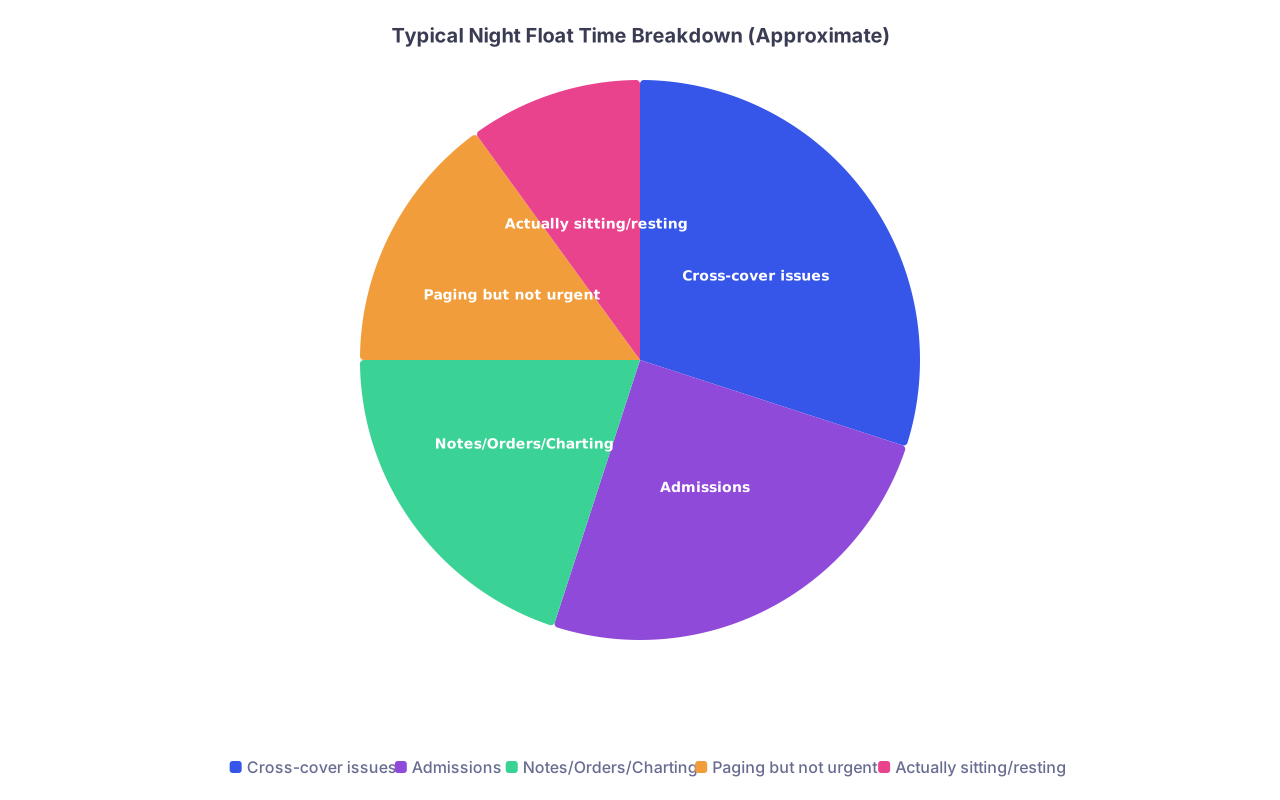
| Category | Value |
|---|---|
| Cross-cover issues | 30 |
| Admissions | 25 |
| Notes/Orders/Charting | 20 |
| Paging but not urgent | 15 |
| Actually sitting/resting | 10 |
That “time breakdown” isn’t scientific, but it’s emotionally accurate. You’ll spend a lot of time:
- Putting out small fires (pain meds, nausea, high BPs, low K)
- Admitting from ED
- Answering “FYI” pages that didn’t need to be FYIs
- Trying to decide which thing is least unsafe to delay
The real mind game isn’t just the work. It’s the combination of:
- Being tired
- Being flipped to nights
- Feeling alone
- Feeling like you’re not allowed to mess up
That’s the part nobody prepares you for.
The Fears You Have (And What Actually Happens)
Let’s go through the worst-case scenarios you keep spinning in your head.
“What if a patient crashes and it’s all on me?”
Harsh truth: sometimes patients crash at night. You will be there when something scary happens.
But it’s almost never “just you.”
There’s usually:
- A nurse who has seen 1,000 more decompensations than you
- A rapid response or code team
- An upper-level or ICU fellow on backup
- An attending you can wake up
I’ve seen interns walk into a room convinced they’re about to kill someone by choosing the wrong thing… and then watch the ICU nurse quietly hand them the right push med, or the RT set up BiPAP while they’re still thinking.
You’ll often feel like you’re the least experienced, least useful person in the room during a crisis. That’s normal. But you’re not the only person in the room.
“What if I don’t know what to do when I’m paged?”
You won’t. Often.
Night float is basically a masterclass in saying, “Let me look into that and call you back.”
Residents who survive nights aren’t magical geniuses. They:
- Ask the nurse to re-check vitals
- Open the chart before they sprint to the bedside
- Call upper-levels and say, “Here’s what’s happening, here’s what I’ve done, here’s what I’m thinking, am I missing anything?”
You’ll get pages like “patient anxious, can we get Ativan?” and you’ll be tempted to just click “sign.” Then you realize their O2 sat is 88%, their RR is 28, and they actually need a workup, not benzos.
You learn patterns. You learn to slow down even when your brain is screaming go faster.
“What if I fall asleep and miss a page?”
This is one of the big, ugly, unspoken fears.
Reality: you might doze off momentarily and miss a page. It happens. To good residents. At good programs.
What usually happens?
- The nurse calls again
- The operator calls
- Worst case, someone physically comes and finds you
Is it ideal? No. Is it the end of your career? Also no.
You minimize the risk by:
- Keeping your ringtone/page volume high and phone near your head
- Avoiding deep sleep if you’re on a service where pages are non-stop (short power rests instead of full-on sleep)
- Telling the night nurses early: “Hey, I’m covering X and Y; if something feels urgent and I don’t answer, please call again right away”
Perfect people don’t survive residency. People who can adapt and recover from small failures do.
The Actual Rhythm of a Night Float Shift
Every program is different, but here’s what a pretty typical inpatient IM night float might look like.

| Step | Description |
|---|---|
| Step 1 | Arrive 6 -30 pm |
| Step 2 | Sign out from day team |
| Step 3 | Prioritize sickest patients |
| Step 4 | Admission from ED |
| Step 5 | Cross cover pages |
| Step 6 | Short rest or snack |
| Step 7 | More admissions |
| Step 8 | Pre-morning check on sick patients |
| Step 9 | Sign out to day team |
You’ll probably:
- Show up around 5:30–7 p.m.
- Get sign-out on who’s sick, who’s “watch closely,” and who’s “please don’t let this person die tonight”
- Knock out early admissions from ED while you’re still semi-human
- Spend the rest of the night bouncing between calls, notes, and triaging
Weird thing: around 3–5 a.m., there’s often this dead quiet. No one paging. Most patients sleeping. Your brain drifting in and out, feeling like you’re underwater. That’s when your decision-making gets dangerous if you’re not careful.
You’re not at your best at 4:30 a.m. No one is. So you use crutches:
- Written checklists for admits so you don’t forget meds/PPx
- Standard ordersets
- Low threshold to call someone if your brain feels like mush
Then, just when you feel like you might pass out in a stairwell, it’s 5:30–6 a.m. and you’re pre-rounding on the sickest folks, making sure nothing catastrophic happened before day team arrives.
You sign out, walk out into the actual sunlight, and feel like a raccoon being blinded by a flashlight.
And then you do it again that night.
Sleep, Food, and Not Losing Your Mind
This is where most people struggle. It’s not just the work—it’s your body revolting against the schedule.

Sleep: the thing everyone tells you to “prioritize” but no one protects
You will not sleep like a normal human. You can still sleep enough to keep functioning.
A rough strategy that actually works for many residents:
- Get home, wind down fast (shower, blackout curtains, white noise, no scrolling)
- Aim for 4–5 hours of solid sleep right after your shift
- Optional: short nap before heading back in, but not so long that you feel groggy
The biggest mistakes I see:
- Trying to “just lay down” and then doom-scrolling for an hour
- Taking calls/texts from family during your core sleep window
- Expecting your brain to instantly flip and then hating yourself when it doesn’t
You’re not going to feel good. You’re aiming for “functional,” not “refreshed.”
Food: you will underestimate how much this affects your brain
Night float turns people into either sugar monsters or caffeine zombies.
You’re not going to meal-prep seven perfect quinoa bowls. Fine. But at least avoid the trap of:
- Only eating vending machine crap
- Drinking 6 coffees/energy drinks and wondering why you’re shaky and anxious at 3 a.m.
Bare minimum survival kit you can toss in your bag:
- One real-ish meal (sandwich, leftovers, frozen thing you microwave)
- One thing with protein (yogurt, nuts, protein bar)
- Something salty, something sweet, and a huge water bottle
You can’t “willpower” through physiology. If your glucose is on a roller coaster and you’re dehydrated, your anxiety will be worse and your thinking will be slower.
How to Cope When You’re Already Anxious About Everything
This is the part I wish someone had talked about honestly.
If you’re already an anxious person, night float can feel like your brain’s personal playground for horror stories.
| Fear | Reality Snapshot |
|---|---|
| Being alone with no help | Backup usually exists (upper, ICU, attendings) |
| Killing a patient with one decision | Most big decisions are team-based and reversible |
| Constant yelling from nurses/staff | Occasional tension, mostly collaboration |
| Never sleeping at all | Sleep is fragmented, but you *do* sleep |
| Everyone else coping fine but you | Almost everyone struggles, they just hide it |
Here’s what actually helps, not the fluffy “self-care” nonsense:
1. Plan your panic before it happens
Assume you will have a moment where you want to cry in a stairwell. Design a script for yourself now:
- “I’m freaking out. That doesn’t mean I’m unsafe.”
- “I’ll deal with the next 10 minutes, not the whole night.”
- “The nurses know what they’re doing. I can lean on them.”
Sounds cheesy. It still works. Your brain grabs whatever thoughts are nearby. You might as well pre-load some less-destructive ones.
2. Make friends with the night nurses
This is not optional.
If you’re terrified, tell one nurse you trust: “Hey, this is my first night block and I’m pretty nervous. If I’m missing something or you think we should do more, please tell me directly.”
They already know you’re new. Pretending you’re fearless just makes you look clueless. Being honest? That earns respect.
And they will absolutely save you. I’ve heard nurses say, “Let’s get a stat lactate” before the resident had even thought sepsis.
3. Use your upper-level like an actual resource, not a cop
You are not bothering them by calling. That is the job.
Good questions to ask at night:
- “Can you walk me through how you think about chest pain on cross-cover?”
- “Can I staff my last admission with you and see if I missed anything?”
- “This patient’s vitals are X, labs are Y, here’s what I did—anything else you’d add?”
If your upper ever says, “Why are you calling me for this?” that’s on them, not you. Document what you told them and what they said. Learn, adjust, move on.
4. Accept that you will feel out of your depth
You’re not behind. You’re just new.
You’ll see seniors casually ordering pressors or making big disposition decisions and think, “I will literally never be that calm.” They once stood exactly where you’re standing, hands shaking, Googling “how to interpret ABG” at 3 a.m.
The only way to get to “calm” is to walk straight through “terrified but doing it anyway.”
Tiny Practical Things That Make a Huge Difference
These sound stupidly small. They’re not.
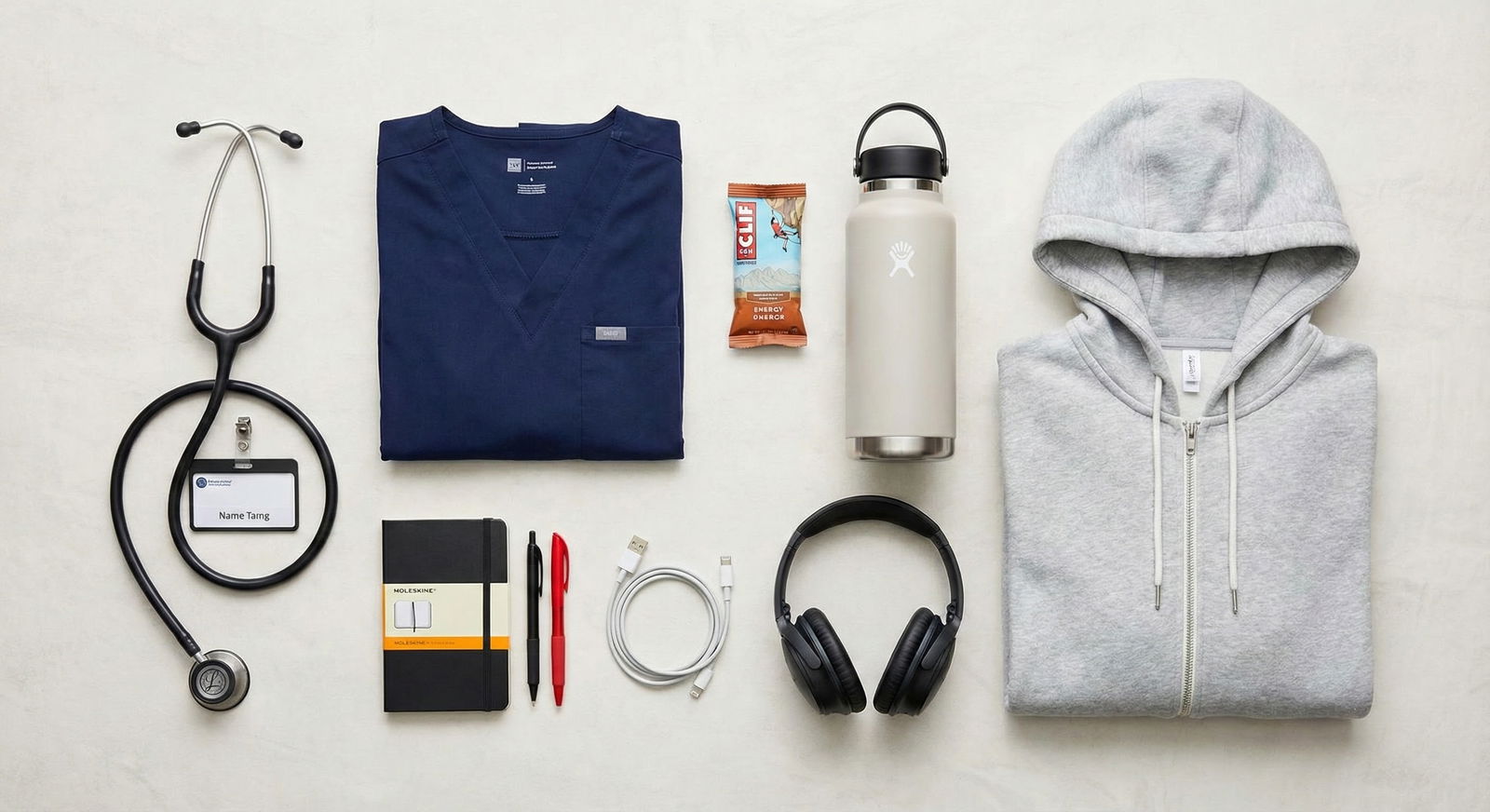
- Pack a charger. Your phone dying at 2 a.m. is hell.
- Bring a sweater or hoodie. Hospitals at night are freezing.
- Keep a tiny notebook: your own quick reference (insulin scales, electrolyte replacement, sepsis bundle steps). Your brain will not remember everything at 4 a.m.
- Decide in advance: one small “anchor” after each shift (same snack, same podcast, same shower routine). It tells your nervous system, “We’re off now.”
- Protect one small piece of your off time on days off: brunch with a friend, a walk, literally 30 minutes of something that isn’t medicine.
None of these fix night float. They just keep the edges from shredding you completely.
The Part Nobody Admits: There Are Good Moments
They’re not glamorous, but they’re real.
- Watching a patient actually look better after your decision—breathing easier, less anxious, pain finally controlled
- Having a nurse say quietly, “Hey, you did a good job with that one”
- Feeling yourself get faster and more organized across a block
- The weird quiet sacredness of a hospital at 3 a.m., lights low, people sleeping, and you’re one of the few keeping watch
Night float can be the first time you realize: “Oh. I am actually becoming a doctor. Not just a student with a badge.”
You don’t have to love it. You probably won’t.
But it’s not the monster your brain is building.
FAQ (You’re Not the Only One Thinking These)
1. What if I start crying during my shift?
It happens. A lot more than people admit.
Step into a bathroom, stairwell, or empty call room. Set a timer on your phone for 3–5 minutes. Let yourself cry hard. Then wash your face, take 5 deep breaths, and say out loud (quietly), “Okay. Next thing.” If you’re truly overwhelmed, tell your upper-level: “I’m not okay right now, I need a minute.” A reasonable senior will help redistribute work or at least check on you.
2. How do I know when something is urgent enough to wake my attending?
Rule of thumb: if you’re wondering “should I call?” you probably should at least run it by your upper-level. Adult vitals that freak people out: MAP < 60, sustained HR > 130, new O2 need, chest pain, acute neuro change, or your gut screaming that something is off. Attendings would rather be mildly annoyed at a 3 a.m. call than show up to a disaster you didn’t warn them about.
3. What if my anxiety is already bad before I even start nights?
Don’t wait. Tell someone before your night block: a chief, PD, GME wellness, or a therapist. You can absolutely be a solid resident and also need SSRIs, therapy, or accommodations. That’s not a character flaw. Ask for a lighter rotation before or after nights, or a split block if possible. And go in with a concrete plan: meds, therapy check-ins, sleep routine, and at least one person on your program side who knows to check on you.
4. Is it normal to dread nights this much?
Yes. Completely. People either lie about it or joke about it, but a huge chunk of residents quietly dread night float, especially the first time. The fact that you’re worried says you care about doing a good job and not hurting people. That’s not a problem; that’s your conscience working. The goal isn’t to erase that dread—it’s to walk in with enough tools, backup, and self-compassion that you can function through it.
Open the calendar on your phone right now and find your next night float block. Then write down three things next to it: who you’ll call for help (upper/attending/nurse you trust), how you’ll sleep (rough plan), and what you’ll pack in your bag. Don’t wait until night one when you’re already scared—decide your supports today.