
It is 30 days before Match Day. Your rank list is in. There is literally nothing left to “optimize” in ERAS. The group chats have gone oddly quiet. And your brain, with no real control left, is trying to invent things to worry about.
This is where people either:
- Drift for a month and hit Match Week totally unprepared, or
- Use these 30 days to quietly kill off 90% of the chaos that wrecks everyone else.
You are going to be in that second group.
This is a day‑by‑day, micro‑task timeline. Very small, very specific actions. At each point: do this now, so Match Week and July 1 are not a disaster.
Big Picture: 30-Day Structure
Here is the rough structure for the month, then we will go granular.
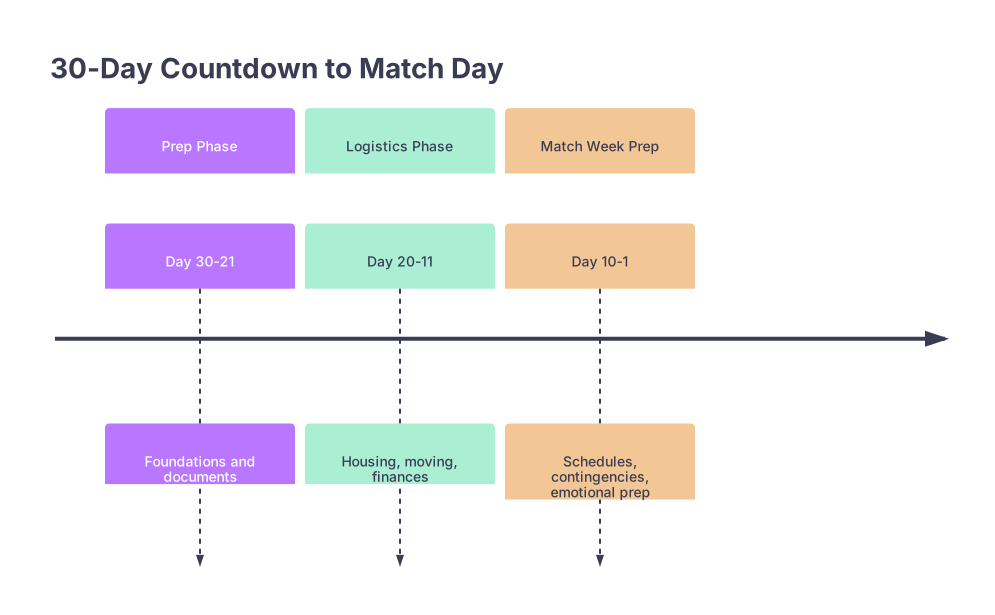
| Period | Event |
|---|---|
| Prep Phase - Day 30-21 | Foundations and documents |
| Logistics Phase - Day 20-11 | Housing, moving, finances |
| Match Week Prep - Day 10-1 | Schedules, contingencies, emotional prep |
Think of it in three chunks:
- Days 30–21: Foundations
- Documents, accounts, basic life infrastructure.
- Days 20–11: Logistics
- Housing, moving, money, health.
- Days 10–1: Match Week systems
- Schedules, communication plans, Plan B (SOAP), and mental load.
Each day is one main micro‑task (maybe 10–20 minutes), plus optional extras if you are ambitious.
Days 30–21: Foundations and Paper Trails
Day 30 – Create your “Match & Move” hub
At this point you should stop letting this stuff live in your head.
Micro-task:
Create one central hub:
- One digital folder: “Match_202X_Residency”
- Inside: Documents, Screenshots, Notes, To-do spreadsheet
If you prefer:
- One Google Doc or Notion page labelled “Match & Move – Master List”
- Sections: Program Info, Moving, Housing, Licensure, HR/Onboarding, Finances
Add a simple checklist template you will keep coming back to:
- Must-do before Match Day
- Must-do during Match Week
- Must-do before July 1
Today is just setup. Do not overthink.
Day 29 – Lock down your contact information
People underestimate how many places need correct contact info. Then they miss critical emails.
Micro-task: Verify and update:
- Email and phone on:
- NRMP
- ERAS
- Your medical school (Student Affairs / Dean’s office)
- Personal email:
- Use one primary, professional address
- Check spam filters and folders
Optional:
- Create email filters or labels:
- “NRMP / Match”
- “Residency / Program”
- Auto-star or highlight anything from “.edu” or major hospital systems.
Day 28 – Gather key documents in one place
At this point you should start assuming you will need the same 10 documents repeatedly.
Micro-task:
In your Match_202X_Residency folder, create subfolder: “_Docs_ReadyToSend”.
Drop in:
- Driver’s license / passport (photos or scans)
- Social Security card (if you have it handy)
- Immunization record (or portal download)
- TB test results / Hep B surface antibody
- Any name change documentation (if applicable)
- Most recent CV (clean version, no ERAS formatting)
Name them cleanly:
- Lastname_Firstname_DriverLicense.pdf
- Lastname_Firstname_Immunizations_202X.pdf
You will thank yourself when GME asks for eight things in one email.
Day 27 – Build a basic program info sheet
You cannot “pick housing later” if you haven’t even pinned where the hospital is.
Micro-task:
Create a simple one-page note (per top 3–5 likely programs, if you had a clear top range):
Include:
- Hospital name
- Main address
- Clinic sites (if known)
- Nearby public transit stops / major highways
- Rough cost-of-living impression (cheap / moderate / brutal)
If you matched somewhere you only visited virtually, this mitigates that “wait… where exactly is this?” moment.
Day 26 – Clean up your digital identity
At this point you should assume programs will Google you, if they have not already.
Micro-task:
- Lock down or clean:
- Instagram, Facebook, TikTok, Twitter/X
- At minimum:
- Make private or
- Remove anything you would not want a PD or chief resident to see
Optional:
- Update LinkedIn to “MS4 – Anticipated PGY‑1 [Specialty] 202X” (you can add specific program after Match Day).
Day 25 – Confirm graduation and requirements timeline
Match is useless if you fail to graduate.
Micro-task:
- Check with your school:
- Any outstanding:
- Clinical evals
- Clerkship grades
- Required procedures/encounters
- Licensing prep modules
- Any outstanding:
- Send a very short, clear email to your dean’s office if anything looks incomplete.
Do not wait until June to realize one attending never submitted your evaluation.
Day 24 – Start your “Residency Money Map”
You are entering the phase where money chaos destroys peace of mind.
Micro-task: Create a small note called “Residency Financial Snapshot.”
Add:
- Your current:
- Checking balance
- Savings
- Credit card balances and interest rates
- Approximate monthly spending
- Expected one-time costs in next 4 months:
- Moving
- Deposits
- Licensing fees
- Step 3 (if you are doing it early)
You are not making a full budget yet. You are just removing unknowns.
Day 23 – List your support people for Match Week
You will need a small, sane inner circle when things hit.
Micro-task: Write down 3–7 people:
- Who you actually want to hear from on Match Day
- Who you trust if things go badly
- Who can help with logistics (housing, car, packing) later
Categorize lightly:
- Emotional: “Call if I do not match / if I am disappointed.”
- Practical: “Ask about moving truck / borrowing a car.”
Send one text:
“Match Day is in a month. You are on my short list of people I may lean on that week. Just a heads-up.”
Day 22 – Decide your Match Day style
At this point you should eliminate one weird source of anxiety: “What am I actually doing that morning?”
Micro-task: Decide:
- Alone or group?
- At school ceremony or at home?
- With family present or on Zoom/FaceTime?
Then lock in:
- If your school has an event, RSVP or confirm details.
- If you hate crowds, quietly give yourself permission to skip and open at home.
Write it down in your calendar: “Match Day plan: [Place], [With whom], [Time].”
Day 21 – Prepare your “no‑match / not ideal match” script
This is brutal, but it saves emotional chaos.
Micro-task: Write two or three short scripts:
- If you do not match:
- “I got tough news. I did not match. I am working with the school on next steps, but I need some space today.”
- If you match but are disappointed:
- “I matched and I am grateful to have a position, but it was lower on my list. I am still processing how I feel, so I may be a bit quiet.”
Stash them in your phone’s Notes. Copy-paste on Match Day instead of inventing painful sentences on the fly.
Days 20–11: Housing, Moving, and Logistics
Day 20 – Clarify your geography
Even without knowing your exact program, you know your ranked cities.
Micro-task: For your top 3–5 cities on your rank list:
- Identify:
- Neighborhoods residents commonly live in (from interviews, forums, alumni)
- Rough commute patterns: driving vs public transit vs walking
- Save 1–2 example apartment listings per city (just to benchmark prices and size).
This is not commitment. It is prep work so you can act fast once you know where you matched.
Day 19 – Start a “moving constraints” list
At this point you should know what will limit your choices.
Micro-task: List:
- Do you have:
- A partner with a job?
- Kids and school needs?
- A pet (and species)?
- A car versus no car?
Rank what matters:
- Non‑negotiable:
- “Must allow a large dog”
- “Must be under X minutes from hospital due to call”
- Flexible:
- “Would like in‑unit laundry”
- “Would like a gym”
You will send this list to yourself later when you are scrolling through 50 apartment listings at 1 AM.
Day 18 – Identify July 1 timelines and constraints
You do not know where you are going, but you know residency start is late June / early July.
Micro-task:
- Check:
- Rough orientation week dates from sample programs (many have them on their websites)
- Decide:
- Latest date you can realistically be moved in:
- “Move must be complete by June 20–25.”
- Latest date you can realistically be moved in:
Block a 7–10 day “move and settle” window in your calendar.
Day 17 – Outline your car situation
Cars are a quiet disaster for many interns.
Micro-task: Answer:
- Do you currently have a car that can:
- Survive the move?
- Legally and practically exist at likely locations (parking, city rules)?
- If not:
- Are you likely to buy/lease or go car‑free?
Make three simple scenarios:
- “I keep current car; need parking.”
- “I sell before moving; use public transit / buy later.”
- “I buy used car near new city.”
You are not buying anything today. You are sketching options.
Day 16 – Start a medical care transition plan
Intern year is not ideal for finding a new primary care doctor from scratch while your prescriptions run out.
Micro-task: Make a short “Health Logistics” note:
- Current:
- PCP name, clinic, portal access
- Specialists
- Active prescriptions and refill counts
- Expiration dates:
- When do current refills run out?
- Action needed:
- “Need 90‑day refill of sertraline before June.”
- “Need dental cleaning before move.”
Set one calendar reminder for 4–6 weeks before you expect to move: “Request extended refills for move.”
Day 15 – Create a moving supplies & cost estimate
At this point, you should at least know if you are doing a U‑Haul versus shipping 5 boxes.
Micro-task: Choose your default approach:
- “Minimalist move – ship boxes, buy furniture there.”
- “Full move – rent truck / moving company.”
Estimate costs:
- Boxes, tape, bubble wrap
- Truck vs shipping estimate
- One‑time purchases after arrival (bed, basic furniture)
Rough, not precise. Just enough to not be blindsided.
Day 14 – Build a simple relocation budget
Now you plug your earlier “Residency Money Map” into actual numbers.
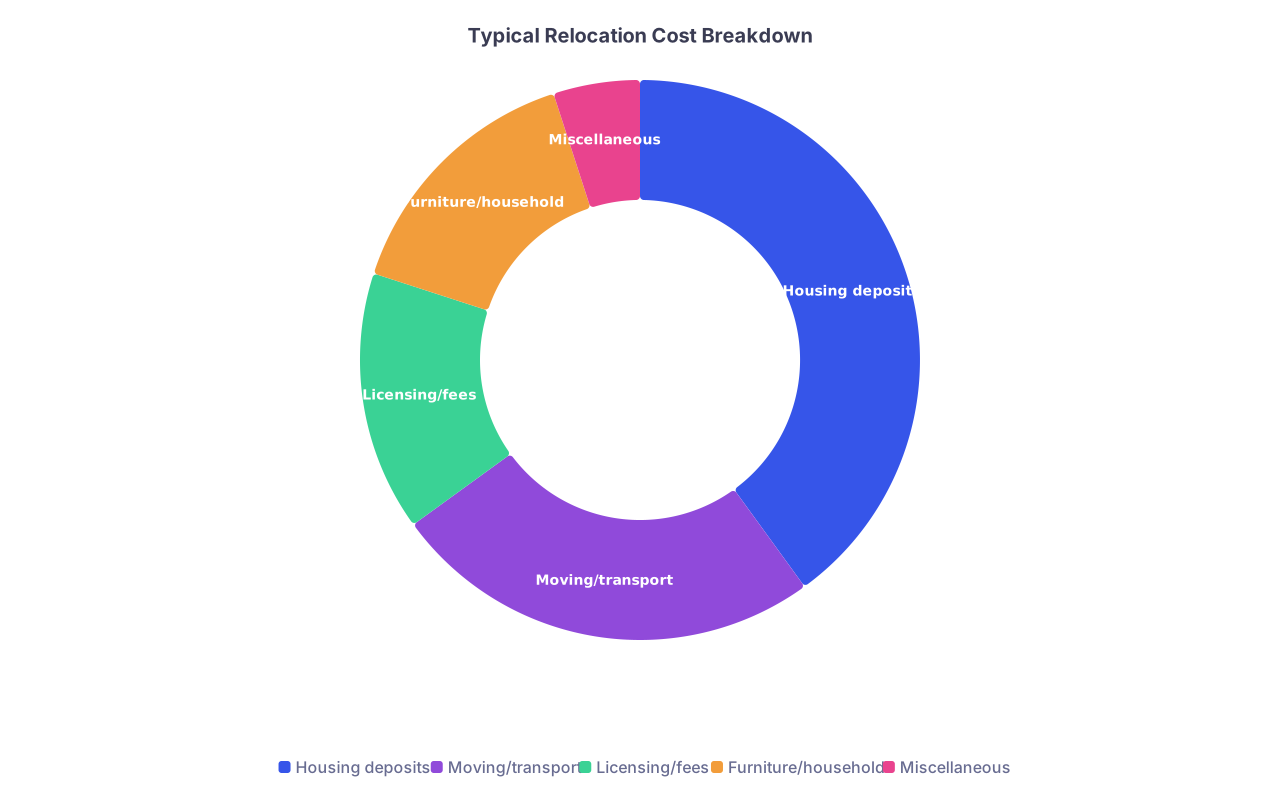
| Category | Value |
|---|---|
| Housing deposits | 40 |
| Moving/transport | 25 |
| Licensing/fees | 15 |
| Furniture/household | 15 |
| Miscellaneous | 5 |
Micro-task: Draft:
- Housing:
- First month + security deposit estimate
- Application fees / pet fees
- Moving:
- From Day 15 estimate
- Licensing and exams:
- State license application (if required early)
- Step 3 registration (if planning early)
- Add a 10–15% “unexpected” buffer.
Compare to your available cash. If it does not add up:
- Identify:
- Credit card / 0% promo options
- Short‑term family loan possibilities
- Side work between now and June (if realistic).
Day 13 – Loan and income prep
Residency salary will change your cash flow, but not instantly.
Micro-task:
- Log into your loan servicer(s):
- Confirm current balance and projected monthly payments under various plans
- Note:
- How long your grace period is post‑graduation
- If you are aiming for PSLF, bookmark the requirements page
Create a tiny “Post‑Match To‑Do” item:
- “Within 2 weeks of Match: update loan servicer with residency info and income when known.”
Day 12 – Tech and accounts audit
Make sure critical accounts will not lock you out when you move.
Micro-task: Check:
- Password manager functioning? Use one if you do not.
- Two-factor authentication:
- Is it tied to a phone number you might change?
- Can you switch some to an authenticator app?
- Cloud storage:
- Are key docs backed up to Drive/Dropbox/iCloud?
Create a list of “must-have access” accounts:
- Email, banking, loans, medical portals, NRMP, school portals.
Day 11 – Declutter one zone
At this point you should take 20 minutes to reduce how much you physically own.
Micro-task: Pick one:
- Clothes
- Books
- Kitchen stuff
Apply a ruthless rule:
- Would I pay to move this?
- If “no” or “not really,” start a donation/sell box.
You do not need to finish all decluttering. Just break the ice.
Days 10–1: Match Week, Contingencies, and Emotional Prep
Day 10 – Understand Match Week timeline
People panic in SOAP largely because they do not know how the week actually runs.
Micro-task: Look up the official NRMP Match Week schedule for your year. Then write down a simplified version for yourself:
| Day | Event |
|---|---|
| Monday AM | Email: Matched vs Unmatched status |
| Mon–Thu | SOAP (if applicable) – applications and offers |
| Friday AM | Match Day – results at set time |
Save this in your Match & Move hub. This ends the “I heard maybe Monday you get X?” rumor chaos.
Day 9 – Build your SOAP emergency playbook
Do not skip this just because you are “probably fine.” Everyone thinks that.
Micro-task: Create a note: “SOAP Plan – Only Open If Needed.”
Include:
- Who to contact immediately if unmatched:
- School’s Match/SOAP advisor
- Dean’s office contact + phone
- Quick checklist:
- Breathe, call advisor
- Get list of available programs from NRMP portal
- Update CV and personal statement rapidly
- Keep phone nearby during offer rounds
You will likely never open this. If you need it, it will save hours and bad decisions.
Day 8 – Social media and announcement boundaries
At this point you should pre-decide how public you want Match to be.
Micro-task: Answer:
- Will you post your Match on social media?
- Same day or later?
- With program name or just specialty and city?
Set rules:
- Who gets told immediately (inner circle from Day 23)
- Who gets told later (extended family, old classmates)
- How to handle intrusive questions if things do not go well
Example script:
- “I’m sharing more details once everything sinks in. Thanks for understanding.”
Day 7 – “Life on hold” tasks list
Match Week is emotional. Your executive function will be garbage. Plan for that.
Micro-task: List 5–10 small life tasks you keep pushing off:
- Emailing back a landlord
- Renewing your driver’s license
- Ordering new glasses
- Closing a random bank account
Decide:
- Which must be done before Match Week
- Which can wait until after
Schedule 1–2 per day this week. Light work, but forward motion.
Day 6 – Emotional anchors
You cannot micromanage your feelings, but you can set basic anchors.
Micro-task: Define your:
- One person you will call no matter what
- One simple activity if you are thrilled
- One simple activity if you are devastated
Examples:
- Thrilled: Dinner with close friends, walk, call your favorite attending.
- Devastated: Go offline for 4 hours, walk outside, meet one trusted friend, no social media.
Write that plan down. You are pre‑deciding when your brain is still reasonably rational.
Day 5 – Match Day logistics drill
At this point you should run through the actual morning.
Micro-task: Decide:
- Where are you physically when the email/portal opens?
- Do you want people with you at the moment you open?
- Wi‑Fi / data backup plan:
- If the school Wi‑Fi dies, what then?
- If your phone fails, whose hotspot can you use?
Create a literal 30–60 minute schedule for Match Day morning:
- Wake up
- Shower / get dressed
- Walk / brief movement
- Be at location X by time Y
This sounds overdone. It works.
Day 4 – Set your “grace rules” for yourself
The worst part of Match Day for many people is weaponizing their own outcome against themselves.
Micro-task: Write down 3–5 rules like:
- “I will not compare my Match to others’ on social media for 48 hours.”
- “My value as a physician is not set by my match number.”
- “I am allowed to feel whatever I feel and still be a good future doctor.”
Corny? Maybe. But you need something to read that is not doom.
Day 3 – Prepare your early post-Match checklist
Once you know where you matched, there is a short blast of tasks.
Micro-task: Create a “48 Hours Post Match” checklist draft. You will fill in the specifics later.
Generic version:
- Save official Match email and PDF somewhere safe.
- Email / respond to program welcome messages.
- Ask for:
- HR / onboarding contact
- Expected start date and orientation dates (if not already known)
- Start soft housing search in that city.
- Tell school’s dean’s office and key mentors where you matched.
Leave blanks where city/program goes. You fill this in on Match Day, not invent from scratch.
Day 2 – Do one thing purely for joy
No productivity here.
Micro-task: Schedule something that has nothing to do with medicine or Match:
- Go to a movie
- Long walk with a friend
- Play a game
- Whatever is fun for you
Put it on your calendar. Protect that time.
Why? It reminds your nervous system that your life is bigger than this one outcome.
Day 1 – Night-before routine
At this point you are done. You are not “manifesting” a different outcome by staring at your ceiling until 3 AM.
Micro-task:
- Prep your morning:
- Clothes laid out
- Device charged
- Location confirmed with any friends/family
- Set one alarm with a backup
- Write one short note to yourself and put it by your bed or as your phone background:
- “Whatever happens tomorrow, I will handle it.”
Then get off your phone 30–60 minutes before sleep. Seriously.
Day 0 – Match Day
You wake up. You follow the plan you already wrote out.
You open the email / portal at the time you decided, in the place you chose, with the people (or lack of people) you selected when you were calmer than you are right now.
Then you:
- Use your scripts, if needed.
- Run your 48-hour checklist.
- Start the next chapter with about 80% less chaos than your classmates.
Key Takeaways
- You reduce chaos by front-loading micro-tasks. Ten–minute actions now prevent hours of panicked scrambling in Match Week and June.
- Decide your scripts and boundaries before emotions hit. Match Day communication, social media, and support plans are much easier to craft now than in the moment.
- Build repeatable systems, not heroic willpower. Centralized documents, simple checklists, and clear timelines carry you through a chaotic transition far better than “I’ll just remember.”