
The worst thing you can do the weekend after Match Day is “just wing it.”
You finally know where you’re going. That’s exactly when most people waste 48 golden hours doomscrolling, half-celebrating, and doing zero real prep for the life hurricane that’s about to hit.
You’re smarter than that. So let’s treat this weekend like what it really is: your launchpad.
Below is a structured, time-specific plan from Friday afternoon through Sunday night to catch up on life admin and set yourself up for residency without burning yourself out.
Big Picture: What This Weekend Is Actually For
Before we go hour-by-hour, anchor on the real goals. This weekend is not for “starting residency prep.” It’s for cleaning up your life backend:
Clarify the non-negotiables
- Where you’ll live (roughly)
- How your money will flow
- What paperwork is coming
- Who’s in your support circle
Capture open loops
Everything that’s been in “I’ll deal with it after I match” limbo: licenses, passport renewals, car, health appointments, family logistics, loans.Create a simple, living system
Not a 40-tab spreadsheet. A few clear lists and folders so you stop re-thinking the same decisions.
To keep this real, here’s a quick breakdown of where your time should roughly go over the weekend:
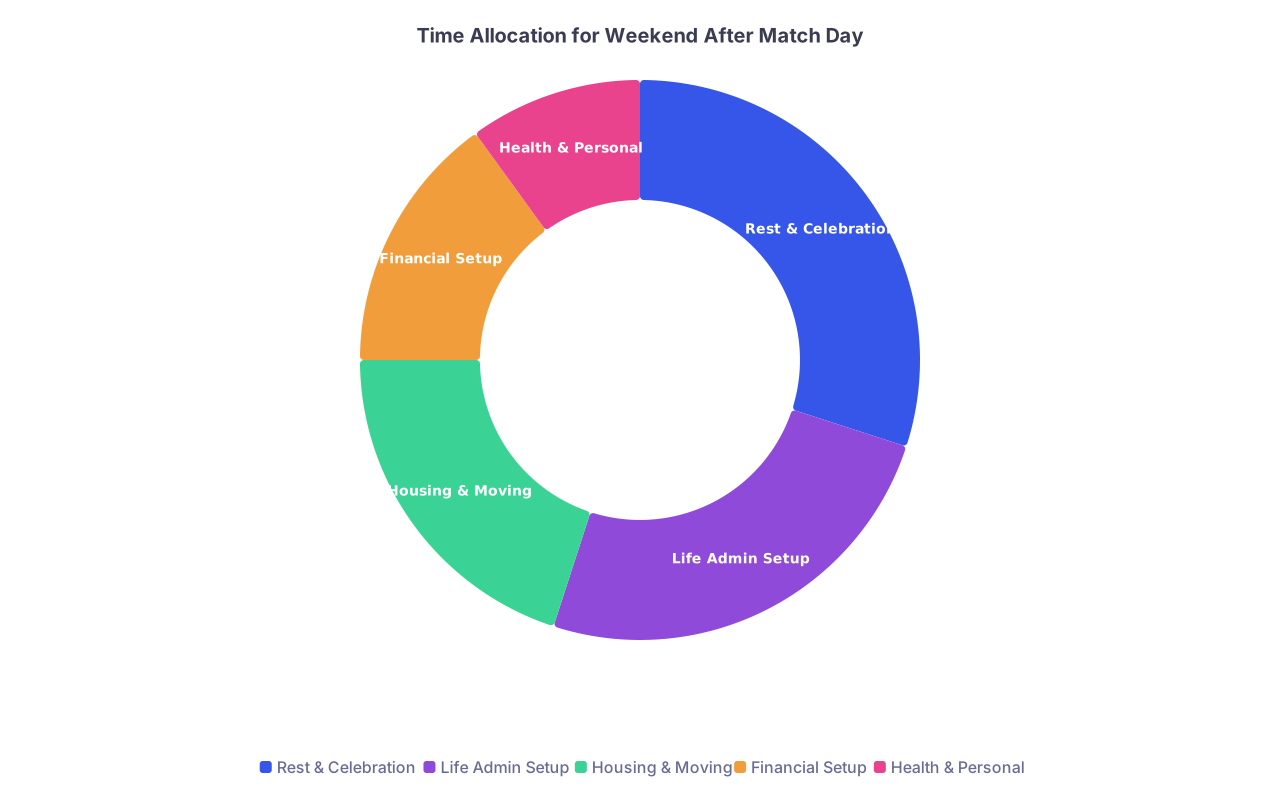
| Category | Value |
|---|---|
| Rest & Celebration | 30 |
| Life Admin Setup | 25 |
| Housing & Moving | 20 |
| Financial Setup | 15 |
| Health & Personal | 10 |
You’re not a machine. About a third of this weekend is still for rest and celebration. The rest is targeted, not endless.
Friday Afternoon & Evening: Contain the Chaos
You’ve just matched. Emotions are everywhere. At this point you should:
Friday 3–5 pm: Initial Decompression + Information Sweep
Celebrate briefly and deliberately
- Call/text your top 3–5 people.
- Share the result once (group chat, social post) so you’re not repeating the same info 40 times.
Do a 30-minute information sweep
Sit down with your laptop. Set a timer for 30–40 minutes.Check:
- Personal email
- School email
- ERAS/NRMP portals
- Program-specific portal if they use one (e.g., Thalamus, InterviewBroker leftovers, etc.)
Create a folder system:
- Email:
Residency - OnboardingResidency - HR & BenefitsResidency - Licensing/Certs
- Files on your computer or cloud:
Residency 202XContracts & LettersHousing & MovingLicensing & CredentialsFinancial
- Email:
Move or label every residency-related email into one of those folders. Don’t overthink. Just sort.
Start a simple “Residency Master List”
Use Notes, Notion, Google Doc — whatever you’ll actually open again.
Create 5 sections:
- Housing & Moving
- Licenses & Paperwork
- Financial & Loans
- Health & Personal
- Program Onboarding
This weekend, everything goes here.
Friday 5–8 pm: Controlled Celebration, Not a Blackout
At this point, you should protect Saturday morning. That means:
- Celebrate, go to dinner, go out if you want.
- But decide a hard cut-off:
- If you have a history of annihilating your next day after going out, be honest with yourself and cap it at 1–2 drinks or be the designated driver.
- Yes, really. You’ll thank yourself when you’re not losing all of Saturday to a headache.
No admin tasks here. Your only job is to enjoy and sleep at a reasonable hour.
Saturday Morning: Hard Reset & Housing Reality
This is the productivity core of the weekend. No one likes this part. Do it anyway.
Saturday 8–9 am: Reset Your Brain and Space
At this point you should:
Clear your physical space (45–60 minutes)
- Tidy your desk.
- Create one physical “Residency Inbox” (a tray, folder, or box) where any residency mail or forms will go.
- Put your notebook or planning app open on that desk. This is HQ.
Quick brain dump (10–15 minutes)
- Write every “after I match I need to…” thought. No order. Just dump:
- “Figure out BLS renewal”
- “Update parents on dates”
- “Renew passport before intern year chaos”
- “Cancel random subscriptions I forgot about”
- Write every “after I match I need to…” thought. No order. Just dump:
You’ll sort it later. For now, just get it out of your head.
Saturday 9–11 am: Housing & Moving – Level 1 Decisions
You will not find your dream apartment before noon. You will define the playing field.
At this point you should answer three questions:
Am I moving across the country, regionally, or staying local?
Will I:
- Live alone
- Live with partner/family
- Live with roommates (other residents or not)
What’s my realistic rent range?
Use a post-tax monthly income estimate (from your program’s PGY‑1 salary on the website) and be an adult about it.
Create a rough structure like:
| Category | % of Take-Home Pay |
|---|---|
| Rent & Utilities | 35–40% |
| Loan Payments | 10–15% |
| Food & Groceries | 10–15% |
| Transportation | 10% |
| Savings/Emergency | 5–10% |
| Everything Else | 15–25% |
If your rent number is >40–45% of take-home, dial it back. This is residency, not a tech salary.
Then:
Map commute radius:
- Look up your hospital on Google Maps.
- Decide acceptable commute time: 10–25 minutes door to door. Night shifts + 45-minute commute = misery.
- Sketch a mental (or actual) radius.
Do a 90-minute housing recon sprint:
- Check 2–3 major platforms (Zillow, Apartments.com, local Facebook groups, program’s resident FB/WhatsApp, institutional GME housing bulletin if they have one).
- Save 5–10 realistic options in a note with:
- Rent
- Distance/commute
- Parking situation
- Safety impressions (quick crime map check if available)
You’re not applying yet. You’re calibrating reality.
Saturday Late Morning to Early Afternoon: Admin Triage
Saturday 11 am–12:30 pm: Paperwork & Program Onboarding Triage
At this point you should get eyes on what the next 4–8 weeks of admin actually look like.
Re-open your residency emails and portals
Make a quick list of everything your program has already mentioned:
- Contract signing deadline
- Background check
- Drug screen
- Occupational health / vaccinations
- BLS/ACLS requirements
- Orientation dates
- Start date
- Any “forms packet” or onboarding portal (e.g., MedHub, New Innovations, institutional HR portal)
Turn that into a mini-timeline
Use a simple layout:
- This Weekend
- Read all onboarding emails fully once
- Add major deadlines to calendar
- Next 2 Weeks
- Sign and return contract
- Complete HR forms
- Start background check
- Next 4–6 Weeks
- Schedule occupational health
- Schedule BLS/ACLS if needed
- Start state license/permit file if required
- This Weekend
Here’s what a clean visual of this process looks like:

| Step | Description |
|---|---|
| Step 1 | Match Result |
| Step 2 | Read Program Emails |
| Step 3 | Create Deadlines List |
| Step 4 | Sign Contract |
| Step 5 | Complete HR Forms |
| Step 6 | Background Check |
| Step 7 | Drug Screen |
| Step 8 | Schedule Occ Health |
| Step 9 | Submit Vaccination Proof |
| Step 10 | Plan License or Permit |
| Step 11 | Send Documents |
- Calendar block the real deadlines
Open your calendar (Google, Outlook, whatever):
Add:
- Contract due date
- Background check completion target date
- Occupational health appointment deadline (if they gave one)
- Orientation and start date with location
Then add buffer reminders:
- 2 weeks before each major deadline
- 1 week before
- 2 days before
This takes 20 minutes now and prevents 3 a.m. panic later.
Saturday Afternoon: Money & Commitments
Saturday 1:30–3 pm: Financial Reality Check
At this point you should stop pretending your loans and cash flow will magically work themselves out.
List your financial baseline
- Current checking/savings balance
- Credit card balances and interest rates
- Approximate total student loan balance (from NSLDS or your servicer)
- Any other debts (car, personal, etc.)
Estimate your PGY‑1 take-home pay
You can google “[Hospital name] PGY‑1 salary” and then sanity-check with a rough take-home calculator. You’re aiming for an approximate monthly net number, not perfection.
- Do a 30-minute “good enough” budget
Categories only, no perfection:
- Rent + utilities (based on your earlier housing reality check)
- Transportation (car payment, insurance, gas, public transit, parking)
- Food
- Loans (if in repayment; if planning IDR, pencil in something)
- Minimum savings buffer (even $50–$100/month counts)
- Miscellaneous (subscriptions, phone, gym, etc.)
Your only goal: confirm that your rent number is not suicidal and identify if you need to:
- Get a roommate
- Sell a car
- Lock down cheaper housing
- Talk to a financial counselor at your med school or hospital later
- Handle low-hanging financial admin (30–45 minutes)
- Make a list of:
- Subscriptions to cancel before internship (unused apps, duplicate services)
- Cards or banks to close/clean up
- Documents you’ll need for HR and credentialing:
- Passport or state ID
- Social Security card
- Birth certificate
- Med school diploma (eventually)
- USMLE/COMLEX score reports
Start a “Residency Docs” folder and drag every digital copy you can find into it.
Saturday 3–5 pm: Health, Personal, and Travel
This is the stuff people forget, then regret.
At this point you should:
- Check your own health logistics
- When was your last:
- Dentist visit
- Eye exam
- PCP visit
- Any chronic meds that need refills before July?
- When was your last:
Make a list of “Must schedule before July 1” appointments.
- Check your immunization documentation
Most programs will want:
- TB testing
- Hep B series or titer
- MMR, Varicella proof
- COVID and flu status
- Tdap status
If you don’t immediately know where that documentation lives, put “locate vax records” on your This Week list. Do not wait until employee health is emailing you in panic.
- Plan any non-residency trips
If you’re seeing family, traveling, or taking a last pre-residency vacation:
- Sketch rough windows:
- Post-graduation but pre-orientation
- Watch out for visa/immigration issues if you’re an IMG or on a visa.
Add those to the calendar as “protected windows” so you don’t accidentally schedule other stuff on top.
Saturday Evening: Light Touch + Real Rest
By now, your brain is cooked. At this point, you should downshift:
Do a light review:
- Glance at your Residency Master List.
- Star or highlight the 3–5 items that absolutely must happen in the next 7 days.
Then do something that has nothing to do with medicine:
- Movie night
- Walk
- Cooking
- Friends (who are not rehashing every rank list decision)
Sleep like someone who just finished a multi-year boss fight. Because you did.
Sunday Morning: Systematize Your Life
Sunday is about turning chaos into a system you can maintain once MS4 turns into “intern getting paged every 3 minutes.”
Sunday 9–10:30 am: Build Your Simple Tracking System
You do not need Notion templates with 17 linked databases. You need something you actually open.
At this point you should:
Lock in 1 main tool for tasks
- Options:
- Todoist / Things / Reminders
- Google Tasks
- A single notebook
- Options:
Create categories/tags matching your Master List
- Housing & Moving
- Licensing & HR
- Financial
- Health & Personal
- Program Stuff
Convert your brain dump + Master List into tasks
- Anything under 10 minutes → mark as “Today” or “This Week”
- Anything big (e.g., “Apply for state license”) → break into 3–5 smaller steps:
- Download license checklist
- Request med school transcript
- Get notarized copies if needed
- Submit online application
- Track application status
Here’s what a simple timeline from now to residency might look like:
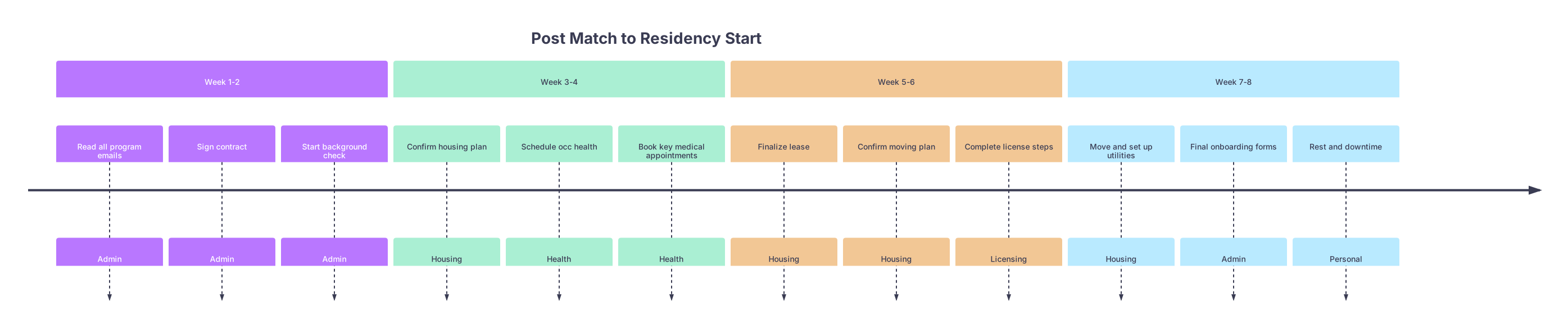
| Period | Event |
|---|---|
| Week 1-2 - Read all program emails | Admin |
| Week 1-2 - Sign contract | Admin |
| Week 1-2 - Start background check | Admin |
| Week 3-4 - Confirm housing plan | Housing |
| Week 3-4 - Schedule occ health | Health |
| Week 3-4 - Book key medical appointments | Health |
| Week 5-6 - Finalize lease | Housing |
| Week 5-6 - Confirm moving plan | Housing |
| Week 5-6 - Complete license steps | Licensing |
| Week 7-8 - Move and set up utilities | Housing |
| Week 7-8 - Final onboarding forms | Admin |
| Week 7-8 - Rest and downtime | Personal |
This doesn’t have to be perfect. It just has to exist.
Sunday Late Morning: Moving & Logistics – Level 2
Sunday 10:30 am–12 pm: Turn Housing Reality Into a Plan
At this point you should:
Decide your housing strategy
- Target date to secure housing (lease signed or arrangement confirmed): usually 6–8 weeks before start date, earlier in expensive markets.
- Decide:
- “I will live within X minutes of the hospital.”
- “I will spend no more than $Y on rent.”
List the key moving decisions you’ll need:
- Will you:
- Ship a car or drive?
- Use movers, pods, or DIY?
- Store stuff or bring everything?
- Will you:
Create a minimal moving checklist
Break into:
- Before move:
- Give current landlord notice
- Book movers / truck / pod
- Change address (USPS + banks + licenses)
- Transfer utilities (stop current, start new)
- Move week:
- Pack essentials box (scrubs, ID, basic kitchen, documents)
- Keep important documents with you, not in boxes
- Before move:
Capture all of this into your task system with rough dates.
Sunday Afternoon: Catch-All & Communication
Sunday 1–3 pm: Loose Ends and People
At this point, you should clean up the social and communication side:
Update key people with specifics
- Parents/family: city, hospital, start date, approximate moving timeline
- Partner: housing plan and money realities (no fantasies, just facts)
- Close friends: “I’ll be in X city; let’s plan something before I move.”
Decide on your residency communication rules
You’re about to get flooded with group chats, email threads, and “reply-all” disasters.
Set your baseline now:
- Primary calendar: [X]
- Primary task manager: [Y]
- Primary communication with co-residents: probably WhatsApp/GroupMe/Signal
You don’t need to build any of it today—just decide what you’ll use and stick to it.
Sunday Late Afternoon & Evening: Lock It Down
Sunday 3–4 pm: 7-Day Action Plan
At this point you should zoom back in:
From everything you’ve captured this weekend, pick:
- Top 3–5 tasks for this coming week that move the needle most:
- Sign/return contract
- Confirm at least one occupational health/PCP appointment
- Narrow housing options and schedule 1–2 viewings (virtual or in-person)
- Gather key documents (passport, SS card, vaccine records)
Create a simple 7-day view:
| Day | Priority Task |
|---|---|
| Monday | Re-read program emails, list deadlines |
| Tuesday | Sign contract, start background check |
| Wednesday | Call occupational health, book visit |
| Thursday | Shortlist 5 apartments |
| Friday | Schedule housing tours or calls |
| Saturday | Locate vaccine and ID documents |
| Sunday | Review progress, adjust next week |
Sunday 4–6 pm: Shut Down Correctly
Do a quick final pass:
Check your Residency Master List and:
- Move anything urgent into this week.
- Push non-urgent items into “Next Month” so they don’t clutter.
Close your laptop. Really.
Then do something that reminds you you’re a person, not just a future PGY‑1:
- See friends
- Go outside
- Cook something decent
- Read/watch something non-medical
Visual Recap: Weekend Structure
Here’s a high-level shape of how the weekend should flow:
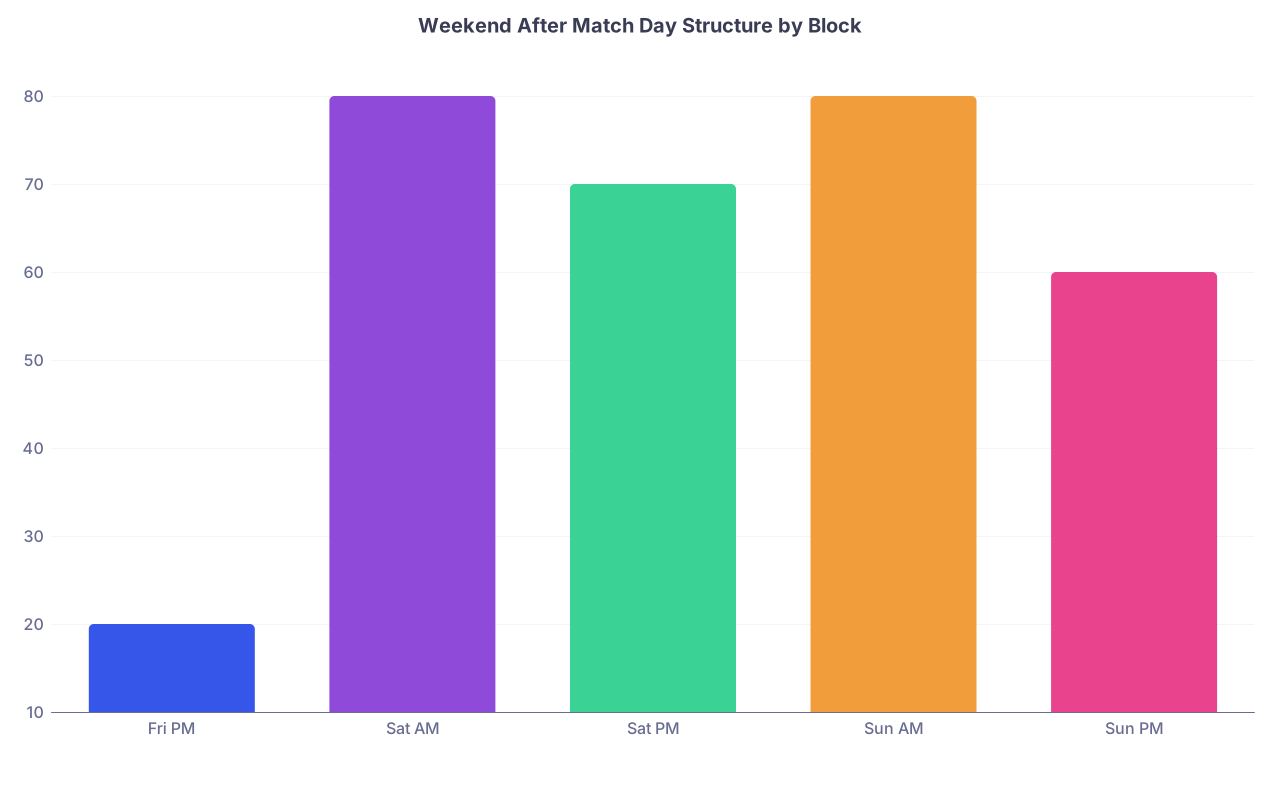
| Category | Value |
|---|---|
| Fri PM | 20 |
| Sat AM | 80 |
| Sat PM | 70 |
| Sun AM | 80 |
| Sun PM | 60 |
(Values are “admin intensity” out of 100: your brain is working hardest Saturday morning and both halves of Sunday.)
And a quick mental model diagram of your new “life admin” system:

Key Takeaways
- Treat this weekend like infrastructure, not improvisation. You’re building the scaffolding that will keep you from drowning once intern year starts.
- Make decisions at the right level. You don’t need a signed lease by Sunday night—but you do need a clear rent target, commute radius, and a housing plan.
- Leave with a 7-day plan, not a massive list. If you end Sunday with a realistic one-week action list, a basic budget, and your key dates in a calendar, you used this weekend better than 90% of new interns.