
The week after Match Day is where most MS4s quietly waste their best chance to get ahead. You either drift and react, or you run a tight, deliberate playbook.
This is your playbook.
We are talking about Post-Match Month: the 4 weeks after results drop, before your life gets swallowed by graduation, moving, and residency onboarding. At each point, I will tell you exactly what you should be doing, in order.
Big-Picture Timeline: Your Post-Match Month At a Glance
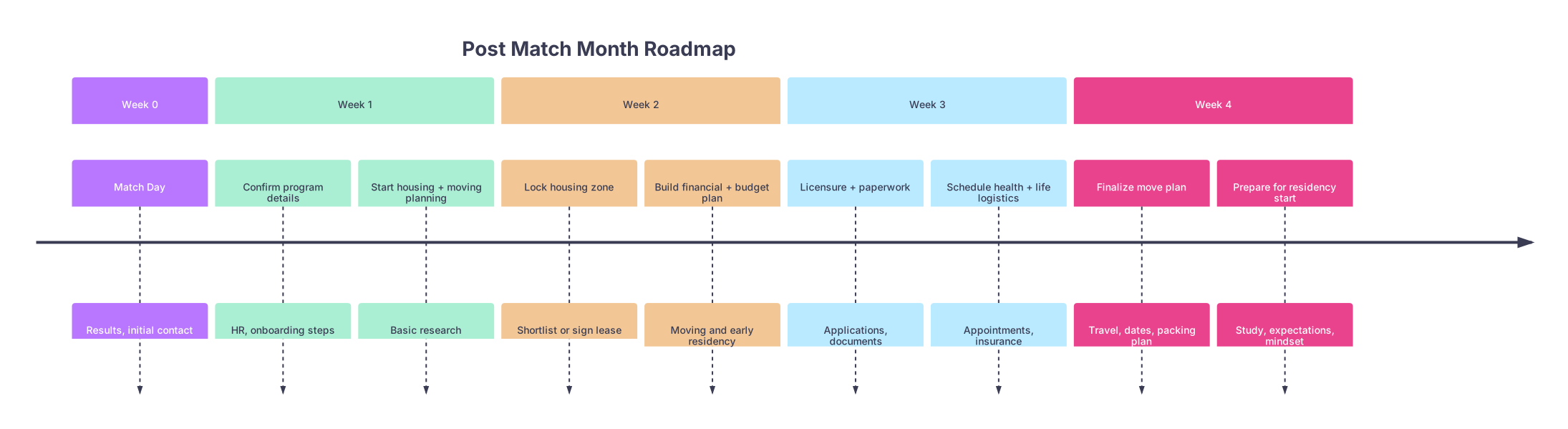
| Period | Event |
|---|---|
| Week 0 - Match Day | Results, initial contact |
| Week 1 - Confirm program details | HR, onboarding steps |
| Week 1 - Start housing + moving planning | Basic research |
| Week 2 - Lock housing zone | Shortlist or sign lease |
| Week 2 - Build financial + budget plan | Moving and early residency |
| Week 3 - Licensure + paperwork | Applications, documents |
| Week 3 - Schedule health + life logistics | Appointments, insurance |
| Week 4 - Finalize move plan | Travel, dates, packing plan |
| Week 4 - Prepare for residency start | Study, expectations, mindset |
You will adjust a bit based on your school calendar, but the order should not change. Delay the wrong items, and you pay for it all PGY-1.
Week 0: Match Day to First Weekend — React, Then Stabilize
Goal of this week: Get oriented, respond professionally, and gather information. Not to solve everything.
Match Day (Friday)
By the end of Match Day, you should have:
Read your Match email and NRMP results fully.
Not just the program name. Check:- Institution
- Track (categorical, prelim, advanced)
- Start date (often July 1, but verify)
- Any listed conditions or special notes
Contact your matched program if they instructed you to.
Many programs send a group email by end of day. If they do not:- Send a brief, professional email to the program coordinator:
- Confirm you received the match result
- Express that you are excited to join
- Ask if there is an onboarding packet or portal and approximate timeline
- Do not ramble. Four sentences is enough.
- Send a brief, professional email to the program coordinator:
Tell your core people.
Same day, you should:- Inform your closest mentors (the ones who wrote your letters)
- Thank them clearly
- Tell them where you matched, and in what track
Capture your initial questions.
Create a running list in a note app:- Housing questions (where do residents live, call rooms, parking)
- Logistics (orientation date, EMR training, required certifications)
- Pay/benefits (salary, meal cards, parking, childcare if relevant)
You are not solving these yet. You are building the question bank.
Weekend After Match Day
By Sunday night, you should have:
Filed and organized your Match documents.
- Save PDFs of:
- NRMP result
- Any program welcome emails
- The contract or “offer packet” if they sent one
- Create folders:
- “Residency – Official Docs”
- “Residency – Housing”
- “Residency – Licensing and HR”
- Save PDFs of:
Pulled the basics on your program and city. Spend 30–45 minutes, not 3 hours doom-scrolling Reddit.
- Look up:
- Hospital locations (main + satellite sites you know about)
- Approximate commute patterns (car vs public transit)
- General rent range around the hospital(s)
- Look up:
Decided whether you are staying or moving cities. This sounds obvious but I have seen people in combined programs get confused. If you have a transitional year / prelim or are doing an advanced program:
- Map out:
- City 1: PGY-1
- City 2: PGY-2+
- That changes your entire housing and moving strategy. Especially leases.
- Map out:
At this point, you should not be signing leases, buying furniture, or studying for intern year. You are still in the orientation phase.
Week 1: From “I Matched” to “I Have a Plan Skeleton”
Goal of Week 1: Confirm your program’s timeline and build a framework for housing, moving, licensing, and finances.
Week 1 – Early (Mon–Wed)
By mid-week, you should:
Have a clear line of contact with your program.
- If you received nothing by Wednesday:
- Email the program coordinator again (politely).
- Ask directly:
- Expected date for onboarding instructions
- Whether there is a resident handbook or website
- Add their phone number to your contacts.
- If you received nothing by Wednesday:
Create a master residency timeline. Use a calendar or simple spreadsheet. Anchor points you should add:
- Orientation start date (ask if not given)
- Official residency start date
- Likely move window (usually 1–2 weeks before orientation)
- School graduation date and any required school events
Start your housing strategy, not your apartment hunt.
Ask yourself:
- Do you need a car?
- Do you value sleep on call more than a nice neighborhood?
- What is your maximum rent (realistically, not fantasy)?
Then, look up where residents actually live:
- Program website “living here” sections
- Ask current residents (if you have their contact)
- Check Google Maps and commute times at 6–7 am
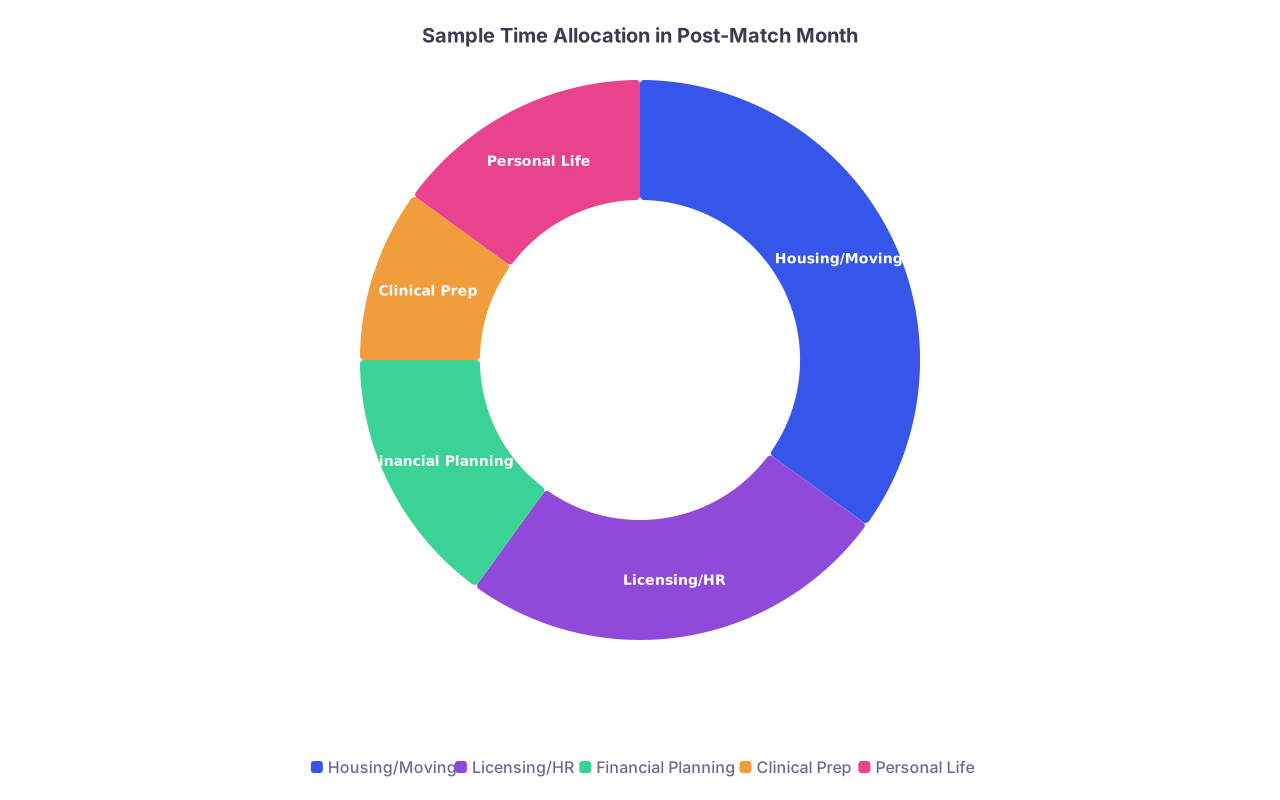
| Category | Value |
|---|---|
| Housing/Moving | 35 |
| Licensing/HR | 25 |
| Financial Planning | 15 |
| Clinical Prep | 10 |
| Personal Life | 15 |
This week is about information and structure. Not final decisions.
Week 1 – Late (Thu–Sun)
By the end of Week 1, you should have:
Snapshot of your financial baseline. Make a quick, ruthless accounting:
- Current savings
- Expected graduation costs (fees, regalia, travel for family)
- Moving costs (rough estimate: truck, flight, deposit)
- Loan status (when payments resume, interest situation)
Drafted a rough moving budget. Do not obsess over exact numbers. You want order of magnitude.
Approximate Moving Cost Ranges Category Typical Range (USD) Local move (truck) 300–800 Cross-country move 1500–4000 Security deposit 1–2 months rent Initial furniture 500–1500 Travel to new city 200–800 Clarified your living constraints. By Sunday night, you should know:
- Are you living alone, with partner, or with co-residents?
- Are pets a factor?
- Do you need in-unit laundry, or can you live without?
- Maximum acceptable commute time on post-call days (hint: 45+ minutes is a terrible idea on Q4–Q5 call)
You are not hunting specific apartments yet. But you should now have your target neighborhood radius, budget range, and timeline to sign.
Week 2: Decisions Start — Housing and Budget Lock In
Goal of Week 2: Move from “options” to “shortlist and commitments,” especially housing and financial planning.
Week 2 – Early (Mon–Wed)
At this point, you should:
Get concrete data from current residents. If your program has not paired you with a resident mentor yet, ask for one. When you talk to them, ask targeted questions:
- “Top 3 neighborhoods residents live in, realistically.”
- “How bad is parking at the hospital? Night shift?”
- “Would you live walking distance if it means smaller/older place?”
- “What one thing do interns always underestimate about this city?”
Take notes. Residents will save you from very stupid mistakes (like signing a lease in a “cheaper” area that is dangerous at 3 am).
Start actual housing search. Now you can:
- Track specific buildings/areas
- Contact leasing offices and landlords
- Ask about:
- Lease start dates (June vs July)
- Short-term options if you have a one-year prelim
- Hospital employee discounts (exists more often than you think)
Refine your budget with real numbers. Replace estimates with actual data:
- Rent from listings
- Parking costs at hospital and at building
- Typical utilities in that city
- Transit pass if applicable
Week 2 – Late (Thu–Sun)
By the end of Week 2, you should have:
Either a signed lease OR a clear target date to sign.
- If competition is high (NYC, SF, Boston): You may need to sign earlier.
- If market is looser: You can wait, but you should still:
- Know which buildings/areas are your first choice
- Have a visit or virtual tour plan if needed
A functional PGY-1 budget. Not a pretty spreadsheet. A functional one.
It should include:
- Net monthly pay estimate (after taxes, insurance)
- Fixed costs:
- Rent
- Utilities
- Parking / transit
- Cell phone
- Loan payments (once they restart for you)
- Variable:
- Groceries
- Gas / rideshare
- Eating out
- Misc (clothes, subscriptions)
Decisions on big-ticket items. Examples:
- Car:
- Do you need one?
- Are you bringing your existing car or buying/leasing?
- Furniture:
- Bringing existing
- Buying used on arrival
- Using a minimalist setup for PGY-1
- Car:
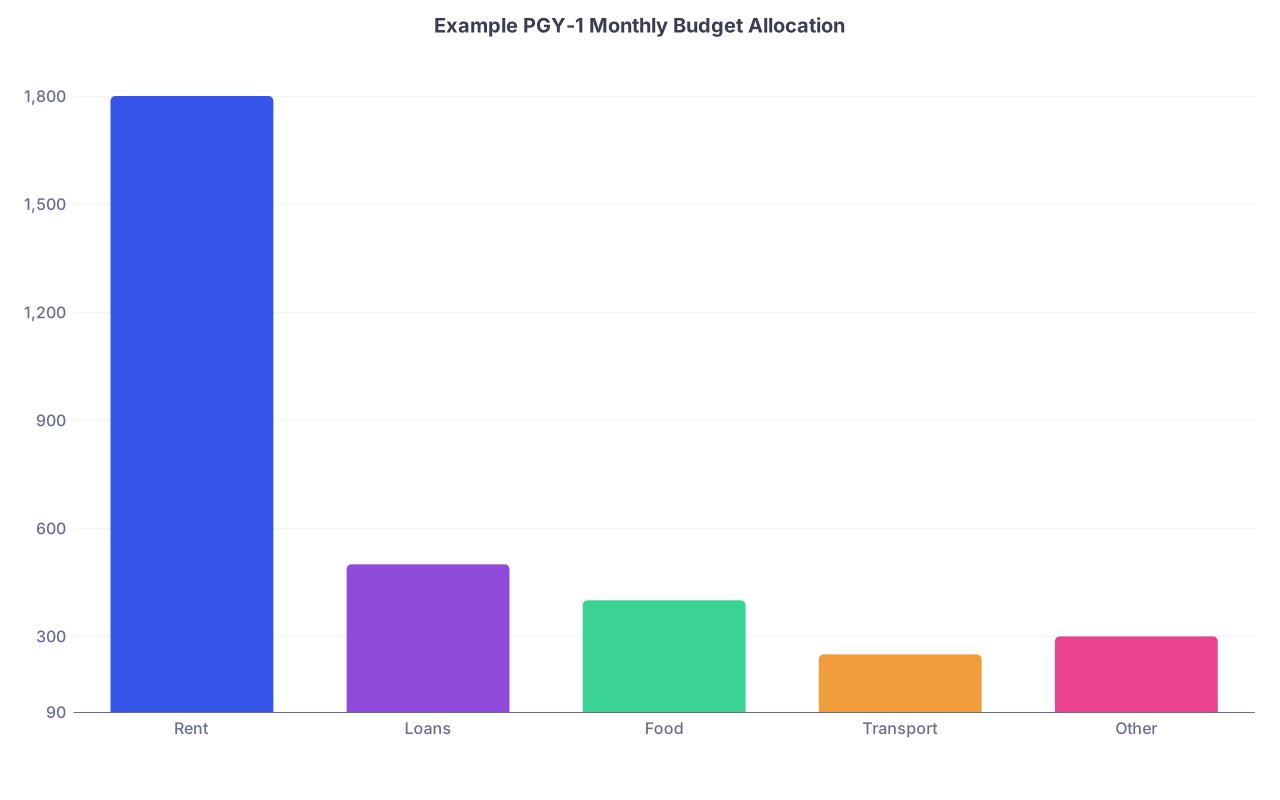
| Category | Value |
|---|---|
| Rent | 1800 |
| Loans | 500 |
| Food | 400 |
| Transport | 250 |
| Other | 300 |
At this point in the month you should feel the shift from “I matched” to “I am concretely moving my life.”
Week 3: Paperwork Week — Licensure, HR, Health, and Life Admin
This is the week most people underestimate. Paperwork lag is how you start residency in chaos.
Goal of Week 3: Knock out licensing, HR, and health requirements before they become emergencies.
Week 3 – Early (Mon–Wed)
By mid-week, you should:
Clarify licensing requirements. Depending on your state and program, this might include:
- Training license vs full license
- Fingerprinting/background checks
- Notarized documents
- USMLE/COMLEX transcript submissions
At this point, you should have:
- Downloaded all forms
- Listed each requirement with:
- Deadline
- Cost
- Items you must gather (ID copies, transcripts, photos)
Request required documents. You will probably need:
- Official med school transcript
- Diploma copy (or letter of expected graduation)
- USMLE/COMLEX score reports
- Immunization records
Do this now. School registrars are slow. Do not wait.
Start HR onboarding steps. From your program or GME office:
- Background check links
- Drug screen appointment
- I-9 work authorization (passport, SSN card, etc.)
- Direct deposit setup
Create a checklist and start ticking.
Week 3 – Late (Thu–Sun)
By the end of Week 3, you should have:
All major applications submitted or scheduled.
- Training license submitted (or in the mail)
- Background check complete or scheduled
- Drug screen completed or scheduled
- Any hospital portal accounts created
Health and insurance logistics lined up.
- Review:
- When your med school insurance ends
- When residency coverage begins
- Avoid gaps:
- If there is a gap, consider short-term coverage or COBRA if needed
- Schedule:
- Dentist appointment before residency
- Eye exam if you need new glasses/contacts
- Primary care check if you have chronic conditions or meds that need refills
- Review:
Personal life admin at least started.
- Address change planning
- Banking:
- Local branch if you care
- Credit cards / limits (moving and setup can spike expenses)
- Documentation:
- Scan and back up:
- Passport
- License
- Vaccination card
- SSN card (store securely)
- Scan and back up:

This is dry work. Do it now, while you still have free time and mental bandwidth.
Week 4: Move Plan + Residency Prep — Tighten the System
You are in the final stage of Post-Match Month. Now you convert all the planning into concrete dates, bookings, and prep.
Goal of Week 4: Have a locked-in move plan and a realistic plan for starting intern year without chaos.
Week 4 – Early (Mon–Wed)
By mid-week, you should:
Finalize your move logistics. At this point:
- Move-out date (current place) is confirmed
- Move-in date (new place) is confirmed
- Travel method chosen:
- Flying + shipping
- Driving cross-country
- Professional movers or rental truck
Book:
- Flights (if needed)
- Rental truck or movers
- Hotel or short-term stay if there is a gap between move-in and orientation
Create a packing and setup plan. Not just “pack later.”
Break it down:
- This week:
- Sort what you will sell/donate
- List what you must bring vs can buy later
- Next weeks (beyond Month 1):
- Pack non-essentials
- Label by room and priority
- This week:
Confirm orientation and first-day expectations. Email or portal-check for:
- Exact orientation dates and times
- Dress code
- Required modules (EMR training, compliance)
- Policies on:
- Parking
- ID badges
- Call room access
Week 4 – Late (Thu–Sun)
This is the last segment of the month. Here is where you stop reacting and start rehearsing what PGY-1 will actually feel like.
By the end of Week 4, you should have:
A simple, focused clinical prep plan. You do not need to “relearn all of medicine.” That is fantasy.
Instead:
- Choose 2–3 high-yield resources depending on your specialty:
- IM: “Pocket Medicine,” “The Little ICU Book,” an intern guide from your program
- Surgery: “Surgical Recall,” your program’s intern manual
- Peds: “Nelson Essentials,” program guides
- Set a modest schedule:
- 30–45 minutes per day, 4–5 days a week
- Focus on:
- Orders
- Call scenarios
- Common cross-cover issues
- Choose 2–3 high-yield resources depending on your specialty:
Baseline daily routine concept for PGY-1. No, you cannot fully predict your schedule. But you can define:
- Target wakeup window
- Sleep hygiene non-negotiables
- Food plan:
- Quick breakfast options
- Go-to snacks for call nights
- Exercise: 1–2 short sessions per week you actually can sustain
Mental and social prep. You are about to start the most intense year of your life so far.
In this last part of the month:- Decide:
- Who your support people are (name them)
- How you will check in with them (weekly call, text thread)
- If you see a therapist or want to:
- Arrange continuity or transfer before you move
- Take a clear-eyed view:
- You will be tired
- You will feel behind
- This does not mean you are failing
- Decide:
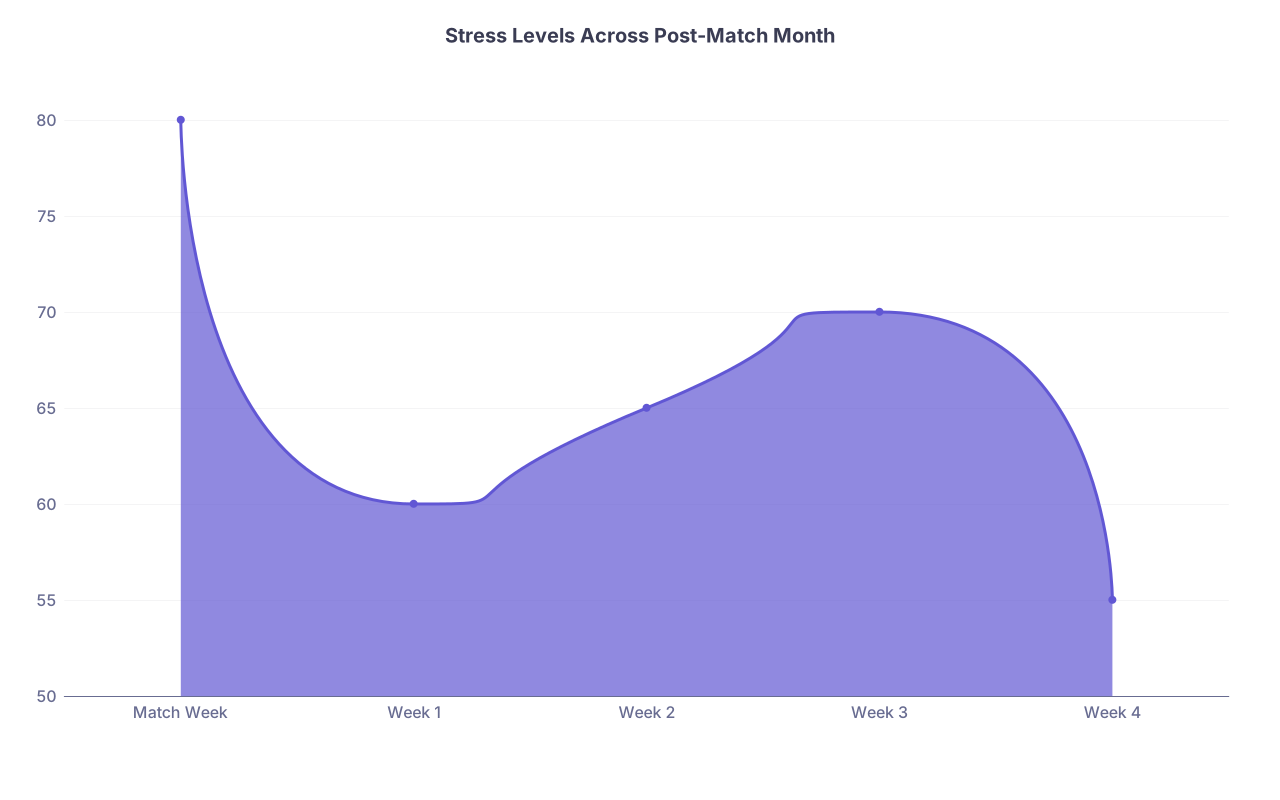
| Category | Value |
|---|---|
| Match Week | 80 |
| Week 1 | 60 |
| Week 2 | 65 |
| Week 3 | 70 |
| Week 4 | 55 |
You are trying to land in July at “manageable stress” instead of “out-of-control chaos.”
Putting It All Together: Your Post-Match Month Checklist
Use this as your sanity check. By the end of Post-Match Month, you should be able to say “yes” to almost all of these:
| Domain | By End of Month 1 You Have… |
|---|---|
| Program Contact | Clear coordinator contact + orientation info |
| Housing | Lease signed or solid plan + dates |
| Moving | Travel and move logistics booked |
| Licensing/HR | Training license submitted, HR tasks underway |
| Financial | Working PGY-1 budget and move budget |
| Health/Admin | Insurance transitions, key appointments scheduled |

Final Takeaways
- The first month after Match is not vacation; it is leverage. Use it to lock in housing, money, and paperwork before residency eats your time.
- Work week-by-week: Week 1 = orientation and planning, Week 2 = housing and budget decisions, Week 3 = licensing and HR, Week 4 = move logistics and intern-year prep.
- If you hit those marks, you start PGY-1 tired-but-ready instead of exhausted-and-scrambling. And that difference shows up every single call night.