
Most students think attendings care whether you matched “well.” They don’t. They care how you behave when the curtain finally gets pulled back.
Match Day is a Rorschach test for professionalism. Faculty watch how you handle public pressure, visible wins, and very visible losses. And yes, people remember.
Let me walk you through what actually happens behind the hallway smiles and “congratulations!” emails. Because the conversations that occur in workrooms, selection meetings, and group texts among attendings are a lot less gentle than what you hear to your face.
What Match Day Really Is To Attendings
On your side, Match Day feels like the climax of four years. On the faculty side, Match Day is more like a character audit.
You see a giant party, champagne, your name on a list.
Attendings see:
- Who is gracious.
- Who is arrogant.
- Who disappears.
- Who melts down and makes it all about them.
- Who steps up for classmates who just had their stomachs ripped out.
In many departments, especially smaller specialties and home programs, your behavior on Match Day is the final note in your file. They will see your match outcome, your reaction, and your social media posts. Then a week later they’re in a meeting talking about next year’s letters, chief resident potential, or fellow recommendations—and someone will say:
“Remember how he acted on Match Day? Hard pass.”
Or:
“She didn’t match and handled that like a pro. I’d write for her again in a heartbeat.”
I’ve heard both of those, almost word for word.
Expectation #1: Emotional, Yes. Uncontrolled, No.
Attendings absolutely expect emotion. They’re not robots and they do not expect you to be, either. People cry, scream, hug strangers. That’s fine. That’s human.
The line you can’t cross is this: your emotions cannot become everyone else’s problem.
Here’s what’s acceptable and what quietly sets off alarms.
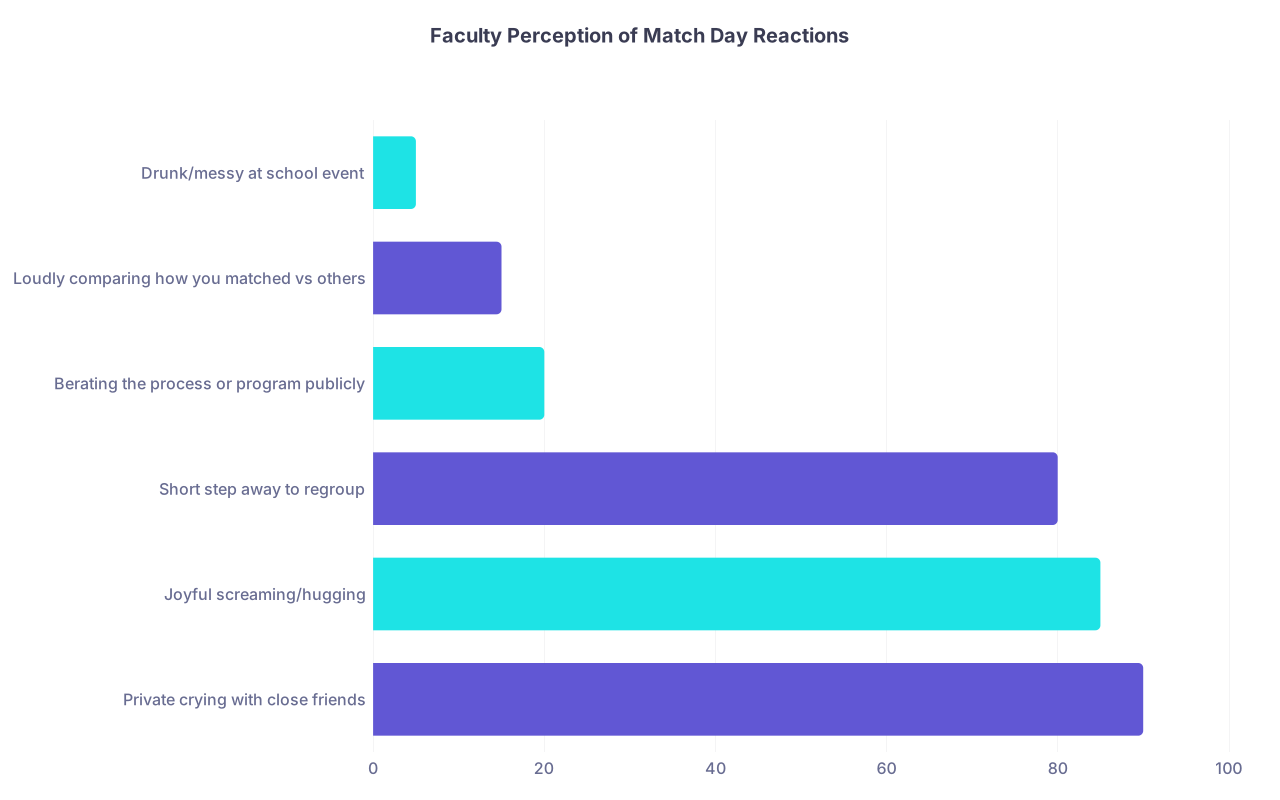
| Category | Value |
|---|---|
| Private crying with close friends | 90 |
| Joyful screaming/hugging | 85 |
| Short step away to regroup | 80 |
| Berating the process or program publicly | 20 |
| Loudly comparing how you matched vs others | 15 |
| Drunk/messy at school event | 5 |
Attendings expect and respect:
- You get your envelope, your hands shake, you cry. You hug your partner, call your parents. Great.
- You didn’t match your dream specialty, but you still walk up, say “I’m going to X for Y, I’m excited,” and you stay present at the event.
- You step away to a quiet room for 10–15 minutes, pull yourself together, then come back.
What worries them:
- You storm out of the room, slam a door, disappear, and your classmates are scrambling to see if you’re safe.
- You get visibly drunk or sloppy at a school-sponsored Match event. (You’d be shocked how much this gets talked about the next week.)
- You publicly bash programs, cities, or specialties in front of faculty: “I can’t believe I got stuck there, that program is garbage.”
I sat in on an internal discussion where someone said of a student who melted down publicly: “If that’s how he handles disappointment, imagine when a patient dies.” That was enough to change how people framed him permanently.
You’re allowed to hurt. You’re not allowed to lose your grip on basic professionalism.
Expectation #2: Stop Making It a Rankings Contest
Let me tell you a dirty little secret: attendings are deeply unimpressed by flexing about prestige on Match Day.
You know the energy: “I matched at MGH.” Pause. Waits for reaction. Then looks at the classmate going to a community program with that subtle, condescending “oh that’s nice” expression.
We see that. We talk about that.
Most attendings—especially those who sit on residency selection committees—know how random the match can be. They’ve seen average applicants land at brand-name programs and superb applicants undershoot or get burned by geography, couples match, or visa issues.
When you stand up and turn Match Day into a prestige Olympics, you’re not showing you’re “top tier.” You’re showing you still think like a premed. Rankings brain, not resident brain.
The behavior faculty actually respect:
- You share where you matched in a straightforward, non-performative way.
- You celebrate classmates equally, whether they matched Hopkins or the community program 20 minutes away.
- If you matched somewhere flashy, you downplay the brand and highlight the fit: “I’m excited about the people there and the training.”
I’ve seen PDs specifically side-eye the “brand-obsessed” student and say, “He’s going to be a problem when he realizes every program has flaws.”
You can be proud. Do not make your classmates feel smaller so you can feel taller.
Expectation #3: Do Not Disappear If You Didn’t Match
The brutal part: some of you won’t match. And you already know by the Monday email.
What attendings expect from you if you’re in that group is very different from what students assume.
Many unmatched students feel ashamed and vanish on Match Day, not responding to messages, skipping the ceremony. I get the instinct. But faculty see something else when you disappear:
- “Can this person function when things go badly?”
- “Will they show up and communicate, or ghost, when residency gets hard?”
If you didn’t match:
You are not required to stand on stage and smile for photos. But you should show up in some way. Even if it’s brief. Even if you stand at the back with one friend and your advisor.
The unmatched students who earn massive respect are the ones who:
- Talk to their advisor early in the week, have a plan for SOAP or reapplication.
- Show their face on Match Day, even for 30 minutes, to support close friends.
- Are honest but composed: “I didn’t match this year. It’s been rough, but we’re working on a plan.”
I’ve seen those students get better letters the following year because attendings were genuinely impressed by their resilience.
If instead you avoid everyone, ignore emails, and reappear two months later with constant complaints about the process—people remember that, too. And they’re less eager to go to bat for you the next cycle.
Expectation #4: Basic Gratitude, Said Out Loud
On Match Day, attendings are listening for something very simple: do you understand you didn’t get here alone?
They’re not fishing for compliments. They’re listening for signs that you see the bigger picture.
This can be as small as:
- Walking up to your clerkship director, saying: “Thank you for your support this year. Your letter meant a lot.”
- Sending a short email that afternoon or weekend: “I matched at X. I really appreciate everything you did for me.”
Not a three-paragraph essay. Two sentences is enough.

Here’s what happens when you do that: a week later, the faculty group chat or meeting rolls around.
Someone says: “Did you hear where she matched?”
Another responds: “Yeah, she emailed me right after. Great kid.”
That’s the person they recommend for chief down the line. That’s the person they answer emails for when fellowship applications come around.
Students massively underestimate how much goodwill a 30-second thank-you creates.
On the flip side, if you were the one constantly “needing a favor” all year—extra letter, last-minute mock interview, personal calls to PDs—and then you never even close the loop? Faculty notice. They don’t rage about it. They just slowly move you into the “transactional, self-focused” bucket in their head.
You don’t want to live there.
Expectation #5: Social Media Self-Control (Faculty Do See It)
Yes, attendings see your Match Day posts. Not all of them, but enough.
They see screenshots, forwarded stories, Twitter rants. Residents show them. Other students show them. Do not kid yourself.
Common things that make you look worse than you realize:
- “Finally escaping this trash city” type posts when you matched away. Remember: many faculty and classmates built careers in that “trash city.”
- “Guess hard work pays off” with an undertone that suggests those who didn’t match well simply didn’t work hard.
- Publicly clowning on programs you interviewed at: “Never wanted that program anyway, vibe was off.”
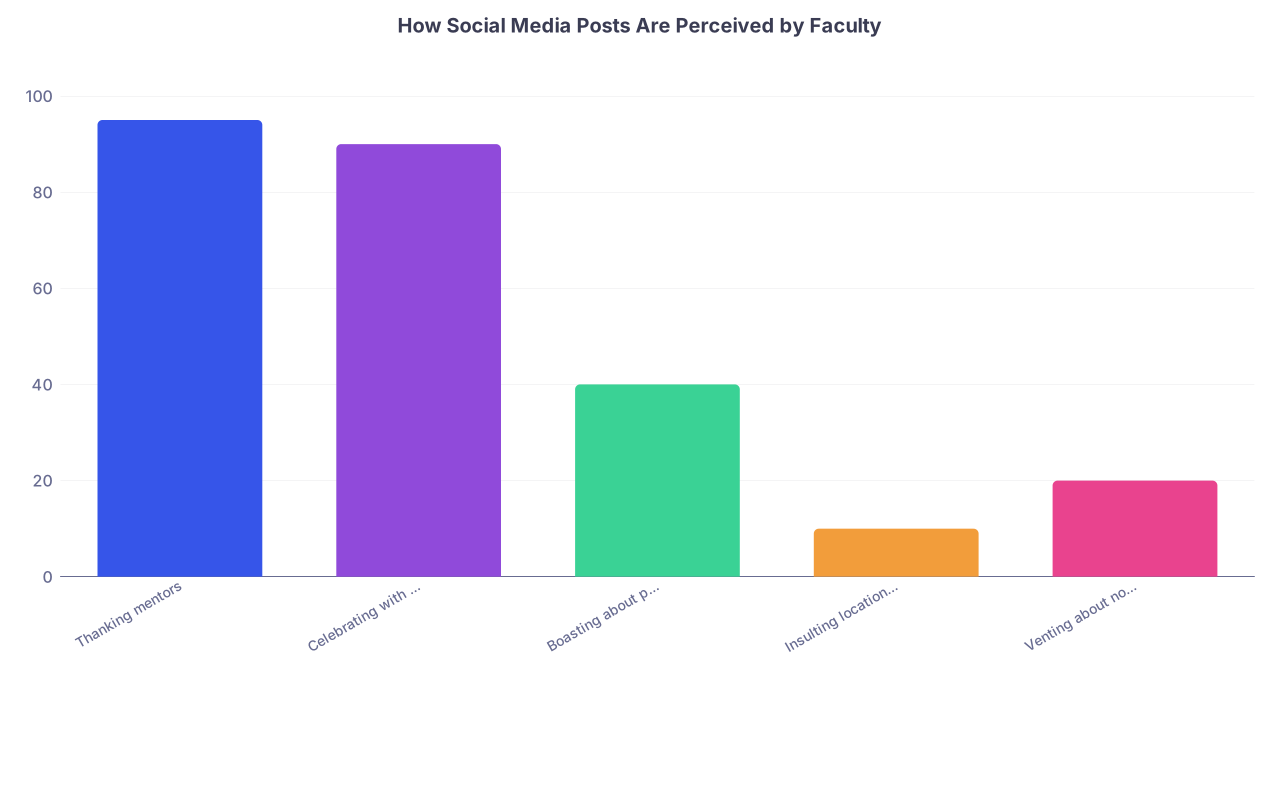
| Category | Value |
|---|---|
| Thanking mentors | 95 |
| Celebrating with classmates | 90 |
| Boasting about prestige | 40 |
| Insulting locations/programs | 10 |
| Venting about not matching | 20 |
What attendings like seeing:
- A simple “Matched at X in Y! Grateful to everyone who helped me get here.”
- Group photos with classmates, residents, and faculty. Signals: you’re a community person.
- Posts that acknowledge the complexity: “Honored to have matched. Holding space for classmates in tough positions this week.”
What they secretly roll their eyes at:
- “I manifested this into existence” type posts. Residency is not a vision board.
- Over-curated photoshoot energy in places where classmates are in tears ten feet away. Feels tone-deaf.
Remember: some of the people reading your posts might literally be writing evaluations and future letters for you. If your post would embarrass you in front of your PD, do not post it.
Expectation #6: You Don’t Check Out Before You Graduate
Once the envelope’s open and the Instagram story is up, many students mentally clock out. Faculty fully expect that temptation. They don’t expect you to suddenly become a new person in the last few months.
What they do expect:
- You still show up to rotations on time.
- You don’t start turning in truly trash-tier work because “I already matched.”
- You don’t treat staff or junior students worse because “I’m done, they can’t touch me now.”
Here’s the ugly behind-the-scenes truth: attendings absolutely talk about “post-match personality changes.” I have heard, more than once:
“He matched great, but his behavior after Match made me nervous about his future colleagues.”
Those comments end up in unofficial reputations that follow you. PDs text each other. Fellowships call your school quietly. They ask: “How was she as a senior? Any red flags?”
If your answer from faculty is: “Strong student, but checked out hard after Match and got a bit entitled,” that sticks.
The flip side is also true. The student who matched early decision, kept their head down, worked hard to the end? They are very easy to recommend later.
Expectation #7: How You Treat Classmates Who Are Hurting
The single strongest character signal on Match Day is how you treat the people who did not get what you got.
Attendings will not see every interaction, but they see enough to form a picture.
Things that stick with faculty:
- You step away from your own celebration for five minutes to check on the classmate who’s crying in the corner.
- You bring a friend who didn’t match into your group for the photo so they’re not isolated.
- You avoid “group gloating” around people who are clearly struggling.

Residents and attendings notice those small choices. Not because they’re creeping on you, but because that’s what they care about in a colleague.
Programs are not just selecting for exam scores and publications. They are selecting for, “Do I want to be on call with this person at 3 a.m. when everything is on fire?”
Your Match Day behavior is an early answer to that question.
If your vibe is, “I got mine, good luck to the rest of you,” that’s exactly how people will expect you to behave as an intern.
Expectation #8: Some Situational Awareness About the Ceremony
Every school runs Match Day a little differently, but the same unwritten rules repeat.
Here’s what faculty silently expect you to do:
- Show up dressed like you’re entering a professional career, not a nightclub. It does not need to be a suit, but it should say “resident physician,” not “spring break.”
- Be present when your name is called, or tell someone ahead of time if you truly can’t be there.
- Keep speeches, toasts, or on-stage comments short and not about you. If a mic gets handed to you, think 10–30 seconds, not three minutes of TED Talk.
And here’s what irritates attendings more than they’ll admit:
- Students trying to “go viral” with antics that derail the event timeline.
- Long, self-indulgent thank-you monologues where you can feel everyone else’s discomfort.
- Public proposals or personal drama hijacking attention from classmates. I’ve seen one. The faculty overwhelmingly hated it, even if they smiled at the time.
Your class is big. Time is limited. They’re there to celebrate everyone, not your personal episode of reality TV.
A Quick Reality Check: What Attendings Don’t Expect
Let’s clear up a misconception: nobody expects you to be fully composed, perfectly gracious, and emotionally balanced at every moment.
They do not expect:
- You to fake happiness if you’re devastated.
- You to instantly make peace with a specialty or location you’re not excited about.
- You to have answers for what’s next if you didn’t match. Monday–Friday of Match Week is a blur.
Faculty know you’re sleep-deprived, anxious, overwhelmed. They do not need you to be flawless.
They need evidence that your core is intact: decency, basic professionalism, and the ability to not implode outward onto other people when things get real.
That’s it.
Practical Game Plan: How To Show Up On Match Day
If you like concrete moves, here’s a clean mental checklist.

| Step | Description |
|---|---|
| Step 1 | Before Match Day |
| Step 2 | Plan who you stand with |
| Step 3 | Decide 1 or 2 faculty to thank |
| Step 4 | Set social media boundaries |
| Step 5 | Prepare short line about your match |
| Step 6 | If unmatched, coordinate with advisor |
| Step 7 | On Match Day - Arrive on time |
| Step 8 | Open envelope, react naturally |
| Step 9 | Connect with close friends |
| Step 10 | Check on struggling classmates |
| Step 11 | Thank key faculty in person or by email |
| Step 12 | Do not overshare or rant online |
Nothing there is complicated. But almost nobody actually plans any of it. They just show up and wing it, then wonder why some people’s reputations rise after Match Day and others quietly sink.
FAQ: Unfiltered Answers
1. If I hate where I matched, do attendings expect me to pretend I’m thrilled?
No. They expect you not to torch bridges in public. You can say something like, “I matched in X at Y. It wasn’t my first choice, but I’m grateful to have a spot and I’m going to make the most of it.” The performative “this is my lifelong dream” when everyone knows it isn’t just makes you look fake.
Vent to one or two trusted people privately. Do not make your entire social circle, ceremony, or social media your emotional dumping ground.
2. Is it really that bad if I skip the Match Day ceremony?
If you matched and skip without a real reason, yes, people notice. The optics are: “Too cool for the class.” That said, if large public events spike your anxiety or you have family/personal reasons, communicate that to someone—an advisor, a dean, or a close faculty member. The red flag is silence and disappearance, not absence with explanation.
If you didn’t match, showing up even briefly is one of the strongest signals of resilience you can send.
3. Do attendings actually care where I matched?
They care what it means for your trajectory, not the flex value. Your pediatrics attending is not impressed that you matched Derm at a big-name place; they’re asking, “Will she thrive there? Was she honest with herself?” They care more about whether the specialty and program fit who you are than the brand logo.
What they’re actively judging is how you carry the outcome you got: humbly, with perspective—or as a tool to impress and distance yourself from others.
4. I’m couples matching. Do attendings expect me to stay if my partner is upset?
No one’s tracking your every move. But they absolutely respect students who balance their own joy with solidarity. If your partner didn’t get an ideal match, it’s a bad look to be high-fiving across the room while they’re crumbling alone. Step away, be a human, rejoin the crowd when they’re stable. That’s exactly the kind of emotional intelligence people want in a resident.
5. How soon after Match Day should I email my letter writers and mentors?
Same day or that weekend is ideal. Doesn’t need to be long:
“Hi Dr. X, I wanted to share that I matched at [Program] in [Specialty]. Thank you again for your support and for writing on my behalf this year. I’m very grateful.”
That’s it. That 30-second email buys you a reservoir of goodwill that will matter later for fellowship, jobs, and random favors you cannot yet predict.
Key takeaways: Match Day shows faculty who you are under pressure. They expect human emotion, not public implosions. And the students who earn the quiet, lasting respect are the ones who stay grounded, show gratitude, and remember they’re part of a community, not the star of a one-person show.