
The day before Match results is not a day to “just relax.” That advice is lazy and wrong. N‑1 Day needs structure, guardrails, and a plan, or your brain will eat you alive.
I am going to walk you hour‑by‑hour through N‑1. What to do, what to avoid, and exactly when to shut things down. Treat this like an attending’s orders. You can improvise later.
We will anchor on a typical Monday N‑1 with results released Tuesday 9:00 a.m. local time. Adjust times if your school or region differs, but keep the sequence.
One Week Out: Set Up N‑1 So It Does Not Break You
At this point (T‑7 days), your goal is simple: prevent N‑1 from blindsiding you.
7–5 Days Before Results
By now you should:
Confirm your results release time and method
- ERAS / NRMP email time
- School‑specific emails or ceremonies
- Time zone differences if you are away on an away rotation or vacation
Decide your N‑0 (results day) setting
- Alone vs with partner / family
- At home vs in person with classmates vs school ceremony
- Who you want in the room when you open the email
-
- No clinical duties if humanly possible
- No big exams, presentations, or travel
- Cap social commitments – one low‑key activity maximum
Pre‑negotiate expectations with people
- Tell family: “You will hear from me after I open the email, not before.”
- Tell friends: group chat is fine, but keep play‑by‑play to a minimum.
- Talk with your partner: Do you open it together? Do you each have space first?
This is also when you plan the skeleton of your N‑1 schedule. Not every detail. Just the structure.
| Block | Focus |
|---|---|
| Morning | Light routine, brief prep |
| Late Morning | Admin and logistics |
| Early Afternoon | Movement and errands |
| Late Afternoon | Connection or solo time |
| Evening | Containment and wind-down |
| Night | Sleep protection |
48–24 Hours Before: Lock Down Decisions, Not Doomscroll
At T‑2 days, your brain wants to re‑hash your rank list. That is useless now.
2 Days Before
At this point you should:
-
- Do not reopen NRMP. Do not re‑calculate odds.
- You made the best list with the info you had. You are done.
Limit “what if” conversations
The worst 48‑hour loop I hear: “What if I scrambled?” “What if I ranked X higher?”
Pick one person you trust and tell them: If I start this spiral, call it out. Hard stop.Do a controlled social media audit
- Mute or hide accounts that will spike your anxiety:
- Over‑confident classmates posting “Manifesting Derm at UCSF!”
- Alumni in your dream specialty posting Match celebrations from last year
- Keep 1–2 accounts that calm or amuse you. Everything else can come back after Match.
- Mute or hide accounts that will spike your anxiety:
Decide your media intake for N‑1
- Short list of shows / podcasts that are familiar and low‑stakes
- No new emotionally heavy series. No medical dramas about failure.
By the time N‑1 starts, decisions are made. Your job then is execution, not analysis.
N‑1 Morning: Start Like a Normal Human, Not a Disaster Victim
You wake up on N‑1. Your stomach is tight. Your phone is near your pillow. Do not start with your phone.
7:00–8:30 a.m. – Wake‑Up and Containment
At this point you should:
Delay your phone by 15–20 minutes.
- Get out of bed. Wash your face. Drink water. Basic physical anchors before digital chaos.
Eat something real.
- Not just coffee. Protein + carbs. Eggs and toast. Yogurt and granola. Even a PB&J.
- You are stabilizing blood sugar for a long anxiety day.
Choose one 5–10 minute grounding practice.
Options that actually work for medical brains:- Box breathing: 4–4–4–4 counts for 5 minutes.
- Write down: “Things I can control today” / “Things I cannot.” Tear up the second list.
- 5‑minute body scan on an app like Headspace or Insight Timer.
You are not trying to feel great. You are trying to be functional.
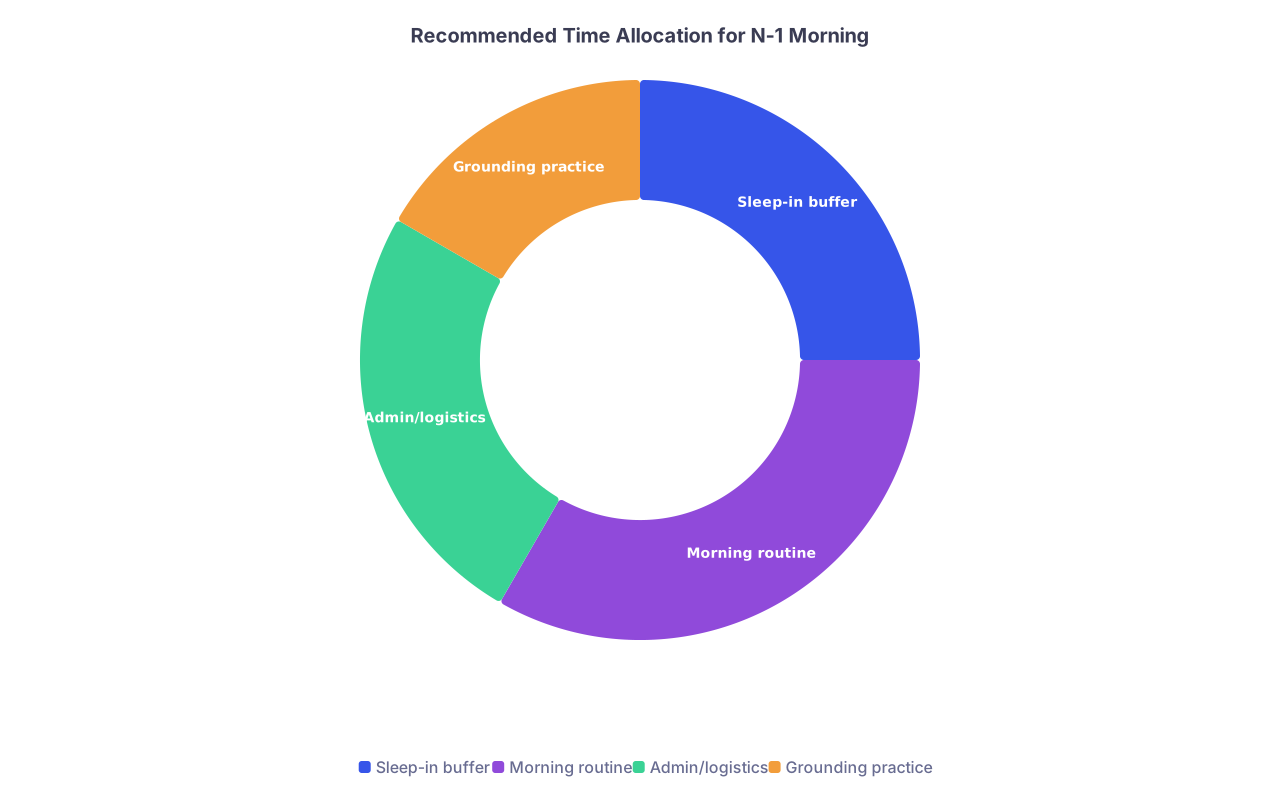
| Category | Value |
|---|---|
| Sleep-in buffer | 30 |
| Morning routine | 40 |
| Admin/logistics | 30 |
| Grounding practice | 20 |
8:30–10:30 a.m. – Light Admin and Match‑Day Prep
This is your productive window. You are anxious, but still capable of linear thinking.
At this point you should:
Confirm all match‑related logistics.
- Check the email address where results will arrive.
- Verify your NRMP login once (not 30 times).
- Confirm the exact release time and any school‑run event details.
Set up your “results environment.”
Decide now, not at 8:57 a.m. tomorrow, where and how you will open results:- Primary device: laptop vs phone
- Backup device charged and ready
- Quiet room, door can close
- Tissues / water / trash can within reach (yes, seriously)
Communications plan.
- Pre‑draft a short text for each tier of people:
- Close family/partner: “I am about to open results. I love you.”
- Friends/class group chat: “Just opened. Matched to ___ at ___!”
- Faculty mentor: “Wanted you to know I matched to ___ at ___ – thank you.”
- Save these in Notes. You will not want to compose them on adrenaline.
- Pre‑draft a short text for each tier of people:
At this point you do not:
- Re‑stalk program rosters
- Re‑read your personal statement
- Calculate probability trees based on friend gossip
That is emotional self‑harm, not preparation.
N‑1 Midday: Move Your Body, Not Your Rank List
By late morning, anxiety spikes and focus drops. This is where most students start scrolling or catastrophizing. You are going to do something else.
10:30 a.m.–12:30 p.m. – Physical Reset
At this point you should:
Get outside for 30–60 minutes.
- Brisk walk, light jog, or easy gym session.
- No PR attempts, no new CrossFit workout. Just movement.
- If the weather is bad, indoor track or treadmill with a podcast.
Bring only one headphone.
- Keep some sensory contact with reality. You want to move, not fully dissociate.
Avoid match chatter during this block.
If you run into a classmate who wants to say, “What do you think you’ll get?”, you have a stock answer:- “No idea. Trying not to think about it. How are you holding up?” Then change topic or keep moving.

If you absolutely cannot exercise, at least commit to:
- A 15‑minute walk around the block, or
- Stretching / yoga video at home
Your body is your best handle on your nervous system today. Use it.
N‑1 Early Afternoon: Low‑Stakes Tasks Only
Early afternoon is dangerous. You are tired, and your brain wants stimulation.
12:30–3:00 p.m. – Structured Distraction
At this point you should:
Eat a normal lunch.
- Again, actual food. Not just coffee and a granola bar.
- Aim to be slightly under‑full, not stuffed.
Do 1–2 low‑stakes, finite tasks.
Examples that work well:- Clean your desk or bedroom for 20–30 minutes
- Do laundry
- Organize a drawer or your email inbox
- Prep a simple breakfast for Match morning (overnight oats, bagels laid out)
These tasks matter for two reasons:
- They create small wins and a sense of control.
- They give your anxious energy somewhere non‑destructive to go.
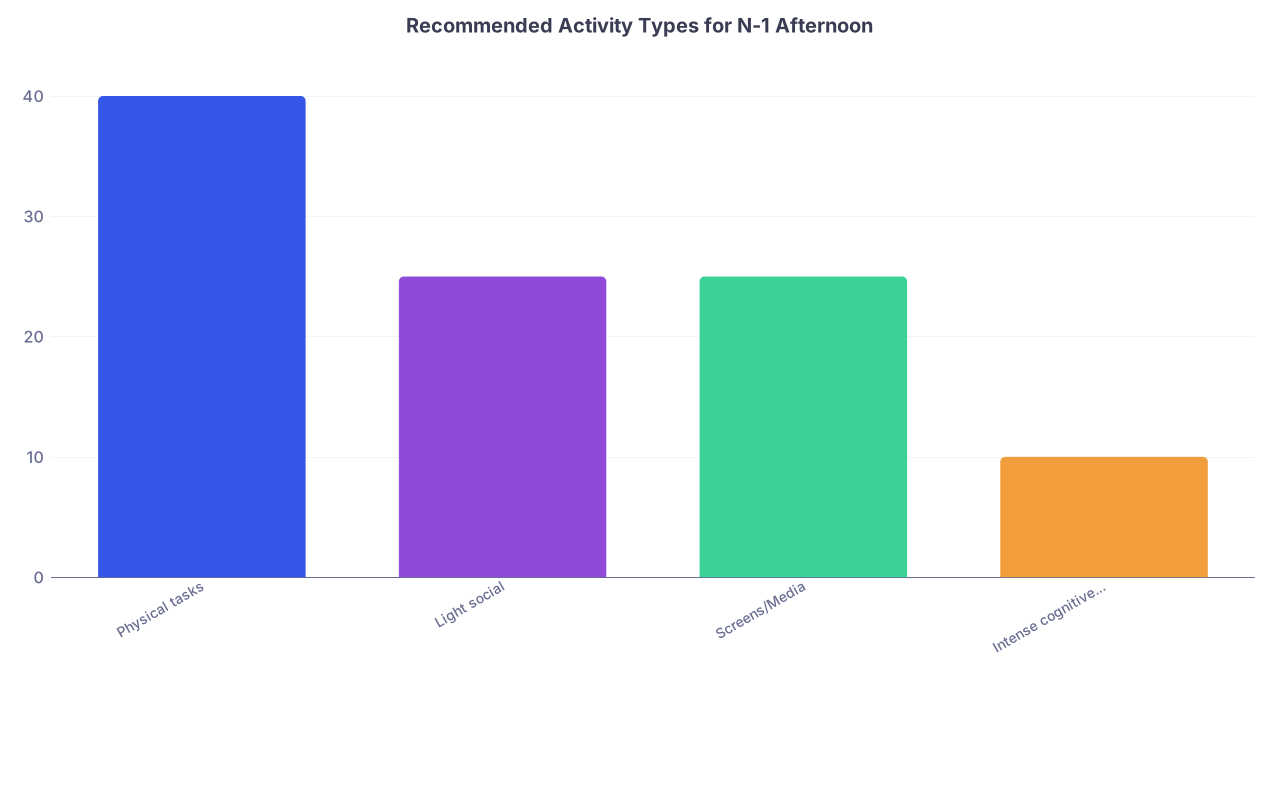
| Category | Value |
|---|---|
| Physical tasks | 40 |
| Light social | 25 |
| Screens/Media | 25 |
| Intense cognitive work | 10 |
You intentionally avoid:
- Studying for anything serious. Your retention will be trash.
- Starting big new projects. No “I’ll finally redo my CV today.”
- Doomscrolling Reddit/SDN/Discord threads about Match disasters.
Set a timer for any screen‑based activity. 25–30 minutes max, then stand up.
N‑1 Late Afternoon: Choose Your People (or Your Solitude) Carefully
This is when classmates start texting. Group chats heat up. The vibe flips between “I am so excited!” and “I am going to vomit.”
You do not have to participate in all of it.
3:00–6:00 p.m. – Social on Your Terms
At this point you should decide:
Do you want connection or quiet?
Option A: Light Social Connection
Good options:
- Coffee with one trusted friend or your partner
- Short call with a sibling or non‑medical friend who will not quiz you about programs
- A planned, small group activity: board games, Mario Kart, a movie everyone has already seen
Ground rules:
- No comparing rank lists. That ship sailed.
- No trying to guess where others will end up.
- No “manifesting” posts or performative optimism on social media if that feels fake to you.
You are allowed to say:
- “I do not want to talk about Match details today.”
- “Can we talk about literally anything else for an hour?”
Option B: Solo Recharge
If socializing drains you right now, pick a solo plan:
- Go to a museum or bookstore
- Watch a light movie you have already seen
- Do a puzzle, cook, or bake something simple
The key is intentionality. Do not just sit on the couch and let YouTube autoplay whatever nightmare the algorithm serves.
N‑1 Evening: Contain the Day Before It Spills into Tomorrow
Evening is where people either salvage their nerves or torch their sleep. You are going to salvage.
6:00–8:00 p.m. – Calm, Predictable, Boring
At this point you should:
Eat an early, simple dinner.
- Nothing super spicy, greasy, or heavy. Your GI tract is already under stress.
- Think: pasta with light sauce, rice and stir‑fry, soup and bread.
Set tech boundaries for the night.
- Decide a time to stop:
- Match‑related group chats
- Program stalking
- Social media browsing
- A reasonable cut‑off: 8:30–9:00 p.m.
- Decide a time to stop:
Prepare your Match‑day morning kit.
Lay it out like you would for Step 1:- Clothes you will wear (comfortable, presentable if you will be on camera / at ceremony)
- Simple breakfast items ready
- Devices charged and plugged in
- A paper and pen nearby if you need to scribble reactions or call notes
This is not superstition. It is to prevent chaotic scrambling at 8:56 a.m. with 180 bpm heart rate.

N‑1 Late Evening: Protect Your Sleep Like a Procedure
No, you probably will not sleep like a baby. You still need enough rest to function.
8:30–10:30 p.m. – Wind‑Down Protocol
At this point you should:
Shut down all Match‑specific input.
- No more texts about “Where do you think you’ll end up?”
- No more NRMP logins “just to check.”
Switch to analog or low‑stim digital.
Good options:- Fiction book (not about medicine, not about death)
- Low‑stakes TV you have already seen (sitcom reruns, nature docs)
- Gentle stretching while listening to calm music
Avoid alcohol and heavy sleep meds.
- Alcohol will fragment your sleep and worsen next‑day anxiety, even if you knock out faster.
- If you use a prescribed sleep aid, stick to your usual dose and timing. Do not experiment now.
Use a simple pre‑sleep script.
Write this down and read it once before you try to sleep:- “The Match is already decided. Nothing I do tonight will change it. My only job is to rest enough to handle tomorrow, whatever it brings.”
If your brain starts racing with specific fears, write a worry list:
- One sheet of paper.
- Bullet list of “I am afraid that…” items.
- When done, fold it and put it away physically. You are telling yourself: I will deal with this tomorrow if any of it becomes real.
Night of N‑1: Handling the 2 a.m. Panic Wake‑Up
Yes, this happens constantly. You wake at 2 or 3 a.m., heart pounding, convinced you will not match.
Here is what you do.
At this point you should:
Do not grab your phone.
Hardest step. Most important. No email, no social, no NRMP.Ground yourself physically.
- 5 slow breaths, feeling your back against the bed.
- Press your feet gently into the mattress. Name 5 things you can feel.
If you are still wired after 10–15 minutes, get out of bed.
- Sit in a chair with low light.
- Read something boring or neutral (textbook chapter you do not care about, non‑stressful article).
- Once drowsy, go back to bed.
Absolute cut‑off for screens: 30 minutes.
If you cave and look at something, set a timer and stop when it dings. You are limiting the damage.
You are not trying to engineer perfect 8‑hour sleep. You are trying to avoid turning a 3 a.m. wake‑up into a full‑night anxiety binge.
Match Morning – The Final 60 Minutes
Technically not N‑1, but you need to see how your structure sets up the landing.
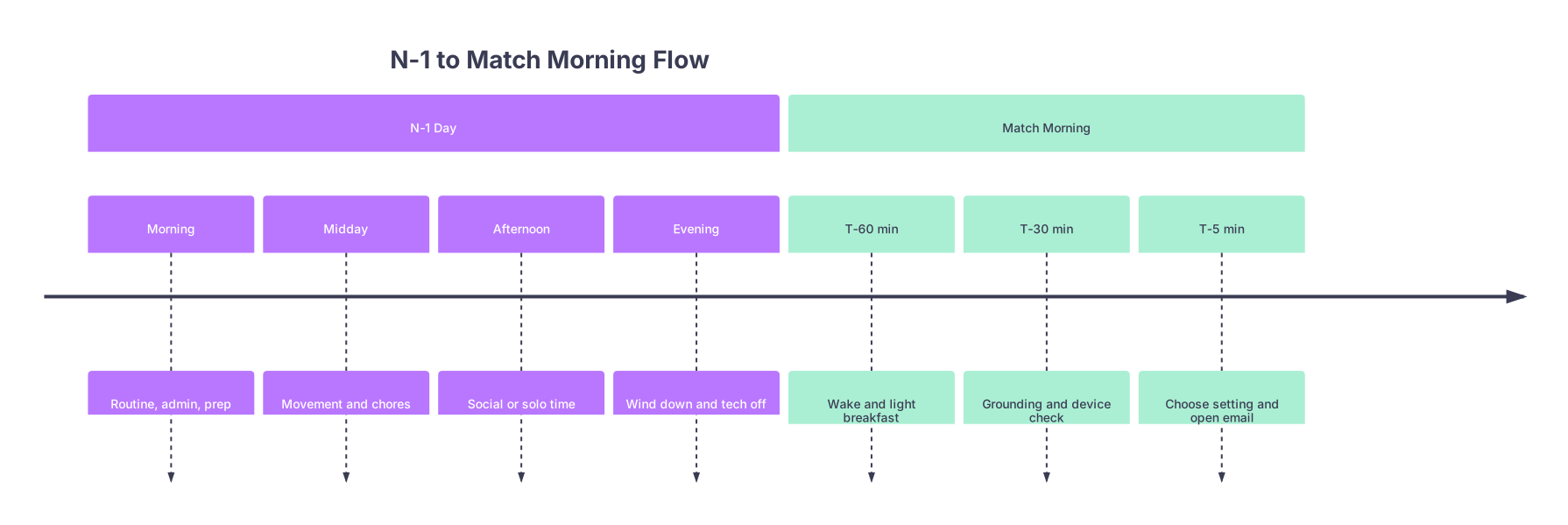
| Period | Event |
|---|---|
| N-1 Day - Morning | Routine, admin, prep |
| N-1 Day - Midday | Movement and chores |
| N-1 Day - Afternoon | Social or solo time |
| N-1 Day - Evening | Wind down and tech off |
| Match Morning - T-60 min | Wake and light breakfast |
| Match Morning - T-30 min | Grounding and device check |
| Match Morning - T-5 min | Choose setting and open email |
T‑60 Minutes to Results
At this point you should:
- Wake up with enough buffer. Do not roll out of bed at T‑5 minutes.
- Eat something small if your stomach allows.
- Glance at your prepped space and devices; do not obsess.
T‑30 Minutes
You are not refreshing email every 10 seconds.
Instead:
- Do 5 minutes of breathing or stretching.
- Send one short text if you want: “Up and getting ready. I will text you after I open it.”
T‑5 Minutes
Devices on. Notifications on for email. You sit where you planned.
You have already done the work. N‑1 set the stage. Now you just walk on.
The Point of All This Structure
You are not controlling the Match. You are controlling exposure:
- Exposure to social comparison.
- Exposure to unbounded anxiety spirals.
- Exposure to total chaos on one of the biggest mornings of your life.
A well‑structured N‑1 Day will not magically make you calm. It will keep you functional. It will lower the odds that you say or do something you regret in a moment of panic. And it will give you just enough mental bandwidth to receive whatever shows up in that email – joy, relief, shock, or grief.
Today, do one concrete thing: open your calendar and block off N‑1 into the five main blocks – morning, midday, afternoon, evening, night – and write one specific activity in each. Do it now, before the anxiety gets a vote.