
The worst thing you can do two weeks before Match Day is pretend it’s just another ordinary stretch of school. It is not.
You’re sitting on a time bomb of uncertainty. If you do nothing, the anxiety will run you. If you structure these two weeks, you’ll walk into Match Week with a clear head, a plan, and fewer 2 a.m. catastrophizing spirals.
Here’s your day‑by‑day and week‑by‑week timeline for the final 14 days before Match Day—both emotional and practical. At each point, I’ll tell you exactly what you should be doing.
Overview: Your Final 14-Day Timeline
Before we zoom in, step back and see the arc. These two weeks break into three phases:
- Days −14 to −10: Information and contingency build
- Days −9 to −5: Logistics and support system lock‑in
- Days −4 to 0: Emotional regulation and execution
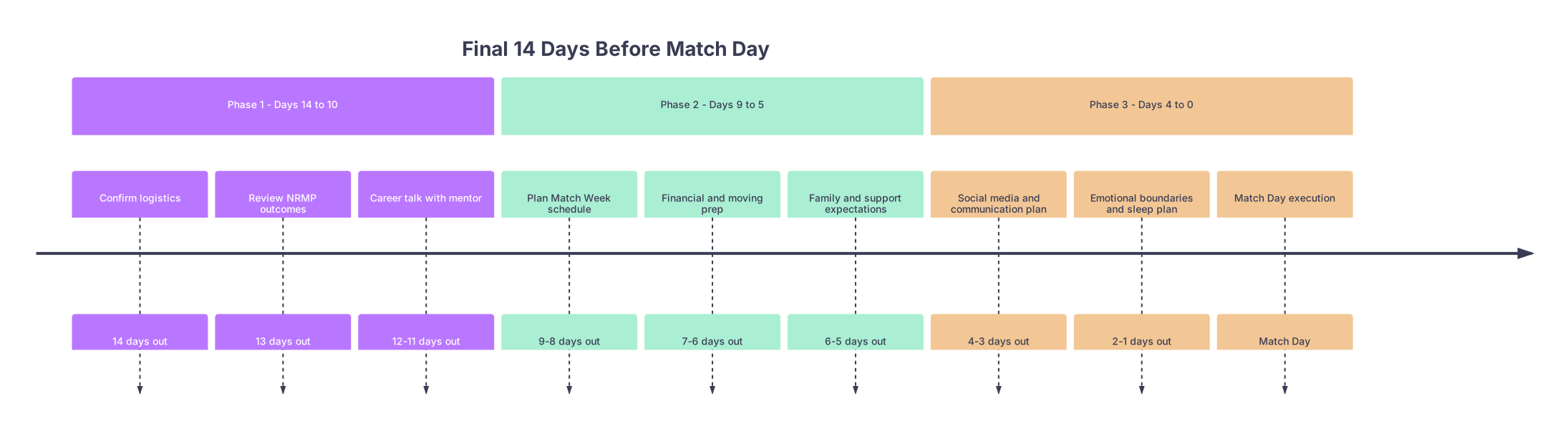
| Period | Event |
|---|---|
| Phase 1 - Days 14 to 10 - Confirm logistics | 14 days out |
| Phase 1 - Days 14 to 10 - Review NRMP outcomes | 13 days out |
| Phase 1 - Days 14 to 10 - Career talk with mentor | 12-11 days out |
| Phase 2 - Days 9 to 5 - Plan Match Week schedule | 9-8 days out |
| Phase 2 - Days 9 to 5 - Financial and moving prep | 7-6 days out |
| Phase 2 - Days 9 to 5 - Family and support expectations | 6-5 days out |
| Phase 3 - Days 4 to 0 - Social media and communication plan | 4-3 days out |
| Phase 3 - Days 4 to 0 - Emotional boundaries and sleep plan | 2-1 days out |
| Phase 3 - Days 4 to 0 - Match Day execution | Match Day |
We’ll walk it chronologically. At each point in time: what you should do, what you should not do, and what to watch for emotionally.
(See also: 30-Day Countdown to Match Day: Micro-Tasks to Reduce Future Chaos for more details.)
Days −14 to −10: Build the Foundation (Information, Plans, Baseline)
Day −14: Get Oriented and Stop Guessing
Two weeks out, you need clarity—not rumors.
At this point you should:
- Pull up your NRMP and school calendars.
- Confirm:
- Date and exact time of “Did I Match?” email (usually Monday of Match Week).
- Date/time of Match Day ceremony.
- Location and format (in person, virtual, hybrid).
- Confirm:
- Review your rank list decisions—briefly.
- Not to torture yourself, but to remember:
- Your top 5 programs and why.
- Any geographic or family priorities you baked in.
- This is not the time to second‑guess emails you did or didn’t send three months ago.
- Not to torture yourself, but to remember:
- Identify your point people.
- 1 faculty mentor or advisor you trust.
- 1 friend/classmate you can text unfiltered.
- 1 family member who “gets it” (or at least tries).
- Tell them: “Match Week is in 2 weeks. I may be off and on. Can I lean on you if things go sideways?”
Emotionally, your job today is to move from fuzzy dread to specific knowledge. Uncertainty loves vagueness. Kill the vagueness.
Day −13: Understand the Possible Outcomes
You can’t emotionally prepare for Match Day if you only imagine the best‑case scenario.
At this point you should:
- Review the NRMP Match Week structure.
Basic reality check:- Monday: “Did I Match?” email.
- If No → SOAP starts that day (strict timelines).
- Friday: Match Day results (if you matched).
- Learn what SOAP actually looks like.
Not in a panic, but rationally:- How many applications can you send per round.
- How your school supports SOAP (some are extremely hands‑on, some… are not).
- Who at your school runs SOAP logistics.
- Clarify what “not matching” would mean for you.
- Would you be willing to:
- Do a research year?
- Pivot to a prelim/transitional year?
- Explore another specialty next cycle?
- You are not committing. You’re reducing “unknown unknowns.”
- Would you be willing to:
This isn’t pessimism. It’s reducing the fear of the dark. I’ve watched students crumble on Monday because they never mentally rehearsed what a “no match” email would actually trigger.
Day −12: Check Logistics for Best-Case Scenario
Now you shift to: “If this goes well, am I actually ready for that reality?”
At this point you should:
- Audit your personal information.
- The email where NRMP will contact you → confirm access, password, 2‑step verification.
- Phone number on file → still active?
- Think through likely Match outcomes.
- For each of your top 3–5 programs, quickly jot:
- City
- Cost of living: rough rent range
- Whether you’d need a car there
- Anyone you know locally (friend, cousin, classmate)
- For each of your top 3–5 programs, quickly jot:
- Check your ID and legal paperwork.
- Valid driver’s license or passport (for credentialing, leases, travel).
- If international: visa status and documentation, approximate timeline.
You’re building a mental landing pad. When that email hits, you don’t want your first thought to be, “Wait, where is that again?”
Day −11: Talk to a Mentor (On Purpose, Not Randomly)
You shouldn’t be crowdsourcing emotional stability from group chats. You need one or two sober voices.
At this point you should:
- Schedule a 20–30 minute conversation with:
- An advisor who knows your specialty landscape.
- Or a senior resident you trust.
- Use that time for three specific things:
- Gut‑check your expectations.
- “Given my interviews, what outcomes are realistically on the table?”
- Ask about transition timing.
- “If I match, when do programs usually start paperwork, and when do they want me in town?”
- Ask them bluntly:
- “If I don’t match, what’s your immediate advice for that Monday?”
- Gut‑check your expectations.
Then stop. Do not fish for guarantees. The point is a plan, not reassurance.
Day −10: Set Your Boundaries and Communication Rules
Match Week doesn’t just hit you. It hits your phone, your parents, your group chats, your social media.
At this point you should:
- Decide your communication policy. Write it down.
- On Monday (“Did I Match?” day):
- Who gets told immediately.
- Who gets told later or not at all unless you want.
- On Friday (Match Day):
- Will you post on social media? Wait? Not at all?
- On Monday (“Did I Match?” day):
- Set expectations with family.
- Sample script:
- “On Monday I’ll find out if I matched, but not where. I’ll text you once I know. If it’s bad news, I might go quiet while I work with my school.”
- “On Friday, we’ll find out where. Please don’t post anything on Facebook until I tell you it’s okay.”
- Sample script:
- Mute or prune group chats if needed.
- If you have a competitive or anxiety‑inducing chat, mute it for two weeks. Yes, really.
You’re protecting your attention. That’s not selfish; it’s survival.
Days −9 to −5: Lock in Logistics, Money, and Support
This week is about controlling everything you can control, so you’re free to emotionally handle the part you can’t.
Day −9: Plan Your Actual Match Week Schedule
You do not want to be scrambling during the most emotionally volatile week of med school.
At this point you should:
- Block your calendar for Match Week:
- Monday morning: “Did I Match?” email time + 1–2 hours afterward.
- Monday afternoon: If needed, SOAP info session / advisor time.
- Friday morning/afternoon: Match ceremony + buffer before/after.
- Protect that time.
- Request schedule flexibility from rotations, chiefs, or preceptors:
- Give them the exact dates and times.
- Most are understanding. The few who aren’t? Still give notice now.
- Request schedule flexibility from rotations, chiefs, or preceptors:
- Decide where you’ll physically be for key moments.
- Monday email:
- Alone in your apartment?
- With one trusted person?
- Not in the hospital stairwell between patients, ideally.
- Friday:
- At your school’s ceremony?
- Logging onto a Zoom?
- At home with family because you chose that on purpose?
- Monday email:
This sounds obvious, but I’ve seen people read “No Match” standing in a hallway packed with classmates. Don’t do that to yourself.
Day −8: Financial Reality Check
You’re likely about to move, sometimes across the country. That costs real money.
At this point you should:
- Make a rough budget for the first 2–3 months of residency.
| Category | Low Estimate | Higher Estimate |
|---|---|---|
| Moving costs | $800 | $3,000 |
| Initial housing | $1,200 | $2,500 |
| Licensing/fees | $500 | $1,500 |
| Furniture/basic | $300 | $1,000 |
| Travel to city | $200 | $800 |
- Identify your funding sources:
- Savings.
- Family support (if available).
- 0% interest promotional credit card (only if you’re disciplined).
- Relocation stipends or signing bonuses (check program websites/emails if they mentioned it).
- Decide your move philosophy now:
- “Bare minimum, air mattress and two suitcases” vs “Fully furnished from day one.”
- Your anxiety wants “solve every problem now.” Your bank account may disagree.
You’re not finalizing travel yet. You’re avoiding financial whiplash the week after Match while you’re still emotionally raw.
Day −7: Housing and City Reconnaissance
No, you don’t need an apartment lined up before Match. But a little reconnaissance goes a long way.
At this point you should:
- For your top 3–5 likely cities, quickly scan:
- Average rent near main hospitals.
- Neighborhoods residents actually live in (ask current residents you met).
- Public transport vs parking costs.
- Make a one‑page note per city:
- Neighborhood names to start with.
- Rough rent range for a studio/1‑bed.
- Commute estimates to main hospital.
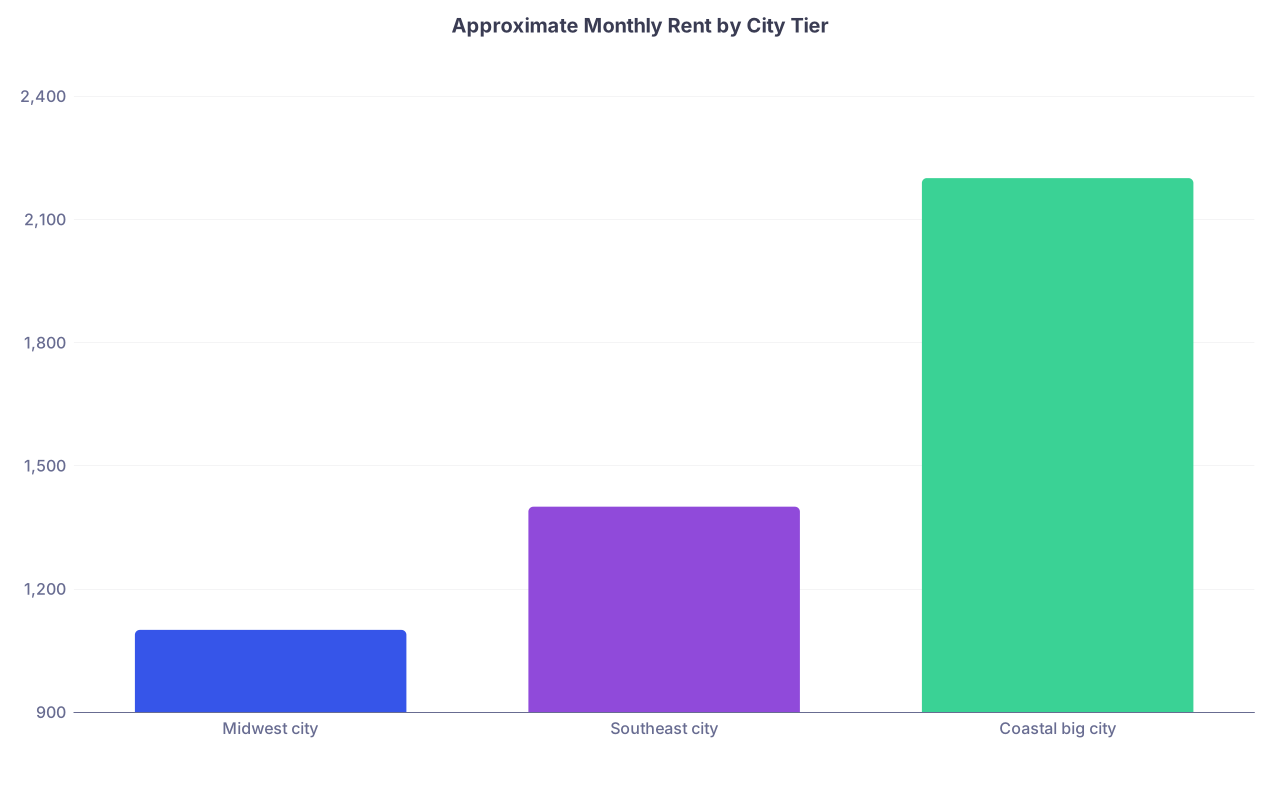
| Category | Value |
|---|---|
| Midwest city | 1100 |
| Southeast city | 1400 |
| Coastal big city | 2200 |
This isn’t Zillow deep‑dive time. It’s “If I match here, I know where to start looking that night” time.
Day −6: Social and Support Planning
Match hits social circles hard. Some people will be ecstatic, some quietly devastated. That mix can be rough.
At this point you should:
- Coordinate with 1–3 close classmates:
- How you’ll support each other Monday and Friday.
- A code or shorthand for “I need to talk but I can’t text details yet.”
- Plan low‑pressure social options for Match Week evenings:
- Monday night:
- Quiet dinner with 1–2 friends.
- Or fully solo if that’s more stabilizing.
- Friday night:
- Small gathering.
- Or time with family.
- Avoid committing to massive all‑school parties unless you know you’ll enjoy that.
- Monday night:
- Clarify how you want people to talk to you about Match.
- It’s fair to tell friends:
- “No play‑by‑play questions from you until I reach out, please.”
- It’s fair to tell friends:
Protect future you from social overwhelm.
Day −5: Mental Health Baseline and Triggers
Now we explicitly shift to emotional prep.
At this point you should:
- Do an honest self‑audit:
- How have you historically handled:
- Big uncertainty (like waiting for Step scores)?
- Public disappointment?
- Where do you usually spiral? (Catastrophizing, insomnia, compulsive checking, social withdrawal.)
- How have you historically handled:
- If you’re in therapy, bring this to session.
- Talk specifically about:
- A plan for the 4 big timepoints:
- The weekend before Match Week.
- Monday morning.
- Monday night (especially if SOAP is in play).
- Thursday night/Friday morning.
- A plan for the 4 big timepoints:
- Talk specifically about:
- If you’re not in therapy, pick 2–3 coping tools now:
- A 10–15 minute walk without your phone.
- A breathing exercise you’ve actually tried, not just read about.
- A “no screens after ___ pm” rule for Match Week.
The goal is not to be calm. The goal is to be functional.
Days −4 to −1: Emotional and Practical Tightening
Now you’re close enough that the anxiety buzz is constant. Structure is your friend.
Day −4: Social Media and Comparison Detox
This is where many people blow it. They marinate in everyone else’s anxiety.
At this point you should:
- Clean up your online environment:
- Temporarily mute:
- Competitive specialty subreddits.
- Discords, Facebook groups, or Insta accounts that spike your stress.
- If you’re prone to doomscrolling, delete at least one app for the week (you can reinstall).
- Temporarily mute:
- Set your posting policy in writing:
- “I will only post after I’ve processed privately.”
- “No checking likes/comments more than twice that day.”
You don’t need the added layer of performing your Match reaction for the internet.
Day −3: Sleep, Call, and Work Boundaries
You can’t control the email, but you can control whether you’re half‑delirious when reading it.
At this point you should:
- Set a hard cut‑off for studying/clinical work in the evenings.
- Accept that productivity will drop a bit. For 5–7 days, that’s fine.
- Adjust your call schedule, if possible:
- Try not to be post‑call on Monday or Friday.
- If you can’t change it, at least warn your team and yourself.
- Build a simple sleep guardrail:
- Aim for a consistent bedtime.
- Decide what you’ll do when you can’t sleep:
- List 3 non‑phone activities:
- Print a short article.
- Journal.
- Stretching.
- List 3 non‑phone activities:
You’re trying to avoid the 3 a.m. twitter + NRMP forum rabbit hole. That rarely ends well.
Day −2: Worst-Case and Best-Case Rehearsal
This is where you mentally walk through both doors.
At this point you should:
- Write two short scripts—literally.
- If you match:
- How you’ll tell:
- Your closest person.
- Your family group chat.
- Your mentor.
- How you’ll tell:
- If you do not match:
- How you’ll notify:
- Your school advisor (“I didn’t match; can we meet today about SOAP options?”).
- 1–2 close people (“I got bad news, working with advisors. Will update later.”).
- How you’ll notify:
- If you match:
- Imagine your reaction without judgment.
- If you match:
- You might cry, laugh, or feel oddly numb. All of that is normal.
- If you don’t:
- You might feel ashamed. Angry. Detached. Also normal.
- If you match:

Writing the words now means you’re not trying to invent them while you’re shocked.
Day −1: The Day Before Match Week Begins
Yes, you still have one more full day before the chaos starts.
At this point you should:
- Tie up loose ends that will distract you next week:
- Empty your inbox of trivial tasks.
- Pay any urgent bills.
- Clear physical clutter on your desk.
- Plan your Monday morning environment:
- Where will you sit when the email comes?
- What will be open on your computer? (Hint: just email. Not Twitter. Not Reddit.)
- Have a small, concrete plan for Sunday evening:
- Light distraction:
- A movie.
- Cooking.
- Low‑stakes hangout.
- Not high‑stakes:
- No big parties.
- No overnight shifts if you can help it.
- Light distraction:
Last thing at night, write down:
- One thing you’re proud of from med school.
- One thing you’re looking forward to in residency life (anywhere).
No, that won’t eliminate anxiety. It just anchors you to a bigger timeline than one email.
Match Week: How Your Prep Pays Off
Your question was about two weeks before Match Day, but the truth is: you’re prepping for Match Week, not just Friday.
Monday Morning: “Did I Match?” Email
Because you did the work:
- You’re in a chosen physical space.
- You know exactly who you’ll text depending on the outcome.
- If it’s “No Match,” you:
- Already know who your SOAP contact is.
- Already know your next 2–3 steps.
- Already wrote the hard text to your support person.
If it’s “Matched,” allow relief, then give yourself some quiet before you start performance mode.
Tuesday–Thursday: Emotional Drift and Micro-Planning
These days are weird. No new info, just waiting.
At this point you should:
- Use your city notes to:
- Quickly plan potential housing searches once you know the exact program.
- Return to normal life lightly:
- Show up for rotation.
- Accept reduced efficiency.
- Keep comparison minimal:
- Don’t marinate in others’ speculation (“I think I matched here because…”).
You’re in a holding pattern. Just don’t stir the turbulence.
Friday: Match Day Execution
Because you prepped:
- You know exactly:
- Where you’re opening the envelope or email.
- Who’s allowed to be physically present.
- When you’ll tell social media (if at all).
- You have:
- A small celebration plan that works for good or mixed news.
- A “safe exit” plan if you’re overwhelmed (quiet space, prior agreement with a friend).
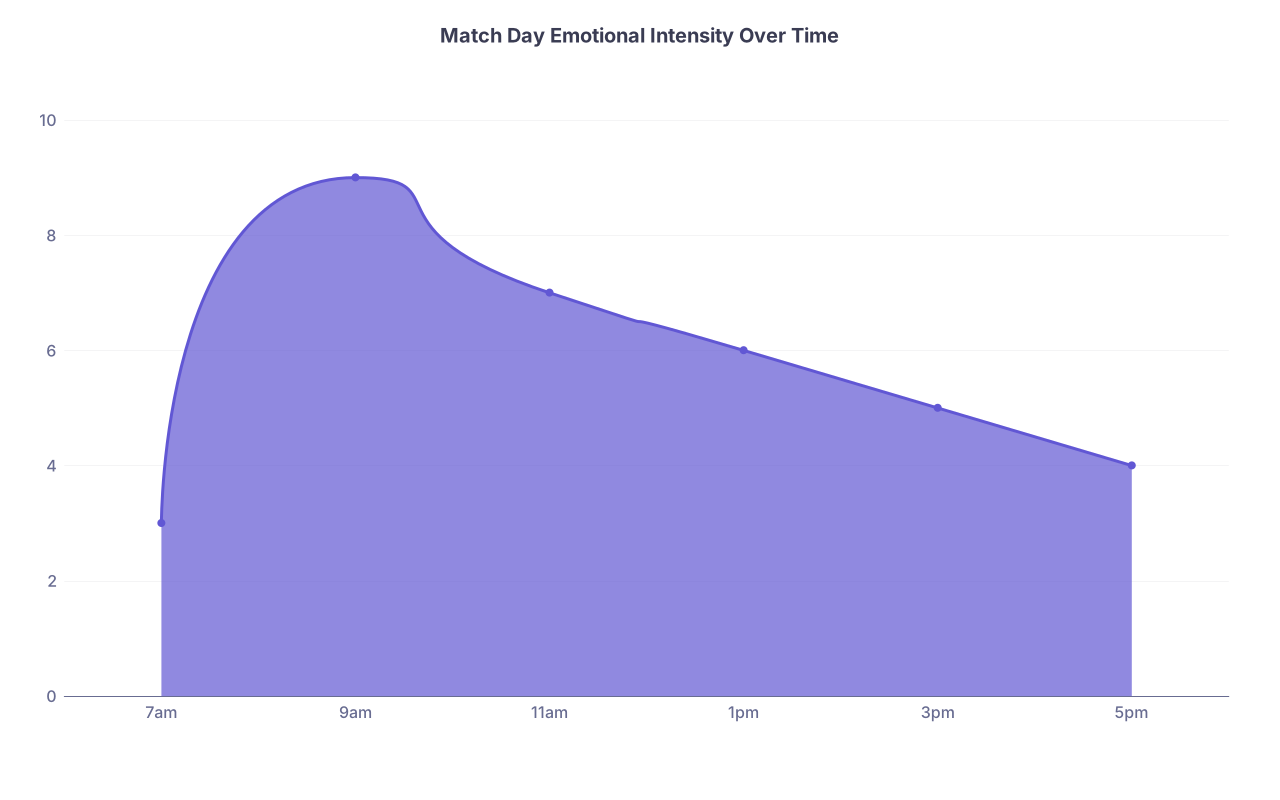
| Category | Value |
|---|---|
| 7am | 3 |
| 9am | 9 |
| 11am | 7 |
| 1pm | 6 |
| 3pm | 5 |
| 5pm | 4 |
Two-Week Emotional Strategy: The Quiet Stuff That Matters
A purely tactical timeline ignores the reality that you’re a human, not a project plan. So weave this into all 14 days:
- Limit future‑tripping
When you catch yourself running through 20 hypothetical lives in 5 cities, cap it:
“I’ll think about this for 3 minutes, then return to today’s task.” - Name the feeling cleanly
“I’m scared I wasted years” beats “I’m fine, it’s whatever.” Precision actually lowers the intensity. - Avoid binary thinking
Match vs no match is binary. Your worth and your future are not.

What To Stop Doing During These Two Weeks
Just as important as what you should do is what you should ruthlessly cut:
- Stop refreshing email every 90 seconds.
Set specific check times. Outside of those, close the tab. - Stop stalking programs on social media.
They’ve already ranked. You will not find secret clues in their latest tweet. - Stop rewriting history in your head.
“If only I had…” is pure emotional self‑harm at this point. The list is locked. The algorithm runs without caring about your regrets.
Final 2–3 Key Points
- Two weeks before Match Day is not “just waiting time.” It’s when you lock in logistics, communication rules, financial sanity, and emotional guardrails.
- Prepare explicitly for both outcomes—matching and not matching—so you’re not improvising under shock on Monday or Friday.
- Control every variable you can: where you’ll be, who you’ll talk to, how you’ll respond. Then let the algorithm do its job, and focus on walking into Match Week as grounded as possible.