
It is 2:07 AM. You are halfway through scarfing down cold pizza in the call room when your pager explodes:
“Surgery cross-cover, come now. Post-op patient hypotensive, unresponsive, sats dropping.”
You jog to the room. The nurse looks anxious. The patient is pale, sweaty, BP 68/40, HR 135, on 2L nasal cannula, fresh from the OR 4 hours ago. You feel that familiar adrenaline dump, and the thought flashes: “Do not screw this up.”
This is where you earn your paycheck.
What you need in that moment is not a lecture on physiology. You need a clear, repeatable checklist that keeps you moving, prevents you from missing killers, and buys you time until help and resources arrive.
Let me give you exactly that.
1. First 60 Seconds: Control the Room, Control Yourself
Your first job is not ordering labs or guessing the diagnosis. It is:
- Make sure the patient does not die in front of you.
- Make sure chaos does not make you stupid.
Walk in, and do this immediately:
Say your name and take command.
- “I am Dr. ___, surgery resident. I am taking over. Everyone, talk one at a time.”
- Make eye contact with the primary nurse. Stand where you can see monitor, patient, and door.
Quick visual sweep (5–10 seconds).
You are looking for:
- Airway: patient talking / gurgling / gasping?
- Breathing: chest rise? accessory muscle use? cyanosis?
- Circulation: color (pale/gray), visible bleeding, soaked dressings, chest tube canister, drains.
- Equipment: oxygen on? monitor leads attached? IV pumps alarming?
Shout for immediate help if truly crashing.
If the patient is obtunded, SATs tanking, or you have that “this is bad-bad” feeling:
- “Call a rapid response / code!” (whatever your hospital uses)
- “Get respiratory here now.”
- “Bring the code cart in the room.”
You are not “weak” for calling a rapid or code early. You are smart. I have never seen anyone criticized for calling too early. I have seen people roasted for calling too late.
2. Go Full ABC: Airway, Breathing, Circulation – Ruthlessly
You already know ABC. The difference at 2 AM is that you must apply it with discipline, not vibes.
A. Airway – Decide in 30 Seconds
Ask yourself: Can this patient protect their airway right now?
Check:
- Are they speaking in full sentences?
- Do they follow commands?
- Is there gurgling, snoring, choking?
- Any massive facial/neck swelling, hematoma, vomit, or blood?
If airway is questionable:
Position and basic maneuvers
- Head tilt–chin lift or jaw thrust (if C-spine a concern).
- Yankauer suction. Get that airway clear now.
- Nasal airway if tolerated and no contraindication (basilar skull fracture, facial trauma).
Escalate oxygen delivery
- Put on a non-rebreather at 15 L/min while you think.
- If already desaturating badly and working hard to breathe, move toward BiPAP/CPAP vs. intubation depending on mental status and cause.
Call anesthesia / ICU early if you think intubation is coming.
- Phrase: “I have a post-op patient with deteriorating mental status and impending airway compromise. I need help at bedside for possible intubation.”
You do not want to be bagging a bloated, post-op abdomen alone with one nurse while trying to find an attending on the phone.
B. Breathing – Fix Oxygen and Look for Killers
Once you are sure the airway is at least temporarily okay, move to breathing.
Step 1: Get numbers and upgrade oxygen
- Check:
- SpO₂
- Respiratory rate
- Work of breathing
- Increase support:
- From nasal cannula → non-rebreather 15 L/min.
- If still <90% or working hard, call RT immediately for possible BiPAP or intubation support.
Step 2: Quick bedside lung assessment (30–60 seconds)
- Look:
- Symmetric chest rise?
- Tracheal deviation?
- Surgical wounds on chest/upper abdomen?
- Listen:
- Diminished on one side? Think tension pneumothorax, hemothorax.
- Crackles? Pulmonary edema, fluid overload.
- Wheezes? Bronchospasm.
- Feel:
- Subcutaneous emphysema?
- Chest wall crepitus?
If you suspect tension pneumo after a central line, thoracic surgery, or trauma:
- Call for immediate help, but do not wait on a stat chest X-ray if they are hemodynamically crashing.
- This is needle decompression / chest tube territory. You do not do this alone as an intern. Get senior / attending and equipment now.
C. Circulation – Stop Bleeding, Support Pressure, Get Access
This is where many people spin out. They start ordering fluids and labs but never identify the actual problem.
Step 1: Check the basics
- BP (manual if the cuff reading is suspicious).
- Heart rate and rhythm on monitor.
- Cap refill, extremity temperature.
- Look for visible or concealed bleeding:
- Surgical site / dressing saturated?
- Abdominal distention?
- Chest tube canister filling with bright red blood?
- JP drains suddenly 400 mL of blood?
Step 2: IV access and immediate moves
If the patient is hypotensive (e.g., SBP < 90 or MAP < 65) and looks bad:
IV access:
- At least two large-bore peripheral IVs (18g or larger). If not present:
- “Can we get an 18g in each antecubital now?”
- If peripheral access is impossible and the patient is crashing:
- IO access (tibial) is faster than a central line in extremis.
- At least two large-bore peripheral IVs (18g or larger). If not present:
Fluids:
- Unless you strongly suspect cardiogenic shock or flash pulmonary edema:
- Bolus 500–1000 mL of balanced crystalloid (LR or PlasmaLyte) quickly.
- Reassess after each 500–1000 mL: BP, HR, mental status, urine output.
- Unless you strongly suspect cardiogenic shock or flash pulmonary edema:
Pressors:
- If hypotension does not respond to fluids or you suspect septic/distributive shock:
- Start norepinephrine through a good peripheral line if necessary (yes, this is safe short-term in a monitored setting).
- Do not delay starting pressors while waiting for a central line, if the patient is tanking.
- If hypotension does not respond to fluids or you suspect septic/distributive shock:
Step 3: Quick rhythm and cardiac check
- Look at the monitor:
- Sinus tachycardia vs. SVT vs. afib with RVR vs. bradyarrhythmia.
- Palpate pulses: central > peripheral. Weak or thready?
- If available and fast:
- Grab a bedside ultrasound.
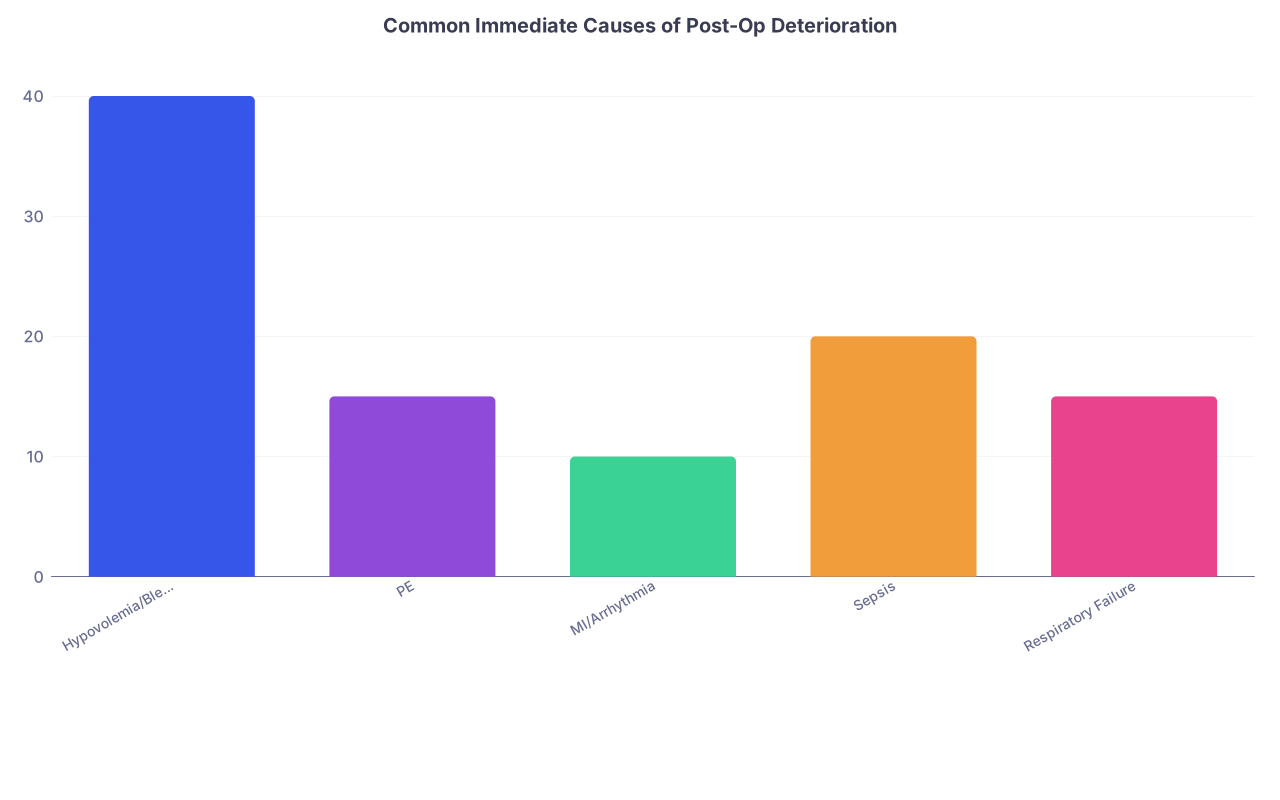
| Category | Value |
|---|---|
| Hypovolemia/Bleeding | 40 |
| PE | 15 |
| MI/Arrhythmia | 10 |
| Sepsis | 20 |
| Respiratory Failure | 15 |
3. The “FAST Hx + Focused Exam” – Post-Op Specific
Once ABC is not on fire (or at least temporarily contained), you need to figure out why this is happening.
You do not have 20 minutes. You have about 3–5.
Get a 60‑Second History
From the nurse and EMR:
- Operation details:
- What surgery? When (hours ago)? Any intra-op issues? Big blood loss?
- Post-op course so far:
- Vitals trend since PACU.
- Urine output.
- Pain control: epidural? PCA? Nerve block?
- Medications:
- Last doses of opioids, sedatives, antihypertensives, insulin.
- Recent anticoagulants / DVT prophylaxis.
Ask the nurse explicitly:
- “What changed right before this started?”
- “Have you noticed increased drain output, shortness of breath, new confusion?”
Often they will tell you the answer if you shut up and let them talk for 20 seconds.
Focused Post-Op Exam
Move system by system:
General
- Mental status: A&O vs. agitated vs. obtunded.
- Skin: cold/clammy vs. warm/flushed vs. mottled.
Surgical site
- Lift the sheets. Always.
- Inspect incisions and dressings.
- Palpate abdomen: rigid? distended? peritonitic?
- Check drains: output amount, color (bright red blood vs. serous vs. bile vs. feculent).
Lungs and heart
- Reassess breath sounds, heart rhythm.
- Look for new JVD, new S3, crackles (pulmonary edema).
Extremities
- Edema? Asymmetry (DVT suspicion)?
- Line sites for hematoma / bleeding.
4. Build a Rapid Differential: What Is Trying to Kill Them?
You are not writing a board-style differential. You are thinking:
“What are the top 3 life threats in this context?”
Here is a practical post-op crash differential you can keep in your head:
| Category | Think About |
|---|---|
| Bleeding/Hypovolemia | Hemoperitoneum, GI bleed, surgical site bleed |
| Cardiovascular | MI, arrhythmia, tamponade |
| Pulmonary | PE, pneumothorax, atelectasis + pneumonia |
| Distributive | Sepsis, anaphylaxis, epidural sympathectomy |
| Medication-related | Opioid overdose, sedatives, antihypertensives |
Now match your exam to likely culprits:
- Hypotension + tachycardia + cool, clammy + increasing drain output / distended abdomen → Bleeding
- Hypotension + tachycardia + chest pain / dyspnea / new hypoxia → PE, MI
- Hypotension + fever + warm extremities + known infection source → Sepsis
- Hypotension + bradycardia + massive epidural dose → High spinal / epidural sympathectomy
- Hypoventilation + pinpoint pupils → Opioid overdose
You are not confirming yet. You are focusing your immediate workup and calls.
5. Parallel Actions: Orders, Labs, Imaging, Calls
Once immediate ABC steps are underway, you start running actions in parallel. This is where residents either shine or drown.
Think in bundles:
A. Monitoring and Lines
- Continuous:
- Cardiac monitor.
- Pulse oximetry.
- Frequent:
- BP q2–5 minutes until stable.
- Lines:
- Ensure 2 large-bore IVs.
- If truly unstable and you have backup:
- Call for central line + arterial line (often ICU-level).
B. Labs to Send Now
- CBC (Hgb, WBC, platelets).
- BMP (electrolytes, creatinine).
- Coags (PT/INR, PTT).
- Lactate.
- Type and screen (or crossmatch if you suspect bleeding).
- Troponin and EKG (any chest pain or arrhythmia or high suspicion).
- ABG/VBG if respiratory failure or severe metabolic disturbance suspected.
- Cultures (blood ± urine) if concern for sepsis.
Do not waste time ordering each one individually on the computer. Use your hospital’s “sepsis” or “rapid response” order set if it bundles these.
C. Imaging – Choose Smart
Common immediate choices:
- Stat portable CXR:
- Suspected pneumothorax.
- Worsening hypoxia after line placement.
- Volume overload vs. pulmonary edema.
- CT PE protocol:
- New severe hypoxia, pleuritic chest pain, tachycardia in a higher-risk patient.
- Urgent CT abdomen/pelvis with contrast:
- Suspected intra-abdominal bleed, anastomotic leak, perforation.
You will not wheel a crashing patient to CT without stabilizing them as much as possible first and negotiating with ICU/anesthesia/surgery.
6. Make the Right Calls – And Say the Right Words
You cannot manage a truly crashing post-op alone. Your job is to start resuscitation and to mobilize the right help early.
You usually need:
- Your senior resident or chief.
- The operating surgeon or attending on call.
- ICU or a higher level of care.
- Anesthesia for airway, hemodynamic support, and possibly urgent reoperation.
- Rapid response / code team if not already activated.
How to Call Your Senior / Attending
Here is a structure that works:
Identify yourself and the urgency.
- “Hi Dr. Smith, this is Dr. ___, the surgery resident on call. I have an unstable post-op patient, and I need your help at bedside.”
One-liner with key data.
- “Mr. Jones, 68-year-old, POD 0 from laparoscopic sigmoid colectomy, now hypotensive to 70s over 40s, HR 135, tachypneic, saturating 88% on non-rebreather.”
What you have done so far.
- “I have secured two large-bore IVs, given 1 L LR, placed him on non-rebreather, checked the wound and drains—JP is now 300 mL of bright red blood in the last hour. I ordered stat CBC, coags, lactate, type and cross, and a portable chest X-ray.”
Your working concern and request.
- “I am concerned about active intra-abdominal bleeding. I think he will need ICU-level care and possibly return to the OR. I would like you to come evaluate him now and help decide next steps.”
You sound organized, you show you have started real work, and you make clear what you need. This is the opposite of “uhh the patient looks bad, can you come?”
7. Common Scenarios and How to Stabilize Them
Let us run through a few classic 2 AM post-op crashes and how to handle them quickly.
Scenario 1: Active Post-Op Bleed
Clues:
- Tachycardia → hypotension → altered mental status.
- Cool, clammy, pale.
- Falling Hgb.
- Increasing bloody drain output / distended abdomen / bloody NG.
- Often within first 24 hours.
Immediate plan:
- ABC as above.
- Rapid IV access and aggressive fluid + blood.
- Call for type and cross, prepare blood (often PRBCs ± FFP/platelets depending on coags, magnitude).
- Notify surgeon/attending: this might be “back to OR” territory.
- Consider:
- Stop anticoagulants.
- Reverse coagulopathy if anticoagulated (vitamin K, PCC, protamine, as appropriate).
- Move patient to ICU or OR as decided by attending.
Scenario 2: Massive PE
Clues:
- Sudden dyspnea, chest pain, tachycardia.
- Hypotension, maybe syncope.
- Hypoxia not improving with O₂.
- Clear lungs, maybe right heart strain signs on EKG (S1Q3T3, new RBBB), elevated troponin.
Immediate plan:
- ABC, non-rebreather or intubation if needed.
- Call rapid/ICU/senior early.
- Stat EKG, troponin, bedside echo if available (RV dilation / dysfunction).
- Discuss CT PE protocol if stable enough, or bedside echo + empiric treatment if crashing.
- High suspicion + hemodynamic instability → discussion of thrombolysis vs. thrombectomy vs. catheter-based therapy with ICU/cardiology/pulm/IR.
- Anticoagulate unless contraindicated and attending approves.
Scenario 3: Septic Shock from Post-Op Infection
Clues:
- Fever or hypothermia.
- Hypotension with warm, flushed skin initially.
- Confusion, tachypnea, oliguria.
- Known or suspected source: anastomotic leak, pneumonia, UTI, catheter infection, wound infection.
Immediate plan:
- ABC and O₂ support.
- Aggressive fluids: usually 30 mL/kg crystalloid, reassessing frequently.
- Broad-spectrum IV antibiotics within the hour:
- Based on local protocols and surgical site (e.g., piperacillin–tazobactam ± vancomycin).
- Labs: cultures (blood, urine ± wound), lactate.
- Early vasopressors if MAP still <65 after adequate fluids.
- Call surgery attending to evaluate for source control:
- CT scan for abscess/leak.
- Possible percutaneous drainage or return to OR.
Scenario 4: Opioid or Sedative Overdose
Clues:
- Depressed mental status.
- Bradypnea or shallow breathing.
- Pinpoint pupils (opioids).
- Often shortly after PCA use or extra pain/sedative meds.
Immediate plan:
- ABC. Support breathing with bag-valve mask if needed.
- Stop all sedating meds.
- Naloxone:
- Titrate small doses IV (e.g., 0.04 mg, then repeat up to 0.4–2 mg as needed).
- Monitor respiratory status closely; repeat naloxone if opioids long-acting.
- Consider flumazenil cautiously for benzodiazepines (rare in post-ops, and dangerous if seizure risk).
8. Communication, Documentation, and Debrief
Once the patient is stabilized or handed off to ICU/OR, your job is not quite done.
Document the Event Clearly
Your note does not need to be poetry. It must be clear, time-stamped, and defensible.
Include:
- Time you were called and by whom.
- Initial vitals and findings.
- Interventions performed and by whom (fluids, meds, airway support, etc.).
- Labs/imaging ordered and critical results.
- Attendings / seniors notified and their recommendations.
- Disposition: remained on floor vs. upgraded to ICU vs. taken to OR.
Talk to the Team
At a minimum:
- Update the bedside nurse on the plan and contingency:
- “If SBP drops below 80 again or urine output stays <0.5 mL/kg/hr, page me immediately.”
- If the patient is awake and appropriate:
- Brief explanation: “You got very sick tonight; your blood pressure dropped. We are treating you aggressively and your surgeon is aware.”
- If family is present:
- Keep it simple but honest: “He became unstable; we are giving fluids, medicines, and watching him closely; the surgical and ICU teams are involved.”
9. A Mental Flowchart You Can Run at 2 AM
Here is the short version you can rehearse in your head.

| Step | Description |
|---|---|
| Step 1 | Enter Room |
| Step 2 | Call Rapid or Code if severe |
| Step 3 | Assess ABC |
| Step 4 | Position, suction, call anesthesia |
| Step 5 | Non-rebreather, RT, consider BiPAP/intubation |
| Step 6 | 2 large IV, fluids, labs, pressors |
| Step 7 | Focused exam and history |
| Step 8 | Focused exam and history |
| Step 9 | Build likely cause |
| Step 10 | Targeted imaging and treatment |
| Step 11 | Call senior, attending, ICU/OR |
| Step 12 | Airway OK? |
| Step 13 | Breathing adequate? |
| Step 14 | Hypotensive or unstable? |
Use this as your internal script until it becomes automatic.
10. How to Train Yourself Before the Next 2 AM Call
Do not wait for the crisis to figure this out. You can prep.
Run mental drills.
- On rounds, pick a random post-op patient and ask yourself:
- “If they crashed right now, what would I do first?”
- On rounds, pick a random post-op patient and ask yourself:
Know your hospital’s resources:
- Where is the code cart?
- How to call a rapid / code.
- Where are IO kits, ultrasound, airway equipment.
- Who covers nights for anesthesia, ICU, surgery.
Practice phrases out loud.
- “I am Dr. X, I am taking over.”
- “Call a rapid response now.”
- “I am concerned about active bleeding; we need to move quickly.”
It sounds silly until you are actually standing there with everyone staring at you. Then muscle memory saves you.
FAQ (Exactly 3 Questions)
1. How much fluid should I give a hypotensive post-op patient before starting pressors?
Aim for an initial bolus of 500–1000 mL crystalloid, reassess, and in suspected sepsis or clear hypovolemia you may go up to roughly 30 mL/kg while continuously checking lungs, JVP, and perfusion. If blood loss is suspected, do not just keep dumping crystalloid—transition quickly to blood products and involve the attending early.
2. When should I push for ICU transfer versus managing on the floor?
Any patient who is requiring aggressive titrated vasopressors, continuous noninvasive ventilation or intubation, rapidly escalating oxygen requirements, repeated fluid boluses for ongoing hypotension, or close 1:1 nursing should go to ICU. If you are asking yourself more than once, “Is this too much for the floor?”, it probably is.
3. What if my attending is not picking up and the patient is crashing?
You do not wait passively. Activate rapid response or code if not already, escalate to your senior resident, call the ICU or anesthesia attending on call if there is airway/hemodynamic collapse, and document your attempts at contact. Your duty is to the patient’s immediate survival, not to a perfect phone tree.
Key points to walk away with:
- In a crashing post-op patient, ABC + control of the room come first, always.
- Think in bundles: access + fluids/pressors + labs + imaging + calls, all running in parallel.
- Anchor your actions on likely post-op killers: bleeding, PE/MI, sepsis, respiratory failure, and drug effects—and involve help early rather than late.