
You are on your first real night cross‑cover. The day team just bolted for the elevators. Your list has 70+ patients you have never met, three different services, and the operator just paged you twice while the nurse on 4B says, “Doctor, the family is very upset and wants to see someone now.” Your heart is pounding, your notes are behind, and you already feel underwater.
This is where most residents either drown… or get very fast, very organized, very deliberately.
I am going to show you how to be the second type.
Not with “be more organized” fluff. With concrete templates, call scripts, and decision flows you can literally copy into your notes app or print and stick in your white coat.
The Real Goal of Cross‑Cover
You are not there to:
- Re‑diagnose every patient
- Completely overhaul care plans
- Impress anyone with genius differentials at 3 a.m.
Your job on cross‑cover is narrower and more brutal:
- Keep patients safe until morning.
- Put out fires efficiently.
- Avoid creating new problems for the day team.
- Document just enough to keep you protected and the plan clear.
So everything I give you here is built around three questions you should always be asking:
- Is this patient stable, or crashing?
- Do I need to see them in person now, or can this be a chart/phone fix?
- What is the simplest safe plan that gets us to morning?
System 1: Your Night Cross‑Cover Setup
Before we touch templates, your setup needs to not suck. Night float runs on systems, not heroics.
A. Your Minimum Night Equipment
Have these ready before the day team leaves:
- Phone / pager with:
- Unit numbers labeled clearly
- Operator/pager directory
- Shortcuts:
- Note templates (I will give them below)
- Call scripts
- Common order phrases (bowel reg, insulin, PRNs, etc.)
- Physical:
- Pen + notepad OR dedicated “cross‑cover notebook”
- One printed census or list per service
- Sleeve card / cheat sheet with:
- Common vitals cutoffs
- Insulin scales
- Common drip concentrations and push doses (if relevant to your specialty)
B. How to Take Sign‑Out Like Someone Who Plans to Survive
You will get rushed sign‑out. You cannot stop that. What you can do is control what you capture.
During sign‑out, for each patient, you need four things:
- Why are they here? (1‑line problem).
- What are we actively worried about tonight?
- What will I get calls about?
- What should I not do without calling someone?
Use a fast sign‑out structure:
Cross‑Cover Sign‑Out Mini‑Template
For each patient, jot:
- ID: [Name / Bed / Service]
- Story: [1‑line]
- Active Issues: [short bullets]
- Anticipated calls: [e.g., pain, HTN, confusion, insulin]
- Limits: [e.g., DNR/DNI, “no escalation”, “do not give fluids”]
Do this fast. Use abbreviations. You are building a mental map of landmines before the night starts.
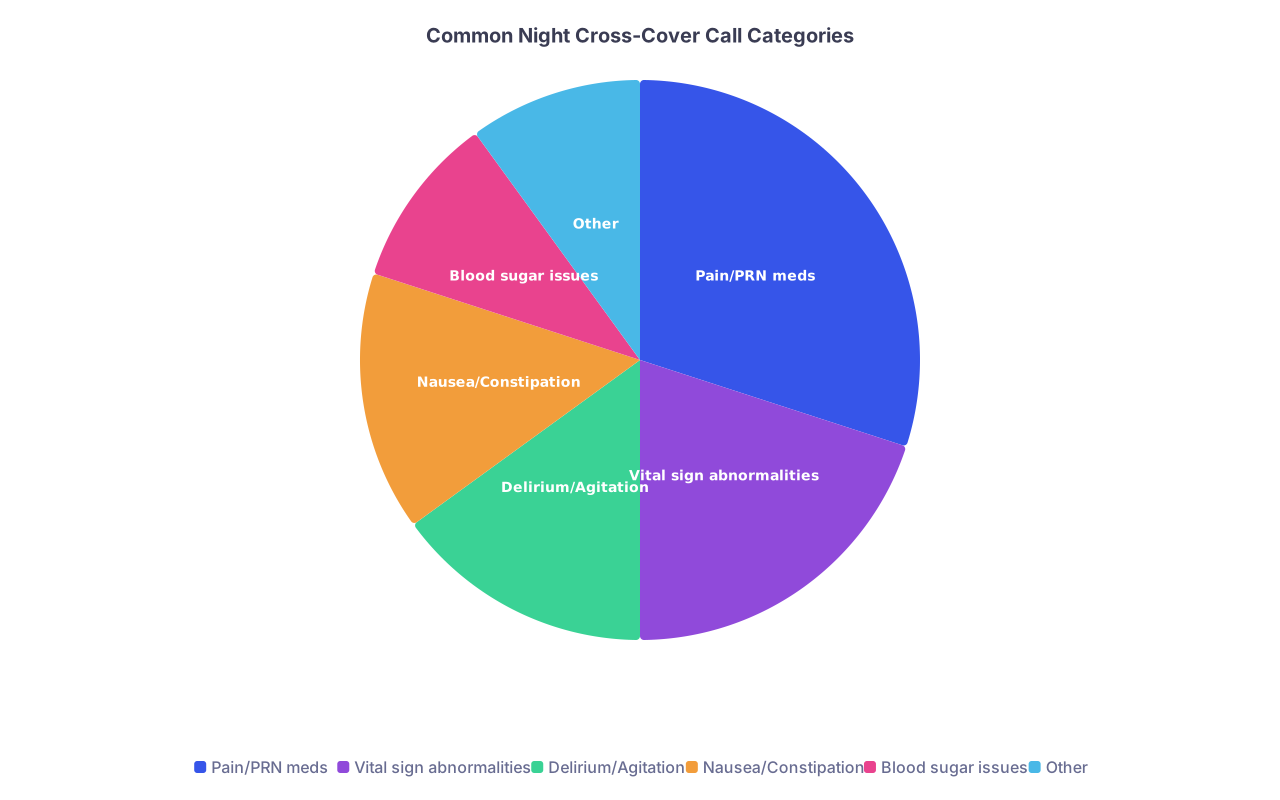
| Category | Value |
|---|---|
| Pain/PRN meds | 30 |
| Vital sign abnormalities | 20 |
| Delirium/Agitation | 15 |
| Nausea/Constipation | 15 |
| Blood sugar issues | 10 |
| Other | 10 |
System 2: A Universal Call Script
Stop freestyling every call. It is slow, you forget key details, and it makes you sound less in control than you are.
Use one default script for every page. The content changes. The structure does not.
A. Your 7‑Step Call Script
When a nurse calls, run this in your head:
- Identify
- “This is Dr. [Name], covering [Service]. Who am I speaking with and which patient is this?”
- Clarify the concern
- “What is the main thing worrying you right now?”
- Acute stability check
- “What are the most recent vitals?”
- “How does the patient look to you compared to their baseline?”
- Relevant background
- “What is their underlying condition related to this?” (if you do not know already)
- “What have we already tried tonight / today?”
- Decision: See now vs. Manage remotely
- Give a clear, specific plan
- Repeat back and close the loop
- “Let me repeat what we are going to do, and what I want you to call me back for.”
B. The Exact Words (You Can Copy‑Paste)
General Call Script
- “Hi, this is Dr. [Name], cross‑covering for [Service]. Who is the patient and what room are they in?”
- “What is the main concern right now?”
- “What are the most recent vitals, and when were they taken?”
- “Has this changed suddenly, or been building over hours?”
- “Have any PRN meds or interventions been given yet? If so, when and what was the effect?”
- [Decide whether you need to see them]
- If yes: “I am coming to see the patient now. Please repeat a full set of vitals and have the chart open.”
- If no: proceed to plan.
- “Here is the plan: [orders]. Please call me back if [X, Y, Z] happens. Does that sound reasonable to you?”
You sound calm. You sound structured. Nurses relax when they hear that rhythm. And you get fewer chaotic repeat calls.
System 3: When to Get Out of Your Chair
The dirty secret: many cross‑cover problems can be solved safely from your workstation. Many absolutely cannot.
You need a strict mental trigger list. No hero “I can manage this remotely” nonsense.
A. Leave Your Chair Now For:
- Any chest pain that is:
- New and not already worked up
- Different from baseline
- Associated with diaphoresis, SOB, hypotension
- Acute mental status change:
- New unresponsiveness
- Sudden confusion or agitation
- Hypotension:
- SBP <90 or symptomatic drop (new dizziness, syncope, chest pain)
- New O2 requirement or desaturation:
- SpO2 <90% on room air or <92% on known lung disease
- Any rapid change from baseline
- “The patient looks bad to me” from an experienced nurse
- New focal neuro deficits
- Any rapid response or code blue
- Sick post‑op patient with:
- Increased pain + tachycardia
- Hypotension
- Abdominal rigidity, wound issues, high output from drains
If you are debating whether to go see them, go see them.

| Step | Description |
|---|---|
| Step 1 | Call from nurse |
| Step 2 | See patient now |
| Step 3 | Manage from workstation |
| Step 4 | Assess, vitals, brief exam |
| Step 5 | Orders and reassess plan |
| Step 6 | Call senior |
| Step 7 | Implement plan |
| Step 8 | Unstable signs? |
| Step 9 | New serious symptom? |
| Step 10 | Need senior help? |
System 4: Templates for Common Night Calls
Now the meat: specific call types with scripts + order sets you can adapt.
1. Pain: “The patient is still in pain”
Most common page on Earth. If you do not systematize it, it eats your entire night.
Nurse Call Script Add‑Ons
- “Where is the pain, and what does it feel like?”
- “Is this the same pain they have had, or new/different?”
- “What is the pain score now, and what was it an hour ago?”
- “What pain meds have been given in the last 4–6 hours, and how did they work?”
When to go see in person:
- New location or character of pain
- Pain with red‑flag vitals (tachycardia, hypotension, fever)
- Post‑op day 0–1 with escalating pain + abnormal exam or vitals
Quick Documentation Template (Pain)
Overnight cross-cover note – Pain
- S: Called by RN for [location] pain, onset [time], described as [quality]. Baseline pain [same/different]. Current pain [x/10]. Prior interventions: [meds/doses/times, response].
- O: Vitals: [list]. Relevant exam: [focused exam if seen]. Surgical site / abdomen / chest etc. [brief findings].
- A: [Chronic vs acute] pain likely due to [post-op / chronic condition / musculoskeletal]. No red flag features of [ischemia, peritonitis, etc.] at this time.
- P:
- Adjust analgesia: [e.g., oxycodone 5 mg q4h PRN moderate pain, 10 mg q4h PRN severe; add scheduled acetaminophen if not contraindicated].
- Monitor for: [oversedation, hypoxia, hypotension].
- RN to call if: pain remains >7/10 despite meds, change in character, or new concerning vitals.
2. Hypertension: “BP is 190/100”
Most new residents overTreat nighttime blood pressures and create morning trainwrecks of hypotension.
Key questions:
- “What are the other vitals?”
- “Any chest pain, headache, visual changes, SOB, neuro deficits?”
- “What is their usual BP here?”
- “Did they get their usual home / scheduled meds?”
If asymptomatic and stable vitals:
- Check MAR. If they missed scheduled dose:
- “Please give their scheduled [home BP med] now if not already given.”
- Avoid random PRN IV hydralazine unless this is a known, agreed‑upon plan from the primary team.
HTN Call Template Note
Overnight cross-cover note – Hypertension
- S: Called by RN for BP [value] at [time]. Patient [denies/reports] headache, visual change, CP, SOB, neuro symptoms.
- O: Vitals: [list]. Exam (if seen): [neuro, cardio, pulm brief]. Med review: missed / received scheduled antihypertensives.
- A: Asymptomatic hypertension likely chronic, no evidence of hypertensive emergency.
- P:
- Administer missed scheduled dose(s): [med, dose].
- Avoid additional IV push agents overnight unless symptomatic.
- Recheck BP in [60] minutes; call if SBP > [X] with symptoms or SBP > [Y] despite meds.
You just saved the patient from crashing at 6 a.m. from stacked meds.
3. Hypotension / Sepsis Concerns
This is where people get in trouble.
Questions:
- “What are the full vitals trend over the last few hours?”
- “How does the patient look? Pale? Confused? Diaphoretic?”
- “Urine output?” (if relevant)
- “Any new symptoms: chest pain, SOB, abdominal pain, bleeding, fevers, rigors?”
Then you go. In person.
At bedside, do a tight focused exam:
- ABCs
- Heart/lungs
- JVP / edema
- Abdomen
- Lines, drains, wounds
- Neuro status baseline vs now
Hypotension Template
Overnight cross-cover note – Hypotension
- S: Called by RN for SBP [value] at [time]. Symptoms: [dizziness, CP, SOB, confusion, none]. Recent events: [procedures, dialysis, diuresis, bleeding, fevers].
- O:
- Vitals trend: [values and times].
- Exam: Gen, HEENT, CV, Pulm, Abd, Ext, Neuro (focused).
- I/O, labs, lactate, recent cultures if relevant.
- A: Hypotension likely due to [sepsis / hypovolemia / medication effect / cardiogenic]. Concern level: [low/moderate/high].
- P:
- ABCs: [O2, monitoring, rapid response if indicated].
- Fluids: [type, volume, rate] if not fluid overloaded.
- Cultures / labs: [blood cultures x2, lactate, CBC, BMP, VBG, troponin as indicated].
- Broad‑spectrum antibiotics if sepsis suspected: [drug/dose/timing], following local protocol.
- Hold: [BP meds, diuretics, sedatives].
- Escalate: [call senior, ICU consult, rapid response].
You do not need to be clever. You need to be systematic and early.
4. Delirium / Agitation
This will break you if you handle it case by case without a plan.
On the phone:
- “Is the patient a danger to self or staff right now?”
- “Do they have lines/tubes they are pulling at?”
- “Any new vitals abnormalities? Fever? Hypoxia?”
- “Any recent meds that can cause this? (benzos, opioids, anticholinergics)”
If dangerous or pulling lines: go. Now.
Delirium / Agitation Template
Overnight cross-cover note – Delirium / Agitation
- S: Called by RN for [confusion/agitation] in [age] patient with [brief hx]. Onset [time]; baseline mental status [oriented x3, mild confusion, etc.]. Current behavior: [yelling, pulling lines, trying to get out of bed].
- O:
- Vitals: [list].
- Exam: Appearance, orientation, attention, neuro focal signs, cardiorespiratory, abdomen, signs of pain.
- Meds: Recent doses of [opioids, benzos, anticholinergics, sleep meds].
- A: [Hyper/hypo]active delirium likely due to [infection, metabolic, meds, sleep deprivation]. Immediate safety risk [present/absent].
- P:
- Safety: sitter, bed alarm, low bed, remove non‑essential lines.
- Medical workup: [labs, UA, CXR, ABG] as indicated.
- Non‑pharm: glasses, hearing aids, reorientation, lights adjusted, minimize disturbances.
- Pharm (if needed and unsafe):
- e.g., haloperidol [0.5–1 mg IV/PO] with ECG/QTc awareness and contraindications.
- Avoid: benzos unless clear indication (alcohol withdrawal, etc.).
- RN to call if worsening agitation, new neuro deficits, or vitals changes.
5. Blood Sugar Issues (Hyper/Hypoglycemia)
You will get 3 a.m. calls for glucose of 280 and for 58. Those are not the same universe.
Hyperglycemia Call Quick Rules:
- Asymptomatic BG <300 in a known diabetic, eating: rarely an emergency.
- Check:
- “What is their usual range?”
- “Have they been eating?”
- “What insulin regimen are they on? Any missed doses?”
If they are clinically stable:
→ Use correction insulin per protocol. Avoid stacking extra long‑acting overnight without knowing the daytime pattern.
Hypoglycemia: do not screw around.
- “Is the patient symptomatic?”
- “Have you already given juice / dextrose per protocol?”
If BG <70:
- If alert and can swallow: juice/glucose tabs, recheck in 15 minutes.
- If not alert / NPO / on tube feed: D50 IV, start D5 or D10 infusion if recurrent risk, figure out why.
Hypoglycemia Mini‑Template
Overnight cross-cover note – Hypoglycemia
- S: Called for BG [value] at [time]. Symptoms: [sweating, confusion, seizure, none]. Underlying DM [type/duration]. Recent insulin doses and PO intake [details].
- O: Vitals, mental status, exam. Repeat BG after treatment.
- A: Hypoglycemia likely due to [excess insulin, poor PO intake, renal function change, etc.].
- P:
- Immediate: [D50 IV / oral glucose / hold insulin].
- Ongoing: adjust insulin regimen [decrease basal, hold correction, modify prandial].
- Feed: ensure carbohydrate intake when insulin given.
- RN to recheck BG in [15–30] minutes until >80 and stable; call for recurrent episodes.
System 5: Fast Micro‑Notes That Protect You
You do not have time at 2 a.m. to write novels. You also cannot leave zero trail and then get surprised on M&M.
You need a 4‑line note structure you can drop in under one minute for most cross‑cover events.
Universal Cross‑Cover Note Template
Overnight cross-cover note – [Chief issue]
- S: Called by RN at [time] for [issue] in [pt identifier]. Brief history: [1 line].
- O: Vitals: [values]. Relevant data: [exam highlights, labs, imaging if any].
- A: [1–2 line assessment of cause + severity].
- P: [Bulleted plan with meds, monitoring, when to call back, follow‑up for day team].
Copy that into your EMR’s smart phrases / macros. One per frequent issue (pain, fever, hypo/hypertension, delirium, fall, etc.).
| Issue Type | Smart Phrase Name | Use Case |
|---|---|---|
| Pain | .cc_pain | Breakthrough or uncontrolled pain |
| Hypertension | .cc_htn | Asymptomatic high BP overnight |
| Hypotension | .cc_hypotension | Low BP / sepsis concerns |
| Delirium | .cc_delirium | New confusion or agitation |
| Glucose Issues | .cc_glucose | Hypo- or hyperglycemia events |
System 6: Communication Scripts That Save You Time (and Sanity)
How you talk at night matters. You can either invite chaos or shape it.
A. With Nurses
You want two things: good information and fewer non‑urgent interruptions.
Setting expectations early (first hour of night):
Walk through the main units if you can and say something like:
- “I am Dr. [Name], covering [service] tonight. My priorities are safety and clear plans. If you are really worried or a patient looks worse than usual, please call me early. If it is something like bowel reg or sleep meds and the patient is stable, I may batch those and put in a few at once. I will always tell you what I am thinking.”
You have just:
- Empowered them to escalate serious things
- Given yourself room to not jump for every non‑urgent page
B. When You Need to Push Back Safely
Sometimes you will be asked to do dumb or unnecessary things. You cannot just say “no,” but you also should not say “yes” to everything.
Example: Extra IV hydralazine in an asymptomatic patient with SBP 178
“Given that they are not having chest pain, headache, or neuro changes, and this is close to their usual blood pressure, I am concerned that an extra dose might drop them too low overnight. I would prefer to give their scheduled meds now and recheck in an hour. If the pressure stays this high and they develop symptoms, please call me back and we can escalate.”
You used:
- Clinical reasoning
- A timeline
- An explicit call‑back plan
That is defensible.
C. Calling Your Senior or Attending
You are not weak for asking for help. You are weak if you do it incoherently. Use SBAR. Every time.
SBAR Script
- Situation: “I am calling about Mr. X in room 123, on [service], with [acute issue].”
- Background: “He is a [age] with [major comorbidities] admitted for [reason]. Tonight, [brief sequence].”
- Assessment: “Right now, vitals are [x]. I think the problem is likely [Y].”
- Recommendation: “I have done [A, B, C]. I am calling to ask whether you think we should [D/E], and if you want to see him / come in / transfer to ICU.”
You will get better help if you sound like you have done baseline thinking.

System 7: Batch the Boring Stuff
Cross‑cover is death by a thousand cuts. Bowel reg requests. Diet changes. Sleep meds. Non‑urgent family calls.
If you take each one in real time with full attention, you burn out and miss the truly sick.
What to batch:
- Non‑urgent bowel reg / constipation meds
- Routine sleep aid requests
- Mild pain adjustments in stable patients with clear diagnosis
- Diet liberalizations already okayed by day team (“advance as tolerated”)
- Non‑urgent lab add‑ons
Set yourself “batch windows”:
- Example: Every hour on the hour, you spend 5–10 minutes doing all low‑acuity chart‑based tasks.
Between those windows, you prioritize:
- Sick calls
- See‑now issues
- Documentation for complex events
You are not being lazy. You are protecting your attention when it actually counts.
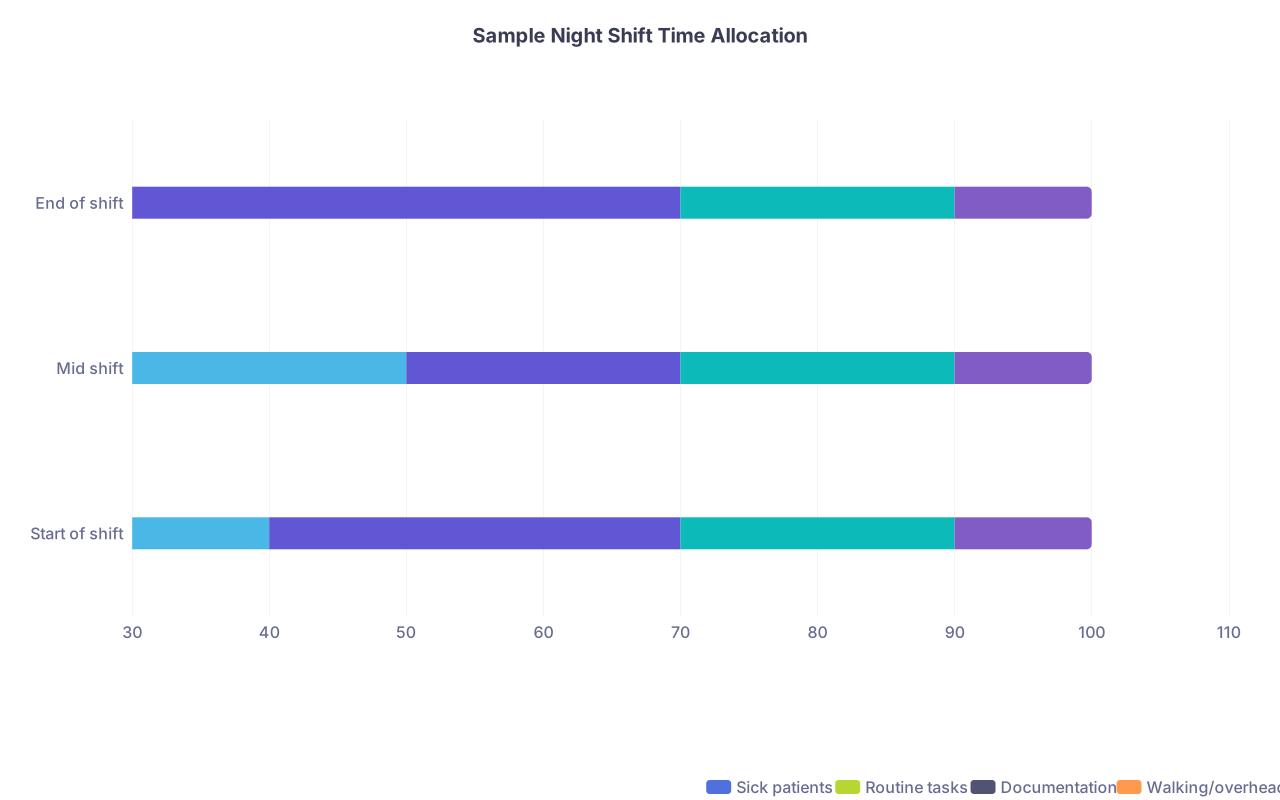
| Category | Sick patients | Routine tasks | Documentation | Walking/overhead |
|---|---|---|---|---|
| Start of shift | 40 | 30 | 20 | 10 |
| Mid shift | 50 | 20 | 20 | 10 |
| End of shift | 30 | 40 | 20 | 10 |
A Practical Night‑Before Checklist
If you have a rough first few nights, it is usually because you walked in cold.
Night before or afternoon before starting cross‑cover rotation:
- Create EMR smart phrases:
- .cc_pain, .cc_htn, .cc_hypotension, .cc_delirium, .cc_glucose, .cc_fever
- Build your phone/notes app page with:
- The universal call script
- When‑to‑get‑out‑of‑chair triggers
- SBAR outline
- Talk to seniors:
- “What are the top 3 things you get called about on this service at night? What do you wish you had known your first week?”
- Ask attendings / chiefs for:
- Local protocols for sepsis, transfusion, hypoglycemia, rapid response
- Decide your personal rule:
- “If I think ‘I wonder if I should call my senior,’ I will call my senior.”

FAQ (Exactly 4 Questions)
1. How much should I document for minor cross‑cover issues like bowel reg or sleep meds?
For truly minor issues in a stable patient, a short one‑liner in the chart is usually enough, especially if your institution does not expect a full note for every overnight call. Example: “Overnight, RN requested sleep aid for difficulty sleeping; ordered melatonin 3 mg PO x1, monitor response.”
You should use more complete notes for:
- Any change in vital signs
- Any new or worsening symptom (pain, SOB, confusion, chest discomfort)
- Any significant medication change (opioids, antihypertensives, sedatives, insulin adjustments)
- Anything that might be questioned later (“Why did you give this?”)
If you are unsure, err on the side of a brief 4‑line cross‑cover note. It takes one minute and protects you.
2. When am I over‑calling my senior versus under‑calling?
Over‑calling is rare for new residents. Under‑calling is what burns people. Clear times you must call:
- Any rapid response or code situation (once you have done basic ABC steps)
- New chest pain, neuro deficits, significant hypotension, or respiratory compromise
- Any potential ICU‑level patient
- Anything you are about to do that feels “big”: starting pressors, large fluid boluses in complex CHF, major insulin changes, new anticoagulation in borderline cases
You are over‑calling if:
- You never propose a plan (always “what do you want to do?”)
- You call for every mildly abnormal lab without synthesis
- You repeatedly call about the same stable patient without trying any of the basic steps discussed with your senior
Aim for: “Here is what is happening, here is what I think it is, here is what I have done, and here is what I am considering. Does that sound reasonable?”
3. How do I handle angry or anxious families at night when I barely know the patient?
You are not there to re‑explain the entire hospitalization at 2 a.m., but you cannot blow them off either. Use a tight script:
- “I am the doctor covering tonight, so I just met your [family member] through the chart. My main job overnight is to keep them safe and handle any urgent issues. I understand you have concerns about [X].”
- Listen for 1–2 minutes without interrupting.
- Then: “Here is what I can do right now: [brief address of immediate concerns, update on vital stability, pain control, etc.]. For the bigger questions about long‑term plan and prognosis, the primary team who knows them best will be back in the morning, and I will leave them a note to update you.”
Document any major family interaction briefly. Do not make promises about timing or outcomes you do not control.
4. How do I avoid missing something serious when I am exhausted at 4 a.m.?
You will miss things if you rely on “feelings” alone. That is why you use rigid systems at night:
- Always run your universal call script: ID → concern → vitals → baseline vs change → what has already been tried.
- For any vital sign abnormality, walk through: “Could this be sepsis? Could this be bleeding? Could this be cardiogenic? Could this be meds?”
- Use your “leave the chair” trigger list. If any trigger is hit, see the patient.
- Do one full, slow chart review and mental reset around 2–3 a.m. for your sickest 3–5 patients: vitals trend, I/Os, labs, orders.
- If a patient “does not feel right” to you or the nurse and you cannot articulate why after a brief assessment, that is actually a reason to escalate, not to dismiss it.
Open your notes app or EMR right now and create at least three smart phrases: one for pain, one for hypotension/sepsis concern, and one universal cross‑cover note. Then paste your 7‑step call script at the top of the document you keep open every night. That small setup step will pay you back the very next time the pager goes off.