

The algorithm does not care where you want to live. Full stop.
Programs care. You care. The algorithm does not.
Let’s tear this apart, because geographic preference is one of the most misunderstood parts of the Match. People keep blaming the algorithm for things that are actually human decisions made before the algorithm ever runs.
You’re not losing positions because you checked the wrong box on ERAS. You’re losing (or gaining) positions because people in offices are screening you based on location signals long before NRMP’s math kicks in.
The Core Truth: The Algorithm Is Blind To Geography
The NRMP algorithm is a stable marriage–type algorithm. It’s applicant-proposing. And it has exactly zero code paths for:
- “Lives in the Midwest”
- “Partner in same city”
- “From this state”
- “Checked geographic preference X”
The algorithm uses one thing from you:
Your rank order list. Ordered program IDs. That’s it.
It uses one thing from programs:
Their rank list of applicants. Again: IDs and order.
Everything else — “geographic preference,” couples labels, ERAS sections, MSPE comments like “she has strong ties to the area” — lives upstream. That’s all pre-algorithm behavior.
So when people say “Does indicating geographic preference change the algorithm?” the honest answer is:
No, but it changes the lists the algorithm receives. Which is where the actual power is.
That nuance matters.
Where Geography Actually Enters The Game
Geography doesn’t care about the algorithm; humans do. They inject it in at four points:
- Screening for interview offers
- How programs rank you
- How you rank programs
- How couples matching interacts with geography
Let’s walk through each.
1. Interview Offers: Geography as a Filter, Not a Formula
Most geography-based stuff happens here, and this is where applicants underestimate the impact.
Program coordinators and PDs sit in front of a spreadsheet of 800–3,000 applications. They are not thinking “match algorithm.” They are thinking “Which of these humans is actually likely to show up here and not be miserable?”
They use shortcuts. Geography is a big one.
Common actual filters I’ve seen in practice:
- “Only review apps with this state listed in ERAS geographic preference”
- “Prioritize people from our med school / state / region”
- “Deprioritize applicants from coasts applying to our rural Midwest program unless they have clear ties”
- “If they’re only signaling interest in West Coast and we’re in the Southeast, push them to the bottom pile”
This isn’t hypothetical. I’ve heard a PD say, out loud:
“If they didn’t check ‘Midwest’ on ERAS, they’re not serious about us.”
Is that reasonable? Sometimes. Is it data-driven? Rarely. But it happens.
So does “geographic preference” change the algorithm?
No.
Does it change who ever gets onto a rank list the algorithm sees?
Absolutely.
This is the part nobody tells you when they say “the algorithm favors applicants.”
2. Ranking: Programs Use Geography As A Commitment Proxy
By the time rank lists are being made, you’ve already cleared the big hurdle: getting an interview. Now geography mostly shows up as “likelihood to actually want to be here.”
Programs can’t stand:
- People who obviously used them as a backup
- People who interview like they’re “too good” for the city or region
- People whose story is inconsistent: “I must be in California” while applying broadly to the Southeast
So what do they do? They bump people up or down based partly on how believable the geographic story is.
Signals they actually pay attention to:
- Did you mention their city/region in your personal statement or secondary questions — specifically, not just “I like urban underserved populations” boilerplate.
- Do you have concrete ties? (family, partner, undergrad, prior job)
- Did you email or communicate in a way that shows you’ve researched the place?
- Did your MSPE or letters mention geographic preference or ties?
Again, the algorithm doesn’t know any of this. It just sees where they put you on the list. But their list is often shaped by geography more than by your Step score once you’re above some threshold.
3. Your Rank List: Geography Is Usually Undervalued
Now flip it around. Your side.
Students regularly rank like this:
- “Brand name” big city program they think they’re supposed to want
- Higher-ranked programs far from any support system
- Actual best fits, geographically and socially, below everything else
Then in March they’re surprised they’re moving cross-country to a place they didn’t really want. The algorithm did exactly what they came close to asking for.
Here’s the thing: the NRMP algorithm favors your true preferences. Not your aspirational ego list. If you rank a far-away shiny program #1, the algorithm assumes you really want that more than the solid, close-to-family program at #3.
It is ruthless in that way. It will not protect you from your own fake preferences.
If geography matters to you but your list doesn’t reflect that, the algorithm can’t fix it.
4. Couples Matching: Where Geography Becomes Algorithmic
This is the one place geography and the algorithm actually intersect.
In couples match, you submit pairs of choices, like:
- Program A in City 1 + Program X in City 1
- Program B in City 2 + Program Y in City 2
- Program C in City 3 + Program Z in City 3
Now the algorithm is trying to place you two as a pair, based on these combined preferences.
But notice something: even here, the algorithm still doesn’t know “we want to be in the Midwest.” It doesn’t know states or regions. It only knows the order of your paired choices.
So yes, with couples:
- Geography matters more
- The algorithm does more complex work
- But it’s still just following your ranked combinations
If your pairs are badly structured — or you’re unrealistic about overlapping geographic options — you can absolutely hurt yourselves. But again, that’s a rank list issue, not a secret “geographic bias” coded into the system.

| Step | Description |
|---|---|
| Step 1 | You Submit ERAS |
| Step 2 | Programs Screen Apps |
| Step 3 | Interview Offers |
| Step 4 | Programs Build Rank Lists |
| Step 5 | You Build Rank List |
| Step 6 | NRMP Algorithm Runs |
| Step 7 | Match Outcome |
ERAS Geographic Preference: Overrated, Misused, Misunderstood
The “Geographic Preferences” section in ERAS has created an entire mythology on its own.
Here’s how it actually plays out.
What That Section Really Does
When you indicate preferences like “Northeast” or “Pacific” or “No preference,” ERAS allows programs to filter or sort by those fields. That’s it.
ERAS does not:
- Send that data to NRMP
- Tell the algorithm to favor certain regions
- Lock you into those regions for interviews or ranking
Programs might filter like: “Show me applicants who selected our region or ‘no preference’ first.” That’s a human filtering choice, not a global rule.
And they’re inconsistent. Some PDs ignore it entirely. Others treat it as gospel. Others only look when deciding who to pull off a borderline pile.
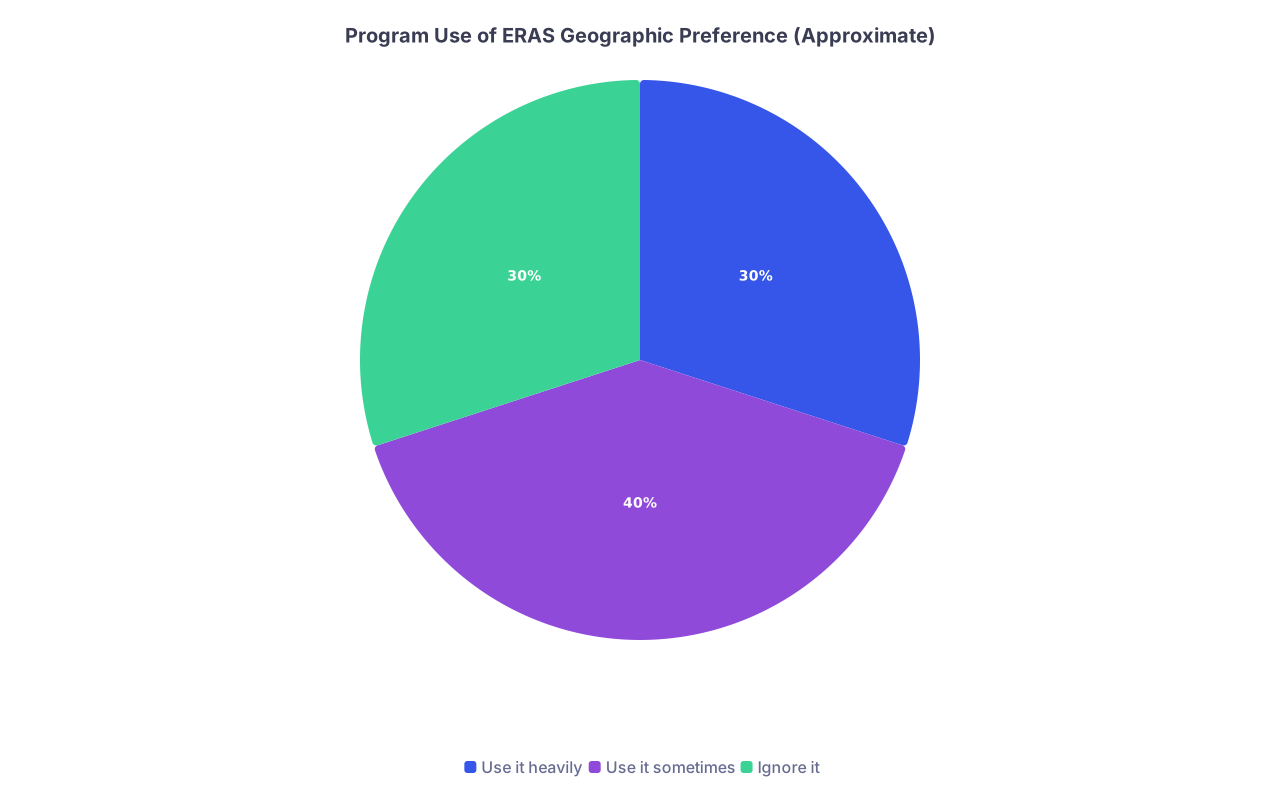
| Category | Value |
|---|---|
| Use it heavily | 30 |
| Use it sometimes | 40 |
| Ignore it | 30 |
Roughly what I’ve seen in conversations and PD panels: a third build filters on it, a chunk glance at it contextually, and a sizeable minority think it’s noise.
Common Applicant Myths About “Geographic Preference”
Let’s crush a few persistent fictions.
Myth 1: “If I pick a region, I can’t match outside it.”
Wrong. Programs in other regions do not magically lose access to your application. Plenty of people match outside the regions they flagged. The algorithm doesn’t see that field.
Myth 2: “If I say ‘no preference’ I’ll look more flexible and get more interviews everywhere.”
Sometimes you just look noncommittal. For smaller or less “desirable” regions, “no preference” is often weaker than “I want this region.” It can help for broad-appeal specialties or hyper-competitive applicants, but it’s not a cheat code.
Myth 3: “I should strategically lie about my preference to get more interviews in X.”
I’ve seen this backfire. If you say “strong Southeast preference” and your life story screams West Coast (undergrad, med school, all experiences, family all in California), interviewers notice. They interpret it as: “This person is gaming the system and will rank us low.”
Data vs Drama: What The Match Numbers Actually Show
The NRMP data does reveal some geographic effects — but again, all upstream from the algorithm.
Patterns that repeat every year:
- A large majority of IMGs match in specific regions (NY, NJ, FL, some Midwest states) because those areas have more IMG-friendly programs. This is about program preference and capacity, not algorithm bias.
- Many U.S. MD seniors stay in the same census region as their med school. Not because the algorithm traps them there, but because they apply and rank there heavily.
- Applicants with very tight geographic constraints (e.g., “must be within one city”) have higher unmatched rates unless they’re top-tier candidates.
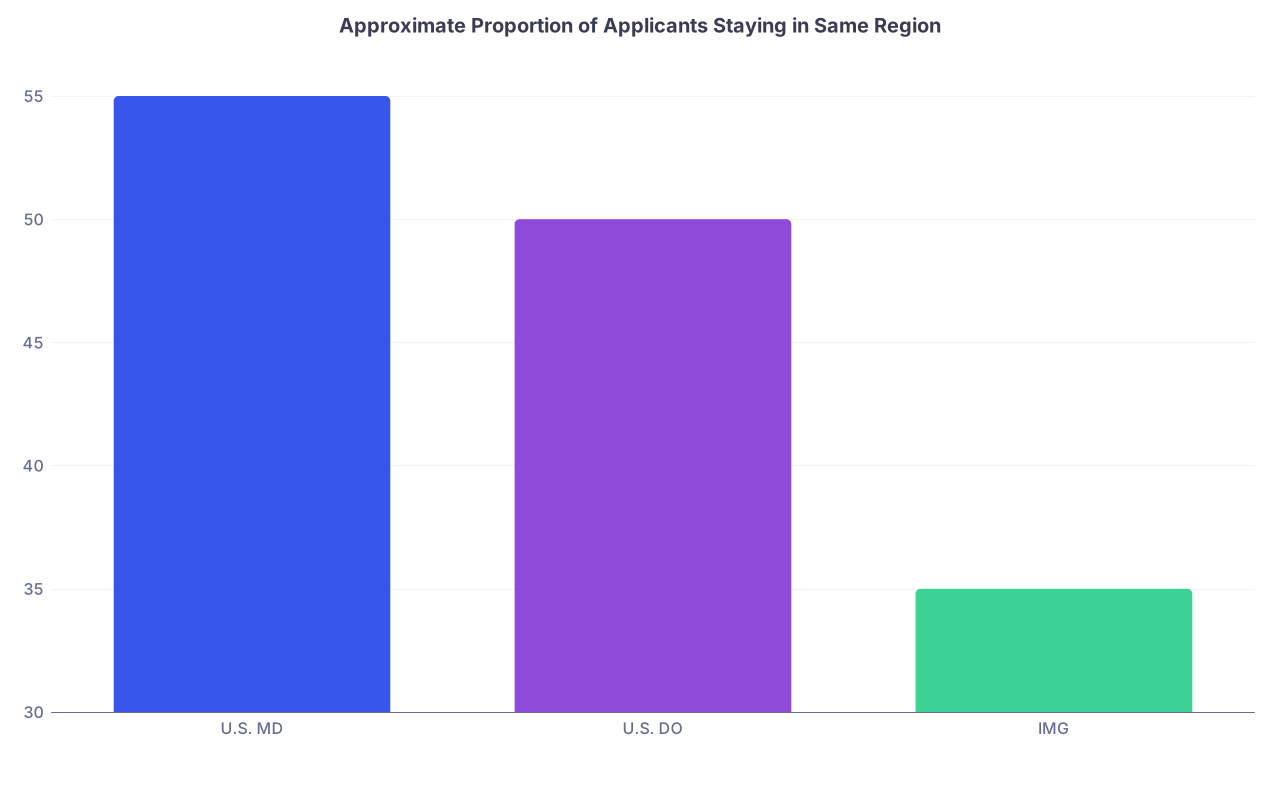
| Category | Value |
|---|---|
| U.S. MD | 55 |
| U.S. DO | 50 |
| IMG | 35 |
These aren’t exact numbers, but they’re in the ballpark of repeated NRMP reports: a majority of U.S. MDs stay regionally; fewer IMGs do, mostly because of opportunity distribution.
Interpretation: geography affects your application strategy and program behavior. The algorithm just reflects what both sides did.
How To Use Geography Without Letting It Wreck Your Match
You cannot change the algorithm. You can change the inputs it receives.
1. Be Honest — But Specific — About Where You’ll Actually Go
If you absolutely will not move somewhere, stop pretending you will.
- Don’t apply there “for practice” interviews. You’re wasting everyone’s time.
- Don’t rank places you’d actually be miserable at just because they’re “strong programs.”
The applicant-favorable algorithm only works if your rank list matches your real preferences. If geography is a hard constraint, your list must reflect that — even if it feels risky.
2. Show Real Ties Or Real Thought, Not Vague Platitudes
If you want to overcome weak geographic ties, you need something better than “I like your city’s diverse population.”
Concrete things that actually help:
- Past time in the region (college, family, military, previous job)
- Well-researched, specific reasons: clinical opportunities, population, lifestyle, support system
- Consistency across your application: if you claim you care deeply about staying in one region, your application choices should reflect that (electives, away rotations, etc.)
Programs are trying to predict: will you rank us high enough for the algorithm to land you here? Show them that’s plausible.
3. Use ERAS Geographic Preferences As A Signal, Not A Hack
Practical approach:
- If you truly have 2–3 regions you’d be happy in, list them.
- If location genuinely doesn’t matter much to you, “no preference” is fine — but make sure your application narrative supports that.
- Don’t spray every region just to look flexible. That reads as noise.
| Your Situation | What To Select |
|---|---|
| Strong preference for 1–2 regions | Select only those regions |
| Open to most places but avoid 1–2 regions | Select several, omit the no-go |
| Truly indifferent to geography | Select "No preference" |
| Couples with tight geographic overlap | Select shared realistic regions |
4. For Couples: Build Geographic Reality Into The Pairs
Couples who get burned by the algorithm almost always made one of two mistakes:
- Overconcentrated on a tiny set of overlapping programs in one city
- Didn’t include enough “less ideal but acceptable” geographic combinations
The fix is unglamorous:
- Map out every plausible combination by city/region
- Include enough lower-ranked but acceptable pairs so the algorithm has room to place you together
- Do not assume you’ll both match your dream city; build ladders of options

| Step | Description |
|---|---|
| Step 1 | Identify Shared Cities |
| Step 2 | List All Programs for Both |
| Step 3 | Create Paired Choices by City |
| Step 4 | Add Backup Pairs in Nearby Regions |
| Step 5 | Rank Pairs by Combined Preference |
What You Should Stop Worrying About
Let’s clear out some mental garbage.
You don’t need to obsess over:
- “Does checking this region change the algorithm?”
- “Does the algorithm punish me if I rank geographically distant programs first?”
- “Will the algorithm force me to stay near my med school if I rank one nearby program?”
The algorithm is dumb and loyal. It:
- Takes your rank list at face value
- Takes programs’ rank lists at face value
- Tries to give each applicant the highest-ranked program that also ranked them high enough
Geography only matters to the extent that it:
- Influences who gets interviews
- Influences how programs order their lists
- Influences how you order your list
Nothing more.
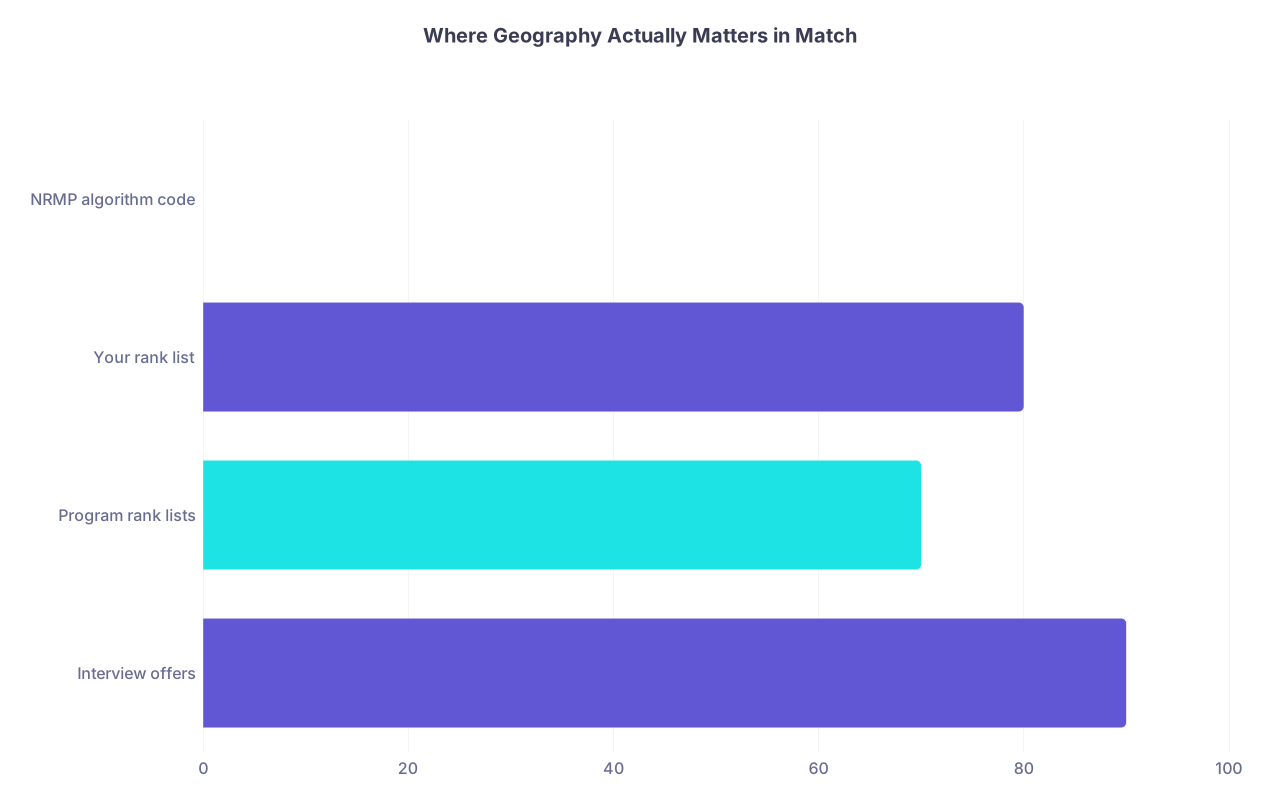
| Category | Value |
|---|---|
| Interview offers | 90 |
| Program rank lists | 70 |
| Your rank list | 80 |
| NRMP algorithm code | 0 |
The Bottom Line: Myths vs Mechanics
Strip away the drama and you’re left with this:
- The NRMP algorithm never “sees” geography. It sees rank lists. Geography only matters insofar as it shapes those lists before the algorithm runs.
- ERAS geographic preferences don’t change the algorithm; they change human behavior during screening and ranking — sometimes significantly, sometimes not at all.
- Your real leverage is in honest, strategically consistent choices: where you apply, how you signal ties or interest, and how you actually rank programs given how much location matters to you.
Stop trying to game a math formula that doesn’t know what a map is.
Start aligning your story, your applications, and your rank list with where you’re actually willing — and able — to live.


