

The worst time to discover red flags in a residency program is January. But that is exactly when most people finally see them clearly.
You are not stuck. You just need a disciplined way to re‑evaluate programs fast, under pressure, without blowing up your Match list out of panic or ego.
This is how you do it.
Step 1: Name Exactly What the Red Flag Is
Vague anxiety is useless. Concrete problems you can actually work with.
Most “late‑season” red flags fall into a few buckets:
- Culture is toxic or fake
- Workload is unsafe or exploitative
- Education is weak or an afterthought
- Outcomes are poor (board pass, fellowship, job placement)
- Leadership is unstable or dishonest
- Logistics are not livable (call, commute, childcare, visas, etc.)
- The program is at real risk: new, on probation, losing accreditation, major hospital merger
You need to write down what changed. Not just “bad vibe.”
Do this:
- Open a note on your phone or laptop.
- For each program you are re‑thinking, write:
- What I learned (specific fact / quote / event)
- Source (who said it / where it came from)
- Why it worries me (one sentence)
- Separate data from impressions.
Example:
- What I learned: “Intern told me 3 of 12 residents left mid‑year in the last 2 years.”
- Source: PGY‑3 on my interview day, confirmed by a friend at the institution.
- Why it worries me: Massive attrition usually means serious culture or leadership problems.
Different example:
- What I learned: “Program director never answered my email, coordinator is slow.”
- Source: My inbox.
- Why it worries me: Might signal disorganization, but could also be seasonal overload.
One more:
- What I learned: “Chief resident joked, ‘We do not document hours honestly. Just click 80.’”
- Source: Dinner the night before interview.
- Why it worries me: Chronic duty hour violations + pressure to falsify = real burnout risk.
You are building a case file on each program. Not every negative thing is a true red flag. Some are noise. Your job is to separate them.
Step 2: Sort Red Flags by Severity and Type
Treat this like triage. Some problems justify dropping a program from your rank list entirely. Most do not.
Use a simple three‑tier system: hard‑stop, serious, soft.
A. Hard‑Stop Red Flags (Drop or Drastically Lower)
These are the things that, in my opinion, can justify removing a program even late:
- Probation or serious accreditation concerns not transparently disclosed.
- Repeated, credible reports of:
- Systemic bullying or harassment (from multiple sources).
- Racism, sexism, homophobia, retaliation for reporting.
- Residents being pressured to falsify duty hours or patient care documentation.
- Unsafe patient care culture:
- Chronic “cover‑ups,” OR / floor chaos, constant near‑misses described as “normal.”
- Attendings routinely unavailable for high‑risk decisions.
- Extreme attrition:
- Several residents leaving or being fired each year, with vague or evasive explanations.
- Clear evidence the program is collapsing:
- Massive leadership turnover + rumors of closing services + residents actively trying to transfer out.
If a program hits one or more of these from multiple independent sources, it should probably fall to the bottom, no matter how “prestigious” the name.
B. Serious Red Flags (Re‑Rank Carefully)
These do not always justify deletion, but they should move a program down unless counterbalanced by major upside that you truly value.
- Culture mismatch:
- Everyone brags about malignant hours and “no hand‑holding,” and you know that is not you.
- Residents regularly describe themselves as “miserable but it’s good training.”
- Workload / schedule:
- Consistent 80+ hour weeks, frequent 28–30 hour calls, no post‑call protection.
- No flexibility for pregnancy, illness, family emergencies.
- Weak education:
- No protected didactics. Lectures always being cancelled “for the needs of the service.”
- Low board pass rates with no remediation plan.
- Leadership issues:
- PD or chair just left and successor is unknown or clearly disorganized.
- Multiple residents independently say, “Leadership does not listen. When we give feedback, they punish us.”
These are strong reasons to move a program down a tier or two, but not necessarily off the list.
C. Soft Red Flags (Re‑Contextualize)
These are “yellow lights.” They matter, but they rarely override core priorities:
- Less “prestige” than you hoped for.
- City is less exciting than you wanted.
- Older facilities, not as shiny.
- Slightly weaker fellowship placement in one niche area.
- Awkward vibe on one interview day.
You re‑evaluate these, but they should not throw your whole list into chaos.
Step 3: Cross‑Check Every Red Flag with Multiple Sources
One bitter resident can make a good program sound like hell. One unusually upbeat intern can make a rough program sound fine.
Your job is to avoid overreacting to a single voice.
Build a quick verification protocol:
Look for at least two independent sources for any serious red flag:
- A resident from that program.
- A student from your school who rotated there.
- An attending who has worked with grads from there.
- Public data (ACGME, board pass rates, etc.).
Use targeted follow‑up emails. Short, direct, and specific.
Example email to a resident (keep it simple):
Subject: Quick question about [Program Name]
Hi [Name],
Thank you again for speaking with us on interview day. I am finalizing my rank list and had a quick follow‑up question.
I heard that there has been some turnover among residents recently. Can you share how leadership has addressed this and whether there have been any significant changes to workload or support in the last year?
I appreciate any insight you are comfortable sharing.
Best,
[Your Name]
You do not accuse. You ask for context.
- Talk to your dean’s office or advisor who actually knows these programs.
A decent dean or program advisor has heard the horror stories. They also know which rumors are overblown. Ask them explicitly:
- “Would you be comfortable sending your own child to this program?”
- “If I rank this #1, are you worried for me?”
If they hesitate for more than a second, pay attention.
- Check whatever data exists.
- ACGME public notices for probation.
- Board pass rates (often in program brochures or asked explicitly).
- NRMP Charting Outcomes and specialty‑specific info for how “strong” this program actually is.
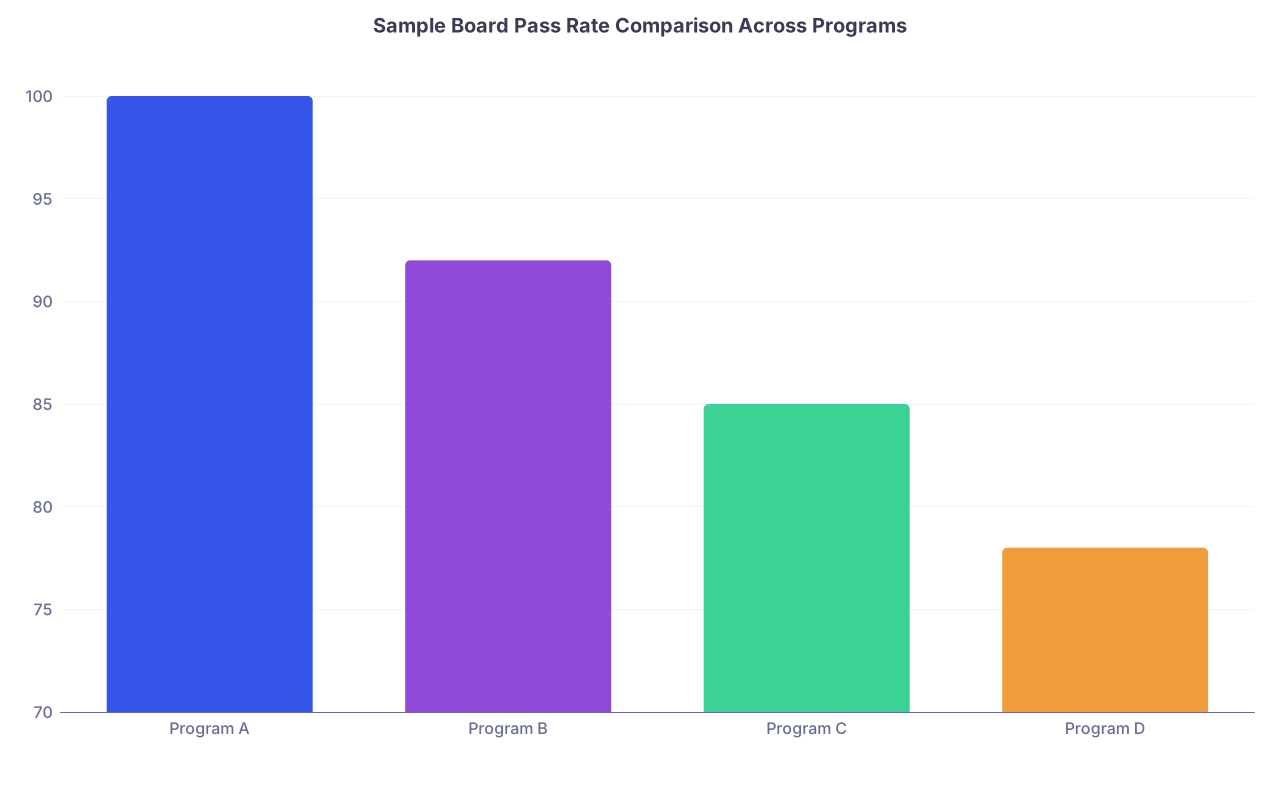
| Category | Value |
|---|---|
| Program A | 100 |
| Program B | 92 |
| Program C | 85 |
| Program D | 78 |
You are not building a legal case. You just want enough confirming evidence to know whether this red flag is real or exaggerated.
Step 4: Re‑Align with Your Non‑Negotiables
Before you start ripping up your rank list, you need a spine. Your own hierarchy of needs.
If you have never written it down, do it now. Late is better than never.
List your top 5 non‑negotiables for residency. Not 20. Five. Examples:
- I must be in [geographic region] because of partner / kids / visa.
- I must have a culture that is not malignant. I do not care about prestige as much.
- I must have strong fellowship placement in [subspecialty].
- I must be in a city with [airport / certain cost of living / family support].
- I must have some flexibility for family planning.
Once you have your five, ask brutally:
- Does this red flag actually hit one of my non‑negotiables?
- Or is it “just” something that annoys me or scares my ego?
If a program violates more than one of your top five, it should probably be ranked lower, regardless of name, research, or “dream” status.
If a program respects your top five, but has softer problems (not as prestigious, older hospital, average fellowship), think very hard before you push it too far down.
Step 5: Use a Structured Re‑Ranking Method (Not Vibes)
You need a framework so you are not swinging wildly based on the last horror story you heard.
Here is a simple scoring model that actually works in practice.
Define 5–7 categories that matter to you:
- Culture / wellness
- Clinical training / volume
- Education / boards
- Fellowship / job outcomes
- Location / support system
- Schedule / lifestyle
- Program stability / leadership
Assign each category a weight (how important it is to you). For example, out of 100:
- Culture / wellness: 25
- Clinical training: 20
- Education / boards: 15
- Fellowship outcomes: 15
- Location / support: 15
- Program stability: 10
Score each program 1–5 in each category based on what you know now, including red flags.
- 1 = unacceptable
- 2 = poor
- 3 = adequate
- 4 = good
- 5 = excellent
Multiply: score × weight for each category, sum the total.
| Category | Weight | Program X Score | Program Y Score |
|---|---|---|---|
| Culture/Wellness | 25 | 2 | 4 |
| Clinical Training | 20 | 5 | 4 |
| Education/Boards | 15 | 3 | 4 |
| Fellowship Outcomes | 15 | 4 | 3 |
| Location/Support | 15 | 3 | 5 |
| Stability/Leadership | 10 | 2 | 4 |
You may discover something uncomfortable: the program you have been worshiping for two years scores significantly lower overall once you honestly include the red flags.
Good. That is what this exercise is for.
Now rank based on total score, then sanity‑check:
- Would I be devastated to match at #3 vs #2?
- Are there any “deal breakers” being hidden by the numbers?
Use the numbers to expose bias. Use your brain to finalize the order.
Step 6: Decide When to Drop a Program Altogether
Everyone asks this question late in the season: “Should I just drop them from my list?”
You need a clear rule so you do not thrash around:
Drop a program if:
- You would rather go unmatched and reapply than spend 3–7 years there.
- The program has hard‑stop red flags confirmed from multiple sources.
- The program flunks your top 2–3 non‑negotiables, with no realistic upside that matters to you.
- Your gut response to “What if I match there?” is physical dread, not nerves.
Otherwise, do not be dramatic. Just rank them lower.
The NRMP rule is simple: only rank programs where you would be willing to train. That does not mean “thrilled.” It means “I would go, I would make it work, I would not quit.”
If a program does not hit that bar, take it off. But be honest: for most applicants, that will only be a handful.
Step 7: Control for Common Cognitive Traps
Late‑season red flags interact very badly with your brain’s built‑in glitches.
There are three traps I see every year.
Trap 1: Recency Bias
The last scary story you hear feels like the most important.
Countermove:
Do not re‑rank anything on the same day you hear a horror story. Write it down. Cross‑check. Then look at your entire list once, not every hour.
Trap 2: Prestige Blindness
“I know it sounds bad, but it is [Big‑Name University]. It has to be fine.”
No. I have seen top‑10 programs with vicious culture, awful support, fake duty hours, and residents quietly begging med students not to come.
Countermove:
Cover the program names on your scoring sheet. Would you still rank them that way if they were called Program A, B, C?
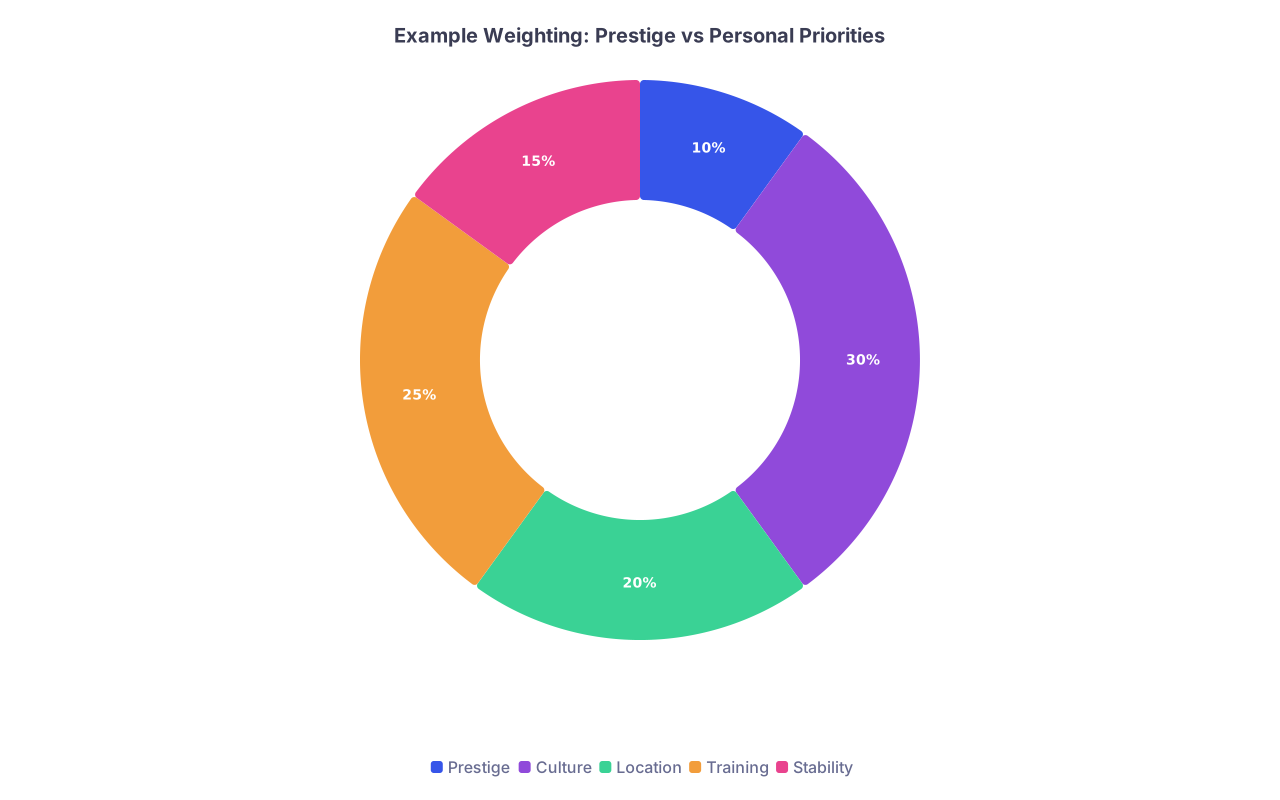
| Category | Value |
|---|---|
| Prestige | 10 |
| Culture | 30 |
| Location | 20 |
| Training | 25 |
| Stability | 15 |
Prestige should be a small slice of the pie, not the whole plate.
Trap 3: Fear of Missing Out
“I heard Program Z has incredible fellowship placement, so maybe the red flags are worth it…”
Maybe. Often not.
Ask yourself a more honest question:
- “Would I rather be a happier, well‑trained graduate from a solid program, or a burned‑out shell from a ‘top’ program that nearly broke me?”
Most attendings I know can spot the difference a mile away. And they care far less about your program’s name than you think.
Step 8: Use Information‑Gathering Efficiently (You’re Busy)
You are on rotations, doing sub‑I’s, or studying for Step 2. You do not have 20 hours to recon every program.
So you prioritize.
A. Focus deeper investigation on:
- Programs in your top 5–7 that developed serious red flags.
- Any place you are debating between ranking #1 vs #2 vs #3.
For these, you:
- Email 1–2 residents with targeted questions.
- Ask your dean / faculty mentor explicitly about them.
- If needed, schedule a quick 10–15 min phone call with a resident (even better than email).
B. For mid‑tier programs (rank #8–20 range):
You do lighter recon:
- Scan notes from interview day.
- Check for any big accreditation / board issues.
- Maybe send one clarifying email if something feels off.
C. For programs you already plan to rank at the bottom:
Do not waste your life investigating them deeply. You already know they are backup.

| Step | Description |
|---|---|
| Step 1 | Identify Red Flags |
| Step 2 | Deep Check: emails, advisors, data |
| Step 3 | Quick Check + maybe 1 email |
| Step 4 | No extra work, keep low |
| Step 5 | Re-score Program |
| Step 6 | Adjust Rank List Once |
| Step 7 | Top 7 Program? |
| Step 8 | Mid Tier or Low? |
You are not trying to know everything. You are trying to know enough to not make a clearly bad decision.
Step 9: Know When to Talk to the Program (And How)
Sometimes a red flag comes directly from the program itself:
- Confusing email about probation.
- Sudden leadership change.
- Announcement about losing a major site.
Should you confront them? Sometimes, yes. Carefully.
General rules:
- If your concern is about accreditation, leadership stability, or curriculum changes, it is reasonable to ask the program director or coordinator for clarification.
- If your concern is about culture, harassment, or residents being mistreated, do not expect program leadership to admit this by email. You will learn much more from residents and alumni.
Example PD email (keep it neutral):
Subject: Clarification about recent changes at [Program Name]
Dear Dr. [PD Last Name],
Thank you again for the opportunity to interview at [Program Name]. I remain very interested in your program and am currently finalizing my rank list.
I recently heard about [leadership change / new clinical site / upcoming accreditation review] and wanted to better understand how this might affect the resident experience, particularly with respect to [education, clinical exposure, etc.].
If you are able to share any context, I would greatly appreciate it.
Sincerely,
[Your Name]
Notice you do not mention rumors or quote other residents. You let them explain. Their answer (or lack of one) will tell you a lot.
Step 10: Final Pass – Build a Rank List You Can Live With
At some point, you must stop collecting data and lock in.
Here is the final pass I recommend:
- Sort by your scoring system.
- Read down the list, and for each program ask:
- “If I match here, can I grow into the physician I want to be and stay basically intact as a person?”
- Mark:
- A = would be genuinely happy / excited.
- B = would be okay, could make it work.
- C = last‑resort; would go, but already planning to survive, not thrive.
Try very hard to keep your list mostly A and B. If you have many C’s, seriously consider whether they should even be ranked.
If you are in a competitive specialty and worried about matching numbers, reality matters. But packing your list with programs that you know are toxic is not a “safety strategy.” It is signing up for 3–7 miserable years.
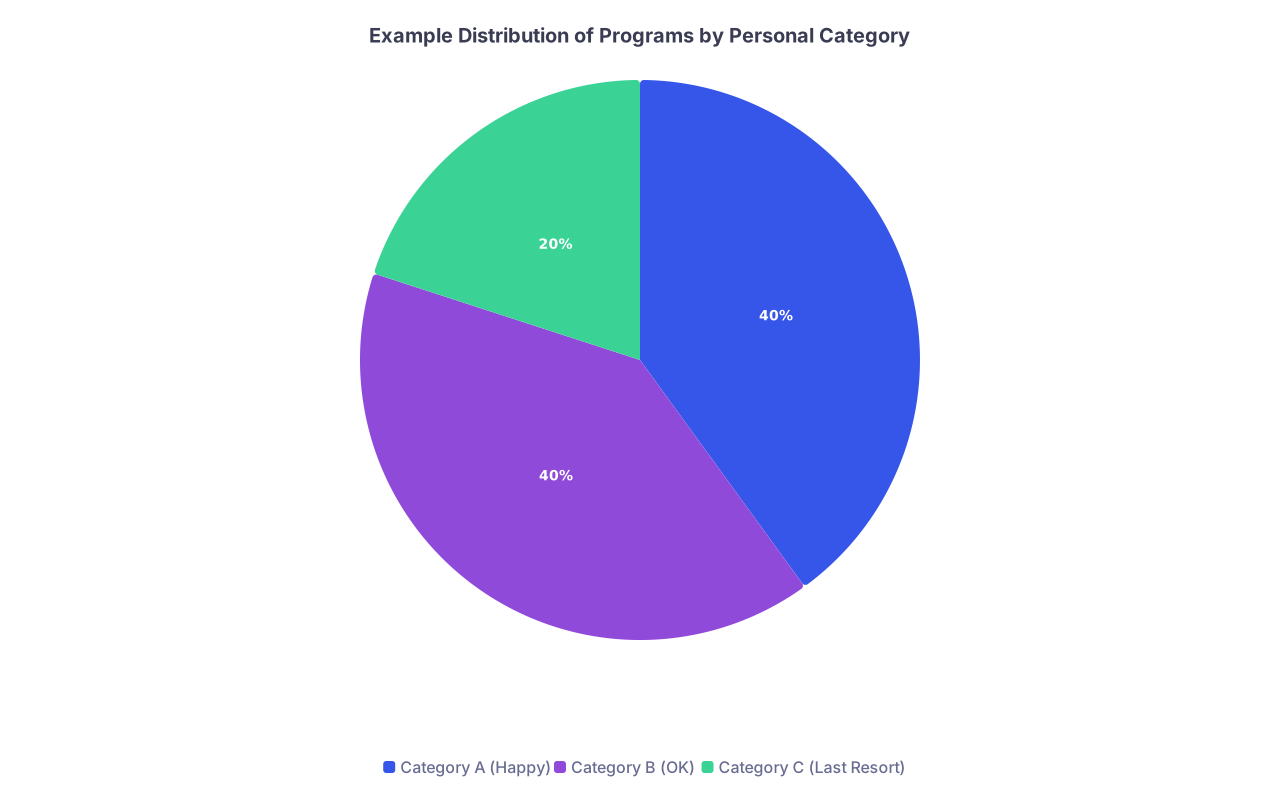
| Category | Value |
|---|---|
| Category A (Happy) | 40 |
| Category B (OK) | 40 |
| Category C (Last Resort) | 20 |
Aim to move a few borderline C’s either up (if red flags are weak) or off the list.
Quick Reality Checks You Should Not Ignore
A few hard‑won truths from watching people go through this:
- A slightly “less competitive” program with a healthy culture beats a famous malignant program every time. Not abstractly. In real careers, incomes, and mental health.
- Leadership quality matters more than most applicants think. A strong PD who fights for residents can fix almost anything. Weak leadership cannot fix even a great hospital.
- If multiple residents independently warn you away with the exact same phrases (“do not come here,” “this place will chew you up”), believe them.
- If the only positive things you can say about a program are “prestige” and “research,” that is a problem.

How to Stay Sane During This Process
You are making big decisions with incomplete information while exhausted. Of course you feel unstable.
A few practical stabilizers:
- Set a decision deadline for yourself 2–3 days before the NRMP deadline. No touching the list after that unless a program literally shuts down.
- Limit “advice” conversations. Too many opinions will paralyze you.
- Talk to one or two people who know you well and understand residency (not just anxious classmates).
- Write down why you ranked your top 3 the way you did. When you doubt later, you can at least see your own reasoning.

A Note on Being Wrong
Sometimes you will misjudge. A program you feared turns out fine. A place you loved hides problems.
That is not failure. That is the limitation of any matching process.
Your real power is not in predicting perfectly. It is in:
- Refusing to ignore glaring red flags.
- Refusing to sacrifice your core values for brand names.
- Being willing to choose “less shiny but functional” over “impressive but toxic.”
If you do that, you have already avoided 80% of the disasters I have seen.

The Bottom Line
- Treat late‑season red flags like clinical findings: define them clearly, cross‑check from multiple sources, and weigh them against your non‑negotiables.
- Use a structured scoring and ranking system so you are not ruled by fear, prestige, or the last horror story you heard.
- Only drop programs you would truly rather avoid entirely; for the rest, re‑rank intelligently and lock your list, so you can walk into Match Day knowing you made a deliberate, adult decision.


