
The biggest mistake applicants make is pretending they can rank programs the same way whether they want to become an academic leader or a high-earning private-practice attending. You cannot. The paths diverge early, and your rank list has to reflect that.
If you’re in the middle of building your rank list and you’re torn between “I kind of like teaching and research” vs “I want a good lifestyle and income,” you’re already in a dangerous gray zone. You need to get out of that gray zone before you hit “Certify.”
This is the playbook for doing exactly that.
Step 1: Decide Which Path You’re Actually Ranking For
You cannot build a smart rank list until you answer one uncomfortable question:
If I had to choose right now, would I rather:
- Be a future fellowship-trained, research-active, teaching-heavy academic attending
- Or a clinically strong, efficient, well-compensated private-practice attending?
Not “maybe both.” Not “I’ll see how residency goes.” Residency is the pipeline that sorts you, and programs are designed with one of these end points in mind.
So here’s how to force clarity in 10 minutes.
Take a sheet of paper and write two columns: “Academic attending” and “Private practice attending.” Now answer these:
- Whose opinion do you want to matter more in 10 years:
Division chiefs and national societies, or partners in a group and your practice manager? - What sounds better:
Giving a talk at a national conference, or having a 4‑day clinical week and no pressure to publish? - When you imagine “success,” do you picture:
Titles (Program Director, Section Chief, PI) or autonomy and high, predictable income?
Circle the column that shows up more. That’s your default path for ranking.
If you’re truly 50/50, you rank as if you might want academics, because academic training almost always keeps private-practice doors open. The reverse is not as reliable.
(Related: Location‑sensitive ranking for families)
Step 2: Understand What Each Path Actually Demands
Strip away the fluff. Here’s what each route really requires from your residency training.
| Priority Area | Academic-Future Resident | Private-Practice-Future Resident |
|---|---|---|
| Research | High | Low–Moderate |
| Fellowship Access | Critical (often top-tier) | Useful but optional |
| Clinical Volume | Moderate–High, often complex | High, broad bread-and-butter |
| Autonomy Early | Moderate | High |
| Teaching Culture | Strong, structured | Variable |
| Work-Life During Res | Worse to moderate | Moderate–better |
If you want to be a future academic:
- You need:
- Solid research output (not just one poster from med school).
- Strong letters from known faculty in your field.
- Access to competitive or niche fellowships if your specialty uses them.
- A home institution or connections where academics is the default, not the exception.
If you want future private practice:
- You need:
- Enough clinical reps to be fast, safe, and efficient.
- Graduated autonomy so you’re not terrified the first time you’re attending alone.
- Decent name recognition (doesn’t have to be “top 10,” but should not be obscure) in your region of interest.
- Mentors tied into regional or national private groups.
None of this means an academic-style program has weak clinical training or that a community program has no research. But the emphasis is different. You’re ranking the emphasis, not just the logo.
Step 3: How to Evaluate Programs If You Want to Be an Academic Attending
If you are leaning academics, your rank list should ruthlessly prioritize programs that set you up as a future faculty candidate, not just a competent clinician.
Here is the filter I’d actually use.
1. Look at the faculty and where they trained
Open the faculty page for your specialty at each program. Check 10–15 people:
- Where did they train for residency and fellowship?
- How many are from that institution vs elsewhere?
- How many have real academic titles and grants?
If 70–80% of faculty also trained there, that place grows its own and values internal trainees. That’s a good sign if you might want to stay for faculty. If you see very few internal graduates on faculty, the pipeline may be weaker or highly competitive.
2. Track record of academic placement
You’re not guessing here. Ask or dig:
- How many graduates last 5 years went into:
- Fellowships (and which ones)?
- Academic positions right out of training?
- Do people present at national meetings every year?
- Do chief residents match at high‑profile fellowships?
You want to see publications and recognizable fellowship names: UCSF, Michigan, Mayo, MGH, Penn, etc. Not because “brand” is everything, but because those programs selectively take people with academic potential.
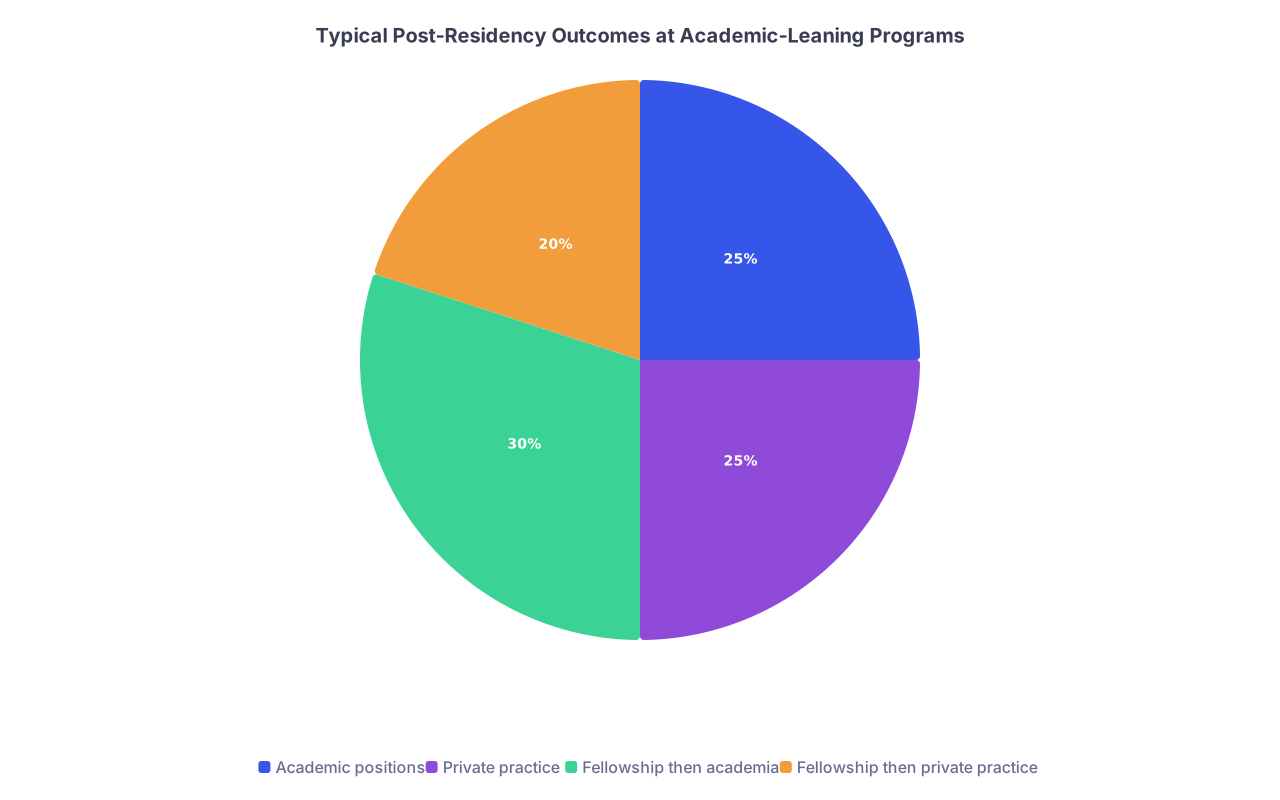
| Category | Value |
|---|---|
| Academic positions | 25 |
| Private practice | 25 |
| Fellowship then academia | 30 |
| Fellowship then private practice | 20 |
If a program cannot clearly articulate where their graduates go academically, it’s a red flag for academic careers.
3. Protected research time (real, not theoretical)
Do not accept vague answers like “residents have opportunities for research.” That phrase is basically meaningless.
You want specifics:
- Is there protected research time? How many months? What PGY years?
- Is it blocked (e.g., 3–6 months) or piecemeal?
- Is there a formal research track, clinician–scientist pathway, or T32?
Programs serious about academics can tell you exactly: “Our research track residents have 6–12 months of protected time, often leading to 3–5 publications by graduation.” If you’re hearing “you can do research on nights, weekends, electives,” this will limit serious academic output in most fields.
4. Funding, mentorship, and infrastructure
Look for:
- Named research centers or institutes aligned with your interests.
- Access to statisticians, IRB support, grants office.
- A track record of residents being first authors.
Ask directly: “Who are 2–3 residents in my potential field currently doing strong academic work that I could talk to?” Then actually email them. Their tone will tell you everything.
5. Teaching culture and educational structure
If you’re going to be faculty, you need to enjoy and be good at teaching.
Signals of a teaching-forward academic environment:
- Regular resident-led conferences, journal clubs, M&Ms.
- Opportunities to teach med students with faculty feedback.
- Formal “resident as teacher” curricula.
(See also: Second‑Look Visits Change Your Perspective for more details.)
If everyone on interview day gushes only about “autonomy” and “volume” but not conferences, mentorship, or scholarship, that’s more private-practice leaning.
How to rank with academic goals in mind
When comparing two programs, ask yourself:
“If I needed academic letters, publications, and a competitive fellowship from this program, how easy would that be here?”
If the answer is “tricky” or “only if I hustle insanely hard against the grain of the program,” move that program down.
Step 4: How to Evaluate Programs If You Want Private Practice
If you know you want private practice, you’re ranking for one thing: becoming independent, efficient, and employable—without burning yourself out or over-training for a career you won’t use.
Your filters shift.
1. Clinical volume and case mix
You want to come out of residency or fellowship being the person a group trusts on day one.
Ask:
- What’s your average number of cases / patients / procedures by graduation?
- Which bread-and-butter problems will I be very comfortable managing solo?
- Are there procedures or skills that grads consistently feel weak in?
You’re not seeking rare zebras. You’re seeking high repetition of common stuff you’ll bill for in private practice.
2. Graduated autonomy that resembles private practice
In private practice, you’re the final call. Nobody is coming behind you to fix your work in real time.
Ask residents:
- As a senior, are you actually running the list/clinic/OR, or are attendings micromanaging?
- Do you handle your own complications or always hand off?
- On nights, are you the one deciding to admit/discharge/operate?
Too little supervision is dangerous. Too much and you graduate timid.
3. Where do graduates actually end up?
You want data like:
- What percent go straight into private practice?
- In what settings: small groups, large multispecialty, hospital-employed?
- In what regions?
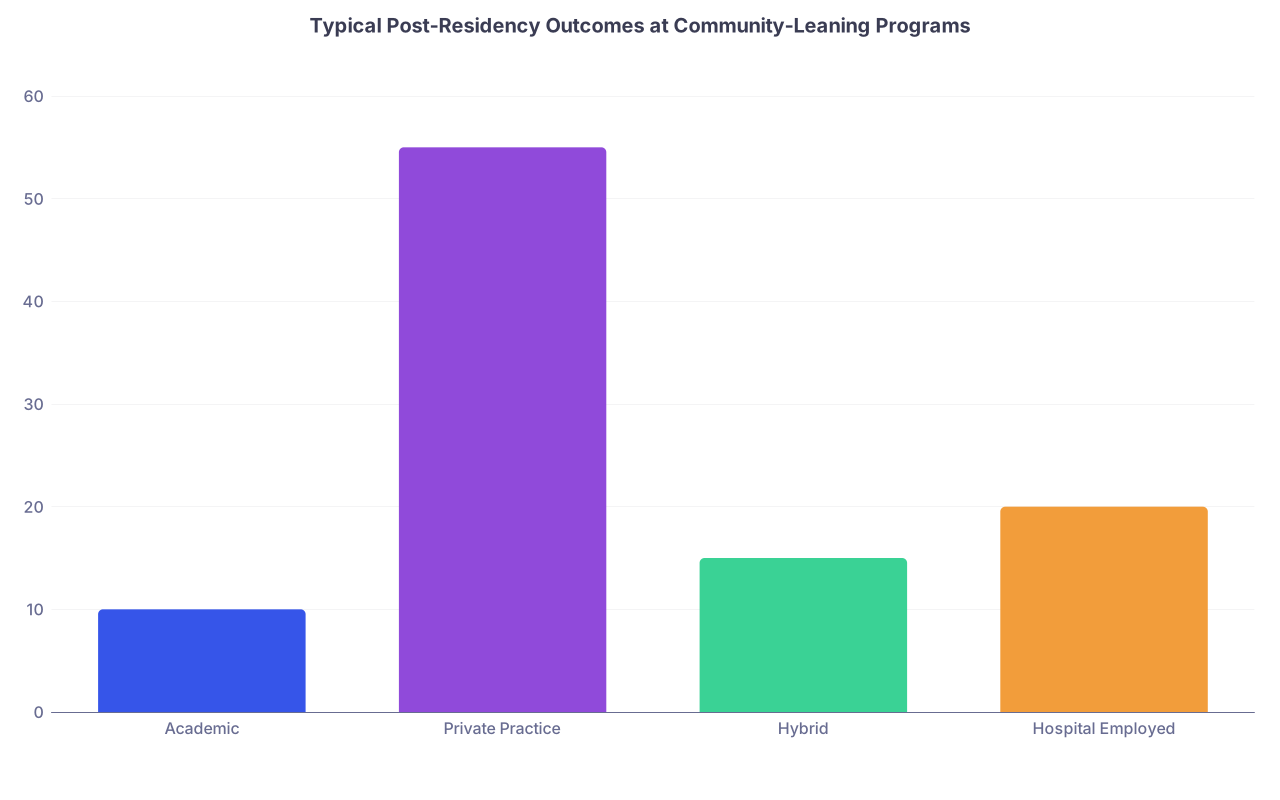
| Category | Value |
|---|---|
| Academic | 10 |
| Private Practice | 55 |
| Hybrid | 15 |
| Hospital Employed | 20 |
If 70% go to private practice and they sound happy when you talk to them, that’s your tribe.
If most grads are scrambling for fellowships they do not really want just to feel competent, the clinical training may be too narrow or shallow.
4. Workload and culture: will you burn out in training?
You will work hard. That’s fine. But if the culture is “we crush our residents, that’s how you learn,” you’re training to tolerate bad systems, not to be a strong clinician.
Ask bluntly:
- How often do people violate duty hours in reality?
- What’s the average number of weekends off per month?
- Is there admin or scut help, or do residents do everything?
If everybody laughs darkly when you ask about wellness, that’s a bad sign.
5. Job-hunting support and private-practice connections
Underrated factor.
Look for:
- Faculty who’ve done private practice and returned.
- Alumni in groups you might want to join.
- Any formal networking with regional practices.
Ask chiefs: “How did you find your job? Did the program help at all?” A shrug means you’re on your own.
How to rank with private-practice goals in mind
When comparing two programs, ask:
“Will I graduate ready to be the only doctor in the room, seeing a full schedule or call load without panic?”
If the answer is “I’ll still need hand-holding,” push that program down.
Step 5: Handling Hybrid Programs and Uncertain Goals
Most programs are not purely academic or purely community. Many big-name academic hospitals still churn out private-practice attendings. Many strong community programs have a niche research operation.
So you sort them by trajectory of graduates and program identity, not marketing.
If you’re unsure of your path:
- Favor programs with:
- At least some protected research time.
- Solid fellowship access.
- Strong clinical volume.
But be realistic: you can’t be at a place where everyone is barely surviving clinically and still expect to do polished research on the side. That’s fantasy.
A simple mental model
Think of programs on a spectrum:
- Pure academic powerhouses
- Academic with strong clinical volume
- Hybrid / university-affiliated community
- Strong community with minor scholarly output
- Pure service-heavy community, minimal academics
If you are:
- Strongly academic → Rank from top of the spectrum downward until you’d rather be anywhere else than that program.
- Strongly private-practice → Start around hybrid/strong community and move toward the community end, but keep at least some name recognition and training quality.
- Unsure → Live in the middle: academic with strong clinical volume or hybrid with legit mentors.
Step 6: Red Flags Depending on Your Chosen Path
What should make you move a program down your rank list?
Red flags if you want an academic future
- “We don’t really track where residents publish.”
- “You can do research if you really want to, but residents are pretty busy.”
- Residents with zero posters, zero abstracts, zero anything beyond clinical.
- No one can name a grad in the last 3 years who went to a competitive fellowship or got a faculty job.
- Faculty tell you privately, “If you want real research, you should go somewhere else.”
Red flags if you want private practice
- Senior residents say, “I still don’t feel comfortable managing X bread-and-butter problem.”
- Alumni keep doing extra fellowships for ‘confidence,’ not passion.
- Program brags about “world-class research,” but residents look dead-eyed from endless service work.
- Duty hour violations are normalized and laughed off.
- Nobody can explain how grads actually get jobs: “They just kind of figure it out.”
Step 7: Reality Check – Money, Lifestyle, and Reputation
You’re probably also quietly thinking: Which ranking approach sets me up better for income and quality of life?
Here’s the blunt version.
- Income: Private practice usually wins, especially procedurally heavy fields. But academic physicians with niche expertise plus side consulting can do very well. Do not assume academics = poor.
- Control over schedule: Often better in private groups or selective hospital-employed jobs. But toxic private groups exist and can be worse than academia.
- Geographic flexibility:
- Private practice: generally more flexible, especially in non-coastal, non-saturated areas.
- Academia: clusters in big metros, limited slots, politics-heavy.
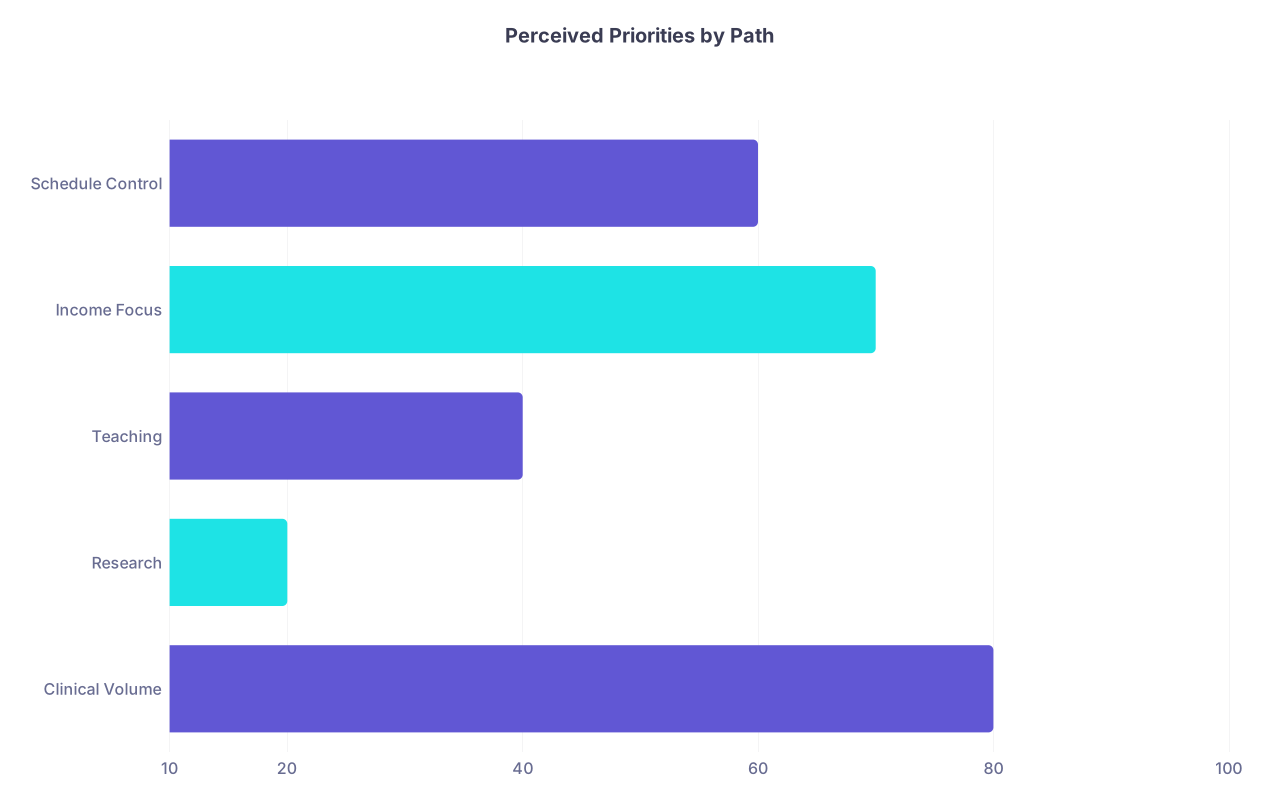
| Category | Value |
|---|---|
| Clinical Volume | 80 |
| Research | 20 |
| Teaching | 40 |
| Income Focus | 70 |
| Schedule Control | 60 |
(Think of these as rough relative weights in private-practice leaning programs; academic programs invert the research/teaching weights.)
Your rank list is about where you want to build your skills and reputation. The money will usually follow if you’re competent and deliberate.
Step 8: Building the Actual Rank List
Now you’ve done all this thinking. How do you turn it into an ordered list?
Here’s a practical approach that works.
- Label every program on your list as:
- A (academic-building)
- H (hybrid)
- P (private-practice-building)
- Mark your path preference: A, H, or P.
- Inside each category, rank programs by:
- Training quality (clinical and/or academic, per your path)
- Culture fit (people you’d actually want to work with at 2am)
- Location and personal life constraints.
Then:
- If you’re academic-bound:
- Put A’s first in your internal quality order.
- Then H’s.
- Then P’s only if you’d rather be there than unmatched.
- If you’re private-practice-bound:
- Put P’s and strong H’s that produce confident grads first.
- Then A’s that are still clinically strong if you liked them.
- If you’re undecided:
- Start with strong A/H hybrids that give you options either way.
- Avoid extremes (hyper-service community with no mentorship or ultra-niche research shop with questionable clinical exposure) at the top.
Do not outsmart the algorithm. Rank in true preference order, but make sure your “preferences” are aligned with your likely future, not just who gave you the best interview lunch.
Step 9: The Emotional Side — Fear of Closing Doors
Here’s the part most people do not admit: you’re scared that choosing either path “too early” will trap you.
Two truths:
- Many people change directions. Academic-leaning residents go private. Private-practice-leaning residents stumble into academics. It happens.
- Some doors absolutely are harder to open later.
Switching from academic-style training to private practice is usually easy. Private groups like well-trained, high-volume, fellowship-trained grads. They do not care that you once presented a poster.
Switching from bare-bones community training to serious academics is harder. Not impossible, but you’re pushing uphill without publications, big-name mentors, or prestigious fellowships.
So, if you’re stuck, lean slightly toward the academic-supportive end of things as long as the clinical training is still robust. That keeps more doors open.
Your Next Concrete Step Today
Do this right now:
Pick your top 8–10 programs and, for each one, write down three words: “Academic, Hybrid, or Private” plus two short descriptors (e.g., “Academic – research-heavy, strong fellowship” or “Hybrid – good volume, some research”).
Then mark your own path: Academic, Hybrid/Undecided, or Private.
Now look at whether your current rank list matches that reality. If it doesn’t, start moving programs up or down until the top of your list matches the kind of attending you’re trying to become—not the version of yourself that just had the most charming interview day.