

Second looks should almost never overhaul your rank list. They should refine it, stress‑test it, and sometimes break a tie—but not hijack months of judgment based on one emotionally charged day.
Let me be blunt: applicants regularly overreact to second looks. You’re tired, you’re flattered by attention, you’re anxious about the Match. Programs know this and curate an “on‑their‑best‑behavior” version of themselves. If you let that single snapshot outweigh everything you saw—and heard—on interview day and during the season, you’re making a bad decision.
Here’s how to use second looks correctly, and when they actually should move a program up or down.
What a Second Look Is (and What It Is Not)
A second look is a visit, not an interview and not a secret audition. It’s primarily for you.
Core reality:
- Programs are not supposed to use second looks to change how they rank you.
- Many program directors don’t even track who comes.
- Second looks can be logistically and financially painful for you. So if you’re going to do them, you need a clear objective.
A second look is good for:
- Clarifying culture: Are residents actually happy on a random Tuesday afternoon?
- Seeing the real workflow: Where you’ll chart, where you’ll sleep, how far things really are.
- Confirming deal‑breakers: Call structure, schedule reality, clinic vibe, commute, parking, cost of living.
- Meeting people you missed: Chief residents, fellows, specific faculty in your niche.
A second look is not good for:
- “Showing interest” to move up on their list.
- Fixing a bad interview.
- Overriding your core priorities because everyone was extra nice that day.
If you go, go with specific questions, not vague feelings.
Baseline Rule: Rank Based on Your Best Global Assessment
Before you even think about how a second look fits in, you need the right hierarchy in your head.
Your rank list should rest primarily on:
- Training quality (clinical volume, autonomy, outcomes, board pass rate).
- Fit with your career goals (fellowship, academic vs community, research, niche interests).
- Culture and resident satisfaction (burnout, support, collegiality).
- Lifestyle and logistics (geography, support system, cost of living, call, schedule).
- Gut feeling over multiple data points—not just one event.
Second looks are a supplemental data point. Not the main one.
So the default is:
- Use interview day + resident conversations + your research to create a preliminary rank list.
- Then treat second looks as a tiebreaker and sanity check.
When a Second Look Should Not Change Your Rank List
Let’s start with the mistakes, because they’re painfully common.
Mistake 1: Letting Hospitality Override Training
Scenario I’ve seen: You visit Program A and they pay for lunch, the chief remembers your name, and a junior attending walks you to your car. You visit Program B and everyone’s busy, a senior looks tired, and no one has time to give you a 45‑minute tour.
You come home thinking, “Program A just felt so much more welcoming. Maybe I should bump them above B.”
Ask yourself:
- Who has stronger case volume and better fellowship placement?
- Whose residents matched where you want to end up?
- Who had a more coherent curriculum on paper?
Never trade 3 years of better training for 3 hours of being pampered. That’s a lousy bargain.
Mistake 2: Assuming the Vibe You Saw Is the Daily Norm
Second looks are not “random Monday in February.” Residents know you’re coming. Some will be extra upbeat. Some will also be exhausted for reasons that have nothing to do with program culture.
Examples:
- You show up after a chaotic trauma night—everyone seems frazzled.
- You visit on a slow clinic afternoon—everyone seems artificially relaxed.
Both are distortions. Treat the second look as one more data point, not the trump card.
Mistake 3: Over‑weighting One Resident’s Opinion
On second looks, you often get pulled aside for “real talk” by a resident. This can be gold—or pure noise.
Bad move:
You talk to one PGY‑2 who hates nights and says the program is “brutal.” You ignore the fact that every other resident you’ve met all season has said, “It’s busy, but very supportive.” You tank the program on your list.
Better move:
You ask:
“Is what I’m hearing from you consistent with what others would say, or are there split opinions in the residency?”
And
“If you had to do it again, would you still rank this program highly? Why or why not?”
If one person’s complaint contradicts 10 others’ stories, do not let it swing your list wildly. Put it in context.
When a Second Look Should Change Your Rank List
Sometimes second looks reveal structural issues or confirm strong alignment. In those cases, yes, you change your list. But make the change for specific, rational reasons.
1. You Discover a True Deal‑Breaker
Deal‑breakers are program features that directly clash with your non‑negotiables.
Examples:
- You need to be in a specific metro area for a partner/kids/elderly parent. On second look you realize commute + parking + schedule will make seeing them practically impossible.
- You care about well‑being, and you observe:
- Residents routinely staying 3 hours post‑call.
- No protected didactic time actually happening.
- Seniors openly saying, “People cry on this rotation, it’s just known.”
- You need a track (global health, clinician‑educator, or heavy research), and on second look you realize it’s mostly brochure‑ware with no consistent structure.
If a second look reveals a clear mismatch with your life or career priorities, yes, that should move a program down. Sometimes dramatically.
2. You See Red Flags You Completely Missed
Some red flags only show when you see an unfiltered workday.
- Attending–resident interactions:
- A senior attending belittling a resident in front of you.
- Residents getting publicly shamed about notes or pages.
- Resident–resident dynamics:
- PGY‑3s trash‑talking interns in front of you.
- Obvious tension or lack of support on busy services.
- System‑level stuff:
- Chronic understaffing, obviously unsafe patient ratios.
- Residents talking about people transferring out every year.
If what you see on second look directly contradicts the polished narrative from interview day, take it seriously. That can justify moving the program several spots down—or off your list entirely.
3. You Confirm High‑Stakes Positives That Matter to You
On the flip side, a second look can validate that a program is genuinely strong in what you care about most.
Examples:
- You want critical care experience. On second look, you:
- Walk through a busy MICU.
- See residents running codes and procedures with real autonomy.
- Confirm that seniors are graduating with 200+ procedures, not scraping by.
- You care about research. You:
- Sit down with a PI and hear about funded projects with open slots.
- Talk to a PGY‑3 who just matched a top‑tier fellowship with first‑author pubs from this program.
- You’re worried about wellness. You:
- See residents leave on time.
- Watch a well‑attended didactic block that was actually protected.
- Hear consistent stories from multiple classes that “Yes, it’s busy, but we feel supported.”
If the second look backs up what you hoped, especially for top 3 programs where you’d be genuinely happy at all, it can reasonably break a tie or bump something up a slot or two.
How Much Should a Second Look Move a Program?
Here’s the honest framework I’d use.
| Scenario | Typical Rank Movement |
|---|---|
| Confirms existing impression | 0 spots |
| Positive tie‑breaker among equals | 1–2 spots up |
| Mild new concern | 1–3 spots down |
| Major red flag or deal‑breaker | Many spots down or off |
| Pure “good vibe” only | 0–1 spot (if any) |
The error I see: Someone has a logical, priority‑driven list in January. Then they do a second look in February, fall in love with “how nice everyone was,” and leap a mid‑tier program above two clear training powerhouses.
That’s like picking a car based on how good the dealership coffee was.
How to Plan and Use Second Looks Strategically
You do not need a second look at every program. That’s expensive and pointless.
Use them:
- For your top 3–5 realistic programs.
- For programs where you left the interview with genuine, unresolved questions.
- For places where the decision will actually be close.
Prepare with a Clear Agenda
Before you go, write down:
- 3–5 specific questions you want answered.
- 2–3 things you want to physically see (call rooms, workrooms, clinic, ICU).
- Who you want to talk to (PGY level, track, or specific interest).
Then after the visit, force yourself to answer:
- What did I learn that I did not already know?
- Did this change how well the program fits my top priorities?
- Am I reacting more to feelings or to facts?
Emotional vs Rational: Recognizing the Bias
You’re human. You’re anxious. You’re also vulnerable to some predictable biases around second looks.
Common traps:
- Recency bias: The last thing you saw feels the most important.
- Gratitude bias: You feel flattered that they “spent so much time with you,” so you unconsciously reward them with a rank bump.
- Fear of missing out: You see fancy facilities and assume that fancy = better training.
Counter this by writing down your rank list before second looks, with reasons. After each second look, don’t just move programs around blindly. Next to each move, write the “why” in one sentence.
If your “why” is “Everyone was so nice and the food was great,” that’s not a rank‑moving reason.
Quick Decision Framework: Should I Change My List After a Second Look?
Here’s a simple mental flow you can use.

| Step | Description |
|---|---|
| Step 1 | Second Look Completed |
| Step 2 | Do NOT change rank |
| Step 3 | Move up 1-2 spots |
| Step 4 | Move down significantly or remove |
| Step 5 | Move down 1-3 spots |
| Step 6 | New info about core priorities? |
| Step 7 | Positive or Negative? |
| Step 8 | Break tie with similar programs? |
| Step 9 | Deal-breaker or major red flag? |
Use that. It forces you to justify a change with actual content, not just vibes.
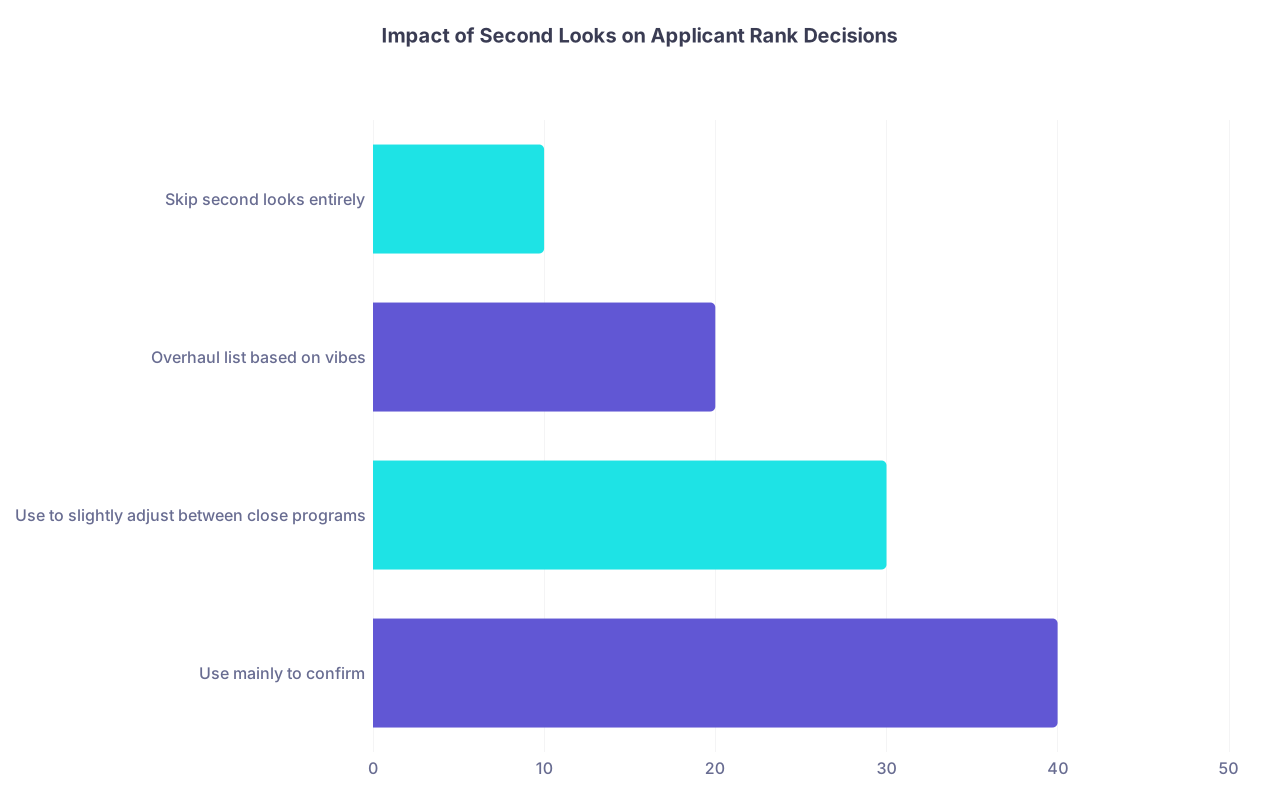
Visual: How Applicants Actually Use Second Looks (vs How They Should)
| Category | Value |
|---|---|
| Use mainly to confirm | 40 |
| Use to slightly adjust between close programs | 30 |
| Overhaul list based on vibes | 20 |
| Skip second looks entirely | 10 |
That’s a rough pattern you see anecdotally: too many people letting second looks overhaul their list. You want to live in the first two categories.
FAQs: Second Looks and Rank Lists
1. Do programs rank me higher if I do a second look?
Usually no. Officially, they’re not supposed to change their rank list based on your visit. Many don’t track attendance. Some will quietly appreciate enthusiasm, but it’s unpredictable and often irrelevant. Assume second looks are for you, not for bonus points.
2. If I loved a program more on second look, should I move it to #1?
Only if:
- It was already in your realistic top tier, and
- The second look provided new, concrete evidence that it better matches your top priorities (training, career outcomes, life situation) than your previous #1.
Liking the people a bit more or having a smoother visit is not enough to justify flipping your whole list.
3. What if I had a bad gut feeling on second look, but the program is strong on paper?
Take the feeling seriously—but interrogate it. Ask yourself what specifically felt off:
- Unsafe workload?
- Tense or toxic vibe between residents?
- Geographic/life fit actually worse than you admitted before?
If you can name the issue and it clashes with your real needs, move it down. If you can’t name it and everything else still lines up, you might be dealing with pre‑Match anxiety more than reality.
4. Should I send a “thank you” email after a second look?
It will not hurt you, and it might help you stay on their radar a bit, but it’s not magic. Keep it short:
- Thank them for their time.
- Mention 1–2 specifics you appreciated seeing.
- Do not imply they’re #1 unless you truly mean it and are ready to back it with your rank list.
5. If I can’t afford to do second looks, am I at a disadvantage?
No. Plenty of applicants match at their top choice without a single second look. You’re not penalized for staying home. Just use your interview impressions, resident contact, and your own research more deliberately. Second looks are a luxury, not a core requirement.
6. How close to rank deadline can I do a second look?
Ideally, at least a week before you certify your list so you’re not making panic moves at midnight. That said, the timing matters much less than your process. If you do a late second look, stick to the framework: only change your list if you learned something meaningful about your core priorities.
7. Bottom line: Are second looks for changing my list or confirming it?
They’re primarily for confirming and fine‑tuning. Most of the time, a second look should:
- Validate what you already thought, and
- Maybe nudge a program up or down a spot within a small cluster.
Only when you uncover a real deal‑breaker or a major, substantive advantage should a second look significantly change where a program sits on your rank list.
Key points to keep in your head:
- Build your rank list on training, outcomes, culture, and life fit—not one extra “nice” day.
- Use second looks to confirm and refine, not to impulsively overhaul.
- Change your list only when the second look gives you clear, concrete information about your top priorities—not just better snacks and friendlier small talk.


