

The ugly truth is this: programs regret their rank lists far more often than they will ever admit to you. And yes—sometimes they regret ranking you too low. Sometimes they regret ranking you too high. And once that list locks, they’re stuck. Just like you are.
This is the part nobody explains to applicants. You’re told, “The algorithm favors the applicant” and “Just rank what you want.” Fine. But behind the curtain, program directors, APDs, and coordinators are playing a high-stress game of probability and ego, and they screw it up more than you think.
Let me tell you what actually happens in those rooms.
How Programs Really Build Their Rank Lists
First, understand this: by the time rank meetings start, most programs are already tired, behind on service, and not remotely as “objective” as their websites pretend.
A typical mid-sized IM program (say, 12–18 residents/year) might start with:
- 3,000–5,000 applications
- 300–600 offers for interview
- 200–350 actually interviewed
- ~100–200 end up on the final rank list
What you see as “I got an interview” is to them “one dot among hundreds we have to sort in a week.”
Here’s how it usually plays out:
- Residents and faculty score you on vague rubrics: “fit,” “professionalism,” “clinical reasoning.”
- The PD and APDs skim ERAS, notes, maybe a couple of LORs (for borderline decisions).
- Someone exports all of this into a spreadsheet, sorted by some Frankenstein “composite score.”
Then comes the rank meeting. This is where the regret seeds get planted.
People argue for “their” favorites. Someone really liked you because of your research. Another thought you were stiff and “might not fit the culture.” You rise, you fall, usually for subjective reasons you’ll never hear about.
By the end, they have a preliminary rank list. And that’s where the real anxiety starts—because now they have to guess how the Match will behave.
When Programs Rank You Too Low
Let’s start with the one that stings most for applicants: when a program realizes they should have ranked you higher.
The classic scenario
You interviewed at a solid university program. Let’s call it MidState University. You thought it went well but not magical. You rank them #1 or #2. On their side:
- One interviewer loved you
- One thought you were “good but quiet”
- Your Step 2 was solid but not a flex
- No big red flags
So you land around #35 on a list that runs 140 deep for 12 spots. Reasonable. Safe. They assume they’ll fill by #60 or so.
Match Day comes. Here’s what their match report looks like in essence:
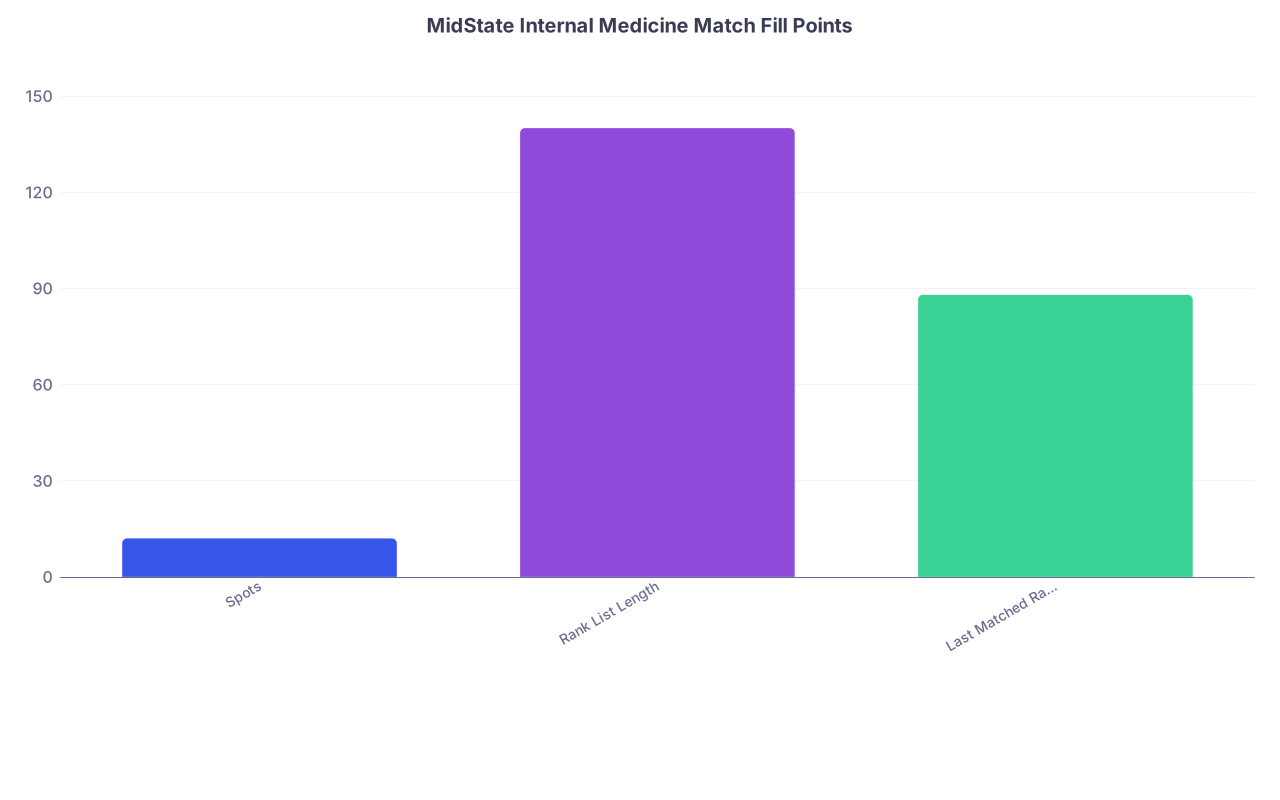
| Category | Value |
|---|---|
| Spots | 12 |
| Rank List Length | 140 |
| Last Matched Rank # | 88 |
They hit their last filled spot at applicant #88. They overshot how “competitive” they were this year. A bunch of people they thought wouldn’t come? Ranked them high and matched.
You, sitting at #35, would have matched there if they’d ranked you higher than some of those above you who never even got close to MidState on their lists.
Do they realize this? Absolutely.
What they see that you don’t
Every PD gets a detailed NRMP report. It does not name applicants, but it tells them:
- How far down the list they had to go to fill
- Whether they filled early (top 10) or deep (80–120)
- Whether filling was “unexpectedly high” or “unexpectedly low”
Then they sit with their Excel sheet and try to reconstruct what happened:
- “We matched at 88? We really thought our first 40–50 would be gone.”
- “Why did we push those two great community program applicants down to the 40s?”
- “We lowballed the DO and IMG candidates who clearly wanted us.”
That’s when your name comes up. Not literally if they don’t remember you, but in the form of your archetype:
- “The quiet but solid applicant who said we were their top choice.”
- “That couple’s match pair we worried wouldn’t really come.”
- “The strong DO from our region with great comments who we were ‘conservative’ with.”
They realize they trusted prestige and Step worship a bit too much. They ranked the 260 Step applicant who was clearly aiming for big-name coastal programs way too high. They ranked the local, sincere, likely-to-come applicant (you) way too low.
There’s a very specific line you’ll hear in those post-match debriefs:
“We got cute with the list.”
That’s code for: we tried to outsmart the algorithm and misjudged interest.
What this means for you, the applicant
Here’s the part that everyone gets wrong: NRMP does not let them fix it.
If they regret ranking you too low and they filled, they can’t:
- Pull someone off their list and swap you in
- Call the NRMP to “adjust” anything
- Offer you a position that’s already matched
They are absolutely stuck.
The only exception is in the SOAP era when they underfill. If they didn’t fill all their spots and you’re unmatched, then possibly you show up again. But if they filled all 12, and you matched somewhere else, that story is over.
Do they ever reach out to say, “We wish we’d ranked you higher”? No. Almost never. It would serve them no purpose and just embarrass them.
But I’ve heard PDs sit in their office after Match and say things like:
- “We missed on a few we really wanted. That one from State Med—probably would have been a star.”
- “We gambled thinking we’d fill by 50. We were wrong.”
That “one from State Med” is some real person who went elsewhere and will never know.
When Programs Rank You Too High
Now for the flip side. And this one? Programs feel it all year.
Ranking you too high usually means one of a few things happened:
- You interviewed extraordinarily well and oversold your actual consistency.
- They ignored subtle red flags because they were dazzled by metrics.
- A powerful letter writer or faculty advocate pushed you up the list beyond what the data supported.
Then you show up in July.
The mismatch becomes obvious fast
By week two or three, attendings and senior residents are whispering:
- “How did this person end up here?”
- “Did we actually interview them or was this a virtual glitch?”
- “They’re not at the level we expected from their file.”
Sometimes it’s knowledge gaps. Sometimes professionalism. Sometimes flat-out attitude.
Remember: that resident is in a slot that somebody else could’ve filled. And sometimes everybody knows who that “someone else” should have been.
I’ve watched this happen in surgery and EM more than once: the PD clearly favored a charismatic, confident applicant and pushed them into the top 5, bumping a less flashy but rock-solid candidate down.
By October, the charismatic one is missing notes, fighting feedback, and clashing with nursing. The “safe” candidate is thriving at some other program.
Regret is very real on the program side too.
How it plays out behind the scenes
No, they don’t “unmatch” you. This isn’t sports; there are no trades. Once you’re matched, you’re theirs.
What they do instead:
- They become more conservative the following year.
- They heavily interrogate their own scoring system.
- They dial back the weight of “great interview” and boost stability and track record.
The internal narrative becomes: “We got burned by over-ranking. Never again.”
And here’s where it affects you indirectly—as an applicant class. Programs that get burned like this start:
- Pushing “risky” but brilliant candidates down
- Over-valuing “steady, safe” over “high ceiling, some variability”
The pendulum swings too far. Then another cohort of programs ends up regretting ranking good people too low.
Why Programs Misjudge Where to Rank You
There are consistent patterns behind these mistakes. Let me be blunt: programs overestimate their own desirability and underestimate yours.
Common things that push you too low:
- You didn’t flex interest clearly enough (or they misread neutrality as disinterest).
- You had a modest Step 2 but excellent narrative strengths, and they leaned too hard on the number.
- You were from a lower-prestige med school and they unconsciously penalized you.
- Someone on the committee had a petty, unfounded bad vibe and nobody challenged it.
Common things that push you too high:
- A PD “fell in love” with you during a 20-minute conversation. Dangerous.
- A big-name mentor called or emailed on your behalf and they got star-struck.
- Your test scores and CV were so shiny that they ignored subtle concerns.
- You fit the “type” they want in promo photos and recruitment materials.
The most honest PDs will admit: by the end of ranking season, they’re triaging impressions more than they’re “objectively weighing all components.” They’re human. They get it wrong.
What Programs Actually See After the Match
Let’s demystify this, because a lot of myths circulate.
Programs do not see:
- Your full rank list
- Where they were on your rank list
- How highly you ranked other specific programs
Programs do see:
- Whether they filled all positions
- How far down their list they had to go to fill all spots
- Aggregate patterns in “Program Director’s Report” (no names, lots of stats)
Where the regret kicks in is when they combine that NRMP data with their own internal spreadsheets.
Example conversation I’ve actually overheard:
APD: “We filled at 104 for 14 spots.”
PD: “We shouldn’t have pushed those borderline folks into the top 40. We assumed we’d fill by 60.”
APD: “We dropped a couple of our really good regional DOs thinking we could be picky.”
PD: “They were probably the ones who actually would’ve come here.”
That’s program-speak for: we ranked some of you too low and some too high, and the market punished us.
How This Should Change Your Ranking Strategy
Here’s the core message: do not try to “game” what the program is doing. They are already misjudging their own position half the time. You will not out-predict them.
Your job is simple and brutally honest:
Rank programs in the exact order where you’d most want to train if every one of them offered you a spot.
Because consider what happens when you start to adjust for “did they like me” or “am I realistic for them”:
- You push a genuine favorite program down because you assume they’re “out of reach.”
- Meanwhile, their committee is sitting post-Match saying, “We clearly underrated some of our interviews; we filled way deeper than expected.”
You get hurt twice: once on your list, once on theirs.
Programs’ regret doesn’t help you retroactively. But understanding their error pattern protects you from making the same mistakes from your side.
Can a Program Fix a Ranking “Mistake” After the Match?
Let’s be concrete.
Scenario 1: They ranked you too low and underfilled
If they didn’t fill all spots and you’re unmatched, they may see you again in SOAP. But that’s not a “we regret ranking you low” reunion. That’s “we need people now and we have a tight 4-round window.”
Do they sometimes quietly prioritize people they vaguely remember liking from interview season? Yes. But that’s more opportunistic than remorseful.
Scenario 2: They ranked you too low and filled completely
finished. Over. No legal way to adjust. They can’t swap residents, can’t appeal, can’t cut someone to bring you in. The NRMP takes that very seriously.
What might happen?
- They recruit you later as a fellow.
- They try to poach you as faculty years down the line.
- They remember you favorably but never tell you they blew it on ranking.
Scenario 3: They ranked you too high and now regret it
Also finished. But they can:
- Put you on remediation or probation if there are true performance issues.
- Fire you for cause if things get bad enough.
- Quietly decide to be more conservative next cycle.
What they won’t do is admit to you that their rank decision was the original mistake. They’ll frame it purely as performance issues, which is not entirely wrong, but it’s not the whole story either.
The Emotions You Never See on the Program Side
Let’s drop the pretense. PDs and APDs are humans who:
- Have favorites they were hoping would match
- Have gut feelings they later second-guess
- Feel defensive when the match results are mediocre
I’ve seen debriefs where:
- They’re genuinely excited about certain interns they ranked “correctly.”
- They’re quietly disappointed about missing particular people they liked who went to “higher tier” programs.
- They carry a chip on their shoulder about being “underrated” and overcompensate the next year.
And this is the punchline: their internal turbulence has zero effect on your actual match outcome once the list is submitted.
Their regret doesn’t move you. It just shapes how they treat the next cohort.
Which is why you can’t let their behavior during interview season control your rank order list. Their guesses about you, their confidence in their appeal, their misreading of the current competitiveness cycle—none of that is stable.
Your rank list is the only thing you fully own.
What You Should Actually Take Away From All This
Here’s the distilled insider truth:
- Programs routinely misjudge where to rank individual applicants. It’s not rare, it’s normal.
- They overestimate which “top” candidates they’ll actually get, and underestimate how appealing they are to solid, realistic applicants.
- Once the rank order list is certified, they’re as locked in as you are—regret or not.
- Their post-match regret shapes future cycles, not your current match.
- Your best and only rational move is to rank based entirely on where you most want to be, not on what you think they think about you.
The algorithm really does favor you. But only if you let it.
Programs will keep making the same emotional, ego-driven ranking mistakes behind closed doors. You do not have to join them.
With this side of the story clear, you’re in a much better place to build a sane, honest rank list. The drama shifts next to what happens when you actually show up in July and discover how well—or poorly—you and your program chose each other. But that’s a different conversation.

Quick Comparison: Program vs Applicant Regret
| Aspect | Program Regrets Ranking You Wrong | Applicant Regrets Ranking Program Wrong |
|---|---|---|
| When it happens | After NRMP reports & July start | Right after Match & during PGY-1 |
| What they can change | Future rank strategy only | Future transfers/fellowship choices |
| Who it directly hurts | Program culture & service balance | Your day-to-day training experience |
| Can they fix this year? | No | No |
| Main cause | Misreading interest & fit | Overthinking “competitiveness” |

| Step | Description |
|---|---|
| Step 1 | Interviews Complete |
| Step 2 | Rank Meeting |
| Step 3 | Rank You Too High |
| Step 4 | Rank You Too Low |
| Step 5 | You Match There |
| Step 6 | You Match Elsewhere |
| Step 7 | Performance Mismatch or Success |
| Step 8 | Program Sees NRMP Report |
| Step 9 | Program Adjusts Next Year Strategy |
| Step 10 | Over/Under-estimate Competitiveness |


