

The divorce already cost you more than half your peace of mind. It does not also have to destroy your retirement.
You’re a divorced attending. Maybe mid-40s, maybe early 60s. You just watched your 401(k), brokerage, maybe even part of your practice value get sliced up in court. You’re staring at a very different balance sheet than you expected at this stage. And you’re asking the only question that matters now: “Can I still retire the way I planned?”
Yes—if you stop pretending you still live in your old financial life and rebuild from where you actually are.
This is how you do that, step by step, as a physician who just went through an asset split.
Step 1: Get brutally clear on your new starting point
You probably have a rough idea. Rough is not good enough.
After a divorce, I’ve seen physicians make two classic mistakes:
- They avoid looking at the numbers because they’re resentful or exhausted.
- They keep using their “mental numbers” from pre-divorce instead of the real ones.
You cannot plan retirement off vibes. You need a post-divorce personal balance sheet.
Gather this, in writing, in one place:
- Most recent statements for:
- 401(k), 403(b), 457(b)
- Traditional and Roth IRAs
- Cash balance or defined benefit plans
- HSAs
- Brokerage accounts (joint accounts now split, new individual account)
- Practice ownership interests (if applicable) and revised ownership percentages
- Home equity (new house or equity in existing one if you retained it)
- New debts:
- Mortgage/refinance after buyout
- HELOCs
- Personal loans / legal fee loans
- Credit card balances
- Any ongoing obligations:
- Alimony / spousal support
- Child support
- College obligations you agreed to in the decree
Now lay out a simple “Before/After” snapshot.
| Item | Before Divorce | After Divorce |
|---|---|---|
| Retirement accounts total | $1,500,000 | $800,000 |
| Taxable investments | $400,000 | $150,000 |
| Home equity | $600,000 | $150,000 |
| Debt (non-mortgage) | $20,000 | $90,000 |
| Annual support obligations | $0 | $40,000 |
Do not round. Do not guess. Get real numbers.
You should end this step with:
- A list of every account (with current balances)
- A list of every debt (with rate, term, and payment)
- A simple pre-divorce vs post-divorce picture like the table above
This is your new floor. Planning from anywhere else is fantasy.
Step 2: Understand exactly what changed in your retirement math
Divorce doesn’t just cut assets. It changes the entire equation: timeline, savings rate, spending, risk tolerance.
Here’s what usually shifts for attendings:
- Retirement assets: Often down 30–60%
- Housing: Bigger mortgage or you’re renting for the first time in years
- Cash flow: Some combination of alimony, child support, or college commitments
- Insurance: New or higher premiums for health, disability, life
- Taxes: New filing status, loss of some deductions, maybe different state after moving
You need to translate all this into a new retirement target.
Use a simple baseline rule:
Assume you need 25x your expected annual retirement spending to be “roughly” financially independent (4% rule territory). Yes, it’s imperfect. It’s fine for triage.
Example:
Pre-divorce:
- You planned to spend $220,000/year in retirement
- Target nest egg ≈ $5.5M
Post-divorce:
- You’ll live solo
- Maybe you expect/need $160,000/year to maintain a good but tighter lifestyle
- New target nest egg ≈ $4M
Now compare that to where you stand today.
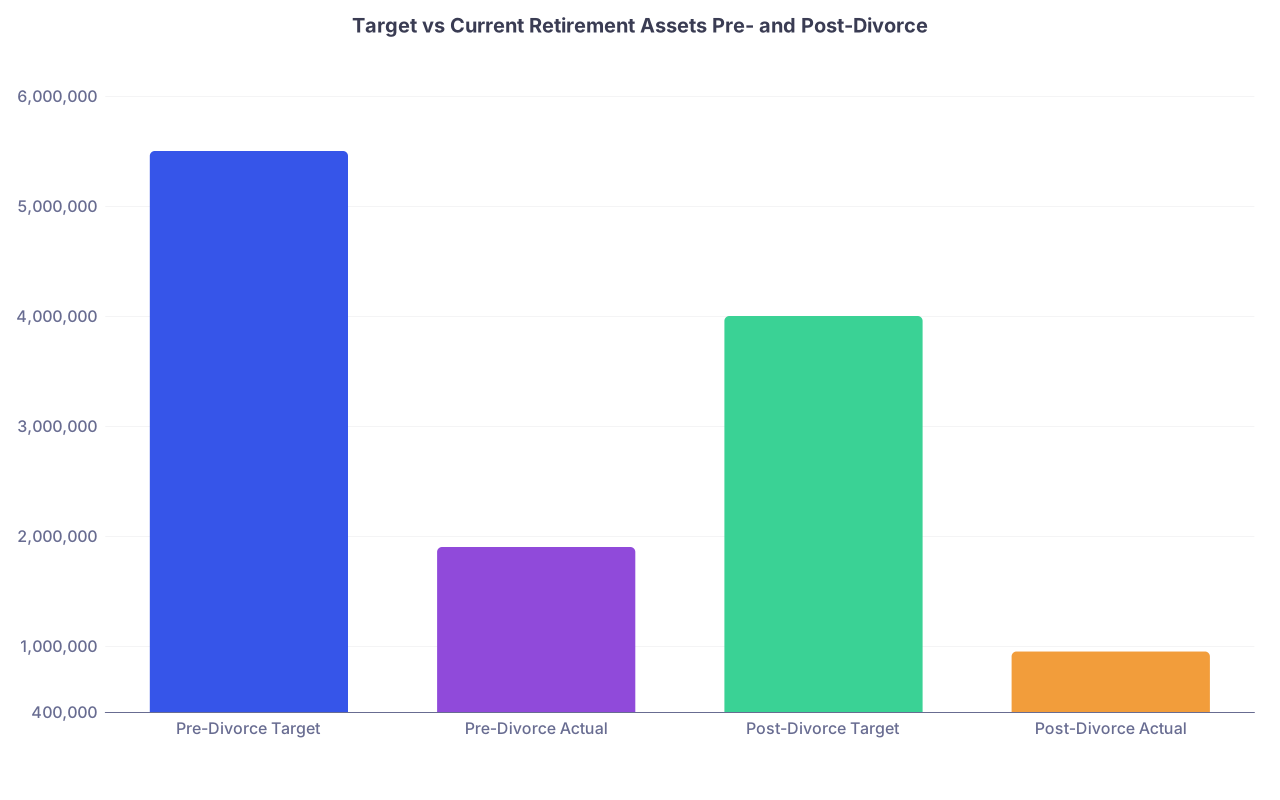
| Category | Value |
|---|---|
| Pre-Divorce Target | 5500000 |
| Pre-Divorce Actual | 1900000 |
| Post-Divorce Target | 4000000 |
| Post-Divorce Actual | 950000 |
If you don’t like the numbers, good. That discomfort is useful. It means you’re awake.
Step 3: Fix the mistakes your divorce probably introduced
Most physicians’ finances get messier during divorce, not cleaner. Lawyers focus on division and compliance, not optimization. So after the decree is signed, you usually have a financial junk drawer.
Common problems I see right after an attending divorces:
- Multiple half-empty retirement accounts from QDRO splits
- Wrong beneficiaries (still your ex on there—this is everywhere)
- Portfolio drift: 80% stock in one account, ultra conservative in another, no overall plan
- Cash sitting idle in settlement accounts
- Lopsided tax buckets—too much in pre-tax, little/no Roth or taxable
- No updated will, advance directive, or powers of attorney
You clean this up first, then you rebuild.
Consolidate where you reasonably can
- Old 401(k)s or QDRO-split plans: roll them into your current 401(k)/403(b) or into a traditional IRA (depending on investment options, fees, and backdoor Roth strategy).
- Don’t leave five orphan accounts all with different investment menus.
Re-set your asset allocation
Decide on an overall target (for example, age 50 attending still working full time: maybe 70% stocks / 30% bonds as a starting point).
Then implement that across all accounts as one unified portfolio, not each account acting independently.Fix beneficiaries immediately
- Retirement accounts
- Life insurance
- Any TOD/POD (transfer on death/payable on death) accounts
If your divorce decree requires you to keep your ex as some or all beneficiary, document that and make sure it complies exactly. Otherwise, remove them.
Rebuild your legal infrastructure
- New will
- New healthcare proxy and financial power of attorney
- Trusts if needed—especially if you don’t want your ex controlling money left to kids if you die early
This housekeeping isn’t optional. It’s damage control.
Step 4: Rebuild your savings structure like a second-year attending
You’re not a new attending, but you are in a new financial phase. Treat it like that.
Your priority order usually looks like:
Emergency fund
3–6 months of your current (post-divorce) expenses. If you’re paying alimony/child support, include that.Max your best pre-tax space
- 401(k) / 403(b) up to the IRS limit
- If you have a 457(b), strongly consider using it—especially if governmental and relatively safe
Use backdoor Roth if eligible
- This gets messy if you have a big traditional IRA from QDRO rollovers. You may want to roll that IRA into an employer plan to keep the backdoor Roth clean.
Then taxable investing
- This is your flexibility fund: supports early retirement, career changes, and “retire before RMD age” plans
If you’re saying “I can’t possibly max all of those now,” fine. But be honest about how hard you’ve actually tried.
Most attendings I’ve seen post-divorce can hit at least:
- Full 401(k)/403(b) funding,
- Some 457(b), and
- A modest monthly taxable contribution
once they ruthlessly right-size housing, car, and discretionary spending.
Step 5: Rebuild your actual retirement plan, not a fantasy
This is where physicians get emotional and irrational.
You had a version of your future: second home, early 60s retirement, travel with a spouse, maybe helping kids with homes or grad school. The divorce took a sledgehammer to that mental movie.
So you do one of three dumb things:
- You cling to the old vision and just assume “I’ll work more”
- You shut down and don’t plan at all
- You panic and assume you’ll die at your desk
Throw all that out. Start over like this.
A. Pick a realistic retirement age, not a wish
Take your new numbers and walk through scenarios:
- Keep same specialty, same hours, spend less = retire at X age
- Same lifestyle, work a bit longer = retire at Y age
- Partial retirement (0.5–0.7 FTE) from age A to B, full retirement at C
If you want a rough gut-check (and no, this is not perfect), think this way:
- If you’re 40–50, earning full attending income, and saving 20–30% of gross, you can usually rebuild a solid retirement in 15–20 years even after a bad split.
- If you’re 55–60, the lever is less about savings rate and more about working longer and spending less.
You may hate these answers. That does not make them wrong.
B. Decide what you’re actually optimizing for now
Your old plan might have been “retire by 60 with $X and travel.”
Your new plan might be:
- “Work to 65, but no night shifts after 58”
- “Pay for kids’ undergrad, but not grad school”
- “Maintain city lifestyle but no second home”
- “Work part-time from 60–68 and draw down slowly”
If you do not consciously rewrite your goals, you’ll drift and overspend trying to keep a life you no longer have.
Step 6: Deal with housing, the sneaky retirement killer
Housing is where divorced attendings quietly blow up their retirement.
A few patterns I’ve seen:
- Keeping the marital home through a buyout, taking on a massive mortgage + property taxes you can’t really justify alone
- Selling, then “treating yourself” to a luxury condo as emotional compensation
- Bouncing through short-term rentals and never stabilizing a plan
Your house is not just where you live. It’s a retirement decision.
Run this test:
If you keep your current housing setup and also:
- Max your available retirement accounts
- Pay support obligations
- Save something into a taxable account
Can you do all that without living paycheck to paycheck?
If the answer is no, you are house-poor, and that is incompatible with a solid retirement rebuild.
Often the best move after divorce is:
- Either: intentionally downsize (smaller place, cheaper suburb, rent for a few years)
- Or: refinance strategically to shorter-term once cash flow stabilizes, if you kept the house and it’s truly affordable
I’ve seen more physicians’ retirement timelines saved by swallowing pride and moving to a modest, well-located townhouse than by any fancy investment strategy.
Step 7: Adjust for support payments and kids’ futures
Support obligations are effectively forced “negative savings” for your retirement, and you have to treat them that way.
Alimony / spousal support
Key questions:
- How long is it scheduled to last?
- Is it fixed, step-down, or modifiable?
- How secure is your income over that period?
You want a retirement plan that:
- Uses the alimony end-date as a pivot point: when it stops, your savings rate should jump significantly
- Avoids upgrading lifestyle when alimony ends—direct that freed-up cash into retirement and taxable investing
Child support and college costs
Kids’ college is where guilt shows up. Many divorced physicians promise more than is rational.
If your retirement took a major hit, you may need to change your stance:
- Prioritize retirement over 100% college funding
- Commit to realistic targets: maybe 50–75% of in-state tuition, not four years of private out-of-state for multiple kids
- Use 529s, but don’t derail your own savings to fully fund them
Your kids can borrow for school. You cannot borrow for retirement. That isn’t a slogan; it’s math.
Step 8: Protect the plan with the right insurance and legal details
Your margin for error is smaller now. You don’t have a partner to fall back on financially if something happens.
You need to be boring and grown-up about risk.
Disability insurance: If you’re an attending without solid own-occupation coverage right now, fix that yesterday. You’re one MS diagnosis or hand injury away from your whole “I’ll just work longer” plan disintegrating.
Life insurance:
- If you’re paying support or have kids depending on your income, you usually need term life that covers:
- Remaining support obligations
- Remaining mortgage
- Some buffer for kids
- If the divorce decree requires a policy, make sure it’s correctly owned and the beneficiary is exactly as specified.
- If you’re paying support or have kids depending on your income, you usually need term life that covers:
Long-term care planning (if 50+):
You may not need a full-blown LTC policy, but you do need a strategy—assets earmarked, hybrid policy, or a conscious choice to self-insure.
And review your divorce decree with a financial eye, not just legal:
- Are you required to maintain any accounts/beneficiaries?
- Are there retirement splits scheduled later (like pensions) that change your long-term numbers?
- Are you obligated to share certain future bonuses or practice sale proceeds?
Step 9: Use a simple, boring investment approach and stop chasing “catch-up” miracles
Divorce makes a lot of physicians vulnerable to bad investment decisions:
- Private real estate syndications you don’t understand
- “Exclusive” funds pitched by a colleague’s advisor
- Options trading because “I need to catch up”
You are not going to day-trade your way out of a 50% asset loss.
You rebuild with:
- A global stock/bond portfolio (low-cost index funds or ETFs)
- Appropriate risk level for your age and timeline
- Automatic monthly contributions across accounts
- Rebalancing once or twice a year
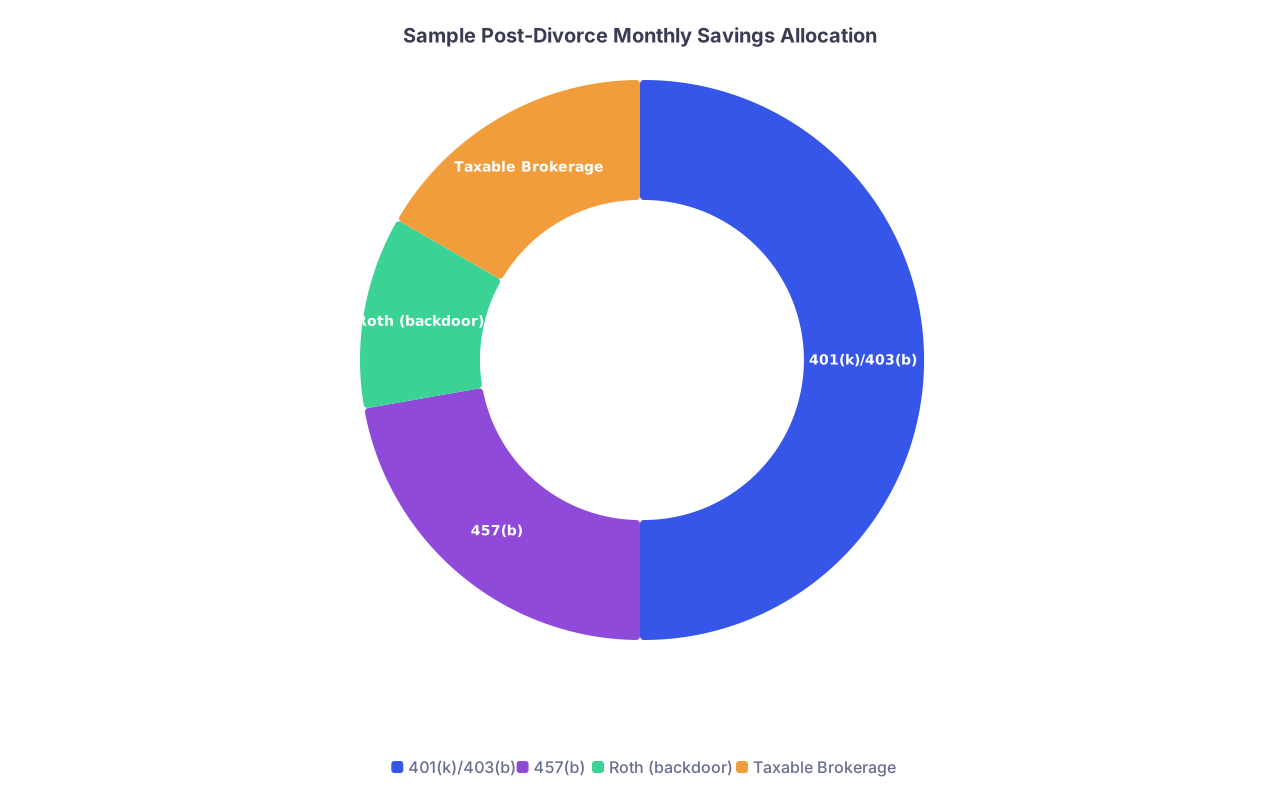
| Category | Value |
|---|---|
| 401(k)/403(b) | 4500 |
| 457(b) | 2000 |
| Roth (backdoor) | 1000 |
| Taxable Brokerage | 1500 |
That example is an attending saving $9k/month. Your numbers may be higher or lower. The structure is what matters.
Step 10: Put it all together in a written one-page plan
If your “plan” lives only in your head, it will evaporate the next time call is brutal or your ex starts something.
You want a one-page document that says, in plain language:
- My current age: 52
- Current retirement assets: $950,000
- Target retirement age: 66
- Target annual retirement spending (today’s dollars): $150,000
- Target nest egg: $3.75M
- Annual savings goal:
- 403(b): $X
- 457(b): $Y
- Roth backdoor: $Z
- Taxable: $W
- Current asset allocation target: 70% stocks / 30% bonds
- Housing plan: keep condo until 62, then downsize; no second home
- Support obligations: child support until 2030; alimony until 2034
- Pivot plan:
- When alimony ends, increase total savings by $40,000/year
- Consider dropping to 0.7 FTE at 62 if portfolio projections remain on track
Keep this where you’ll see it. Update once a year.
If you want a visual checkpoint for your own sanity, map it like this:

| Step | Description |
|---|---|
| Step 1 | Divorce Finalized |
| Step 2 | Create New Balance Sheet |
| Step 3 | Clean Up Accounts and Beneficiaries |
| Step 4 | Set New Retirement Target |
| Step 5 | Design Savings Plan |
| Step 6 | Adjust Housing and Spending |
| Step 7 | Implement Investment Strategy |
| Step 8 | Annual Review and Adjust |
That’s all this is. A loop you run once a year, not a crisis you relive every month.
When you should get professional help (and when you don’t need to)
You’re a high-income professional with a complex life event. You’re not weak if you bring in a financial planner. You’re smart if you avoid the wrong ones.
Look for:
- Fiduciary, fee-only planner (not commissioned product pusher)
- Experience with physicians and with divorce cases
- Comfort working with your divorce attorney and CPA
Where they’re genuinely useful:
- Modeling new retirement timelines with realistic assumptions
- Coordinating tax strategies across W-2/1099/practice income
- Integrating QDRO’d pensions, cash balance plans, or practice buyouts
- Keeping you from emotional, impulsive money decisions
Where you don’t need anyone:
- Choosing between “Total Stock Market Index vs S&P 500 Index”
- Debating 5% vs 10% of portfolio in international
- Picking a savings rate when you already know you’re undersaving—that’s more about behavior than expertise
The bottom line if you’re a divorced attending
You lost assets. You may have lost financial stability. You did not lose the ability to retire well—unless you insist on pretending nothing changed.
Here’s what actually matters now:
- Get precise about your new reality, then rewrite your retirement age, spending, and savings targets from that number, not your old life.
- Clean up the post-divorce financial mess—accounts, beneficiaries, legal documents—then aggressively rebuild using a simple, automated, high-savings-rate plan.
- Make housing, support obligations, and insurance decisions that support your future self, not your emotions from the divorce.
You can absolutely have a solid retirement as a divorced attending.
But it starts with this: stop comparing to the life you thought you’d have, and start planning for the one you actually do.


