
The biggest mistake applicants make on second looks is believing call schedules and workload “are all the same.” They are not. And if you treat them like background noise, you will absolutely match somewhere that burns you out.
You are not going on a second look to be flattered. You are going to collect hard data on how your life will look at 2:00 a.m. on a Tuesday in January.
Here is how to do that systematically and without getting snowed by a charming chief or a glossy PowerPoint.
Step 1: Get Clear On What You Actually Need To Compare
Before you set foot in a second look, you need a checklist. Otherwise you will walk away with fuzzy impressions instead of actionable differences.
There are four big buckets that matter for call and workload:
- Call structure
- Hour intensity and real workload
- Support and backup when things go bad
- Flexibility and culture around time off
Translate that into specific, repeatable questions so you can compare Program A vs Program B on the same metrics.
A. Call Structure — The Skeleton Of Your Life
You want concrete, countable data.
Ask residents (not just leadership):
- What is the call model?
- 24‑hour in‑house?
- Night float?
- Home call?
- Hybrid?
- How many:
- 24‑hour calls per month (by PGY year)?
- Night float weeks per year?
- Weekends per month on average?
- How often are “golden weekends” (full Sat–Sun off) truly happening?
| Program | 24-hr Calls/Month PGY-2 | Night Float Weeks/Year | Typical Weekends/Month |
|---|---|---|---|
| A | 4–5 | 4 | 2–3 working |
| B | 2–3 | 6 | 2 working |
| C | 0 | 8 | 3 working |
You are not trying to find “the best” pattern. You are trying to find what you tolerate.
If you hate flipping days and nights, a heavy night float system may be worse than periodic 24‑hour calls. If you have a partner with a 9–5 job, constant weekend work may hurt more than tough weekdays.
Write those numbers down on a single sheet for each program. If they will not give you approximate numbers, that is a red flag by itself.
B. Hour Intensity — The Reality Behind “We Follow 80 Hours”
Every program “follows the 80‑hour rule.” That statement is useless.
You need to know:
- Typical range of weekly hours on:
- Ward months
- ICU months
- Outpatient months
- Realistic start and end times:
- What time do interns usually leave on a “good” day?
- On a “bad” day?
- How often people stay past 24+4 during call.
Ask in a way that invites honesty:
- “On your last ICU month, what were your actual hours roughly week by week?”
- “What time did you usually get home on wards as a PGY‑1?”
You are looking for consistency between different residents’ answers. If one says “50–60 hours” and another says “I had several 80‑hour weeks in a row on wards,” believe the higher number.
Step 2: Use Your Second Look To Watch The System, Not The Show
On second look visits, programs put on their best version of themselves. You need to ignore the marketing and pay attention to the plumbing.
Watch The Schedule In Real Time
Ask ahead of time if you can see:
- The current call schedule
- The current daily assignment sheet / service coverage list
- The rotation calendar by PGY level
You want to see something that looks like this, not a one‑slide summary.
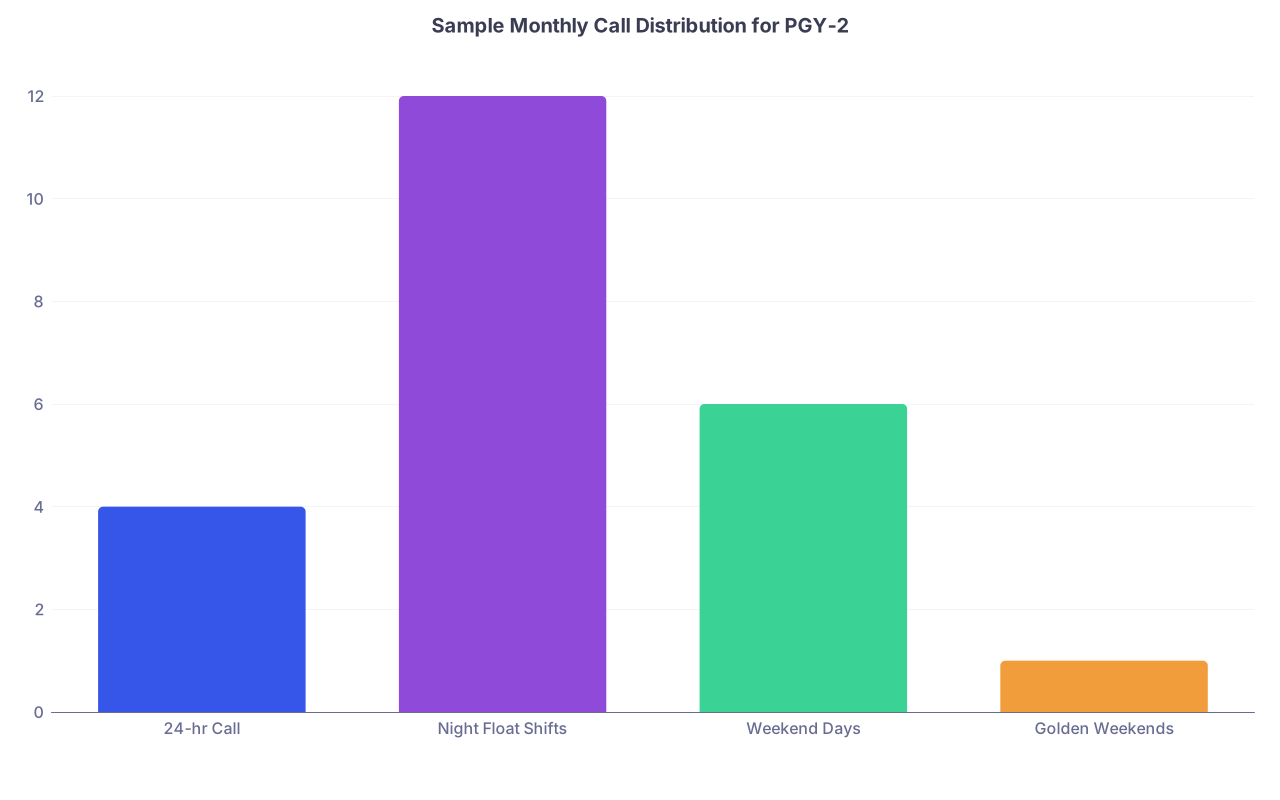
| Category | Value |
|---|---|
| 24-hr Call | 4 |
| Night Float Shifts | 12 |
| Weekend Days | 6 |
| Golden Weekends | 1 |
If they will not show you actual schedules “because of privacy” or “it is complicated,” that is usually code for: “You will not like what you see.”
Specific things to look for on those schedules:
- Are there residents who appear on back‑to‑back heavy rotations with no lighter block in between?
- Are there rotations that repeatedly assign the same person to late stays or “short call”?
- Are there pattern outliers (one person with way more nights than others)?
You do not have to confront anyone. Just note it. This is you auditing the program, not them auditing you.
Follow A Real Resident Through Part Of A Day
If the second look itinerary is all conference rooms and no patient care spaces, you are getting a tour, not a look.
Ask if you can:
- Shadow a resident for rounds (even 1–2 hours is enough).
- Sit in the workroom for a while as they page, call consults, sign notes.
In the workroom, watch:
- How many open charts are on each screen.
- How often their pager/phone goes off.
- Whether anyone looks like they are drowning at 2 p.m. but expected to stay quiet and push through.
A resident who quietly mutters “I still have ten notes and three discharges” at 3:00 p.m. tells you more about workload than any wellness slide.
Step 3: Ask The Right Questions — And Ask Different People
You need three perspectives: leadership, chiefs, and rank‑and‑file residents. Each group filters reality differently.
What To Ask Program Leadership
Use leadership for structure and policy. Do not expect them to admit “we overwork you.”
Examples:
- “How have you changed call schedules in the last 3 years?”
You want to hear specifics, not “we are always evaluating.” - “How do you monitor for duty‑hour violations beyond residents self‑reporting?”
If the answer is “we trust residents to tell us,” assume under‑reporting. - “What is your philosophy on 24‑hour calls vs night float?”
You want intentionality, not “this is how it has always been.”
What To Ask Chiefs
Chiefs usually know the truth but speak in code. Push them a bit.
- “If you had to pick the roughest 3 rotations in terms of hours, what are they?”
Then ask: “How many weeks per year is that for each PGY?” - “Where do residents most often bump up against 80 hours?”
If they say “never,” they are either lying or have an unusually gentle program. - “What changes are you planning for next year’s call structure?”
New models often add hidden pain (more nights, more weekends) even while “reducing 24s.”
What To Ask Residents — Separately And Off‑Script
This is where you get the real data. You must talk to several residents, ideally in different PGY years and away from leadership.
Ask questions that force them to choose, not to give vague “it depends” answers.
Examples:
- “For PGY‑1s on wards here: would you describe the workload as light, moderate, or heavy compared to your friends at other programs?”
- “How many weeks last year do you think you worked more than 70 hours?”
- “If your best friend were choosing between here and [peer program], what would you warn them about regarding call and workload?”
- “What percentage of your co‑residents have seriously considered leaving or switching because of workload?”
Then you watch body language and tone as much as content.
If they quickly say “It is busy, but very doable” and move on, fine. If they pause, look at each other, and then give a polished answer about “resilience” and “great learning opportunities,” interpret that as a warning.
Step 4: Quantify What You Hear — Turn Vibes Into Numbers
Most applicants collect stories. You need to collect data.
After each second look, sit down that evening and fill out a simple scorecard for each program on the same dimensions:
- Call burden
- Average weekly hours
- Weekend frequency
- ICU/Wards intensity
- Backup/cross‑coverage support
- Flexibility/time‑off culture
- Documentation burden (notes, EMR pain)
Use a 1–5 scale for each, based on what you saw and heard. Not the official narrative.
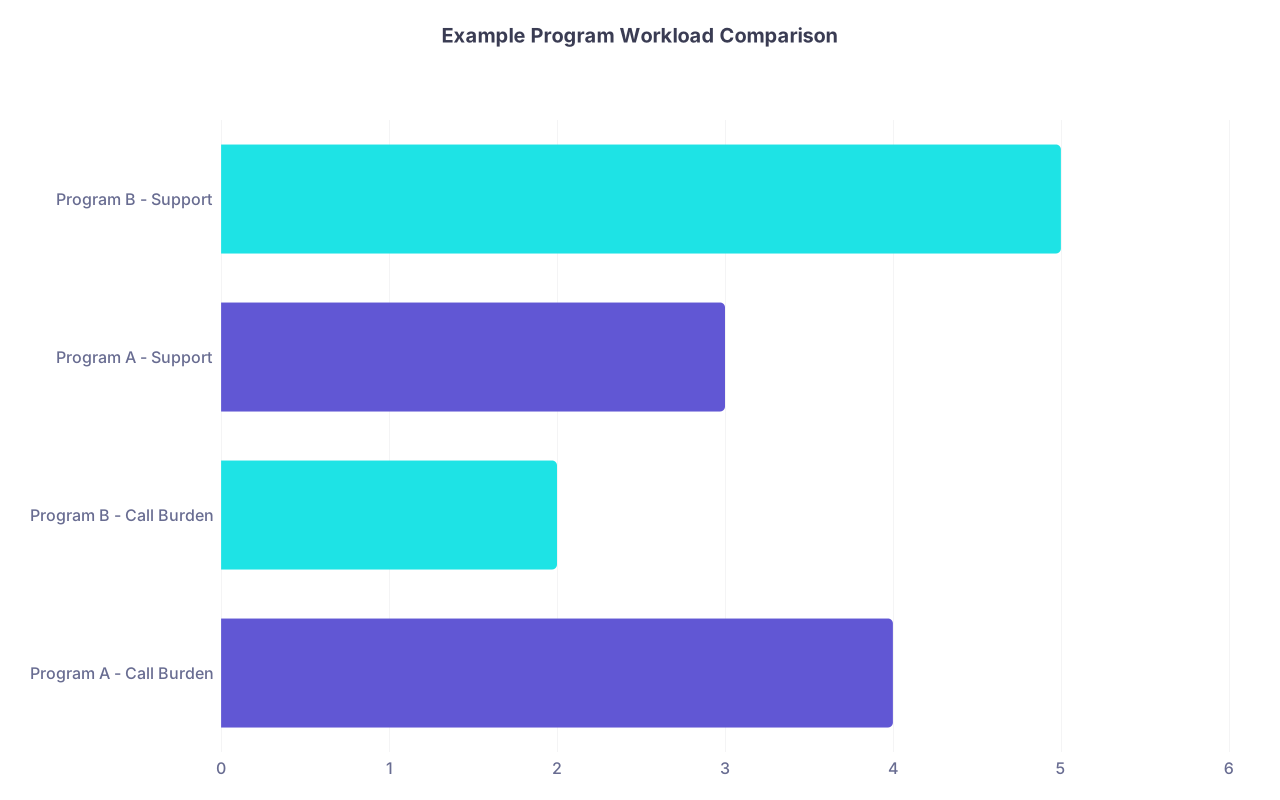
| Category | Value |
|---|---|
| Program A - Call Burden | 4 |
| Program B - Call Burden | 2 |
| Program A - Support | 3 |
| Program B - Support | 5 |
Then ask yourself two blunt questions:
- Which program makes it easier to be a decent human outside work?
- Which program gives me the learning I want without hollowing me out?
Sometimes the answer is the “busier” program if the education and support are strong. Sometimes it is a slightly less prestigious name with saner hours. But now you are choosing with data, not vibes.
Step 5: Diagnose Hidden Workload Killers During Second Look
Programs usually advertise schedule features. They do not advertise the three silent workload multipliers:
- Documentation load
- Scut and non‑educational tasks
- Weak ancillary support
Use your second look to hunt these down.
A. Documentation Load
Ask residents directly:
- “How many notes a day are you writing on a typical wards day?”
- “Are attendings helping with documentation at all?”
- “How bad is the EMR? What slows you down?”
Signs of a punishing documentation environment:
- Residents talk about “clicking for hours” or finishing notes at home regularly.
- No scribes, no team‑based documentation, and heavy expectations on length and formatting.
- Complex note templates with many mandatory fields.
On your shadowing time, glance at the computer screens:
- How many open notes per resident?
- How often are they interrupted while trying to document?
I have seen programs where the schedule looks fine on paper, but the EMR adds 1–2 hours per day of hidden work. That matters more than whether you have 2 or 3 calls per month.
B. Scutwork And Non‑Educational Tasks
This is where residents get quietly crushed.
Ask:
- “Who typically arranges transport, calls outside hospitals, and does faxing / forms?”
- “Do you have phlebotomy and IV teams at night? On weekends?”
- “How often are you doing tasks you feel could be done by someone else?”
Red flags:
- Residents laughing when you say “phlebotomy team” because they do everything themselves.
- Stories of “we are the transport team at night.”
- Heavy expectation of non‑stop calling for beds, prior auth, procedural scheduling, etc.
Again, observe on the unit:
- Are residents taking blood, starting IVs, wheeling patients to CT regularly?
- Or are they actually doctoring?
C. Weak Ancillary And Consultant Support
Even the best schedule collapses if everything flows back to the residents.
Questions to use:
- “If a patient is crashing at 3 a.m., how fast does help actually arrive?”
- “How responsive are consultants overnight? Any specialties that are notoriously difficult?”
- “Do nurses feel comfortable escalating concerns early, or do they wait until things are on fire?”
If you can, talk briefly to nurses or pharmacists:
- “Do you feel like residents here are overwhelmed?”
- “What happens when you call the night resident?”
Nurses will tell you the truth in one eyebrow raise.
Step 6: Evaluate Backup, Cross‑Coverage, And Sick Call
Programs love to talk about “wellness.” Their sick‑call system is where you find out if that means anything.
On second look, ask all three groups (leadership, chiefs, residents):
- “Walk me through what happens if a resident wakes up with the flu on a call day.”
- “How often does sick call get used, realistically?”
- “Who ends up covering when there is a gap? Is there a jeopardy system?”
You are trying to answer:
- Is there a formal jeopardy pool, or does someone lose a post‑call day every time?
- Are residents guilted out of calling in sick?
- Do vacancies trigger unsafe cross‑coverage (e.g., one person covering two ICUs overnight)?
If the answers from leadership and residents do not match, believe the residents.

| Step | Description |
|---|---|
| Step 1 | Resident Sick |
| Step 2 | Jeopardy Resident Covers |
| Step 3 | Co-resident Loses Post-call |
| Step 4 | Minimal Impact |
| Step 5 | Increased Burnout Risk |
| Step 6 | Formal Jeopardy System |
A strong sick‑call/jeopardy system can turn an otherwise heavy program into a survivable one. A weak one can make even moderate schedules dangerous.
Step 7: Factor In Rotation Mix And Longitudinal Workload
Do not just fixate on a single bad ICU month. You live in the pattern across 3 years.
During the second look, try to see the rotation grid by PGY:
- How many:
- ICU months per year?
- Wards months?
- Clinic / elective months?
- Are the hardest rotations clustered?
Example patterns:
- Program X:
- PGY‑1: 5 wards, 3 ICU, 2 night float, 2 elective
- PGY‑2: 4 wards, 3 ICU, 3 night float, 2 elective
- Program Y:
- PGY‑1: 4 wards, 2 ICU, 2 night float, 4 elective
- PGY‑2: 4 wards, 2 ICU, 3 night float, 3 elective
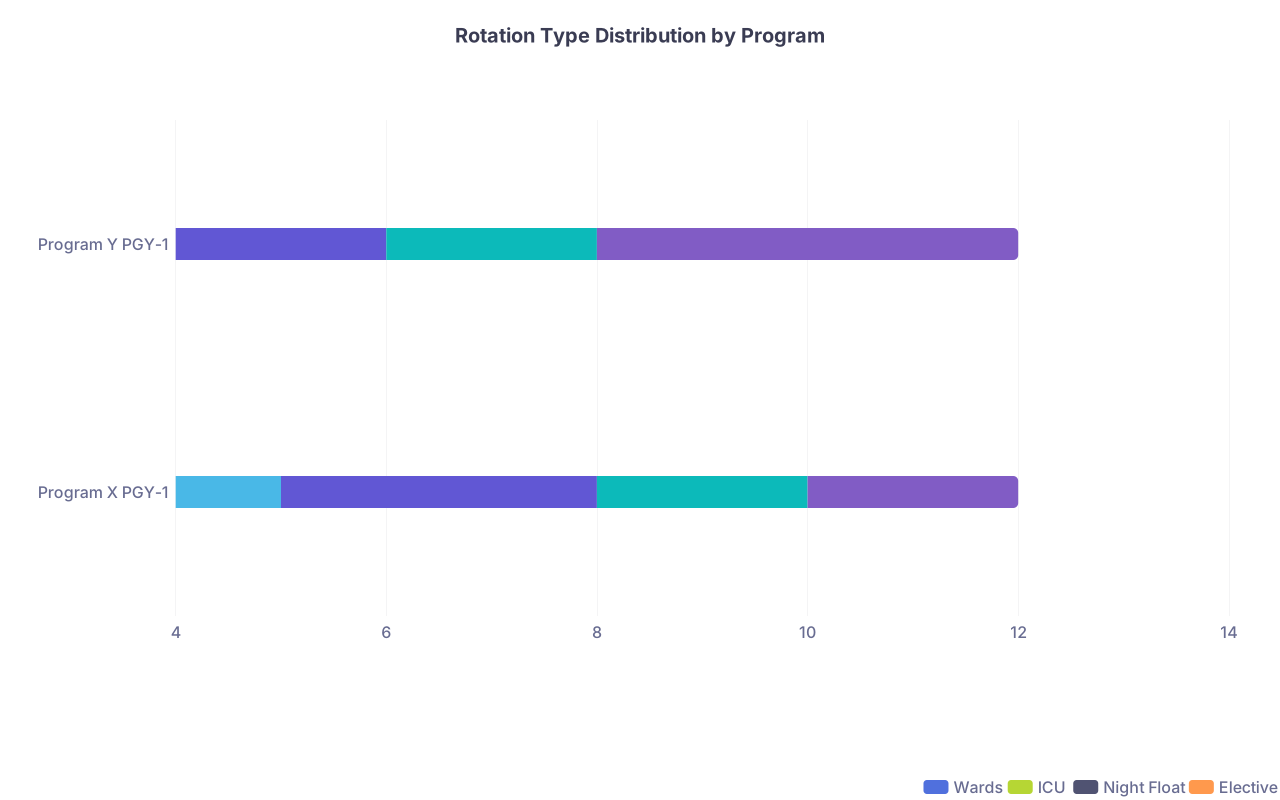
| Category | Wards | ICU | Night Float | Elective |
|---|---|---|---|---|
| Program X PGY-1 | 5 | 3 | 2 | 2 |
| Program Y PGY-1 | 4 | 2 | 2 | 4 |
On second look, ask residents:
- “Which months feel like recovery months?”
- “Do you ever go more than 3–4 months without a lighter block?”
The key is cadence. Programs that alternate heavy and lighter blocks thoughtfully are sustainable. Programs that stack three brutal months in a row are how you end up crying in your car.
Step 8: Read The Culture Behind The Numbers
Two programs can have identical call numbers and feel completely different. That is culture.
Use your second look to evaluate:
- How people talk about time off.
- How they talk about staying late.
- How they talk about each other.
Signals of a healthy workload culture:
- Residents openly say, “I was fried last month; my senior helped me out a lot.”
- Chiefs describe sending people home when work is done instead of inventing tasks.
- Leadership acknowledges busy rotations and describes how they protect residents around them.
Signals of a toxic “martyr” culture:
- Jokes about “real doctors do not complain about hours” or “you can sleep when you are attending.”
- Residents brag about how late they stay or how many patients they “crushed.”
- Guilt language: “We never call in sick because we do not want to let the team down.”
On second look, listen for those passing comments in hallways, not just in formal Q&A.
Step 9: Build A Simple Decision Framework After Your Visits
By the time you finish your second looks, you will have too much information. You need a way to compress it into a decision that is not just “I liked the free lunch better here.”
Use a two‑axis framework:
- X‑axis: Training quality / career fit
- Y‑axis: Sustainability of call + workload
Place each program mentally (or literally on a piece of paper) in that grid.

Your target is the upper‑right quadrant: strong training, sustainable workload.
Then, ask yourself two ruthless questions:
- If I had a terrible week personally (family illness, breakup, whatever), which program would I rather be in?
- If I could not take a research year, moonlight, or “escape,” would this program still be acceptable for all 3–7 years?
If a program only feels tolerable because of side perks, that is a warning sign that the day‑to‑day is too punishing.
Step 10: Common Traps To Avoid On Second Looks
Let me be blunt about a few patterns I have seen applicants fall into.
Trap 1: Being Swayed By One Very Happy Or Very Unhappy Resident
Outliers exist. The extrovert chief who loves 80‑hour weeks and call nights will tell you “it is busy, but fun.” The one burned‑out PGY‑3 on their third ICU month will tell you “do not come here.”
Both are data points. Neither is the whole story. Look for convergence across several conversations.
Trap 2: Confusing Prestige With Protectiveness
Big‑name programs talk a good game about wellness these days. Many also quietly expect you to work to the edge of legality. Prestige does not protect you from bad schedules; sometimes it enables them.
On second looks, treat brand name as irrelevant for workload analysis. You are evaluating a workplace, not a logo.
Trap 3: Letting Guilt Or Flattery Override Your Gut
Some programs will lay it on thick: “We think you are a great fit,” “We see you as future chief material,” and so on. Nice to hear. Irrelevant if the schedule will wreck you.
If your gut says, “I feel tired just looking at this schedule,” listen.
How To Prepare Before You Go
Spend 30–45 minutes before each second look doing this:
Draft your non‑negotiables.
Examples:- Max 1–2 24‑hour calls per month.
- At least one golden weekend most months.
- A real jeopardy system for sick days.
Write 5–7 targeted questions you will ask multiple people at each site.
Print or create a one‑page score sheet per program with:
- Spots to record call numbers.
- 1–5 scales for culture/support.
- Space for “biggest workload red flag” and “biggest workload strength.”

Do not rely on memory. Programs will blur together, especially if you are visiting several in a short span.
How This Actually Plays Out: A Quick Example
Imagine you are choosing between two internal medicine programs after second looks.
Program 1 – Big Name University Hospital
- 24‑hour calls: 4 per month PGY‑1, 3 PGY‑2.
- Ward months: 5 per year; ICU: 3 per year.
- Residents quietly admit: “You will have several 80‑hour weeks on wards and ICU.”
- No formal jeopardy; sick call usually means co‑resident loses post‑call.
- Strong fellows and attendings, lots of research.
Program 2 – Strong Regional Program
- 24‑hour calls: 1–2 per month PGY‑1, night float system more heavily used.
- Ward months: 4 per year; ICU: 2 per year.
- Residents say they average 55–65 hours most weeks, occasional 70‑hour weeks.
- Formal jeopardy system; chiefs emphasize sending people home post‑call.
- Solid but not famous name, good fellowship matches regionally.
On paper, Program 1 might look more impressive. On second look, you saw:
- Residents at Program 1 still writing notes at 7:30 p.m., joking about being “perma‑fried.”
- Residents at Program 2 sitting in a busy workroom at 4:30 p.m. finishing discharges, talking about their weekend hiking plans.
If your priority is surviving residency as a whole human, the decision is obvious. But you cannot see that from websites. You see it on second look, if you are paying attention to workload and call.

The Bottom Line
Use your second looks like a forensic audit of how you will actually live:
- Get real numbers on call and hours from multiple sources and write them down. Ignore generic “we follow 80 hours” assurances.
- Probe the hidden workload—documentation, scut, weak support, sick‑call backup—and watch people working, not just presenting.
- Judge the culture around time and fatigue, not just the schedule grid. The same call schedule can feel brutal or sustainable depending on support and attitudes.
If you do this right, your rank list will not just reflect which program flattered you. It will reflect where you can train hard, learn a ton, and still recognize yourself when you look in the mirror at the end of PGY‑3.