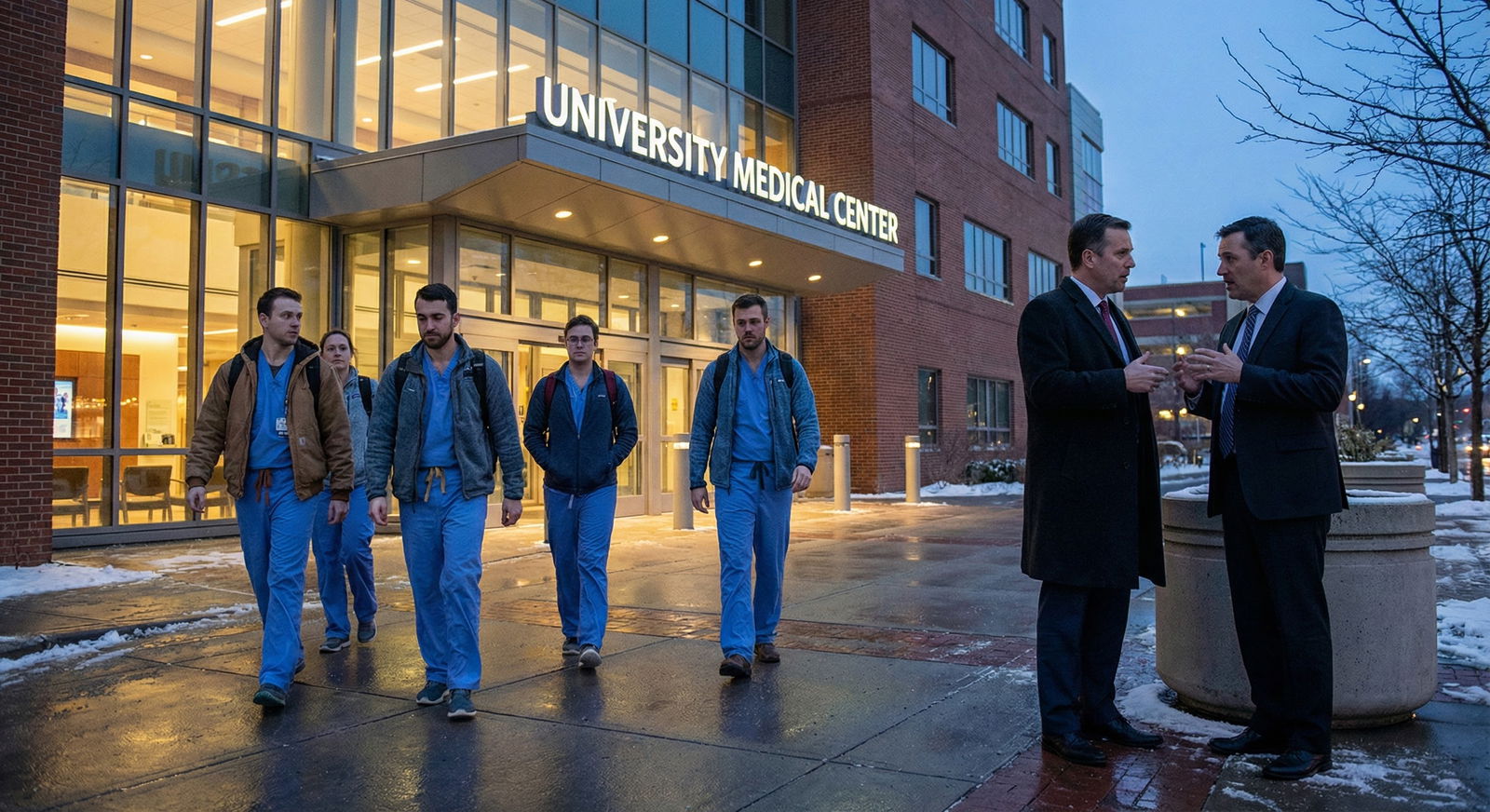
The worst way to do a self-guided second look is to just “show up and wander.”
If you are taking the time and money to revisit a program without formal programming, you need a playbook. A specific, hour-by-hour plan that converts an aimless walk-through into real data for your rank list.
This is that playbook.
Step 1: Get Permission and Structure Before You Show Up
You do not just stroll into a hospital and start poking around. That looks weird at best and unprofessional at worst.
You need two things ahead of time:
- A clear purpose.
- A basic skeleton of a schedule.
A. Email the right people (short, direct, professional)
Email 7–10 days before you plan to visit. One concise email to the right contact goes a long way.
Who to email:
- First choice: Program coordinator
- Second: Program director’s admin
- Optional add-on: Chief resident or resident liaison if they have one listed
Template you can adapt:
Subject: Self-guided second look visit – [Your Name]
Dear [Coordinator Name],
I am a [MS4 / applicant] who recently interviewed with [Program Name] and remain very interested in the program. I will be in [City] on [date(s)] and was hoping to do a brief self-guided second look to better understand the day-to-day environment.
I am not requesting any formal meetings or additional interviews, but I wanted to ensure that it is acceptable for me to:
- Walk through the hospital/clinics as a visitor, and
- Briefly meet with any available residents on their own time if they are willing.
If there are any guidelines, restrictions, or check-in procedures I should follow, I would be grateful for your guidance.
Thank you for your time and for all the work that goes into the interview season.
Sincerely,
[Name]
[AAMC ID / Contact info]
Key points:
- You explicitly say you are not asking them to organize anything.
- You show respect for rules and workflow.
- You give dates and let them say yes/no or offer parameters.
If they say “we don’t encourage second looks” or “please do not come in,” you respect that. For that program, your “second look” becomes external only: neighborhood, commute, housing, city feel. Still useful data.
B. Decide what you are trying to answer
A second look is not sightseeing. It is targeted information-gathering. Before you go, write down 5–8 specific questions you want answered. Examples:
- “Can I actually see myself living in this city and neighborhood?”
- “How burned out do the residents seem in unpolished settings?”
- “Do people in the hospital know and respect the residency?”
- “What does overnight or weekend coverage really feel like here?”
- “Is this program all service, or is there protected time and real teaching?”
If you cannot list concrete questions, you are not ready to go. Fix that first.
Step 2: Build a 3–5 Hour Second-Look Plan
You do not need a full day. In fact, you should not stay so long that you are hovering. Target 3–5 focused hours.
Here is a sample structure that works in almost any city:
| Time | Activity |
|---|---|
| 8:00–8:30 am | Commute simulation to hospital |
| 8:30–9:15 am | Hospital exterior and lobby scan |
| 9:15–10:15 am | Cafeteria + public spaces review |
| 10:15–11:15 am | Walk to nearby clinics/areas |
| 11:15–12:15 pm | Neighborhood + housing walk/drive |
Adjust based on:
- Weather
- How spread out the system is
- Whether a resident has offered to meet you briefly
This is the rough skeleton. Now I will break down what to actually do in each block.
Step 3: Simulate Your Daily Life, Not Your Instagram
Most applicants waste their second look focusing on the wrong things. Fancy buildings. Art on the walls. That is irrelevant if your commute is miserable, the call rooms are awful, and residents never sit for teaching.
A. Test your real commute
If you will likely live in:
- A certain suburb
- Near a train line
- Close to campus housing
Simulate that commute at roughly the correct time. If you are serious about a program, this alone is easily worth 30–60 minutes.
Checklist:
- Drive or take the bus/subway at 7:00–8:00 am or 4:30–6:00 pm.
- Notice: parking chaos, traffic bottlenecks, safety walking from transit stops.
- Time door-to-door. Twice. Once inbound, once outbound.
If the commute feels awful when you are stress-free and not post-call, it will be unbearable later.
B. Walk the hospital perimeter and main entrances
Once you are on campus, do one full loop of the main buildings.
Pay attention to:
- How massive/spread out the system is (you will be walking this daily).
- Signage clarity (if you are lost now, imagine Day 1 as an intern).
- Security presence at entrances (badge checks? visitors flowing freely?).
You are not trying to sneak into restricted areas. You are trying to understand the layout and feel.
Step 4: Extract Maximum Signal from “Public” Spaces
You can learn more from 45 minutes in a cafeteria than 2 hours of polished interview-day tours. That is not an exaggeration.
A. Cafeteria recon: where the real culture leaks out
Find the main hospital cafeteria or coffee shop around:
- 7:30–9:30 am (pre-rounds/after sign-out)
- 11:30 am–1:30 pm (lunch)
- 5:00–7:00 pm (pre-evening shift)
Buy a drink or snack. You are a paying customer. You belong there.
What to watch:
- Who is sitting with whom? Mixed groups (nurses, residents, attendings) or rigid cliques?
- Facial expressions and body language: laughter and casual conversation vs. glassy-eyed doom scrolling.
- How often you hear: “I am drowning,” “We are so short-staffed,” “Cross-cover is brutal tonight,” etc.
This is not about eavesdropping for gossip. It is about spotting persistent themes in how people talk about work.
B. Hallways, whiteboards, and bulletin boards
Walk publicly accessible floors:
- Main corridors
- Near conference rooms (but do not intrude)
- Outside resident lounges if clearly visible but restricted
Look for:
- Conference schedules posted — are there daily/weekly didactics, noon conferences, M&Ms, journal clubs?
- Flyers about wellness initiatives, research meetings, or resident social events.
- Whiteboards listing cross-cover teams, sign-out rooms, or on-call schedules (sometimes visible through open doors).
That 30-second glance at a real schedule tells you more than 20 minutes of brochure language.
Step 5: Make Resident Interaction Happen (Without Being Awkward)
If a resident offers to meet you, you accept. Every time. A 20-minute coffee with a PGY-2 is worth the entire trip.
If nobody was pre-arranged, you do not randomly approach people in scrubs like a lost tourist. That is uncomfortable for you and them. Here is how to handle it correctly.
A. Best case: pre-arranged resident meet-up
After your coordinator email, sometimes a resident will reply:
“I am happy to meet for 15–20 minutes if you are around.”
Perfect. Confirm a specific time and place:
- Coffee shop across the street
- Hospital cafeteria
- Nearby lobby
Prepare targeted questions. Not fluff like “Do you like it here?” They will say yes, because they are polite.
Ask things like:
- “How many hours a week do you realistically work on ICU months? Floor months?”
- “When you are post-call, do you usually leave on time or are you often stuck?”
- “What is one thing you wish you had known about this program before ranking?”
- “In the last 6 months, have there been any residents who left or seriously considered leaving? Why?”
- “How approachable are attendings when you are struggling or behind?”
- “What are the 2–3 biggest strengths and 2–3 biggest weaknesses of this program?”
And then shut up and listen. Do not argue. Do not try to “sell” yourself. Your goal is intel, not another mini-interview.
B. If you happen to cross paths naturally
If you find yourself in line behind someone clearly wearing “Internal Medicine Resident” or similar on their badge, you can do a soft, low-pressure approach.
Something like:
“Hi, I am an applicant who interviewed here this season and I am just doing a quick solo visit while I am in town. Do you generally like the program?”
Then read the vibe. If they seem receptive and chatty, follow up with 1–2 focused questions:
- “What is one thing you wish applicants knew that does not come across on interview day?”
- “How does this place treat residents when the hospital is slammed?”
If they look rushed or guarded:
- You thank them for their time.
- You back off. Quickly.
Do not ask:
- “What are your exact call schedules?” (too detailed for a 2-minute chat)
- “How competitive was it for you to match here?” (too personal)
- “I am trying to decide between here and [other top program] — which is better?” (tone deaf)
Step 6: Systematically Evaluate the Physical Environment
People overcorrect on this. Yes, shiny buildings can be misleading. But chronic dysfunction often seeps into the environment in small, obvious ways.
A. Check the basics
As you walk public corridors:
- Are things reasonably clean or visibly grimy?
- Are signs peeling, outdated, or handwritten and taped everywhere?
- Are there “Limited staffing – expect delays” signs everywhere, permanently?
No hospital is spotless, and most are understaffed. You are not looking for perfection. You are looking for clearly neglected.
B. Call rooms and workrooms (indirect view)
You may not be allowed in call rooms or resident-only workspaces. Fine. But you can sometimes see:
- Where residents chart in public areas — is there any semblance of ergonomic seating, working computers, or are people camped out on hallway counters?
- Posted “resident lounge” directions — is it clearly present, or does it look like an afterthought?
You do not break rules. You observe what is openly visible.
Step 7: Evaluate the Surrounding Neighborhood Like a Future Resident, Not a Tourist
You are not moving to the hospital. You are moving to the city. A bad mismatch here can ruin an otherwise great program.
A. Do a slow drive or walk of the local area
Within a 1–2 mile radius, note:
- Actual apartment buildings or housing you might live in.
- Grocery stores, gyms, pharmacies, coffee shops.
- Street lighting, foot traffic, and general safety vibe — especially if you might be walking home post-call.
You are trying to answer:
- “Would I feel comfortable walking to my car at 10 pm?”
- “Would I resent this area after a month, or could I tolerate 3+ years?”
B. Identify realistic living options
Use your phone and cross-check:
- Approximate rent within 20–30 minutes of the hospital.
- Whether residents typically live nearby or further out (often on program websites or Reddit, but take Reddit with a fistful of salt).
If you cannot imagine any plausible living situation that is safe and financially sane, that is a serious data point against the program.
Step 8: Capture What You See in a Structured Way (So You Actually Use It)
If you do not write things down the same day, all second looks blur together. You will remember one cafeteria’s scrambled eggs and forget the fact that the residents looked dead inside.
Right after you leave the campus, sit somewhere quiet for 15–20 minutes and fill out a quick grid.
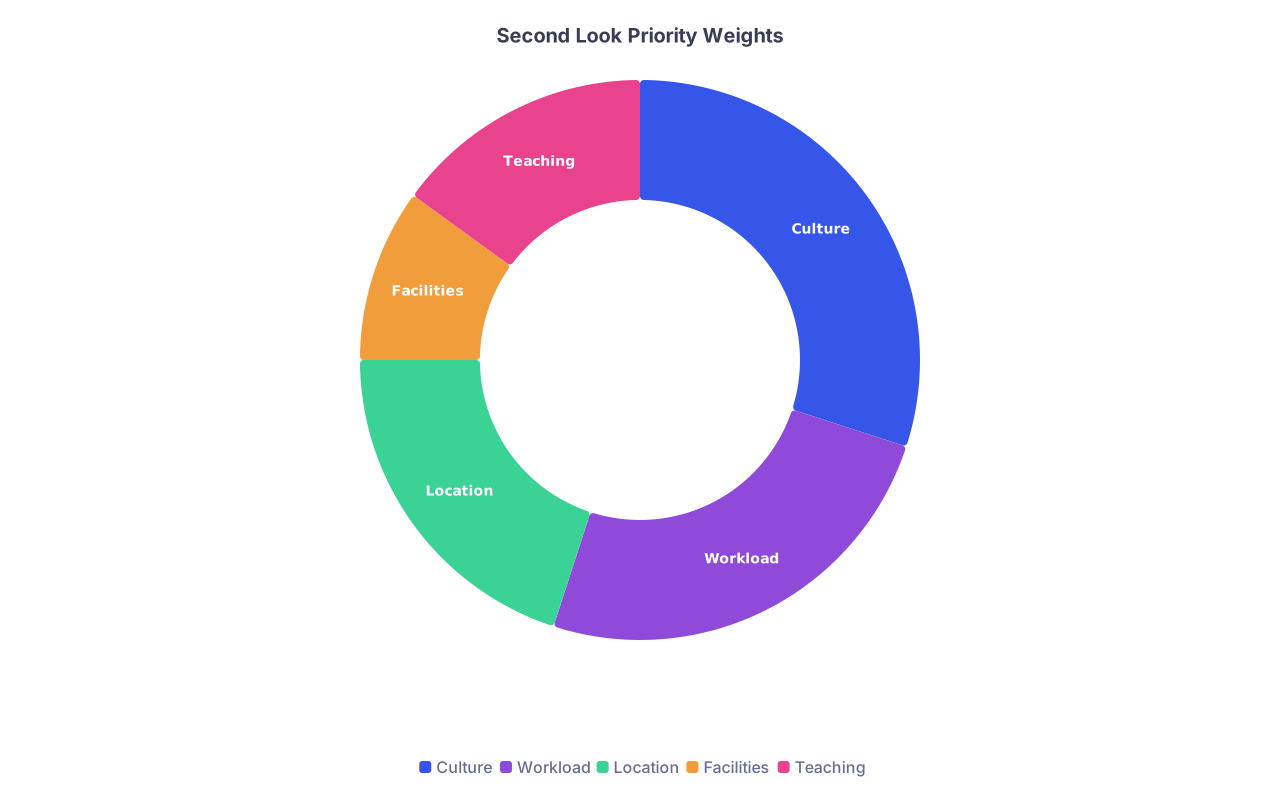
| Category | Value |
|---|---|
| Culture | 30 |
| Workload | 25 |
| Location | 20 |
| Facilities | 10 |
| Teaching | 15 |
This kind of mental weighting is what you should be formalizing for yourself.
Create a simple 1–5 rating for each program you second-look based on your priorities:
- Resident vibe (non-interview setting)
- Hospital environment (cleanliness, organization, chaos)
- Teaching/academic signs (posted conferences, research flyers)
- Commute feasibility
- Neighborhood livability and safety
- Gut feeling: “Do I want to be here on my worst call?”
Do not overcomplicate it. You are just trying to avoid emotional whiplash later.
Step 9: Do Not Overplay Your Hand with the Program
This is where applicants sabotage themselves. They think second looks are another audition, and they start trying too hard to be seen and remembered.
Bad ideas:
- Announcing yourself across multiple offices: “Hi, I am an applicant back for a second look!”
- Asking staff to pull residents out just to meet you.
- Hovering around program offices to “accidentally” bump into the PD.
If you obtained permission to be onsite and you happen to briefly see someone you met previously, a brief hello is fine:
“Hi Dr. X, I am [Name]. I interviewed here in November and am just in town doing a quick second visit. I wanted to say hello and thank you again for your time during interview season.”
Then you let them exit. Quickly. Do not try to start a 15-minute conversation unless they clearly invite it.
You want to be remembered, if at all, as:
- Polite
- Respectful
- Low-maintenance
Not as “that applicant who just hung around the workroom uninvited.”
Step 10: When a Self-Guided Second Look is a Bad Idea
Here is the part few people say directly: sometimes you do not need a second look. Or you should skip it.
Skip a self-guided second look when:
- The program explicitly tells you not to come back outside interview day.
- You already have enough information and the cost/stress of travel is high.
- Your only reason is anxiety and FOMO, not actual unanswered questions.
Self-guided second looks are tools, not rituals. Used correctly, they sharpen your rank list. Used blindly, they burn time and money and add confusion.
If you are debating between five programs and feel compelled to second-look all of them, pick one or two where:
- There is a major lifestyle difference (city size, cost of living, commute).
- You left the interview day with a question mark about culture.
- You could realistically rank it anywhere from #1–#5 and need a tie-breaker.
Step 11: Turn Observations into Actual Rank List Movement
After you do your self-guided second look, do not just file the experience away mentally. Use it to change something.
Sit down with your running rank list and ask:
- Did this visit move this program up, down, or not at all?
- Which of my core priorities did this visit clarify?
For example:
- You loved the interview day, but:
- Residents in the cafeteria looked wrecked.
- Public boards showed daily 6:30 am conferences and late PM sign-outs.
- Neighborhood felt unsafe walking from parking after dark.
That should probably move the program down a notch compared with a similar program where:
- Residents seemed tired but functional.
- Teaching looked structured but humane.
- Housing options felt realistic.
Or the opposite:
- You were lukewarm after interview day.
- Second look showed strong camaraderie, lots of board prep sessions, and a walkable, affordable neighborhood.
That might bump the program up above a more “prestigious” but miserable-feeling place.
Your second look is only valuable if it changes your decisions.
Step 12: Quick Checklist You Can Print and Take With You
Here is a condensed field checklist you can screenshot or print. Use it to keep yourself focused.
Before you go:
- Email coordinator for permission/parameters
- Define 5–8 specific questions you want answered
- Build a 3–5 hour schedule (commute, hospital, neighborhood)
On site – hospital:
- Simulate commute during real traffic time
- Walk full exterior/perimeter of main hospital
- Spend 30–60 minutes in cafeteria during busy time
- Note resident body language and hallway interactions
- Scan for conference schedules, teaching signs, resident events
- Observe cleanliness, signage, general organization
On site – resident interaction:
- If pre-arranged, meet resident in neutral, non-clinical space
- Ask 4–6 concrete questions about workload, culture, support
- Keep it brief, low-pressure, and professional
- Avoid trying to “re-interview”
Neighborhood and living:
- Walk or drive 1–2 mile radius around hospital
- Identify realistic housing options and safety level
- Check access to essentials (groceries, gyms, transit)
After leaving:
- Rate program (1–5) on culture, environment, teaching, commute, neighborhood
- Write a 3–4 sentence “gut summary” while it is fresh
- Adjust your rank list if warranted
Step 13: Common Mistakes — and How to Avoid Them
Let me be blunt: I have watched smart applicants waste their second looks by doing exactly these things.
Mistake 1: Treating it like a casual campus tour
Fix: Go in with written questions and a timed plan. You are there to gather data, not vibes.
Mistake 2: Trying too hard to be seen
Fix: Aim to be invisible. You are an observer. Minimal contact unless invited.
Mistake 3: Overinterpreting single anecdotes
You overhear one resident complaining about a rough night and decide the program is toxic. That is lazy thinking.
Fix:
- Look for patterns, not isolated complaints.
- Compare your second-look observations with interview-day narratives and what you hear from multiple residents.
Mistake 4: Doing it because “everyone else is”
Second looks have become a weird arms race. That does not mean you have to participate.
Fix:
- Only go if you can articulate what decision this visit might change.
- If you cannot answer “What specifically am I trying to learn?” do not buy the plane ticket.
Step 14: A Brief Word About Ethics and Professionalism
There is a line you do not cross on a self-guided visit:
- You do not enter patient-care areas without explicit permission and proper ID.
- You do not take photos in clinical spaces.
- You do not try to access resident lounges or restricted rooms.
- You do not ask residents for insider ranking or NRMP-violating comments.
Stay on the right side of that line and you will be fine. Cross it, and you risk putting a bad taste in the program’s mouth — or worse.
Today’s Action Step
Open your rank list and pick one program where you are genuinely torn and where location/culture could make or break your experience.
Write down:
- Three concrete questions about that program you still cannot answer.
- How a 3–5 hour self-guided second look might realistically answer them.
If you can answer both clearly, send the coordinator a short email today to ask about doing a brief, informal visit. If you cannot, skip the second look and move your energy back to refining your rank list instead of chasing more noise.