
The worst SOAP outcomes usually start in January—long before Match Week.
If you have few or no interviews right now and you are hoping it will all magically work out, you are already behind. SOAP is absolutely survivable, but only if you treat it like a separate, full application cycle and start building for it now.
Below is your January-to-Match-Week playbook, broken into month-by-month, then Match Week day-by-day, with specific “at this point you should…” actions.
January: Admit the Risk and Build Your SOAP Base
At this point you should: accept you are a SOAP-risk candidate and start parallel planning.
Week 1–2 (Early January): Hard Reality Check
You need a clear-eyed status snapshot.
At this point you should:
- Count your interviews:
- 0–2 interviews → High SOAP risk
- 3–5 interviews → Moderate SOAP risk
- 6+ interviews → Still plan, but lower urgency
- Meet with:
- Your dean / student affairs or ECFMG advisor (IMGs)
- A trusted specialty mentor
- Ask them directly:
- “If I end up in SOAP, what fields do you see as realistic for me?”
- “Will you be available on Match Week for letters / calls?”
Then quickly define:
- Your primary specialty (the one you already applied to)
- 1–2 backup SOAP specialties based on:
- USMLE/COMLEX scores
- Visa status (if IMG)
- Prior experiences (rotations, letters)
If you are still fantasizing about switching into dermatology via SOAP—stop. You SOAP into realistic fields: prelim IM, prelim surgery, FM, psych, peds, neuro, transitional year. Not the ultra-competitive ones.
| Applicant Profile | Common Realistic SOAP Targets |
|---|---|
| IMG, 1st attempt, >230 | IM, FM, Peds, Psych |
| US grad, low Step | FM, Peds, Psych, TY, Prelim IM |
| US grad, no US letters | FM, Peds, TY, Prelim IM |
| Reapplicant | FM, Psych, TY, Prelim IM/Surg |
Week 3–4 (Late January): Build SOAP-Specific Documents
SOAP is fast. Anything you are not drafting now you will rush badly during Match Week.
At this point you should have:
SOAP-tailored personal statements (PS) started
- 1 for primary specialty (revised)
- 1 generic “back-up” statement for:
- FM / IM / TY
- Or psych / peds, etc., depending on your target
- Keep them short and direct (¾–1 page). SOAP PDs skim, not study.
A brutally honest CV update
- Add:
- Any new rotations (especially US clinical experiences)
- Any new publications / posters
- Volunteer or work you picked up during the year
- Clean ERAS CV entries so they are tight, consistent, and not fluffy
- Add:
Reference list ready
- Identify 3–4 attendings who:
- Know your clinical work
- Can answer a last-minute email or phone call during SOAP
- Ask them:
- “If I enter SOAP, may I list you as someone programs can contact for a quick reference?”
- Identify 3–4 attendings who:
You are not sending new LORs in SOAP—but PDs absolutely email and call informally.
February: Strategic Positioning and Program Scouting
At this point you should: map the landscape and quietly pivot toward SOAP-compatible programs.
Week 1–2 (Early February): Program Intelligence Work
You cannot know the exact SOAP List before Match Week, but you can predict patterns.
At this point you should:
Build a target program spreadsheet with columns:
- Program name
- Specialty
- State
- Visa status (if relevant)
- Prior history of unfilled spots (check NRMP “Results and Data” PDFs from prior years)
- Past minimum Step/COMLEX scores (from websites, forums, past emails)
- Your “fit” notes (IMG-friendly, community vs university, etc.)
Mark:
- Green: realistic / strong fit
- Yellow: borderline, maybe worth 1–2 applications
- Red: fantasy / historically full / hostile to your profile
You are not guessing blindly during SOAP Week. You are plugging into a prepared plan.
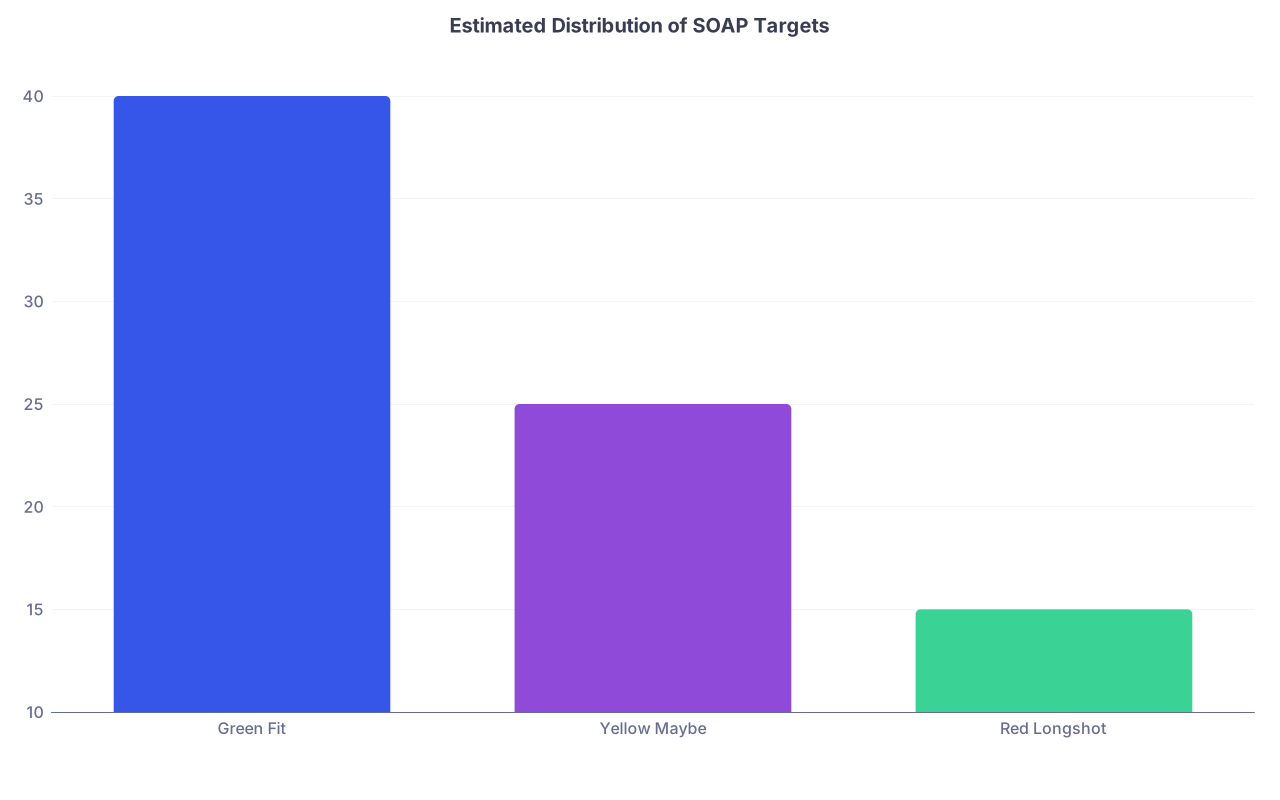
| Category | Value |
|---|---|
| Green Fit | 40 |
| Yellow Maybe | 25 |
| Red Longshot | 15 |
Week 3–4 (Late February): Repair and Reinforce Your Application
This is where you fix what hurt you in the main cycle.
At this point you should:
Address any obvious red flags
- Failed Step → draft a short remediation paragraph you can drop into emails or PS:
- 3 sentences: what happened, what you changed, how you proved improvement (Step 2, clinical evals).
- Gap year → frame it with:
- Specific work, research, family responsibility, or health issue.
- PDs hate vague “I took time to figure things out.”
- Failed Step → draft a short remediation paragraph you can drop into emails or PS:
Secure at least one “hard vouch”
- Ask one attending / PD:
- “If I am in SOAP for [X specialty], would you be willing to reply to a PD’s email or take a quick call saying you recommend me strongly for their program?”
- If they hesitate, that is data. Find another person.
- Ask one attending / PD:
Start practicing SOAP-style interviews
- Short. Direct. Less polished than main cycle.
- Practice:
- “You do not have many interviews. Why?”
- “Why are you applying to our program in SOAP instead of the main Match?”
Do 2–3 20‑minute mock SOAP interviews with:
- A resident you know
- A friend also applying, rotating questions
Early March (Pre-Match Week): Final Prep and Mental Rehearsal
At this point you should: assume you will not match and prepare for SOAP—while still hoping you do.
March 1–7: Lock Everything Down
At this point you should have:
Final SOAP personal statements ready
- 1–2 versions saved:
- “FM / IM / Psych generic”
- “Prelim only” if that is part of your plan
- Labeled clearly in your folders so you do not upload the wrong one in a panic.
- 1–2 versions saved:
Technology and workspace plan
- Reliable:
- Laptop or desktop
- Backup device (tablet, borrowed laptop)
- Stable internet; backup hotspot if possible
- A quiet spot reserved for Match Week:
- Away from loud roommates, clinical chaos, or call shifts
- Headset / earbuds for phone interviews
- Reliable:
Day-off coverage if needed
- If you are on clinical duties Match Week:
- Inform your chief / scheduler:
“I may need short-notice time for Match Week SOAP calls—can I trade call or have some flexibility Monday–Thursday?”
- Inform your chief / scheduler:
- This is preventable chaos. Plan now.
- If you are on clinical duties Match Week:

Match Week: Day-by-Day SOAP Timeline
This is where most people panic and lose efficiency. You will not.
Monday Morning (11:00 AM ET): The “Did Not Match” Email
At this point you should: feel whatever you feel—for 30 minutes—then switch to execution mode.
11:00–11:30 AM ET:
- Read the NRMP email.
- If it says “Did not match” or “Partially matched” → you are SOAP-eligible.
- Take 20–30 minutes:
- Cry, call someone, go outside. Do it now, not in the middle of calls later.
11:30 AM–12:00 PM ET:
- Log into NRMP and ERAS:
- Confirm SOAP eligibility is shown.
- Review instructions and timelines inside the portal.
At this point you should:
- Notify:
- Your dean’s office / ECFMG advisor
- Your key recommenders:
- “I did not match and will enter SOAP. Programs may contact you this week.”
Monday Afternoon: SOAP List Release and Rapid Targeting
At 12:00 PM ET, the List of Unfilled Programs drops.
12:00–2:00 PM ET:
- Export / copy the unfilled list into your spreadsheet.
- Filter by:
- Specialty (your targets)
- State / region
- Visa status (IMG)
- Cross-reference with your prebuilt notes:
- Highlight overlap with your green/yellow programs.
- Add any new programs you had not predicted but that look viable.
2:00–6:00 PM ET:
- Rank-order top 45–50 programs you will apply to once ERAS opens for SOAP submissions (limit is 45 per SOAP round, but you are planning which set to send first).
- Think carefully about strategy:
- Are you prioritizing categorical positions over prelim?
- Would you rather be in any FM spot than a prelim IM year? Be explicit now.

| Step | Description |
|---|---|
| Step 1 | Monday Email |
| Step 2 | Exit SOAP Process |
| Step 3 | Check SOAP List |
| Step 4 | Filter by Specialty and Visa |
| Step 5 | Rank Programs |
| Step 6 | Submit Applications in ERAS |
| Step 7 | Interview Offers |
| Step 8 | Create Preference List |
| Step 9 | Offers Released |
| Step 10 | Accept Best Offer |
| Step 11 | Did you match |
Tuesday: SOAP Applications Open
At this point you should: deploy a precise, realistic application list—fast, not sloppy.
8:00–10:00 AM (before applications open):
- Final review of:
- Personal statements: attach correct PS to each specialty in ERAS.
- Program list: check for:
- Licensing/visa dealbreakers
- Geographic places you absolutely cannot go (family, legal, etc.)
When ERAS opens for SOAP applications (time varies, usually late morning):
At this point you should:
Submit applications intentionally, not randomly
- Up to 45 programs total in Round 1.
- Prioritize:
- Programs that historically fill in SOAP.
- Programs where your profile matches their past stated criteria.
- Avoid:
- Wasting applications on famous university programs that never take SOAP candidates like you.
Keep a clear tracking sheet
- Columns:
- Program
- Time applied
- Specialty
- Any connections
- Response status (no contact / email / interview scheduled)
- Columns:
Afternoon and evening:
- Be glued to:
- Phone
- Missed phone calls are missed interviews. SOAP PDs do not chase you.
Wednesday: Interview Day(s) – Short, Aggressive, and Honest
At this point you should: be ready for rapid-fire phone or virtual interviews.
SOAP interviews are different:
- 10–20 minutes.
- Often by phone.
- PD might be in clinic between patients.
At this point you should:
Have your “core answers” locked Keep a one-page sheet next to you with bullets for:
- “Why did you not match?”
- “Why our specialty?”
- “Why our program specifically?”
- “If you do not SOAP, what is your plan?” (They want to know you will finish training somewhere.)
Run a tight phone setup
- Phone on loud + vibrate.
- Voicemail message professional.
- If you miss a call:
- Call back immediately.
- Follow with a short, professional email:
“Dr. X, I saw a missed call and believe it may have been from your program about SOAP. I am very interested and available at [times].”
Take notes after every interaction
- Fit
- Vibe
- PD enthusiasm
- Any hints about rank likelihood
Those notes feed directly into your preference list.

Thursday Morning: Ranking and Offers
This is the part students consistently underestimate. Ranking badly can hurt you more than a rough interview.
Early Thursday: Build and Submit Preference List
At this point you should: turn your notes into a ruthless preference order.
You will submit a SOAP preference list in NRMP. Programs do the same. Offers are generated by algorithm, not by who talks the prettiest on the phone.
At this point you should:
Rank every program you can live with
- Highest = you most want to train there.
- Do not play 4D chess about "what seems realistic." The algorithm already does that.
- If you truly cannot live in a place or tolerate that program’s culture, do not rank it.
Double-check
- Specialty type (categorical vs prelim vs TY).
- Program codes.
- No duplicates or wrong programs.
Thursday Afternoon: Offer Rounds
NRMP usually runs multiple SOAP offer rounds (e.g., four rounds, one hour apart).
At each round:
- You may receive:
- 0 offers
- 1 offer
- Multiple offers
At this point you should:
When you get multiple offers
- Choose the best combination of:
- Stability (categorical > prelim if possible)
- Specialty alignment with your long-term goals
- Geographic / life constraints
- You generally have a short window (often 2 hours) to accept.
- Once accepted, you are done with SOAP. You cannot “keep shopping.”
- Choose the best combination of:
When you get no offers in a round
- Do not panic publicly.
- Quietly communicate with your dean / advisor:
- They may still be emailing programs and advocating for you behind the scenes.
- Keep your phone ready in case of last-minute interviews between rounds.
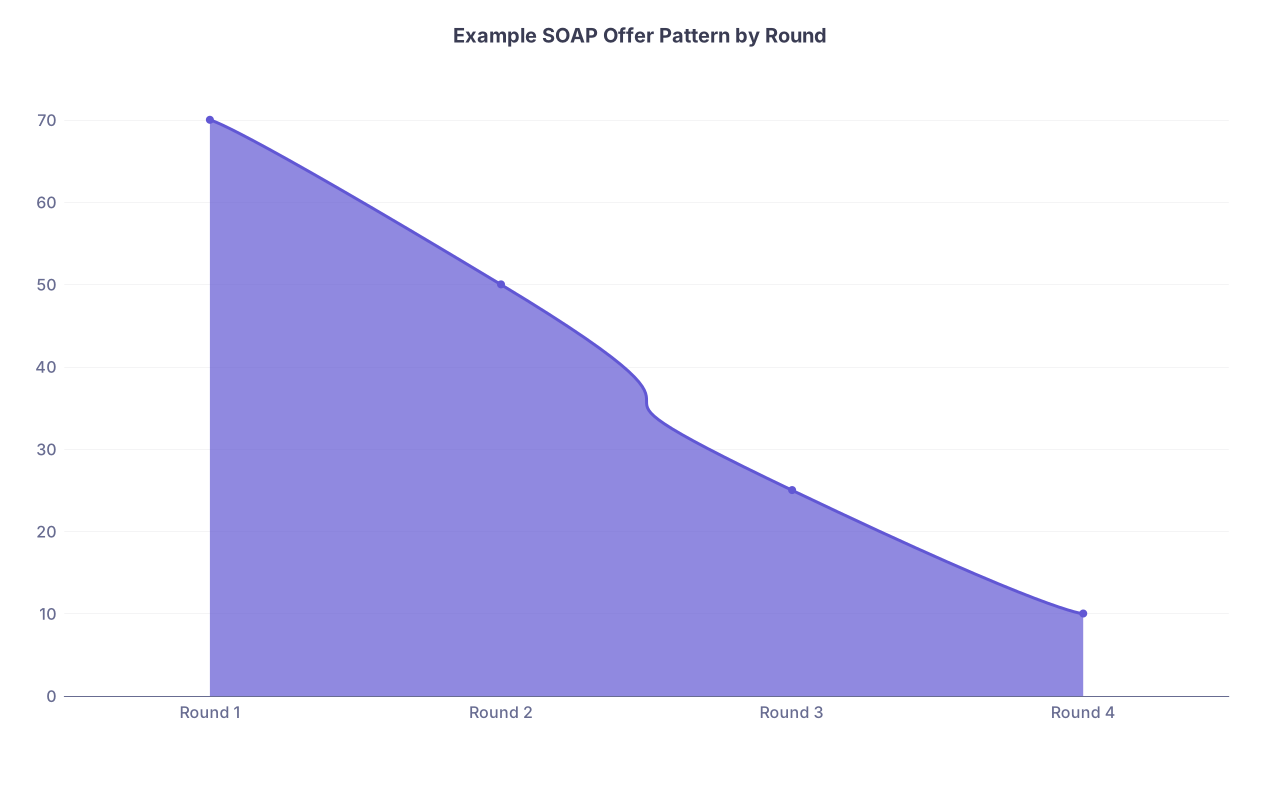
| Category | Value |
|---|---|
| Round 1 | 70 |
| Round 2 | 50 |
| Round 3 | 25 |
| Round 4 | 10 |
If You Do Not Secure a Position After SOAP
You hope this section is irrelevant. But a responsible guide includes it.
If Thursday ends with no position:
Same day / Friday:
- Meet with:
- Dean / ECFMG advisor
- A brutally honest mentor in your desired field
- At this point you should:
- Decide: reapply vs alternate path (research year, prelim-only hunt, non-clinical work).
- Get a concrete 12-month remediation plan:
- New rotations / observerships.
- Step retakes (if allowed).
- Research with a PD willing to go to bat for you next cycle.
Do not scatter-fire emails to 500 PDs at 2:00 AM begging for “any spot.” That almost never works and burns your name.
Quick Checklist: By Phase
By End of January, you should have:
- Clear sense of SOAP risk.
- Identified 1–2 realistic backup specialties.
- Drafted:
- 1 revised primary specialty PS.
- 1 generic backup-specialty PS.
- Updated CV and identified 3–4 verbal references.
By End of February, you should have:
- A program spreadsheet with:
- Historical SOAP/unfilled trends.
- Visa/score/fit notes.
- At least one strong advocate ready to respond during SOAP Week.
- Completed SOAP-style mock interviews.
By March 7 (week before Match Week), you should have:
- Final PS versions uploaded / ready.
- Reliable tech and quiet workspace plan.
- Communication with chiefs / schedulers about Match Week flexibility.
During Match Week, you should:
- Monday: Process emotion, analyze SOAP List, refine target programs.
- Tuesday: Submit up to 45 targeted applications; track everything.
- Wednesday: Handle rapid interviews, keep detailed notes.
- Thursday: Build accurate preference list, respond decisively to offers.