
What if this is it? What if you only get one interview and your entire future depends on that single day?
That’s the loop, right? “If I blow this, I’m done. If they don’t rank me, I’m SOAPing. If I SOAP, I’ll never get the specialty I want. If I don’t match in SOAP, I’ll never be a doctor.” It escalates so fast your heart’s racing at 2 a.m. and you’re reading every Reddit horror story ever posted.
Let’s talk about what actually happens if you only get one interview. Not the fantasy version. The realistic, sometimes painful, but still salvageable versions. Including what SOAP can actually look like from that starting point.
Because one interview is not the same as no options. It just means your margin for error is thinner and your SOAP strategy has to be smarter, not more panicked.
First: What Does “Only One Interview” Actually Mean?
There are a few different “one interview” situations, and they’re not equal.
| Scenario | Risk of Needing SOAP | Typical Path |
|---|---|---|
| 1 interview in community IM | Moderate | Could still match; SOAP backup helpful |
| 1 interview in competitive specialty only | High | Likely SOAP needed |
| 1 home program interview only | Moderate | Depends on home support |
| 1 interview + strong Step scores | Lower | Program might rank you higher |
| 1 interview + red flags (fail, LOA) | Higher | SOAP planning critical |
If your single interview is:
- In a relatively less competitive field (FM, IM, Peds, Psych, Path, Neuro in some regions)
- At a community or mid-tier academic program
- And you have decent scores and no huge red flags
…you actually have a non-trivial chance to match there. One interview isn’t good odds, but it isn’t zero. Programs match people they interviewed once. It happens every year.
If your only interview is in something like Dermatology, Ortho, ENT, Plastics, or another ultra-competitive specialty, and it’s not combined with a prelim TY/IM backup list? That’s when SOAP becomes very real as a likely outcome.
So first, be honest with yourself: Is SOAP a backup scenario or a near-inevitable one? You plan differently depending on the answer.
The Harsh Math: One Interview and Match Probability
I’m not going to sugarcoat it. With one interview, your odds aren’t great. But they’re not as hopeless as they feel in your head.
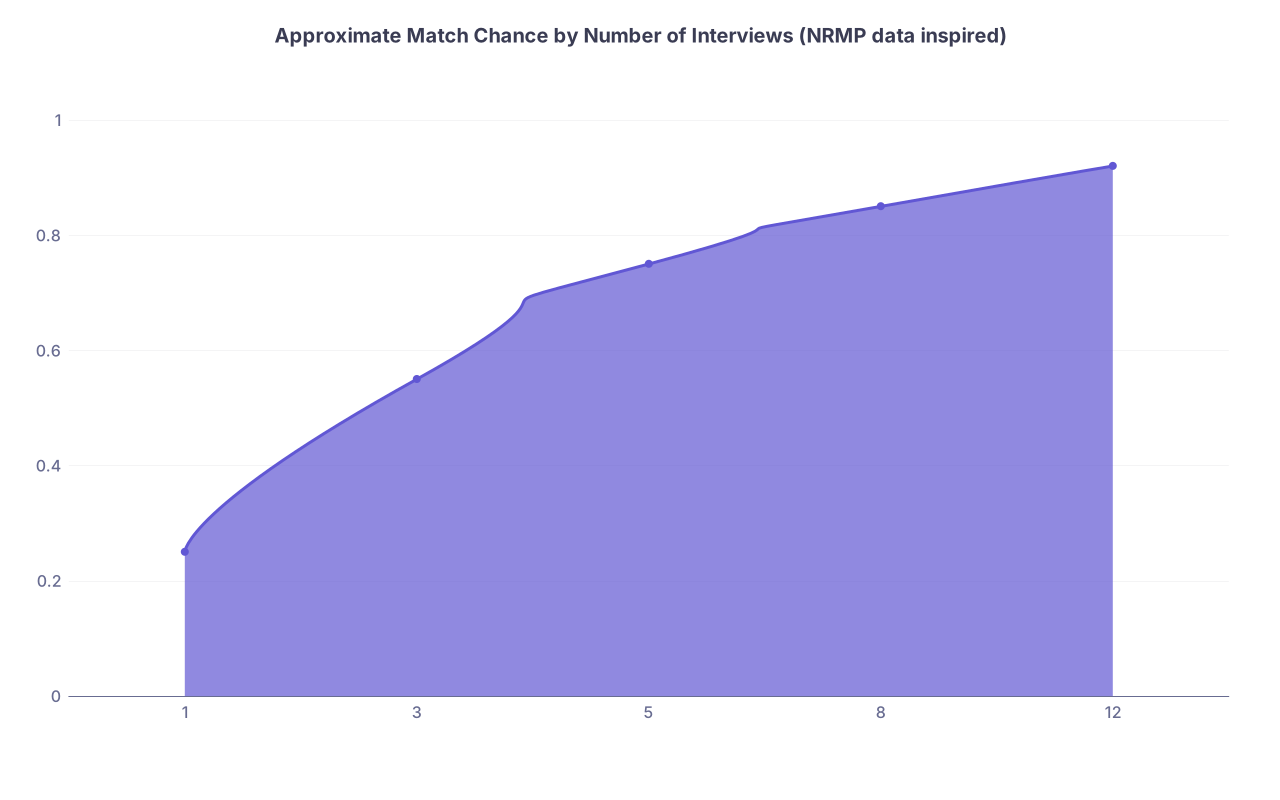
| Category | Value |
|---|---|
| 1 | 0.25 |
| 3 | 0.55 |
| 5 | 0.75 |
| 8 | 0.85 |
| 12 | 0.92 |
These are ballpark, specialty-dependent, and not perfect, but the pattern is consistent: once you drop below 5–6 interviews, the risk of not matching climbs fast.
With one interview? You might be in the 15–30% chance-to-match range depending on specialty and your application strength.
So what do you do with that?
You accept two truths at the same time:
- You absolutely might match at that one program, especially if it’s less competitive.
- You absolutely must plan for SOAP like you won’t match.
Holding both in your head at once is brutal. But it’s reality.
Realistic SOAP Paths Starting From One Interview
Let’s run through actual, plausible paths people take from this spot. Not the glamorous ones. The lived, messy ones.
Path 1: Match Your Single Interview, But Only Because You Were Prepared
Scenario:
You had one interview at a community internal medicine program in the Midwest. You felt it went “okay but not great.” They were nice, but not overly enthusiastic. No “we love you” emails. You spiral.
Here’s what you did right in the background:
- You quietly prepared all your SOAP materials in February as if you were unmatched.
- You talked to your dean’s office early and asked them bluntly, “If I go into SOAP, what fields should I realistically target?”
- You updated your CV with any new things: rotations, case reports, Step 2, letters.
You go into Match Week absolutely sure you’re unmatched.
Then Monday hits.
That email: “We are sorry, you did not match…” or “Partially matched…” Honestly, seeing “You have matched” when you expected not to feels surreal. It happens. More than people talk about.
You never use your SOAP prep. But you were ready if you needed it. That’s the point: good SOAP planning doesn’t jinx your match. It just lowers the stakes in your head enough that you can breathe.
Path 2: Unmatched → SOAP → Categorical in a Different Specialty
This is the “I swallowed my pride and picked a different route, but I still became an attending” path.
Example I’ve seen: Student goes for categorical surgery, only gets one low-tier surgery interview, doesn’t match. On Monday, they see the dreaded email. They don’t have a prelim surgery safety net.
SOAP opens. They’ve already done what you should do now:
- Built a serious, non-fluffy explanation for: “Why are you now applying to X (IM, FM, Psych, etc.)?”
- Identified specialties they can live with realistically—not their dream, but not their nightmare.
- Talked to mentors outside the dream field who were honest: “Your chance at categorical surgery is close to zero in SOAP; here’s what I’d do.”
They pivot hard in SOAP to:
- Internal Medicine categorical
- Family Medicine categorical
- Maybe Transitional Year or preliminary spots if those are tied to a clear plan (like reapplying surg later, with realistic expectations)
They’re grieving. They’re angry. They still send out SOAP applications like their life depends on it (because it kind of does).
Two years later, they’re a PGY-2 in IM, managing sick patients, getting board-certified soon. The path hurt, but it was a path.
That’s the realistic version. Not romantic. But real.
Path 3: Unmatched → SOAP → Prelim / TY → Reapply (With a Twist)
This is the “Okay, I still want my original field, but I’m going to buy time the smart way” route. It’s risky but doable if you’re brutally clear-eyed.
Scenario:
You only had one interview in neurology. You don’t match. In SOAP, you and your advisor look at what’s open:
- A smattering of IM prelim spots
- Some TYs
- A few categorical positions in other fields you never seriously considered
If you cannot emotionally let go of your original specialty yet, but you’re not delusional, you might do:
- SOAP into a prelim IM or TY that gives you solid clinical experience
- Use that year to:
- Crush your clinical evals
- Get stronger letters
- Fix any red flags (like a Step failure) if possible
- Do research or meaningful scholarly work in your target specialty
But the twist here: you promise yourself—and someone else you trust—that if you don’t get a clear upgrade your second cycle (more interviews, stronger interest), you expand your list and consider other specialties seriously.
This path works best if:
- Your scores aren’t catastrophically low
- You had some initial interest in multiple fields
- You have at least one mentor who’ll go to bat for you
It’s not a fairy tale. It’s more like: “I took the hard road and limited my shot at stability for another year, but I did it with intention.”
What SOAP Actually Feels Like (And How to Not Fall Apart)
People describe SOAP like a war story for a reason. It’s fast, humiliating, high-pressure. Your classmates are celebrating while you’re refreshing ERAS and fielding phone calls that may or may not come.
Here’s the emotional part no one likes to say out loud:
- You will feel like a failure. Even though you’re not.
- You will compare yourself to everyone. It’ll be toxic.
- You will question if you should’ve gone into medicine at all.
You need a few things in place before Match Week:
A reality-based target list of SOAP specialties
Not, “I’ll just SOAP into anesthesia if I don’t match derm.” That’s not how this works. You need:- Fields that historically have SOAP availability (FM, IM prelim, sometimes Psych, Peds, Neuro, Path, etc.)
- Backup specialties you can actually stomach doing long-term if SOAP gives you a categorical spot there.
A clear narrative you can say in 2–3 sentences
You’ll be asked, basically, “So… why are you applying to us/this field in SOAP?” You can’t sound like you’re settling, even if you are.You want something like: “I initially focused on X, but over the year I realized what I loved most was longitudinal patient care and managing complex medical issues. I see myself building a career in internal medicine because it aligns better with the day-to-day work I value.”
Not: “I didn’t match in X so I’m here now.”
A support person who knows the SOAP timeline
Dean, advisor, counselor, whoever. Someone who will literally say to you: “Send the applications. Drink water. Now we wait.” Because you won’t think straight.
How To Prepare for SOAP Now (While You Still Hope You Match)
This is the annoying double-life you have to live for a while: polishing thank-you emails for your one interview while quietly building your SOAP survival kit.
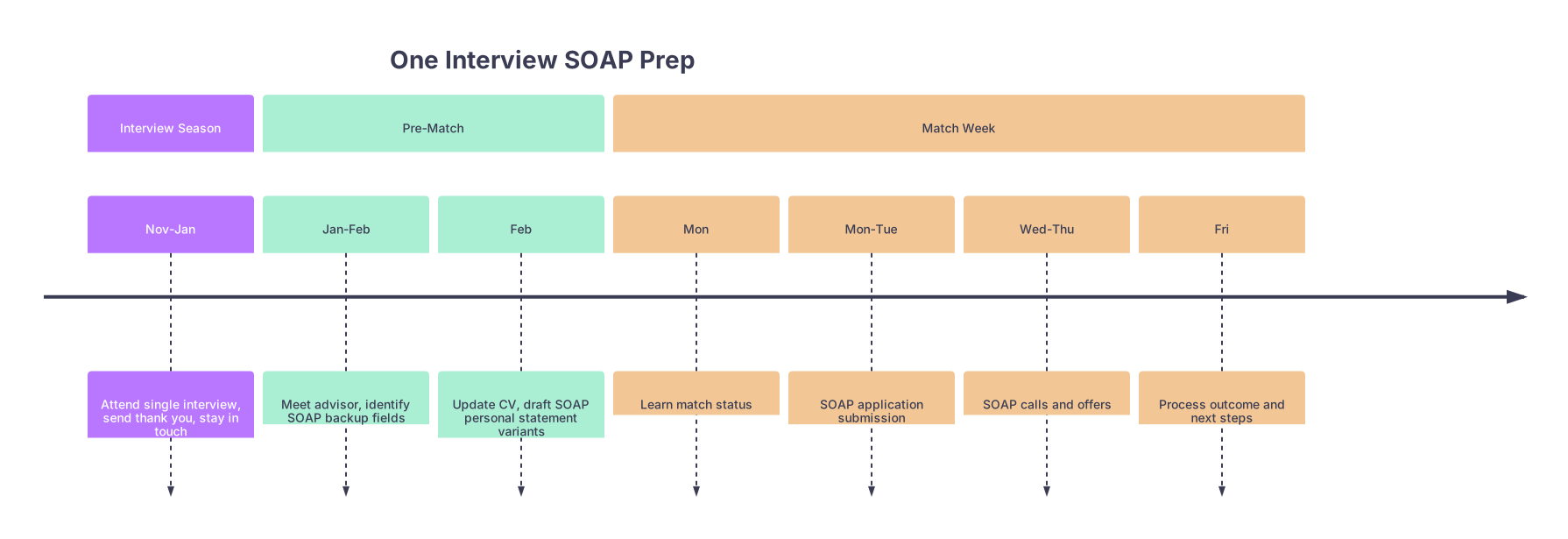
| Period | Event |
|---|---|
| Interview Season - Nov-Jan | Attend single interview, send thank you, stay in touch |
| Pre-Match - Jan-Feb | Meet advisor, identify SOAP backup fields |
| Pre-Match - Feb | Update CV, draft SOAP personal statement variants |
| Match Week - Mon | Learn match status |
| Match Week - Mon-Tue | SOAP application submission |
| Match Week - Wed-Thu | SOAP calls and offers |
| Match Week - Fri | Process outcome and next steps |
Here’s what you can start doing now without sabotaging your hope:
Meet with your dean/advisor and force the awkward conversation
Literally say: “I only have one interview. If I don’t match, what would you recommend for SOAP? Which specialties? How strong is my application compared to past SOAPers here?”
Don’t let them handwave. Push for specifics.Draft a generic “backup specialty” personal statement
You can’t write a heartfelt FM statement in the 4 hours between learning you’re unmatched and SOAP opening. You just can’t.
Write a template now for 1–2 backup fields you’d consider. You can tweak them later.Identify any last-minute boosters
Things like:- A case report you can submit before Match
- A letter update from a recent attending
- A brief research abstract submission
They’re small, but in SOAP, being able to say “I just submitted X” can help you stand out a bit.
Accept that prestige is dead in SOAP
SOAP is about getting a job as a physician-in-training. Not a shiny one. Survival first, ego later.
If You Don’t Match: What Happens Hour by Hour (Emotionally and Practically)
Here’s a rough emotional + practical sequence if Monday’s email says you’re unmatched:
Monday morning (shock)
Your stomach drops. You stare at the screen. Denial, anger, shame—pick your poison. Everyone’s texting “Matched!!!” and you want to throw your phone.Practical move:
You reply to no one yet. You walk. You breathe. Then you contact your dean’s office, who should already have a SOAP plan for you.Monday midday (scramble)
You see the list of unfilled programs with your advisor. This is where you confront reality:
“Derm is dead. EM is dead. These are the fields still actually open. What can I live with?”Practical move:
You apply broadly in SOAP to programs and specialties that fit the strategy you and your advisor agreed on weeks ago. No pride. Just options.Tuesday–Thursday (waiting + calls)
You might hear nothing. You might get weird, rushed phone calls. Faculty may ask surprisingly blunt questions. It’s uncomfortable.Practical move:
Answer professionally. Emphasize stability, work ethic, and genuine interest in their field. You are not pitching perfection. You’re pitching reliability.Thursday (offers or silence)
You might get an offer. You might get multiple (rare, but it happens). You might get none.If you get one: breathe. Talk briefly with someone you trust, then accept if it fits your floor (not dream, floor—what you can realistically handle for 3+ years).
If you get nothing: the floor really does fall out. This is where some people pivot to a non-clinical year, research, or reapplying with major adjustments.
Hard Truth: Your Worth ≠ Your Interview Count
This all sounds clinical when I write it out. It’s not clinical when it’s you.
You’re going to think:
- “All those years for this?”
- “Everyone will know I failed.”
- “I must just not be good enough.”
Here’s what I’ve seen: the match and SOAP processes are brutal, but they’re also random, biased, opaque, and very imperfect at sorting actual future physicians.
Some of the best residents I’ve seen matched in SOAP. Or after going unmatched once. Or after pivoting fields under pressure. Their patients do not care that they had one interview originally.
You’re allowed to grieve. And you’re allowed to still fight for a path that gets you into practice—even if it doesn’t look like the one you drew up in M1 orientation.
FAQ: One Interview and SOAP – The Questions Keeping You Up at Night
1. If I only have one interview, should I already give up on my dream specialty and change my rank list or reapply?
No. You already got the interview; that’s the hard part. You don’t toss that away preemptively. Submit your rank list with that one program honestly ranked where you’d go. At the same time, you mentally accept that SOAP or reapplying is a real possibility and you prepare for that. Hope for the match; plan for the storm.
2. Is it even possible to get a categorical spot in SOAP, or is it all prelim and garbage programs?
Categorical spots do appear in SOAP every year, especially in FM, IM, Peds, and sometimes Psych, Neuro, Path, etc. Are they all super desirable locations? No. Are some of them perfectly solid training programs where you’ll become a competent attending? Yes. SOAP isn’t only prelim and chaos, but you can’t be picky about geography or prestige. That’s the trade-off.
3. Should I email my one interview program to say they’re my top choice or that I have no other interviews?
You can send a sincere, brief, post-interview note expressing strong interest and fit. But telling them “you’re my only chance” generally doesn’t help and sometimes looks desperate. Focus your message on: why their program fits your goals, what you appreciated specifically about your visit, and that you’d be thrilled to train there. Don’t overshare your desperation.
4. If I SOAP into a different specialty, can I ever switch back to my original one?
Maybe, but you shouldn’t count on it. Switching specialties later is possible but rare, and it’s easier between some fields than others (IM → cards vs FM → derm, for example). If you SOAP into a categorical slot, you need to accept there’s a good chance that’s your long-term field. Go into it with eyes open: can you see yourself doing this forever if you never switch? If the answer is a hard no, think carefully before committing.
5. What if I go completely unmatched after SOAP too? Is my career over?
It feels like it in that moment. But no, it isn’t automatically over. People do research years, work as fellows in non-ACGME positions, do MPH or other degrees, or reapply with major changes (broader specialties, different strategy, more realistic target lists). The path gets harder, yes. But “no match once” is not a legal or absolute bar to becoming a doctor. It just means this is going to hurt more and take longer than you planned.
6. What’s one concrete thing I should do today if I only have one interview?
Today, send an email to your dean’s office or advising office asking for a specific SOAP planning meeting. Literally: “I currently have one interview in X specialty. I’d like to schedule a meeting to discuss realistic SOAP options and backup specialties in case I don’t match.” Get that on the calendar. That one step turns vague panic into an actual plan.
Open whatever document holds your CV or personal statement right now. Add a new heading: “SOAP Backup Plan – [Year].” Under it, type two specialties you could realistically live with if your one interview doesn’t work out. Not your dream. Your survival options. Start there.