
The reflex to explain everything on ERAS is a mistake that sinks a lot of applicants.
If you treat ERAS like a confession booth, you will over-share, over-explain, and talk programs out of interviewing you. The art is knowing what to explain, what to acknowledge briefly, and what to leave alone.
Let me walk you through how program directors actually look at “weaknesses” and when silence is not just acceptable—but smarter.
The Core Principle: Fix What Matters, Ignore What Doesn’t
Here’s the real rule:
You only explain a weakness on ERAS if:
- It is obvious and material,
- It changes how they interpret your application, and
- You can explain it in a way that helps you, not hurts you.
If you cannot hit all three, you usually do better saying nothing.
Programs are not hunting for perfection. They are hunting for red flags they cannot safely ignore: professionalism issues, big performance failures, or unexplained patterns that suggest risk if they rank you.
What they do not care about:
- One random B in preclinical years
- An AOA miss
- “Only” a mid-220s Step 2 for a non-ultra-competitive specialty
- Not being chief
- Not publishing in NEJM
You do not get bonus points for apologizing for things they already think are fine.
What PDs Actually Notice First
Most PDs scan ERAS the same way, especially on first pass:
- Board scores (if visible) / pass vs fail
- Any “Y/N” red flags: professionalism, leaves, failures
- Class rank/Med school reputation (loosely)
- Clinical grades and comments in MSPE
- Pattern of commitment to the specialty
- Big unexplained gaps or weirdness in the timeline
That’s it for the top-level screen. Nobody is zooming in on your B+ in Neuroanatomy.
So how do you decide what to explain?
A Simple Framework: Explain, Acknowledge, or Stay Silent
Use this decision tree for every “weakness” you’re obsessing over.

| Step | Description |
|---|---|
| Step 1 | Notice a weakness |
| Step 2 | Stay silent |
| Step 3 | Usually silent or 1-line mention |
| Step 4 | Brief honest acknowledgment |
| Step 5 | Targeted explanation in ERAS/PS |
| Step 6 | Will they see it anyway? |
| Step 7 | Is it major? |
| Step 8 | Can you show cause + improvement? |
Let’s apply this to specific situations.
When You SHOULD Explain
These are the situations where silence almost always hurts you more than a tight, factual explanation.
1. Step Failure or Dramatic Score Drop
If you have:
- Step 1 fail (even now that it’s pass/fail, failures matter)
- Step 2 fail
- A huge score drop (e.g., 245 Step 1 → 210 Step 2)
They will notice. If you say nothing, they will assume the worst: poor work ethic, unsafe test-taking under stress, or chronic performance issues.
What to do:
- Use the ERAS “Education” or “Experience” description or personal statement to briefly explain.
- Focus on:
- The specific, short-term factor (illness, family crisis, poor strategy—not “I’m just bad at tests”).
- What you changed.
- Evidence of improvement or stability since.
Bad explanation:
“I have always struggled with standardized tests…”
Good explanation (tight, 3–4 sentences):
“During my first attempt at Step 1, I was dealing with untreated generalized anxiety and poor study structure, which led to a failing score. I sought care, worked with a counselor, and completely rebuilt my study approach with spaced repetition and weekly practice exams. On retake, I passed comfortably and have since passed Step 2 on the first attempt. My clerkship performance and shelf exams have been stable and consistent with this improvement.”
No drama. No begging. Just cause → intervention → outcome.
2. Failed Course, Remediation, or Repeated Year
If it’s in your transcript or MSPE, they already know.
Silence makes it feel like you’re dodging it. A short, adult explanation usually helps.
Example:
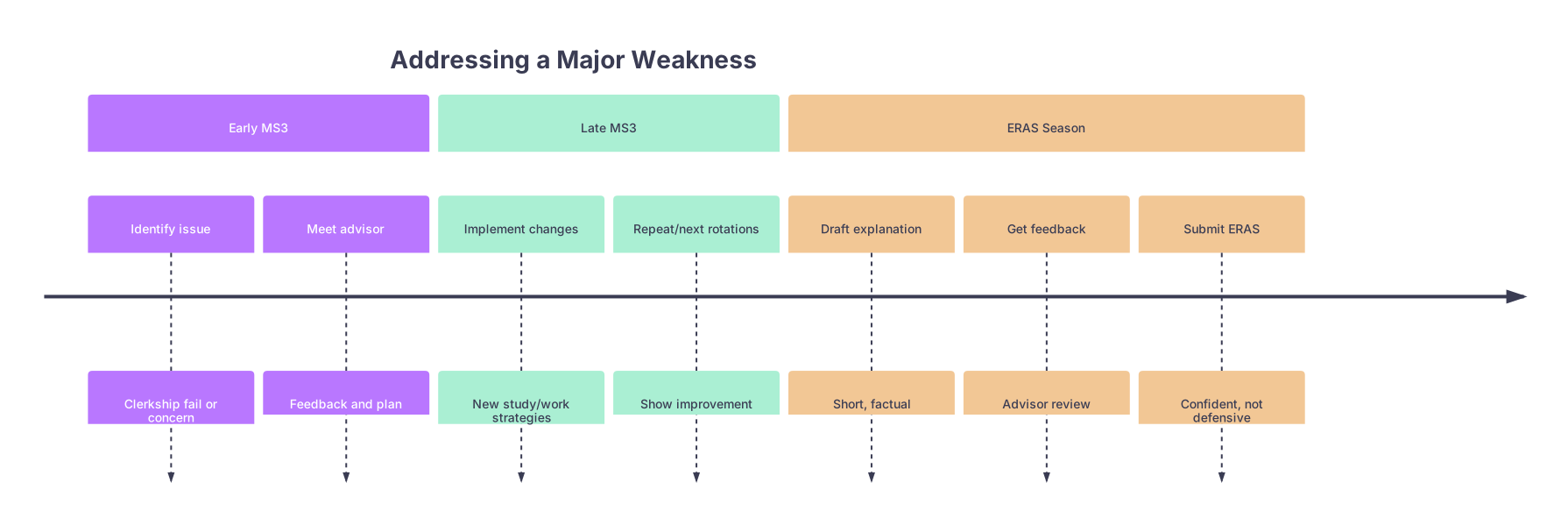
“I failed my surgery clerkship during third year after struggling with time management, especially balancing OR responsibilities and floor work. I met with my clerkship director, developed a specific daily task system, and repeated the clerkship, earning a High Pass. Since then, I have passed all remaining rotations, many with Honors, using the strategies I learned.”
Key parts:
- You own it
- You name what actually went wrong
- You show a pattern of improvement
Do not write a novel about how “third year is hard”. Everyone knows.
3. Documented Professionalism Issues
Anything involving:
- Academic dishonesty
- Unprofessional behavior
- Formal warnings or disciplinary actions
This can be lethal if unexplained. Some programs won’t touch it either way, but the ones who might give you a chance need to see insight and change.
You:
- Acknowledge what happened (without getting graphic)
- Take responsibility
- Show concrete behavioral change and confirmation from others (if possible)
Example:
“During my second year, I received a professionalism citation for arriving late to small group repeatedly and not communicating proactively. This feedback was a wake-up call. Since then, I implemented a strict scheduling system, met regularly with my advisor, and have had no further professionalism concerns. My clerkship comments consistently mention reliability and follow-through.”
If your dean’s letter already explains this well, you might not need to double-explain in the personal statement, but you shouldn’t pretend it doesn’t exist.
4. Significant Gap or Leave of Absence
If there’s a gap of months in your education timeline, they will ask: “What happened?”
Valid reasons include:
- Medical leave
- Family crisis
- Maternity/paternity leave
- Mental health treatment
- Military service
- Visa issues
You do not owe them your full medical chart or trauma history. You owe them a brief, coherent explanation that reassures them about your current stability and reliability.
Good pattern:
“During [dates], I took a medical leave of absence to address a health issue. The condition has been fully treated/managed, and I was cleared by my treating physicians and the school to return without restrictions. Since returning, I have completed all rotations on time and at expected performance.”
Notice: you don’t have to name the diagnosis explicitly if you don’t want to. But you do have to make clear that the risk is not ongoing and uncontrolled.
When You Should Keep Your Mouth Shut
Here’s where people over-explain and hurt themselves.
1. “Low” But Passing Scores With No Big Story
If you passed Step 1 and Step 2 on the first try, and your scores are just “average” for the specialty—stop apologizing.
Nobody wants to read:
“I know my Step 2 score of 229 is lower than your average applicant, but…”
It just spotlights the number in their mind. Programs screen on cutoffs long before they read your essay. Once you clear the filter, they care much more about:
- Clinical performance
- Fit with the specialty
- Reliability and work ethic
- LORs
Explain only if there is a discrete, time-bound reason that clearly changes the interpretation of your performance and you have better data now (e.g., strong shelf scores, strong COMLEX after weak Step).
2. Old, Minor Academic Blemishes
Examples:
- One bad preclinical block
- Random “Pass” in a sea of “Honors”
- Early stumbling in med school that self-corrected
Do not build a tragic narrative around a single C in Biochemistry from 3 years ago. Most PDs won’t even remember that detail by the time they rank you.
If there’s a pattern (e.g., everything improved sharply after M2), let your transcript and MSPE tell the story. Your personal statement is prime real estate; do not waste it on noise.
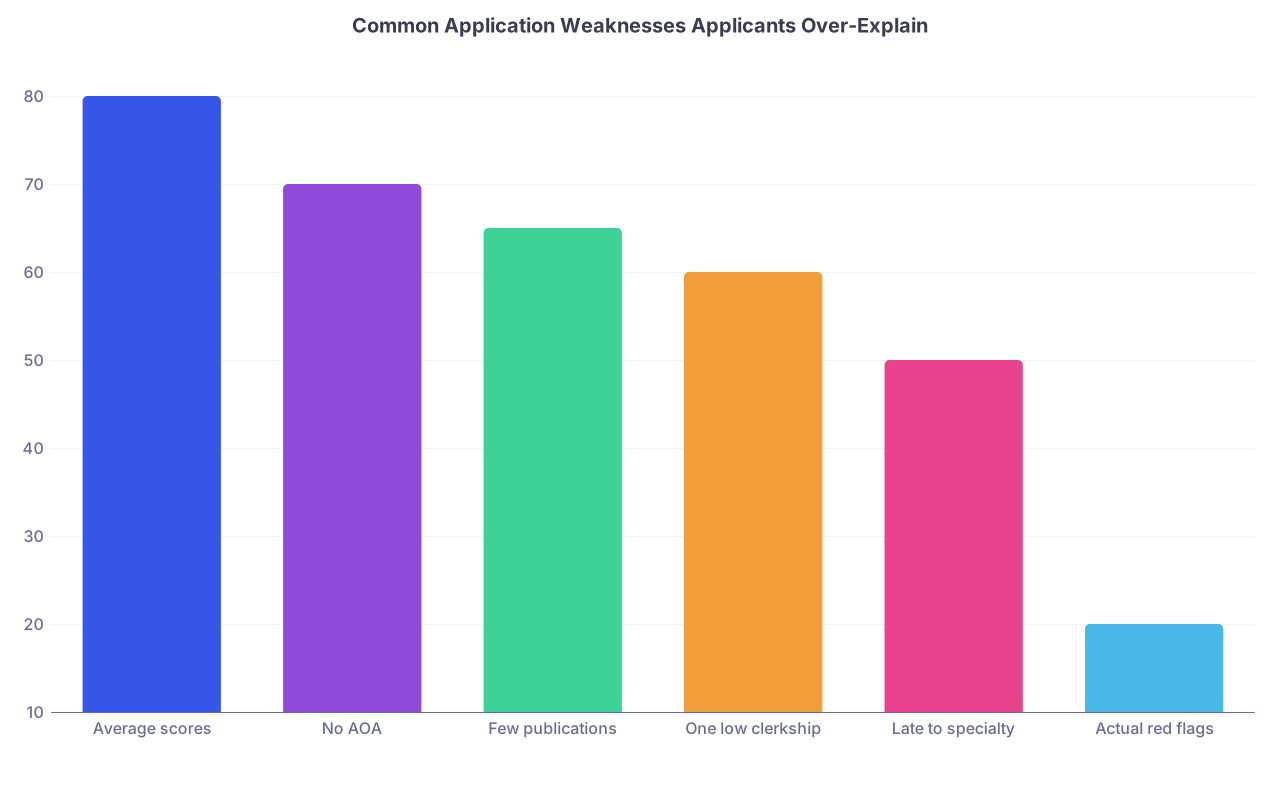
3. Being Average, Not “Exceptional”
You don’t need to explain:
- Not being AOA
- Not being Gold Humanism
- Not having 12 publications
- Not leading five national organizations
ERAS is full of people trying to explain why they are “only” solid. PDs do not have time for that.
Use your words to show:
- Clear, consistent interest in the specialty
- Evidence that you’re someone they’d trust at 2 a.m.
- That you’re teachable, normal, and not a problem
Forget apologizing for what you are not.
4. Soft Insecurities That Aren’t Actually Red Flags
Things like:
- No research in a non-research-heavy specialty
- Coming from a mid-tier med school
- No home program in your specialty
You may want to clarify interest (e.g., why EM with no EM home program), but that’s different from “explaining a weakness”. The framing matters.
Weak framing:
“Although I do not have research in emergency medicine, I hope to show…”
Stronger framing:
“My interest in emergency medicine grew primarily from extensive clinical exposure and longitudinal work in the ED, rather than research. I’ve prioritized hands-on clinical experience, ultrasound skills, and working in high-acuity settings.”
You’re not apologizing. You’re framing your profile.
Where To Put Explanations (And How Long They Should Be)
Use these locations strategically.
| Situation | Best Location |
|---|---|
| Step failure | PS or Education section |
| Course/clerkship failure | MSPE + brief PS note |
| LOA / gap in training | Education or PS |
| Professionalism citation | PS or Dean’s letter |
| Major health issue (resolved) | PS (short) |
General rules:
- 2–5 sentences is usually enough
- Stay factual, not emotional
- Focus more on what changed than on the drama
If your school’s MSPE already contains a clear, fair explanation, you may choose just to echo or lightly expand, not to reinvent the wheel.
Example Language You Can Steal and Adapt
Here are some templates you can adjust to your situation.
Step 1 fail → later pass & Step 2 pass:
“I failed Step 1 on my first attempt due to ineffective study strategies and poor exam discipline. After working with an academic coach, I overhauled my approach with structured daily blocks, frequent practice questions, and weekly self-assessments. I passed Step 1 on my second attempt and subsequently passed Step 2 on the first attempt. My clerkship comments and shelf scores reflect the consistency I’ve built since that time.”
LOA for mental health (resolved/managed):
“From January to June 2023, I took a medical leave of absence to address a mental health condition. With treatment and support, my symptoms have been well controlled. I was cleared by my physicians and school to return without restrictions and have since completed all required rotations on schedule with strong evaluations.”
Failed clerkship:
“I initially failed my internal medicine clerkship after struggling to balance documentation, patient care, and studying. With feedback from my attending and advisor, I developed a structured pre-rounding routine and daily task list system. I repeated the clerkship and earned a High Pass, and I have successfully applied these strategies across subsequent rotations.”
Professionalism concern (tardiness):
“During my second year I received a professionalism warning for repeated tardiness to required small-group sessions. I took responsibility, met with my course director, and implemented strict calendar reminders and earlier arrival times. Since then, I have had no further professionalism issues, and my clinical evaluations consistently mention reliability and punctuality.”
Use this kind of language. Clean. Direct. Grown-up.
How Programs Read These Explanations
Here’s what goes through a PD’s mind reading your explanation:
- Did they clearly own it?
- Does the explanation actually make sense?
- Did they show concrete behavior change?
- Do I see evidence of that change in later performance?
- Does this feel like a one-time event or a chronic pattern?
Explanations do not erase the weakness. They reframe it.
If your narrative is:
- “Bad thing happened”
- “I blamed everyone/everything”
- “I’m still kind of fragile about it”
That’s worse than silence.
If your narrative is:
- “I screwed up (or got hit by something real)”
- “I learned and adjusted”
- “Here’s the proof I’m now stable and reliable”
That moves some programs from “No” → “Okay, let’s at least look at this person.”
Quick Reality Check: You’re Not on Trial
ERAS is not a legal defense. It’s advertising plus a limited explanation where needed.
You are not obligated to bleed on the page for every misstep. In fact, that makes you look less ready for residency.
Here’s what strong applicants do with weaknesses:
- They explain what must be explained
- They accept that some PDs will still say no
- They don’t waste space apologizing for being average
- They lean hard into their strengths everywhere else
You want programs to finish your application thinking: “Normal, honest, seems to learn from feedback, no hidden bombshells.”
That’s enough.
| Category | Value |
|---|---|
| Average scores | 80 |
| No AOA | 70 |
| Few publications | 65 |
| One low clerkship | 60 |
| Late to specialty | 50 |
| Actual red flags | 20 |

| Period | Event |
|---|---|
| Early MS3 - Identify issue | Clerkship fail or concern |
| Early MS3 - Meet advisor | Feedback and plan |
| Late MS3 - Implement changes | New study/work strategies |
| Late MS3 - Repeat/next rotations | Show improvement |
| ERAS Season - Draft explanation | Short, factual |
| ERAS Season - Get feedback | Advisor review |
| ERAS Season - Submit ERAS | Confident, not defensive |

FAQ: Should I Explain Every Weakness in ERAS?
Do I have to explain a Step 1 pass with a low score now that it’s pass/fail at some schools?
No. If you passed on the first try and the score is simply “not amazing,” do not apologize for it. Programs that care about exact numbers will screen on the score before they read your narrative. Once you’re past the screen, explaining a still-passing but low score usually just reinforces it in their mind.Where is it better to explain a big issue—personal statement or ERAS comments?
If it’s a central, substantial issue (failures, LOA, major professionalism concern), the personal statement is usually the cleanest place: one short paragraph, controlled tone, and you know they’ll see it. For smaller items (single course failure with clear MSPE explanation), a brief mention in an ERAS education/experience section or letting the MSPE speak for itself can be enough. You do not need to write about it in three different places.Should I talk about mental health struggles that affected my performance?
Only to the extent needed to explain timeline or performance gaps and to reassure them you’re now stable and safe to train. You don’t owe diagnoses or detailed symptoms. Something like: “I took time to address a health issue, received treatment, and have since returned to full, unrestricted training with strong performance” is usually sufficient. The key is to clearly signal recovery/management and ongoing reliability.What if my school already explained my failure or LOA in the MSPE? Do I repeat it?
Often, you just need a brief, aligned echo. A sentence or two in your personal statement that matches the MSPE framing can show you take ownership, without feeling redundant. If the MSPE explanation is thorough and fair, you can even choose to leave your PS focused on your strengths and future, and discuss the issue only if asked in interviews.Is it ever good to proactively explain “weak” research or lack of leadership?
For most core specialties, no. You can—and should—frame what you do have (e.g., strong clinical engagement, meaningful longitudinal volunteering) rather than apologizing for what you don’t. The one partial exception is research-heavy fields (derm, rad onc, neurosurg) where you might briefly explain that you came to the specialty later and focused heavily on X, Y, Z experiences instead of early research, while pointing to any newer scholarly work you’ve managed.How honest should I be about personal/family crises that affected my scores?
Honest but not raw. Programs do not need your full backstory; they need to understand: there was a real stressor, it impacted performance, you addressed it, and this won’t be a chronic destabilizing force in residency. 2–4 straightforward sentences, no melodrama, no fishing for pity. If you find yourself writing more than a short paragraph about it, you’re probably going too far for ERAS. Save deeper detail for a trusted mentor, not your application.
Key points to walk away with:
- Explain only what is obvious, significant, and reframe-able.
- Keep explanations short, factual, and focused on growth and current stability.
- Stop apologizing for being average—use ERAS to highlight who you are now, not to relitigate every stumble.