
The fellowship decision you did not expect just blew up your carefully built loan plan. Good. Now we can build one that actually matches your real life instead of your fantasy schedule.
You are not starting from zero. You are starting from a more accurate version of your future. The mistake most residents make here is pretending nothing changed, or making one random panicked move (“I’ll just refinance everything!”) and locking themselves into a bad path.
You need a controlled reset. Here is how to do it, step by step, without wrecking your finances or your sleep.
Step 1: Freeze the Panic and Get the Facts on Paper
Right now your brain is mixing emotion (“I didn’t match where I wanted” / “Now it’s three more years of low pay”) with numbers (“$310k loans, 7% interest, IDR plan, PSLF? Maybe?”). That combination is terrible for decision-making.
You need a one-page snapshot of your situation as it stands today, not what you thought it would be.
Grab a blank sheet or spreadsheet and list:
All your loans
- FedLoan / MOHELA / Nelnet / Great Lakes / Aidvantage, etc.
- For each loan group:
- Federal or private?
- Balance
- Interest rate
- Current repayment plan (SAVE, IBR, PAYE, REPAYE, Standard, Graduated, etc.)
- Months of qualifying PSLF credit (if any)
Your new training reality
- Fellowship start date and length (e.g., 3-year cardiology, starts July 2026)
- Expected PGY level and salary range
- Whether fellowship is at:
- A 501(c)(3) or government hospital (PSLF eligible), or
- A private / for-profit institution (not PSLF eligible)
Your original loan plan (before the surprise)
- Were you planning:
- PSLF with 3 years of residency + 7 years attending at nonprofit?
- Aggressive payoff in 5–7 years after residency?
- Private refinance right after residency?
- What specific milestones were you counting on? (e.g., “Refi at PGY4 when making 340k”)
- Were you planning:
This is not busywork. This is your map.
If your loans are federal and you do not know your details, log into studentaid.gov and your servicer sites today and pull a full list. Do not trust your memory.
Step 2: Identify the One Big Fork: PSLF vs. Non-PSLF Path
Your fellowship decision just changed one core variable: how long you will be on low-ish income and where you will be employed.
This directly affects the main fork in your loan strategy:
- Path A: You are on or considering Public Service Loan Forgiveness (PSLF)
- Path B: You are planning a non-PSLF payoff or private refinance strategy
If you are not sure which side you’re on, use this quick filter:
| Situation | Likely Path |
|---|---|
| Federal loans + residency + fellowship + nonprofit attending job likely | PSLF-focused |
| Federal loans + training at nonprofit but plan to join private group after | Mixed, run numbers both ways |
| Mostly private loans already | Non-PSLF/refinance-focused |
| Low federal balance (<$80k) and high-earning specialty | Non-PSLF/refinance-focused |
You cannot make good decisions without committing to a primary path, even if you leave yourself an exit ramp. Waffling (“I might do PSLF… maybe”) is how people end up overpaying by six figures.
Step 3: If You’re PSLF-Oriented, Rework Your 120 Payment Timeline
If you ever had PSLF in the back of your mind, an unexpected fellowship at a qualifying employer is not bad news. It might actually be a gift.
1. Confirm PSLF eligibility for residency + fellowship
Call or email HR / GME and literally ask:
“Is this hospital a 501(c)(3) or government employer that qualifies for Public Service Loan Forgiveness?”
Do this for:
- Your current residency
- Your future fellowship
- Any planned attending job (if known)
If both residency and fellowship are PSLF-eligible, you just got extra cheap years of qualifying payments. That usually means:
- Stay on an income-driven repayment (IDR) plan (SAVE is best for most).
- Keep making PSLF-qualifying payments throughout fellowship.
- Use the low-income years to stack qualifying months.
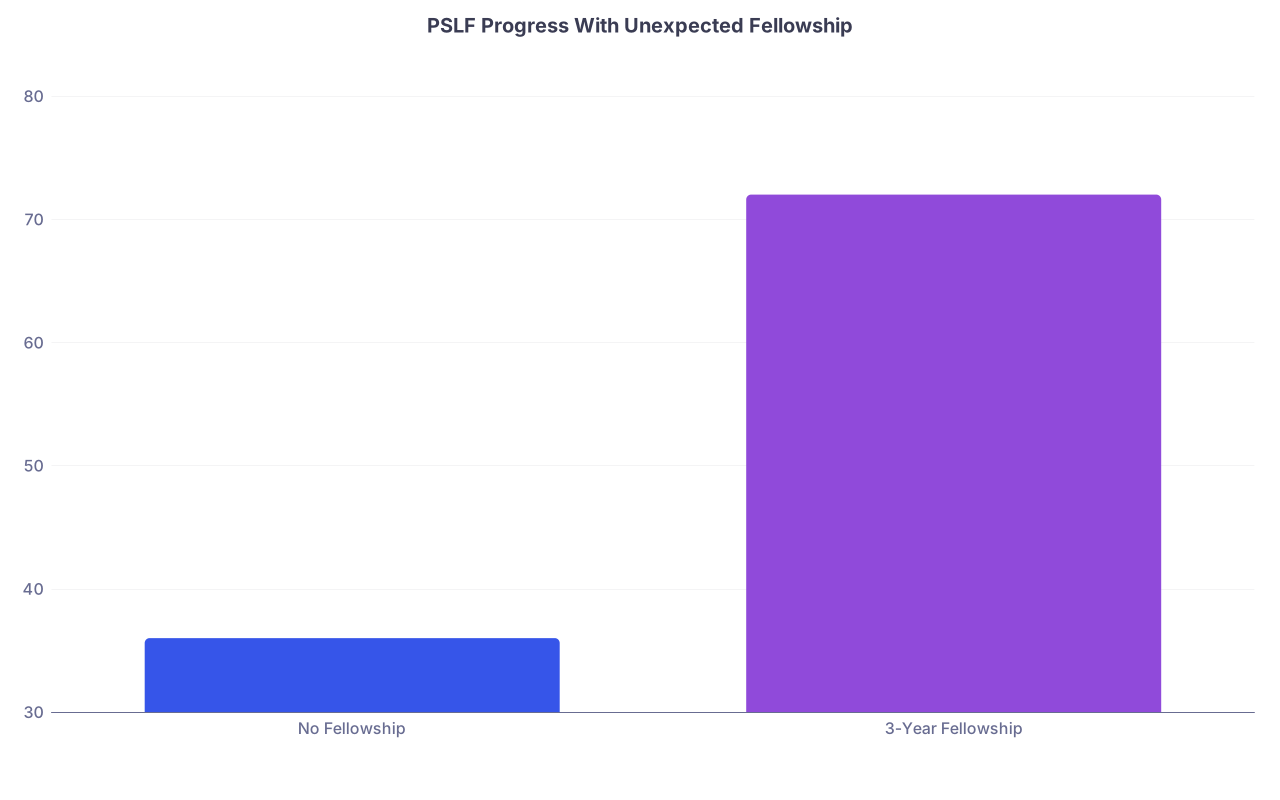
| Category | Value |
|---|---|
| No Fellowship | 36 |
| 3-Year Fellowship | 72 |
In this example:
- 3-year residency only: 36 qualifying payments
- 3-year residency + 3-year fellowship: 72 payments
That is more than half your PSLF requirement done before you even become an attending.
2. Rebuild your “120 payment” calendar
Take a fresh look:
- Count how many PSLF-qualifying months you already have.
- Add the number of months in fellowship (assuming PSLF-eligible and you stay on IDR).
- Subtract that from 120 to see how many years of an attending job you still need.
Example:
- 2 years of residency completed at PSLF-eligible hospital: 24 months
- 3-year fellowship at PSLF-eligible hospital: +36 months
- Total by end of fellowship: 60 months
- Needed for PSLF: 120 months
- Remaining: 60 months (5 years) as attending at a qualifying employer
That is a completely different picture than your original “3 years of residency + 7 years attending.” Your original aggressive payoff plan may now be stupid. If your projected forgiven amount is large, PSLF is probably the smarter play.
3. Adjust your IDR plan to your new timeline
If you’re PSLF-leaning:
- Stay on or switch to SAVE (if eligible), unless there’s a specific reason to keep an older plan (PAYE, old IBR).
- Recertify your income on time every year.
- Do not voluntarily overpay during residency/fellowship — every unnecessary dollar is money you never get forgiven later.
Your unexpected fellowship just changed “years on low IDR payments” from 3 to maybe 6. That usually makes PSLF more attractive, not less.
Step 4: If You’re Non-PSLF / Refinance-Oriented, Do Not Refinance on Autopilot
This is where people get burned.
They had a pre-fellowship plan:
“Finish residency → refinance to a 5-year private loan → pay it off fast as an attending.”
Then fellowship shows up, and they carry out the refinance anyway. On a fellow salary. With a private company that doesn’t care about your forbearance sob story.
Do not be that person.
1. Pause all refinancing moves until these are clear:
You do not refinance federal loans to private unless:
- You’re absolutely sure you are not using PSLF, and
- You have a realistic income path that can support the payment, and
- You have 6+ months of emergency savings or family backstop, and
- You understand you’re losing:
- Income-driven repayment flexibility
- Federal forbearance and deferment safety nets
- Any future loan forgiveness changes / programs
During fellowship, your income is still low enough that federal IDR is usually safer and cheaper month-to-month.
The phrase I’ve heard from too many fellows: “I refinanced PGY3 because everyone in my program did it, then I matched into a low-paying, non-PSLF fellowship and my $2,000 private payment crushed us.”
2. Build a two-phase payoff plan instead
Instead of “refi ASAP and pay like crazy,” think:
Phase 1: Residency + Fellowship (low pay)
- Use SAVE or another IDR for cash-flow management
- Keep payments low and predictable
- Aim to cover at least interest (or close) if you can, but don’t starve
Phase 2: Attending (real money)
- Then aggressively pay down or refinance,
- And choose term (5, 7, 10 years) based on specialty income and risk tolerance
This is where a simple timeline overview helps.
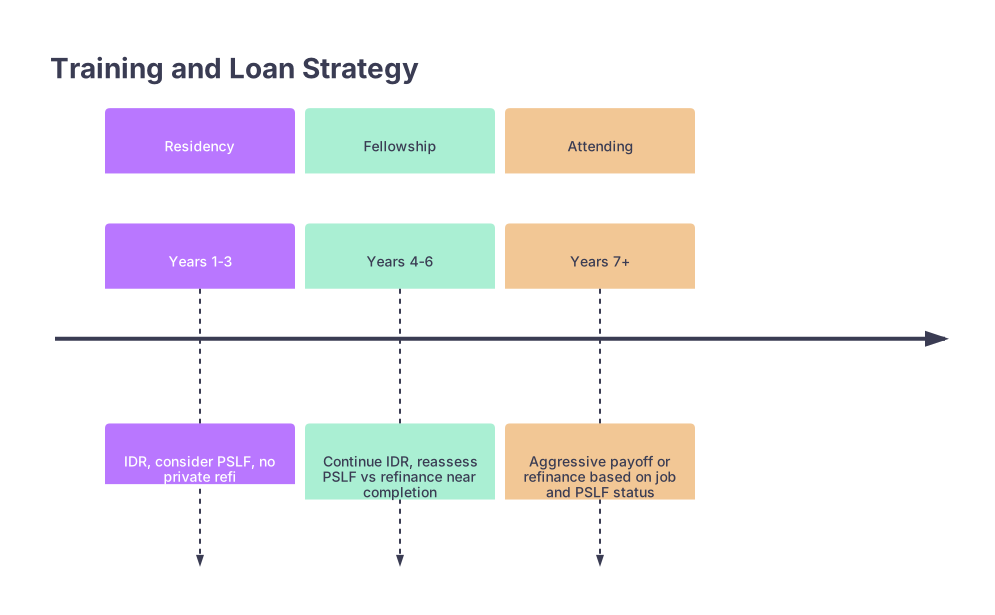
| Period | Event |
|---|---|
| Residency - Years 1-3 | IDR, consider PSLF, no private refi |
| Fellowship - Years 4-6 | Continue IDR, reassess PSLF vs refinance near completion |
| Attending - Years 7+ | Aggressive payoff or refinance based on job and PSLF status |
Your original “I’ll be an attending in 3 years” plan is dead. Accept it. Replace it with a phased plan that actually matches your timeline.
Step 5: Recalculate Your Monthly “Safe” Payment Range
The question right now isn’t “How fast can I pay these off?”
The question is:
“What payment amount is safe during fellowship without wrecking my life?”
Here is how to get that number.
1. Build a bare-bones fellowship budget
Rough outline:
- Net income (after taxes, benefits, retirement contributions if any)
- Minus:
- Rent/mortgage
- Utilities + internet + phone
- Groceries + basic household items
- Transportation (car payment, insurance, gas, maintenance, transit)
- Required insurance (health, disability, basic term life if you have dependents)
- Minimal discretionary (eating out, small travel, family support)
- Existing obligations (credit card minimums, other debt)
What’s left is your maximum safe student loan payment. Not the target. The ceiling.
During fellowship, you want your real payment comfortably below that number.
If your current IDR required payment is way below what you can afford, you can choose to:
- Make the required minimum, and
- Throw extra principal payments on your highest-rate loan only if you’re absolutely not using PSLF.
But do not raise your required payment structure (e.g., by refinancing or switching off IDR) unless there’s a serious upside.
Step 6: Decide What to Do Right Now With Each Type of Loan
You have to handle federal and private loans differently.
Federal loans
In an unexpected fellowship scenario, the default move for most people:
- Stay on or switch to SAVE/IDR
- Do not refinance yet
- Do not forbear unless absolutely necessary
The only design exceptions:
- Very low total balance (e.g., $30–60k) in a high-paying specialty where you’re 100% sure you’ll pay it off quickly and never do PSLF. Then an earlier refinance can make sense, but wait until late residency / early attending, not the month you match into fellowship.
Private loans
These are simpler and harsher. No forgiveness, no PSLF, fewer protections.
Here your goals are:
- Keep them on the lowest fixed rate you can get with a payment you can actually afford during fellowship.
- If current private loan payments are too high, refi to a longer term just to drop the payment, then plan to overpay as an attending.
That’s not ideal mathematically (more interest over time), but it’s safer than constant forbearance or missed payments.
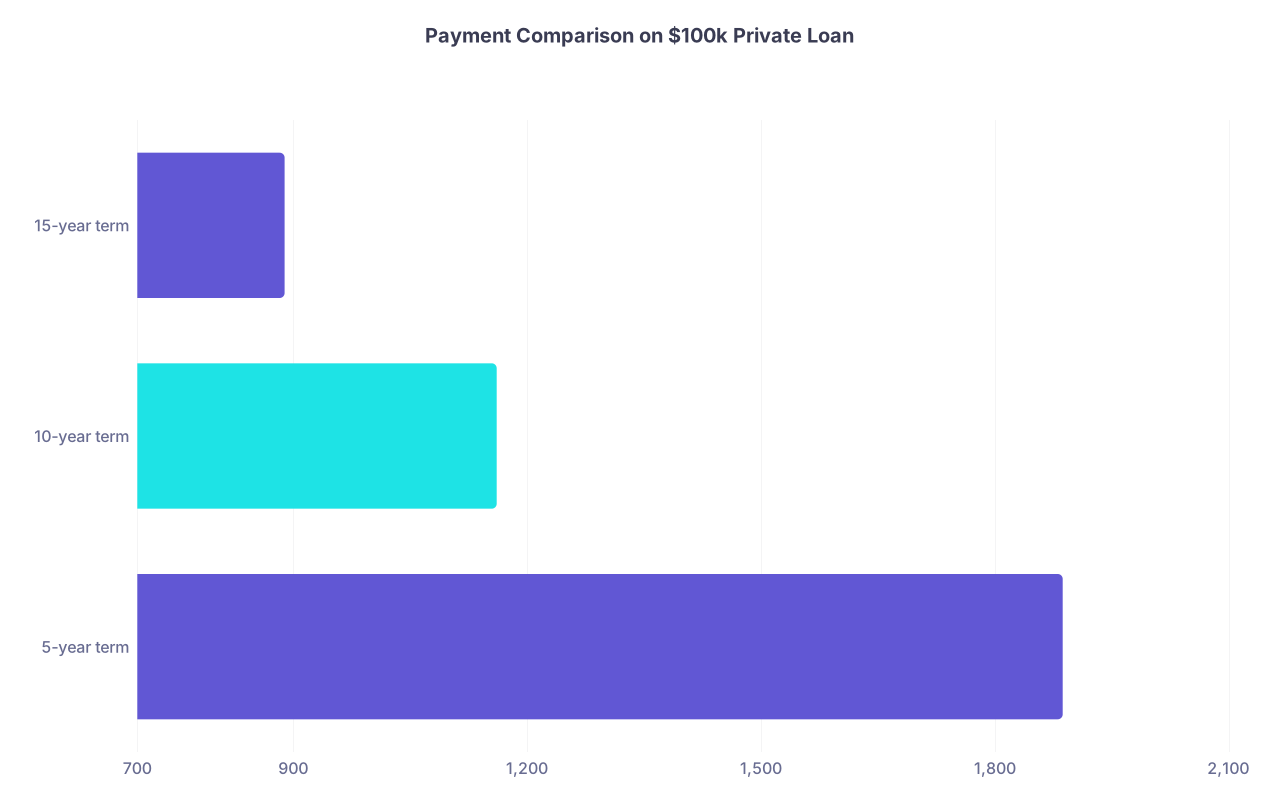
| Category | Value |
|---|---|
| 5-year term | 1887 |
| 10-year term | 1161 |
| 15-year term | 889 |
See that 5-year payment? Not realistic for many fellows. Better to pick a 10- or 15-year term you can survive, then pay extra later when your income jumps.
Step 7: Rework Your “End Game” With Real Numbers, Not Vibes
Once you’ve stabilized the short-term (next 12–36 months), then and only then do you zoom out again.
You now have:
- An updated training timeline (residency + fellowship years)
- Employer types for each stage (PSLF-eligible or not)
- Realistic budget constraints
- A sense of your likely attending salary range
Now re-run your two main long-term scenarios:
PSLF scenario
- Assume:
- You stay in qualifying employment long enough
- You stay on IDR
- Estimate:
- Total you’ll pay over 120 months
- Projected forgiven amount
- Assume:
No-PSLF / payoff scenario
- Assume:
- You pay off loans in 5–10 years as an attending
- Either with federal loans (no PSLF) or refinanced private loans
- Estimate:
- Total paid (principal + interest)
- Monthly payment you’d need to meet your target payoff date
- Assume:
Then compare. Not philosophically. Numerically.
If PSLF saves you $150k+ versus “just pay it off” and your career plans fit nonprofit work anyway, then stop fantasizing about being debt-free in three years. Use PSLF intelligently.
If your potential PSLF benefit is small (say $20–40k) and your leaving nonprofit work is highly likely, that is when an aggressive payoff or refinance strategy is more sensible.
Step 8: Handle the Emotional Whiplash Without Trashing Your Finances
Let me say something blunt: a lot of bad loan moves happen the week after Match or fellowship decisions because people are angry, embarrassed, or tired.
Common emotional mistakes I’ve seen:
- “I’ll prove everyone wrong; I’m just going to pay these off in five years no matter what” → Chooses insanely high payments, burns out, then backslides into deferment.
- “Who cares, I’ll be making cardiology money later” → Forbears or pays minimum on everything, lets interest explode, ends up with $500k+ balance and regrets.
- “I didn’t get the fellowship I wanted so nothing matters” → Stops opening servicer emails, misses IDR recertification, gets slammed with giant standard payment.
Your feelings about your fellowship match are valid. They just do not belong inside your loan decisions.
So put a rule in place: No irreversible financial decision for 30 days after a big unexpected outcome.
In that window you can:
- Gather data
- Rebuild your budget
- Confirm PSLF eligibility
- Set up IDR or adjust your payment date
You do not:
- Refinance federal loans
- Consolidate older loans that have PSLF credit without thinking it through
- Commit to aggressive pay-off plans you haven’t budget-tested
Step 9: If You’re in a Really Messy Corner Case
Some people are not a clean case. A few gnarly but common examples:
- Mixed federal + private debt, with high balances in both
- Prior forbearances, missed payments, gaps in training, partial PSLF credit
- Major life changes alongside fellowship: marriage, kids, divorce, partner losing job
- International grads with complicated visa + employment situations
In those situations, a 60–90 minute session with someone who lives and breathes physician student loans is often worth more than the fee.
Not a random “financial advisor” trying to sell you insurance. Someone who:
- Talks about SAVE, PSLF, consolidation, refi confidently
- Knows how residency/fellowship income actually looks on paystubs
- Has seen dozens of similar cases, not three
You are allowed to buy expertise when the cost of a mistake is six figures.
Step 10: What You Should Do Today
Do not “think about this more.” Do not open twelve tabs of forums and get lost.
Do this instead, today:
- Log into studentaid.gov and your loan servicer(s).
- Create a one-page summary: balances, interest rates, loan types, current plan.
- Write your new timeline across the top of that page: “Residency until __, Fellowship until __, Attending starting __.”
- Circle one word: PSLF or No PSLF (payoff/refi) as your primary working plan, knowing you can revisit it, but you need a default lane.
Then ask yourself one question:
“Given this new fellowship reality, what is the safest loan move I can make this year that still moves me forward?”
Make that move. Nothing heroic. Nothing dramatic. Just the next right step.