
The worst time for most residents to refinance their federal loans is during residency.
Let me say that again, because lenders will not: for a large chunk of trainees, refinancing too early is a very expensive mistake—especially if you might use Public Service Loan Forgiveness (PSLF).
You want timing, not vibes. So here’s the real answer: you refinance when (1) you’re sure you do not need federal protections or PSLF, and (2) the numbers say you’ll come out ahead after accounting for your career path, risk, and cash flow. For a surprising number of residents and fellows, that “right time” is actually near the end of training or even after you start attending pay.
Let’s break it down.
Step 1: Decide Which Path You’re Actually On
Before talking about timing, you have to pick the lane you’re realistically in.
There are only three real paths:
- PSLF / forgiveness path (10-year PSLF or 20–25-year IDR forgiveness)
- Aggressive early payoff path (you’re going to crush the loans fast)
- “I don’t know yet” path (which is where most residents truly are)
If you’re in camp 3, you are not ready to refinance long-term federal loans. Period.
PSLF path: refinancing during training is usually wrong
If all or most of these are true, you’re probably in the PSLF lane:
- You’re in (or very likely heading into) academic, nonprofit hospital, or VA work
- Your hospital shows up as a 501(c)(3) or government employer
- You’re already on an income-driven plan (SAVE, PAYE, IBR)
- Your federal loans are Direct Loans (or can be consolidated to Direct)
- You’ll have 10 or more years total in qualifying employment
If that’s you, then:
- Every year of low income during residency on IDR = cheap PSLF credit
- Refinancing those loans into private loans instantly kills PSLF eligibility
- You lose IDR safety nets (payment caps, payment reductions if income drops, and federal forbearance options)
For PSLF-leaning people, the right move is almost always:
- Stay in federal loans
- Use SAVE (or PAYE if strategically better)
- Certify employment annually
- Reassess near the end of training or when your career plan truly solidifies
Timing here:
Refinance only after you’re sure you’re not going for PSLF anymore. That often means: once you’ve accepted a private practice job and have no intention of going back to a qualifying employer.
Step 2: Understand What You Actually Give Up When You Refinance
Refinancing means converting federal loans into private loans. Once done, there’s no “undo” button.
You’re giving up:
- PSLF eligibility
- IDR plans (SAVE, PAYE, IBR)
- Federal forbearance and deferment protections
- Future legislative benefits (pandemic-style pauses, interest waivers, targeted forgiveness programs)
You’re getting:
- A lower interest rate (hopefully)
- Potentially lower monthly payment if you stretch the term
- More predictable amortization (no IDR weirdness)
So the bar for timing is simple: only refinance when the tangible interest savings outweigh the value of federal protections and forgiveness options you’re realistically likely to use.
During residency and fellowship, federal protections are usually more valuable than a modest rate drop.
Step 3: The Four Common Scenarios (Where Do You Fit?)
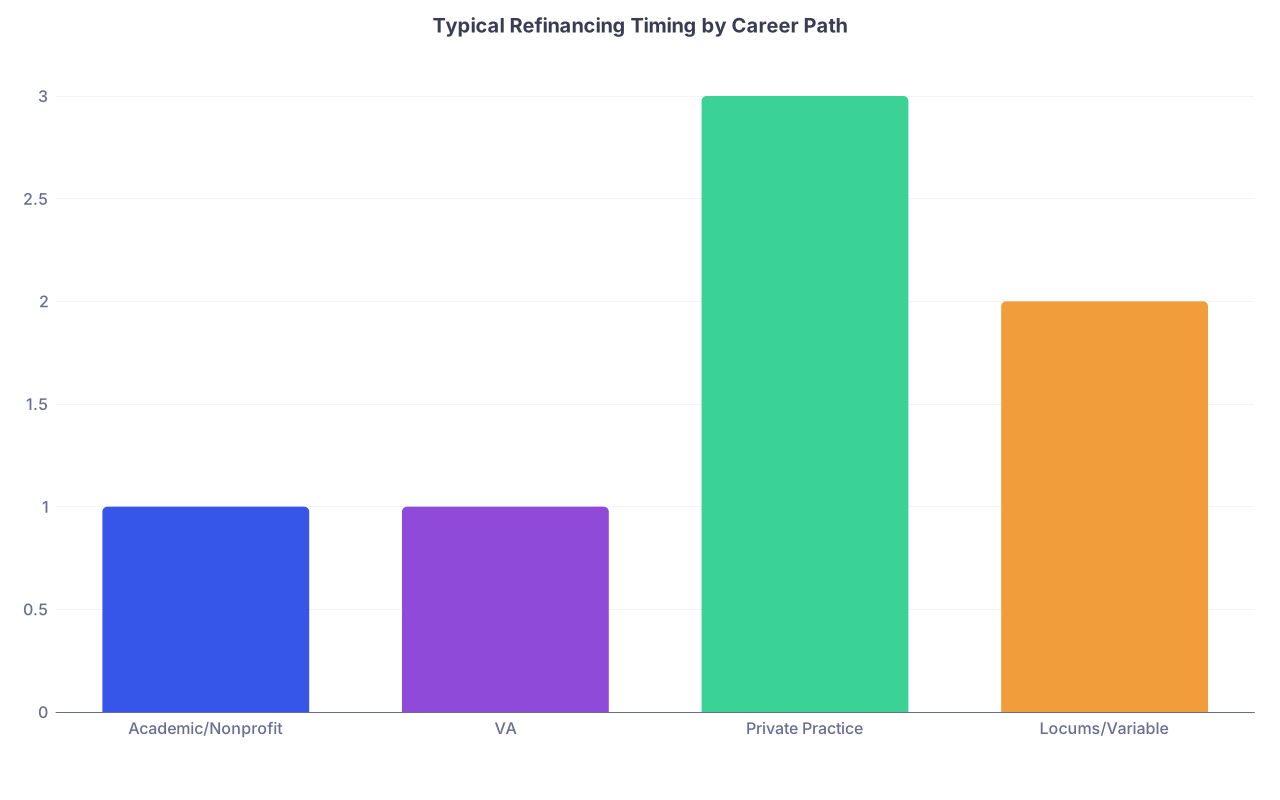
| Category | Value |
|---|---|
| Academic/Nonprofit | 1 |
| VA | 1 |
| Private Practice | 3 |
| Locums/Variable | 2 |
Legend (rough guide): 1 = usually late or never refinance; 2 = case-by-case; 3 = often refinance earlier.
Scenario 1: You’re dead set on academic/PSLF-eligible work
Examples:
- IM resident planning academic cardiology at a university hospital
- Psychiatry fellow who wants to stay at the same 501(c)(3) system
- Pediatrician who loves children’s hospitals and teaching
For you, the “right time to refinance” may be:
- Never on your main federal loans
- Possibly only on smaller side loans (e.g., private loans from undergrad) that aren’t PSLF-eligible anyway
Refinancing your PSLF-eligible federal loans as a resident is almost always a mistake. Your income-based payments are artificially low now; that’s the entire PSLF advantage.
Scenario 2: You’re probably going private practice, but you’re not 100% sure
This is the gray zone where many residents sit:
- Surgery resident leaning toward private practice but likes the idea of academics
- Anesthesiology trainee who might do locums or join a large private group
- Subspecialty fellow still exploring geography and job types
Here, the default should be: do not refinance federal loans during training.
You can:
- Stay on IDR (often SAVE) to keep cash flow manageable
- Keep PSLF/IDR forgiveness optionality
- Build some savings and flexibility
- Reassess when you sign your attending contract
The “right time” to refinance in this scenario is usually:
- A few months before or after your attending start date, once you:
- Know your actual income
- Know whether your employer is PSLF-eligible
- Have decided how long you’ll stay in that job
Scenario 3: You are absolutely not doing PSLF-eligible work
Examples:
- Ortho resident with a signed offer at a private group
- Dermatology trainee going 100% private cosmetic practice
- EM doc planning locums and small democratic groups only
If this is honestly you—no academic dreams, no VA curiosity, no “maybe later I’ll do teaching”—your calculus changes.
For very highly-paid specialties, especially with large loan balances, refinancing before training ends can sometimes make sense.
When might it be reasonable to refinance during residency/fellowship?
- You have no interest in PSLF-eligible paths
- You’re in a relatively high-paying specialty (ortho, derm, anesthesia, EM, radiology, some surgical subs)
- You can handle a resident/fellow refinancing payment without blowing up your budget
- The refi rate is meaningfully lower than your current federal interest (not a 0.5% vanity move)
Many refi lenders offer resident-specific programs:
- Lower required monthly payments (e.g., $100/month) during training
- Full payment kicks in after you finish
Those can make sense if:
- The rate is much lower
- You’re comfortable giving up PSLF and IDR safety nets
- You’ve thought through job risk (what if your dream private job falls through and you end up at a nonprofit? Happens more than you think.)
The truly “right” time here is often:
- Late residency or fellowship (PGY-3+), when your specialty and likely job type are concrete
- Or right before you start attending pay, if the lender’s resident program is weak
Scenario 4: You already have private loans
If some of your loans are already private, PSLF is off the table for those anyway.
For those private-only loans:
- Refinancing during residency can absolutely make sense if you can drop the rate
- There’s no federal protection to lose; you’re just shopping for a better private deal
Here, the “right time” is whenever the rate savings are real and the terms fit:
- Lower APR
- Reasonable payment structure while you’re still in training
- No bizarre fees or conditions
You can refinance private loans without touching your federal loans. And often, that’s the best compromise.
Step 4: The Math That Actually Matters
Ignore pure marketing—“We saved our average borrower $X!”—and look at your numbers.
Here’s the simple framework:
- Figure out your current federal effective rate and term
- Get multiple actual refinance quotes (not just pre-quals)
- Model two or three realistic paths and compare total out-of-pocket cash
| Factor | Refinance During Training | Wait Until Attending |
|---|---|---|
| PSLF Eligibility | Usually lost | Preserved for longer |
| Interest Savings | Starts earlier | May get better rates |
| Cash Flow Flexibility | Lower if full payments | Higher with big income |
| Risk Protection | Lower (private only) | Higher (federal + choice) |
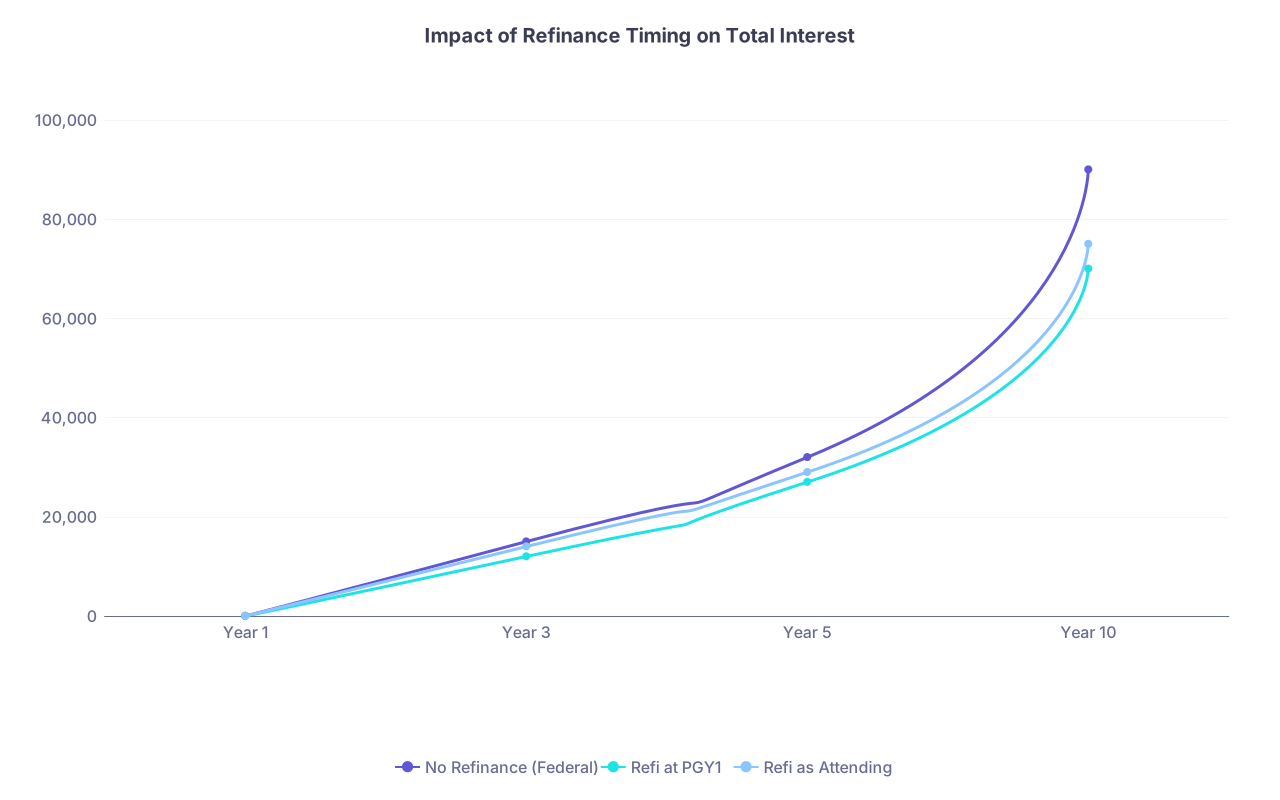
| Category | No Refinance (Federal) | Refi at PGY1 | Refi as Attending |
|---|---|---|---|
| Year 1 | 0 | 0 | 0 |
| Year 3 | 15000 | 12000 | 14000 |
| Year 5 | 32000 | 27000 | 29000 |
| Year 10 | 90000 | 70000 | 75000 |
You’re comparing:
- Total cost of federal IDR/PSLF path
- Total cost of refi + aggressive payoff path
- Total cost of hybrid (IDR during training, refi as attending, then payoff)
If you’re nowhere near running those numbers, the “right time” to refinance is probably “not yet.”
Step 5: Career and Risk Questions You Must Answer First
Here’s the part lenders almost never force you to think through but absolutely should:
- How sure are you about your specialty? (Switching from derm to pediatrics changes everything.)
- How stable is your partner’s income or your family situation?
- Any chance you’ll want part-time work, extended leave, or geographic flexibility early as an attending?
- Is your mental bandwidth already maxed out? (Aggressive payoff sounds great until you’re post-call and wrecked.)
If any of those answers are “I’m not sure,” federal flexibility has real value.
I’ve seen people refinance in PGY-2, then:
- Match into a different fellowship than expected
- Fall in love with academic medicine late
- Have a major health or family disruption
- Lose that PSLF opportunity they suddenly want back
Refinancing early closes off those Plan B and C options.
A Rough Timeline: What “Good Timing” Often Looks Like
This is not gospel, but it reflects what tends to work in real life.
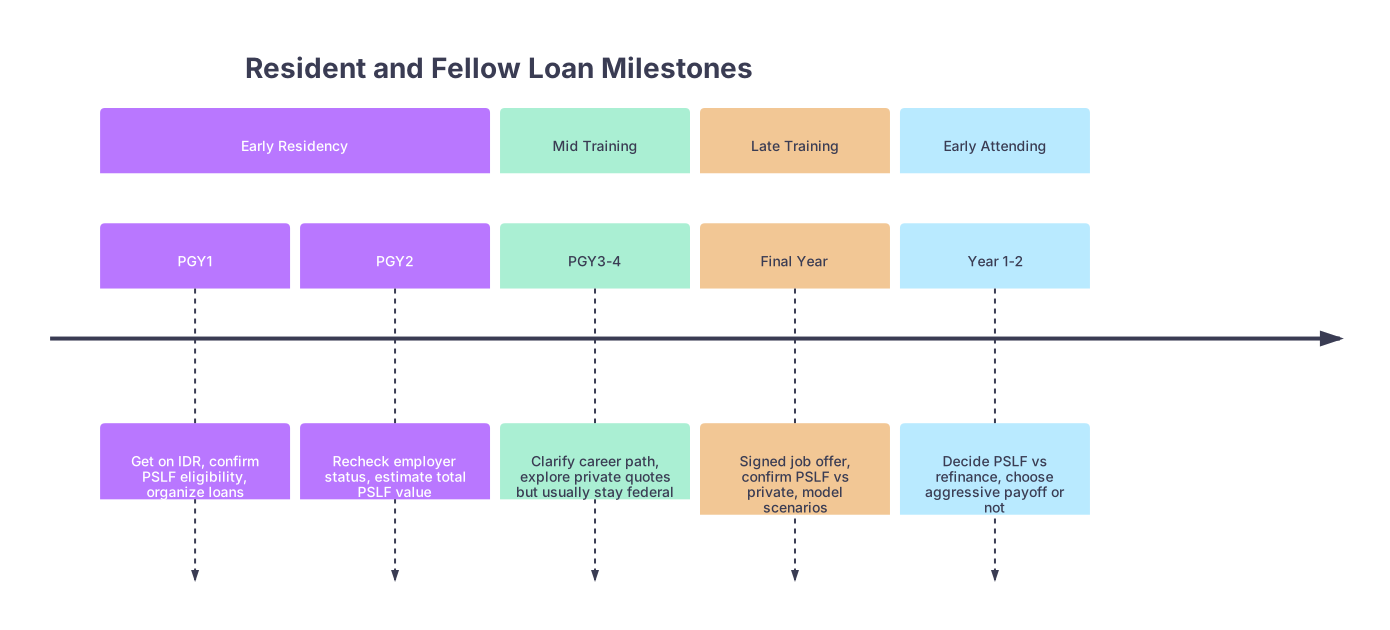
| Period | Event |
|---|---|
| Early Residency - PGY1 | Get on IDR, confirm PSLF eligibility, organize loans |
| Early Residency - PGY2 | Recheck employer status, estimate total PSLF value |
| Mid Training - PGY3-4 | Clarify career path, explore private quotes but usually stay federal |
| Late Training - Final Year | Signed job offer, confirm PSLF vs private, model scenarios |
| Early Attending - Year 1-2 | Decide PSLF vs refinance, choose aggressive payoff or not |
And one more reality: you don’t get bonus points for being “decisive” if the decision is wrong. Waiting 1–2 years until your path is clearer is often the smarter financial move.
Practical Rules of Thumb
Use these as a sanity check:
You’re probably refinancing too early if:
- You’re still in residency or fellowship
- You’re at a nonprofit hospital and might stay there
- You haven’t modeled PSLF vs refi with rough math
- A lender rep is pushing you harder than your own numbers are
You’re probably in the right timing window to seriously consider refinancing if:
- You’ve signed (or are about to sign) a private practice or non-PSLF-eligible job
- You’ve decided against PSLF with math, not vibes
- You’re comfortable locking in a payoff horizon of 5–10 years
- You’re already budgeting like an attending, not like a lottery winner
And you’re probably better off not refinancing at all (or only refinancing your private loans) if:
- You’re committed to academic/VA/nonprofit work long-term
- Your loan balance is huge relative to income, and PSLF saves you a large amount
- You like the idea of optionality in your career without loan tail risk
Two Special Cases Residents Forget About
1. Moonlighting income
If you’re moonlighting during residency/fellowship, you’ve got a hybrid situation:
- Your AGI goes up, so IDR payments may rise
- You have more cash to throw at loans
But that does not automatically mean “refinance now.”
Often the better move is:
- Stay on IDR to keep protections
- Use extra moonlighting money as optional extra payments on your highest-interest loans
- Re-evaluate refi once you’re attending and done with moonlighting uncertainty
2. Spouse income and tax filing
Your decision interacts with:
- Married filing jointly vs separately
- How much your spouse earns
- Whether they have loans or not
This is one place where a one-hour consult with a student loan–focused planner or CPA actually pays for itself. I’ve watched couples save five figures just by filing MFS + IDR optimized, then refinancing later.
FAQ (Exactly 6 Questions)
1. Is there ever a good reason to refinance federal loans during residency?
Yes, but it’s narrow. It can be reasonable if you’re in a high-paying specialty, absolutely certain you’re not doing PSLF-eligible work, and you can access a significantly lower rate with resident-friendly payments. Even then, I’d wait until mid-to-late training, not PGY-1. And you still need to be honest about job risk and life uncertainty.
2. If I’m going for PSLF, should I never refinance?
You should not refinance your PSLF-eligible federal loans. But you can absolutely refinance non-federal or non-eligible loans (e.g., old private loans) while keeping federal Direct Loans in the PSLF/IDR system. Plenty of attendings do a hybrid: PSLF on federal loans, aggressive payoff on private refi loans.
3. What if interest rates are high right now—should I wait to refinance?
You don’t time this like a stock market. You compare what you can get today to what you already have. If federal rates are 6–7% and a private lender offers you 3–4% fixed with terms you like, that’s real savings, even if macro rates feel “high.” But during residency, the rate gap has to be big enough to justify losing flexibility.
4. Can I refinance more than once?
Yes. Many people refinance multiple times as their income rises, credit improves, or market rates drop. That’s another reason not to panic-refi every loan in PGY-1; you can refi private loans later on even better terms as an attending, when your risk to the lender is lower and they’ll fight harder for your business.
5. How do I know if PSLF is really worth it versus refinancing and paying fast?
You run the numbers. Estimate 10 years of IDR payments vs a 5–10 year private refinance payoff. Consider your likely income, family size, tax filing status, and job type. If PSLF would wipe out six figures of remaining balance after 10 years, it’s very hard for refinancing to “beat” that unless you’re aggressively attacking loans with a very high income.
6. What’s the single best “default” action for a confused PGY-1 resident?
Simple: consolidate into Direct (if needed), get on SAVE or another IDR plan, make qualifying payments, and do nothing else drastic. Keep PSLF on the table. Build a small emergency fund instead of prepaying a ton of principal. Revisit refinancing decisions later in residency once you know your specialty, job type, and whether PSLF still fits your actual career.
Key takeaways:
Most residents should not refinance federal loans during training unless they’re absolutely certain PSLF and federal protections have no value to them. The “right time” to refinance is usually late training or early attendinghood, after your job type is clear and you’ve done the math. And you can always refinance private loans separately while leaving federal loans alone until your future is actually in focus.