
The culture of “never say no” in surgery is breaking people, not making them better surgeons.
You’re not crazy for wondering if asking for more time, or fewer cases, will secretly label you as the weak one. The lazy one. The co-resident who “just doesn’t have it.”
Let me say this bluntly: that fear is everywhere in surgical training. People just whisper it instead of admitting it out loud.
You’re terrified that if you ask for:
- more time to learn a procedure
- more support with a steep learning curve
- a slower ramp-up after a mistake, illness, pregnancy, burnout, whatever
…your co-residents will keep grinding, and you’ll quietly fall behind in case volume, skills, and reputation. And then five years from now, you’ll be the one everyone low-key avoids operating with.
Let’s drag that fear into the light and actually dissect it.
The Myth: “If I Don’t Say Yes to Everything, I’ll Never Be a Good Surgeon”
There’s this unspoken rule in a lot of surgical programs: always say yes. Yes to more consults. Yes to staying late. Yes to extra cases. Yes, yes, yes, until you’re so fried you’re charting at 2 a.m. and crying in the call room.
You already know how the story goes:
You imagine you’re an intern or junior:
- You’ve had three nights of bad sleep
- You’ve already been in two long cases today
- There’s a third case you could scrub, but your brain feels like scrambled eggs
And then the voice in your head starts:
“If I don’t scrub this, my co-resident will get another lap chole… That’s another case for their numbers and one less for me… What if this is the deciding difference when we’re both applying for fellowships?”
That voice doesn’t care that you’re exhausted. It cares about one thing: not falling behind.
So you scrub. You zone out a little. You fumble a step you actually know. Attending gets tense. You leave feeling worse, not better.
Here’s the part no one tells you: blindly saying yes to everything is not the same as deliberate, high-quality learning. It often gives you more reps of mediocrity, not mastery.
To make it more concrete:
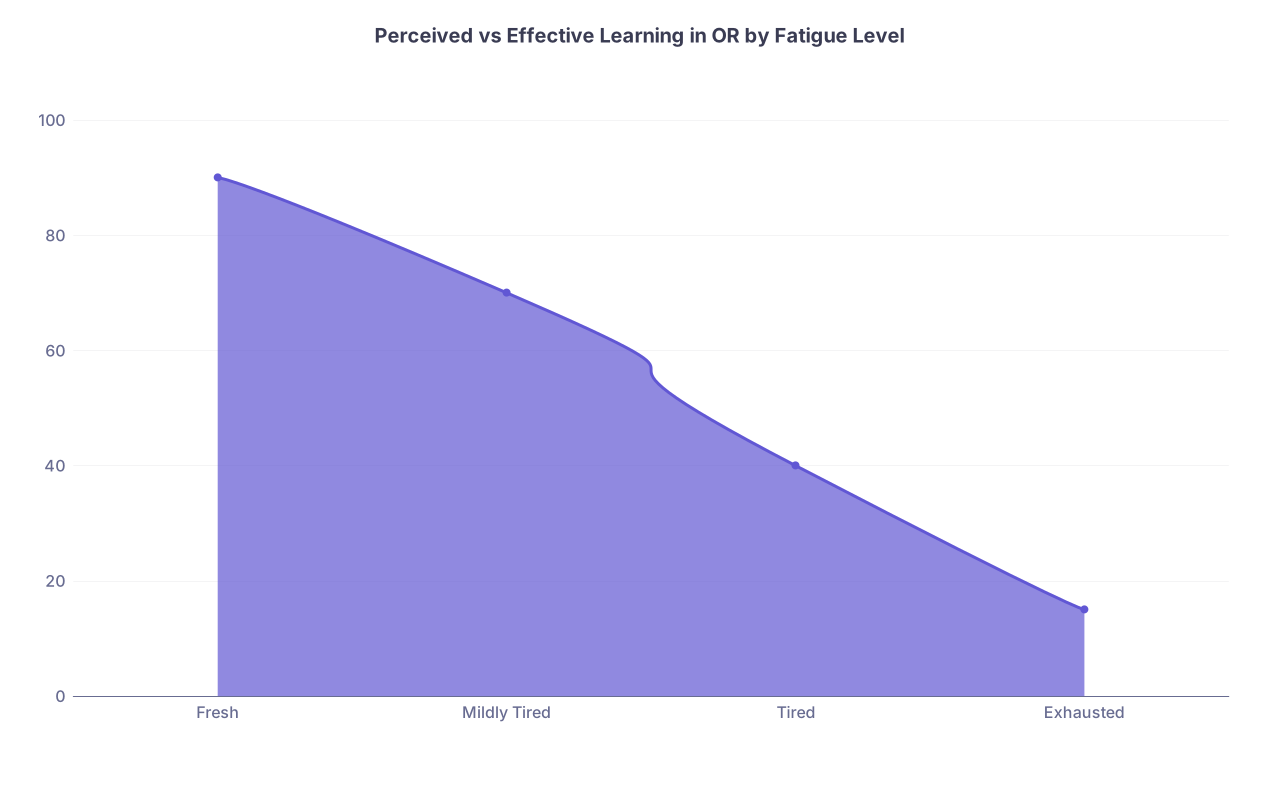
| Category | Value |
|---|---|
| Fresh | 90 |
| Mildly Tired | 70 |
| Tired | 40 |
| Exhausted | 15 |
That’s the problem. You’re terrified of missing “opportunities,” but you’re ignoring how much those opportunities are actually teaching you when you’re half-dead.
The Reality: Surgical Case Volume Is Not a Straight Race
You’re imagining case volume like a treadmill race. Whoever runs the farthest, fastest, wins. That’s not how it really works.
I’ve seen residents:
- Who had monster PGY-2 and PGY-3 years, then had a rough life event (illness, family crisis, pregnancy) and slowed down for a time
- Who got pulled into research for a year, lost the OR rhythm, came back terrified they’d be “rusty forever”
- Who had remediation or extra oversight after a complication and thought, “That’s it. I’m branded. I’m done.”
Then two years later? They’re senior residents who everyone trusts to run the board.
Because skills in surgery don’t grow in a straight tidy line. They spike, plateau, backslide, then jump again.

| Step | Description |
|---|---|
| Step 1 | Intern Year |
| Step 2 | Steep Learning |
| Step 3 | Plateau PGY 2 |
| Step 4 | Jump After Responsibility |
| Step 5 | Slowdown From Life Event |
| Step 6 | Recovery and New Jump |
| Step 7 | Senior Level Competence |
Your fear is that if you take even a small dip — ask for more time to learn, say no to a case when you’re unsafe to operate, request structured help — you’ll never catch back up.
That’s not how this actually plays out over 5+ years.
High-volume programs literally expect variability between residents: rotation differences, attending preferences, random case mixes, vacations, illness, maternity/paternity leave, research time. It’s baked into the system.
Here’s the uncomfortable truth: by graduation, the overwhelming majority of categorical surgical residents meet case volume and competence standards, even if their path wasn’t perfectly smooth or identical to their co-residents.
The Numbers Game: Will Fewer Cases Ruin Me?
You’re haunted by numbers. Case logs. Minimum requirements. Your seniors flexing their 1,000+ logged cases by PGY-4.
Let’s ground that.
| Fear | Typical Reality |
|---|---|
| I’m 50–100 cases behind my co-resident | Both still graduate above minimums |
| I missed a month of OR time | Cases redistributed, later months heavier |
| I needed remediation or extra oversight | Temporary dip, long-term skills usually recover |
| I said no to cases when exhausted | Fewer cases that day, better learning later |
And the part that actually matters: nobody cares that you did 15 more appendectomies than your classmate if your technique is sloppy, your judgment is shaky, and you break down under pressure.
Attendings will absolutely take the resident with:
- 10 thoughtfully performed cases, with reflection and feedback
over - 25 half-remembered cases where you just “held the camera and checked your phone afterward”
The fear: “If I’m behind this year, I’ll always be behind.”
The reality: rotations change, opportunities shift, chiefs graduate, new cases flow in, and your relative position can change fast.
Asking for More Time ≠ Admitting You’re Incompetent
Here’s where your anxiety spikes: the actual asking.
You’re thinking:
- If I tell my attending I’m not comfortable doing this part yet, they’ll think I’m behind.
- If I ask for a slower step-by-step, I’ll look like I’m dragging the case.
- If I ask for simulation time instead of jumping right into the hardest parts, I’m wasting time.
I’ve watched this play out in real ORs.
Scenario A: The anxious resident pretends they’re fine
Attending: “You’ve seen this a few times, you can do the dissection.”
Resident (panic): “Yeah, okay.”
They hesitate, wrong plane, attending clamps down, tension rises, learning shuts off.
Scenario B: The anxious but honest resident
Attending: “You’ve seen this, you can do the dissection.”
Resident: “I’d like to try, but I’m still struggling with identifying the right plane consistently. Can you talk through the first few moves with me?”
Attending pauses, adjusts expectations, coaches more deliberately.
Guess which one ultimately progresses faster.
You’re scared that asking for more time means you’re falling behind.
In practice, asking for more time usually:
- makes attendings trust you more, not less
- gets you more targeted teaching, not less
- helps you make fewer dangerous mistakes, which means fewer setbacks in confidence and reputation
There’s a huge difference between “I never want responsibility” and “I want to do this right and safely, and I need a bit more structured help to get there.” Most decent surgeons know the difference instantly.
The Dark Fear: Will My Co-Residents Pass Me and Leave Me Behind?
Let’s say it happens. You get sick. You need time off. You develop anxiety or depression and have to actually address it. You’re pregnant. A parent gets sick. Whatever. Life hits.
You watch your co-residents:
- Scrub into more cases
- Run more consults
- Get the “fun” complex cases while you’re doing more basics or sitting in clinic
You lie in bed and think: “This is it. This is the moment I become ‘the weak one’ in my class.”
I’ve heard this exact line on night shift from residents who’d just come back from leave or remediation:
“I feel like I missed the boat. Everyone else is on another level now.”
Six months later? Often that gap shrinks dramatically.
Because here’s what you don’t see in real time:
- Some of your co-residents are also burning out, but you only see their Instagram flexes and case logs
- Some of that “extra” volume is low-yield, low-learning, just body-in-the-OR time
- Some attendings prefer the resident who took the time to reset and is now more focused, stable, and teachable
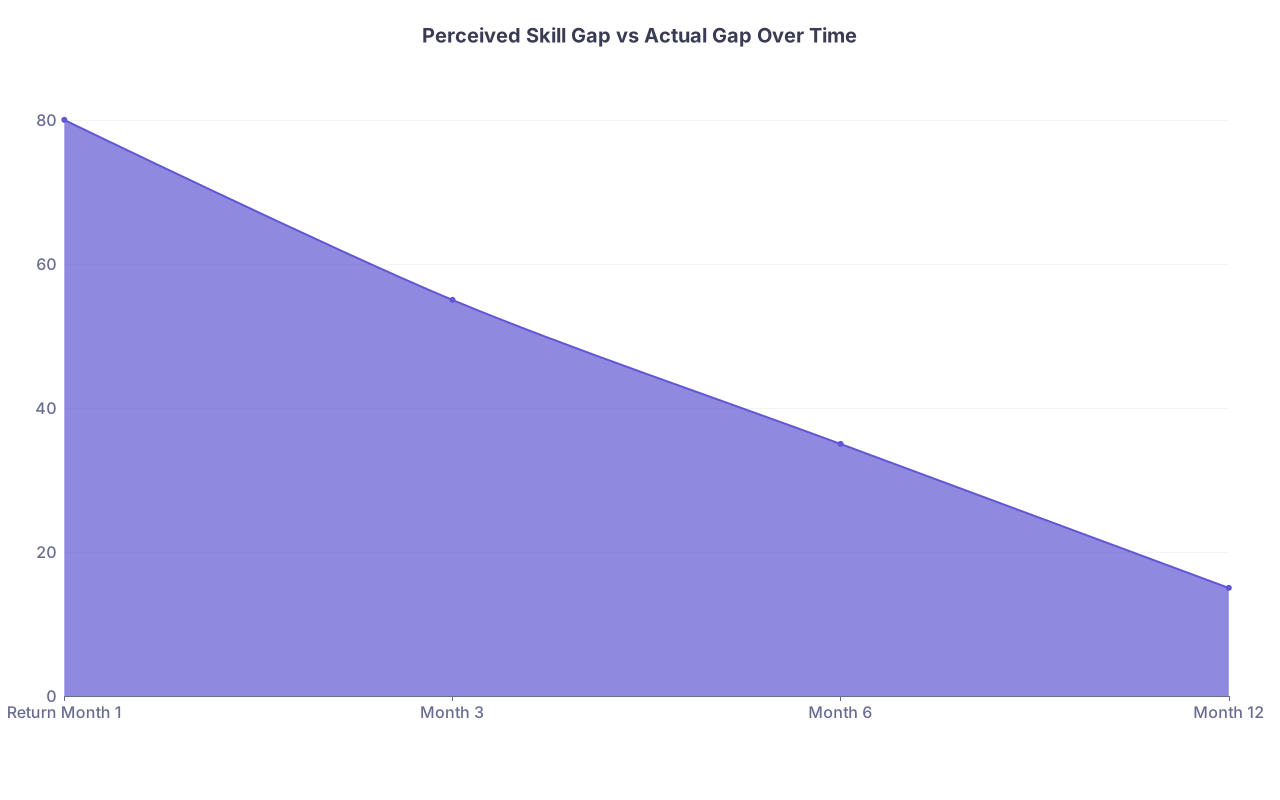
| Category | Value |
|---|---|
| Return Month 1 | 80 |
| Month 3 | 55 |
| Month 6 | 35 |
| Month 12 | 15 |
Your brain loves catastrophic, permanent stories.
“I fell behind, therefore I’ll always be behind.”
Residency reality is messier and kinder than that. People slow down, catch up, spike, stagnate, and still finish as safe, competent surgeons.
The Future of Surgery Is Not “Grind Until You Break”
You’re also not training in a vacuum. The whole field is shifting under your feet.
We’re moving toward:
- Competency-based training and assessment instead of pure case-count obsession
- More structured simulation and deliberate practice (robotic consoles, VR, bench models)
- Greater awareness of burnout, mental health, and the actual cost of training like it’s the 1980s forever

This doesn’t mean things are suddenly soft and gentle. They’re not. Surgery is still brutal a lot of the time.
But programs are being watched more closely. ACGME has duty hour standards. Wellness committees exist not just for show anymore. Case logs are monitored to ensure minimums, and learning environments are under scrutiny.
The old model of “the resident who never says no, never struggles, never asks for help” is being replaced by “the resident who is safe, teachable, and sustainable.”
The future surgeon isn’t the one who got the most cases at any cost. It’s the one who’s still functional, thoughtful, and safe ten years after graduation.
You being conscious of your limits is not a red flag. It’s honestly a requirement for where this field is going.
So How Do You Ask for More Time Without Sabotaging Yourself?
You’re probably thinking, “Okay, fine, but if I actually open my mouth, what do I say that doesn’t sound like ‘I can’t hack it’?”
Here’s language that tends to land better with attendings:
Instead of:
“I’m not good at this. I need help.”
Try:
“I want to get better at this step, but right now I’m not consistent. Could we slow down the first part and talk through your mental checklist while I do it?”
Instead of:
“I don’t think I can do this case.”
Try:
“I’m worried my current fatigue level and limited experience with this approach might make me unsafe as primary. Could I assist and focus on specific parts today, then take more next time when I’m sharper?”
Instead of:
“I’m behind my co-residents.”
Try:
“I’ve noticed my log is lighter in [specific type of case]. Could we be more intentional about involving me when those cases come up, and maybe add some targeted simulation or review?”

| Step | Description |
|---|---|
| Step 1 | Notice Struggle |
| Step 2 | Define Specific Skill Gap |
| Step 3 | Choose Attending or PD to Talk |
| Step 4 | Use Concrete Language |
| Step 5 | Ask for Targeted Plan |
| Step 6 | Follow Up After a Few Weeks |
You’re not asking: “Can I be less of a surgeon?”
You’re asking: “Can we train me smarter so I become a better surgeon?”
That’s the frame. You’re not weak. You’re serious.
What You Can Actually Do Today (Even If You’re Just an Applicant)
You might still be pre-residency, just imagining the worst. That’s fair. Your brain loves horror trailers.
Here’s what you can do now:
- When you talk to programs, actually ask about how they support residents who fall behind in case volume, take leave, or struggle with specific skills. Listen very carefully to how they answer.
- Pay attention on interview day or sub-I: are residents open about struggles, or is it all bravado and grind-culture chest thumping? If nobody admits to ever needing help, that’s not a strong environment. That’s denial.
- Start practicing honest language about limits in your current world: with mentors, in research, in clinical rotations. If you can’t say “I need more time” in med school, you’re not magically going to find the words as a PGY-1 at 3 a.m.

Your fear that asking for more time will ruin you? Understandable. You’re entering (or thinking about entering) a culture that glorifies being invincible.
But here’s the real test:
Not whether you can say yes to everything.
Whether you can stay honest enough with yourself — and brave enough with others — to ask for what you need so that five years from now, you’re not just a surgeon with a high case count.
You’re a surgeon who’s actually safe. Skilled. And still a human.
FAQ (Exactly 4 Questions)
1. If my co-residents are logging more cases than me, will fellowship programs think I’m weaker?
Fellowship directors don’t just look at raw case numbers. They talk to your program director. They ask, “Would you let this person operate on your family?” They look at letters describing your judgment, growth, and reliability. A 10–20% difference in total case numbers is rarely the deciding factor. Chronic patterns of poor performance, bad attitude, or unsafe behavior are much more damaging than having fewer cases because you took leave or needed a gradual ramp-up.
2. Will asking for more time or help get me labeled as “the problem resident”?
It depends how you do it and the culture of the program. If you’re chronically avoiding responsibility, yes, people notice. But asking for specific help to improve a defined skill, or explaining a temporary limitation (fatigue, new technique, recent complication) usually reads as maturity, not weakness, in most halfway decent programs. The “problem resident” label more often comes from denial, blame-shifting, and lack of insight — not from requesting thoughtful support.
3. What if I really do fall behind in case volume because of illness, leave, or remediation? Can that actually be fixed?
Yes. Programs adjust rotations, give heavier operative months, use simulation, and redistribute call to help residents catch back up. The ACGME cares a lot about graduates meeting minimum case numbers, and programs are under pressure to make that happen. You might need an extension of training in extreme cases, but that’s not a death sentence — it’s a bridge to safe practice. It feels like failure in the moment. It often looks like thoroughness when fellowship or hospital privileging committees review your record later.
4. How do I tell the difference between being appropriately cautious and just letting fear hold me back from good opportunities?
That’s the hardest line. One rough rule: if you’re consistently saying no to responsibility even when you’re rested, prepared, and supervised, that’s fear running the show. If you’re saying, “I want to do this, but I need more structure/teaching/stepwise progression,” that’s appropriate caution. Talk to someone you trust — an attending, chief, or mentor — and ask them directly: “Am I being too cautious, or appropriately self-aware?” Their pattern of feedback, over time, will tell you a lot.
Open a notes app or piece of paper right now and write one sentence: “If I needed more time or help in residency, I would say it like this: _______.”
Fill in that blank. Get the words out of your head and onto the page. That’s your first rehearsal for not letting fear silently run your training.