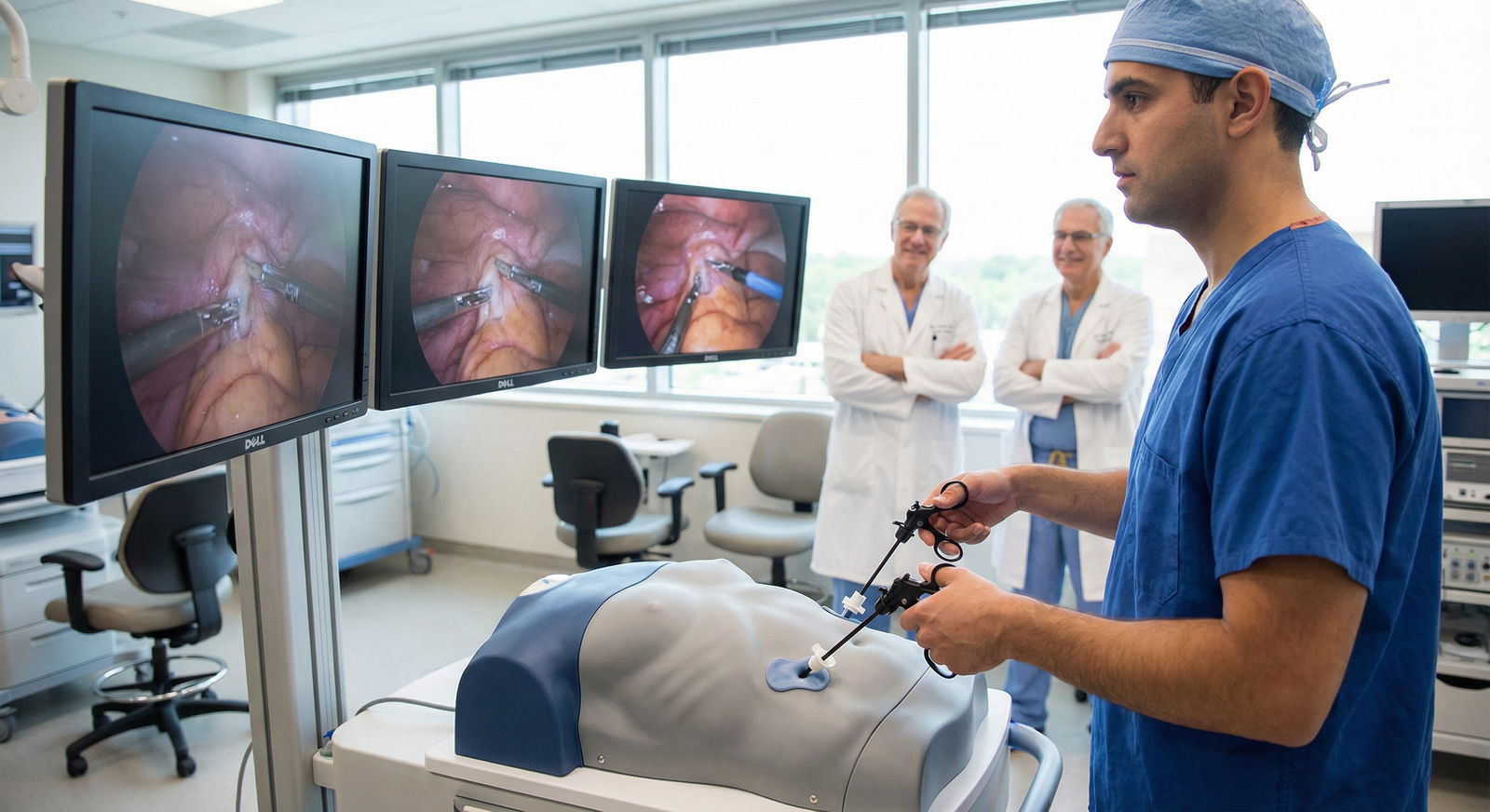
It’s a Tuesday night. You’re sitting in a call room or at your kitchen table, flipping through old rotation schedules that never happened. That trauma month that got converted to “virtual didactics.” The elective surg onc block you were excited about—just… disappeared. You’re scrolling through your ACGME case log or logbook and it hits you: this number is not going to catch up. And the thought lands like a brick in your stomach:
“Did I just permanently screw my surgical case volume because of something I couldn’t control?”
Let’s talk about that. Honestly. With all the worst-case fears out loud, not brushed aside.
The fear you’re not saying out loud
Here’s the ugly internal monologue most people won’t admit:
“What if I graduate as that surgeon? The one who’s technically ‘board eligible’ but secretly undercooked. What if attendings can tell I got trained in the ‘cancelled rotation’ era? What if fellowship PDs see my case logs and quietly bin my application?”
And then the spiral kicks in:
- I missed months of OR because of COVID / staffing shortages / hospital restructuring.
- My elective cases evaporated.
- Even now, rooms are running fewer cases per day.
- Everyone says “it’ll be fine” but... what if they’re wrong?
You’re not crazy for thinking this. A lot of residents and students quietly keep a mental tally: “I should have done 30 more choles, 15 more appys, a bunch of hernias, and I just… didn’t.”
Let me cut right into it: your surgical case volume is not permanently doomed. But pretending nothing changed is also nonsense. The system changed. The expectations shifted with it. And you have more levers to pull than it feels like at 2 a.m. staring at your log.
What “permanently hurt” actually means (and doesn’t)
“Permanently hurt” sounds like:
- I’ll always be behind my peers.
- I’ll never catch up in skill or confidence.
- Programs and boards will label me “less than.”
- Patients will be unsafe with me.
That’s the catastrophic version your brain is spinning. Reality is way less binary and way more annoying and nuanced.
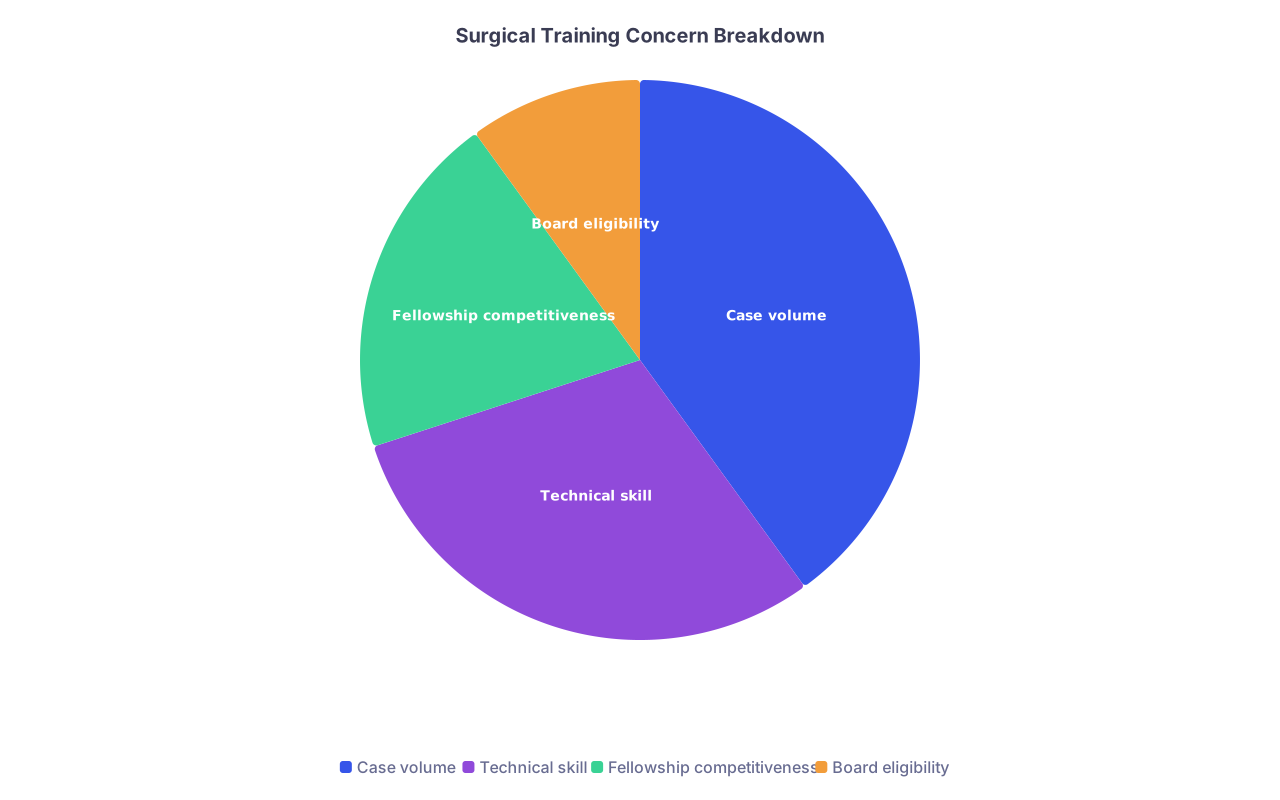
| Category | Value |
|---|---|
| Case volume | 40 |
| Technical skill | 30 |
| Fellowship competitiveness | 20 |
| Board eligibility | 10 |
Here’s the line I’m going to stand on:
Your raw case number may end up lower than some historical cohorts. That does not mean you’re doomed to be a worse surgeon.
Why? Because several things move when case volume drops:
- Accrediting bodies adjust expectations. They had to. ACGME, ABS, and specialty boards literally issued pandemic guidance and flexibilities because half the planet’s ORs shut down.
- Programs recalibrate their definition of “competent.” If a whole class lost elective time, they can’t apply pre-pandemic expectations like nothing happened.
- Attendings change how they teach. I’ve seen chiefs get thrown into cases earlier, juniors get more deliberate practice, and simulation suddenly matter a lot more.
The big question isn’t: “Is my total case count lower than the class of 2017?”
It’s: “Given what happened, am I using every available tool to end up competent by graduation?”
That’s the part you control.
The reality of canceled rotations: what actually got lost
Let’s be specific, because “rotations got canceled” is vague until you spell out what was actually taken from you.
The three big hits I’ve seen people take:
Bread-and-butter reps
- Missed straightforward cases: chole, appy, hernia, laparoscopy basics.
- Lost “I could almost do this with my eyes closed” repetition that builds speed and comfort.
Subspecialty exposure
- Trauma level 1 rotations cancelled or replaced with ED triage shifts.
- Transplant, surg onc, colorectal, MIS, or pediatric blocks cut or combined.
- Less time to decide what you actually like, and less time for those people to know you.
Case complexity ramp
- PGY-3 or PGY-4 blocks that were supposed to escalate your autonomy… disappeared.
- Instead of a smooth progression, you get weird gaps: solid PGY-2 skill set, then a random jump to chief-level responsibility without the intermediate scaffolding.
Here’s the thing that’s hard to hear: some of those reps are gone. They are not coming back in the exact same packaged form.
But that doesn’t mean you can’t build the same skill. It just means you’ll probably build some of it differently and a bit later than you planned.
How programs and boards are actually looking at this
Let’s pull back the curtain on the system itself, because your anxiety is partly fueled by not knowing how you’ll be judged.
| Aspect | Pre-Disruption Norm | Post-Disruption Reality |
|---|---|---|
| Raw case numbers | High, stable expectations | More flexible, cohort-aware |
| Rotation completion | Full required blocks | Substitutions, adjusted structures |
| Board eligibility | Rigid minimums | Temporary flexibility, context used |
| Fellowship review | Raw numbers + letters | Heavier weight on narrative & skill |
| Simulation value | Nice but peripheral | Actively counted and emphasized |
I’ve seen PDs sit in meetings literally say:
“Look, the 2020–2023 classes are not comparable to 2016. We know they lost months of elective OR.”
Boards and accreditation bodies:
- Issued guidance acknowledging reduced case volume.
- Allowed some substitution or flexibility with case logs.
- Emphasized competency-based assessment more than raw counts.
Does that magically erase every deficit? No. But you’re not being secretly judged with pre-pandemic benchmarks while everyone smiles and lies to your face. They know.
Fellowships are similar. Will some ultra-competitive programs still quietly favor residents with monster logs? Yes. That’s reality. But those people also know that a PGY-5 with 1,100 cases from a high-volume trauma center isn’t the fair comparison to a resident who lost three months of OR to redeployment.
You are not being evaluated in a vacuum.
What you can actually do right now (that isn’t magical thinking)
Here’s where the anxiety usually turns into paralysis. You can’t resurrect those canceled months, so you just… stew. Don’t.
You have levers. They’re not glamorous, but they matter.
1. Get brutal with your case log and gaps
Sit down with your actual numbers and patterns. Not vibes. Numbers.
- How many total cases?
- How many as primary surgeon or surgeon junior?
- Where are the holes? No trauma? Few scopes? Weak in laparoscopy? Almost no endocrine or vascular?
Write it down like you’re doing an audit of someone else’s training. It’ll feel uncomfortable. Do it anyway.
Then bring that to someone you trust: PD, APD, a senior who actually knows the politics. And say the part you’re scared to say:
“I’m worried my case volume in X and Y is not where it should be for my level. What can we realistically do about that in the time I have left?”
That level of clarity gets better answers than vague “I feel behind.”
2. Ask for targeted cases, not generic “more OR time”
Aim small, not “please give me more everything.”
If you know you’re light on, say, basic laparoscopic general surgery, you can say to your attending:
“I’m short on straightforward lap choles and hernias because of the cancelled block last year. If there are any days with open spots or add-ons for those, could you keep me in mind?”
Specific is harder to ignore.
Same with trauma:
If your trauma rotation got gutted, ask: “Can I be the first call for trauma activations when I’m on nights?” Or “Can I cross-cover trauma consults when census is reasonable?”
You’re not being annoying; you’re compensating for something real that happened to you.
3. Use simulation like it actually matters (because now it does)
I know. Sim sometimes feels like fake surgery for checkboxes. But in low-volume eras, high-quality sim closes real gaps in a way that used to be “nice to have” and is now… kind of non-negotiable.
I’m not saying sim equals live OR. It doesn’t. But:
- Hand-eye coordination in laparoscopy trainers.
- Suturing, knot-tying, anastomosis models.
- Crisis scenarios, trauma resuscitations, ACLS in the sim lab.
Those reps translate. The people who pour into this end up feeling less catastrophically behind when the cases finally come.
If your program is half-hearted about sim, this is where you and a few co-residents can be slightly obnoxious and ask for more structured sessions, or simply hijack the sim lab on your own time.
4. Be smarter (and louder) about your progression
One real danger with lost rotations: attendings underestimate how much responsibility you can handle because your log looks thin.
So instead of quietly hoping they give you more autonomy, say:
“Because of the cancelled PGY-3 block, I haven’t had as many intermediate cases, but I feel comfortable with X, Y, and Z. I’d like to try doing more of the case today, if you’re comfortable with that.”
You’re not faking competence. You’re signaling your readiness in a world where your log doesn’t tell your whole story.
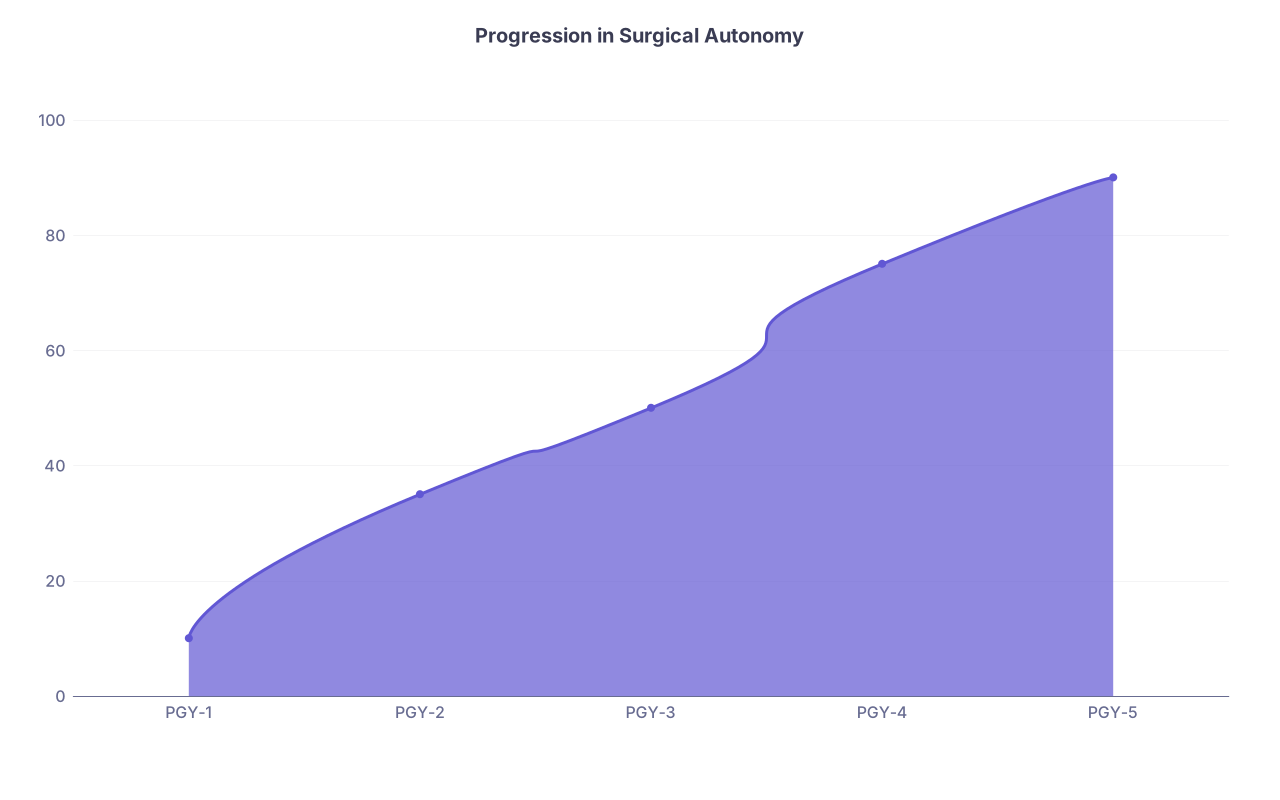
| Category | Value |
|---|---|
| PGY-1 | 10 |
| PGY-2 | 35 |
| PGY-3 | 50 |
| PGY-4 | 75 |
| PGY-5 | 90 |
That little conversation shifts how attendings think about you. And yes, some will still hanger-on and not let go of the case. But many will respond.
5. For students: your clerkship got wrecked—now what?
If you’re still a med student and your core surgery or sub-I looked like “Zoom lectures and two half-days in the OR,” the fear is slightly different:
“I’ll never match surgery because my exposure and letters will be weak.”
You still have options:
- Do a later sub-I when the OR is more functional, even if it’s off-cycle or at a different site.
- Ask for concrete OR days on other rotations (ICU, trauma, surgical subspecialties) and actually scrub, not just “observe.”
- Shadow on call nights or weekends if allowed; those add up more than people think.
- Make your personal statement and letters explicitly contextualize the disruption instead of pretending it didn’t happen.
PDs remember the years that got hammered by cancellations. If your application shows sincere interest, reasonable exposure, and people vouching for your work ethic and ability to learn, the fact that your M3 rotation was weird isn’t a death sentence.
Will future employers and fellowship directors silently judge your numbers?
You’re scared about the quiet stuff. The eyebrow raise when someone sees “fewer than 1,000 cases” or a thin trauma log.
Some people will judge you on numbers alone. That’s reality in every field.
But the people you actually want to train with or work for? They’re going to care about:
- How you talk through a case.
- How you handle complications.
- Whether you know your limits.
- How quickly you grow once you’re in a stable, reasonably normal OR environment.
I’ve watched fellows start with lower case volume than their co-fellows and catch up within months because:
- they were self-aware,
- they were hungry to learn,
- and they didn’t pretend their gaps didn’t exist.
Your case volume is a starting point, not your final definition.
The part of this that really is permanent
I won’t lie to you: the rotations you lost are gone. Some percentage of cases you were “supposed to” get will never be exactly replaced.
What stays permanent is not the volume gap itself. It’s the habits you build in response:
- Do you become the resident who quietly gives up and assumes you’ll always be behind?
- Or the one who obsessively chases every realistic opportunity and comes out of this weird era sharper because you never took a single case for granted?
That mindset? That’s what will follow you into fellowship, into practice, into the days you’re the attending deciding how much your trainee gets to do.
You got dealt a worse hand. That’s true. But you’re not stuck with a worse outcome, unless you decide the story ends here.

| Step | Description |
|---|---|
| Step 1 | Rotations Canceled |
| Step 2 | Quietly fall behind |
| Step 3 | Identify case gaps |
| Step 4 | Ask PD and attendings for targeted cases |
| Step 5 | Use simulation and extra OR time |
| Step 6 | Build competence despite lower raw volume |
| Step 7 | Reaction |
FAQ (exactly what your 3 a.m. brain is asking)
1. If my total case log is significantly lower than recent grads from my program, am I unsafe to practice?
Lower volume by itself doesn’t automatically equal unsafe. What matters is whether your core index operations and critical situations have been done enough, and with enough autonomy, that you can perform them safely and recognize when you’re in trouble. If you and your PD can both look at your skills and say, “Yes, you can handle the bread-and-butter and know your limits,” you’re not unsafe—you’re a new attending who may need a steeper learning curve early on, which is already true for most people even in high-volume eras.
2. Will fellowship programs reject me outright if my case numbers are on the low side?
Not automatically. Especially for the “cancellation cohorts,” directors know the context. Thin numbers plus lukewarm letters and vague narratives are a problem. Thin numbers plus strong letters that explicitly say, “Despite reduced volume, this resident’s technical skill and judgment are excellent,” is a totally different story. If you’re worried, have your mentors name the disruption in your letters and talk about how you handled it.
3. I missed an entire high-yield rotation (like trauma or surg onc). Can I actually ‘make that up’?
You probably can’t perfectly recreate that exact rotation schedule, but you can partially rebuild the experience: moonlighting in trauma-heavy environments later, doing extra elective time in that subspecialty as a senior, using fellowship to deepen that gap if it’s your career interest. The question is less “Can I fully replace that missing month?” and more “Can I get enough exposure and reps that my eventual practice in that area is competent?” The answer is usually yes, but it takes intention and honesty about what you haven’t seen yet.
4. Should I delay graduation or extend residency just to get more cases?
Extending is a big, high-friction move, and it’s not the default answer. If you’re catastrophically underexposed or your PD genuinely feels you’re not ready, then an extension can make sense. But most people with moderate volume loss don’t need a whole extra year; they need targeted rotations, more responsibility in the OR they do have, heavy use of sim, and possibly a fellowship that’s hands-on. I’d only push for an extension after a brutally honest conversation with your PD, not just based on comparing your log to some legend from 2015.
5. As a med student whose surgery clerkship was mostly virtual, did I permanently kill my chances of matching surgery?
No. You’re behind on exposure, not behind in some unfixable way. You’ll need to be more deliberate: get a strong sub-I when things are more normal, actually show up in the OR on related rotations, and work with mentors who will explain in your letters that your M3 experience was heavily disrupted but you did everything possible to pursue surgery anyway. PDs know which years were messy. They’re looking for people who showed persistence and interest despite that, not people who had a perfect, uninterrupted clerkship.
Key points to hang onto:
- Your canceled rotations did lower your raw case volume, but that doesn’t doom your long-term skill if you respond aggressively and intentionally now.
- Programs, boards, and fellowships do know your cohort got hammered; they adjust more than your anxiety gives them credit for.
- The gap that matters is not what you lost, but what you’re still leaving on the table today—every targeted case, sim session, and honest conversation is a chance to close it.