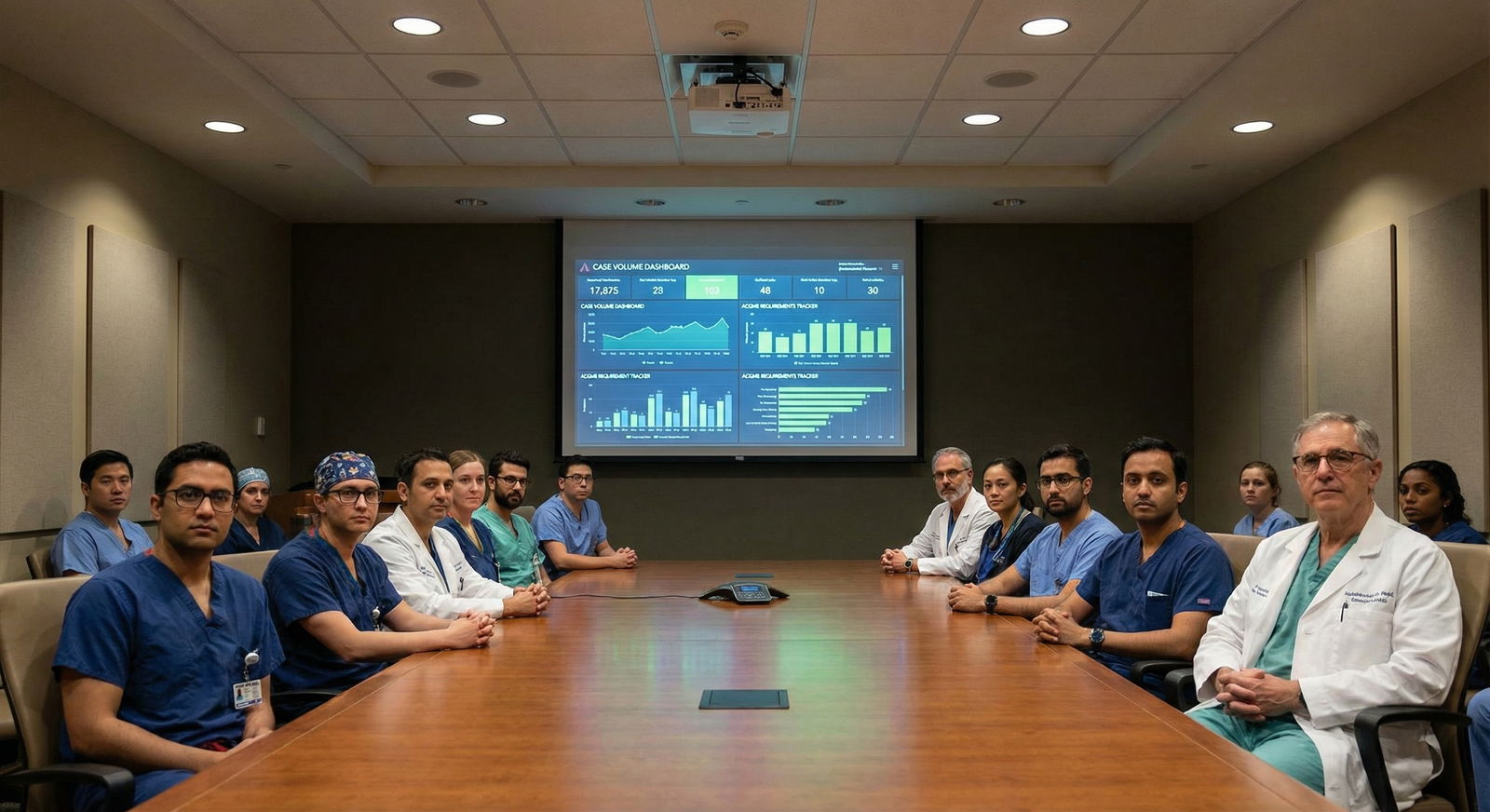
It is 6:15 a.m. You walked into the OR early, looked up tomorrow’s schedule, and saw a Whipple with the department chair, plus a complex redo hernia you have been dying to scrub. By 3 p.m., both of those cases have a different resident’s name next to them. You are “helping” with a port and a skin lesion excision.
No one sat you down and said, “We are sidelining you.” They just stopped putting you on the big cases.
That is how it actually happens.
You rarely get explicit feedback like, “You keep doing X, so we do not trust you with high-yield cases.” Instead, you just gradually disappear from the complex parts of the schedule. Attending surgeons and senior residents do not have time to rehabilitate bad habits in the OR. They quietly protect the case, and you quietly lose volume.
This is about the behaviors that get you bumped. And how to stop doing them before you permanently brand yourself as “not ready for big cases.”
1. Being Unprepared: The Fastest Way to Get Quietly Blacklisted
If you remember nothing else, remember this: walking into a major case unprepared is the single quickest way to be removed from future high-yield cases. People do not forget it.
Unprepared does not mean you skimmed the UpToDate summary during pre-op holding. It means:
- You cannot explain the indication for the operation in one or two crisp sentences.
- You do not know the key steps of the procedure.
- You have not reviewed relevant imaging yourself.
- You do not know the patient’s anatomy and comorbidities that actually matter.
The attending notices within the first five minutes.
They ask, “Why are we doing a Whipple instead of just a bypass?” You mumble something about “malignancy” and “palliation” but cannot articulate vascular involvement or margins. That attending will not let you near any pancreatic case for months.
You avoid this by having a simple, non-negotiable prep standard for any high-yield case:
- Read a real operative note for the same procedure from your institution.
- Watch at least part of a video (e.g., AHPBA, SAGES, ACS) focusing on the first 20 minutes and the critical steps.
- Open the imaging yourself. Not just the report. Scroll through the CT. Know where the mass is, what vessels are involved, what looks abnormal.
- Know 3–5 major complications and what step of the case they come from.
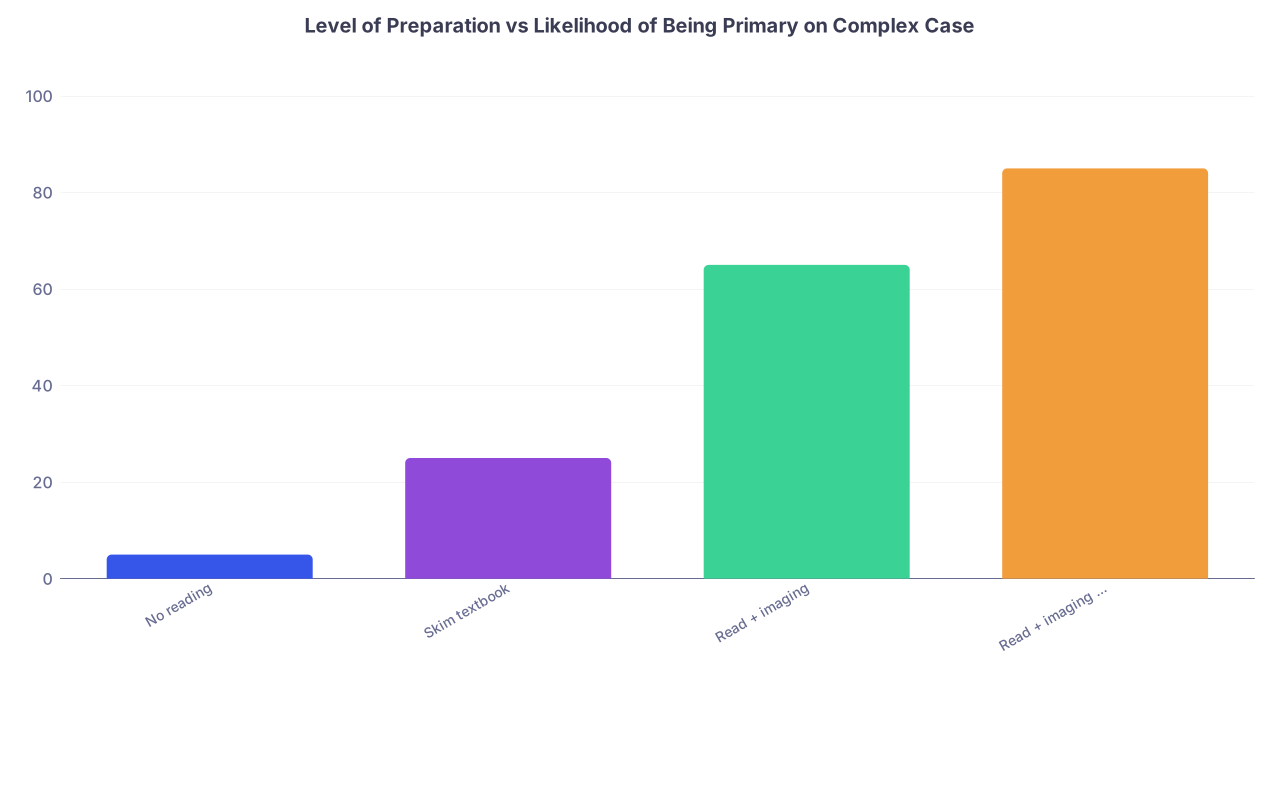
| Category | Value |
|---|---|
| No reading | 5 |
| Skim textbook | 25 |
| Read + imaging | 65 |
| Read + imaging + videos | 85 |
Do not make the mistake of thinking, “I am just an intern, they do not expect me to know all that.” They do. They adjust how much they let you do, but they are absolutely judging how you prepare. Interns who are chronically unprepared get quietly routed to call coverage and low-yield add-on cases.
Once people decide you are “light” on preparation, pulling you off a big case feels like “protecting the patient,” not “punishing the resident.” You will not win that argument.
2. Poor Sterile Technique: The Silent Case-Killer
Nothing gets you bumped faster than being a contamination risk. No one will argue with that. Infection is expensive and dangerous, and attendings will not gamble a complex case on a resident with sloppy sterile habits.
Typical repeating sins I see:
- Dragging your non-sterile elbow across the blue drapes as you adjust the light.
- Letting your hands fall below the table repeatedly.
- Turning your back to the mayo and brushing against the anesthesiologist’s cart.
- Reaching across the sterile field to grab something instead of stepping around.
Most residents who get a reputation for “bad sterile technique” are not reckless. They are distracted. Thinking about anatomy instead of their hands. But intent does not matter when the scrub nurse has to change an entire setup mid-case because you contaminated something, again.
You rarely get dramatic confrontation. Instead, you get:
“I’ll just have the fellow scrub for this one.”
Or the attending tells the chief: “Put someone really solid on sterile technique for tomorrow’s case,” and that is not you.
Do not make the mistake of assuming sterile technique is “basic” and unimportant. On high-yield cases, it is a screening exam.
If you want to stay on the complex cases list:
- Ask your scrub nurse directly: “Point out anything I do that breaks sterile technique. Even small stuff.”
- Watch the best resident on the service. The one scrub nurses love. Copy how they move. Where they stand. How they turn.
- Treat every minor contamination like a major error in your mind. Overreact internally. Fix it.
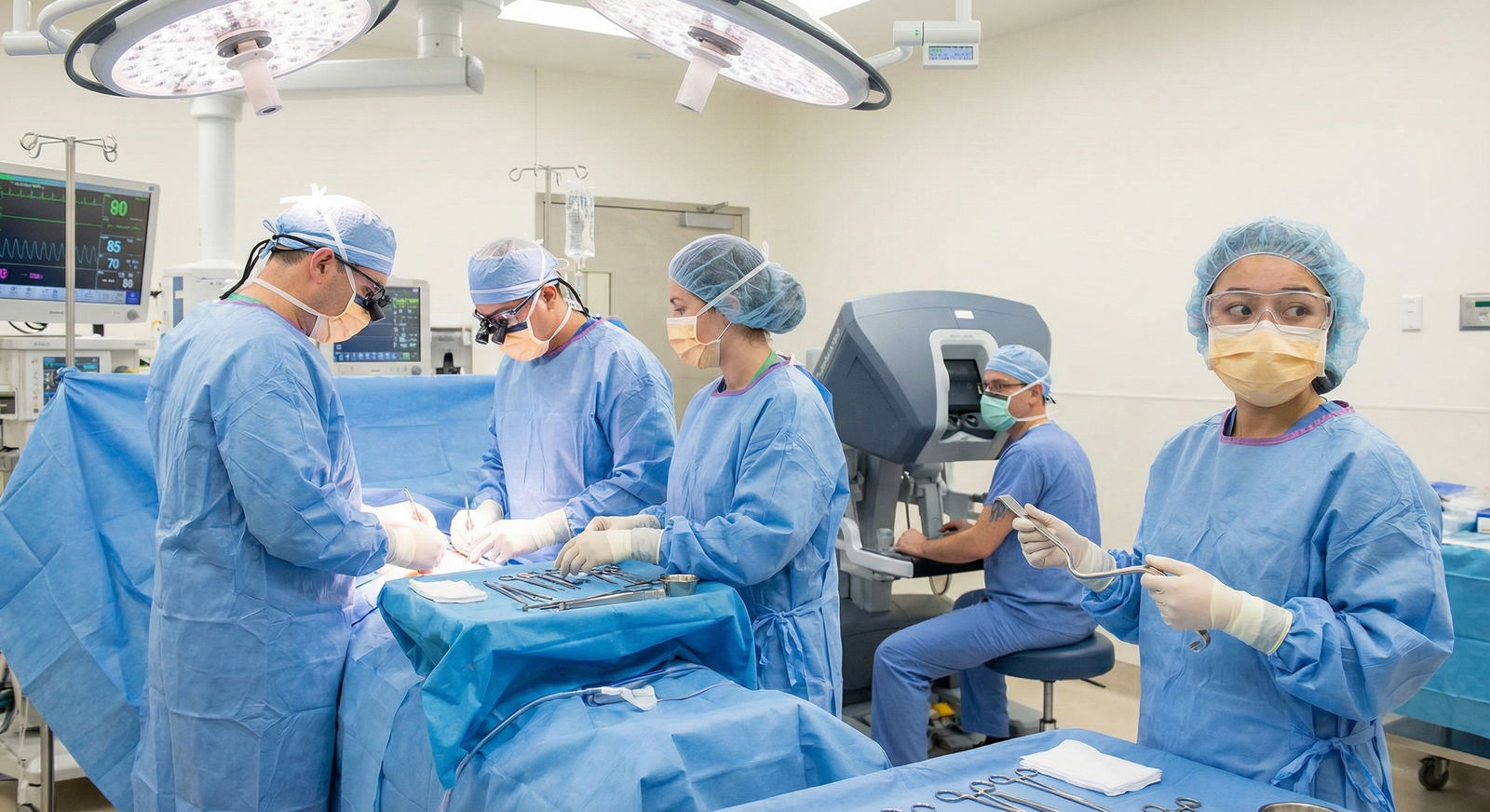
If they perceive you as a contamination risk, you will get filtered away from the highest-stakes cases. Always.
3. Being a Passive Passenger Instead of an Active Learner
You have seen this resident: scrubbed in, holding the camera or a retractor, barely speaking, answering questions with one word, never anticipating the next step. Then they complain later that they never get to “do anything.”
You will get bumped from big cases if you behave like a passenger.
Attending surgeons are not selecting who to reward just on PGY level. They are asking:
- Does this resident think ahead?
- Do they know where we are in the operation?
- Are they helping the flow or slowing us down?
A few red-flag behaviors that scream “passive”:
- You never adjust retraction without being told.
- You do not ask a single question the entire case.
- You cannot tell the medical student where you are in the procedure.
- You look at the attending every time you move an instrument instead of the field.
The fix is not to chatter nonstop. That is just another problem. The fix is to show you are mentally operating even when your hands are not.
Concrete ways to avoid this trap:
- Quietly narrate steps to yourself and to the medical student: “We are dissecting along the cystic duct now; next step is…”
- Ask targeted questions at natural pauses: “At this point, is your main concern the plane to the SMA or the portal vein?” Not “So… what are you doing now?”
- Anticipate one step ahead: adjust the camera angle before they ask, reposition your retractor as they change planes.

| Step | Description |
|---|---|
| Step 1 | Silent retractor holder |
| Step 2 | Answers direct questions |
| Step 3 | Asks targeted questions |
| Step 4 | Anticipates next step |
| Step 5 | Trusted for key parts |
| Step 6 | Primary operator for major cases |
Residents stuck at A or B in that diagram become dependable retractors. Not primary operators. They get pulled off big cases when someone more engaged is available.
4. Chronically Late or Last-Minute: The Scheduling Death Spiral
If you are habitually walking into the OR at 7:28 for a 7:30 start, do not be surprised when your name vanishes from the best cases. “Barely on time” reads as “not committed” in the OR world.
Here is how the death spiral looks:
- You are late one day for a big case because you were “finishing notes.”
- The attending does not yell, but the chief covers your role.
- Next time, the chief preemptively puts a different resident on the complex case “to be safe.”
- Pretty soon, you are the resident who always covers floor calls while others are in the room.
The OR rewards over-preparation and over-availability. Being physically there, early, repeatedly, builds trust. Being seen as “at risk” for delays demolishes it.
Practical guardrails:
- If you are not changed and in the OR by 7:00 for a 7:30 case, you are late. Mentally, treat it that way.
- Pre-round faster, or the night before. Do not use the “floor work” excuse. No one cares on a big transplant or onco day.
- Communicate absurdly early if you are delayed: “I am stuck in the ICU with a crashing patient. Please put X resident on the start of the case; I will join when relieved.”
| Behavior | Likely Impact on High-Yield Case Assignment |
|---|---|
| Arrives 30+ min early, ready | Considered for primary on complex cases |
| Arrives right at scheduled start | Kept on smaller, lower-stakes cases |
| Frequently late | Removed from high-yield schedule |
| Communicates early about delays | Trusted and often protected |
Do not make the mistake of thinking, “I am doing a lot on the floor, they will understand.” They might understand. They will still choose the resident who is already standing in the room.
5. Acting Entitled or Transactional About Cases
You want more case volume. Fine. So does everyone else.
What gets you removed from high-yield cases is acting like the case is yours by right. The OR does not care about your personal log. It cares about the patient and the team.
Red-flag phrases I have heard residents say (and then watched their case assignments quietly dry up):
- “This should be my case. I need this for my numbers.”
- “Why is the fellow doing that part? I’m the chief.”
- “I was supposed to drive here; why is she getting to do the anastomosis?”
This attitude tells attendings and chiefs that you see cases as currency, not responsibilities. They will protect themselves from that energy by giving complex cases to residents who show gratitude and humility, not accounting.
The right mindset: Every major case is borrowed, not owned. You are being allowed to participate.
Better phrases that keep you on the big case list:
- “I would like to drive as much of this case as you feel comfortable with. I read X and Y to prepare.”
- “If there is a chance to work on the anastomosis today, I would appreciate it. If not, I understand.”
- After a good case: “Thank you for letting me do that part. I learned a lot.”
You avoid getting bumped by being ambitious but not entitled. Surgeons always know who is quietly angry when they do not get their way. They do not forget.
6. Poor Communication and Disrespect to Staff
You may think attendings only care how you talk to them. Wrong. If you treat scrub nurses, circulators, anesthesia, or PACU staff poorly, your name will start vanishing from high-yield cases.
Scrub nurses absolutely talk about residents. Anesthesiologists definitely tell surgeons, “That resident is a nightmare to work with.” And then one day the attending says to the scheduler, “Just do not put that person on my complex cases.”
Behaviors that will get you silently cut:
- Snapping at the scrub tech: “No, the other clamp.”
- Rolling your eyes when anesthesia wants more time to optimize a sick patient.
- Ignoring the circulator’s questions or talking over them on counts.
- Acting impatient with PACU nurses on sign-out.
You do not have to be syrupy nice. You do have to be consistently respectful and concise.
Protective behaviors that keep you in the good graces:
- Learn names. Use them. “Sarah, can we get another 3-0 Vicryl?” goes farther than you think.
- Own your mistakes out loud: “That was my fault; I broke sterility when I turned.”
- Back up staff in front of others: “Let us pause and do the count properly.”
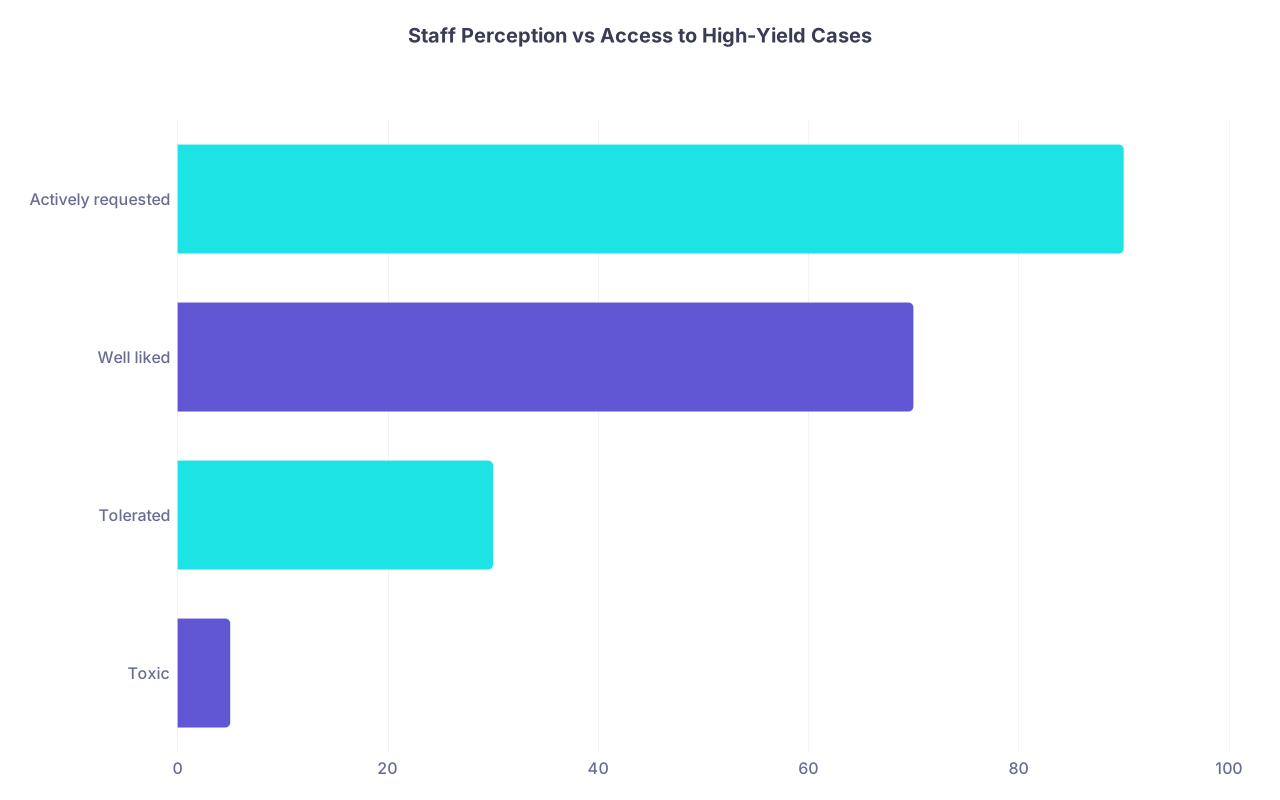
| Category | Value |
|---|---|
| Toxic | 5 |
| Tolerated | 30 |
| Well liked | 70 |
| Actively requested | 90 |
Attendings will often choose the “less technically strong but great team player” resident over the “technically gifted but toxic” one for complex cases. Because those cases are long, stressful, and high-risk. They want stability around them.
7. Freezing or Falling Apart When Given Responsibility
Everyone gets nervous the first time they are allowed to take the lead on a big case. That is not the problem. The problem is residents who simply shut down once they are in control, or start arguing, or panic.
Patterns that get you quietly reclassified as “not safe for big cases”:
- You stop responding to guidance. The attending says, “Take smaller bites,” and you keep doing the same thing.
- You argue mid-case: “But that is not how Dr. X does it.”
- You physically freeze with the needle in mid-air, for a full minute, more than once.
- You blame someone else afterward: “The camera was bad” or “The scrub gave me the wrong instrument.”
Once an attending feels like they have to rescue the case from you, they will think twice before giving you similar responsibility again. They will pick the resident they trust not to crumble.
How to avoid this:
- Before the case, set expectations: “This is my first time fully driving this operation. If I start going off track, please redirect me early.”
- When corrected, verbalize adjustment: “Understood. Smaller bites, closer to the edge.” Then do it.
- If you feel yourself freezing, ask for a micro-reset: “Can I pause for 10 seconds to reorient? We are here, we need to get to X.”

The attending’s mental question in every big case: “If things start to go bad, will this resident stabilize or make chaos worse?” Your behavior under pressure answers that.
8. Ignoring the Rest of the Work: Being a “One-Shift” Resident
One more quiet killer of case volume: behaving like the only thing that matters is what happens between incision and closure. Attendings and chiefs care deeply about the entire perioperative picture.
If you consistently:
- Do not know your post-op patient’s labs the next morning.
- Forget to check on pain control or early complications.
- Leave sign-out incomplete and vanish after the case.
- Try to hand off every complex post-op to night float without a proper plan.
You send a clear message: “I want to cut, but I do not want to take care of what I cut.”
Those residents get bumped from high-yield cases because attendings do not trust them with full ownership. They pick the resident who will see the patient pre-op, show up early, scrub, stay late post-op, and check on them on POD 1.
That does not mean you must live in the hospital. It means you must consistently show continuity:
- Pre-op: personally see the patient, understand the consent, know the imaging.
- Intra-op: be present, prepared, engaged.
- Post-op: check labs, visit the patient, know their progress and issues.
Surgeons remember which residents “follow the case through.” Those are the ones they invite back for the next big one.
FAQ (Exactly 4 Questions)
1. I am an intern. Do these behaviors really matter for high-yield cases this early?
Yes. The list-makers (chiefs, fellows, attendings) start forming opinions about you in the first month. Interns who show up early, are prepared, respect staff, and care about post-op care get quietly prioritized even when they are junior. You might not drive the Whipple, but you will be in the room. Which is how you later get to drive it.
2. What is the single biggest red flag that will get me bumped from complex surgical cases?
Consistent lack of preparation. Everything else can sometimes be coached or forgiven if you obviously did the work beforehand. But walking into a high-risk case without knowing the indication, steps, and anatomy tells surgeons you are comfortable risking the patient’s safety for your own learning. That is not a recoverable impression.
3. How do I recover if I have already been pulled from a big case for poor performance?
Own it directly and specifically. “I know I was underprepared for that hepatectomy, and it showed. I have since read X and Y and reviewed Z imaging. I would appreciate another chance; I will be ready.” Then you must actually overprepare for the next opportunity. People will give you a second chance if they see a clear change in behavior. They will not if you pretend nothing happened.
4. How can I signal that I want more high-yield case volume without sounding entitled?
Approach the chief or attending outside the heat of the OR. “I am really interested in getting better at complex foregut cases. Is there anything I can do—preparation, timing, helping with coverage—that would make you more likely to put me on those cases?” That framing acknowledges their priorities and makes it collaborative, not transactional.
Today, do one concrete thing: open tomorrow’s OR schedule, pick the most complex case you might realistically touch, and prepare as if you were the primary operator. Read an operative note, review the imaging, and write down the stepwise plan. Then show up 30 minutes earlier than you normally would and let the team see the difference.