It’s June. You’re staring at a rank list draft or a spreadsheet of potential fellowships. On one side: a big-name “prestige” program where the alumni list reads like the editorial board of Annals of Surgery. On the other: a less flashy place that quietly logs monster operative numbers. You’re trying to answer one brutal, very practical question:
If you want to become a competent, confident surgeon, does surgical case volume matter more than program reputation?
Here’s the answer you’re looking for: for technical training and day‑one independent practice, case volume usually beats reputation. But that’s not the whole story. The smart move is understanding when volume truly matters, when reputation really helps, and how to spot programs that have one but not the other.
Let’s break this down like someone who’s watched residents graduate from both ends of the spectrum.
The Core Question: Volume vs Reputation
Strip away the branding, the glossy websites, the US News nonsense. What makes you a safe, effective surgeon?
Three things, mainly:
- How many cases you do
- How complex those cases are and how much you actually operate, not just retract
- The quality of teaching and feedback while you do them
Reputation alone doesn’t operate on patients. Suture lines don’t care if your badge said “Mass General” or a community program you’ve never heard of. Muscle memory comes from repetition. Judgment comes from repeated exposure to real decisions with real consequences.
So here’s the hierarchy:
- For technical skill and comfort in the OR → Volume wins.
- For doors that open later (fellowship, academics, certain markets) → Reputation can matter a lot.
- For long-term career satisfaction → The mix of volume, mentorship, and program culture matters more than either single metric.
But if you force me to choose for training quality alone: I’d rather see you at a high-volume, well-run no‑name program than a brand-name low-volume one.
What “High Volume” Really Needs To Look Like
Not all “busy” programs train surgeons well. Some just burn out residents.
You’re looking for meaningful volume: enough reps at the right level of responsibility.
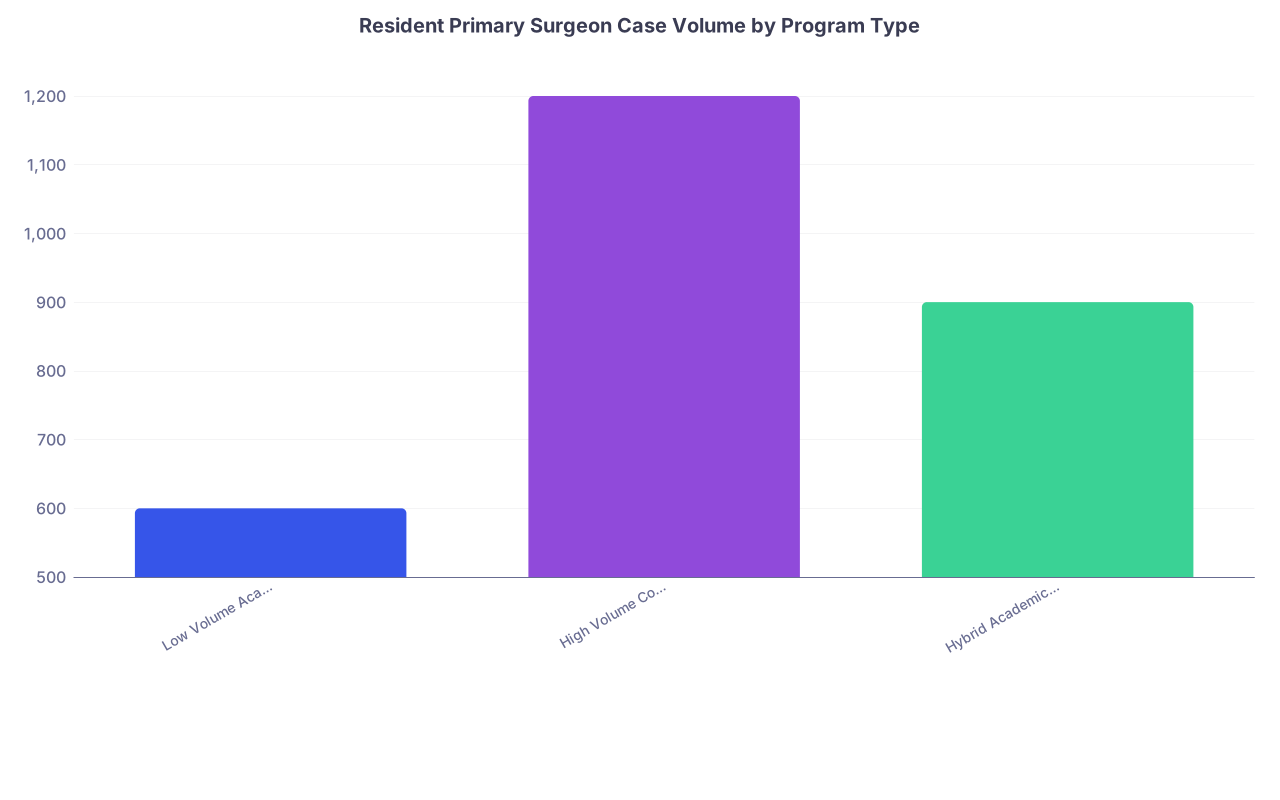
| Category | Value |
|---|---|
| Low Volume Academic | 600 |
| High Volume Community | 1200 |
| Hybrid Academic-Community | 900 |
What actually matters:
Total operative cases as primary surgeon
Not “logged cases” where you held a retractor. You want programs where graduating chiefs crack:900–1000 total cases in a 5‑year general surgery residency
- Strong numbers in bread-and-butter: lap chole, appendectomy, hernia, bowel resection, etc.
Case mix that matches your goals
Want trauma? A busy Level I center beats a low-volume “prestige” Level II any day.
Want vascular? You better see EVARs, open bypass, fistulas, not just “assists” on one aneurysm per month.Progressive autonomy
I’ve seen residents at top-tier “name” places who never closed an anastomosis alone until chief year because there were too many fellows. That’s not training. That’s shadowing with fancy branding.Operating, not just watching
Are you first assist? Or are you the second or third body in the room while an attending and fellow do the real work? Ask bluntly:- Who does lap choles on call? Chief? PGY-3? Attending?
- Who staffs emergent cases overnight?
- Do juniors get full cases or just skin closure?
If a program cannot deliver frequent, hands‑on opportunities where you are truly in charge of key steps, I don’t care how famous the logo is. That’s a weak surgical training environment.
When Reputation Actually Matters
Reputation is not fake. It just gets misused.
Program name matters in these specific ways:
Highly competitive fellowships
If you’re aiming for peds surgery, surgical oncology at MSK, complex HPB at MD Anderson, or CT at the usual heavy hitters, the name on your residency can absolutely tilt the odds. Not because you’re smarter, but because:- PDs know the training style
- Alumni from that program sit on the selection committees
- There’s a built-in credibility signal: “We know what a graduate from there looks like”
Academic careers
Big-name research powerhouses plug you into grants, mentors, and publication pipelines. If you want an R01 and a division chief job one day, there is value in add‑ons like:- NIH T32 programs
- Protected research years with real productivity
- Heavy emphasis on presentations at ACS, SSO, STS, etc.
Certain job markets
Some private groups or big systems love brand recognition. It should not matter, but it often does. I’ve heard real hiring partners say, “We filter by training pedigree first when the stack is big.” It’s lazy, but it’s real.
Here’s the thing though: reputation without operative volume will not save you in your first job when you’re the only one scrubbed and the anesthesiologist is asking, “Are you okay to proceed?”
The Dangerous Myth: “Prestige Will Make Up for Fewer Cases”
This is where people get burned.
They think: “If I match Famous University, the name will compensate for a weaker operative experience.” That’s wrong. Dead wrong for your day-to-day competence.
I’ve seen:
- Graduates from no-name community programs who are absolute monsters in the OR. Calm, efficient, safe. They did 1200–1500 cases and it shows.
- Graduates from elite academic powerhouses who were brilliant on paper but needed heavy mentoring in practice, because a fellow was between them and the attending for five years.
The hard truth:
Fellowship directors can patch gaps in research. They cannot easily fix a fifth-year resident who still struggles with a basic open colectomy.
How To Evaluate Volume vs Reputation in Real Life
Let’s make this practical. You’re comparing Program A (famous, slightly lower volume) and Program B (less known, very high volume). What do you actually look at?
| Factor | High Volume Community | Prestige Academic |
|---|---|---|
| Total chief case numbers | Higher | Moderate |
| Fellow competition | Low | High |
| Research infrastructure | Limited | Strong |
| Name recognition | Lower | Higher |
| Autonomy | Often higher | Variable |
Questions you should ask residents directly (and I mean directly, not to the PD):
- How many cases did your most recent chiefs log?
- How many lap choles has a typical PGY-3 done?
- When do you get your first independent appendectomy?
- Who actually does the emergent ex-laps at 2 a.m.?
- Any rotations where residents feel like “scope jockeys” or “professional retractors”? Where? How long?
- Do you ever turn down cases because there are too many? (Good sign.)
- Do you share cases with fellows? How does that work in real life, not on paper?
And then balance that with:
- How many residents go into fellowship vs general practice?
- Where did the last 5 fellowship-bound residents match, and in what fields?
- Is there dedicated research time? Protected means… actually protected?
If you walk away from the interview thinking, “These chiefs are comfortable, efficient, and not panicked talking about big cases,” that tells you more than the US News rank.
Autonomy: The Real Multiplier on Volume
Volume alone doesn’t guarantee training. It multiplies—or gets wasted—based on autonomy and culture.
Here’s the formula I care about:
Training Quality ≈ (Case Volume) × (Resident Autonomy) × (Feedback Quality)
Low autonomy kneecaps even the busiest program.

| Step | Description |
|---|---|
| Step 1 | Program |
| Step 2 | Strong Technical Skills |
| Step 3 | Good Judgment |
| Step 4 | Independent Surgeon Ready |
| Step 5 | High Case Volume |
| Step 6 | Resident Autonomy |
| Step 7 | Teaching Quality |
Red flags that autonomy is poor:
- Multiple fellows in your preferred subspecialty swallowing all the key portions of the operation
- Residents saying they “do not touch certain cases until chief year”
- Residents who give vague answers when you ask what they personally do in the OR
Contrast that with programs where PGY-3s confidently say, “I run the acute care surgery service overnight and do most of the emergent cases with backup available.” That’s how you learn.
The Future: Will Volume Still Matter in 10–20 Years?
Short answer: yes. Probably more than ever.
Here’s why:
Shift to robotics and advanced MIS
Robots and advanced laparoscopic platforms widen the skill gap between high-volume and low-volume surgeons. Learning curves are real. Doing 20 robotic cases vs 200 is not the same universe.Centralization of complex surgery
More oncologic, transplant, and complex vascular work is concentrating at tertiary centers. That means:- Residents at low-volume places may see almost no complex index cases
- Residents at regional hubs may get flooded with advanced pathology and become very strong technically
Simulation and AI will help—but not replace—real cases
Sim helps with basic skills. AI will help with decision support. Neither replaces the feel of tissue, real anatomy variation, unexpected bleeding, or the emotional pressure of a live patient. The only way to get good at the whole package is real OR time.

- Outcome tracking and transparency
As public and payer scrutiny on outcomes increases, surgeons who trained with low case volume and poor autonomy will be exposed. Systems will quietly prefer people with demonstrably robust training.
So yes, reputation helps you get in the door. But long-term, your hands and your judgment keep you in the room.
When To Prioritize Volume Over Reputation (And Vice Versa)
If you’re still stuck, use this:
Prioritize case volume and autonomy when:
- You want to be a community or regional surgeon doing high-volume bread-and-butter and some complex work
- You’re not 100% sure about fellowship or do not care if it’s the “top 3” program in the country
- You value confidence and independence more than chasing academic prestige
Prioritize reputation and academic firepower when:
- You’re dead set on a hyper-competitive fellowship (peds surg, HPB at big-name centers, CT at the usual suspects)
- You want a career in academic surgery with grants, major trials, and leadership positions
- You’re comfortable accepting potentially less autonomy or lower case counts in exchange for research and networking
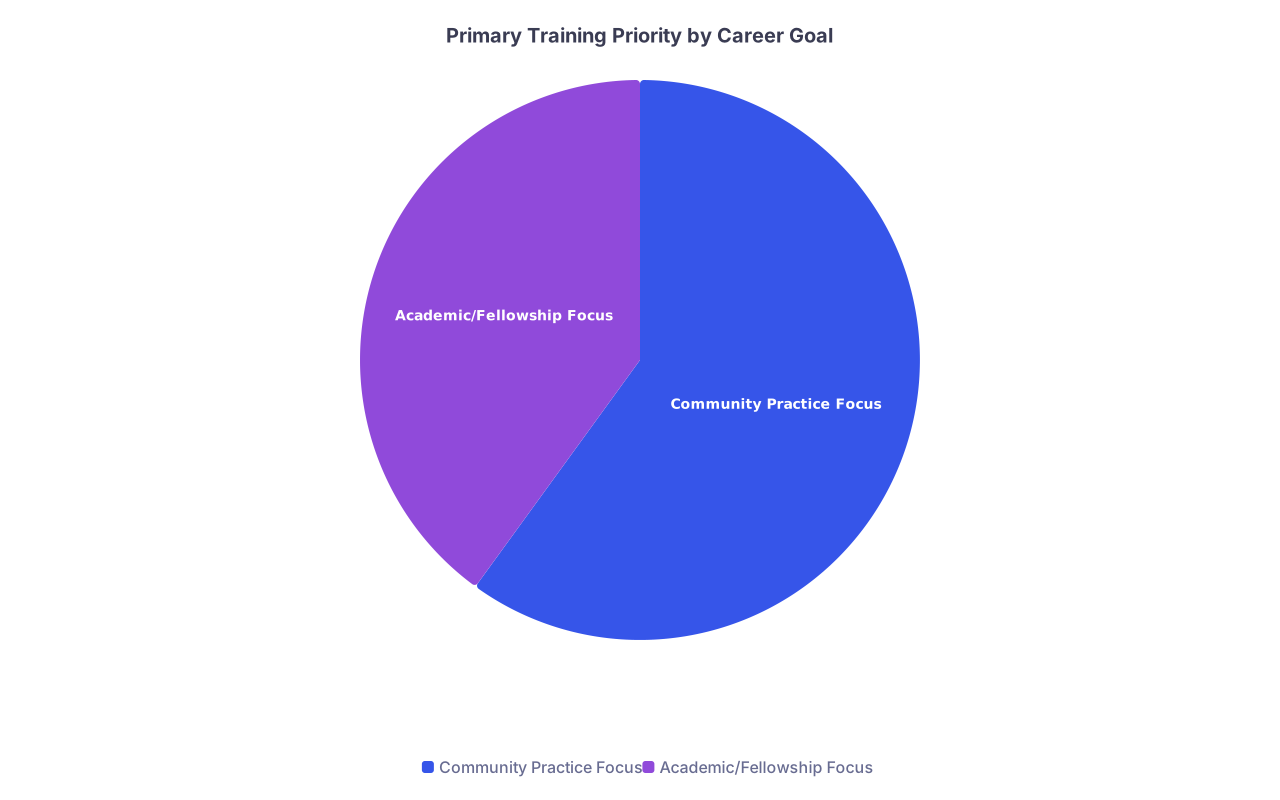
| Category | Value |
|---|---|
| Community Practice Focus | 60 |
| Academic/Fellowship Focus | 40 |
That pie chart is my opinionated breakdown of what most applicants should prioritize: the majority are better served by emphasizing volume and autonomy.
How To Spot the Sweet Spot: Volume + Reputation
The ideal program gives you both. They do exist.
You’re looking for:
- Solid national name recognition
- Strong chief case numbers with real autonomy
- Limited competition with fellows in your areas of interest
- Proven fellowship placement but not at the expense of operative time
- Residents who sound like surgeons, not just junior attending‑wannabe researchers

If you see chiefs:
- Presenting at national meetings
- Logging 1000+ cases
- Speaking confidently about independent decision-making
…you’ve probably found that overlap between volume and reputation that’s hard to beat.
Quick Reality Check: What Actually Makes You Good
Let me be blunt.
Patients don’t care where you trained. They care if:
- You do not leak their anastomosis
- You don’t leave them bleeding
- You recognize when they’re crashing at 2 a.m. and do the right thing fast
Those skills do not come from branding. They come from:
- Repeating the same operation until it feels boring
- Then doing enough variations that it becomes interesting again
- Being forced to think and act, not just watch and present at morbidity & mortality

If you have to lean on your program’s name to convince people you’re competent, that’s a bad sign.
FAQs
1. If I have to choose, should I rank a high-volume community program above a lower-volume prestigious academic program?
If your primary goal is to be a confident, capable operating surgeon and you’re not dead set on an ultra-competitive fellowship, yes—rank the genuinely high-volume program with strong autonomy higher. Reputation will not rescue weak hands in the OR. Volume with autonomy usually produces better day-one independent surgeons.
2. How many cases is “enough” in general surgery residency?
Most solid programs see chiefs graduating with 900–1100+ cases. Under ~800, I start to get nervous unless there’s heavy subspecialty concentration. Above ~1100 with clear autonomy, you’re likely in good shape. But raw number isn’t everything—check the mix: enough basic bread-and-butter, some complexity, and real primary surgeon responsibility.
3. Do I need a “name” program to match a competitive fellowship?
It helps, but it isn’t mandatory. A strong applicant from a high-volume, non-famous program can absolutely match competitive fellowships if they have:
- Great letters from known surgeons
- Solid research in their field of interest
- Strong interview performance and a reputation for being technically excellent
Name-brand pedigree is a shortcut, not a requirement.
4. How can I tell if fellows are going to hurt my operative experience?
Ask residents very specifically: When a complex case happens (big oncologic resection, major vascular, complex foregut), who does what? If the fellow consistently:
- Drives the case
- Takes all key steps
- Leaves you skin and scopes
…then yes, that fellowship might cannibalize your training. On the flip side, some places have clear role separation where residents still get plenty of major cases. Residents will tell you the truth if you ask directly.
5. What if I want both high volume and strong reputation—am I being unrealistic?
Not necessarily, but you’ll have to be picky. Some programs hit both: big case numbers, strong autonomy, and real national reputation. They exist, but they’re not always the ones with the loudest branding. Look at actual case logs, talk to chiefs, and check fellowship match lists. If a place is pushing out confident surgeons who match well and speak like they own their operative experience, that’s the sweet spot.
Key takeaway one: for becoming a technically solid surgeon, high case volume with real autonomy usually matters more than prestige.
Key takeaway two: reputation mainly helps with fellowships, academics, and first-job optics—but it can’t compensate for weak hands in the OR.