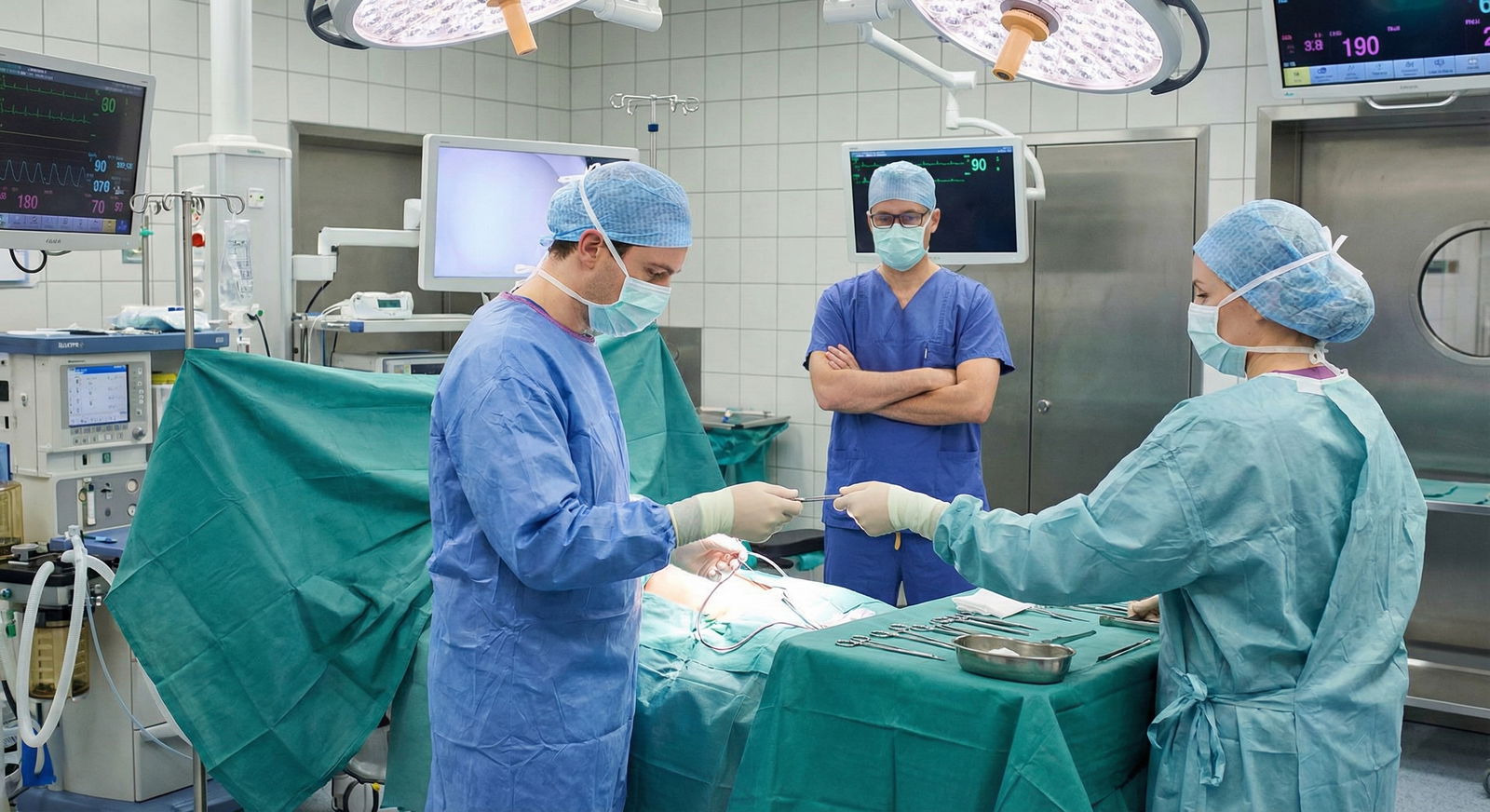
You are 90 days from graduation.
It is 10:30 p.m. in the call room. You just closed your third lap chole of the day, opened ACGME, and your stomach dropped.
General surgery minimums:
- 850 total cases
- 200 core
- 40 endoscopy
…and you are short. Not by a lot. But enough that if you coast, you will graduate “on time” and still have an awkward conversation with your PD about case volume.
This is the moment the clock really starts.
Below is your 90‑day, then 60‑, 30‑, 14‑, and 7‑day plan to make sure you hit critical surgical case benchmarks before residency ends.
First, Know Your Targets (Day 90–85)
At this point you should stop guessing and pull real numbers.
Pull your official case log report
- Log into ACGME or your program’s logging system.
- Export the full report with subtotals by category and year.
- Do not rely on the half-remembered “I think I have around 900 cases” in your head.
Compare to actual minimums for your specialty
(Example: categorical general surgery; adapt the mindset to ortho, ENT, OB/GYN, etc.)
| Category | Common Minimum | Your Current | Gap |
|---|---|---|---|
| Total cases | 850 | ||
| Chief year cases | 200 | ||
| Endoscopy (EGD+Colon) | 40 | ||
| Basic laparoscopic | 25 | ||
| Complex lap (if tracked) | 20 |
- Do simple math per remaining week
You have roughly 12–13 weeks. Translate gaps into weekly targets.
Example:
- Short 30 total cases → ~3 cases/week
- Short 8 endoscopies → ~1 scope every 1–2 weeks
- Short 10 chief cases → just under 1 per week
Once you see it in weekly units, it stops being vague anxiety and becomes a workload problem you can actually solve.
Day 90–60: Triage And Build A Case Strategy
At this point you should stop being passive about the schedule. You are not “along for the ride” anymore.
1. Identify your real problems
Look at your gaps by type, not just total count:
- Endoscopy low?
- Hernias and lap choles fine but soft tissue cases low?
- Chief cases too concentrated in one area (e.g., pure biliary, no colorectal)?
The most common end-game issues I see:
- Endoscopy short (especially colonoscopies)
- Bread‑and‑butter emergencies underrepresented as surgeon junior/primary
- Subspecialty holes (e.g., not enough vascular exposure in a “general” track)
List 3–5 priority categories you must fix. Write them down.
2. Sit down with someone who controls the schedule
Not a vague hallway conversation. A real sit-down.
- Program director
- Service chief for your current rotation
- OR medical director / chief resident who assigns rooms
Bring:
- Your case log summary with gaps highlighted.
- A 1‑page printout of ACGME minimums, with missing numbers circled.
Say something direct:
“I am 10 colonoscopies and 12 chief cases short of where I want to be to feel ready. I have 12 weeks. Here’s where I think I can realistically make that up. Can we adjust my schedule to prioritize these?”
People respond to specifics. Vague “I need more cases” gets you nothing.
3. Reshape the next 8–10 weeks
Most residency schedules have some flexibility if you ask early enough.
At this point you should:
- Swap out low-yield electives (research month, admin, clinic-heavy blocks) for:
- Endoscopy
- Acute care surgery / trauma
- High‑volume bread‑and‑butter services (biliary, hernia, colorectal)
- Shift call schedule if possible:
- More weekend calls on high-volume services
- Avoid long stretches on clinic or floor‑heavy rotations this late in the game
You are trading comfort for volume. That is exactly what the last 90 days are for.
Day 60–45: Fix Your Logging And Coding
This is where I often find 20–50 “missing” cases for senior residents who thought they were in trouble.
1. Back-log every unlogged case
At this point you should:
- Print the last 6 months of OR scheduling data with your name on it.
- Cross-check each case against your ACGME entries.
- Log everything you missed:
- Middle of the night cases you promised yourself you’d enter “tomorrow”
- Assists you mentally dismissed as “not important”
- Endoscopies that never got entered because the day was nuts
You will be shocked how many unlogged cases appear.
2. Fix wrong role or wrong category
Common mistakes:
- Logging as assistant when you were effectively surgeon junior or chief
- Mis‑classifying complex laparoscopy as “basic”
- Logging colonoscopies as “diagnostic procedure – other” instead of the proper endoscopy category
Sit with a faculty member or chief who knows the coding rules and review:
- 10–15 random cases
- A few of each category you are short on
Adjust where it is accurate to do so. You are not gaming the system; you are cleaning up sloppy data entry.
3. Establish a zero‑backlog rule
From now until graduation:
- Every case entered same day
- Night call cases entered before you leave the hospital
- Weekly self-audit every Sunday night:
- Compare the OR schedule for the week to your log. No gaps.
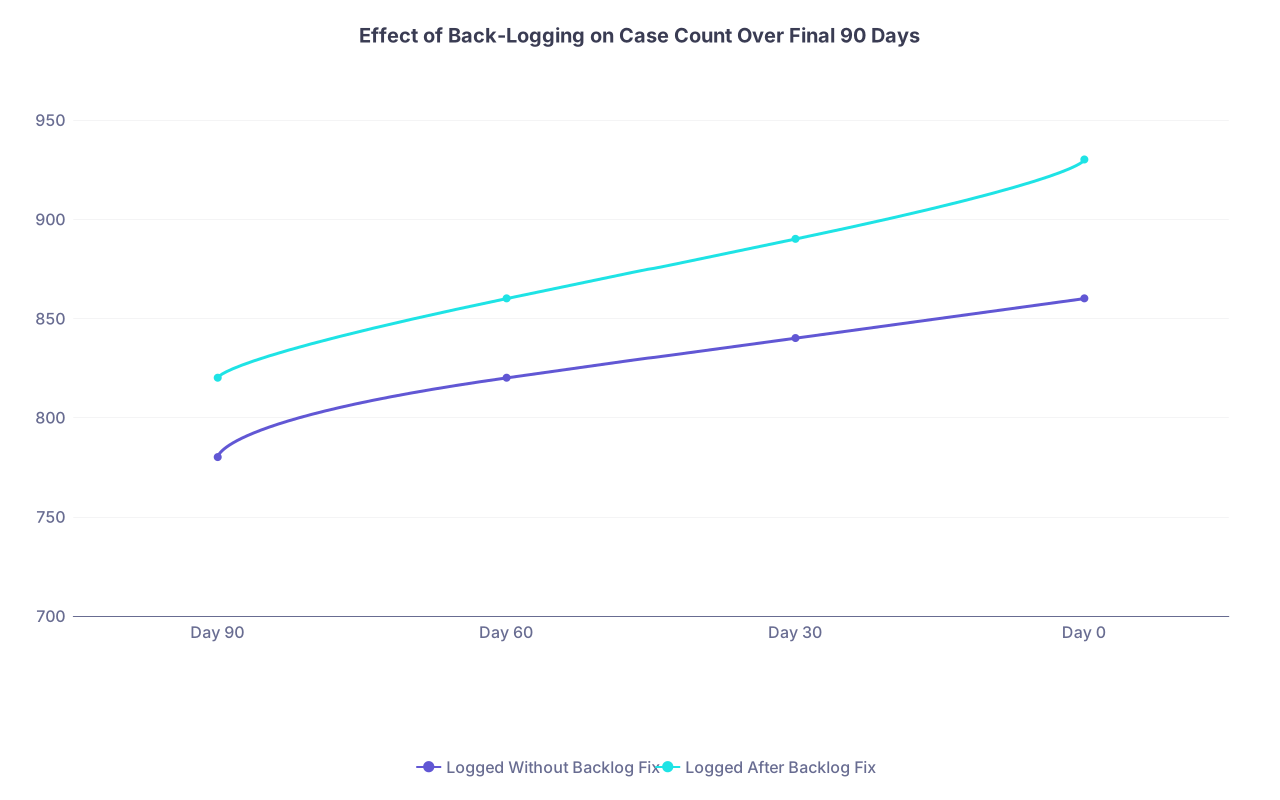
| Category | Logged Without Backlog Fix | Logged After Backlog Fix |
|---|---|---|
| Day 90 | 780 | 820 |
| Day 60 | 820 | 860 |
| Day 30 | 840 | 890 |
| Day 0 | 860 | 930 |
A lot of people “hit minimums” simply by cleaning their logs. Do this before you panic.
Day 45–30: Aggressive Case Capture Phase
Now you know your true numbers. This is the most important 2–3 weeks of the 90‑day sprint.
At this point you should be doing three things relentlessly.
1. Pre‑claim high-yield cases
For every OR day, 24–48 hours in advance:
- Open the board.
- Identify cases in your gap categories.
- Message the attending or chief:
- “I am short 8 scopes to graduate at the numbers we discussed. Can I be primary on these two colonoscopies tomorrow?”
- “I need more inguinal hernias as surgeon chief. Can I run room 12 with you on Friday?”
People say yes far more often than no when you are specific and prepared.
2. Optimize your role in the room
As a near-graduate, hovering as “assistant” in every case is a waste.
Strive for:
- You as surgeon chief/junior on:
- Basic laparoscopy
- Open hernias
- Appendectomies
- Most endoscopies
- Faculty scrubbed but letting you:
- Make the incision
- Perform the dissection
- Run the scope
Say it plainly:
“I need this logged appropriately as surgeon chief if you are comfortable; I will walk you through my plan before we start.”
If you behave like the surgeon, faculty are more likely to let you be the surgeon.
3. Prioritize cases over low-yield activities
For these weeks:
- Clinic slots that can be safely covered by others → do that. Take the OR instead.
- Noon didactic vs being primary on a lap chole: pick the chole. You already know the lecture slides.
- Floor tasks that a junior or APP can handle → supervise, do not personally do every piece of it.
This is not laziness. This is correct prioritization at the end of training.
Final 30 Days: Micro-Planning By Week
Now we zoom in. Week-by-week execution.
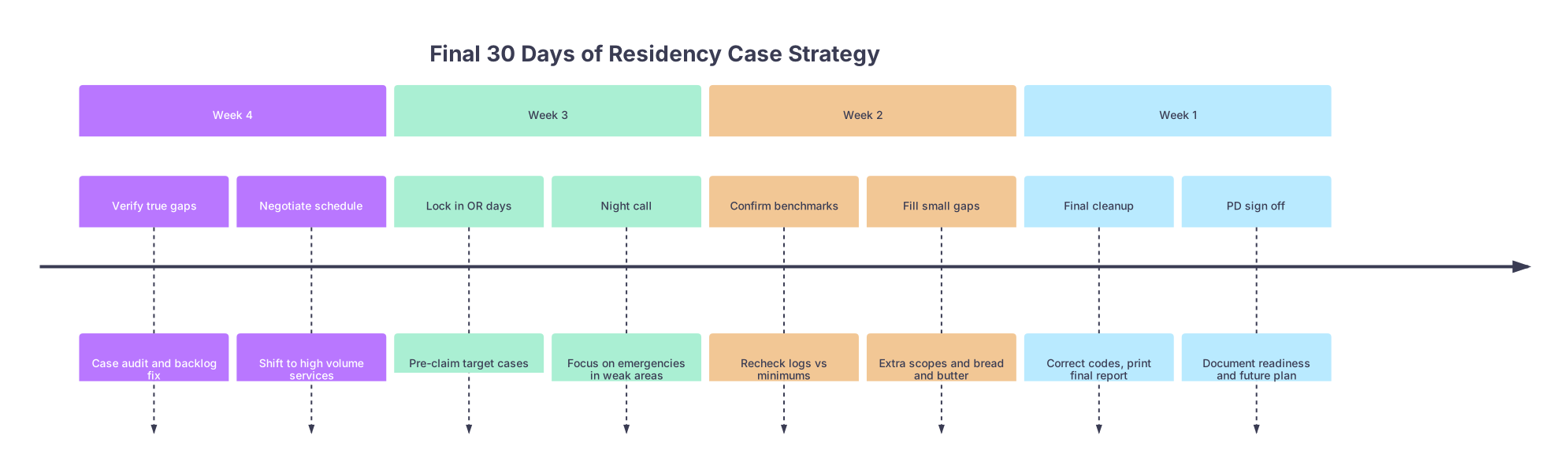
| Period | Event |
|---|---|
| Week 4 - Verify true gaps | Case audit and backlog fix |
| Week 4 - Negotiate schedule | Shift to high volume services |
| Week 3 - Lock in OR days | Pre-claim target cases |
| Week 3 - Night call | Focus on emergencies in weak areas |
| Week 2 - Confirm benchmarks | Recheck logs vs minimums |
| Week 2 - Fill small gaps | Extra scopes and bread and butter |
| Week 1 - Final cleanup | Correct codes, print final report |
| Week 1 - PD sign off | Document readiness and future plan |
Week 4 (Day 30–24): Hard Reality Check
At this point you should:
Pull your updated case report.
Compare to your original 90‑day gap list:
- What is fixed?
- What is still lagging?
- Any new imbalances created by focusing heavily on one category?
Identify what is now mathematically impossible vs still salvageable:
- If you are 1–2 cases short in some esoteric category that your program rarely does, that is a PD‑level conversation.
- If you are 15 colonoscopies short with 4 weeks of endoscopy access available, that is a work problem, not a systemic one.
Week 3 (Day 23–17): Night Call As Volume Multiplier
You are tired. Do not start declining cases to “rest” if you are behind on volume.
When on call:
- Volunteer for every emergent appendectomy, cholecystectomy, bowel obstruction that can safely be yours.
- Coordinate with juniors:
- Let them close skin.
- Let them do parts you are already solid on.
- You run the main parts that count toward your gaps.
Put simply: you should walk toward the OR light, not away from it, in these weeks.
Final 2 Weeks: Precision Work
Now you are not chasing raw numbers. You are patching small holes.
1. Re-run your case log with a fine-tooth comb
At this point you should:
- Filter by role: make sure chief/junior roles are accurately coded for the final year.
- Filter by procedure within each category:
- Enough open and lap appendectomies?
- Enough colon resections, not just “other small bowel”?
- Enough EGD and colonoscopy, not one lopsided?
If you find you are, for example, 3 colonoscopies short:
- Flag that explicitly.
- Email the endoscopy director:
- “I need 3 more colonoscopies in the next 2 weeks to hit my benchmarks. I am scheduled on X, Y, Z days; can we prioritize my assignment to those patients where appropriate?”
Targeted, not desperate.
2. Protect remaining high-yield days
Do not let non-essential tasks blow up your last few OR days.
- Ask PD/chief:
- “Can I be excused from this half-day meeting if I am running a room as primary surgeon?”
- Reschedule clinic follow-ups that you do not need to personally see.
- Confirm with OR board the night before:
- “I am still assigned as primary on these cases tomorrow, correct?”
You are guarding the last remaining opportunities.
3. Begin your “graduation story” file
This is more future-facing. But do it now while cases are fresh.
Create a simple document:
- 10–15 cases that defined your senior year:
- Massive GI bleed you controlled endoscopically.
- Difficult lap chole that converted to open safely.
- Complex trauma laparotomy where you led the team.
- For each, jot:
- Age, rough diagnosis.
- Key decision you made.
- What you learned or would do differently.
These will become:
- Fellowship/interview talking points.
- Early attending Morbidity & Mortality presentations.
- Teaching cases for your first residents.
Final 7 Days: Lock-In And Handoff To Your Future Self
At this point you should be done chasing cases and focused on documentation, sign-off, and how you will use this volume as an attending.
1. Final numbers and PD meeting
Pull:
- Final ACGME case report (total and chief year).
- Any subspecialty breakdowns required by your program or board.
Sit down with PD:
- Confirm that ACGME minimums and program expectations are met.
- If any category is still marginal:
- Document the conversation.
- Outline a plan to address it in your first job or fellowship:
- “I will deliberately seek more endoscopy volume in my first year.”
- “My private practice group has high hernia volume; I have arranged initial mentorship for complex abdominal wall.”
Honesty beats pretending.
2. Convert volume into readiness
Case counts are not the end point. Competence is.
Look at your highest-volume procedures:
- Lap chole
- Appendectomy
- Hernia repairs
- Basic endoscopy
For each:
- Are you genuinely comfortable handling 95% of routine variations?
- Do you know when to bail and call for help?
- Are there steps you still mentally “black box”?
If any answer is shaky:
- Use the last few days to:
- Scrub with a trusted attending and ask, “Can we walk through variants and bailout plans?”
- Review videos of difficult cases in that category.
- Map out complication management: bile leak, post-op hemorrhage, anastomotic leak.
You are training your future self, not just your log.
3. Plan for the first 90 days as an attending
Last piece. Do not ignore it.
In your notebook or notes app, create three lists:
Cases I must keep doing early in practice to maintain skill
- Example: “At least 1–2 lap choles/week,” “Weekly EGD/colonoscopy lists.”
Cases I will continue to treat as ‘advanced’ and seek mentorship for
- Complex abdominal wall reconstruction
- Redo colorectal
- High-risk bariatric revisions
Concrete habits from residency I want to keep
- Logging cases meticulously.
- Seeking feedback after difficult operations.
- Reviewing imaging myself before every case.
These lists will keep your new case volume aligned with your training foundation, not randomly dictated by whatever walks into clinic.
Quick Reality Check: Where You Should Be At Each Milestone
| Time Left | You Should Have… |
|---|---|
| 90 days | Exact gaps identified, schedule discussion set |
| 60 days | Backlog fixed, coding cleaned, zero-backlog rule |
| 45 days | High-yield services and calls locked in |
| 30 days | Majority of numeric gaps closed |
| 14 days | Only small targeted gaps remaining |
| 7 days | Minimums confirmed, PD signed off |

Key Takeaways
- Treat the final 90 days like a project, not a vibe: know your exact gaps, week-by-week targets, and who controls the levers (schedule, OR assignment, endoscopy).
- Clean your data before you panic: back-logging and correct coding often recover dozens of cases, then targeted OR and call strategies fill the rest.
- Use the numbers to build a future, not just a certificate: convert your case volume into real readiness, a clear sense of your limits, and a deliberate plan for your first 90 days as an attending.