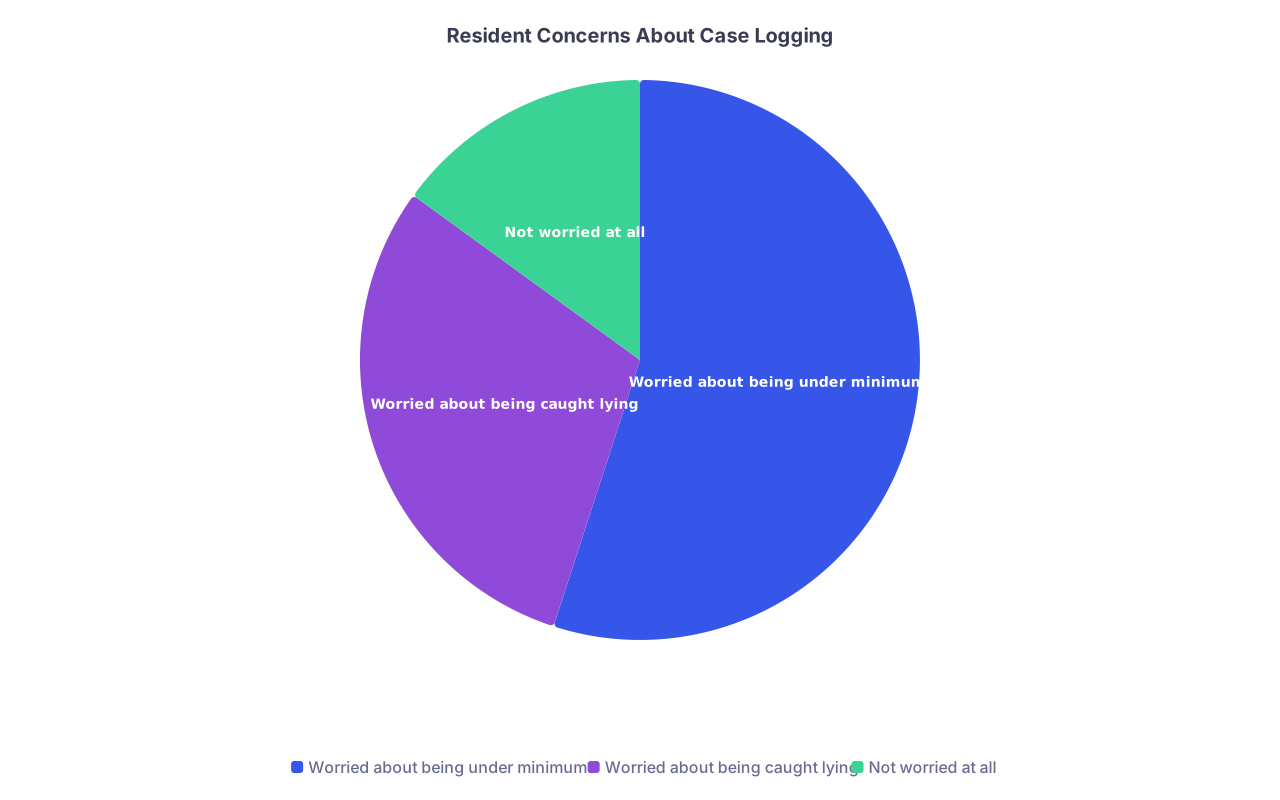
| Category | Value |
|---|---|
| Worried about being under minimums | 55 |
| Worried about being caught lying | 30 |
| Not worried at all | 15 |
I Logged Cases Late and Inconsistently: Does Anyone Actually Check?
What happens if your ACGME case log is a mess and someone decides to actually look at it? Like… really look. Line by line.
Because that’s the thought, right? Not just “my numbers might be low,” but: “What if they audit me, compare OpNotes, see that half of these were entered two months late at 1:37 a.m., decide I’m dishonest, and I get reported, or delayed graduation, or worse?”
Let’s just say you’re not the only one who’s had that 3 a.m. doom spiral.
The Ugly Truth: Your Logs Aren’t Invisible
Let me get the worst part out first so we’re not pretending.
Yes. People check.
Not every case. Not every resident. Not every program director hovering behind you as you click “add case.” But there are actual human beings whose jobs and accreditation depend on the fact that someone is looking at case volume.
So who really looks?
Program directors and APDs. They absolutely look at aggregate reports. By PGY level. By category. They look at outliers. They look at trends. I’ve literally heard a PD say, “Why does PGY2 Resident X have fewer laparoscopic choles than the interns?” over coffee at 7:30 a.m.
The Clinical Competency Committee (CCC). They usually don’t click into each line item, but they see your totals in categories when they’re deciding if you’re “progressing as expected.” You don’t want to be the only PGY-4 with colon numbers that look like a PGY-2.
The program coordinator. Quietly the most dangerous person in this chain. They’re often the first ones to notice, “Hey, you’ve logged 0 cases for the last 6 weeks,” or, “You just added 200 cases on June 20. Want to talk about it?”
The ACGME and RRC (Residency Review Committee). They don’t live in your individual log daily, but they absolutely look at de-identified program data. If patterns look bad, they ask questions. And sometimes they pick charts to audit.
The ABS (for surgery) or your board for other surgical specialties. They look at final counts, not timestamps. They care if you met the minimums and weren’t obviously fraudulent. But they can request more info, and they can delay or deny board eligibility if something doesn’t add up.
So no, your case log isn’t some private diary in the cloud that nobody ever opens. It’s not a black hole. It’s a system people use. And sometimes, they use it aggressively.
But. There’s a huge difference between:
“I log late, in clumps, and I’m worried I look disorganized”
and
“I fabricated stuff I never did to hit minimums.”
Those are not the same in anyone’s mind. Including the boards.
Late vs Fake: What People Actually Freak Out About
Here’s the line no one really spells out but everyone acts on:
Being late, inconsistent, and back-entering cases: annoying, unprofessional, mildly risky.
Making up cases, exaggerating your role, logging things you 100% didn’t do: career-ending if caught.
And people do get caught.
Not every time. But when it happens, it goes badly. Because once someone believes you lied about operative volume, they start asking what else you’d lie about. That’s the part that scares PDs and boards: dishonesty, not imperfection.
So, ask yourself honestly: what did you actually do?
You:
- Forgot to log for 2–3 months, then sat down and tried to reconstruct from memory?
- Logged cases in the right category but maybe misremembered assistant vs surgeon junior for a few?
- Mixed up which month something happened but still logged it roughly correctly?
That’s normal. Sloppy? Yeah. Malicious? No.
Or did you:
- Add cases for rooms where you were in the OR suite but not scrubbed?
- Log cases from clinic procedures you only saw once but suddenly listed as primary dozens of times?
- Copy-paste attending case lists and just “divide them up” to make everyone’s numbers prettier?
That’s approaching a problem where, if questioned hard, you’re going to have trouble.
If you’re in the first group, your situation is fixable and common. If you’re in the second group, we need damage control and honesty fast.
How Much Can They Actually See?
This is what keeps people up: what if the timestamp betrays me?
ACGME case log systems vary a bit by specialty, but generally:
- They can see when you entered a case. Yes, that includes the fact you added 184 cases between 1:00 and 3:00 a.m. on July 3.
- They can see totals by category, CPT, attending, PGY level.
- They don’t typically have a magic button that cross-matches every OpNote in EPIC with your log…and then emails your PD a “fraud score.” But they can pick cases and compare if they really want to.
Do most PDs or CCCs look at timestamps? Honestly, not regularly. They’re busy. They care more that:
- You have enough cases.
- You don’t have obviously absurd patterns (e.g., 50 Whipples as PGY1 primary, nothing as PGY5).
- The program as a whole looks compliant for accreditation.
Where people start digging deeper is when something looks blatantly off. For example:
- You had a rotation known for heavy laparoscopy, but your log shows almost none.
- Your numbers were low all year, then you magically added 300 cases the week after someone reminded you about minimums.
- You’re applying to a competitive fellowship and your case mix looks weird compared to your peers.
Then you might get called into, “Hey, walk me through how you’re logging cases.” That’s unpleasant, but it’s not automatically a hanging offense.
Program-Level vs You-Level Risk
Here’s the part nobody tells you because it sounds political and gross:
The RRC doesn’t want to fail you individually. They want to keep the program in line.
If a whole class has low numbers, that’s a program problem. The PD gets emails. Site visitors start asking why your vascular volume is terrible. They’ll grill rotations and coverage plans.
If just you are low, that’s awkward but manageable. The program might:
- Give you extra call or extra OR time
- Extend residency (worst case, but it happens)
- Document remediation plans
No one wants to do that. It’s paperwork and headache. But they’d rather fix your numbers than sit in front of the RRC explaining why they graduated someone who never did a lap appy.
Where people start thinking “this is serious” is when they suspect falsification. Because then it puts their accreditation at risk. Nobody will go to war for you if they think you lied.
So if your issue is late and inconsistent logging, your worst realistic outcomes are:
- An awkward conversation
- Mildly angry PD
- Remediation plan
- Possible extra time if your numbers are truly low and graduation is close
If your issue is invented cases, the worst realistic outcomes go all the way up to:
- Being reported to the board
- Losing board eligibility
- Being dismissed from the program
Again: most people are in the first bucket. Wrecked, late, patched-together logs. Not outright fraud.
Can You Fix This Without Digging a Deeper Hole?
You can’t time-travel and make real-time entries retroactively. But you can stop making it worse.
If you’re early or mid-residency: you have room to fix patterns.
Step one: Stop lying, if you crossed that line at all. Right now. Today. Do not add non-existent cases to “catch up.” Ever.
Step two: Make your log at least honestly approximate reality. If you know you did something, even if you’re fuzzy on the exact date, log it accurately in role and type. People care way more about inflated depth than misremembered dates.
Step three: Create a simple, non-heroic system going forward. For example:
- Screenshot the OR schedule at the end of the day, and log cases off that.
- Keep a tiny notes app list with “Date – Attending – Procedure – role” and enter every 2–3 days.
- Set a weekly calendar reminder you genuinely honor.
Not cute. Not elaborate. Just reliable enough that you’re not back-entering 200 cases again.
If you’re late PGY-4 / PGY-5 and close to graduation: you need to know where you actually stand.
Pull your ACGME report. Not the vibes version in your head. The real numbers. Look at where you are relative to the minimums for your specialty and the program’s typical graduates.
| Category | ACGME Minimum | Typical Grad | You Right Now |
|---|---|---|---|
| Total Major | 850 | 1000+ | 780 |
| Endoscopy Total | 85 | 120 | 60 |
| Hernia | 25 | 40 | 18 |
| Laparoscopic Appy | 25 | 35 | 22 |
| Mastectomy | 20 | 25 | 17 |
Seeing that in black and white is terrifying, but it’s way better than guessing.
If you’re under: this is where you talk to somebody. Quietly, early, before the last month of residency.
The Conversation You’re Dreading (But Need)
I know the script spinning in your head:
“If I tell my PD I logged late, they’ll assume I’m lying.”
“If I admit I don’t remember details of some cases, they’ll think I’m incompetent.”
“If I say anything, I’ll trigger some RRC-level catastrophe.”
Reality is usually much more boring.
The PD has seen this before. Every program has at least one resident per class who lives in chaos, logging at the very end, swearing they’ll do better. It’s not new.
What you don’t want is to spring a surprise low volume report on them at the time of graduation paperwork. That’s when tempers flare because they feel blindsided.
The better, less-terrible script sounds like:
“I pulled my ACGME report and I’m worried. I was inconsistent about logging early in training and I’ve been trying to reconstruct from memory. I’m not making anything up, but I know I haven’t been perfect, and I’m concerned my numbers might not reflect what I’ve actually done. Can we look at this together and make a plan?”
That signals three things PDs care about:
- You know there’s a problem.
- You’re not claiming perfection.
- You want a plan, not special pleading.
Will they be thrilled? No. Could they be blunt? Yes. But you give them time to help you fix it—extra OR, specific rotations, more targeted case assignment—before the RRC or boards ever see your final numbers.
“What If They Audit Me?”
Here’s where the paranoia spikes: “What if they pick me, cross-check everything, and decide I lied?”
Let’s separate scenarios.
If you made honest approximations—e.g., logged as surgeon junior when you might’ve been more of a “strong assistant,” or misremembered which attending on a busy service—almost nobody is coming for you over that.
If an audit compares OpNotes and finds:
- You’re generally there when you say you were
- Your roles are roughly consistent with your training level
- Numbers match reality within reason
Then the worst you get is, “Be more timely about logging going forward.”
If you invented whole cases or massively inflated your role, that’s where you’re exposed. Because:
- Another resident was actually the primary and also logged it.
- The OpNote lists different staff/assistants.
- You have 40 specialty cases no one remembers you doing.
If that’s you, the only safe move is to stop now, and if pressed, be honest. Doubling down on obvious lies is how people lose careers.
The most common reality I’ve seen? People are terrified of an audit that never actually happens. What does happen is a PD or CCC member saying, “Your hepatobiliary numbers are low—let’s fix that next block.”
How This Actually Affects Your Future
You’re probably catastrophizing it all the way to: “No fellowship. No job. Blacklisted forever.”
Slow down.
Fellowships and jobs mostly see: did you finish residency and are you board eligible? If you make it that far and your letters don’t say, “This person is dishonest,” they aren’t microscopically re-analyzing your case log most of the time.
Where it does matter:
- If you’re applying to a niche, high-volume fellowship and your numbers are clearly weak. They may worry about operative readiness.
- If your program had to extend you for volume problems—that might come up.
- If there’s a documented concern about professionalism/dishonesty related to logging. That’s a big deal.
But if your story is:
“I was sloppy early. Got called on it. Cleaned it up. Hit my numbers honestly by the time I graduated.”
Then years later, this will be nothing more than an embarrassing memory.
You won’t be sitting in clinic as an attending thinking, “I hope they don’t find out I back-entered 80 lap choles as a PGY-3.” You’ll be thinking, “Why is this 3 p.m. add-on actually starting at 6:30?”
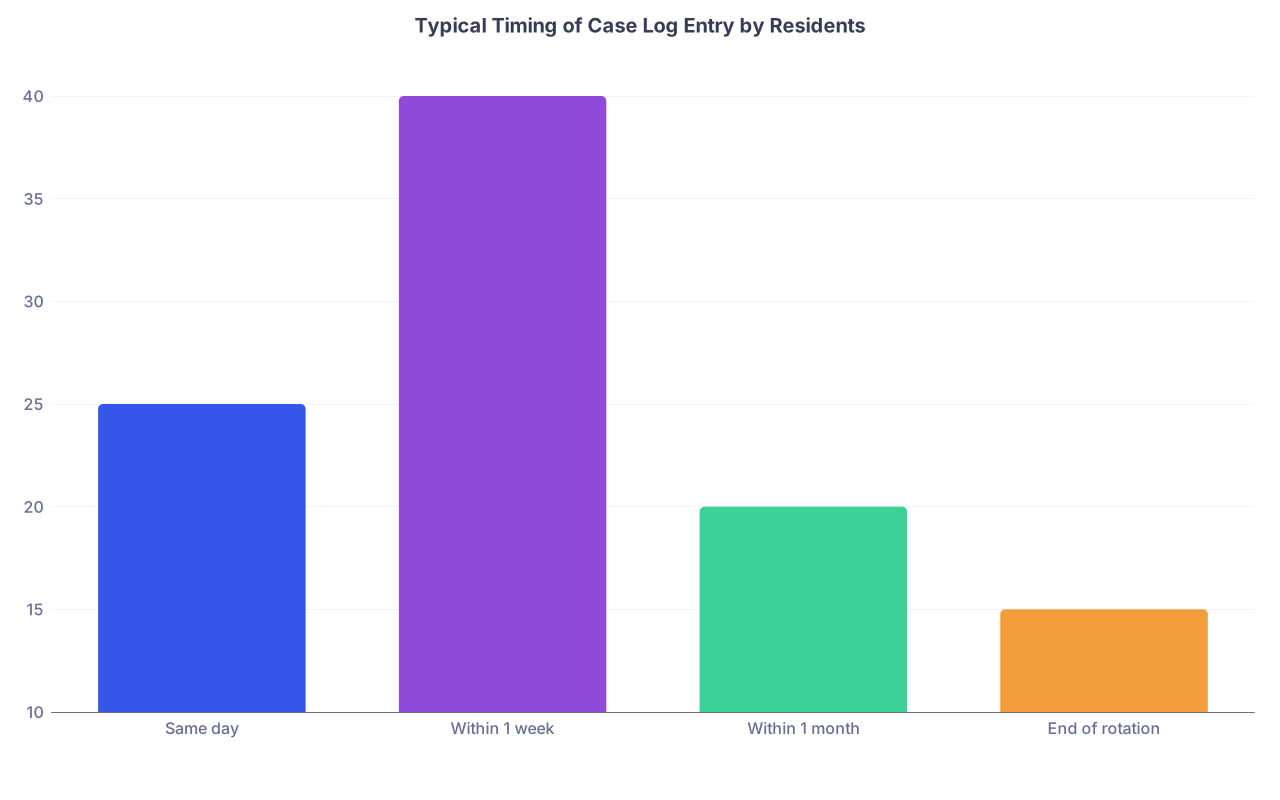
| Category | Value |
|---|---|
| Same day | 25 |
| Within 1 week | 40 |
| Within 1 month | 20 |
| End of rotation | 15 |
If You’re Reading This at 2 a.m. Panicking…
Here’s what I’d do in the next 7 days if I were you.
Day 1–2: Pull your actual ACGME case log report. Full PDF. Sit with the discomfort. Highlight obvious holes. Notice categories that are embarrassingly low for your level.
Day 3–4: Go through your calendar, OR schedule screenshots, emails, even text threads (“Hey I scrubbed this crazy ex-lap tonight”) and reconstruct what you truly did but never logged. Enter those cases accurately. Not aspirationally. Honestly.
Day 5: Make a list: “Here are the areas where I know my numbers don’t reflect my real experience, and here are the areas where my actual experience is under volume.”
Day 6–7: Ask for a meeting. PD, APD, or trusted faculty who sits on the CCC. Show them your report and say the thing you’re afraid to say: “I’m worried about this. What can I do now so I graduate truly competent and in good standing?”
Will your anxiety vanish? No. You’ll probably still feel sick walking into that meeting. But you’ll have moved from secret panic to an actual plan. Which is about as much control as you get in this system.

| Step | Description |
|---|---|
| Step 1 | Realize logs are a mess |
| Step 2 | Reconstruct from records |
| Step 3 | Stop adding false cases |
| Step 4 | Assess numbers vs minimums |
| Step 5 | Meet with PD or APD |
| Step 6 | Increase real case exposure |
| Step 7 | Maintain timely honest logging |
| Step 8 | Graduate with accurate log |
| Step 9 | Did you fabricate cases |

The Thing No One Admits Out Loud
Most residents don’t have perfect case logs.
Everyone likes to pretend they log daily, accurately, in real time, with perfect classification. That’s fiction. Residency is chaos. You’re exhausted. You’re cross-covering four services. The last thing your brain wants to do at 11:45 p.m. is click through CPT codes.
But there’s a difference between imperfect and dishonest. Between late and fabricated. Between “I’m anxious because I care about this” and “I’m anxious because I know I crossed a serious line.”
If your stomach is in knots because you’re disorganized and scared, you can fix that. Today. It’ll be uncomfortable, but it’s fixable.
If your stomach is in knots because you built your numbers on stuff you didn’t do, that’s heavier. It still doesn’t magically fix itself by ignoring it. The least awful version of that future is one where you stop now and face it sooner, with someone who can help you minimize the damage.
Years from now, you’re not going to remember how many times you clicked “add new case” at 2 a.m. You’re going to remember whether, when you realized you were in trouble, you hid and hoped…or you raised your hand and dealt with it.