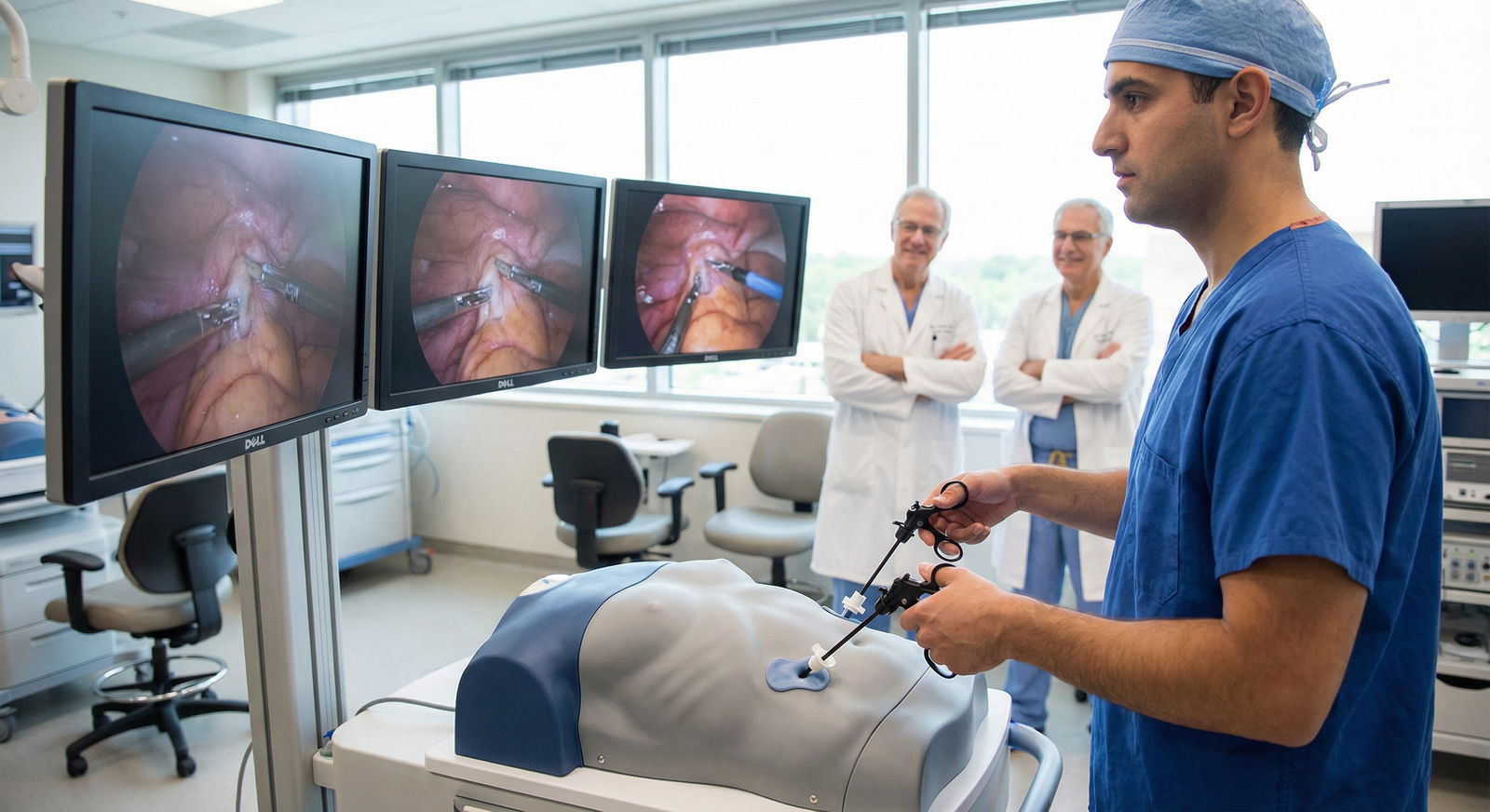
The fastest way to get in trouble with international electives is to play games with your case log.
You’re not just “writing down what you did.” You’re creating a legal, credentialing, and ethical document that people will rely on years later when they decide: can this surgeon operate safely, unsupervised, on real patients?
If you’re going abroad and planning to count surgical cases, you need a system. Not vibes. Not memory. A system.
Here’s how to handle it.
1. Understand What Actually “Counts” Before You Get on the Plane
Let me be blunt: if you cannot explain how your home program defines a “case” and an “acting role,” you’re not ready to log anything abroad.
Start here: pull your program’s case logging policy and your board requirements. For example:
- In the US, ACGME/ABS define what counts for residents.
- In the UK, the JCST logbook has clear definitions.
- Other regions have similar structures.
At minimum, you need clarity on:
- What roles exist: primary surgeon, assistant, observer, bedside assistant, endoscopist, etc.
- Whether international cases are recognized at all (some programs don’t accept them for minimum numbers).
- How to handle overlapping procedures (one patient, multiple counted cases vs one global case).
- Whether your malpractice/indemnity covers you abroad and under what supervision level.
If you do not know these answers, email or meet with:
- Your program director
- Your clerkship or residency rotation director
- Your department’s international electives coordinator (if you have one)
And ask specifically:
- Can I log cases performed on my international elective?
- Under what conditions do they count (supervision, role, site accreditation)?
- How should I label them (e.g., “International – Kenya, supervised by Dr. X”)?
- Will they count toward graduation/board requirements, or are they “experience only”?
Document their answers. Save that email chain. Future you will be grateful.
2. Ethical Boundaries: What You Must Not Do Abroad
This is where people get burned.
International electives can tempt you into doing things beyond your training because “they need the help” and “the local consultant said it was okay.” That may be true locally. It is not a defense if something goes wrong and your home institution didn’t authorize it.
Here are hard boundaries:
- Do not perform any procedure independently that you are not credentialed to do at home.
- Do not represent yourself as something you are not (“resident” vs “consultant,” “student” vs “doctor”).
- Don’t upgrade your role in the log. Assistant is assistant. Standing in the room is observer.
You should always be able to answer, honestly: “Could I have done this at my home hospital under the same supervision level?” If the answer is no, be very cautious about how you describe your role.
If you’re a student and you “closed skin” or “held the camera,” those are not primary surgeon roles. Don’t record them like they are.
3. A Simple Framework for International Case Logging
You need a framework that works under lousy Wi‑Fi, power outages, and packed OR lists. Assume:
- The local hospital has no electronic record you can access later.
- You may not have constant internet.
- OR lists may be handwritten on a piece of paper taped to a wall.
So your system has to work offline and in real time.
Use this three-layer approach:
- Real-time capture (in the OR hallway / immediately after the case)
- Daily structured log (paper or digital)
- Weekly transfer into your official log system (ABS, JCST, eLogbook, etc.)
Real-time capture
Right after the case, jot down 6 things. No excuses.
- Date
- Hospital/site
- Patient identifier (local medical record or coded ID—NO full names on your phone)
- Procedure(s)
- Your role
- Supervising surgeon
You can do this in:
- A small physical notebook you keep in your pocket
- A locked notes app on your phone
- An offline spreadsheet in Google Sheets/Excel
If you’re using your phone, make sure it’s password-protected and that you’re not storing identifiable info in a way that breaks local or home privacy rules. Use codes if needed.
4. What Exactly to Record: Minimum Fields That Protect You
If you want your future self, your PD, and your board to believe your log, it has to be specific enough to be credible and reconstructible.
Here’s a solid minimum dataset:
| Field | Why It Matters |
|---|---|
| Date of surgery | Timeline, training stage |
| Country & hospital | Context, quality, resources |
| Patient ID/code | Verifiability, audit trail |
| Age group (adult/peds) | Case mix, board requirements |
| Procedure name | Categorical counting |
| Approach (open/lap/etc) | Skills profile |
| Your role | Competency, supervision |
| Supervising surgeon | Accountability, verification |
| Elective type | Emergency vs elective practice |
If you’re going into a high-volume service (e.g., 8 hernia repairs in a day), add two more fields:
- Case number of the day (1/8, 2/8…) so you can remember which was which
- Brief free-text note if something stands out (“massive inguinal hernia, local anesthesia only”)
5. Role Inflation: The Fastest Way to Undermine Your Log
If you’re in a low-resource setting, people will often let you do more. That doesn’t automatically make you “primary.”
Here’s how to think about roles abroad, realistically.
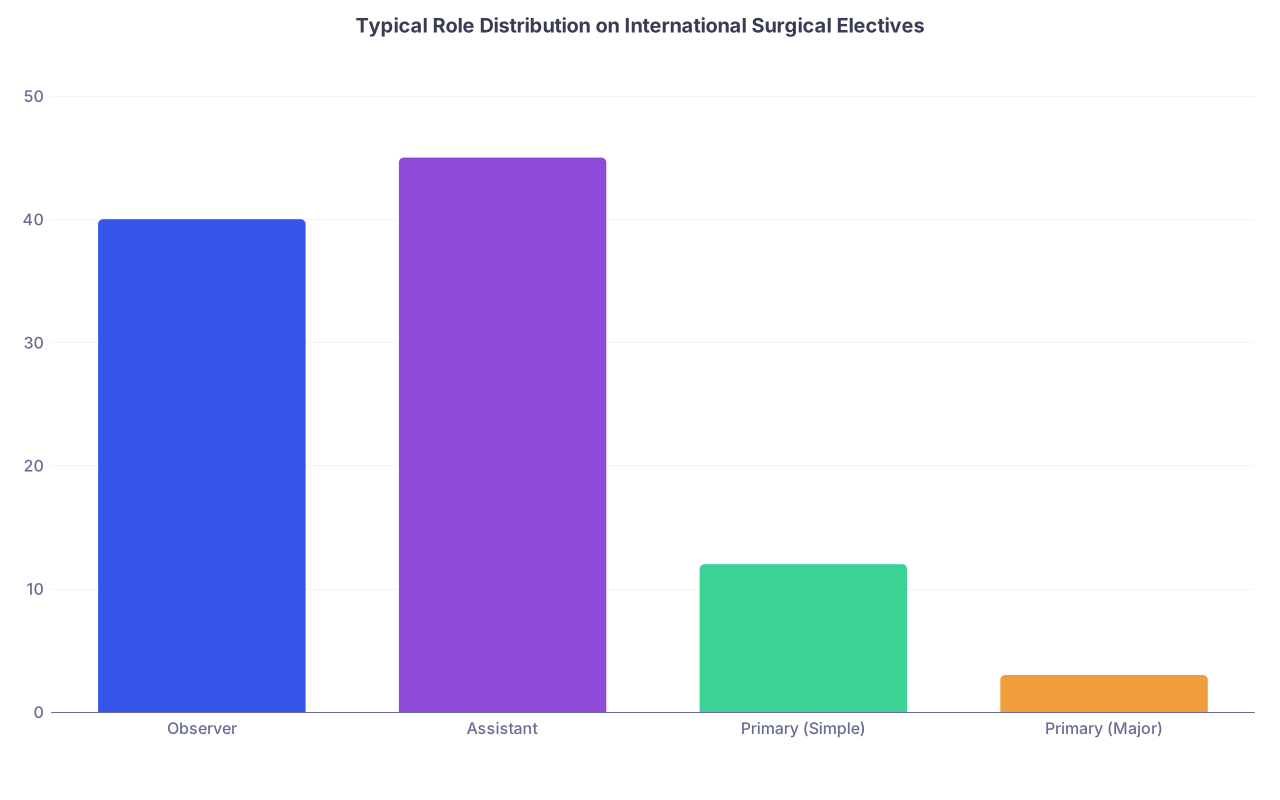
| Category | Value |
|---|---|
| Observer | 40 |
| Assistant | 45 |
| Primary (Simple) | 12 |
| Primary (Major) | 3 |
Basic rule: your role equals the highest level of responsibility you consistently performed for critical parts of the operation.
Some examples.
- You scrubbed, placed one trocar, retracted, and closed skin on a laparoscopic cholecystectomy: You’re an assistant.
- You performed the full skin-to-skin small abscess I&D under direct supervision: You’re primary for that minor procedure.
- You dissected the sac and tied the sac ligature in a hernia repair while the consultant handled the approach and mesh placement: Still assistant.
Be honest, but also be precise. You can document nuanced roles like:
- “Assistant – performed skin closure and drain placement”
- “Assistant – performed entire camera work”
- “Primary – simple I&D under direct supervision”
That level of detail protects you, especially with international cases. It shows you aren’t exaggerating.
6. Aligning Local Reality With Your Home Program’s Rules
Here’s a classic problem:
You’re in a district hospital. The only surgeon is a generalist who does everything—from C‑sections to amputations. The OR note might say something vague like “laparotomy,” and the concept of CPT codes, DRGs, or ABS categories doesn’t exist.
You still need to translate that into your home system. So:
Immediately after the case, ask the local surgeon:
- “What exactly did we do today? Appendectomy only or also washout? Any bowel resection?”
- “How do you usually describe this operation?”
Write it down in plain language first:
- “Midline laparotomy for generalized peritonitis from perforated duodenal ulcer, omental patch.”
Later, map it to your system:
- ABS category: “Gastric/duodenal – ulcer operation”
- JCST: “Emergency laparotomy – perforated peptic ulcer repair”
Do not invent a nicer, neater, more advanced-sounding procedure. Your translation should reflect what actually happened, not what sounds fancier.
If you’re unsure, flag it in your log: “Uncertain mapping – emergency laparotomy for peritonitis, no bowel resection.”
7. Digital vs Paper: Build Redundancy (Because Stuff Will Go Wrong)
You should have at least two independent records:
- A primary working log (paper or digital)
- A backup (photo scans or copied into an app)
Reason: phones get stolen, laptops die, paper note pads get soaked in a rainstorm.
A simple strategy that works:
- Use a small bound notebook in the OR for real-time notes.
- Once a day, photograph that notebook and save to a secure cloud folder.
- Once or twice a week, transcribe into your official electronic log.
You can also set up a simple structure like this for digital:
- Google Sheet/Excel with clearly labeled columns
- One tab per site if you’re rotating through multiple hospitals
- Color code emergency vs elective, major vs minor
If your home board or program has a specific category list, pre-load that list into a drop-down column so you’re not re-inventing names on the fly.
8. Safety and Scope: When You Should Walk Away From a Case
You’re not just a trainee; you’re also a guest. But you’re still responsible for your behavior.
If you’re being pushed beyond your scope:
- Example: A consultant says, “You close the fascia and skin on this C‑section alone, I’ll be back later.”
- Or: “You do the amputation; I trust you.”
Stop and recenter on three questions:
- Am I trained and credentialed to do this level of work at home?
- Do I have immediate, in-room supervision by someone truly able to rescue me if things go south?
- Is this being done because it benefits the patient or because it’s “a great learning case for you”?
If 1 or 2 is no, step back. Say: “I’m not comfortable doing this unsupervised; I’m happy to assist while you lead.”
Then log the case truthfully as assistant or partial-steps primary.
Pretending you were more independent than you really were is unsafe for patients now and unsafe for your patients in five years, when you might rely on that false confidence.
9. How Programs and Boards Look at International Volume
Reality check: most programs will not let you fill core graduation requirements entirely with international cases. They treat it as supplemental.
What usually happens (I’ve seen this in multiple departments):
- International cases are counted but capped (for example, only up to X% of total in a category).
- They may flag them in reports as “international” so faculty can interpret them with context.
- Volume-heavy, low-resource cases (e.g., dozens of straightforward C‑sections) may be seen as great experience but not a substitute for specialized or complex cases at home.
| Aspect | Typical Program Approach |
|---|---|
| Total case count | Counted but monitored |
| Core index cases | Usually must be domestic |
| Complex subspecialty | Rarely satisfied abroad |
| Minor procedures | Freely counted, less scrutiny |
| Independent practice | Not credited without clear oversight |
So do not bank on your three weeks abroad to “fix” a weak logbook. Use them to:
- Broaden your exposure
- Understand surgery in low-resource settings
- Get repetitions on basic things (e.g., skin closure, wound debridement, basic laparotomies) that make you more efficient back home
10. Documentation for the Future: Proving What You Did
Five years from now, someone might ask: “You say you did 40 C‑sections in Malawi. Prove it.”
You should be able to pull:
- Your contemporaneous log (date, hospital, supervising surgeon)
- An email/letter from the host supervisor confirming:
- Dates you were there
- Typical weekly caseload
- Your usual role in the OR
Get that letter before you leave. Not three years later when the consultant has moved three jobs and lost their institutional email.
The letter does not need to list every patient. It just needs to substantiate your presence and general scope of work. Something like:
“Dr. X spent four weeks at District Hospital Y (Country Z) from Date A to Date B, participating in emergency and elective general surgery and obstetrics. They regularly assisted and occasionally performed minor procedures (such as incision and drainage, basic wound debridement, and simple cesarean sections) under direct supervision.”
That, plus your detailed log, is strong evidence.
11. Quick Case-Logging Workflow You Can Start Using Tomorrow
If you want a plug-and-play system, here’s a simple daily routine that works in the field:
Morning:
- Before cases start, draw a quick table in your notebook for the day:
- Time / Patient ID / Procedure / Role / Surgeon / Notes
- Leave enough rows for the maximum number of cases you might see.
Immediately after each case:
- Fill in the line while you’re still scrubbed out and remembering details.
- Clarify the procedure name and your role with the supervising surgeon if there’s any doubt.
End of day (10–15 minutes):
- Take photos of the full page(s).
- Transcribe into your digital log while it’s fresh.
- Highlight any ambiguous cases in yellow to clarify with the local team the next day.
End of week:
- Transfer everything into your official national / institutional log (ABS, JCST, eLogbook, etc.).
- Send a brief email to your home supervisor summarizing:
- Number of cases
- Breakdown by rough categories
- Any scope-of-practice concerns that came up
That email trail becomes your protection if anyone ever questions what you did.
12. Future of Case Logging: Where This Is Going
You’re in a transitional era.
On one side: paper OR books, sketchy memories, “I think I did about 20” cholecystectomies.
On the other side: fully integrated electronic logs, real-time verification, and AI-powered dashboards tracking competence milestones instead of raw volume.
Expect:
- Electronic logbooks that automatically verify cases with local EMRs (even abroad, eventually).
- Standardized international elective templates for documentation and supervision expectations.
- More serious auditing of overseas cases as boards start to care more about patient safety in global health experiences.
For now, your best move is to behave like that future system already exists. Assume someone will cross-check your notes one day. Log as if they’re looking over your shoulder.
Because one day, they probably will.

| Step | Description |
|---|---|
| Step 1 | Before Elective |
| Step 2 | Confirm program rules |
| Step 3 | Set up paper and digital log |
| Step 4 | Arrive at host site |
| Step 5 | Record each case same day |
| Step 6 | Weekly transfer to official log |
| Step 7 | Obtain host supervisor letter |
| Step 8 | Review counts with home program |

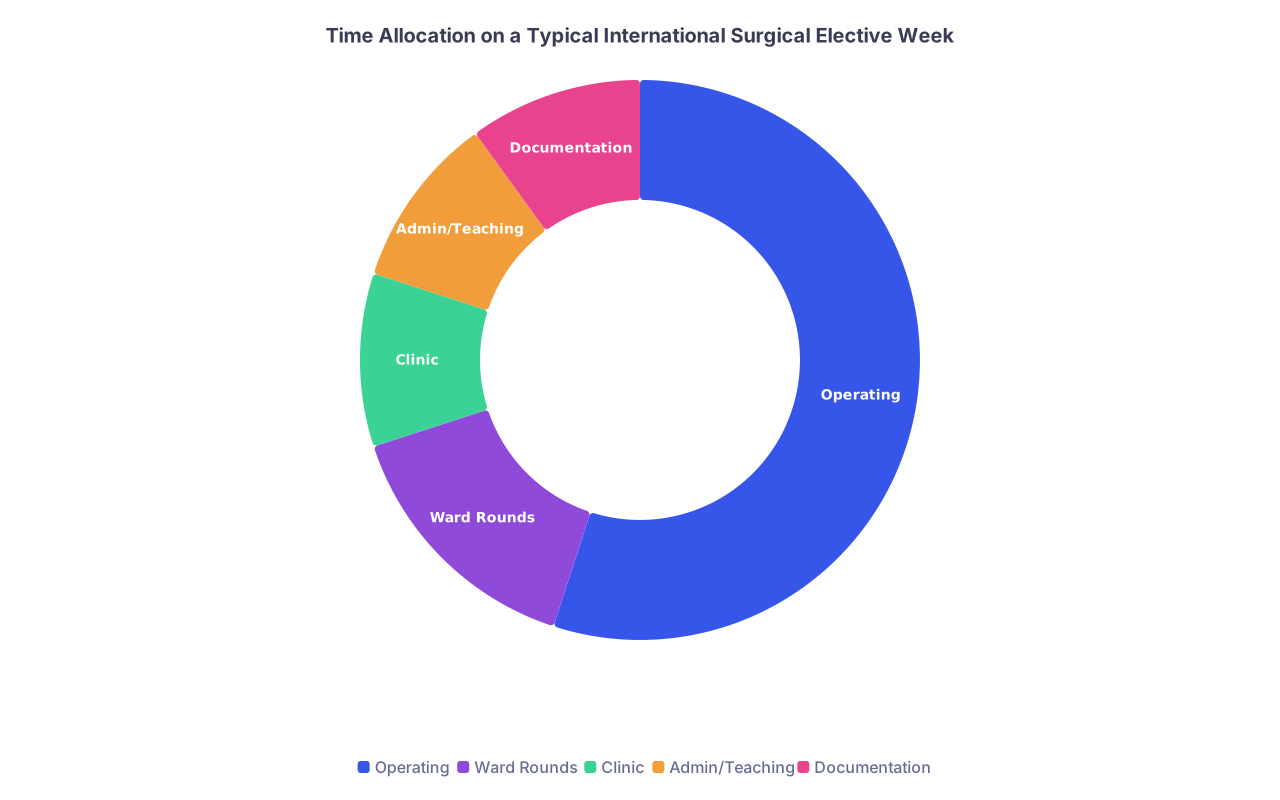
| Category | Value |
|---|---|
| Operating | 55 |
| Ward Rounds | 15 |
| Clinic | 10 |
| Admin/Teaching | 10 |
| Documentation | 10 |
FAQs
1. I’m a medical student and I closed a lot of skin abroad. Can I “count” those as surgical cases?
You can and should document them as experience, but you should not inflate your role. Log them as “assistant – skin closure” or similar, and treat them as details under broader cases rather than independent “operations.” They’re good for showing exposure and technical practice, not for padding “primary surgeon” numbers.
2. My host surgeon let me do a full C‑section skin-to-skin under supervision. Can I log that as primary?
If you performed the entire procedure under direct in-room supervision, and you’d be allowed to take that role at home at your level, you can reasonably log it as primary for that specific minor/standard procedure. Still, mark it clearly as “International, supervised by Dr. X” and be prepared to explain the context. Don’t use it to claim independent practice.
3. The local hospital doesn’t use formal procedure names or codes. How do I map cases to my board categories?
Write down a plain-language description right after the case (“emergency laparotomy for perforated appendix, no resection”) and later map it to the closest equivalent in your board categories. If you’re unsure, flag it as “uncertain mapping” and review with your home supervisor when you’re back. Do not guess fancy codes to make your log look stronger.
4. Can I retroactively reconstruct cases from memory when I get home if I didn’t log in real time?
You can try, but it’s weak evidence and easy to over- or under-estimate. At best, treat it as approximate exposure, not precise case counts. If you’re already on elective and behind, start today with same-day logging and accept that the early days will be fuzzier. Do not mass-enter “estimated” cases as exact numbers in your official log without a contemporaneous record.
Open whatever you’re planning to use as your log—paper notebook, Notes app, spreadsheet—and build the exact columns you’ll use on your elective. If you can’t do that in 10 minutes, your system is too complicated. Simplify it now, before you step into the OR abroad.