
Pediatric vs Adult Surgical Case Mix: Planning a Balanced Logbook
You are post-call, half-asleep in the call room, staring at your case log portal. It hits you: you are three months from fellowship applications and your “peds” column looks embarrassingly thin. Meanwhile your adult cholecystectomy count is astronomical. You remember the fellowship director who said, “I do not care how many lap appys you logged if you have never safely managed a 10-kg child.”
This is where most residents realize no one is going to balance their case mix for them. Not your PD. Not the chief. Not the OR board. You either plan your pediatric vs adult mix consciously, or you graduate lopsided.
Let me break this down specifically.
1. Why Pediatric vs Adult Mix Actually Matters
This is not just about checking a box on ACGME reports.
There are three different audiences watching your pediatric vs adult mix, each with a different agenda:
- Your certifying body (ACGME / ABS or equivalent) – looking for minimum competence and breadth.
- Your future employers / fellowship programs – looking for evidence you can handle their patient population.
- You, five years from now – looking back and either grateful you saw enough variety, or deeply annoyed that you avoided children for an entire residency.
Different physiology, different surgery
Children are not “small adults.” You know this intellectually. But your logbook will expose whether you actually trained that way.
Key differences that should be reflected in your case mix:
- Airway and anesthesia risk at different ages (infant vs teen).
- Fluid shifts and blood loss tolerance (50 mL in a 7-kg kid is not the same).
- Congenital anomalies and variant anatomy.
- Pain management strategies and post‑op monitoring levels.
If your logbook shows 800 adult abdominal cases and 12 pediatric cases, it is pretty clear which world you actually trained in.
Minimums vs credibility
For many general surgery programs, formal pediatric minimums are modest. You can technically “meet requirements” and still be unprepared to independently operate on kids. Or worse, you might be fearful enough that you refer nearly every child out once you are an attending.
The question you should ask is not:
“Have I met the minimum pediatric numbers?”
The better question is:
“If a 10-year-old with appendicitis shows up on my call night as a new attending, do I truly feel competent to take them to the OR, manage the post‑op, and talk to the parents without calling a friend at the children’s hospital?”
Your logbook should back up that answer.
2. Understanding the Typical Case Mix by Training Context
Stop assuming your experience is “normal.” It often isn’t. Geography, hospital structure, and specialty drastically change what a “balanced” mix looks like.
| Training Setting | Expected Peds Volume | Typical Peds % of Total Cases |
|---|---|---|
| Pure adult tertiary center | Low | 0–5% |
| Mixed community hospital | Moderate | 5–15% |
| Academic center with Peds Hosp. | High (if rotated) | 10–25% |
| Standalone Children’s Hospital | Very high (on peds) | 70–100% during block |
General surgery residency (non‑peds focused)
A reasonably “healthy” general surgery logbook in the U.S. or similar systems usually ends up with pediatric exposure something like:
- Total index adult cases: 700–900
- Pediatric cases (all types): 40–120
- Pediatric as primary surgeon: ideally 30–70
Below ~25 pediatric cases total as a graduate of a program that claims broad-based training is weak. Above 100, with a variety of pathologies and age ranges, is strong.
Of course, programs vary. Some residents barely see children. That is not an excuse; it is a planning problem.
Subspecialty paths and what they expect
If you are heading toward:
Pediatric surgery fellowship
– They expect several hundred total pediatric cases by the end, with clear progressive autonomy. But you only get that if your senior years are heavily peds loaded or if you did a peds‑heavy research block or visiting rotation.Pediatric ortho, peds ENT, peds urology
– The adult:little‑kid ratio matters less, but they still want to see you chose peds cases when available and did not hide from complexity or small bodies.Pure adult surgical subspecialties (e.g., vascular, surgical oncology)
– Nobody cares if you are mediocre with children. They care that your adult log is deep. Still, being able to manage adolescent patients is not trivial, especially in trauma or transplant‑adjacent specialties.
The bottom line: “balanced” is relative to where you are going. But no path justifies zero functional pediatric experience.
3. What a “Balanced” Case Mix Actually Looks Like
Let us get concrete. A balanced logbook is not just “I have X pediatric cases.” It is what those cases are.
Think in four dimensions, not raw counts
When you evaluate your pediatric vs adult distribution, look at:
Age distribution
- Neonates and infants
- Toddlers / preschool
- School‑age
- Adolescents
Pathology distribution
- Acute (appendicitis, intussusception reduction involvement, incarcerated hernia)
- Elective (inguinal hernia, umbilical hernia, hydrocele, orchiopexy, minor soft tissue)
- Complex / congenital (malrotation, Hirschsprung, anorectal malformation, chest wall, tumor resections)
Approach distribution
- Open vs laparoscopic vs thoracoscopic
- Emergency vs elective
Role distribution
- Assistant vs surgeon junior vs surgeon chief
- Number of key portions you actually performed
If your log is 50 pediatric cases but 45 of them are “assistant, laparoscopic appendectomy, adolescent, elective,” that is not balance. It is repetition.
A sample “competent generalist” profile
If I see a graduating general surgery resident who wants to practice broad-based community surgery with the following approximate pediatric profile, I am comfortable:
- Total pediatric cases: 60–100
- Age spread: at least 10–15 cases in patients under 5 years, not just teens
- Index peds operations (as surgeon of record or surgeon junior):
- 15–25 pediatric appendectomies (mix of open / lap, including small kids)
- 15–30 pediatric hernia / hydrocele / orchiopexy / umbilical hernia repairs
- Several pyloromyotomies (3–10) – not strictly mandatory everywhere, but very helpful
- A handful (3–10) of more complex things where they at least did a meaningful part: bowel resection for NEC, malrotation, Meckel, trauma laparotomies, Meckel diverticulectomy, etc.
Contrast that with their adult log:
- 100+ adult cholecystectomies
- 50+ adult colorectal cases
- 30+ adult hernias (open + lap)
- Ample emergency laparotomies, trauma, etc.
That is a realistic, balanced mix. You do not need 300 pediatric cases as a non‑peds surgeon. You do need enough width and depth to function without panic.
4. How Pediatric Cases Differ in Logbook Impact
Some cases are “high‑yield” for competence. Others are just volume padding.
High‑yield pediatric cases for a generalist
These move the needle in your training and should be prioritized when you have a choice:
- Laparoscopic appendectomy in a 5–12‑year‑old (especially if you are primary)
- Open appendectomy in small children where anatomy is tighter
- Pediatric inguinal hernia / hydrocele repair, especially under 2 years
- Pyloromyotomy (open or lap) – physiology, small margins, real consequences
- Pediatric trauma laparotomy – even if you only performed parts of the case
Each of these forces you to deal with pediatric physiology and scaled anatomy, not just adult habits.
Low-yield or misleading volume
These are not useless, but they easily give a false sense of pediatric competence:
- Tonsils and adenoids logged under “peds exposure” if you are not the one dealing with airway risks.
- Minor skin excisions in kids under sedation.
- “Assistant” on complex peds tumor resections where you held retractors and watched.
You should still log them. But do not kid yourself: 30 “assistant, complex pediatric” cases do not equal 10 primary index pediatric operations you actually led or significantly ran.
5. Planning Your Mix: Strategy by Training Year
Residents who end PGY‑5 with a solid pediatric portfolio usually did not “get lucky.” They planned earlier than everyone else.
Here is how I would engineer it year by year for a typical 5‑year general surgery residency.
PGY‑1: Baseline exposure and mindset
Your goal in intern year is not volume. It is comfort.
- Get into pediatric rooms whenever your senior offers. Take them. Do the skin. Learn how the anesthesia team sets up for infants vs teens.
- Log everything from day one. Label pediatric cases correctly by age group; do not leave them as “adult” by default. You will never fix this retroactively.
By the end of PGY‑1 you should have:
- At least 10–20 logged pediatric cases, even as an assistant.
- Seen at least some kids under 5 in the OR or on the ward.
PGY‑2–3: Targeted accumulation and skill building
This is where most residents lose the plot. They get buried in adult emergencies and forget children exist.
Your priorities now:
On pediatric / mixed rotations
- Aggressively volunteer for cases that are “painful” for others: night‑time peds appys, incarcerated hernias at 3 a.m.
- Ask to do more of the key steps. Do not be content with “closing.”
On adult or mixed services
- Watch the OR board. When a pediatric case appears, ask your chief to go if coverage allows. Seniors often would rather avoid the extra complexity; use that.
Keep a running tally
- Once a quarter, open your logbook, filter for age <18, and see what you actually have.
By the end of PGY‑3, you want:
- 30–50 pediatric cases total.
- Not just adolescents. At least a dozen under age 10.
- A few primary roles documented.
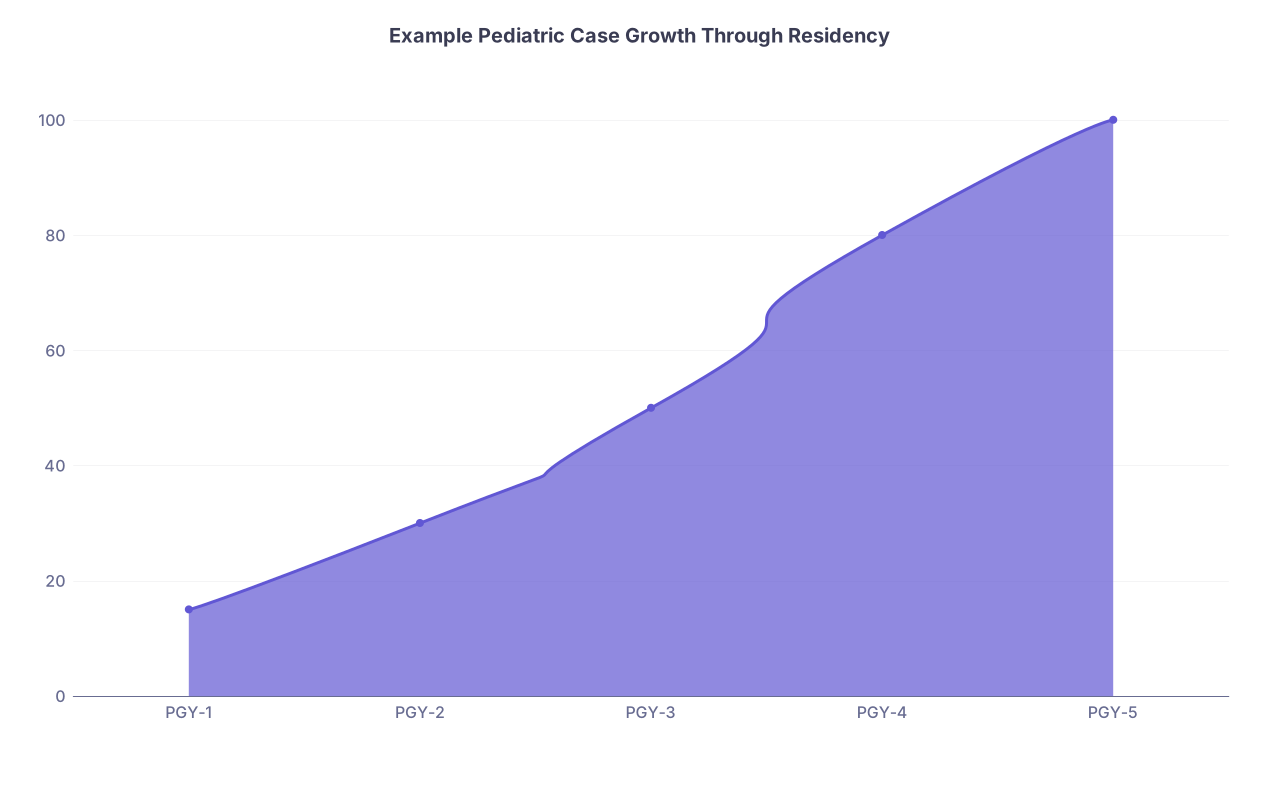
| Category | Value |
|---|---|
| PGY-1 | 15 |
| PGY-2 | 30 |
| PGY-3 | 50 |
| PGY-4 | 80 |
| PGY-5 | 100 |
PGY‑4–5: Deliberate shaping for your career path
Now you refine, not just accumulate.
If you are headed toward general/community practice:
- Focus on bread‑and‑butter pediatric emergencies and electives you will actually see: appy, hernia, orchiopexy, trauma.
- Get primary surgeon credit on these wherever possible. Log case role honestly but assert what you did.
If you are targeting pediatric fellowship:
- You need depth and complexity: neonatal cases, malrotation, Hirschsprung, chest cases, pediatric solid tumors.
- Consider an elective or away rotation at a children’s hospital if your home program cannot provide this.
- Your logbook should show a strong upward slope in pediatric volume in your senior years, with more “surgeon chief” roles.
At the end of residency, you should be able to defend your pediatric vs adult mix in one clear sentence during any interview.
Something like: “I graduated with approximately 850 adult general surgery cases and about 80 pediatric cases, with a strong focus on appendectomy and hernia in kids under 10, and a smaller but meaningful exposure to neonatal emergencies.”
That is specific, credible, and supports your stated career goals.
6. Using Your Logbook as a Real-Time Tool (Not a Post‑Hoc Autopsy)
Too many residents treat the logbook as a clerical afterthought. Then PGY‑4 hits and they panic.
Your logbook is a feedback tool. Use it.
Set explicit numeric targets
Do this early. As in, PGY‑2.
Say you are in a standard 5‑year general surgery track, planning broad community practice. Reasonable personal peds targets might be:
- By end of PGY‑3: 40 pediatric cases total, at least 10 under age 10.
- By graduation:
- Total pediatric cases: 80–100.
- At least:
- 20 pediatric appendectomies
- 20 pediatric hernia/hydrocele/orchiopexy/umbilical hernias
- 10 cases in kids under 3 years
- 5–10 more complex/emergency peds abdominal cases
Write those down somewhere you actually see every few months.
Quarterly review and course correction
Every 3–4 months:
- Export your case log.
- Filter by age or pediatric designation.
- Count each high‑yield category: peds appy, peds hernia, peds trauma, etc.
- Compare to where you wanted to be by now.
If you are 18 months from graduation and only have 6 pediatric appendectomies, that is not a surprise crisis. That is a preventable failure you can still fix—if you acknowledge it early.

| Step | Description |
|---|---|
| Step 1 | End of Quarter |
| Step 2 | Export Case Log |
| Step 3 | Filter Pediatric Cases |
| Step 4 | Maintain Strategy |
| Step 5 | Adjust Rotations/OR Bids |
| Step 6 | Discuss with PD/Chief |
| Step 7 | Track Progress Next Quarter |
| Step 8 | Meeting Targets |
7. Tactics to Increase Pediatric Exposure Without Wrecking Your Life
You do not need to be a martyr or live in the peds OR. But you do need to be smart and a bit opportunistic.
1. Negotiate strategically on service
On mixed rotations:
- Tell your chief plainly: “I am short on pediatric appys and hernias. If there is any flexibility, I would like to be primary on those when they pop up.”
- Do this early in the month, not the last week. Chiefs are far more receptive if you are not desperate and frantic.
Most seniors care about their own logs, not blocking yours. If covering call and wards is reasonable, they will often let you take the “annoying” pediatric overnight cases.
2. Use elective time intentionally
If you have an elective block:
- Do not waste it on a second plastics rotation if you are weak on peds and planning community general surgery.
- Arrange an elective month at the children’s hospital or with the pediatric service.
- Be candid: “I am not going into peds fellowship, but I want to come out of residency actually competent with kids.”
Programs respect that.
3. Work with anesthesia and peds teams, not against them
Sometimes the hidden barrier to peds cases is not surgery; it is anesthesia or PACU logistics.
Build trust:
- Be prepared. Know the weight, dosing ranges, relevant labs, and approach when you show up to the room.
- Help with positioning, lines, and communication with parents. Staff notice who takes pediatric care seriously.
Once anesthesia trusts you as “the resident who prepares well for kids,” they are more relaxed letting you run more of the actual case.
4. Stop being “too busy” for the right cases
There will be days when you could choose between:
- Another adult lap chole you have done 100 times.
- A 6‑year‑old with a right inguinal hernia.
If your log is already full of adult choles and light on peds, you know the correct choice. You just need to act on it.
8. Documenting Pediatric Complexity and Role Honestly
Programs and future employers know how to read between the lines. Gaming your logbook is obvious.
Be precise about age and case classification
Anything under 18 should be correctly entered as pediatric. More granularly:
- Many systems let you specify age groups; use them. A 17‑year‑old is not the same as a 9‑month‑old, both for training value and perception.
- For high‑stakes neonatal or infant cases, add notes (if allowed) summarizing your role: “Performed majority of pyloromyotomy under close attending supervision.”
| Case Type | Age Group | Role | Count |
|---|---|---|---|
| Lap appendectomy | 10–17 yr | Surgeon junior | 14 |
| Lap/open appendectomy | <10 yr | Surgeon junior | 6 |
| Inguinal hernia repair | <5 yr | Surgeon junior | 8 |
| Pyloromyotomy | <1 yr | Assistant | 4 |
| Trauma laparotomy | <18 yr | Assistant | 3 |
This tells a much clearer story than “35 pediatric cases” with no breakdown.
Describe your experience clearly in applications
When you are writing personal statements or interviewing:
- Reference your actual numbers and types: “Across residency, I completed approximately 80 pediatric cases, including around 25 peds appendectomies and 20 hernia/hydrocele repairs, with a solid subset in children under 5.”
- Pair numbers with an outcome: “I feel prepared to independently manage common pediatric emergencies in a community setting, and I will refer more complex congenital pathology appropriately.”
That is the entire point of this balancing act.
9. The Future: How Pediatric vs Adult Mix Will Evolve
You are not training in a vacuum. The landscape is shifting under you.
Three trends matter here:
1. Increasing sub‑specialization and centralization
More complex pediatric surgery is being centralized to high‑volume children’s hospitals. That will likely mean:
- Fewer complex index peds cases at smaller or non‑children’s center residencies.
- More emphasis on bread‑and‑butter peds for generalists: appendicitis, hernias, basic trauma, testicular torsion co-management.
So a realistic “balanced” mix for a future community surgeon will probably focus even more on:
- Safe resuscitation and decision making.
- Recognizing which kids are safe to keep and which need immediate transfer.
- Doing the right core operations well, not everything.
2. More granular competency‑based assessment
Certifying bodies are drifting toward real competency metrics rather than blunt volume thresholds. You will see more of:
- Milestones around pediatric airway, fluid management, and consent with parents.
- Simulation‑based assessment for rare pediatric emergencies.
Your logbook alone will not “prove” competence, but it will still be a necessary foundation.
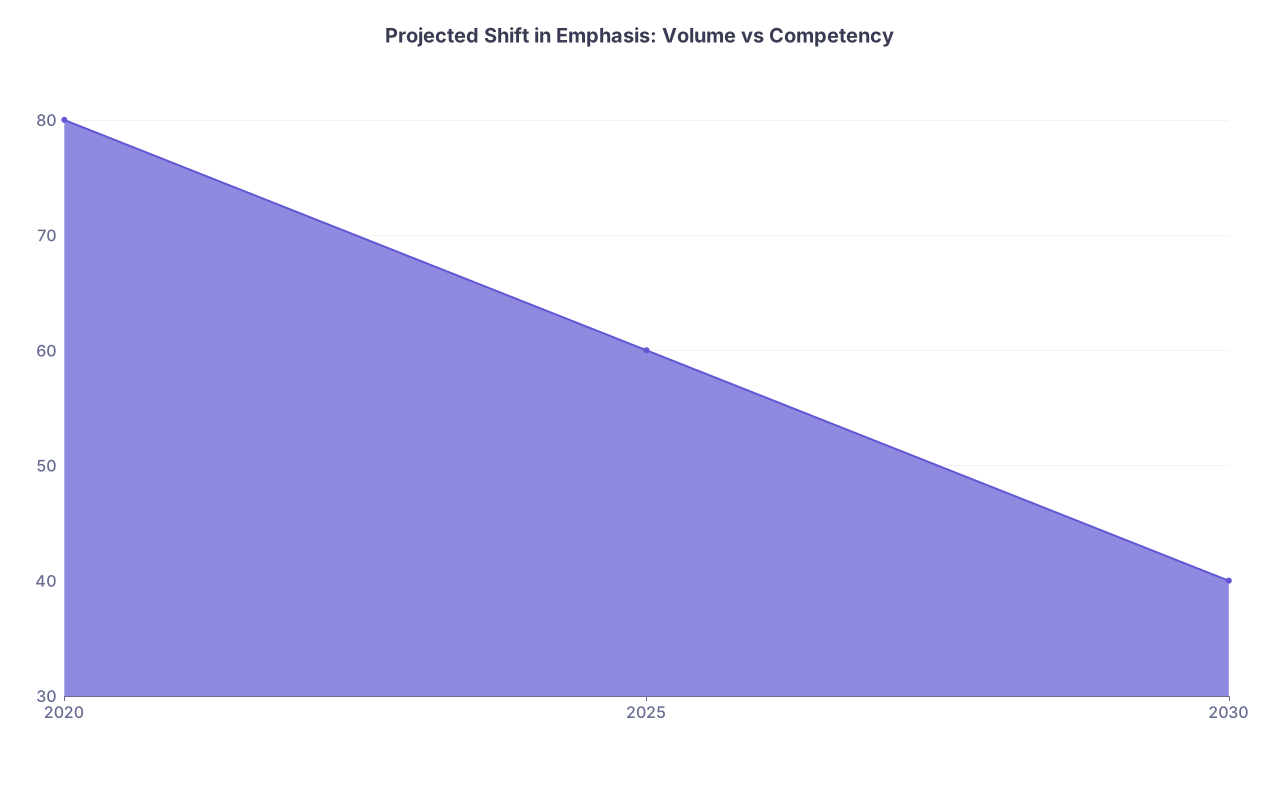
| Category | Value |
|---|---|
| 2020 | 80 |
| 2025 | 60 |
| 2030 | 40 |
(Interpretation: decreasing reliance on crude volume metrics over time; rising emphasis on direct competency assessment.)
3. Data transparency and benchmarking
You will not be able to hide a lopsided logbook. Programs are already comparing residents against internal and national benchmarks.
Reality check:
- If your program’s average graduating resident logs 70 pediatric cases and you have 18, that is going to raise questions, even if you “met minimums.”
- Conversely, if you have a particularly strong pediatric profile relative to peers, that is a real advantage for fellowships and jobs in mixed populations.
So plan your mix as if someone will line it up against your co‑residents and ask you to explain. Because they will.
10. Putting It All Together: Your Action Plan
You do not need a 20‑page spreadsheet. You need a sharp, simple framework.
Here is how I would operationalize this in real life.

| Step | Description |
|---|---|
| Step 1 | Define Career Goal |
| Step 2 | Set Peds Targets |
| Step 3 | Track Quarterly |
| Step 4 | Identify Gaps |
| Step 5 | Adjust Rotations/OR Choices |
| Step 6 | Verify Progress with PD |
Step by step:
Define your end‑goal
- Pure adult subspecialty? Balanced generalist? Pediatric fellowship?
- Write down what that demands in pediatric exposure.
Translate that into approximate numeric targets
- Total pediatric volume plus key category counts (appy, hernia, trauma, infant cases).
Review your log at least every 3–4 months
- Quick counts by age, pathology, and role. No illusions.
Adjust your behavior
- Take pediatric cases over redundant adult ones when you have a choice.
- Use elective time and mixed rotations intelligently.
- Communicate your needs to chiefs and PD early, not at the end.
Document honestly and specifically
- Age, roles, and complexity.
- Be prepared to explain what your numbers actually mean in terms of ability.
Key Takeaways
A “balanced” pediatric vs adult case mix is not about hitting arbitrary volume minimums; it is about emerging from training actually competent with the children you will see in your real practice.
You must plan your pediatric exposure starting by PGY‑2 and track it quarterly. Waiting until senior year to fix a thin pediatric logbook is how you end up graduating lopsided.
Use your logbook as a strategic tool: set explicit pediatric targets aligned with your career path, prioritize high‑yield pediatric cases over redundant adult ones, and document your age ranges and operative roles clearly so your numbers tell an honest, convincing story.