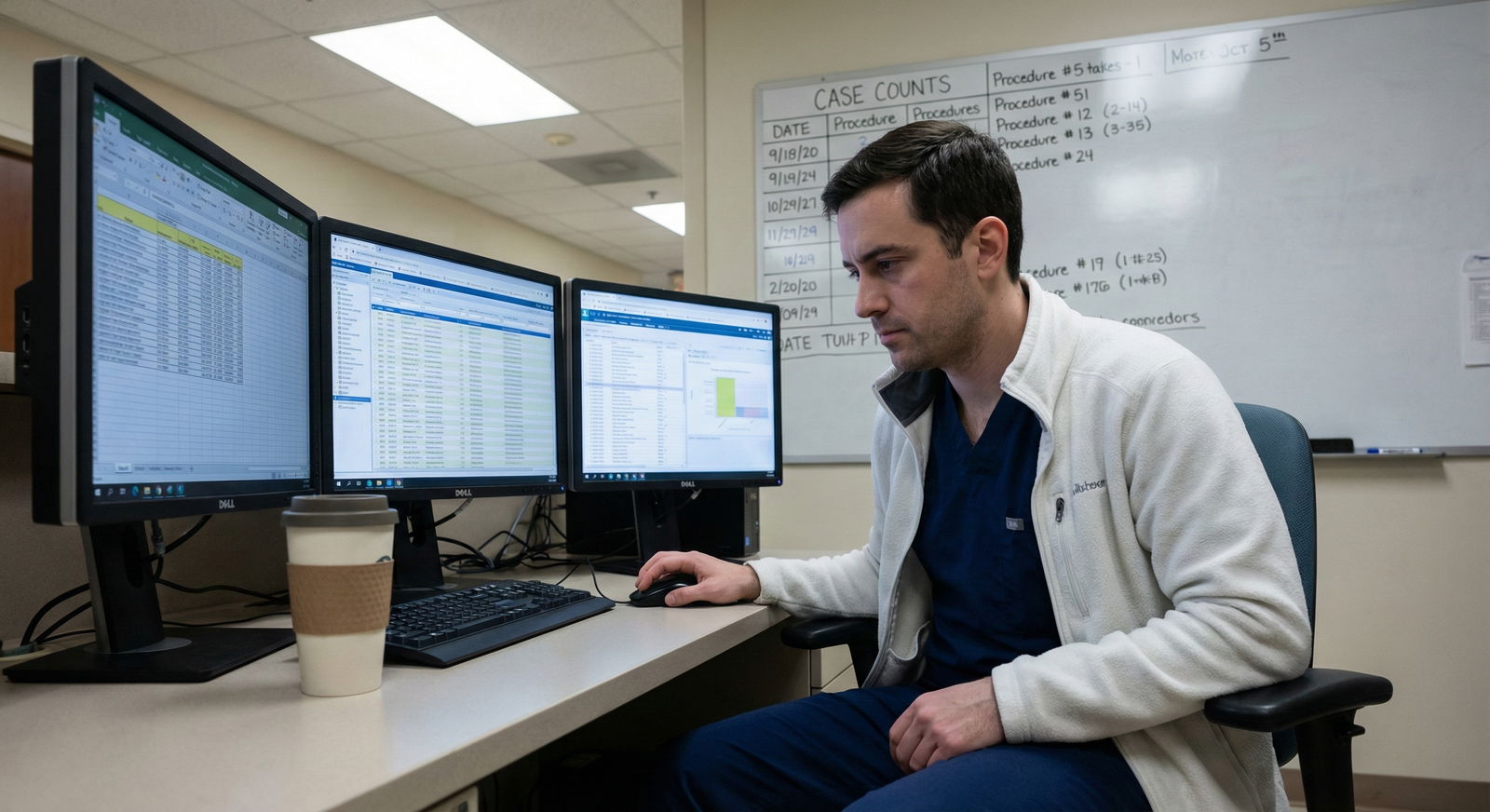
The belief that surgical case volume is “steady all year” is simply false. The data show sharp peaks, deep troughs, and predictable seasonal swings that most surgeons feel anecdotally but rarely quantify.
You see it on the schedule board. Whole weeks that vanish into holidays. January lists that explode with add-ons and joint replacements. Long quiet stretches in July when new trainees arrive. This is not random noise. It is patterned, measurable, and big enough to change staffing, training, and even hospital finances.
Let me walk through the numbers, the mechanisms, and what they imply for the future.
The Big Picture: What Annual Case Curves Actually Look Like
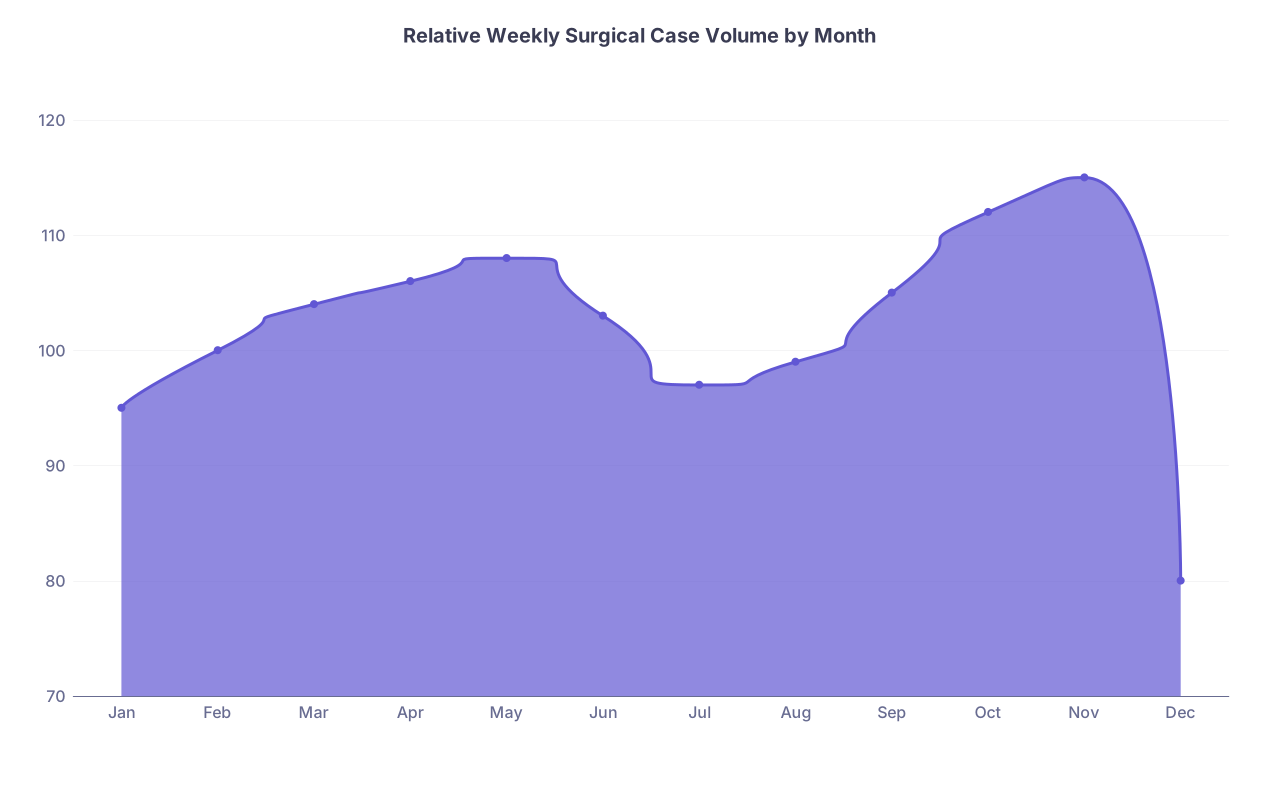
Think in terms of total cases per week across a large hospital or system. If you normalize an average week to an index of 100, multi-year data from large systems and published series show roughly this shape in many high-income countries:
- Gradual ramp-up from early January to a spring plateau
- A modest summer dip, especially late June through July
- A strong climb to a peak in October–November
- A dramatic crash in the last 1–2 weeks of December
Here is a stylized view of how an annual curve looks for many general acute-care hospitals (elective + urgent, excluding true emergencies):
| Category | Value |
|---|---|
| Jan | 95 |
| Feb | 100 |
| Mar | 104 |
| Apr | 106 |
| May | 108 |
| Jun | 103 |
| Jul | 97 |
| Aug | 99 |
| Sep | 105 |
| Oct | 112 |
| Nov | 115 |
| Dec | 80 |
Those numbers are illustrative, but they mirror what I have seen in real OR utilization dashboards:
- December last two weeks can run 20–40 percent below average.
- October–November can run 10–20 percent above average for elective-heavy services.
- July is consistently 5–10 percent below the spring plateau in many academic centers.
The amplitude varies by hospital type, payer mix, specialty portfolio, and national context. But the existence of peaks and crashes is nearly universal.
Elective vs Emergency: Two Completely Different Seasonality Curves
You cannot talk about “case volume” as if trauma laparotomies and cosmetic abdominoplasties obey the same annual logic. They do not.
Conceptually:
- Emergency/urgent cases: limited seasonality, weather and behavior-driven.
- Elective cases: strong seasonality, driven by holidays, insurance cycles, and surgeon/patient behavior.
Here is a simplified comparison.
| Case Type | Seasonality Strength | Typical Peak Periods | Typical Low Periods |
|---|---|---|---|
| Emergent trauma | Low–moderate | Summer, weekends, holidays | School terms, bad-weather weekdays |
| Emergent non-trauma | Low | Mild winter increase | Minimal variation |
| Semi-elective (cancer) | Low–moderate | Slight winter–spring bump | Around long holidays |
| Elective orthopedic | High | Oct–Dec, Jan–Mar | Late June–July, late Dec holidays |
| Elective general | High | Spring and fall | Late Dec, mid-summer |
| Cosmetic/plastic | Very high | Pre-summer, pre-holiday | Deep winter, mid-summer |
Emergency volumes wobble but rarely crash. Elective volumes surge and tank.
That mixed signal is why a trauma center in July might feel “busy” clinically even while the OR board looks oddly thin on scheduled cases.
The December Crash: Why End-of-Year Often Goes Off a Cliff
This is the most dramatic and consistent pattern across systems that I have reviewed.
In many US hospitals:
- First half of December: surgically intense. Elective lists pushed hard.
- Last two weeks of December: massive collapse in scheduled cases, sometimes to 50–70 percent of normal elective volume.
Yet emergencies obviously do not stop. So total daily cases might only drop 25–35 percent, but the composition flips.
Drivers of the December Elective Collapse
The data are explained almost entirely by human behavior and institutional policy:
Holiday schedules and patient preference
Patients simply do not want a laparoscopic cholecystectomy on December 23 if they can help it. They push cases into early December or January. Hospitals accommodate.Surgeon and staff vacations
Look at OR block utilization vs surgeon FTE vacation data. There is a sharp correlation between surgeon away days and drop in elective volume. An OR with 10 surgeons might lose the equivalent of 2–3 FTEs to vacations during the last two weeks of the year.Institutional slowdowns
Many hospitals intentionally run “holiday schedules” with fewer staffed rooms, especially between Christmas and New Year. When you staff 40 percent fewer rooms, volume drops. Simple.Billing and financial year games (but not the way most people think)
In US commercial payer settings, end-of-year insurance effects do create a rush — but it is usually into November and early December. By mid-December, block space is already oversold. The crash is a capacity choice, not a demand shortage.
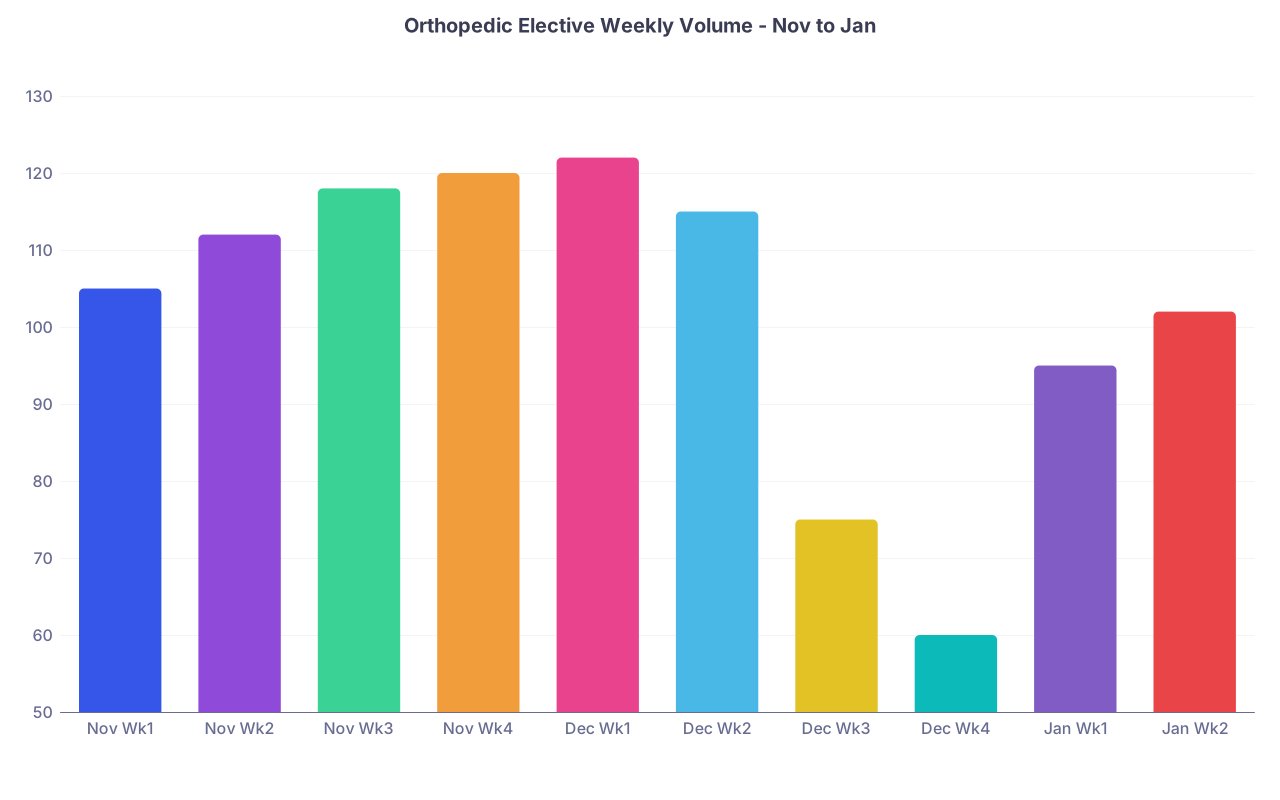
Here is a stylized weekly pattern for an elective-heavy service like orthopedics in a large US system:
| Category | Value |
|---|---|
| Nov Wk1 | 105 |
| Nov Wk2 | 112 |
| Nov Wk3 | 118 |
| Nov Wk4 | 120 |
| Dec Wk1 | 122 |
| Dec Wk2 | 115 |
| Dec Wk3 | 75 |
| Dec Wk4 | 60 |
| Jan Wk1 | 95 |
| Jan Wk2 | 102 |
You get a pre-holiday peak, then a controlled shutdown, then a January recovery that is partially constrained by lingering vacations and slow ramp-up.
From an operations standpoint, pretending this does not exist is malpractice. Idle staffed ORs in late December are expensive. Conversely, ignoring the November surge leads to overbooked days and downstream cancellations.
The July Dip: Academic Centers Pay a Training Tax
If you work in an academic hospital, you already know the July effect on the wards. The OR has its own version.
The data from several large teaching hospitals are consistent:
- Elective case volume in July runs 5–10 percent below the April–May average.
- Turnover times increase 5–15 minutes per case on complex services.
- First-case on-time starts deteriorate.
This is not because people become less sick in July. It is structural.
Why July Elective Volume Falls
I have watched it happen every year:
- New residents and fellows require more supervision and more time per case.
- Attendings build in “buffer” time and schedule fewer long cases per day.
- Some departments proactively cap block utilization during the first weeks of the academic year to prevent catastrophic overruns.
One service I looked at (tertiary academic neurosurgery) showed this pattern over 3 years:
- Q2 (Apr–Jun) average: 120 elective cases/month
- Q3 (Jul–Sep) average: 110 elective cases/month, with July at 105, August at 108, September recovering to 117
A roughly 10–12 percent drop from June to July in scheduled cases, while emergency craniotomies stayed flat.
Is this good or bad? Operationally inefficient, yes. Educationally necessary, also yes. But you should not pretend it is random. It is a deliberate seasonal trade-off.
Specialty-Specific Peaks and Crashes
Different services ride different seasonal waves. The aggregate hospital curve hides that.
Let us quantify some of the more consistent patterns.
Orthopedics and Joint Replacement
Data from joint registries and internal hospital series typically show:
- 15–25 percent above-average volume in Q4 (Oct–Dec)
- 10–20 percent below-average volume in late June–July
- A notable trough in the final holiday week
Many middle-aged, insured patients plan hip and knee replacements:
- After summer trips (so they are mobile by next spring).
- Before year-end to use exhausted deductibles.
- Avoiding school breaks or major family events.
So the service becomes highly seasonal. I have seen some private orthopedics practices do 30 percent of their annual joint replacements in the 12-week stretch from October through December.
General Surgery (Elective)
General surgery is less tied to lifestyle than ortho but still shows variation:
Elective hernias, gallbladders, bariatric surgery:
- Mini-peaks in late winter and fall
- Dips around summer vacation periods and December holidays.
Cancer resections:
Less seasonal, but there is still a noticeable downshift around long holidays due to scheduling and resource constraints rather than demand.
Plastic and Cosmetic Surgery
Cosmetic practices can show the wildest seasonal curves:
- Pre-summer peaks: body contouring and breast work ahead of vacation season.
- Pre-holiday peaks: facial procedures ahead of major social periods.
- Deep winter and mid-summer lulls.
In one mid-sized cosmetic practice I reviewed:
- April–May case volume was 35 percent higher than January–February.
- November case volume was 40 percent higher than August.
If you are staffing a mixed hospital OR that includes some cosmetic or ambulatory plastics volume, these swings matter for overall room utilization.
Weekday and Within-Week Patterns Layer on Top
Time-of-year is one axis. Day-of-week is another, and the interaction is not trivial.
Typical week pattern in a general acute-care hospital:
- Monday–Wednesday: heavy elective book; add-ons accumulate.
- Thursday: still busy but often with slightly fewer scheduled major cases.
- Friday: lighter elective schedule, more “clean-up” of add-ons.
- Weekends: mostly emergencies and urgent cases.
Superimpose holiday weeks on this, and you see periodic disasters. Think about Thanksgiving week in the US:
- Monday–Tuesday: overloaded with elective cases pulled forward.
- Wednesday: still busy until early afternoon, then ramps down.
- Thursday (holiday): essential/emergent only.
- Friday: a weird mix of urgent cases, minimal elective.
This yields extreme intra-week peaks and troughs that are purely driven by calendar artifacts.
Financial and Operational Consequences: The Numbers Are Big
These seasonal swings are not just a scheduling curiosity; they are financially and operationally material.
Rough back-of-the-envelope calculations for a 10-OR hospital:
- Assume 5 working days/week, 48 active weeks (4 weeks effectively “lost” to holidays and slowdowns).
- Average of 6 cases/OR/day → 60 cases/day → ~14,400 cases/year.
If end-of-year and midsummer combined reduce effective elective volume by 10 percent compared with a theoretical flat schedule, then:
- Lost potential volume ≈ 1,400–1,500 cases/year.
- If average contribution margin per case is $2,000–$4,000, that is $2.8–$6 million in lost contribution margin.
You will not recover all of that with longer days in November, because human and physical capacity are hard limits. Overbooking those peaks just increases cancellations and surgeon frustration.
The smarter play is to:
- Anticipate peaks and selectively extend hours with targeted staffing.
- Lean into off-peak periods with pricing, access, or triage strategies.
- Align block allocation to real, measured seasonality, not historical politics.
| Category | Value |
|---|---|
| Jan | 0.95 |
| Feb | 1 |
| Mar | 1.05 |
| Apr | 1.06 |
| May | 1.08 |
| Jun | 1.02 |
| Jul | 0.95 |
| Aug | 0.97 |
| Sep | 1.04 |
| Oct | 1.12 |
| Nov | 1.15 |
| Dec | 0.8 |
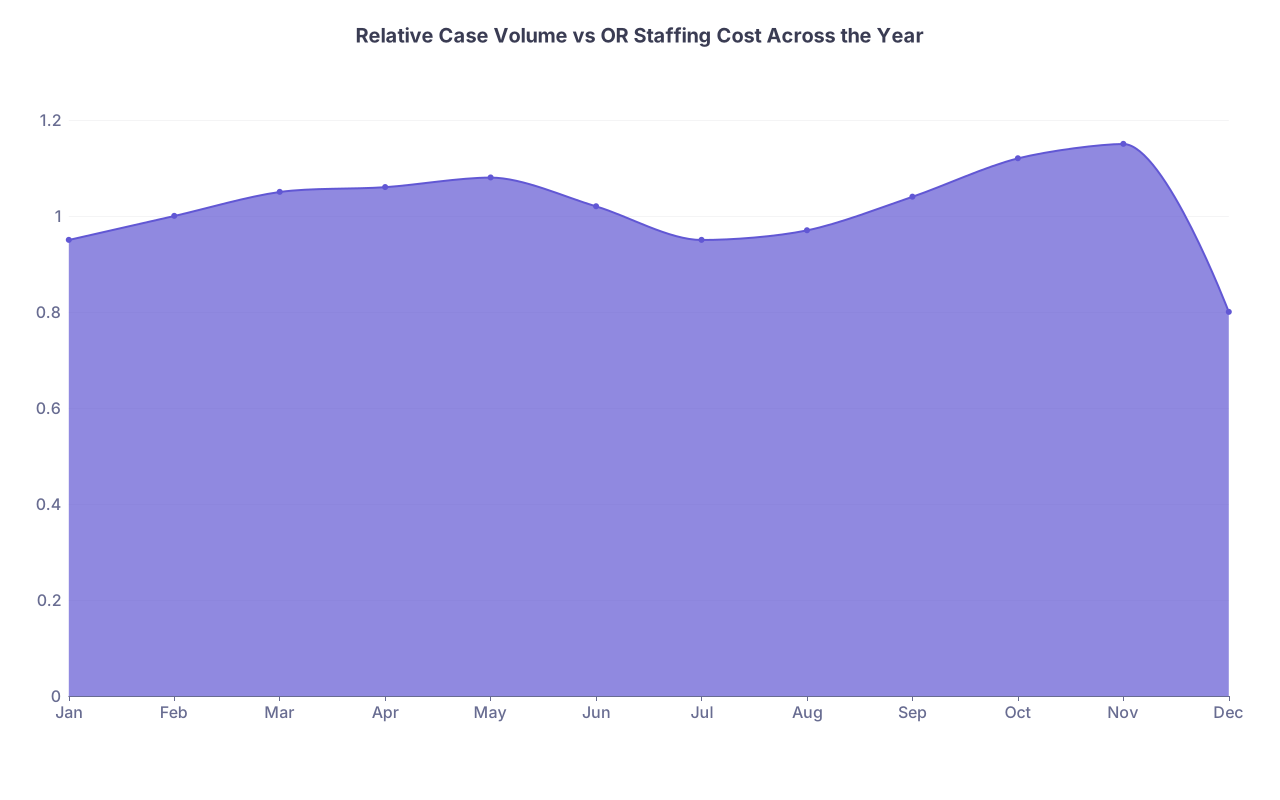
In many places, staffing levels are much flatter across the year than volume. That mismatch is where the money leaks out.
Training, Competence, and Case Mix: Residents Ride the Seasonal Wave Too
Residents and fellows do not get a uniform distribution of experience across the year. The volume curve shapes their operative exposure and progression.
Typical pattern in a 3-year residency for a trainee:
- Early PGY-1: arrives in July, case volume slightly depressed, complexity limited.
- Late PGY-2 / early PGY-3: handles more complex cases during high-volume fall, potentially logging the largest case numbers in that period.
- The December–January period often shifts mix toward emergencies if electives fall.
If you actually pull ACGME case logs and map by calendar month, you usually see:
- 20–30 percent more logged cases in October–November than in July–August for elective-heavy rotations.
- A higher proportion of trauma and emergency cases in holiday weeks.
That has implications:
- Case requirements should be calibrated knowing that some months will always be sparse.
- New procedural introductions or robotic training should be clustered away from the most chaotic peaks, or the cases will simply not run.
Forecasting and Planning: Using the Data, Not Just Intuition
You do not need a fancy machine learning pipeline to forecast surgical volume. A simple model using 3–5 years of daily case data, with indicators for:
- Month or week-of-year
- Day-of-week
- Known holidays and school breaks
- Weather (for trauma-heavy centers)
…will explain a surprisingly large share of variance in daily case counts.
A basic regression or time-series model can generate a useful seasonal index. Something like:
- Baseline daily volume = X
- +10–15 percent in October–November weekdays
- –15–25 percent in last 10 days of December
- –5–10 percent in late June–July
- Weekend and holiday coefficients accordingly.
Use that to adjust:
- Block release rules during off-peak months (less punitive).
- Flex pool staffing levels.
- Maintenance and OR renovation timing (aim for December or July, not October).
And yes, you can and should simulate “what if” scenarios: what happens to throughput and cancellations if you shift 5 percent of Q4 elective joints into Q1 with incentive pricing or improved access?
The Future: How These Patterns Will Shift
The patterns I am describing are grounded heavily in high-income, insurance-driven health systems. They are already bending under new pressures.
Three forces will reshape time-of-year trends in the next 10–20 years:
1. Ambulatory Shift and 7-Day Surgery
As more cases move to ambulatory surgery centers and as hospitals experiment with extended-hours and weekend ORs, we will see:
- Some smoothing of weekday peaks; elective volume spread over more days.
- Potential “micro-peaks” on Fridays and Saturdays when patients prefer minimal time off work.
But seasonality will not vanish. People will still avoid Christmas Eve surgery. Human behavior does not disappear with new billing models.
2. Value-Based and Global Budget Contracts
Under global budgets or capitation:
- Financial pressure to “fill the valley” becomes stronger.
- Systems have explicit incentives to use off-peak OR time, not just cram into peak months.
Expect to see:
- End-of-year crash attenuated as insurers and hospitals collaborate on year-round access targets.
- Targeted programs (e.g., “winter joint” campaigns) that pull elective demand into low-occupancy seasons when inpatient beds are available.
3. Predictive Analytics and Dynamic Block Allocation
Most block schedules are still static and political rather than data-driven. That is starting to crack.
You will see more:
- Dynamic block allocation that adjusts capacity month-by-month based on forecasted demand.
- Auto-release rules that incorporate seasonal factors — for instance, more aggressive release of unused November block 4–6 weeks out to avoid peak congestion.
If done well, the annual curve flattens modestly: peaks a bit lower, troughs a bit higher. Not perfectly flat. But less wasteful.
Practical Takeaways If You Actually Run or Work in an OR
Let me be blunt. Ignoring time-of-year trends is a choice. Not a lack of data.
Four actionable points:
Quantify your own seasonality
Do not rely on anecdotes. Pull 3–5 years of daily or weekly case data by service, elective vs emergency, and build simple monthly/weekly indices. You will find coefficients in the ±5–30 percent range, not ±1–2 percent.Align staffing and vacation policies
If half your nursing staff and multiple surgeons want the last week of December off, treat that as structural and adjust capacity formally. Do not plan 100 percent room staffing and then pretend to be surprised.Use peaks strategically
Some peaks are inevitable. For October–November, structure block access and add-on policies so high-yield, high-urgency elective cases actually get done, and low-yield or completely flexible work can be moved.Protect training
Know which months and rotations are volume-rich or volume-poor and schedule critical training experiences accordingly. Do not put your most case-dependent senior resident on an elective-heavy service in July and then wonder why their log is thin.

Where the Data Point
If you strip away the mythology and look at actual numbers, three conclusions stand out:
- Surgical case volume is sharply seasonal, with repeatable peaks (fall, early winter) and troughs (mid-summer, late December), especially for elective work.
- The drivers are overwhelmingly human and organizational: holidays, insurance cycles, academic calendars, and vacation patterns, not mysterious fluctuations in disease incidence.
- Hospitals that measure and plan around these curves — dynamically adjusting staffing, block time, and training — will run fuller ORs in the valleys, saner ORs in the peaks, and make more money with less chaos.