
Working from home in telemedicine can quietly wreck your mental health if you’re not careful.
Let me say that out loud because nobody does on recruiting calls.
You hear: “Flexible hours, no commute, see patients from your couch, great for work–life balance!”
You don’t hear: “You might spend 9 hours in a room by yourself refreshing a queue, talking into the void, with no colleagues, no hallway chats, no debrief after the awful consult that sticks with you all night.”
If you’re post‑residency, looking at telemedicine jobs, and your brain keeps whispering:
- “What if I get depressed working alone?”
- “What if I hate the isolation but I’ve already signed a contract?”
- “What if telemed burns me out even faster than clinic did?”
You’re not overthinking. You’re asking the right questions. Because the isolation part is real. And it blindsides a lot of people.
Let’s walk through what actually makes telemedicine lonely, how bad it can realistically get, and concrete ways to protect your sanity before and after you sign.
The Part Recruiters Don’t Emphasize: How Isolating Telemedicine Can Really Feel
Picture this.
You’re in a small home office. Clinic hours, but it doesn’t feel like clinic. It’s just… you. Laptop. Headset. EMR. Maybe a Slack channel no one really uses.
You start at 8:00. By 11:30, you realize you haven’t stood up once. You’ve seen 18 patients, but they’re all little floating heads that vanish as soon as you hit “End Visit.” No one says “Nice catch on that PE,” or “Ugh, that case was rough.” There’s no attending, no co‑resident, no nurse poking their head in.
Just you and your own thoughts.
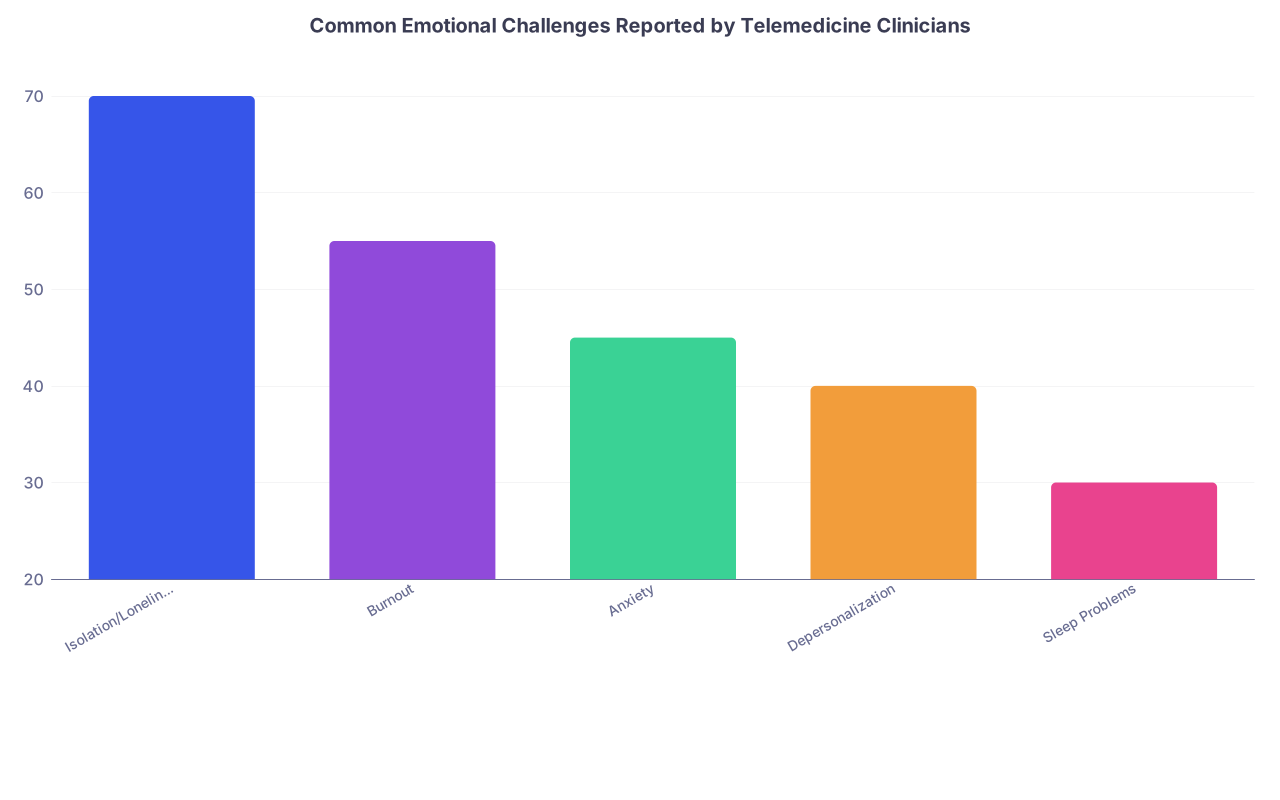
| Category | Value |
|---|---|
| Isolation/Loneliness | 70 |
| Burnout | 55 |
| Anxiety | 45 |
| Depersonalization | 40 |
| Sleep Problems | 30 |
No, that chart isn’t from an official RCT; it’s basically a mash‑up of what people quietly admit in physician groups, coaching calls, and exit interviews. Isolation is always near the top.
The isolation hits hardest when:
- You’re naturally anxious and ruminate alone.
- You relied on team energy in residency to get through hard days.
- You live alone or in a new city with no built‑in social network.
- You’re switching directly from the chaos of inpatient to sitting in a chair all day.
So if you’re thinking, “I’m already a little fragile. Is this going to break me?” — that’s not drama. That’s risk assessment.
What Telemedicine Isolation Actually Looks Like Day to Day
It’s not just “no coworkers.” It’s a million tiny things adding up.
1. No casual human contact
In-person: You wander to the nurses’ station. Someone offers you half a donut. You share a dark joke about consults. Micro‑connection.
Telemed from home: You wander to your kitchen. It’s you, a sink full of dishes, and your own brain.
2. Emotional load with nowhere to put it
In residency, after a brutal code or a tough family meeting, you could at least say to someone, “That sucked.”
In solo telemed, you can finish a visit where a patient hints at suicidal ideation, or shares trauma, or screams at you for not giving antibiotics — and your next move is… clicking “Next patient.”
No debrief. No, “Hey, was that reasonable?” Just stewing.
3. Blurred boundaries between “home” and “work”
Your home becomes:
- The place you sleep
- The place you eat
- The place you cry after a bad shift
- The place you see 30 viral URIs back‑to‑back
All in the same 10’ x 10’ room.
You close your laptop and you’re technically “home,” but you never left. Your body doesn’t get the signal the day is over, so the anxious work energy just kind of hangs in the air.
4. No one sees you
You can be:
- Exhausted
- Behind on charts
- Quietly spiraling
…and there’s no preceptor, no chief, no colleague saying, “You doing okay?” You can be totally underwater and still look “fine” on productivity reports.
That invisibility is what worries me most for already‑anxious folks. Problems can brew for months before anyone notices — sometimes including you.
Are You at Higher Risk for Struggling with Telemedicine Isolation?
Let’s be blunt. Some people do fine. Some people crash hard.
Here are some realistic factors that increase the chance this hits you harder:
- You already have anxiety or depression.
- You had a tough time on lighter rotations where you weren’t constantly around people.
- Your self‑worth is tied to productivity and gold‑star feedback.
(Telemed feedback is often just… silence unless you screw up.) - You tend to catastrophize when alone — your brain spins worst‑case scenarios at 2am.
- You moved to a new place and know almost no one nearby.
None of these are disqualifiers. They just mean you can’t treat the “isolation part” as an afterthought. You need an actual plan.
And no, “I’ll be fine, I’ll just work out more and FaceTime my friends sometimes” is not a plan. That’s a wish.
How to Build an Anti‑Isolation Plan Before You Start
Here’s the part that can actually lower your anxiety: a lot of the damage is preventable if you’re intentional.
You need structure, people, and exits. Think of it like this:

| Step | Description |
|---|---|
| Step 1 | Telemedicine Offer |
| Step 2 | Build Support Team |
| Step 3 | Set Basic Boundaries |
| Step 4 | Schedule Regular Human Contact |
| Step 5 | Create Workday Structure |
| Step 6 | Define Red Flag Triggers |
| Step 7 | Plan Exit Options |
| Step 8 | Risk Factors? |
Let’s break that down in actual human terms.
1. Structure your day like a real clinic, not like a YouTube binge
If you just open your laptop and “start,” your brain will slide into sludge mode. You want rituals and boundaries, even at home.
Concrete things you can do:
- Start‑of‑day ritual: Same 5–10 minute routine before you log in
(coffee + 5 deep breaths + look at a window + short stretch) - Protected breaks blocked on your calendar
Actually stand up. Leave the room. Do not open your phone and scroll. - A fake “commute”: 10–15 minute walk before and after shift to physically separate work/home states.
If this sounds stupidly simple — good. Simple is what you can follow when you’re tired and anxious.
2. Force regular human contact into your schedule
Don’t trust that “I’ll reach out when I’m lonely” will work. You won’t. When you’re low, you isolate more.
Schedule contact in advance:
- Weekly standing call with a co‑resident, med school friend, or sibling.
- If your telemed group has other docs, propose a 30‑minute weekly or biweekly Zoom “huddle” or case chat — even if only 2 people show.
- Join at least one non‑medical regular thing: climbing gym, choir, running club, language class, church group, whatever. Something where people notice if you vanish.
You’re recreating what residency accidentally gave you: built‑in people.
Building a Real Support System Around a Remote Job
This is the piece that keeps people from quietly unraveling.
1. Get mental health care before you’re desperate
If your brain already runs anxious, waiting until you’re nonfunctional is a horrible plan.
Do this now, before you even start:
- Find a therapist who has experience with physicians / high‑stress professionals.
- Have at least 1–2 sessions before your job begins, so you’re not “starting from zero” in crisis.
- Be blunt: “I’m nervous about telemedicine isolation; I need skills for rumination, boundaries, and loneliness.”
And yes, it’s okay to say, “I want to have support in place in case this goes badly.” That’s not admitting weakness. That’s triage.
2. Use physician communities — but selectively
Physician Facebook groups, Slack channels, or forums can be lifelines or emotional dumpsters.
Look for:
- Smaller, moderated communities (telemed‑specific, specialty‑specific, or early career).
- Places where people share cases, not just vent about admin all day.
Limit doomscrolling. Some of the big forums are basically group anxiety attacks.
3. Don’t let work swallow all your social energy
There’s a quiet trap: “I’m so drained from screen time, I can’t deal with people after.”
Here’s the ugly truth: if you give all your limited social energy to patients and none to yourself, you will burn out and feel lonely at the same time. That’s a horrible combo.
So instead of, “I’ll see how I feel after work,” commit to low‑effort, low‑stakes social time:
- Co‑working sessions with a friend (even virtually).
- Watching a show with someone over a synchronized streaming app.
- Sitting in a café to chart sometimes instead of always at home.
It doesn’t have to be a 4‑hour dinner. 30 minutes of being physically around other humans can matter.
When Telemedicine Isolation Is a Bad Fit (And What to Do About It)
Let’s talk worst‑case scenarios, since your brain is already going there.
Worst case isn’t: “You take a telemed job and you die alone in your studio, completely forgotten.”
Realistic worst case looks more like this:
- Your mood slowly droops over a few months.
- You start dreading logging in.
- You feel detached, irritable, guilty for “not being more grateful.”
- Charting feels impossible. You procrastinate more.
- You stop leaving the house. Sleep gets weird.
That’s when you need to stop telling yourself “everyone else is fine, I should just tough it out.”
Here’s what not to do: stay frozen for 2 years because you signed a contract and you’re “not a quitter.”
Here’s what you can do instead.
| Option | How It Helps |
|---|---|
| Reduce FTE | Fewer hours alone; room for in‑person work or life |
| Hybrid role | Mix of clinic and remote to break isolation |
| Urgent care/locums | Human contact + shorter commitments |
| Switch companies | Some have better support/culture |
| Seek accommodations | Adjust schedule, breaks, or metrics |
Your anxiety will say, “If I admit this isn’t working, my career is over.” That’s just not true.
Lots of people try a full‑time remote gig, realize it’s bad for their brain, and pivot:
- Some keep a small telemed side gig but return to clinic.
- Others find hybrid jobs (2 clinic days, 3 remote).
- Some go into non‑clinical work where they’re at least on a team (industry, informatics, QA).
Leaving a job that messes with your mental health is not failure. It’s standard post‑training course correction that no one advertises on match day banners.
Questions to Ask Employers About Isolation (That You’re Probably Afraid to Ask)
You’re allowed to interrogate the “you’ll love the flexibility!” pitch. In fact, you should.
Here are specific questions that are not dumb or needy:
- “How do clinicians connect with each other day to day? Any regular huddles, case conferences, or Slack channels people actually use?”
- “Is there any protected time for debriefing tough cases, or does everything have to be ‘productive time’?”
- “Do you track burnout or turnover? What do doctors commonly struggle with in this role?”
- “Are there options for hybrid roles or occasional in‑person work if full remote is not a good fit for someone long term?”
Watch how they respond.
If you get:
- “Well, everyone loves it, we don’t really hear about burnout here.”
- “We’re fully asynchronous. No meetings, no calls — just you and your queue.”
That’s a yellow (maybe red) flag if you’re already nervous about isolation.
A Realistic Picture: Telemedicine Doesn’t Have to Ruin You
I know I’ve been hammering the negatives. Your anxious brain is like, “See? Told you this would be a disaster.”
So let’s straighten that out.
There are physicians who:
- Work telemed from home,
- Set real boundaries,
- Build in human contact,
- And are actually less burned out than they were in clinic.
The difference is almost never “they’re just stronger than you.” It’s that:
- They know their own mental health patterns.
- They don’t treat isolation like an afterthought.
- They’re willing to adjust quickly when something feels off.
You can do that too. You just need to stop pretending “I’ll figure it out later” is an actual approach.
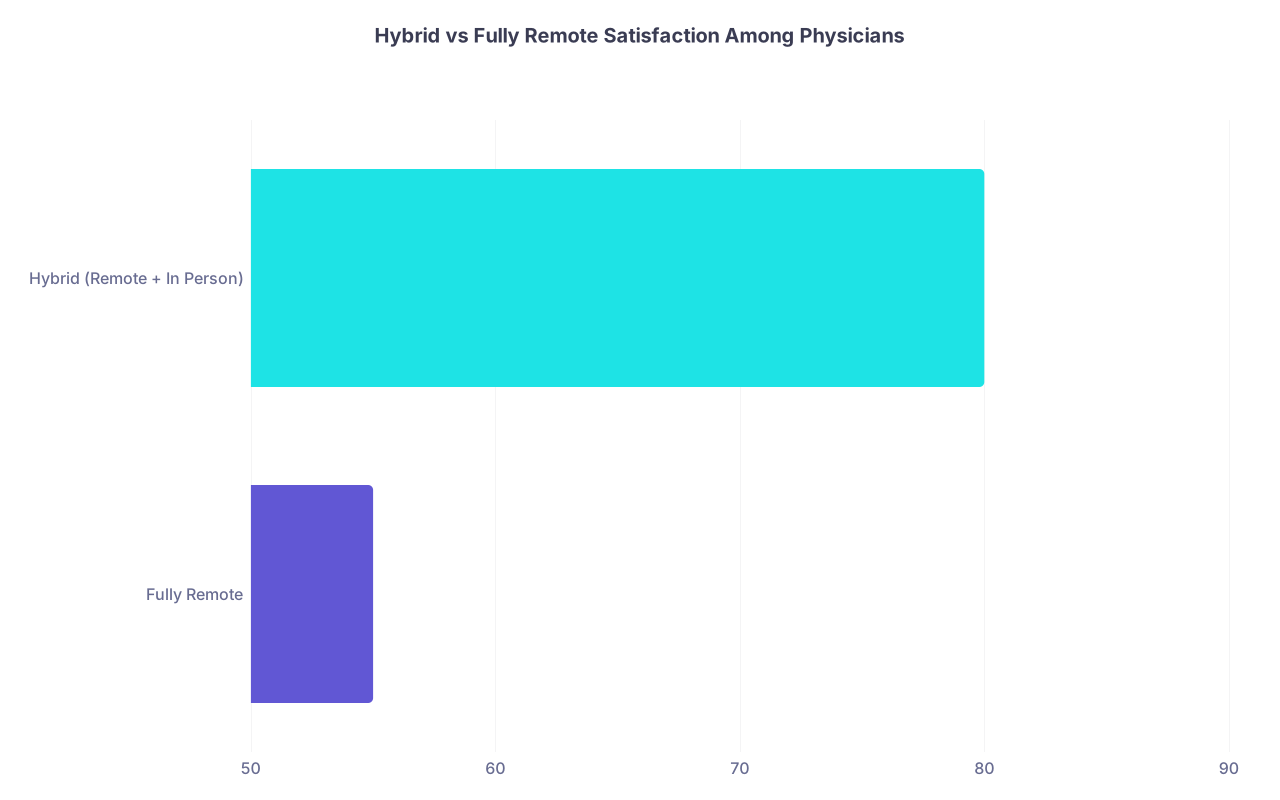
| Category | Value |
|---|---|
| Fully Remote | 55 |
| Hybrid (Remote + In Person) | 80 |
A lot of anxious folks do best with some combo: a couple of days seeing real people, a couple of days at home. That’s not weakness. That’s design.
Quick Self‑Check: Are You Safe to Try Telemed, or Is This a Bad Idea Right Now?
Ask yourself, brutally honestly:
- In the last 6 months, have I had significant depression or anxiety that made work/functioning hard?
- Do I have at least 2–3 people I see or talk to weekly who actually know what’s going on with me?
- Am I willing to set boundaries, even if it means saying no to more money or higher productivity?
- Do I have exit options if I realize in 3–6 months this is damaging my mental health?
If you’re answering:
- “Yes, my mental health is fragile.”
- “No, I don’t really have people right now.”
- “No, I struggle to say no.”
- “No, I have no idea what I’d do if this goes badly.”
Then you can still take a telemed job — but you need to treat your mental health as a critical part of that decision, not a side note.
You might:
- Start with part‑time telemed + some in‑person work.
- Delay full‑time remote until you’ve built a local support system.
- Work with a therapist before switching.
What you shouldn’t do is throw yourself into full‑time isolated work and hope brute force carries you through.
FAQs: Telemedicine Isolation and Your Anxious Brain
1. What if I accept a telemedicine job and realize I hate working alone?
Then you adjust. That might mean:
- Asking to reduce hours.
- Keeping telemed as a side‑gig and adding an in‑person role.
- Actively looking for hybrid jobs while you’re still employed.
You are not locked into a lifetime because you signed one contract. Treat the first 6–12 months as data gathering, not a permanent identity shift.
2. I already feel lonely in my current job. Won’t telemedicine just make it worse?
It might, if you copy‑paste your current life into a more isolated environment. But if you use the shift as a reason to intentionally build routines, relationships, and therapy support, it can actually be a forcing function to fix patterns that are hurting you now. The key is not lying to yourself about your starting point.
3. Is full‑time telemedicine a bad idea if I live alone?
Not automatically, but it’s higher risk. If you live alone and work alone, you need:
- Regular out‑of‑the‑house activities.
- People scheduled into your week.
- A mental health plan (therapy, PCP, coping strategies) ready to go.
If the idea of leaving your apartment more than once a week already feels like too much, I’d lean toward a hybrid setup instead of pure remote at first.
4. How do I know if the isolation is actually harming my mental health?
Watch for slow, creeping changes:
- You’re more irritable or numb with patients and people you care about.
- Your sleep or appetite is off for weeks.
- You dread logging in, even after rest days.
- Hobbies and social stuff feel like effort, not relief.
- You start thinking, “What’s the point?” about work more often.
If that’s happening for more than a few weeks, don’t gaslight yourself with “it’s just an adjustment.” Talk to a professional and make changes.
5. What if my future employer thinks I’m weak for asking about burnout and support?
If they really think you’re “weak” for wanting to protect your mental health after years of training… why would you trust them with your career? The right employer sees those questions as signs you’re thinking long‑term and responsibly. Honestly, if they’re dismissive, that’s not a place anxious you needs to be.
6. I’m scared that if I don’t take this telemed job, I’ll never find anything better. How do I deal with that?
That’s scarcity brain talking, not reality. Post‑residency, the market changes constantly: new telemed companies, urgent cares hiring, hospitalist gigs, hybrid outpatient jobs, non‑clinical roles. Your career is not a single yes/no fork. You’re allowed to say, “This doesn’t feel right for me right now” and keep looking.
Open your calendar right now and block 30 minutes this week to sketch your “telemedicine isolation plan” — who you’ll talk to, what support you’ll line up, and what your exit routes are. Don’t just think about it. Put it somewhere you can’t ignore.