
The worst way to “add telehealth” to your practice is to bolt it on as an afterthought. The best way is to rebuild your workflow, month by month, into a true hybrid practice.
Here’s exactly how to do that over 12 months—what to decide, when to decide it, and what you should have finished at each checkpoint.
Month 1–2: Clarify Your Hybrid Model and Legal Foundation
At this point you should not be buying software. You should be deciding what kind of practice you’re actually building.
Weeks 1–2: Define your hybrid strategy
Decide your basic model:
- % of visits you want to be virtual vs in‑person by Month 12
- Which visit types will be telehealth‑friendly and which are always in‑person
- Whether you’re:
- Joining an existing group and building hybrid workflows inside it, or
- Running/starting your own independent hybrid practice
Answer these questions:
- Who are your core patients?
- Established panel from residency or prior job?
- Totally new market (e.g., ADHD adults, weight management, women’s health)?
- Geography:
- Are you going to be single‑state or multi‑state?
- Are you using IMLC (Interstate Medical Licensure Compact) to expand?
Write down your Month 12 target clearly:
- Example: “60% telehealth, 40% in‑person within a 25‑mile radius of [City]. Focus on chronic disease management, medication follow‑ups, mental health comanagement.”
You’ll refer back to this constantly.
Weeks 3–4: Legal, licensing, and compliance groundwork
Now you lock down the rules of the game.
- Confirm state rules for:
- Establishing a patient‑physician relationship via telehealth
- Teleprescribing controlled substances (especially if doing ADHD, anxiety, MAT)
- Whether audio‑only visits count for parity
- Check payer rules:
- Your top 3–5 commercial payers
- Medicare/Medicaid in your state
- Decide where you’ll be licensed for telehealth by Month 6.
| State Plan | License Count | Focus Type |
|---|---|---|
| Single | 1 | Local Hybrid |
| Regional | 2–3 | Nearby States |
| Multi | 4–8 | Niche Telehealth |
At this point you should:
- Contact a healthcare attorney (yes, pay for the hour) to:
- Review your telehealth plan
- Confirm corporate practice of medicine rules if forming an entity
- Clarify supervision rules if you’ll use NPs/PAs
Weeks 5–8: Business structure and malpractice
Now you build the skeleton.
- If independent:
- Form entity (LLC or professional corporation depending on your state)
- Get EIN, open business bank account
- Decide if telehealth services will be under a separate “telehealth brand” or same brand as in‑person clinic
- Tighten malpractice coverage:
- Confirm policy explicitly covers telehealth
- Confirm coverage in every state where you’ll see patients
- Confirm coverage for asynchronous care (e‑visits, secure messaging) if you plan to bill those
By the end of Month 2:
- Your legal model is defined
- Your state/licensure strategy is written down
- Your entity and malpractice are either finalized or in motion
You haven’t bought tech yet. Good. You’re avoiding the classic mistake.
Month 3–4: Choose Technology and Redesign the Schedule
Now you start putting real tools in place—but timed correctly.
Month 3: Platform selection and EMR decisions
At this point you should be evaluating vendors, not signing with the first rep who emails you.
Decide on your tech stack pieces:
EHR / Practice Management
- Staying with an existing EHR? Check:
- Built‑in telehealth video?
- Integrated scheduling and reminders?
- Starting from scratch?
- Shortlist 2–3 hybrid‑friendly systems (e.g., DrChrono, Athena, Elation + third‑party telehealth).
- Staying with an existing EHR? Check:
Telehealth platform You need:
- HIPAA‑compliant video
- Easy patient access (no 7‑step app download)
- Group visit support if you’ll do groups (weight loss, CBT, etc.)
- Documentation integration or at least PDF export
Communication and intake
- Online intake forms
- Secure messaging or patient portal
- Automated reminders (text/email)
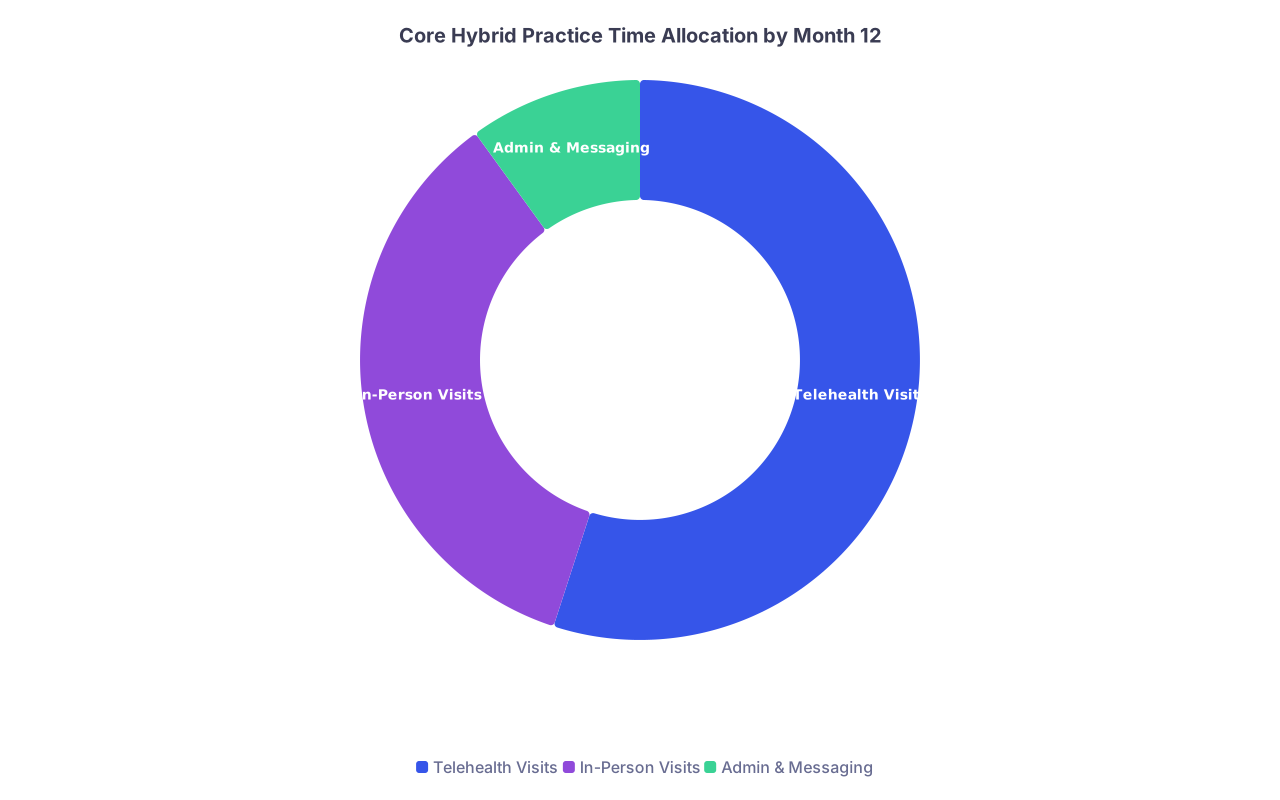
| Category | Value |
|---|---|
| Telehealth Visits | 55 |
| In-Person Visits | 35 |
| Admin & Messaging | 10 |
By the end of Month 3, you should have:
- 1 preferred EHR / practice management system
- 1 core telehealth video platform (or confirmed your EHR’s built‑in is good enough)
- A simple list: what this system does well, what you’ll hack around
Month 4: Schedule architecture and visit types
Now you rewire your week.
Create a template week for Month 6–12 (you can adjust later):
- Example:
- Mon: AM telehealth, PM in‑person
- Tue: In‑person only
- Wed: Telehealth only
- Thu: Mixed half‑day
- Fri: Admin + a short telehealth block
Define visit buckets:
- Telehealth‑only:
- Medication follow‑ups (HTN, DM, depression stable)
- Lab review, imaging discussions
- Post‑op check if visual inspection acceptable
- In‑person required:
- New patient physicals (depending on state/payer)
- Acute abdominal complaints, neuro deficits, procedures
- Either/or (patient preference + clinical judgment):
- Routine chronic follow‑up
- Behavioral health, sleep, weight management
By end of Month 4:
- You have a weekly template and clear rules: “These visit types are telehealth unless there’s a red flag.”
- Staff (or you, if solo) can schedule without asking you 10 questions each time.
Month 5–6: Build Workflows, Policies, and Start a Soft Launch
Now you move from ideas to repeatable process.
Month 5: Written protocols and billing setup
At this point you should be writing everything down.
Create concise one‑page SOPs (standard operating procedures) for:
- Telehealth eligibility:
- Which patients qualify for virtual vs must be in‑person
- When to convert telehealth to in‑person mid‑visit
- Pre‑visit tech checks:
- Patient instructions (email/script): device, lighting, internet, quiet space
- Staff checklist: consent on file, insurance verified, co‑pay collected
- Documentation templates:
- Telehealth note template with:
- Location (patient and provider)
- Consent statement
- Limitations of exam
- Emergency plan note (what you’d do if decompensation)
- Telehealth note template with:
Billing and coding:
- Confirm with top payers:
- Telehealth parity (same rate vs lower)
- Modifiers (e.g., 95, GT) and POS codes (02, 10, or in‑office if allowed)
- Whether they pay for:
- E‑visits
- Remote patient monitoring
- Chronic care management (CCM)
- Set up:
- Fee schedule for telehealth
- Superbills including virtual codes
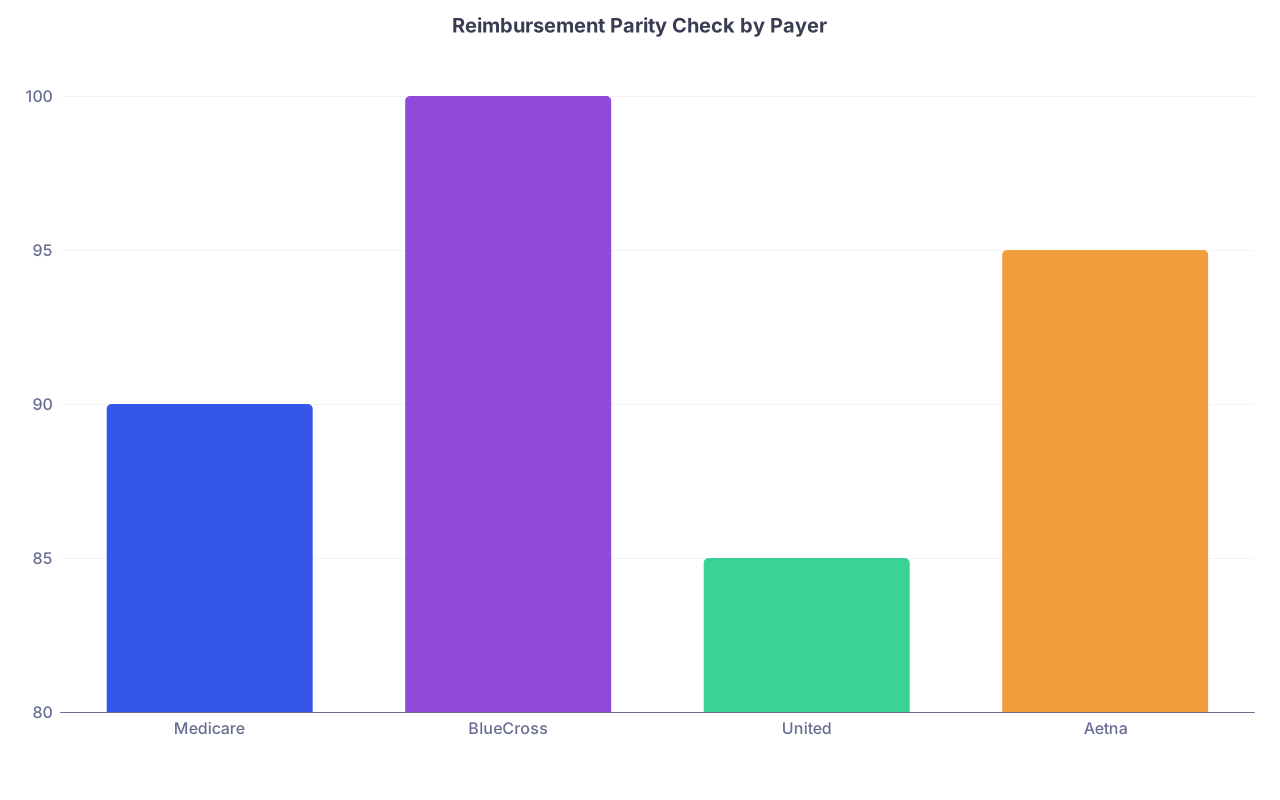
| Category | Value |
|---|---|
| Medicare | 90 |
| BlueCross | 100 |
| United | 85 |
| Aetna | 95 |
(Values as % of in‑person reimbursement.)
Month 6: Soft launch with a small telehealth block
Now you start. Quietly.
- Open one half‑day per week as telehealth‑only:
- Restrict to established low‑risk patients
- Limit to 6–8 visits that day at first
- Staff script (or your own if solo) when offering telehealth:
- “Dr. S does video visits for this type of follow‑up. Would you prefer that or coming in?”
Run this as a controlled experiment:
- Track:
- No‑show rate vs in‑person
- Visit length (scheduled 20 min, actually 14 min, etc.)
- Tech failure rate (can’t connect, audio issues)
By the end of Month 6, you should have:
- Real‑world data from at least 20–40 telehealth visits
- A list of “this worked / this was painful” that will shape your expansion
Month 7–8: Scale Telehealth Capacity and Tighten Operations
Now you lean in. This is where the hybrid practice really takes shape.
Month 7: Expand telehealth blocks and refine flow
At this point you should double your telehealth exposure.
Adjust schedule:
- Move from 1 telehealth half‑day → 2–3 blocks per week
- Start mixing:
- One full telehealth day
- Shorter 2–3‑visit telehealth chunks between in‑person sessions
Fix the most annoying issues:
- If logins are a mess:
- Switch to SMS‑based links or one‑click browser access
- If patients are late:
- Add automatic reminders at:
- 24 hours
- 2 hours
- 15 minutes before visit
- Add automatic reminders at:
- If you’re constantly behind:
- Shorten telehealth visit templates
- Make MA/nurse do pre‑visit vitals review (home BP, BG logs) before you enter the call
Month 8: Train staff and standardize patient experience
Even if “staff” is just one part‑time MA, you still need training.
Create micro‑scripts:
- Check‑in call:
- “Hi, this is [Name] from [Clinic]. I see you have a video visit with Dr. X at [time]. Have you received the link? Are you in a private location?”
- Tech troubleshooting:
- Plan A: Browser link
- Plan B: App
- Plan C: Convert to phone visit if allowed and clinically appropriate (and billable)
Codify your telehealth safety rules:
- When to stop the visit and direct to ER
- What to do if you lose connection mid‑visit
- What counts as billable time vs courtesy call

By the end of Month 8:
- Everyone knows exactly what to do 30 minutes before a telehealth visit
- Patients are no longer shocked or confused by the process
- You’ve handled at least 75–100 telehealth visits and learned from them
Month 9–10: Marketing, Patient Panel Growth, and Service Mix
Now you move from “we do telehealth sometimes” to “we’re a hybrid practice by design.”
Month 9: Clarify your hybrid value proposition
At this point you should be able to explain in one sentence why your hybrid model is better for patients.
Examples:
- “We handle chronic conditions with alternating telehealth and in‑person visits so you don’t spend your life in waiting rooms.”
- “We combine virtual check‑ins with targeted in‑person exams for faster ADHD and anxiety management.”
- “We provide a hybrid women’s health model—first visit in‑person, follow‑ups by video when appropriate.”
Update:
- Website:
- Clear “How virtual visits work” page
- Specific examples of conditions handled via telehealth
- Google Business Profile:
- Mark “telehealth services available”
- Intake forms:
- Ask: “Do you prefer in‑person, telehealth when possible, or no preference?”
Month 10: Design longitudinal care pathways
Now you architect care pathways that use both modalities intelligently.
For 2–3 core conditions (e.g., HTN, DM2, depression, obesity), define:
- New patient flow:
- Initial visit: in‑person vs telehealth + quick in‑person exam within 30 days
- Follow‑ups:
- Example (HTN):
- Month 0: In‑person new patient
- Month 1: Telehealth BP review
- Month 3: Telehealth med adjustment
- Month 6: In‑person physical + labs
- Example (HTN):
- Data collection:
- Home BP cuff, glucometer, scale
- Portal or app to upload data (or old‑school paper scanned in)
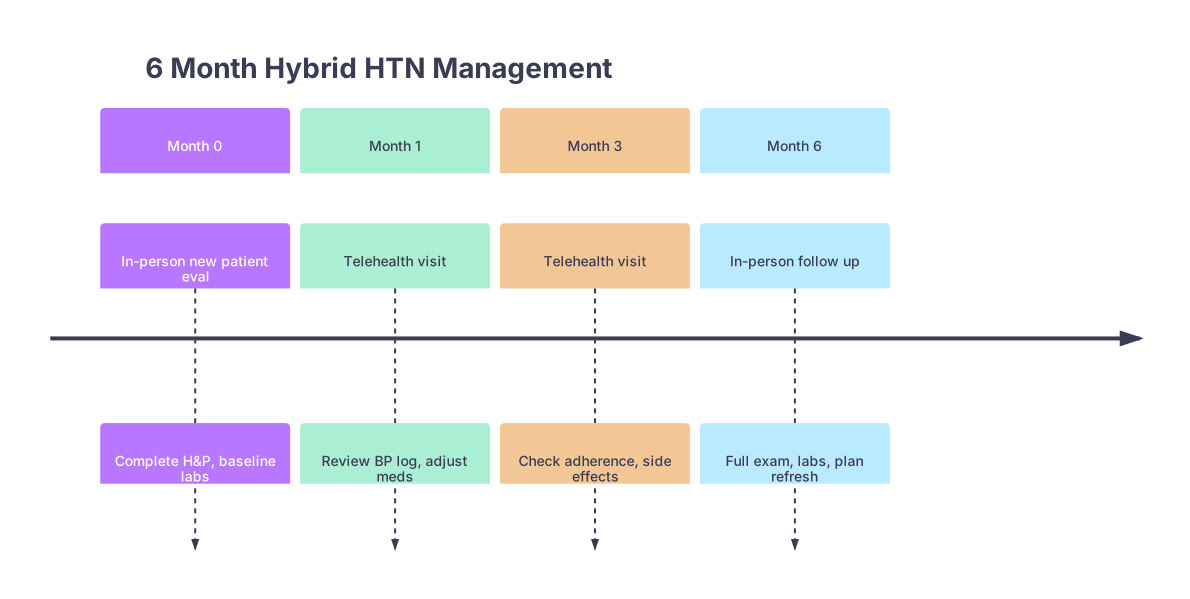
| Period | Event |
|---|---|
| Month 0 - In-person new patient eval | Complete H&P, baseline labs |
| Month 1 - Telehealth visit | Review BP log, adjust meds |
| Month 3 - Telehealth visit | Check adherence, side effects |
| Month 6 - In-person follow up | Full exam, labs, plan refresh |
By the end of Month 10:
- Your top diagnoses have a standard hybrid pattern
- You’re not making up visit type and timing on the fly every time
Month 11: Optimize Finances, Metrics, and Risk Management
This is where you stop guessing and start measuring.
Revenue and utilization review
Pull 3 months of data (Months 8–10 ideally):
- % of visits that are telehealth vs in‑person
- Average revenue per telehealth visit vs in‑person
- No‑show/cancellation rates for each
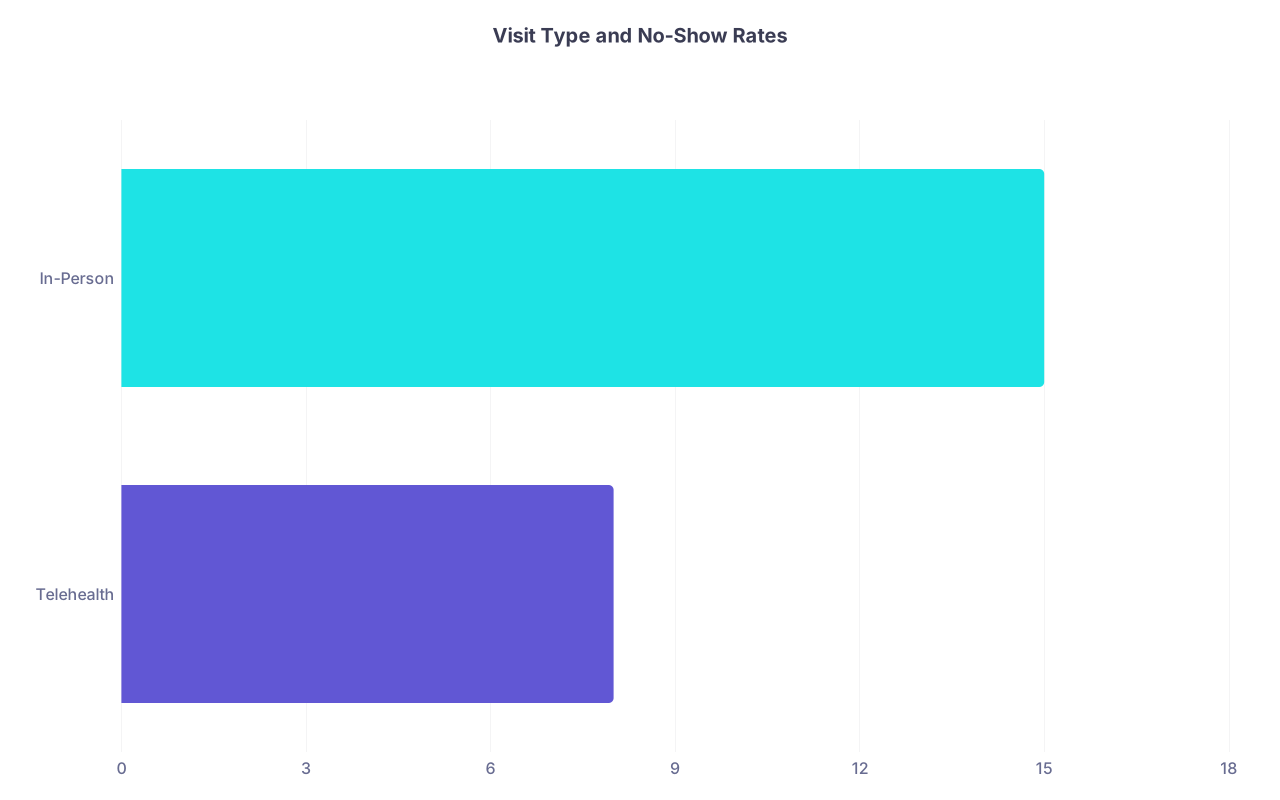
| Category | Value |
|---|---|
| Telehealth | 8 |
| In-Person | 15 |
(Values are example no‑show percentages.)
Ask hard questions:
- Are your telehealth visits under‑coded out of fear?
- Are you doing too many low‑value quick telehealth touches for free?
- Are there services you should add (RPM, CCM, groups) based on your population?
Risk management and documentation tightening
Audit 15–20 telehealth charts:
- Did you consistently document:
- Patient location, provider location
- Mode (video vs audio‑only)
- Consent?
- Exam limitations and plan if condition worsens?
Update risk policies:
- Clear rule: Which complaints must be scheduled in‑person or sent to urgent/ER
- Policy for:
- Telehealth with minors
- Telehealth with new patients vs established only
At this point you should:
- Have fewer “edge case” telehealth visits that make you nervous
- Feel that if the chart was reviewed by a board or court, you’d be comfortable
Month 12: Lock in Your Hybrid Identity and Plan the Next Year
Now you stop calling this an “experiment.” It’s your practice.
Brand and experience consolidation
Make the hybrid model visible and consistent:
- All staff give the same explanation of how you use telehealth
- Your website, voicemail, after‑visit summaries all match the hybrid plan
- New patients understand from Day 1 that they’re entering a combined virtual + in‑person system
If you’re in an employed position:
- Present your data to leadership:
- No‑show reduction
- Patient satisfaction quotes
- Revenue stability or growth
- Propose:
- More protected telehealth blocks
- Support for remote staff or tech upgrades
If you’re independent:
- Decide whether to:
- Add another state license
- Hire NP/PA to extend telehealth hours
- Add complementary services (nutrition, therapy, group visits)
12‑Month Retrospective and Next‑Year Targets
Sit down with 3 simple questions:
- What part of telehealth felt high‑yield and energizing?
- What part felt like a time‑sink or legal headache?
- What do you want the ratio of telehealth to in‑person to be next year?
Set concrete goals for Year 2:
- Example:
- Keep 60/40 hybrid split
- Add RPM for 100 HTN/DM patients
- Expand to 1 additional state for niche telehealth service

By the end of Month 12:
- You have a working hybrid practice, not a scattered menu of options
- Telehealth is an intentional part of your care model, not something you apologize for
Quick Month‑by‑Month Checklist
Use this as your sanity check.
| Month | Core Milestone |
|---|---|
| 1–2 | Legal, licensing, malpractice, hybrid strategy |
| 3–4 | Choose EHR/telehealth tools, design schedule |
| 5–6 | SOPs, billing setup, soft launch telehealth block |
| 7–8 | Expand blocks, train staff, standardize workflows |
| 9–10 | Market hybrid model, build condition pathways |
| 11 | Optimize finances, audit risk and documentation |
| 12 | Solidify hybrid identity, plan next‑year targets |
Bottom Line
Three key points:
- A successful hybrid practice is built intentionally, not by slapping a video link onto your schedule.
- Each 2‑month block has a job: first legal and structure, then tech and workflow, then scaling and optimization. Don’t skip ahead.
- By Month 12, telehealth shouldn’t feel special—it should just be how your practice runs: predictable, safe, and financially solid.