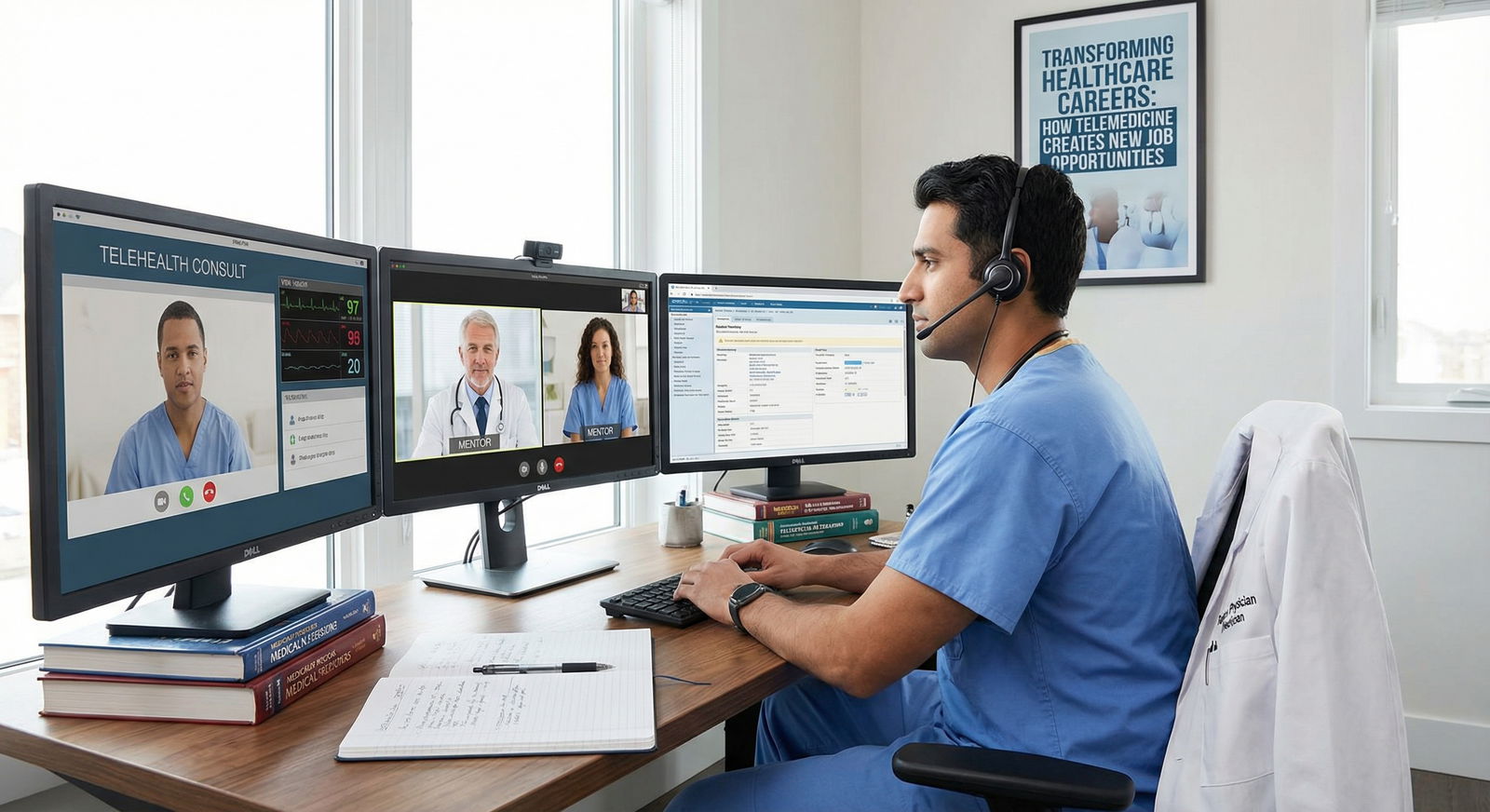
Virtual pre‑op and post‑op visits are not a side gig anymore; they are becoming core surgical practice.
If you are post‑residency and thinking about how telemedicine fits into your actual surgical workflow (and your medicolegal risk), you are asking the right question. Most surgeons either implement virtual visits sloppily and expose themselves, or avoid them completely and leave money, time, and patient satisfaction on the table.
Let me break down how surgeons use telemedicine for pre‑op and post‑op visits safely, efficiently, and in a way that actually enhances their careers rather than creating a second unpaid job.
1. Where Telemedicine Fits in a Surgical Practice (And Where It Absolutely Does Not)
First, draw the lines correctly. Telemedicine for surgery is not “do everything on Zoom.” That is how you get burned.
Think of virtual visits as a set of clearly defined use‑cases:
Pre‑op:
- Initial surgical consideration / triage
- Review of imaging and prior workup
- Informed consent reinforcement (not the sole source)
- Optimization and education
- Second opinions
Post‑op:
- Early wound checks (select cases)
- Pain control management check‑ins
- Review of pathology / operative report
- Long‑term follow‑up where physical exam adds little
Places where telemedicine is dangerous or outright wrong for surgeons:
- Acute abdomen or undifferentiated acute pain
- New neurologic deficits
- Ischemia, compartment syndrome, or any “time is tissue” scenario
- Trauma evaluation (beyond very narrow teletrauma consult setups)
- First‑time breast or soft tissue mass evaluation where you truly need your hands and eyes
The surgeons who stay out of trouble are ruthless about these boundaries. They build them into scheduling rules and templates, so a call center or MA cannot accidentally book a “suspected appendicitis” as a video visit.
2. Legal, Licensing, and Reimbursement: The Unsexy Stuff That Can Ruin You
You want a telemedicine career that lasts? Get this section right. Most of the disciplinary actions I have seen around telehealth are not from botched care; they are from sloppy compliance.
2.1 Licensing and Location Problems
Telemedicine is about where the patient is located, not you.
- If the patient is in State A, you need to be licensed in State A.
- If you are doing multi‑state virtual second opinions, you either:
- Hold multiple state licenses, or
- Work under a formal second‑opinion consult program that is structured as provider‑to‑provider, not direct‑to‑consumer.
Do not “just do a quick visit” for your old patient who moved two states away unless:
- You hold that new state license, or
- Your system has a formal cross‑state telemedicine arrangement.
That “quick favor” carries the same malpractice exposure as any other clinical encounter.
2.2 Informed Consent – For Both Surgery and Telemedicine
You are not just getting consent for a cholecystectomy. You are also getting consent for the mode of care.
You need two parallel tracks:
Standard surgical informed consent:
- Risks, benefits, alternatives
- Reasonable expectations
- Anesthesia considerations
- Peri‑operative course
Telemedicine‑specific consent (often a separate checkbox or document):
- Nature of telehealth (no physical exam or limited exam)
- Technology risks (disconnection, privacy)
- When escalation to in‑person or ED is required
- How follow‑up will occur
Many states require explicit, documented telemedicine consent. Smart surgeons treat this as a standard element: templated in the EMR, read and confirmed during the first virtual encounter.
2.3 Documentation and Coding – How You Get Paid Without Triggering Audits
You are used to documenting physical exam. Virtual visits are different, but not “lighter.” They are different.
For pre‑op and post‑op telehealth, you are usually billing:
- E/M codes (99202‑99215) with telehealth modifiers (e.g., 95 or GT depending on the payer).
- Sometimes specific telehealth visit codes, depending on your institution/payer.
The safest approach:
Document:
- Mode: “Synchronous video visit”
- Location of patient and physician
- Participants (patient, spouse, interpreter, NP)
- Any limitations of the exam and why (video quality, camera not available, etc.)
- Clear medical decision making, especially when you decide to bring them in or send them to ED.
Assume an auditor will read it without context. If your plan is, “Return in 1 week if worsens,” but you just evaluated severe abdominal pain via video and did not offer in‑person evaluation, that looks bad on paper.
You can absolutely meet “moderate” or even “high” MDM levels using telehealth if your complexity, data review, and risk justify it. The physical exam is one piece, not the whole code.
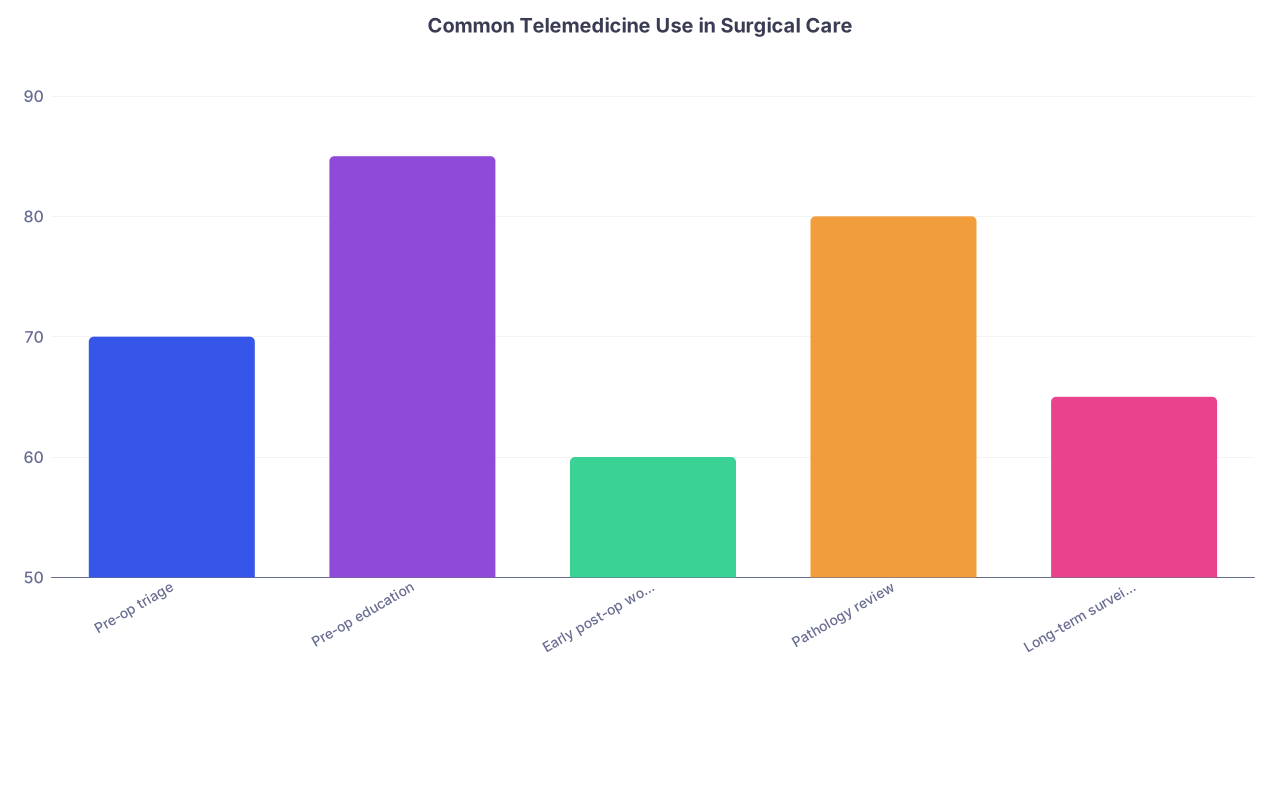
| Category | Value |
|---|---|
| Pre-op triage | 70 |
| Pre-op education | 85 |
| Early post-op wound check | 60 |
| Pathology review | 80 |
| Long-term surveillance | 65 |
3. Workflow: How Virtual Pre‑Op and Post‑Op Actually Look in Real Life
Let me walk you through concrete patterns that work, because vague advice is useless once you are staring at a full clinic template.
3.1 Virtual Pre‑Op – Three Archetypes
A. “Is Surgery Even Appropriate?” – Triage Visit
Scenario: 58‑year‑old woman referred for gallstones, ultrasound already done, stable episodic biliary colic.
Virtual visit structure:
- Confirm history and symptom pattern.
- Review imaging live on screen share.
- Check red flags: fever, persistent pain, weight loss.
- Decide:
- Appropriate for elective cholecystectomy, or
- Needs more imaging / GI workup / in‑person visit.
You are not palpating a tender abdomen here. If something sounds like acute cholecystitis or choleangitis, you escalate. The safe frame: telemedicine to confirm appropriateness for surgery, not to downplay acute disease.
B. Optimization and Risk Discussion – Pre‑Op Clearance Adjacent
For high‑risk patients:
- Obese patient scheduled for hernia repair.
- Frail older adult scheduled for colon resection.
You can:
- Review comorbidities, meds, and functional status.
- Coordinate pre‑op evaluation with anesthesia and medicine.
- Give very explicit instructions on prehab: walking targets, nutrition, smoking cessation.
- Align expectations: LOS, drains, Foley, possible ostomy.
This optimizes your OR day. It also cuts surprise cancellations because everyone knows the plan.
C. Second Opinions and Shared Decision‑Making
Virtual works extremely well here:
- Patients upload imaging and path reports ahead of time.
- You review the case and provide:
- Your interpretation.
- Your recommended surgical vs conservative options.
- Clarification of risks and outcomes.
In large systems, these second opinions can be multi‑state, but the legal structure must be right. Often it is framed as an “expert consult for the treating physician,” not assuming full longitudinal care responsibility.

3.2 Virtual Post‑Op – Who Is Safe and Who Is Not
The temptation is to convert every post‑op into telehealth. That is lazy and unsafe. The best surgeons stratify.
Think in tiers:
Safe for early telehealth wound checks:
- Clean, small incisions (lap chole, lap appy, port placement).
- Stable, reliable patients with good social support.
- Cases where the main question at day 5–10 is: “How is the incision? How is your pain? Are bowels moving?”
Usually require in‑person early follow‑up:
- Large open incisions.
- Complex reconstructions (flaps, grafts).
- High‑risk wounds (diabetic foot, vascular bypass).
- Concern for seroma, hematoma, or dehiscence.
One common hybrid model that actually works:
- Early “quick check” at 5–7 days = virtual (if low risk).
- Second visit at 3–4 weeks = in‑person for full exam.
- Additional long‑term surveillance (e.g., 6 or 12 months) = virtual if just labs/scans review and symptom screen.
3.3 What You Can Actually Examine on Video (If You Are Disciplined)
Let’s be honest: virtual physical exam is limited. But you can do more than most people realize.
For post‑op:
Wounds:
- Ask for good lighting.
- Have patient or caregiver hold the camera still, zoom slowly.
- Evaluate color, swelling, drainage, separation, erythema.
- Have them gently press around the incision if appropriate (“Does this feel soft, firm, fluctuant?”).
Functional status:
- Can they stand up from a chair without assist?
- Are they walking to the kitchen / bathroom without stopping?
- Respiratory status: speech in full sentences, visible respiratory effort.
Pain:
- Pain location and character.
- Frequency of analgesic use.
- Signs of uncontrolled pain: sleep disturbance, inability to ambulate, guarding visible on movement.
You must be ruthless with your threshold for escalation. If you cannot clearly say, “This appears normal post‑op recovery,” you schedule in‑person or send them to the ED — and you document that thought process explicitly.
4. Safety Nets: Protocols that Keep You out of Lawsuits and Complaints
Telemedicine falls apart when surgeons treat it like “casual clinic from my laptop.” You need structured safety nets.
4.1 Triage Protocols Before the Visit Starts
Smart practices do not wait until you are on video to decide if it was a bad idea.
They build simple, rigid screeners used by schedulers or MAs:
- “Do you have: fever > 101, uncontrolled pain despite medication, shortness of breath, chest pain, new uncontrolled bleeding, suddenly worsening swelling or redness, or drainage that smells foul?”
- Yes: no virtual. Same‑day in‑person or ED.
- No: proceed to booked telehealth slot.
And they have procedure‑specific rules:
- Within 72 hours of major abdominal surgery: no virtual, period.
- New neurologic deficit after spine surgery: bypass virtual, send immediately to ED or urgent in‑person.

| Step | Description |
|---|---|
| Step 1 | Post op patient requests visit |
| Step 2 | ED or same day clinic |
| Step 3 | In person clinic |
| Step 4 | Telemedicine visit |
| Step 5 | High risk symptoms |
| Step 6 | Procedure risk level |
4.2 Escalation Rules During the Call
You know this scenario: Patient logs on, and within 30 seconds you realize telehealth was the wrong setting.
The mistake is to “try to finish the visit anyway.” That is how charts read terribly in hindsight.
Instead, adopt a hard rule in your practice:
- If you detect red‑flag symptoms or unclear but concerning findings:
- Stop the virtual visit.
- Explain clearly: “Based on what you are describing, I am not comfortable evaluating this safely by video. I want you seen in person now.”
- Give a specific plan: ED vs urgent clinic slot vs 911.
- Document the reason for escalation and patient’s understanding.
This is defensible. “Doctor recognized limitation of telemedicine and escalated appropriately” is exactly what you want in the chart.
4.3 Team‑Based Telehealth
The surgeons who do this well do not carry all the telehealth burden themselves.
Common pattern in bigger practices:
RN/NP virtual pre‑visit:
- Medication reconciliation.
- Basic symptom inventory.
- Education reinforcement (wound care, activity levels, VTE prophylaxis).
Surgeon virtual visit focused on:
- Key medical decisions.
- Changes in plan.
- Return‑to‑work, driving clearance, etc.
You can also use asynchronous telehealth (photo upload with written response) for very narrow use‑cases:
- Simple wound photo at 2 weeks.
- Rash near incision.
- Bruising after laparoscopic surgery.
But you must define clear boundaries: if anything looks even mildly concerning, convert to synchronous visit or in‑person.
5. Telemedicine as a Career Asset, Not a Burnout Multiplier
You are not just trying to “offer video visits.” You are building a sustainable, billable, and frankly leverage‑enhancing part of your surgical career.
5.1 Protecting Your Time and Revenue
Telehealth can quickly become unpaid extra work if you let every portal message morph into a “quick video check” that you never bill.
So:
Treat virtual slots exactly like clinic slots.
- Same scheduling rules.
- Same time blocks (e.g., 15–20 minutes per new telehealth, 10–15 per follow‑up).
- Same documentation and billing.
Define what is billable telehealth vs RN triage vs non‑billable messaging.
- Post‑op portal question with a single, simple answer: message response.
- Complex question with med changes, risk counseling, or review of imaging: convert to a telehealth appointment.
You also gain OR efficiency: fewer unnecessary in‑person visits, fewer last‑minute cancellations because tele‑pre‑op caught misunderstandings, more targeted in‑person use.
5.2 Expanding Referral Base and Niche Practice
Telemedicine allows you to become that surgeon:
- The complex hernia surgeon doing virtual second opinions across a multi‑state system.
- The endocrine surgeon reviewing thyroid nodules and ultrasound from distant sites.
- The colorectal surgeon doing virtual ostomy teaching and long‑term surveillance.
You can build:
- Regional referrals: rural PCPs send you patients for virtual pre‑surgical evaluation instead of defaulting to the nearest mediocre option.
- Institutional roles: become the “virtual care lead” for your department, which often comes with protected time and program‑building influence.
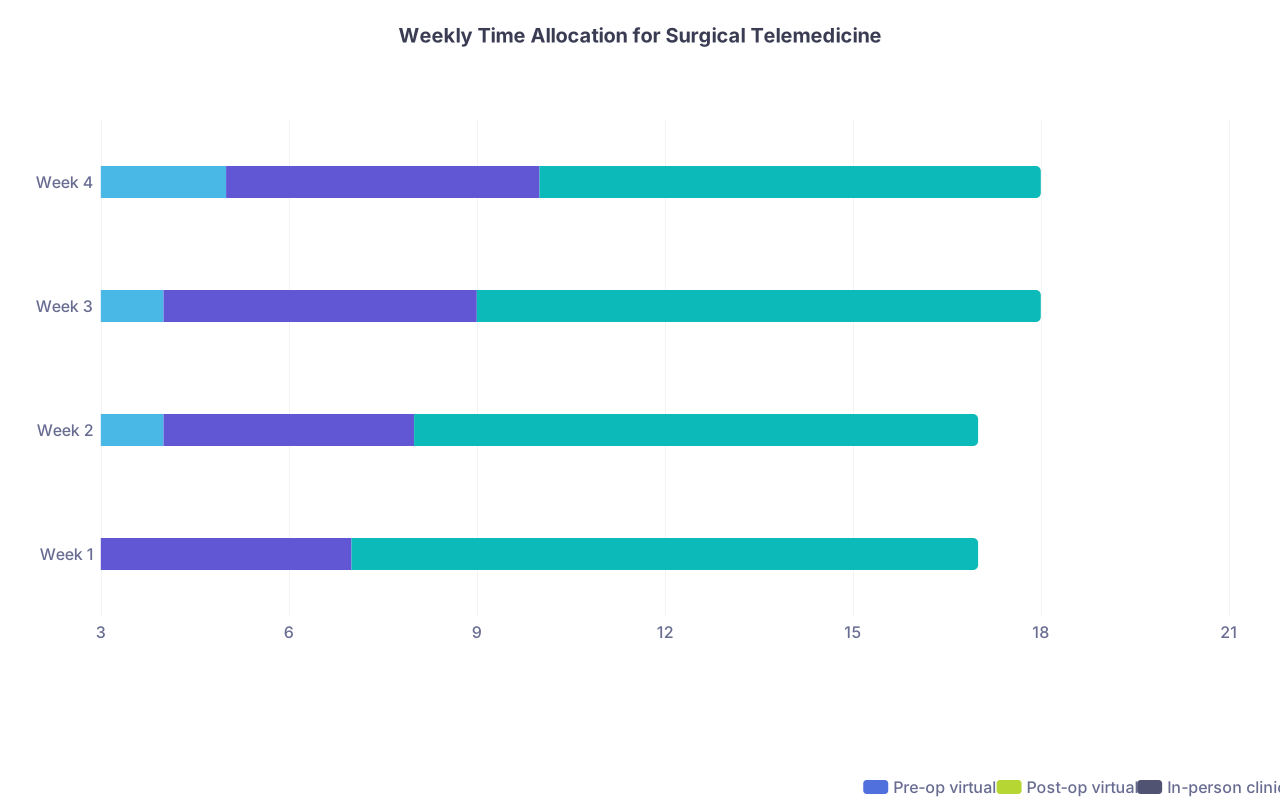
| Category | Pre-op virtual | Post-op virtual | In-person clinic |
|---|---|---|---|
| Week 1 | 3 | 4 | 10 |
| Week 2 | 4 | 4 | 9 |
| Week 3 | 4 | 5 | 9 |
| Week 4 | 5 | 5 | 8 |
5.3 Avoiding Burnout Traps
There are traps you should avoid from day one:
- “Open access” telehealth: where anyone can book any time with you. That sounds innovative; it is chaos.
- After‑hours “just a quick check” add‑ons: especially with portals and texts. If it looks like a visit, schedule it as a visit.
- Lack of boundary between home and work: sitting on your couch doing 3 extra “simple” post‑op video checks at 9 pm – this is how resentment starts.
Set these boundaries early:
- Telemedicine sessions batched into defined blocks (e.g., Wednesday 8–11 am).
- No same‑day add‑on telehealth without your explicit approval.
- Clear patient instructions: how and when to use telehealth vs portal vs ED.
6. Practical Setup: Technology, Environment, and Patient Preparation
Virtual care looks amateur fast if you are not intentional about the basics.
6.1 Tech Setup That Does Not Look Like a Webcam Hobby
Minimum acceptable setup for a surgeon:
- Hard‑wired or high‑quality Wi‑Fi.
- 1080p webcam at eye level, not looking up your nose.
- Decent microphone or headset (patients hate echo and static).
- Dual monitors if possible:
- One for EMR and imaging.
- One for the patient video window.
Background:
- Professional, neutral wall.
- No clutter, no OR gore, no family photos.
- Good front lighting so your face is clearly visible.
If your institution gives you a generic laptop and nothing else, invest a few hundred dollars in your own peripherals. It dramatically changes patient perception and reduces fatigue.
6.2 Patient Preparation Scripts and Checklists
The worst part of telemedicine is wasted time on tech issues. You can prevent half of it with good pre‑visit prep.
Your team should:
Send patients:
- Connection test link.
- Instructions on:
- Lighting and camera positioning (especially for wounds).
- Having meds and discharge instructions accessible.
- Having a family member present if needed for mobility or translation.
For post‑op wound checks:
- Ask them to remove dressings just before the visit if appropriate.
- Advise against ointments or creams right before the call (they distort appearance).
- Request they have a flashlight or phone light handy.

7. Specialty‑Specific Nuances: Not All Surgeons Use Telemedicine the Same Way
Telemedicine is more natural in some surgical fields than others. Example patterns I have seen work well:
| Specialty | Strong Use Cases |
|---|---|
| General Surgery | Gallbladder, hernia, colorectal follow-up |
| Orthopedics | Post-op mobility checks, imaging review |
| Neurosurgery | Imaging review, long-term follow-up |
| ENT | Simple wound checks, pathology review |
| Vascular | Surveillance, medication management |
A few specifics:
Orthopedics:
- Virtual ROM assessment, wound checks, and imaging review are very feasible.
- But acute joint infection or suspected DVT/PE? No telehealth; straight to ED or in‑person.
Vascular:
- Excellent for follow‑up of stable aneurysm, carotid disease, PAD.
- Telemedicine plus remote imaging (vascular labs) can form a very efficient surveillance model.
Neurosurgery:
- Ideal for MRI review, surgical decision‑making conferences, and long‑term functional checks.
- Poor for new neurologic deficit or acute spine emergencies.
You need to build your own “approved use‑case list” for your specialty and make it standard for your team and schedulers.
FAQ: Virtual Pre‑Op and Post‑Op for Surgeons
1. Can I safely do all first post‑op visits virtually if patients feel fine?
No. Blanket policies like that are dangerous. You should risk‑stratify by procedure and patient. Low‑risk laparoscopic cases in healthy patients may be fine for a first virtual wound check, but major open procedures, high‑risk wounds, or concerning symptoms still require in‑person exams.
2. How do I protect myself medicolegally during virtual visits?
Be explicit in documentation about what you could and could not assess. Document patient location, telehealth consent, technical limitations, your reasoning for telehealth appropriateness, and your threshold for escalation. When in doubt, convert to in‑person or ED and record that decision clearly.
3. Do virtual pre‑op visits replace anesthesia or medicine pre‑op clearance?
No. They complement it. Your telehealth pre‑op visit can optimize expectations, review imaging, and plan the operation, but formal clearance by anesthesia/medicine still follows standard institutional protocols. Think of your virtual pre‑op visit as surgical planning and patient education, not a replacement for comprehensive clearance.
4. What is the best way to handle telemedicine across state lines?
If the patient is physically in another state, you generally need a license in that state. Alternatives are structured physician‑to‑physician consult programs where you advise the local treating surgeon rather than providing direct care. Do not informally see out‑of‑state patients on video without checking licensing and your malpractice coverage.
5. How do I keep telemedicine from becoming unpaid extra work?
Put virtual visits into your regular clinic templates as billable encounters, with clear rules for what triggers a visit instead of a portal message. Batch telemedicine into defined time blocks, avoid after‑hours “quick checks,” and train your staff to schedule telehealth rather than routing every complex issue as a message for you to answer off the clock.
With these structures, protocols, and boundaries in place, telemedicine stops being a novelty and becomes a powerful extension of your surgical practice. The next step is harder: negotiating with your group or hospital to build a tele‑surgical model that protects your time and aligns with their metrics. But that is a fight for another day.