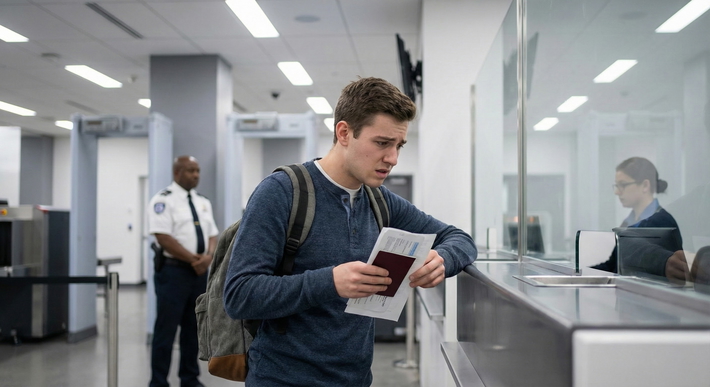
It’s 7:42 a.m. You’re sitting in your car outside Prometric. Your hands are shaking so badly you’re spilling coffee on your Step 2 CK permit. You’ve gone through UWorld twice, your NBMEs are fine, but your brain is screaming one thing on loop:
“What if I get in there and I just… blank?”
Not “what if it’s hard.”
Not “what if I miss my goal by a few points.”
The nuclear option: what if your mind empties out and you stare at the screen like you’ve never heard of heart failure or DKA in your life?
I’ve heard this exact fear from so many people that it’s almost cliché at this point. But when you’re the one about to swipe into the testing center, it doesn’t feel cliché. It feels like a trap you can’t escape.
Let’s pull this apart.
First: Does “Blacking Out” Actually Happen?
Short answer: sort of, but not in the catastrophic way your brain is picturing.
People don’t suddenly forget all of medical school permanently because they sat in front of a Prometric computer. That’s not how memory works.
What does happen:
- You read the first few questions and your brain feels foggy, slow.
- Your heart rate spikes so high you can’t focus on the words.
- You feel like you’re not “recognizing” anything, even though you’ve seen it all before.
- You panic because block 1 doesn’t feel good, and that panic threatens the whole test.
That’s not true amnesia. That’s anxiety hijacking your working memory. Your knowledge is still there; access to it is just… throttled.
I’ve seen people crash hard on block 1, snap out of it by block 3, and still end up scoring right around their practice average. I’ve also seen people let a rough start spiral the whole day because they weren’t ready for the mental freak-out.
So my honest answer: yes, you may have moments that feel like a blank. But that doesn’t automatically equal “I failed my Step and ruined my career.” That leap is anxiety talking, not evidence.
What Actually Happens in Your Brain When You Panic
Let me be uncomfortably literal for a second.
Anxiety on test day isn’t some personality flaw. It’s a physiology problem:
- Your body detects threat (the exam) → sympathetic nervous system fires.
- Heart rate up, sweating, tunnel vision, shallow breaths.
- Your prefrontal cortex (the part that does reasoning, integration, “what’s the best answer?”) gets less bandwidth.
- Working memory collapses. You can’t hold the whole question in your mind at once.
You know those UWorld days when you were calm, half-distracted eating cereal, and you just saw the diagnosis after two lines? That’s prefrontal cortex with normal blood flow.
On test day, if you’re panicking, your brain is blasting “LION!” alarms while you’re trying to differentiate between nephritic vs nephrotic.
That fog, that “everything looks unfamiliar” sensation? It’s literally your anxious physiology stomping on your cognitive function.
The point here:
You’re not stupid. You’re not unprepared. You’re scared, and your nervous system is overreacting.
Which means you need a plan that targets the physiology, not just “try to calm down.”
The Real Worst-Case Scenarios (And What They Actually Look Like)
You probably have this horror movie in your head: you blank, bomb the exam, never match, end of story.
Let’s zoom out and be specific.

Here are the main fears people carry into Step day and what they really mean:
| Anxiety Fear | More Realistic Outcome |
|---|---|
| “I’ll blank and fail spectacularly.” | Shaky start, then partial recovery. |
| “I’ll tank way below my practice range.” | Score slightly below (or near) practice. |
| “One bad block = total disaster.” | One weak block diluted by others. |
| “Programs will think I’m incompetent.” | They’ll see one data point, not your soul. |
Does actual failure happen? Yes. To some people. Usually when there’s:
- Very weak baseline prep plus high anxiety
- Major life crisis around test time
- Or they ignore every sign during practice tests that they’re not ready
But the cartoon version in your head—total blank, nothing remembered the whole day, every question guessed randomly—that’s not how this plays out for almost anyone who’s realistically ready to sit.
Your anxiety is showing you an extreme edge-case movie, not a documentary.
Pre-Game: How to Reduce the “Blank Out” Risk Before You Even Get There
You can’t fully eliminate anxiety. If you care about this exam at all, you will be nervous. Fine.
The goal is to knock your anxiety from “overheating processor” to “background static.”
Here’s what I’d actually do if I were panicking about blanking:
1. Run “test-day simulations” that include anxiety, not just content
Most people do half-baked “simulations”: they take an NBME, check their score, move on.
You want reps that look like this:
- Wake up at the time you’ll wake for the real exam.
- Eat the exact breakfast you plan for test day.
- Sit at a desk, phone away, no music, only allowable test-day items.
- Use a full-length practice (NBME or UWorld assessment) in proper blocks with timed breaks.
Why? Because you don’t just need practice answering questions. You need practice feeling anxious and still functioning.
It’s exposure therapy. You want your brain to think, “Oh, this feeling again. We’ve done this. We didn’t die.”
2. Script your first 10 minutes of every block
The first few questions are where a lot of people feel the biggest “blank.”
You solve that by ritual, not vibes.
Example script for the first minute of a block:
- Before clicking “Start,” do one slow inhale through your nose for 4 seconds, hold for 2, exhale for 6–8. Twice.
- Tell yourself (literally, in your head): “Block 1 always feels weird. It does not predict my score.”
- When you start:
- Skim question 1. If it looks long/annoying, flag it, next.
- You’re allowed to warm up. You do not need to ace Q1.
You’re teaching your brain: “We don’t panic when things feel off at the start. We run the script.”
3. Decide how you’ll handle the “I have no idea” moment
Because you will get a question that makes you feel clueless. Everyone does.
If you don’t have a policy for that, anxiety drives.
Make a rule ahead of time, something like:
- Spend no more than 60–75 seconds.
- If still lost, eliminate any obviously wrong answers, pick the best of what’s left, flag, and move on.
- Say to yourself: “I’m not supposed to know every question. The exam is graded on a curve.”
If you’ve rehearsed this in practice tests, your brain will recognize the move on test day.
During the Exam: What To Do When You Feel Yourself Blank
This is the part you’re really worried about, right? You’re in there, it’s happening, and you feel the wheels coming off.
Here’s a step-by-step for when your mind goes white noise mid-question.

| Step | Description |
|---|---|
| Step 1 | Notice panic rising |
| Step 2 | Pause & look away from screen |
| Step 3 | Slow breath: 4-2-6 |
| Step 4 | Re-read stem only |
| Step 5 | Skip & mark, move to next question |
| Step 6 | Identify key words & question type |
| Step 7 | Eliminate 1-2 wrong answers |
| Step 8 | Choose best, flag if needed, move on |
| Step 9 | Can you re-read calmly? |
Breakdown in English:
Notice the panic.
You feel your heart jump, your chest tighten, brain buzzing. That “oh no, it’s happening” moment.Force a micro-reset.
- Gently take hands off mouse/keyboard.
- Look down at your scratch paper or the desk, not the screen.
- Do one controlled breath: 4–2–6. That’s it. You have time for one breath.
Give yourself permission to not solve this question perfectly.
Remind yourself: “My job is not to crush every question. My job is to get through the block with the least damage.”Re-approach the question like you’re tutoring someone.
- Ignore the answer choices at first.
- Read just the stem and ask: What organ system? What’s the category of question (diagnosis, next step, mechanism, side effect)?
- That alone often jogs memory.
If you’re still blank, switch into damage-control mode.
- Eliminate the obviously wrong choices: wrong drug class, contradicted by vitals, etc.
- Pick the best remaining guess.
- Flag if you think there’s even a chance you can revisit.
Move on, even if it feels terrible.
This is where people self-destruct: they stay stuck on one question trying to fight the blank. You can’t think your way out of a panic spiral on that one item. You have to get to the next question to break the loop.
I know this feels like surrender. It’s not. It’s triage.
But What If the Whole Block Feels Like a Blur?
This is the more aggressive fear: not just a momentary blank, but an entire 40-question block that feels like you’re underwater.
First, blunt truth: that happens to people. They walk out of block 1 or 2 convinced it was a bloodbath.
I’ve seen:
- Students walk out after block 1 texting, “I failed, I have to void,” then score solidly within their NBME range.
- One person who was so rattled after block 2 they considered leaving, stayed, and ended up with a perfectly fine, non-career-ending score.
Why? Because your perception of how you did is wildly distorted by anxiety.
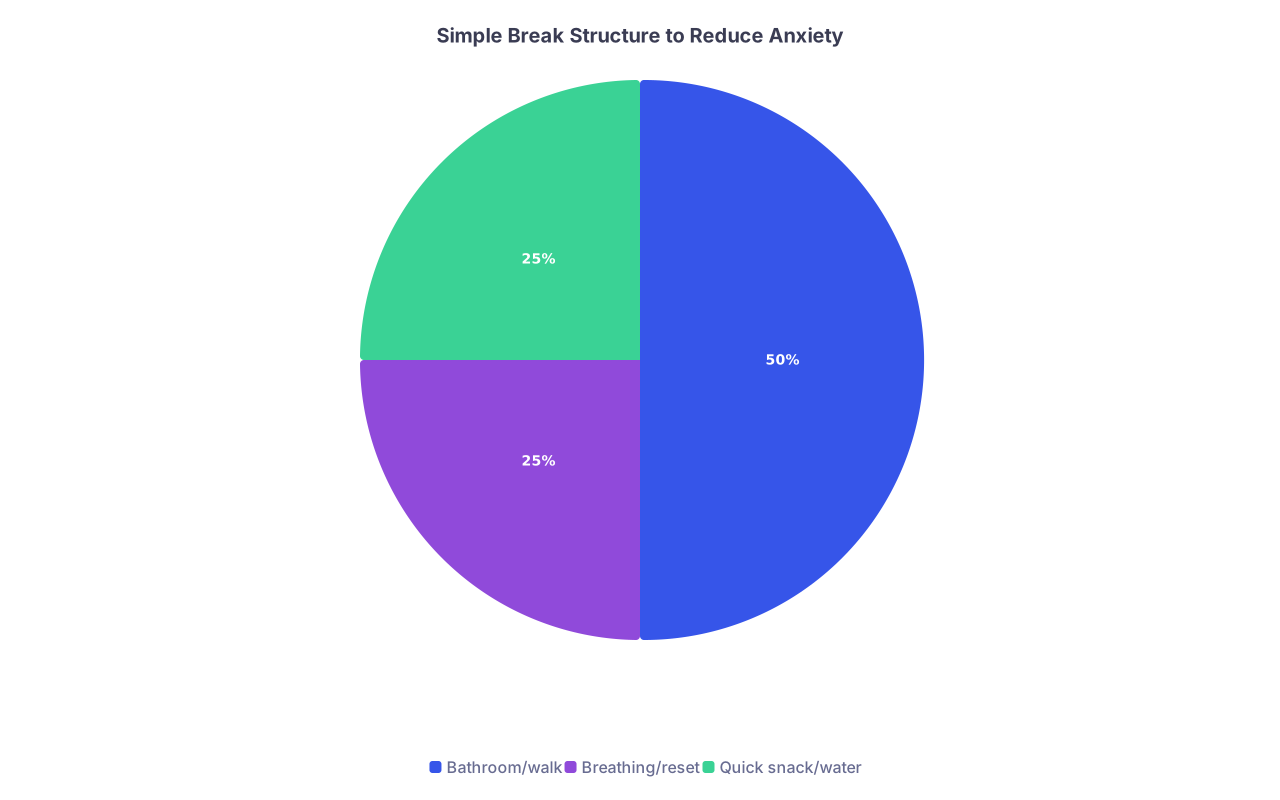
If you finish a block and feel like it was a train wreck, here’s the emergency protocol for the break:
| Category | Value |
|---|---|
| Bathroom/walk | 50 |
| Breathing/reset | 25 |
| Quick snack/water | 25 |
Concrete break script:
Physically move away from the testing terminal.
Bathroom, water fountain, whatever. Get your body out of the panic location.Give your brain one job: physical regulation, not exam analysis.
- Do 3–4 rounds of 4–2–6 breathing or box breathing (4-4-4-4).
- Shoulders down, unclench your jaw.
Repeat a neutral, boring phrase.
Not “I’m going to crush this.” That feels fake. Try:- “Messy blocks still pass.”
- “One bad block does not fail Step.”
- “My job is just to finish.”
Do NOT autopsy the questions.
No replaying stems, no mentally checking UWorld. That just re-summons the anxiety.Plan your next move in one sentence.
For example: “Next block: I focus on slowing down for the first five questions and reading carefully.”
Then go back in. Not because you feel ready. Because your future self will be very, very glad you didn’t walk out.
What If After All This… You Really Do Badly?
I’m not going to feed you the fantasy that everything always works out perfectly. Sometimes people underperform. Sometimes significantly.
But here’s the part your anxiety never includes in its horror story: what happens after the bad score.
I’ve watched people:
- Bomb Step 1, then crush Step 2 and still match into solid IM, EM, even anesthesia.
- Fail Step 1, take dedicated time, pass on second attempt, adjust their specialty choices and still live sane, successful physician lives.
- Walk out convinced they failed, end up scoring only a few points below practice, and realize their “disaster” wasn’t actually that bad.
The system is rigid and punishing in a lot of ways, yes. But it’s not a single-exam-and-you’re-exiled-from-medicine machine.
You’re allowed:
- Imperfect scores
- Bad test days
- Needing a retake
- Mourning a lost dream specialty and building a new, actually-good life in another
Your anxiety collapses all that complexity into: “Blank → fail → no residency → ruined.” That’s incomplete and honestly just inaccurate.
When You Should Consider Getting Professional Help Before Step
If your fear of blanking is intense enough that:
- You’re having panic attacks during practice exams
- You can’t sleep for days leading up to tests
- You keep freezing even on low-stakes questions at home
- You have a long history of test panic going back to SAT/MCAT days
Then this isn’t just “normal nerves.” It’s test anxiety worth treating.
And no, seeing someone isn’t overkill. People get accommodations and/or meds for this all the time.
Things that actually help, in real Step-taker lives:
- Short-acting beta blockers (like propranolol) to blunt physical symptoms
- Therapy specifically aimed at test anxiety and performance
- Sometimes SSRIs if there’s broader anxiety/depression
If the idea of telling your doctor “I’m scared I’ll blank on Step” embarrasses you, say it anyway. They’ve heard worse. And it’s a lot less embarrassing than silently suffering and tanking an exam you could’ve managed with better support.
Quick Reality Check: You’re Not the Outlier Freaking Out Alone
Your brain loves to whisper: “Everyone else is stressed but functioning; I’m the one who’ll actually fall apart.”
Here’s what I’ve personally heard:
- “I was sure I failed after block 1. I was Googling ‘can I reschedule mid-test?’ in my break.” → passed solidly.
- “I didn’t understand half of block 3, I guessed like crazy.” → ended up near their NBME average.
- “I almost left during lunch; I was so sure it was over.” → matched into a very normal, very real residency.
You’re not some fragile outlier. You’re just conscious enough of your fear to put words on it.
The difference between people who get destroyed by their anxiety and people who survive it isn’t who’s scared. It’s who has a plan and runs it even when they feel like garbage.
FAQ (Exactly 4 Questions)
1. What if I feel myself blanking on the very first question of the exam?
Totally common. Don’t treat Q1 like a prophecy. If it looks convoluted and your brain seizes, skip it immediately. Go to Q2 or Q3, warm up on something more straightforward, and come back. Plenty of people do this and still score in their expected range. The first question is just… the first question. Nothing more.
2. Should I void my exam if I feel like I’m blanking or doing terribly?
Almost never. People are notorious for misjudging their performance under high anxiety. I’ve seen people walk out convinced they failed and then get perfectly average or decent scores. Voiding is basically choosing a guaranteed zero over a maybe-bad-but-maybe-fine score. Unless there was a clear disaster (you were physically ill, huge technical problem, etc.), finishing the exam is almost always the better move.
3. What if I blank on a topic I know I studied a lot?
That disconnect—“I know this, why can’t I remember it?”—is classic anxiety. Your long-term memory didn’t disappear. Access just got jammed in that moment. Treat it as a transient glitch, not proof you’re unprepared. Make your best guess, flag it if you must, and move on. Often, the memory pops back later in the block or on a break, once you’re less keyed up.
4. How do I know if I’m actually ready for Step vs just anxious?
Look at your practice data, not your feelings. If your NBMEs/assessments are consistently in a pass range (or near your target), and you’re not guessing randomly on half the questions, you’re likely academically ready. Anxiety will still scream that you’re not. That’s where the test-day plan, breathing, and maybe professional help come in. If your practice tests are truly failing or all over the place, that’s not just anxiety—that’s a sign you need more content and question practice before sitting.
Key things to hold onto:
- “Blanking” is usually anxiety slamming your working memory, not actual memory loss.
- You can build concrete, scripted responses for panic moments instead of free-falling.
- One bad question—or even one bad block—doesn’t automatically equal a ruined score or ruined career.
You don’t need to be calm to pass. You just need to be functional while scared. That’s the bar. And you’re probably closer to it than your anxiety is letting you believe.